Common Octopus
Common Octopus: The Camouflage Master With Three Hearts
The common octopus changes colour, pattern and texture in a second and runs on three hearts and blue blood. It is the classic octopus of the Mediterranean and the eastern Atlantic — and the most studied octopus in the world.
By Emily Carter · Reviewed by our vet team · Updated 10 November 2026 · 9 min read
Changes colour in a secondThree heartsBlue blood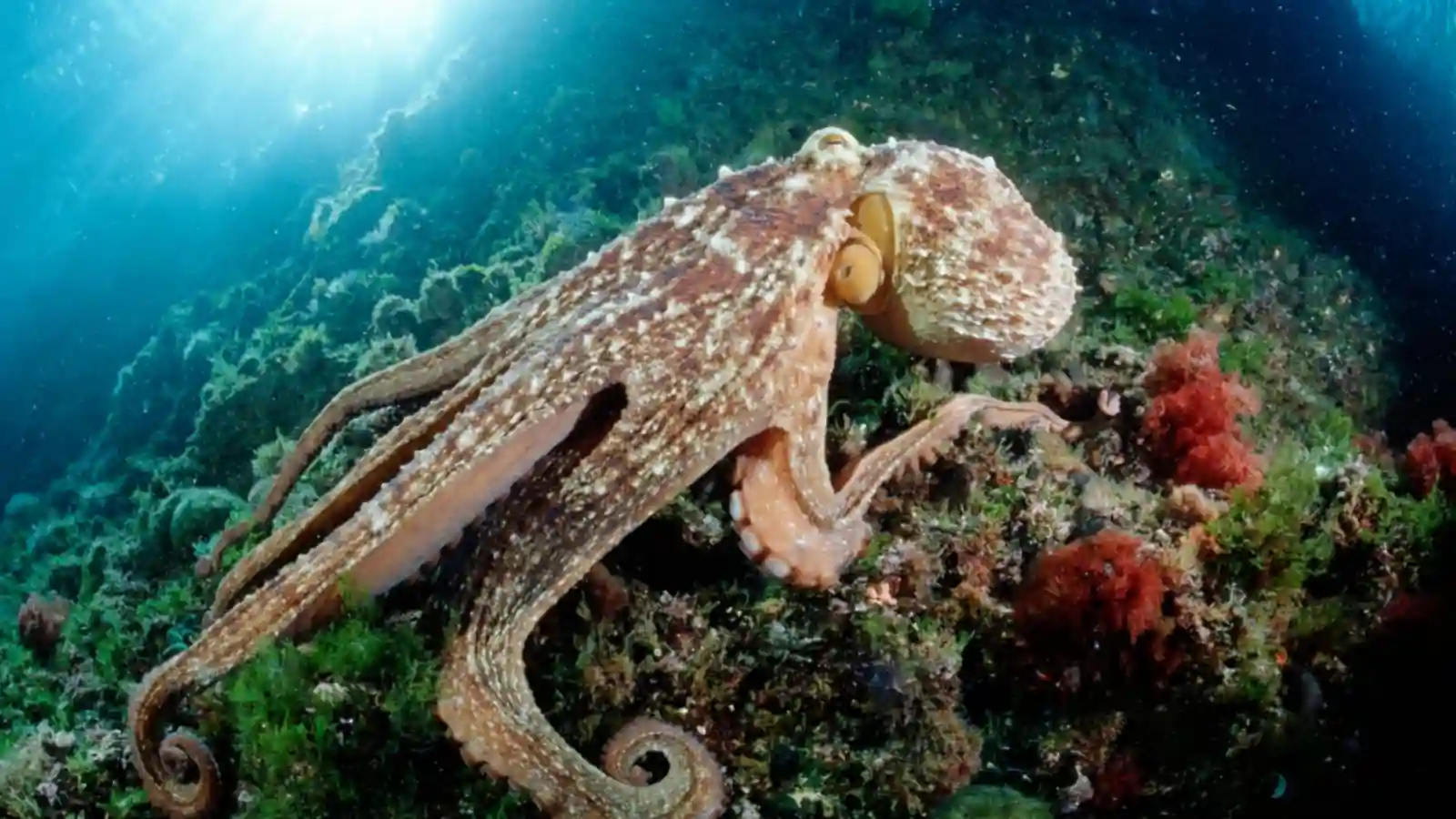
At a Glance
The common octopus is the classic octopus of the Mediterranean and the eastern Atlantic, Octopus vulgaris, and it is the most studied octopus in the world. Its mantle reaches 20–25 cm, its total length to 1.3 m, and it changes colour, pattern and texture in a second.
Common Octopus Size: A Metre-Long Reef Octopus
It grows a mantle of 20–25 cm and a total length to 1.3 m, and it typically weighs 3–10 kg — a substantial reef octopus, big enough to take a crab and strong enough to pull apart a mollusc. The arms are long and muscular, and the mantle is the engine that drives the jet.
Size varies with food and temperature: a well-fed octopus in warm Mediterranean water grows fast and lives about a year, while a cold-water animal grows more slowly and may live longer. The 1.3-metre figure is the maximum; most common octopuses you meet on a reef are under a metre long. The arms do most of the work — eight muscular arms that feel, grip and pull, each lined with suckers that can taste as well as hold, so the animal can find a crab in a crevice by touch alone in the dark.
Camouflage: Colour, Pattern and Texture in a Second
It changes colour, pattern and texture in a second, using three systems working together: chromatophores, tiny sacs of pigment that expand and contract; iridophores, reflective plates that add shine; and papillae, small fleshy bumps that raise the skin into ridges and horns. Together they let the octopus become rock, sand, coral or weed at will.
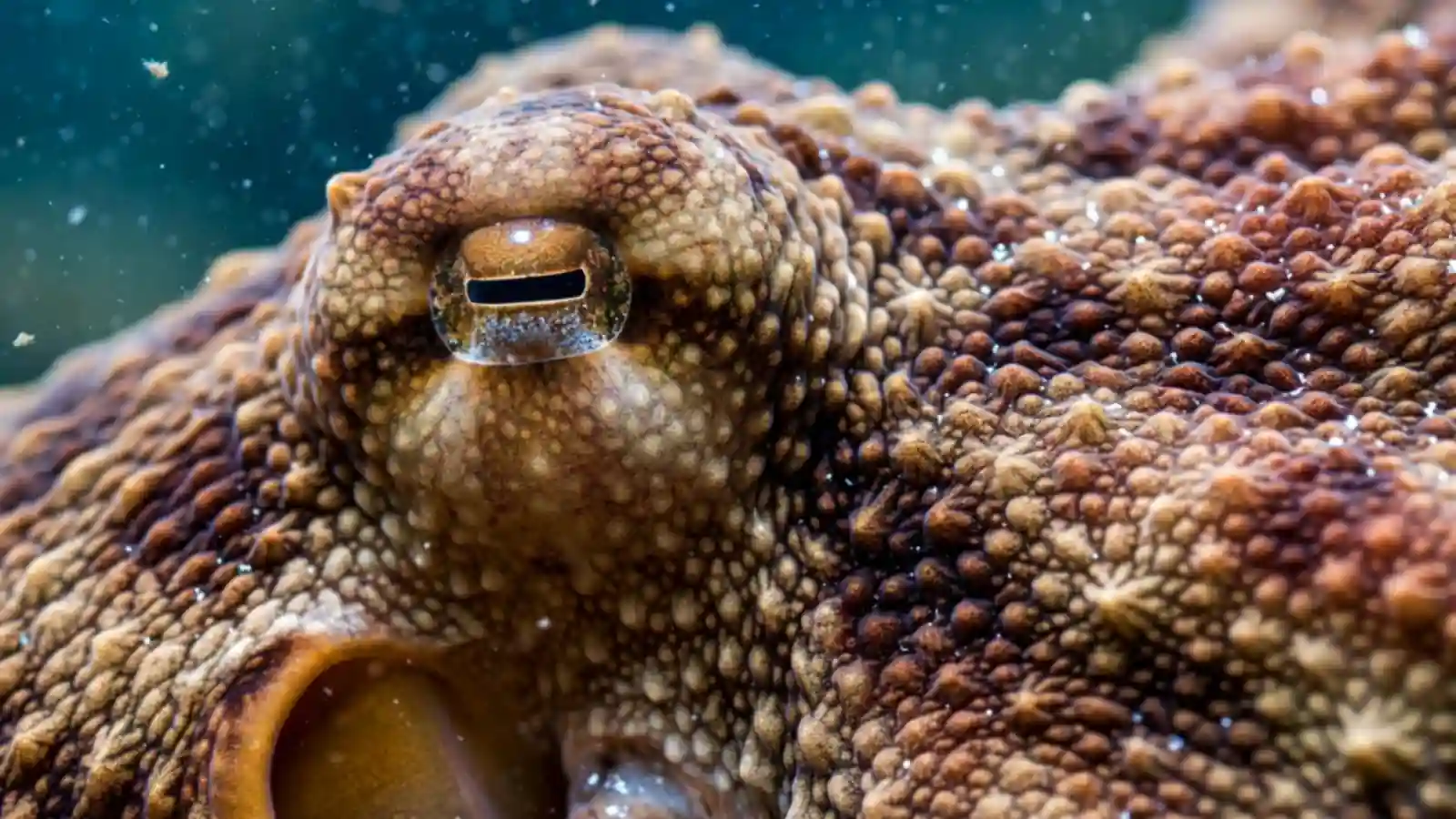
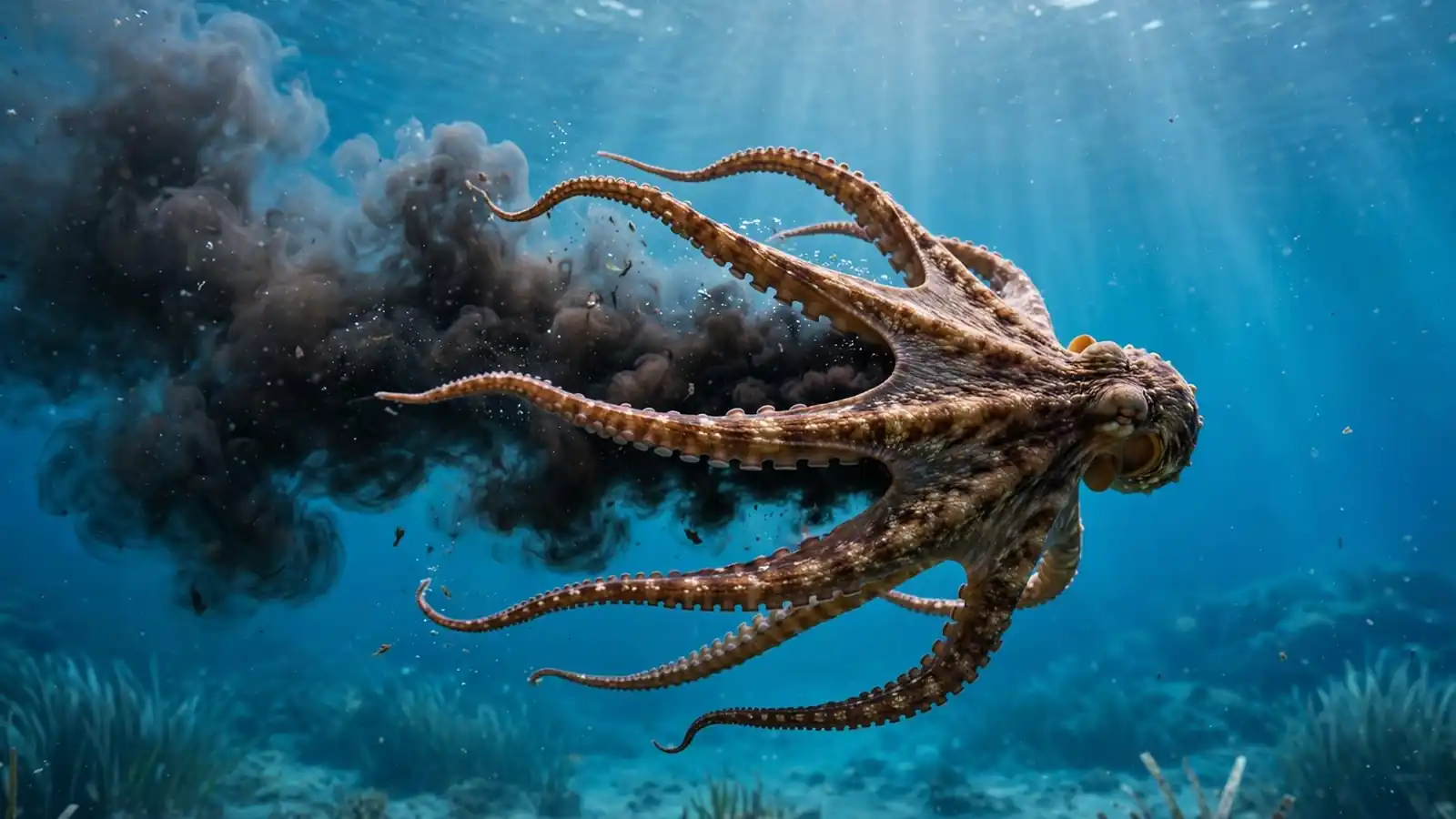
The change is controlled by the brain and the eyes, and it is fast enough to track a moving background. The textured skin is the giveaway in close-up: the papillae stand up like little horns above the eye, and the skin ripples as the pattern shifts. For the full account of the camouflage, see this octopus profile, which covers the colour change in detail.
Three Hearts and Blue Blood
It has three hearts and blue, copper-based blood. Two hearts pump blood to the gills, and one pumps it to the body — and the blood is blue because it carries oxygen on haemocyanin, a copper-based molecule, instead of the iron-based haemoglobin that makes our blood red.
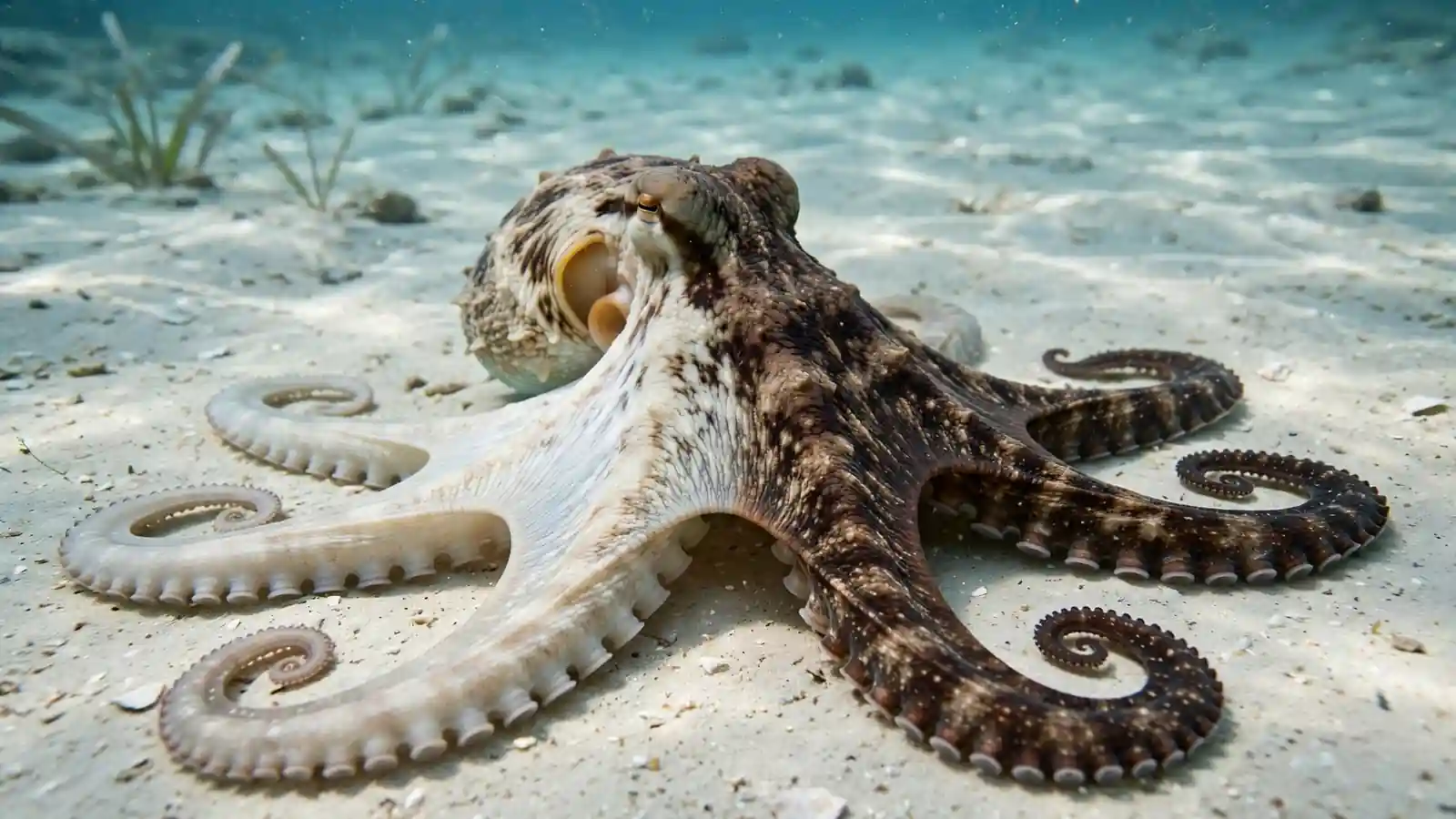
The three hearts power the colour change: the chromatophores need a constant supply of oxygenated blood, and the big systemic heart works hard to deliver it. When the octopus swims, the systemic heart actually stops beating — the animal relies on the jet and the gill hearts while it moves — which is one reason octopuses prefer to crawl rather than swim.
Where Common Octopuses Live: Mediterranean Reefs
Common octopuses live in the Mediterranean and the eastern Atlantic, on rocky reefs and in dens, from the surface down to about 200 m. They are reef animals: they need rock, crevices and a den, and they spend their days in the den and their nights hunting over the reef.
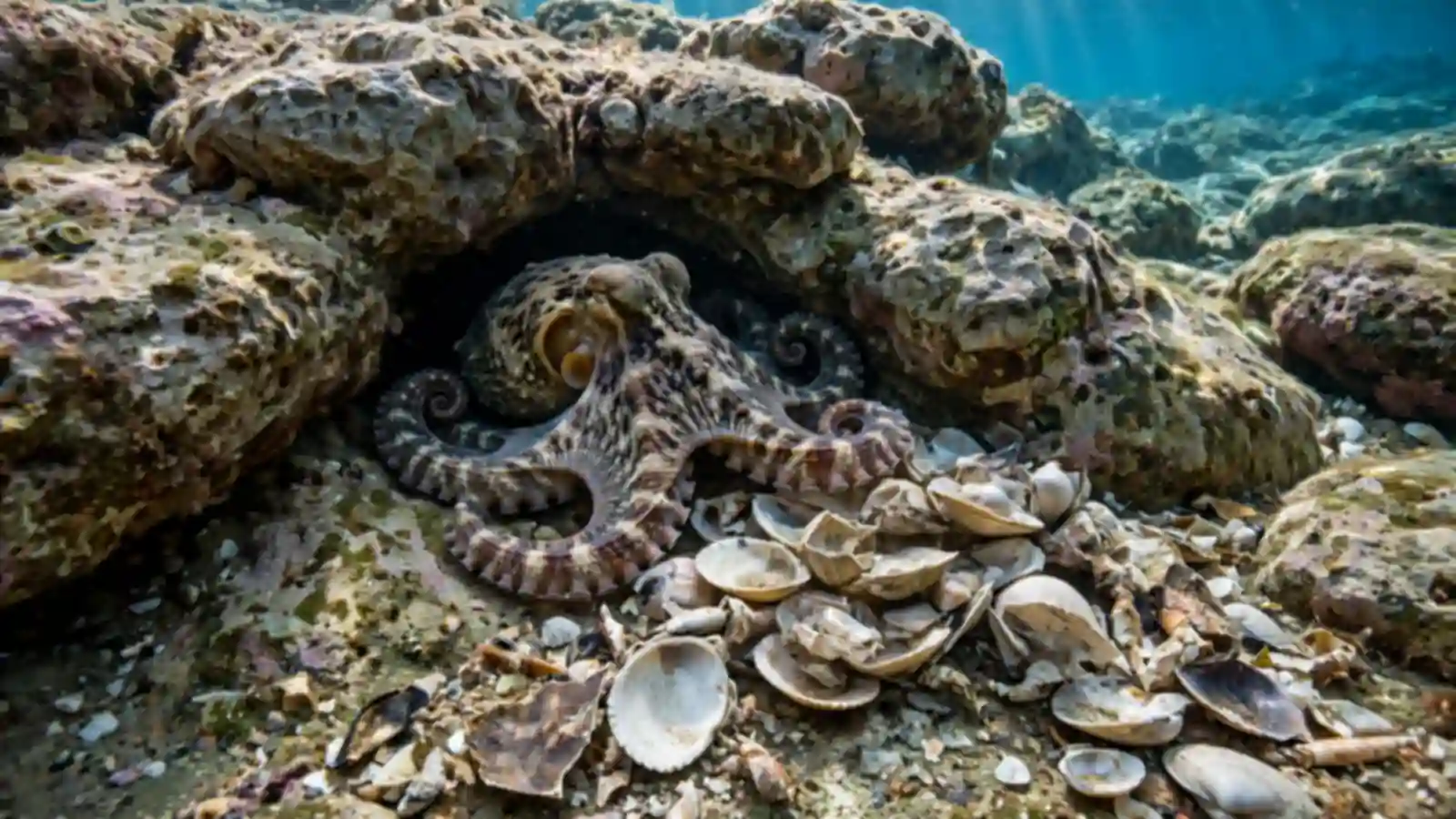
The den is the centre of its life. It is a crevice or a hole in the rock, often marked by a pile of empty shells outside — the middens of past meals — and the octopus returns to the same den night after night, defending it from other octopuses and retreating into it at the first sign of danger.
What Do Common Octopuses Eat? Crabs and Molluscs
It eats crabs, molluscs, shrimps and small fish, drilled or pulled apart. It catches a crab with its arms, pulls it close and bites through the shell with its beak, or it drills a small hole in a mollusc shell and injects venom to loosen the animal inside. Smaller relatives hunt the same way on a smaller scale: the California two-spot octopus works the reefs off California and Mexico, while the argonaut octopus drifts in the open ocean inside a paper-thin egg case.
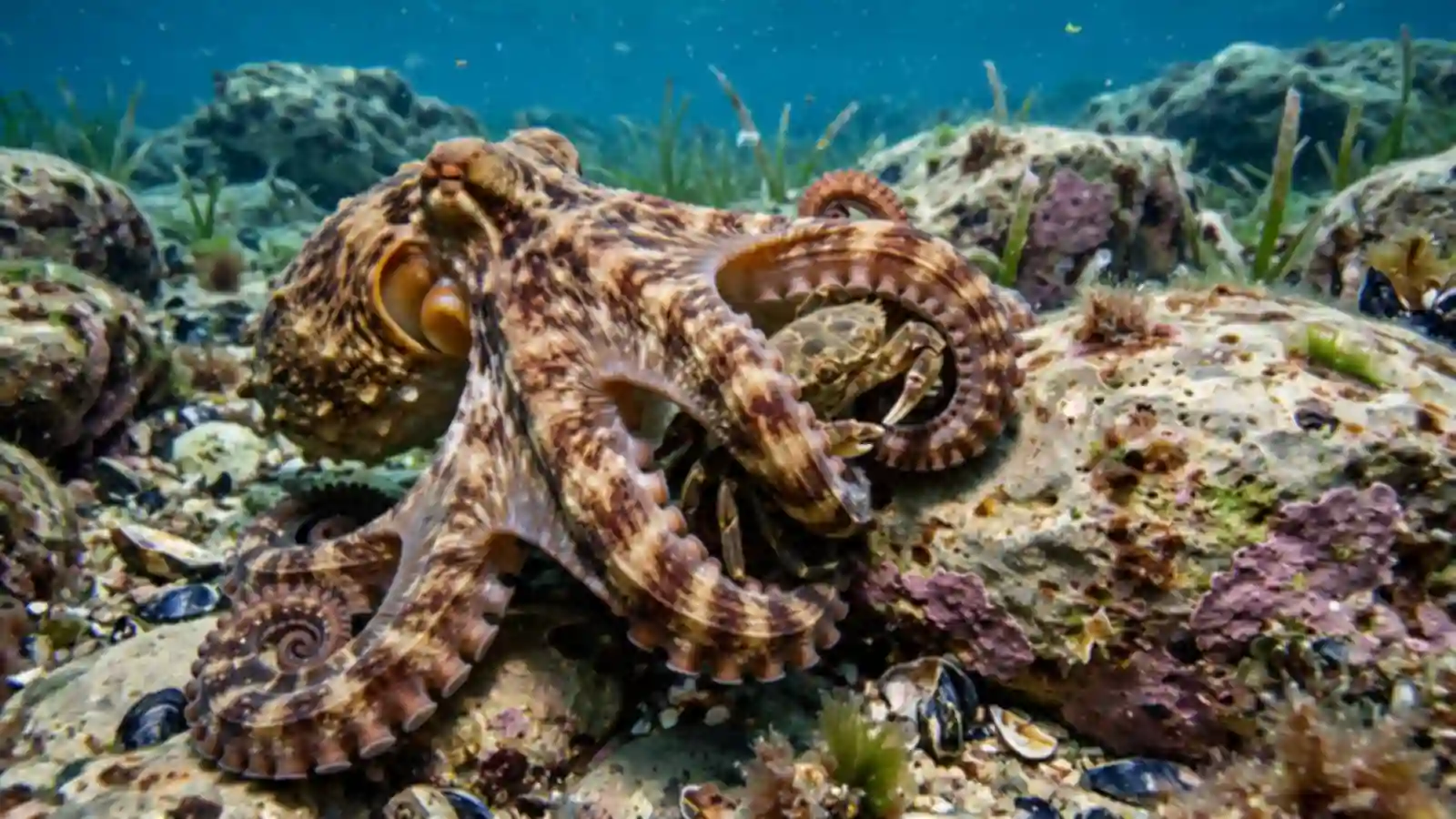
The hunting is mostly nocturnal: the octopus leaves its den at dusk, prowls the reef for crabs and molluscs, and returns before dawn with its catch. The shell middens outside the den are the evidence — piles of crab carapaces and drilled shells that mark a well-fed octopus’s home.
Common Octopus Reproduction: One Brood, Then Death
It breeds once, and the female dies after brooding her eggs. She lays her eggs in a den — a rocky crevice curled around the clutch — and guards them without eating until they hatch, fanning them with her arms to keep them oxygenated and clean.
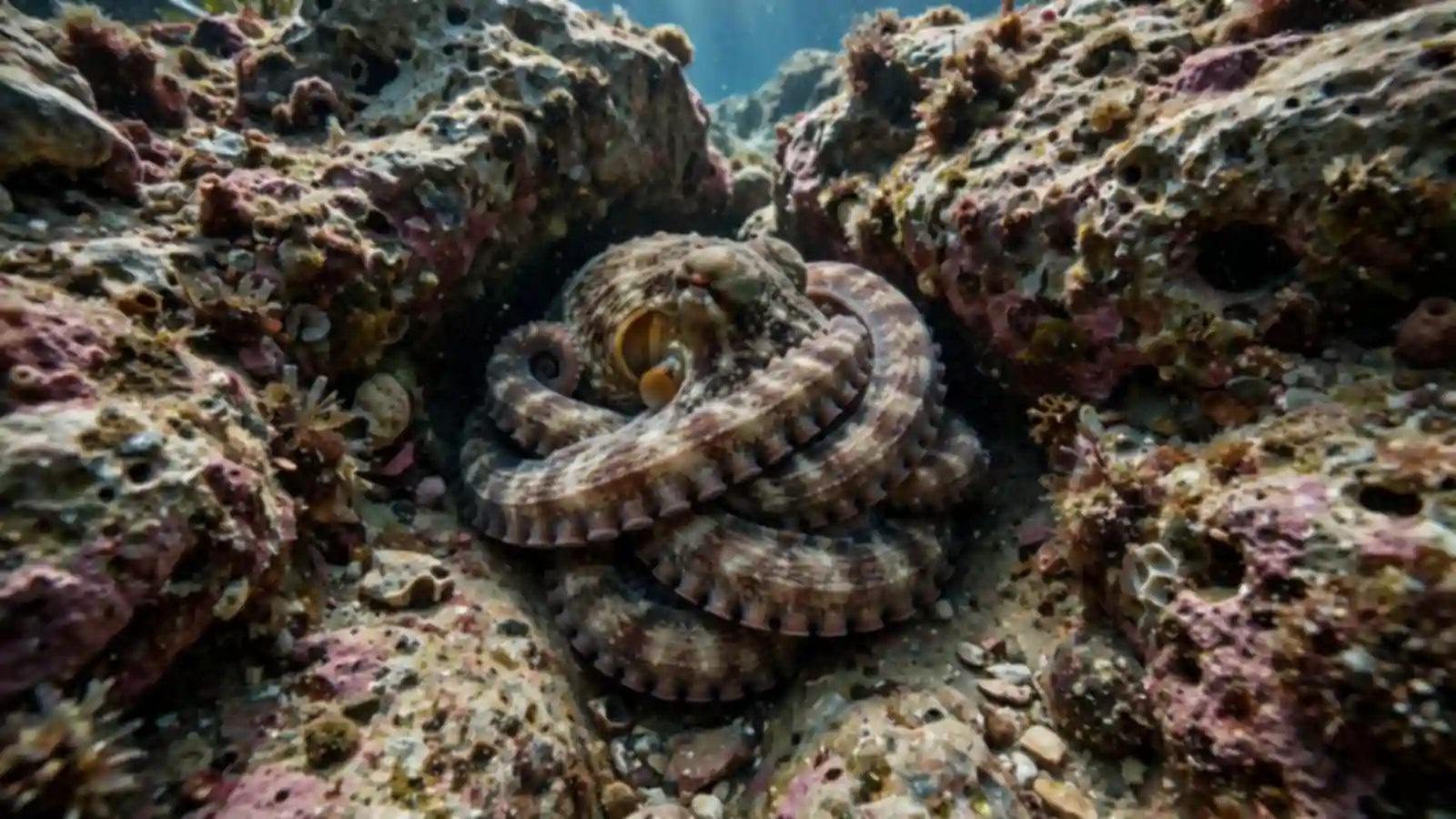
The eggs hatch into tiny planktonic young that drift in the currents before settling to the bottom. The female, spent by months of guarding, dies soon after the young hatch. It is a short life — 1–2 years, rarely to 3 — but the octopus packs a remarkable amount of learning and hunting into it.
Conservation: A Least Concern Octopus
It is listed as Least Concern by the IUCN. It is widespread across the Mediterranean and the eastern Atlantic, it is abundant on rocky reefs, and although it is fished commercially, the population is not considered threatened.
The older National Geographic species page says “Not evaluated”, but that listing is outdated — the current IUCN assessment is Least Concern, and this guide uses the current status. It remains the best-studied octopus in the world, and its numbers on Mediterranean reefs are healthy.
Fun Facts
- It changes colour, pattern and texture in a second.
- It has three hearts and blue, copper-based blood.
- Its mantle reaches 20–25 cm and its total length to 1.3 m.
- It drills holes in mollusc shells and injects venom to loosen the animal inside.
- The shell middens outside its den mark a well-fed octopus’s home.
- Females die after brooding their eggs — a life of 1–2 years, rarely to 3.
Frequently Asked Questions
How Big Do Common Octopuses Get?
The mantle reaches 20–25 cm, the total length to 1.3 m, and the weight typically 3–10 kg. Most common octopuses you meet on a Mediterranean reef are under a metre long; the 1.3-metre figure is the maximum.
Where Do Common Octopuses Live?
In the Mediterranean and the eastern Atlantic, on rocky reefs and in dens, from the surface down to about 200 m. They are reef animals that need rock and crevices, and they return to the same den night after night.
What Do Common Octopuses Eat?
Crabs, molluscs, shrimps and small fish, drilled or pulled apart. They catch crabs with their arms and bite through the shell, or drill a hole in a mollusc shell and inject venom to loosen the animal inside.
How Do Common Octopuses Change Colour?
With three systems working together: chromatophores, sacs of pigment that expand and contract; iridophores, reflective plates that add shine; and papillae, fleshy bumps that raise the skin into ridges and horns. The brain and eyes control the change, and it takes about a second.
Do Common Octopuses Really Have Three Hearts?
Yes. Two hearts pump blood to the gills and one pumps it to the body, and the blood is blue because it carries oxygen on haemocyanin, a copper-based molecule. When the octopus swims, the systemic heart stops beating — one reason octopuses prefer to crawl.
How Long Do Common Octopuses Live?
One to two years, rarely to three. Females die after brooding their eggs, and males die soon after mating. It is a short life, but the common octopus is one of the most intelligent animals in the sea.
What Is the Difference Between a Common Octopus and a Day Octopus?
They are separate species. The common octopus, Octopus vulgaris, lives in the Mediterranean and eastern Atlantic and hunts mostly at night. The day octopus, Octopus cyanea, lives on Indo-Pacific reefs, hunts by day, and shows the “passing cloud” display. Do not mix the two species’ facts.
Similar Species Worth Exploring
Keep Exploring
Meet the day octopus, its daytime counterpart on Indo-Pacific reefs, then the coconut octopus, the tool user of the same family, and browse the whole family in our types of cephalopods hub — then come back to the camouflage master with three hearts, the common octopus.