
Australian Shepherd Dog Breed Guide
Australian Shepherd: the brilliant American ranch dog
The brilliant American ranch dog bred for herding with intelligence and stamina. Training, exercise, care, and health in one complete guide.
By Emily Carter · Reviewed by our vet team · Updated 22 October 2026 · 10 min read
Lifespan 12–15 yrsWeight 40–65 lbSmart & driven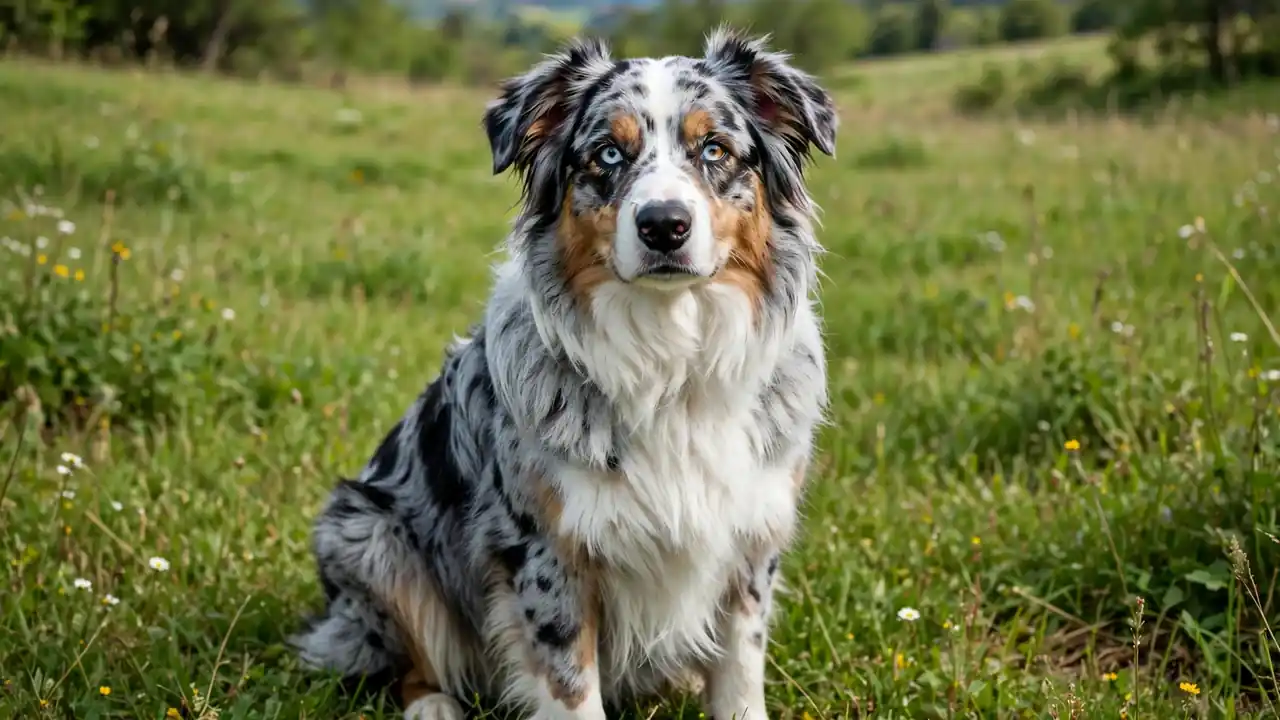
Australian Shepherd dog is an American ranch dog, bred for herding livestock with intelligence and stamina. Despite the name, this brilliant breed is not Australian at all. Here is what matters before you commit.
At a Glance
Size and Weight
Medium-sized but solid and athletic. Here are the numbers. The Australian Shepherd dog fits that medium, athletic build.
Males stand 20 to 23 inches and weigh 50 to 65 pounds; females are 18 to 21 inches and 40 to 55 pounds. The build is balanced and agile rather than bulky, designed for all-day herding work.
There is also a Miniature American Shepherd, a separate smaller breed for those who love the Australian Shepherd look in a smaller package. Make sure you know which one a breeder is selling. The Australian Shepherd dog itself is the larger, original breed behind that smaller cousin.
Coat and Colors
The merle coat is the signature. Here is what to expect.
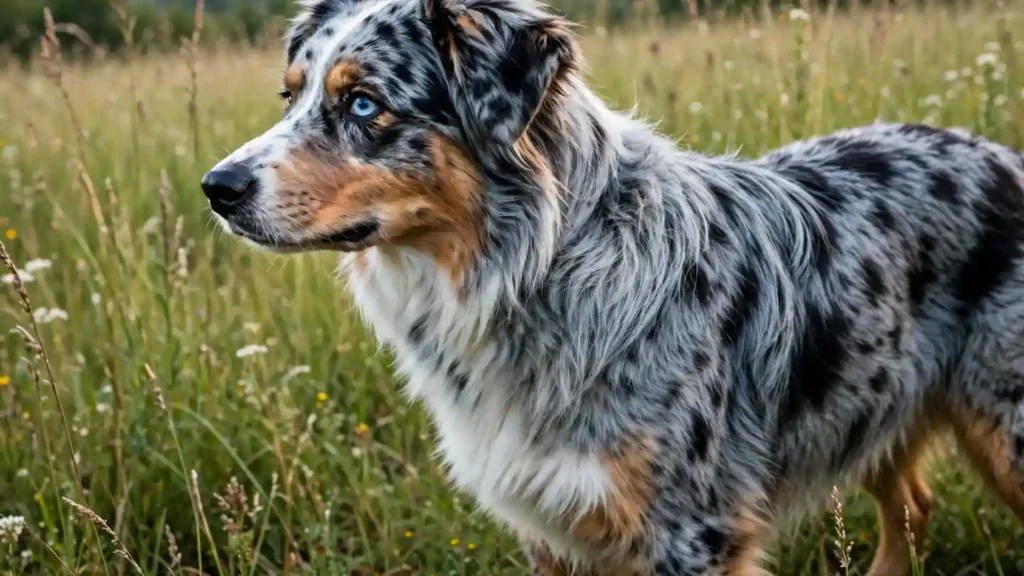
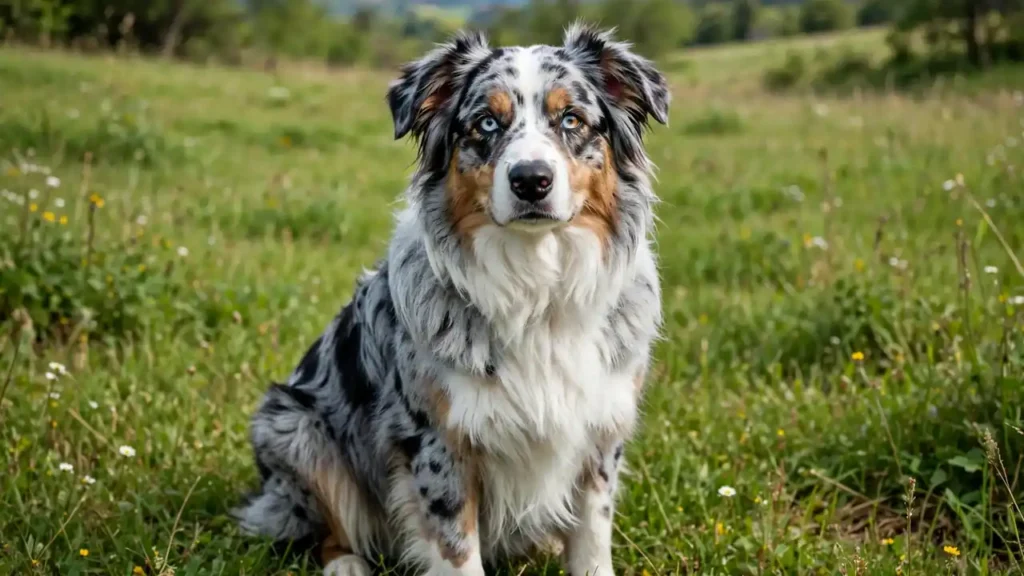
A medium-length double coat that is weather-resistant and comes in blue merle, red merle, black, and red, often with white and copper trim. Eyes can be brown, blue, amber, or even two different colors (heterochromia), which is common and striking. The Australian Shepherd dog wears that weather-resistant double coat in merle and solid colours.
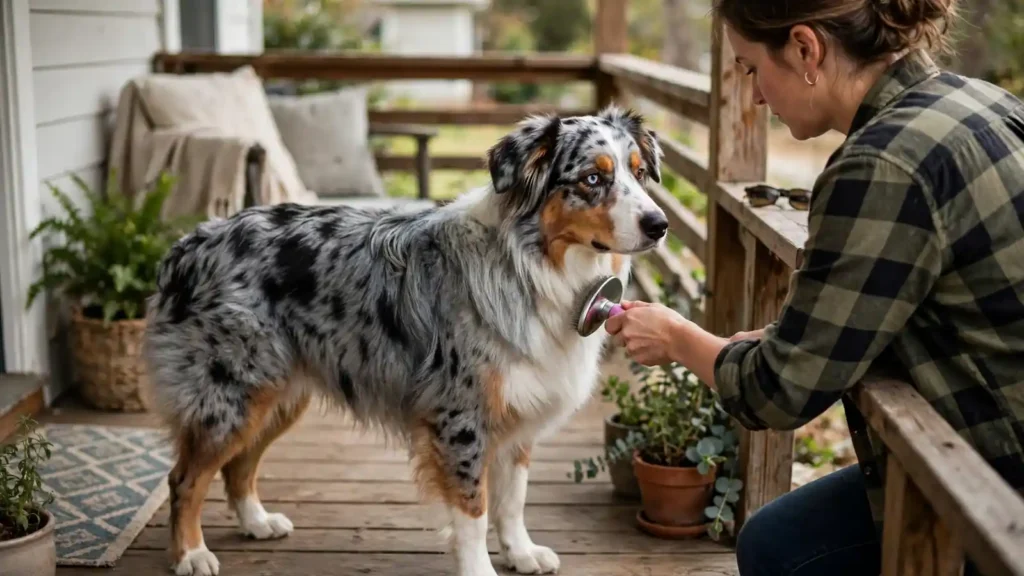
Shedding is moderate year-round with heavier seasonal periods. Weekly brushing handles it; daily during shedding season.

History and Origins
The ancestors were herding dogs brought by Basque shepherds who came to the western United States via Australia in the 1800s, which explains the name.
American ranchers refined them into the ultimate cowboy dog: tireless, brilliant, and versatile.
Aussies became rodeo stars and movie dogs in the mid-1900s, which spread their fame beyond ranch country. They remain working dogs at heart, and that heritage drives everything about the temperament.
The name is misleading; the breed is American. Here is the real story. The Australian Shepherd dog story begins in America, despite its name.
The ancestors were herding dogs brought by Basque shepherds who came to the western United States via Australia in the 1800s, which explains the name. American ranchers refined them into the ultimate cowboy dog: tireless, brilliant, and versatile.
Australian Shepherds became rodeo stars and movie dogs in the mid-1900s, which spread their fame beyond ranch country. They remain working dogs at heart, and that heritage drives everything about the temperament.
Physical Characteristics
Built for agility, not bulk. Here is the structure.
Balanced, athletic body with a level back and deep chest. The head is clean-cut with expressive eyes; ears are triangular and fold forward. Tails are often naturally bobbed or docked in working lines.
Everything about the Aussie says quick and clever. This is a dog designed to sprint, turn, and think at full speed.
Australian Shepherd Personality and Behavior
A genius that needs a job. That is the whole breed in one sentence.
Aussies are among the smartest dog breeds, intensely loyal to their families, and driven to work. Without a job, they invent one: herding children, chasing cars, rearranging the household. This is not misbehavior; it is unemployment. The Australian Shepherd dog is among the smartest breeds and deeply loyal to its family.
They are reserved with strangers but not shy, and deeply bonded to their people. They thrive on training and learn astonishingly fast, which is wonderful and also means they learn bad habits just as quickly.
Owners consistently describe the Aussie as intelligent, energetic, and loyal. In practice, owners report that the breed’s brilliance is the main reason they recommend it to active, engaged owners.
A genius that needs a job is the whole breed in one sentence. The Australian Shepherd dog is an American ranch dog, among the smartest dog breeds, intensely loyal to its family and driven to work. Without a job, the dog invents one: herding children, chasing cars, rearranging the household, which is not misbehavior but unemployment.
The learning speed cuts both ways. Reserved with strangers but not shy, deeply bonded to its people, the breed thrives on training and learns astonishingly fast, which is wonderful and also means bad habits are learned just as quickly. Training should be ongoing for life, since the dog loves learning.
Without a job, they invent one: herding children, chasing cars, rearranging the household. This is not misbehavior; it is unemployment.
Deeply bonded to their people and reserved with strangers but not shy.
They thrive on training and learn astonishingly fast, which is wonderful and also means they learn bad habits just as quickly.
- Among the smartest of all dog breeds
- Devoted and affectionate with family
- Excels at agility, herding and dog sports
- Needs 60 to 90 minutes of exercise plus mental work daily
- Will herd children and chase cars if bored
- Poor fit for sedentary or apartment life
Care Essentials
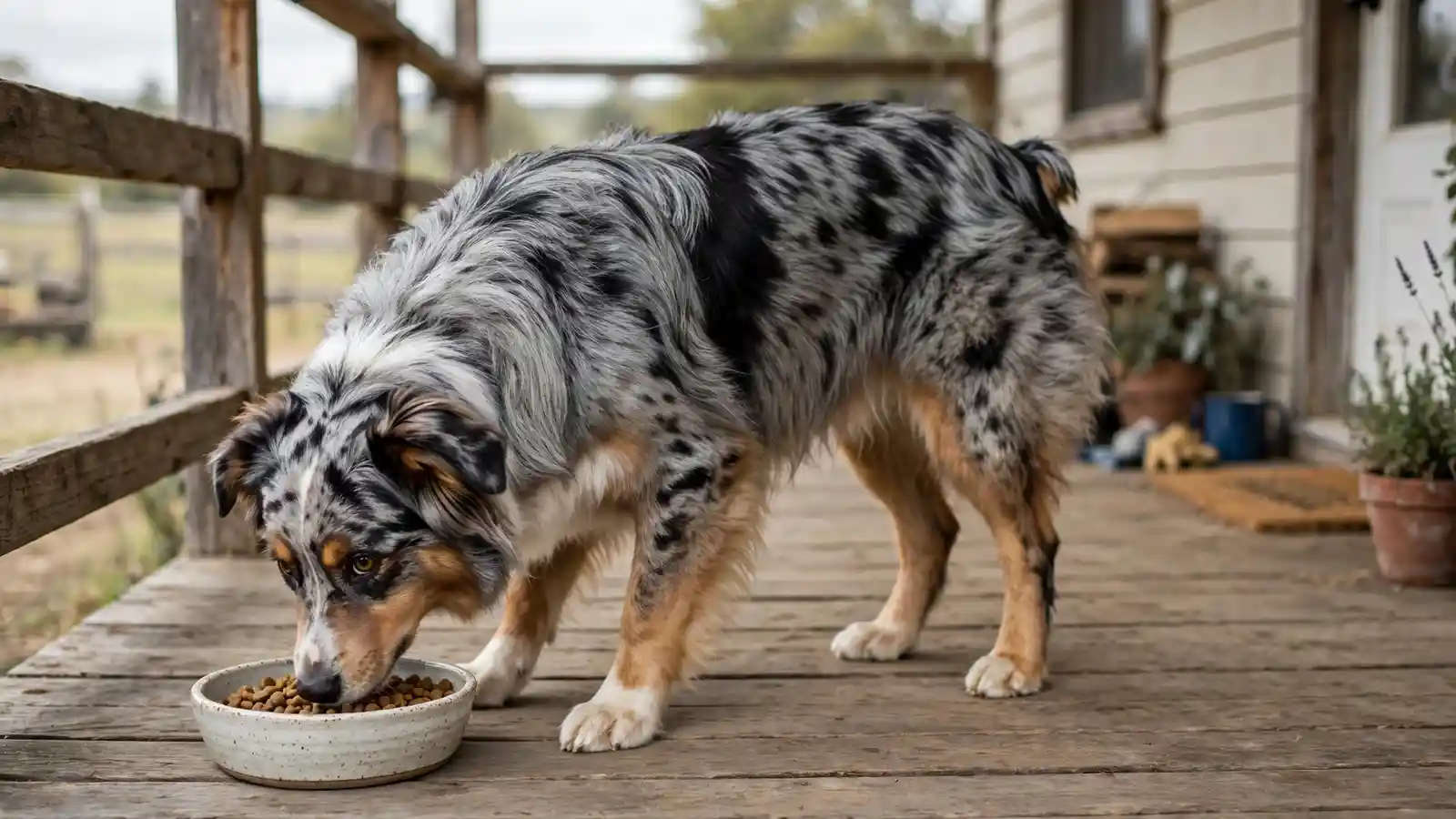
Two meals a day of a high-quality diet for active medium breeds, with portions matched to real activity, which varies hugely between a couch dog and an agility competitor.
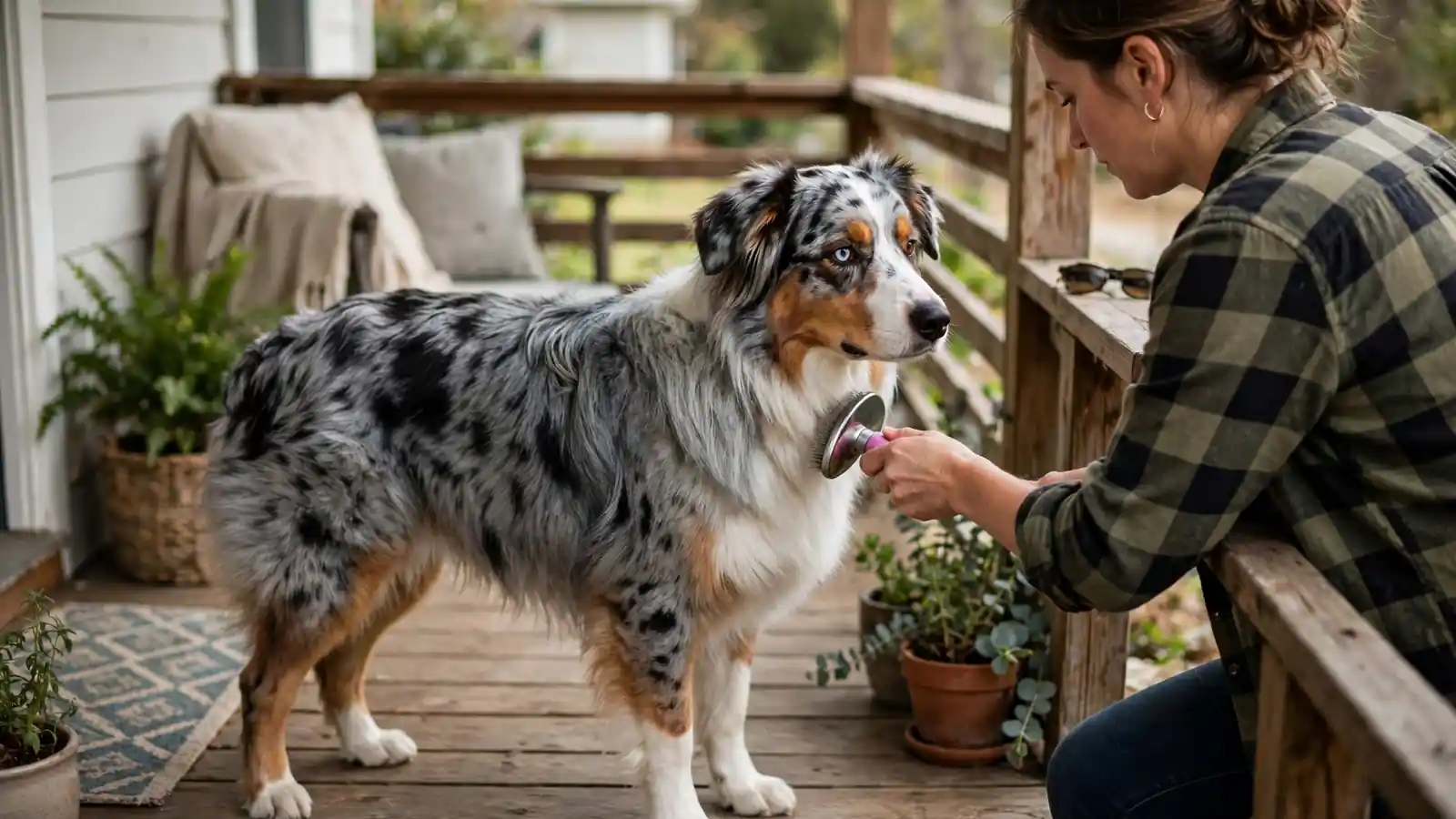
Weekly brushing with a slicker brush and undercoat rake, more in shedding season. Do not skip behind the ears and the britches, where mats form.
60 to 90 minutes of vigorous exercise daily, plus puzzle toys, trick training and nose work to engage a brain bred to manage livestock.
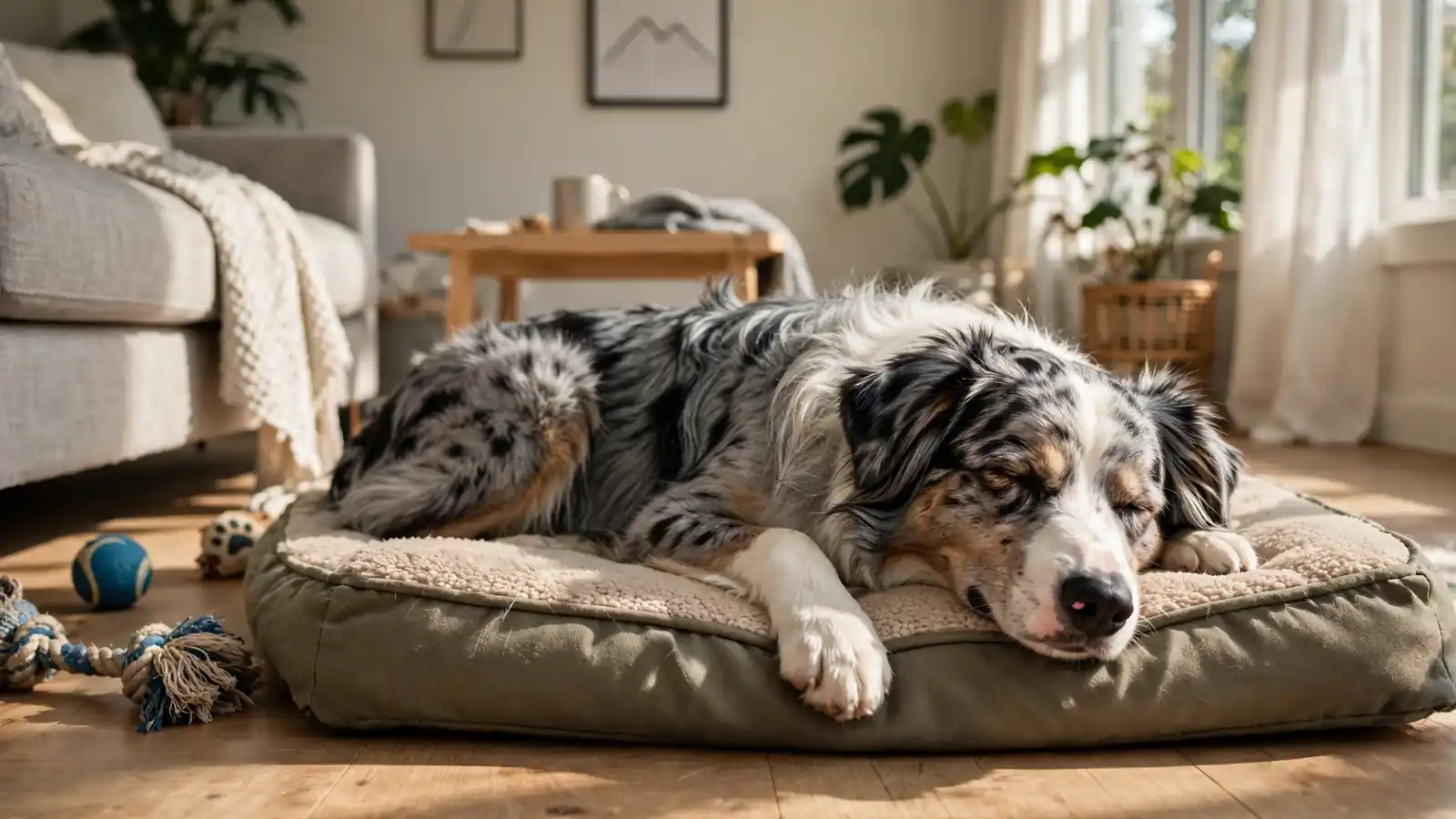
Lives indoors with its people. A fenced yard is great, but it is no substitute for engaged exercise with you.
This is a lifestyle breed. Here is what that means daily.
An Aussie needs hours of engagement every day, not just a walk around the block. They excel at agility, herding trials, obedience, dock diving, and any dog sport. Training should be ongoing for life; they love learning. The Australian Shepherd dog needs hours of engagement every day, not just a walk around the block.
They do poorly as backyard ornaments or apartment dogs without massive exercise commitments. If your life is sedentary, this breed will be miserable and make you miserable too.
A typical day runs on hours of engagement. An Aussie needs hours of engagement every day, not just a walk around the block, excelling at agility, herding trials, obedience, dock diving, and any dog sport. The breed does poorly as a backyard ornament or apartment dog without massive exercise commitments, and a sedentary life makes the dog miserable.
Nutrition and Diet
High energy output needs quality fuel. Here is the feeding plan.
Feed a high-quality diet formulated for active medium breeds. Aussies burn enormous calories, so portions should match actual activity, which varies hugely between a couch Aussie and an agility competitor. Two meals a day is standard. The Australian Shepherd dog burns enormous calories, so portions should match real activity.
Watch weight anyway. Even athletic breeds can get chunky if food is not adjusted when activity drops, such as in winter or after an injury.
Feeding suits high energy output with quality fuel. A high-quality diet for active medium breeds in two meals keeps the dog steady, with portions matched to actual activity, which varies hugely between a couch Aussie and an agility competitor. Weight should be watched anyway, since even athletic breeds get chunky when activity drops, such as in winter or after an injury.
Grooming
Beautiful coat, manageable upkeep. Here is the routine.
Brush weekly with a slicker brush and undercoat rake; more during shedding season. Bathe as needed, usually every couple of months. Trim nails regularly, check ears, and brush teeth. The Australian Shepherd dog coat needs weekly brushing, with more in shedding season.
The coat is fairly wash-and-wear for a longish coat. Mats can form behind the ears and in the britches, so do not skip those spots.
Grooming is a beautiful coat with manageable upkeep. Weekly brushing with a slicker brush and undercoat rake covers the medium-length double coat and its moderate shedding, with more during shedding season and baths every couple of months. The same session covers nails, ears, and teeth, and mats behind the ears and in the britches should never be skipped.
Exercise and Enrichment
Very high energy is the defining trait. Plan your life around it.
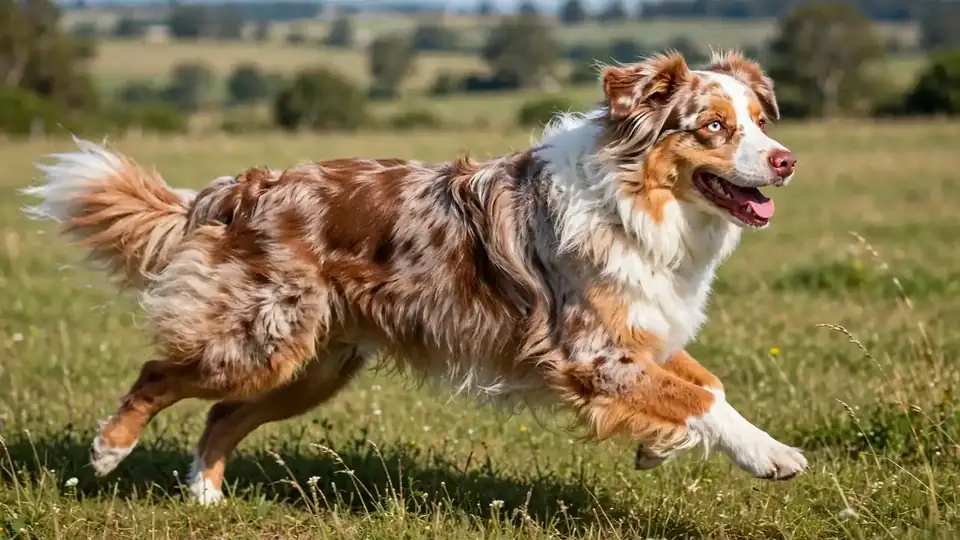
Aim for at least 60 to 90 minutes of vigorous exercise daily, plus training and mental work. Running, fetch, frisbee, agility, herding lessons: the more the better. A tired Aussie is a delight; an under-exercised one is a demolition crew. The Australian Shepherd dog needs at least 60 to 90 minutes of vigorous exercise daily, plus mental work.
Mental stimulation is equally critical. Puzzle toys, trick training, and nose work engage the brain that was bred to manage livestock all day.
Exercise is very high energy as the defining trait. Sixty to ninety minutes of vigorous exercise daily plus training and mental work cover the need, with running, fetch, frisbee, agility, and herding lessons all suited, and the more the better. Mental stimulation is equally critical: puzzle toys, trick training, and nose work engage the brain bred to manage livestock all day.
Health
Aussies live 12 to 15 years. Here are the health issues to know.
Hip and elbow dysplasia occur, so choose breeders who screen. The MDR1 gene mutation, common in herding breeds, causes sensitivity to certain drugs including some antiparasitics; a simple DNA test identifies it, and your vet needs to know the result. Eye conditions including cataracts and collie eye anomaly are seen. Epilepsy occurs in some lines. The Australian Shepherd dog can be affected by hip and elbow dysplasia, so screened breeders matter.
Schedule annual wellness exams, or twice-yearly exams for seniors, and ask your vet about screening for conditions the breed can be prone to, such as hip dysplasia and eye disorders, plus MDR1 testing. Consult your veterinarian promptly if you notice changes in appetite, thirst, weight, or energy. For general background, see the Australian Shepherd article on Wikipedia.
Health care follows the familiar rhythm with joint and drug-sensitivity screening in focus. Annual exams, twice-yearly exams for seniors, and screening for hip dysplasia, eye disorders, and MDR1 testing cover the ground the guide names, and breeders who health-test hips, elbows, eyes, and MDR1 and prove dogs in work or sport are worth seeking out. Day to day, limping, vision changes, and changes in appetite, weight, or energy deserve a prompt vet call, and the vet must know the MDR1 status.
A gene mutation common in herding breeds that causes sensitivity to certain drugs, including some antiparasitics. A simple DNA test identifies it, and your vet needs to know the result.
Both occur in the breed, so choose breeders who screen hips and elbows.
Cataracts and collie eye anomaly are seen in the breed, and epilepsy occurs in some lines.
Indoor and Outdoor Living
Indoor family member, outdoor athlete. That is the balance. The Australian Shepherd dog lives indoors with its people and exercises vigorously outdoors.
Aussies live indoors with their people and exercise outdoors vigorously. They are not kennel dogs; isolation causes anxiety and destructive behavior. A fenced yard is great but not a substitute for engaged exercise.
They handle both heat and cold reasonably with the weather-resistant coat, but exercise should be adjusted for extreme temperatures.
Indoor living as a family member defines the arrangement. The breed lives indoors with its people and exercises vigorously outdoors, not a kennel dog, since isolation causes anxiety and destructive behavior. A fenced yard is great but not a substitute for engaged exercise, and the weather-resistant coat handles heat and cold reasonably, with exercise adjusted for extreme temperatures.
Family Suitability
Fantastic with active families, challenging with toddlers. Here is the picture. The Australian Shepherd dog adores children but may try to herd them, so supervision matters.
Aussies adore children and are gentle with them, but the herding instinct means they may nip heels and “herd” running kids. Training manages this, but families with very small children should be prepared.
They usually do well with other dogs and can live with cats if raised together, though the chase instinct needs management. Early socialization smooths everything.
With families, activity leads and herding instinct sets the limit. The Australian Shepherd dog adores children and is gentle with them, but the herding instinct means it may nip heels and herd running kids, so supervision matters and training manages it. Usually doing well with other dogs and able to live with cats raised together, the breed needs chase-instinct management and early socialization, which smooths everything.
Finding a Breeder or Rescue
Working ability varies hugely between lines. Know what you want. The Australian Shepherd dog varies hugely between show and working lines, so choose a breeder to match your life.
Show lines tend to be calmer; working lines are intense. Good breeders health-test (hips, elbows, eyes, MDR1), prove their dogs in work or sport, and match puppies to homes. Aussie rescues are full of adolescents surrendered for being “too much dog”; an adult rescue can be perfect if you want to skip the land-shark phase.
- Ask what health testing the breeder does on their dogs
- Ask to see the parents and the living conditions
- Puppies should be raised in a home environment
- A good breeder answers questions openly and asks you some too
Quick Quiz: Is an Australian Shepherd Right for You?
Answer four questions. Tap yes or no.
Frequently Asked Questions
Are Australian Shepherds good for beginners?
They are challenging for beginners because of the energy and intelligence. A committed beginner with time for training and exercise can succeed, but easier breeds exist.
How much exercise does an Australian Shepherd need?
At least 60 to 90 minutes of vigorous activity daily, plus mental stimulation. This is the breed’s defining need.
Do Australian Shepherds shed a lot?
Moderately year-round, heavily during seasonal sheds. Weekly brushing manages it.
Are Aussies born in Australia?
No. The breed was developed in the United States, though ancestors came via Australia.
Do Australian Shepherds bark a lot?
They can be vocal, especially when bored or under-exercised. A busy Aussie is a quieter Aussie.
How long do Australian Shepherds live?
Typically 12 to 15 years.
What do Aussie owners say about living with the breed?
Owners consistently describe the Aussie as intelligent, energetic, and loyal. In practice, owners report that the breed’s brilliance is the main reason they recommend it to active, engaged owners.
When should I ask my vet about my Aussie’s health?
Schedule annual wellness exams, or twice-yearly exams for seniors, and ask your vet about screening for conditions the breed can be prone to, such as hip dysplasia and eye disorders, plus MDR1 drug-sensitivity testing. Consult your veterinarian promptly if you notice changes in appetite, thirst, weight, or energy.
The Australian Shepherd is a brilliant, tireless ranch dog that turns training into a way of life. For active owners who give it work, sport and company, it is one of the most rewarding partners in the dog world.
Similar Breeds Worth Exploring
Related Breed Guides
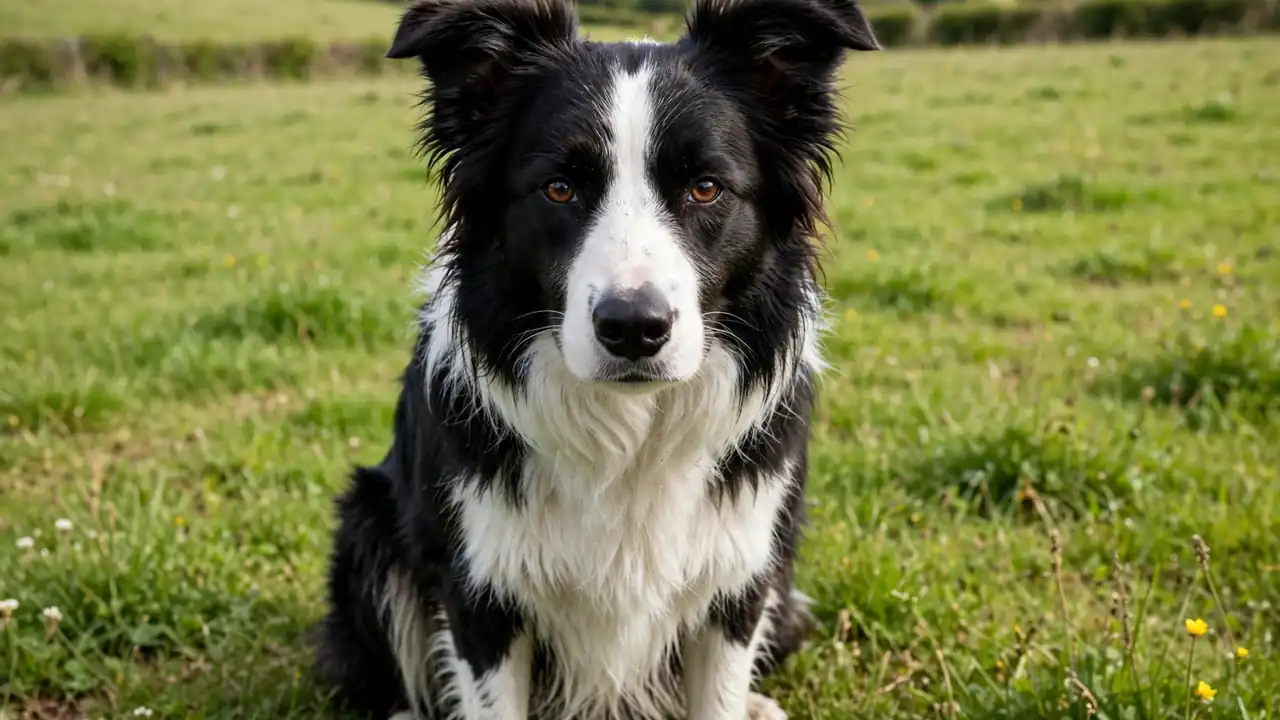
- Border Collie Dog Breed Guide
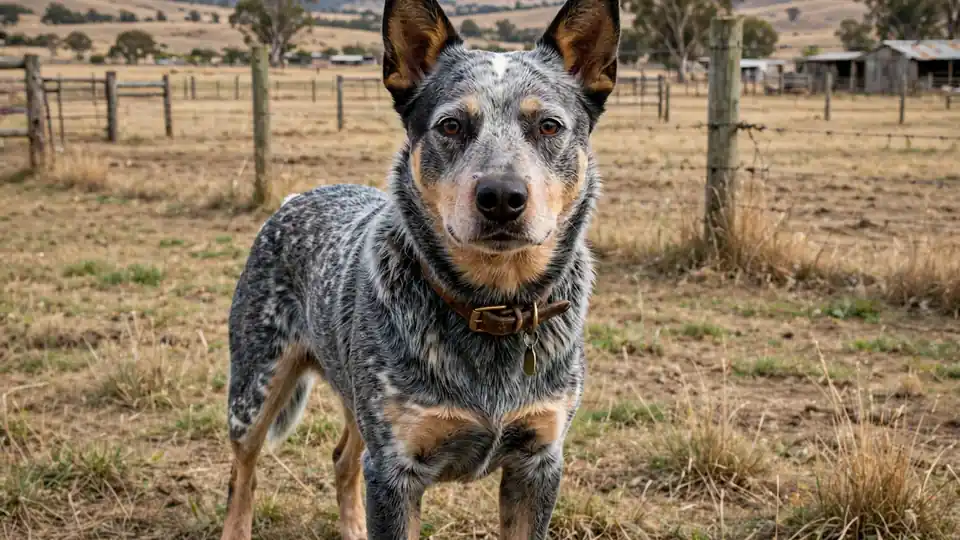
- Australian Cattle Dog Dog Breed Guide
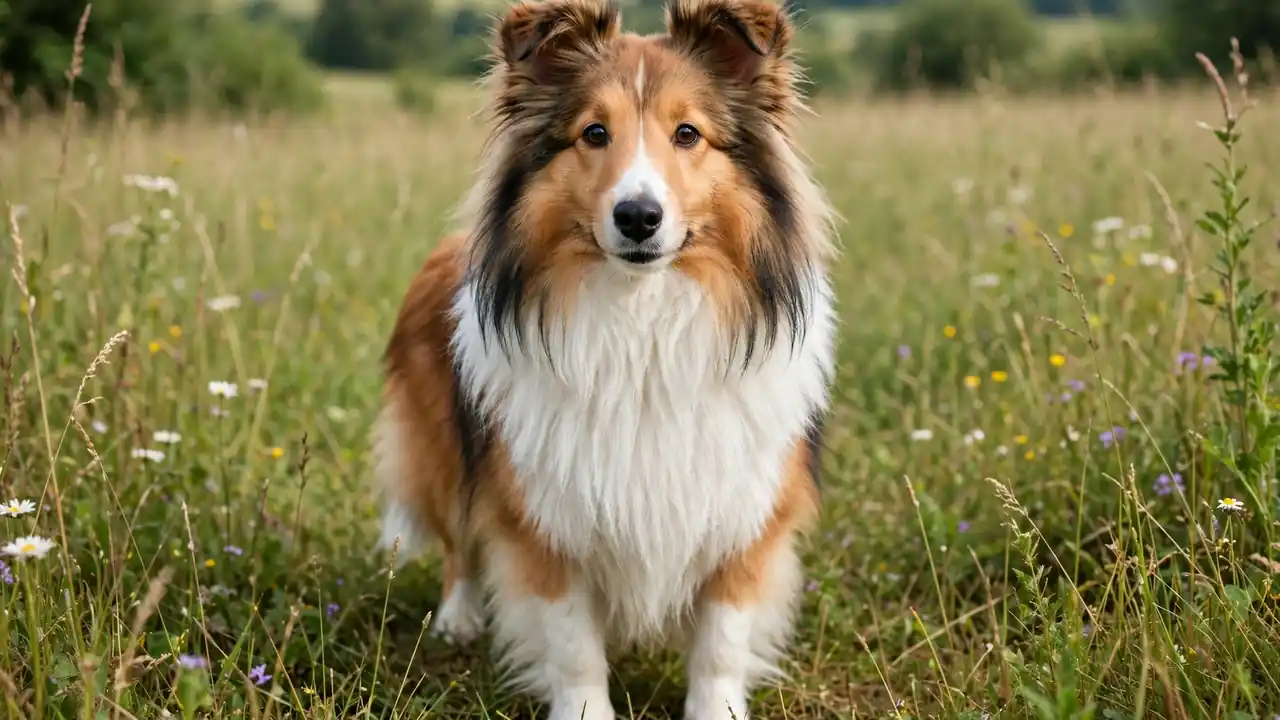
- Shetland Sheepdog Dog Breed Guide
- German Shepherd Dog Breed Guide
Keep Exploring
Browse all our Dog Breed Guides, try the Dog Age Calculator, or explore our Cat Breed Guides.