
Bengal Cat: The Complete Breed Guide
Bengal Cat Breed Overview
The Bengal cat is one of the most striking cat breeds in the world: a fully domestic cat with the spotted, rosetted coat of a miniature leopard. Behind the wild looks is a playful, athletic, and intensely social companion that behaves more like a dog than a typical housecat.
Bengal cat quick facts
Size and weight
Adult Bengals are medium to large, athletic cats, typically 8 to 15 pounds depending on sex and generation. Earlier generations, closer to the original wild cross, tend to run larger. Males are generally bigger than females.
coat and colors
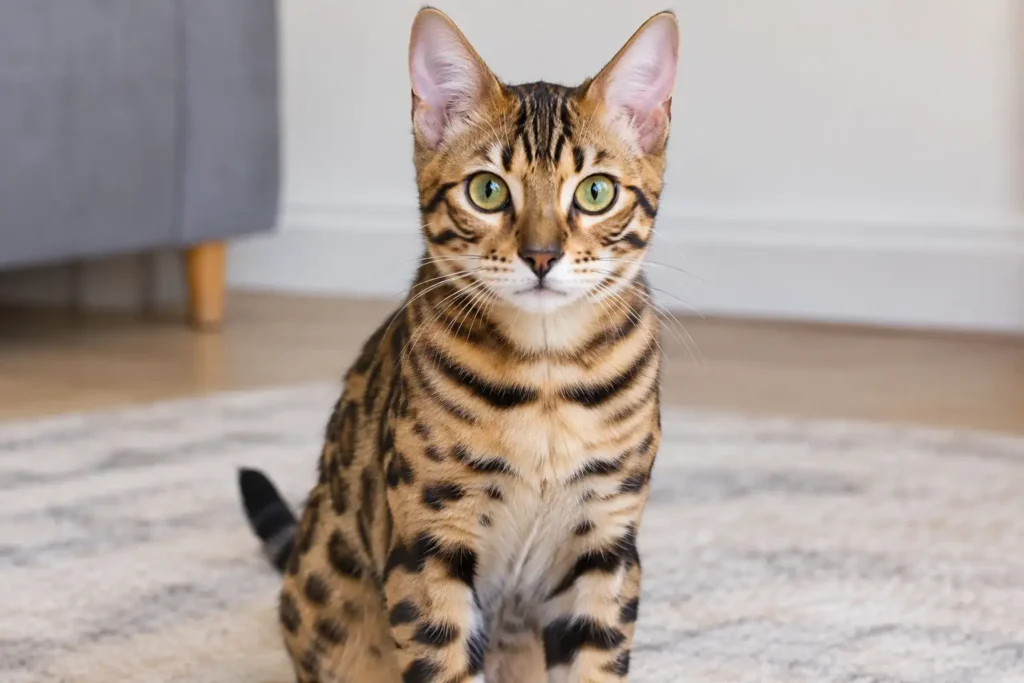
The Bengal’s signature is its wild patterned coat: large, random spots or “rosettes” (two toned spots with darker outlines), or a marbled pattern of swirling horizontal stripes. Breed recognised colors include brown tabby, silver, and snow (seal lynx point, seal mink, and seal sepia). The short coat often has a glittered sheen that makes it shimmer in the light.
personality summary
A confident, curious, and intensely playful cat, often compared to a dog in loyalty and energy. The Bengal cat personality is social with its people, demanding of attention, and happiest in an active household.
Is a Bengal Cat Right for You?
Yes, for experienced owners who can meet their energy and enrichment needs. Bengals make excellent house pets for people with the time, space, and experience to match their intensity. They are a poor fit for first time owners, very quiet homes, or anyone away from home most of the day. Read the sections below carefully before deciding.
Origins and History
The Bengal’s wild look is no accident. It comes from a real wild ancestor, crossed with domestic cats starting in the 1960s.
Jean Mill and the first Bengal cats
The Bengal breed began with American breeder Jean Mill, who in 1963 crossed a domestic shorthair with an Asian leopard cat. She aimed to create a domestic cat with the leopard cat’s exotic spotted coat. Her work stalled when her first husband died, but she resumed the programme in the 1970s. Around the same time, geneticist Willard Centerwall was crossing Asian leopard cats with domestic cats for feline leukaemia research.
Breed development
Mill continued the programme using Centerwall’s cats along with spotted domestic cats, producing affectionate cats five generations removed from their wild ancestors. Later development added Abyssinian, Burmese, and Egyptian Mau bloodlines. The Cat Fanciers’ Association accepted Bengals for registration in 2016, requiring five generations of pure domestic ancestry, and granted championship status in 2018.
Bengal cats and their wild ancestry
Today’s pet Bengals are classified by filial generation: F1 is the first cross between an Asian leopard cat and a domestic cat, with F2, F3, and later generations progressively more domestic in size and temperament. Most pet Bengals are higher generation cats. Reputable breeders recommend higher generations over early ones, which are larger, more demanding, and face legal restrictions in some places.
Personality and Behavior
Living with a Bengal is less like owning a typical cat and more like sharing your home with a small, spotted athlete who has opinions.
Temperament
The cat temperament is confident, curious, and highly active. Bengals are intelligent problem solvers that get bored quickly, and a bored Bengal tends to invent its own entertainment, usually at your expense.
Are Bengal cats affectionate?
Yes. Bengals bond closely with their people and are often described as sweet and loyal. That said, they are not typically lap cats. Their affection shows up as following you from room to room, playing with you, and insisting on being involved in whatever you are doing.
Are Bengal cats vocal?
They can be. Bengals vocalise their needs (food, play, attention), and some individuals are quite chatty while others are relatively quiet. Expect communication, not silence.
Hunting instincts
Bengals have a strong prey drive and are skilled, enthusiastic hunters. Interactive play that mimics hunting is essential for them. Small pets such as hamsters, birds, or fish should always be kept securely separated.
Training and intelligence
Bengals are among the most trainable cat breeds. Many learn tricks, play fetch, and walk on a harness and leash. Their intelligence cuts both ways. A trained Bengal with plenty of stimulation is a joy, while an understimulated one will open cupboards and splash in sinks (many Bengals are fascinated by water) and generally take over the household.
How Bengal cats interact with people and other pets
Bengals are social with their families and often do well with other cats and cat friendly dogs when introduced properly. Their territorial streak and high energy can overwhelm timid or elderly pets, so introductions should always be gradual and supervised at first.
Activity, Enrichment and Exercise Needs
This is the section that determines whether a Bengal thrives or drives you up the wall: their exercise needs are not negotiable.
How much exercise does a Bengal cat need?
A lot, every single day. Bengals need active, interactive play daily, plus the freedom to climb, jump, and run around the home. Owners who cannot commit to daily play sessions should seriously reconsider the breed.
Indoor enrichment
Rotate puzzle feeders, food dispensing toys, and lick mats to make meals mentally engaging. Set up vertical territory such as tall cat trees, wall mounted shelves, and window perches, because Bengals naturally seek high vantage points.
Interactive toys and activities
Wand toys, fetch, and water play burn energy well. A cat exercise wheel is one of the most popular Bengal specific investments, giving them a safe indoor outlet for sprinting.
Climbing, jumping, and scratching needs
Provide sturdy, tall scratching posts and cat trees built to handle a powerful, athletic cat. Bengals will climb whatever is available, so give them acceptable options before they choose your curtains.
How to prevent boredom and frustration
Boredom is the root of most Bengal behavior problems: destructiveness, excessive vocalization, and relentless pestering. Prevent it with daily interactive play, rotating toys, hunting style games, and plenty of vertical space. A bored Bengal does not calm down. It escalates.
Indoor vs Outdoor Life
Bengals would love the great outdoors, but letting one roam free is one of the riskiest things you can do.
Indoor
Yes, and most experts recommend it. Bengals can live happily indoors provided the home offers serious enrichment: climbing structures, daily interactive play, and mental challenges. An enriched indoor life beats a dangerous outdoor one.
Outdoor
Bengals are fast, athletic, territorial, and visually striking, a combination that makes free roaming dangerous. They roam far, get into fights, and face a real risk of theft because of their exotic appearance and value. Traffic is an obvious danger for such an active, curious cat.
Creating a stimulating indoor environment
Think in three dimensions: floor space for sprinting, vertical space for climbing, and rotating novelties like new toys, puzzle feeders, and rearranged perches to keep the environment interesting. A window perch overlooking birds or a garden provides hours of low effort stimulation.
Safe outdoor options
The safest outdoor access is a secure, escape proof garden or a large outdoor cat enclosure (a “catio”) with climbing heights. Harness and leash walks are another good option, and many Bengals take to the harness well, but a Bengal should never roam off leash.
Nutrition and Feeding
An athletic cat burns serious energy. Here is how to fuel a Bengal properly.
What to feed
Feed a complete, AAFCO compliant commercial cat food appropriate for your cat’s life stage. As obligate carnivores, Bengals need animal protein rich nutrition, and some owners choose breed formula foods designed for Bengals.
How much should you feed a Bengal cat?
Follow the feeding guide on your chosen food, adjusted for your cat’s weight, age, and activity level. Your vet can adjust portions. Measure meals rather than leaving food out all day, so you can monitor exactly how much your cat eats.
How often should Bengal cats eat?
Multiple small meals a day suit Bengals better than one or two large meals or constant free feeding. Splitting food into several portions, some delivered through puzzle feeders, mirrors their natural hunting rhythm and adds mental stimulation.
Nutritional needs
Like all cats, Bengals need a diet rich in animal protein with balanced fats, vitamins, and minerals. There is nothing exotic about their nutritional requirements. Quality and life stage appropriateness matter far more than novelty.
Feeding tips
Use food puzzles and lick mats to slow down fast eaters and add mental work to mealtimes. Keep fresh water available at all times, and do not be surprised if your Bengal prefers drinking from a running tap or a pet fountain.
Grooming Guide
Good news: that spectacular coat is one of the lowest maintenance parts of owning a Bengal.
Coat care
Bengal cat fur is short, dense, and single layered. It rarely mats and sheds less than many breeds’ coats. A weekly brush with a soft bristle brush or grooming mitt removes loose hair and keeps the coat glossy.
How often should you groom a Bengal cat?
Once a week is enough for most Bengals. Many actually enjoy grooming sessions, which doubles as bonding time.
skin care
Routine brushing lets you check the skin for redness, flakes, or parasites. Bathing is rarely necessary unless your cat gets into something messy, since the coat largely takes care of itself.
Eye care
Wipe away any discharge from the corners of the eyes with a soft, damp cloth as needed. Persistent tearing, redness, or squinting warrants a vet visit.
Ear care
Check the ears regularly and clean them gently as needed. Healthy ears should be clean and odour free. Dark discharge, odour, or head shaking can signal infection or mites.
Nail care
Trim nails about once a month, and provide sturdy scratching posts for daily maintenance. Regular trims protect your furniture and prevent overgrown, uncomfortable claws.
Health Issues
Bengals are generally healthy cats, but responsible ownership means knowing the conditions the Bengal cat breed is prone to.
Hypertrophic Cardiomyopathy (HCM)
The most important Bengal health concern. HCM thickens the heart muscle and is the most common heart disease in cats. It often shows no early symptoms, which is why reputable breeders have their breeding cats screened by a veterinary cardiologist with an echocardiogram before breeding.
Progressive Retinal Atrophy (PRA)
An inherited eye condition that gradually destroys the retina and leads to blindness. One hereditary form appears at 2 to 3 months of age and a later onset form at 2 to 5 years; night blindness is typically the first sign. DNA testing lets breeders identify carriers.
Pyruvate Kinase Deficiency (PKD)
An inherited enzyme deficiency that causes the premature breakdown of red blood cells, leading to anaemia. A DNA test exists, so ask breeders for the parents’ results.
Patellar Luxation
A dislocating kneecap: the patella slips out of its groove, causing intermittent limping or a skipping gait. Mild cases may need only monitoring, while severe cases can require surgery.
Gastrointestinal Conditions
Bengals can be prone to gastrointestinal upset, including inflammatory bowel disease. Chronic vomiting, diarrhoea, or weight loss should always be investigated by a vet rather than dismissed as a “sensitive stomach.”
Lymphoma
Lymphoma, a cancer of the lymphatic system (most commonly the intestinal form in cats), is seen in the breed. Unexplained weight loss, vomiting, diarrhoea, or lethargy warrant prompt veterinary attention.
Health screening and veterinary care
Before buying, ask the breeder for documented health screening: DNA test results for PRA and PKD, and cardiac screening (echocardiogram) for HCM in the parents. Going forward, keep up with annual vet exams. Early detection is the best tool against every condition on this list.
Care and Veterinary Needs
Beyond the breed specific issues, here is the routine care that keeps any Bengal healthy.
Routine veterinary checkups
Schedule annual wellness exams for adult Bengals, and twice yearly exams for seniors. Regular checkups catch weight changes, dental disease, and early illness before they become serious.
Vaccinations and preventive care
Keep core vaccinations current on your vet’s schedule, and maintain year round parasite prevention for fleas, ticks, and intestinal worms. Indoor cats need prevention too, since parasites hitchhike indoors on shoes and clothing.
Dental care
Dental disease is common in cats and often silent. Ask your vet about dental checkups and home options such as dental treats, or brushing if your cat tolerates it.
Signs of illness to watch for
Watch for changes in appetite, thirst, litter box habits, energy, or grooming. In Bengals specifically, take note of limping or a skipping gait (possible patellar luxation), breathing changes or lethargy (possible HCM), and night vision problems (possible PRA).
When to contact a veterinarian
Contact your vet promptly for breathing difficulty, persistent vomiting or diarrhoea, refusal to eat for more than a day, sudden lameness, or any rapid behavioural change. With high energy cats, a sudden drop in activity is often the clearest warning sign.
Are Bengal Cats Good Family Pets?
The honest answer depends on your family. Bengals are wonderful with the right people and a handful with the wrong ones.
with children
Bengals can be great with older children who understand how to respect a cat’s space and play appropriately. They are less suited to homes with very small children, since the breed’s size, strength, and boisterous play can accidentally overwhelm toddlers.
With other cats
Many Bengals enjoy feline company, especially a similarly playful companion. Introduce new cats gradually, since a Bengal’s intensity can stress a shy or elderly resident cat.
With dogs
Bengals often do well with cat friendly dogs. Their confident, doglike nature makes them less intimidated than many breeds. Supervise early interactions and always give the cat escape routes.
Bengal cats for first time owners
Generally, no. Bengals are consistently recommended for experienced cat owners. Their energy, intelligence, and enrichment demands can catch first time owners off guard. A first time owner who researches thoroughly and fully commits to the lifestyle can succeed, but the learning curve is steep.
Time and attention requirements
Expect to invest real daily time: interactive play sessions, enrichment setup, and general companionship. Bengals are not independent, low maintenance cats. They want to be part of whatever you are doing.
Suitability and Considerations
Before you fall for those rosettes, run through this reality check.
Are Bengal cats hypoallergenic?
No cat is truly hypoallergenic, and Bengals are no exception. Their short, single layered coat sheds relatively little, which some people with mild allergies find easier to live with. If you have significant allergies, spend time with Bengals before committing.
Are Bengal cats legal in the United States?
It depends on where you live and the cat’s generation. Some US states restrict or ban Bengal ownership, typically targeting early generations (F1 to F3) closest to the wild cross, while others allow later generations, sometimes with conditions. Always check your state, county, and city laws before getting a Bengal.
How much does a Bengal cat cost?
Pet quality Bengal kittens typically cost $1,500 to $4,000, with the price varying by generation, coat quality and color, and breeder reputation. Early generation cats command the highest prices. Beyond the purchase price, budget for quality food, enrichment equipment such as cat trees and puzzle toys, and both routine and emergency veterinary care.
How much care does a Bengal cat require?
A great deal compared to the average cat. High exercise needs, daily interactive play, significant enrichment, and an owner with real time and experience. Bengals are consistently rated as high maintenance cats.
Pros and considerations of living with a Bengal cat
Pros:
Considerations:
FAQs
Quick answers to the questions Bengal Lovers ask most.
Are Bengal cats good house pets?
Yes, for experienced owners who can meet their energy and enrichment needs. They are less suited to first time owners or very quiet households.
Are Bengal cats hypoallergenic?
No. No cat is truly hypoallergenic. Bengals shed relatively little, which may help people with mild allergies, but they still produce allergens.
How much is a Bengal cat?
Typically $1,500 to $4,000 for a pet quality kitten, depending on generation, coat, and breeder.
Are Bengal cats legal in the US?
Some states restrict or ban them (usually early generations); others allow later generations. Check your state and local laws first.
How long do Bengal cats live?
Roughly 12 to 16 years according to most veterinary sources, though estimates vary. Good diet, healthy weight, and preventive care support longevity.
Are Bengal cats affectionate?
Yes. They bond closely with their people, though they show it through companionship and play rather than lap sitting.
Do Bengal cats need a lot of attention?
Yes. Daily interactive play, enrichment, and companionship are requirements, not optional extras.
Can Bengal cats live indoors?
Yes. Most experts recommend indoor only living with strong enrichment (climbing structures, daily play, puzzle feeders), or safe outdoor access through a secure enclosure or harness walks.
Similar Breeds
Love the Bengal’s energy but not sure it is the one? Here is how it compares to other active breeds.
Bengal vs other active cat breeds
Among high energy breeds, the Bengal sits at the top for playfulness and intelligence, which also makes it one of the most demanding. Where some active breeds are content with bursts of play, Bengals need sustained daily engagement: more exercise, more enrichment, and more of your time.
Similar breeds to consider
If you want an active, engaging cat with slightly lower demands, breeds often mentioned alongside the Bengal include the Abyssinian, the Somali, and the Burmese, all lively, people oriented cat breeds. Notably, the Abyssinian, Burmese, and Egyptian Mau all contributed to the Bengal’s own development.
Final Thoughts
So, is the Bengal the right cat for you? Here is the bottom line.
Is a Bengal right for your lifestyle?
The Bengal cat suits active, experienced owners who want an engaged, entertaining companion and can provide daily play, climbing space, and mental stimulation. If you want a calm lap cat, or you are away from home most of the day, a less demanding breed will make both you and the cat happier.
Key care considerations
Before committing, confirm legality in your area, choose a reputable breeder who health tests (HCM, PRA, PKD), budget for the purchase price plus ongoing care, and honestly assess whether your home and schedule can meet a high energy cat’s needs. Get those right, and a Bengal cat is an unforgettable companion. Take your time choosing a breeder, prepare your home before the kitten arrives, and you will be rewarded with one of the most engaging cats in the domestic world.
Keep exploring: the Abyssinian, reading your cat’s body language, and the AnimalFactsPro homepage.