Pufferfish
Pufferfish: The Balloon With a Beak and a Poison
The pufferfish is a slow, curious-looking fish hiding three superpowers: it can gulp water and become a spiky balloon, crush shellfish with a beak of fused teeth, and carry a poison stronger than cyanide. This guide explains the species, the inflation trick and the truth about the toxin — including the licensed chefs who serve this fish as fugu.
By Emily Carter · Reviewed by our vet team · Updated 10 November 2026 · 10 min read
Around 200 speciesInflates to 2 to 3 times its sizeCarries tetrodotoxin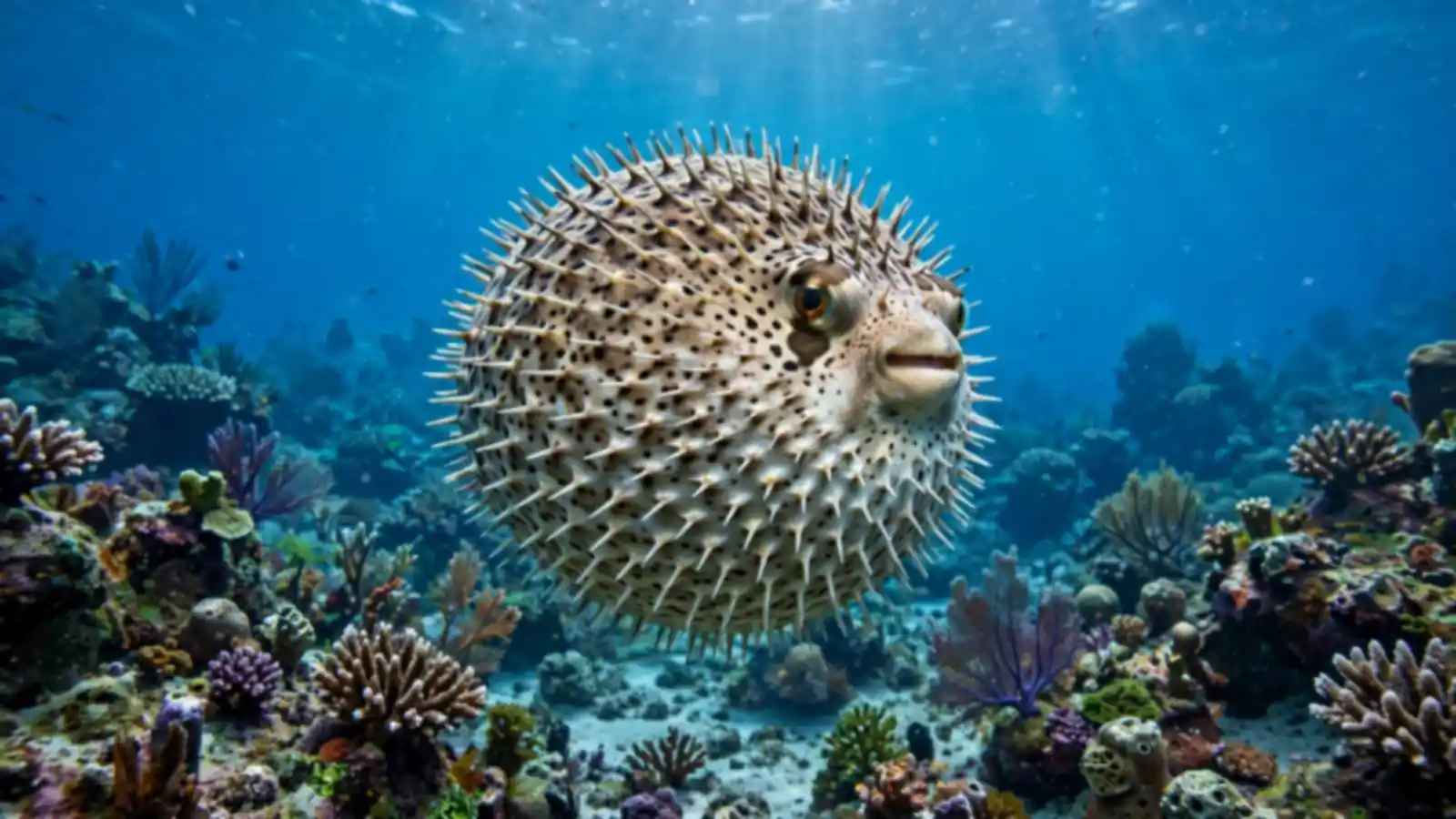
At a Glance
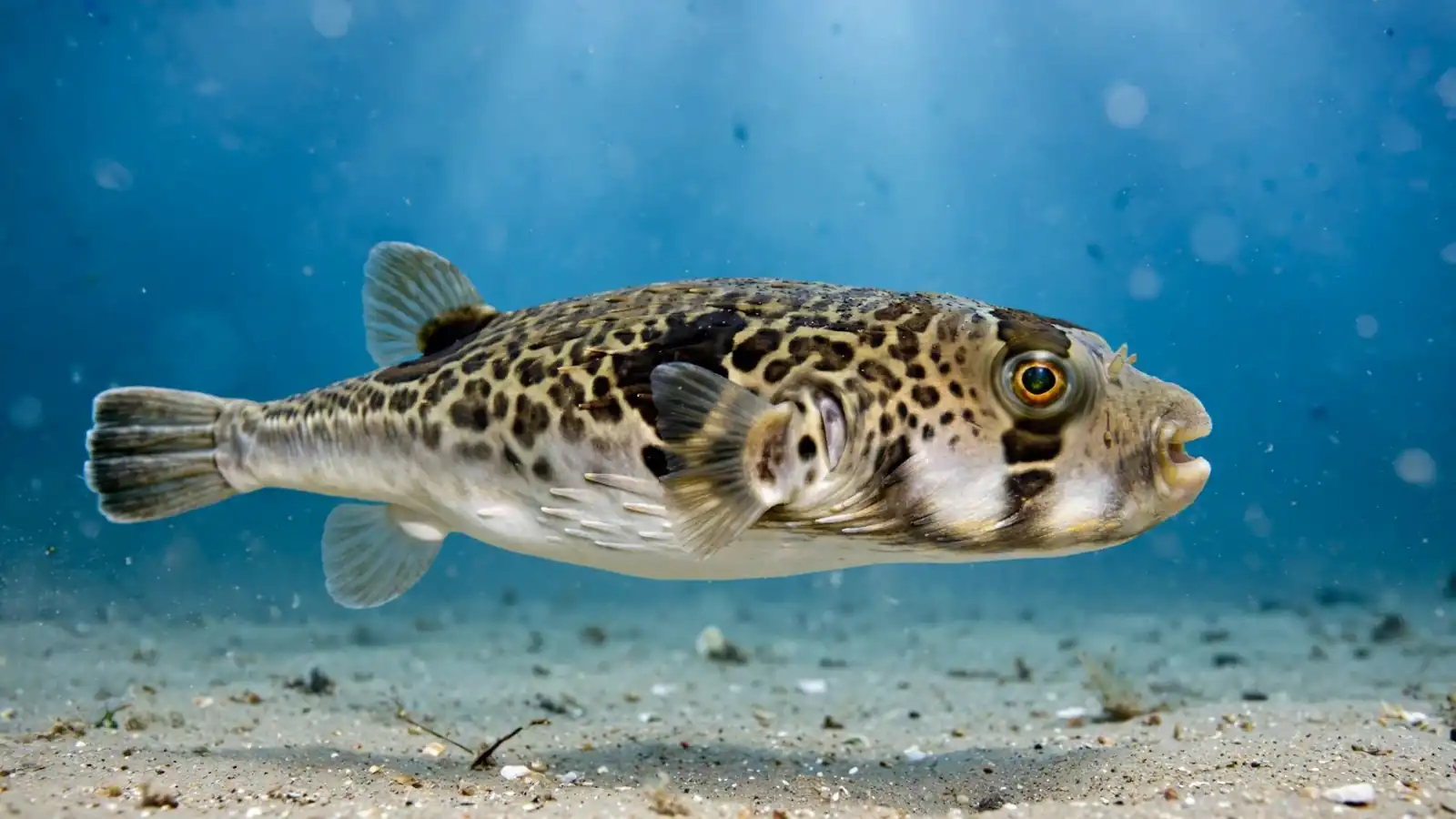
A pufferfish is any member of the family Tetraodontidae — around 200 species of mostly warm-water fish whose teeth have fused into a beak. The family name itself gives the game away: Tetraodontidae means “four teeth”, for the four tooth plates that form the crushing beak. Puffers are weak swimmers that flutter their small fins like hummingbirds, steering with a precision faster fish cannot match — including swimming backwards. What they cannot do is flee, and so evolution armed them instead: an inflatable body, a thicket of spines, and for most species, one of the most potent poisons in the animal kingdom.
Pufferfish Size and Species
Their size spans almost the whole range of fish sizes. At the tiny end, the dwarf pea puffer of Indian rivers measures barely 2.5 centimetres and weighs a few grams. At the other, the starry puffer of tropical oceans can approach 1.2 metres, and the freshwater Mbu puffer of the Congo River reaches about 67 centimetres and over five kilograms. Most familiar reef species, like the white-spotted puffer, sit in the middle at 30 to 50 centimetres.
The look changes surprisingly little across that range: a rounded, almost neckless body, large watchful eyes that can move independently, skin rather than obvious scales, and the ever-present beak. Colour is where species show off — spots, saddles, marbling and, in the guineafowl puffer, a wardrobe change from black-with-white-spots to solid gold.
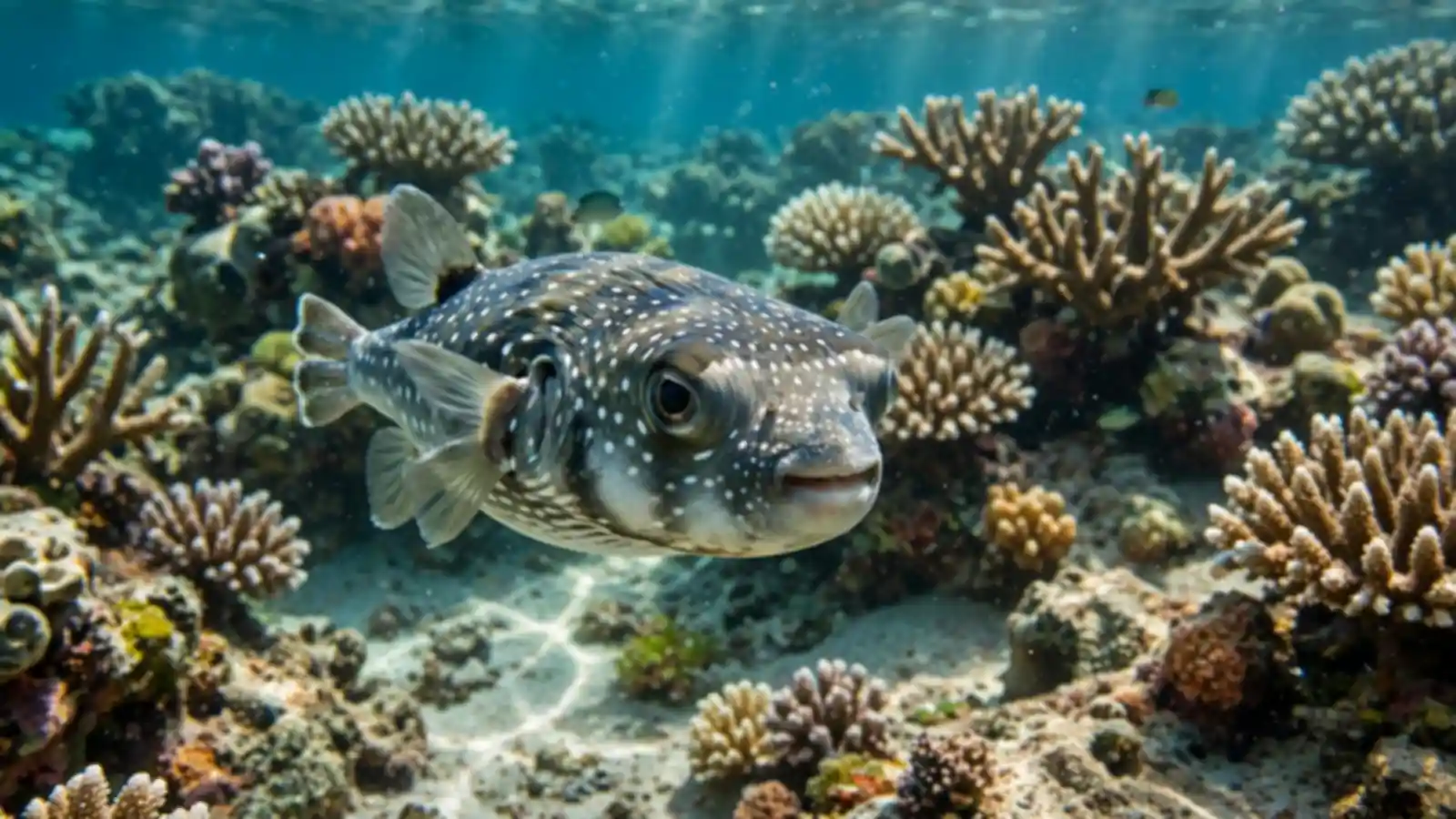
One confusion to clear up: porcupinefish, with their much longer spines, are not true puffers but close cousins in their own family — their beaks have two fused plates instead of four. The tiger puffer shows the classic four-plate build at its most valuable: you can explore the full species record for the tiger puffer, from its 80 centimetre maximum size to the note that its liver and ovaries are extremely toxic.
How Do Pufferfish Inflate? The Balloon Defence
Inflation is a masterpiece of plumbing. Threatened, it pumps water — dozens of gulps in a few seconds — into a specialised, pleated stomach that unfolds like a balloon, while extra folds of loose skin smooth out over the swelling body. Puffers lack ribs and pelvic bones, so nothing rigid resists the expansion: within seconds the fish is two to three times its normal size and nearly spherical, with its small spines, which lie flat when relaxed, standing on end.
The trick is a bluff with sharp edges, and it works because most predators simply cannot get a ball of spines into their mouths. It has costs, though: an inflated puffer can barely swim, drifting until it can expel the water, and inflation is stressful enough that the fish uses it only as a last resort. Puffers lifted from the water may gulp air instead, which they struggle to expel — one more reason never to provoke or handle one.

Even the balloon does not make it untouchable. Tiger sharks swallow puffers whole, apparently unbothered by the toxin, and large groupers and sea snakes sometimes risk the spines. The young are the most vulnerable of all: larval and juvenile puffers are eaten by tuna and other fast hunters long before they can inflate their way out of trouble. The defence is best understood as odds-shifting rather than invincibility — most predators, most of the time, decide the spiky ball is not worth it, and that is enough.
The Poison: Tetrodotoxin Explained
Tetrodotoxin — TTX for short — is a neurotoxin that blocks the sodium channels nerves use to fire. The result is creeping numbness, then paralysis, and in serious cases the breathing muscles stop while the victim stays conscious. It is estimated at around 1,200 times more potent than cyanide, a couple of milligrams can kill an adult, and there is no antidote: treatment means supporting the patient’s breathing until the toxin clears. In most species the poison concentrates in the liver, ovaries, intestines and skin, with the flesh usually far less toxic or clean.
Here is the twist: the fish does not make its own poison. Tetrodotoxin is produced by bacteria and reaches the fish through its food, building up in the body over time. The proof is elegant — fish raised in aquaculture on toxin-free diets grow up completely non-poisonous, which is how safe farmed fugu is produced. In the wild, the toxin is the puffer’s insurance policy: predators that survive an encounter learn, and the poison protects even the drifting larvae, which carry it in their skin.
Where Do They Live? Habitat and Range
They are creatures of warm water: reefs, lagoons, seagrass meadows and estuaries across the tropical and temperate oceans, entirely absent from cold seas. Most hug the bottom in shallow water, nosing around rock and coral for food. But the family has also conquered fresh water — around 35 species live their whole lives in the rivers of South America, Africa and Southeast Asia, from the tiny pea puffer to the giant Mbu.
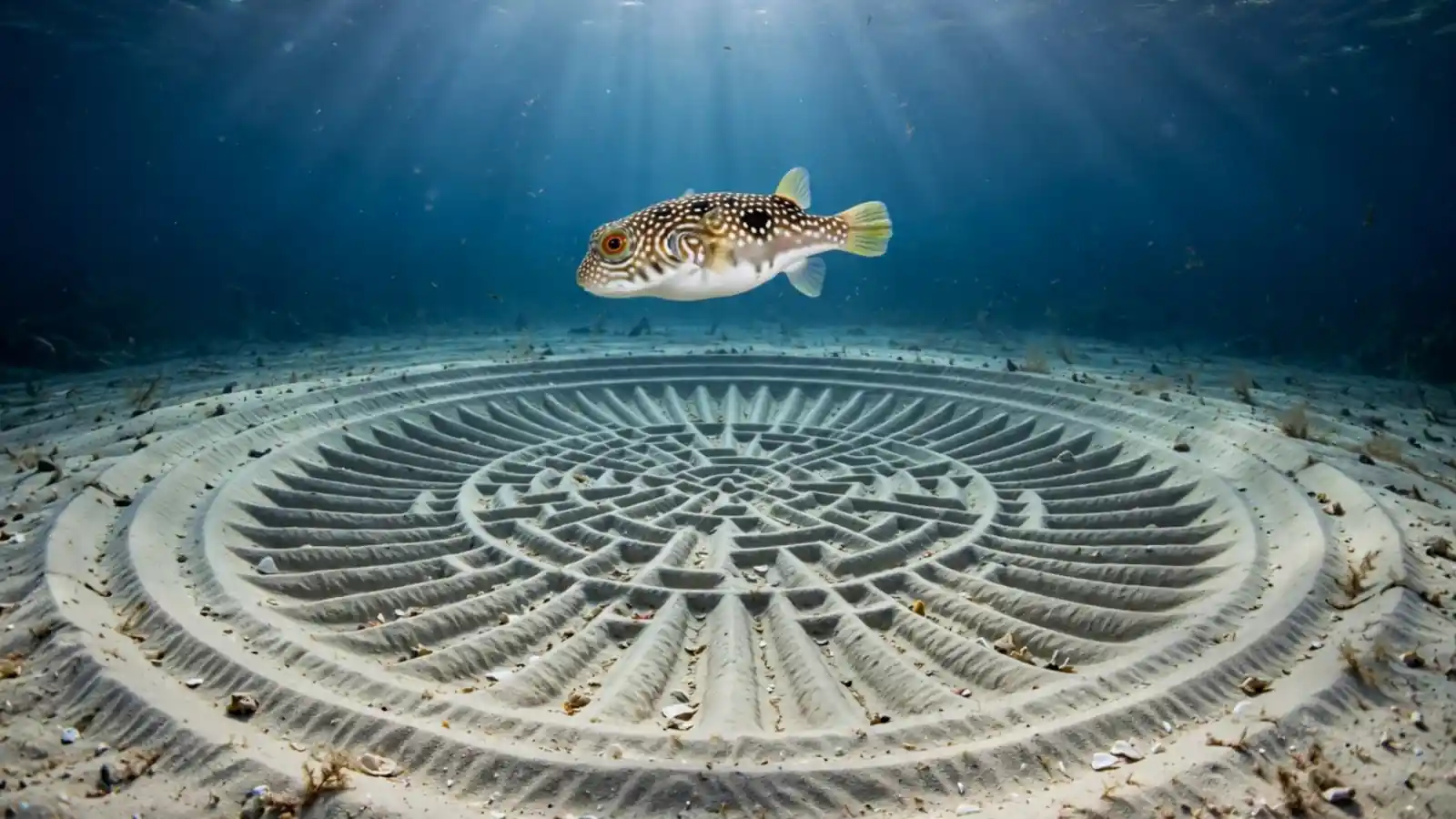
Home, for one species, is a work of art. The male white-spotted puffer of Japan spends about a week sculpting a geometric circle in the sand up to two metres wide — ridges, valleys and shell decorations included — to persuade a female to lay her eggs in its centre. Other puffers take simpler routes: the tiger puffer, for instance, attaches its eggs to rocks in shallow bays in spring. Males of many species guard the eggs until they hatch.
Diet: A Beak Built for Shells
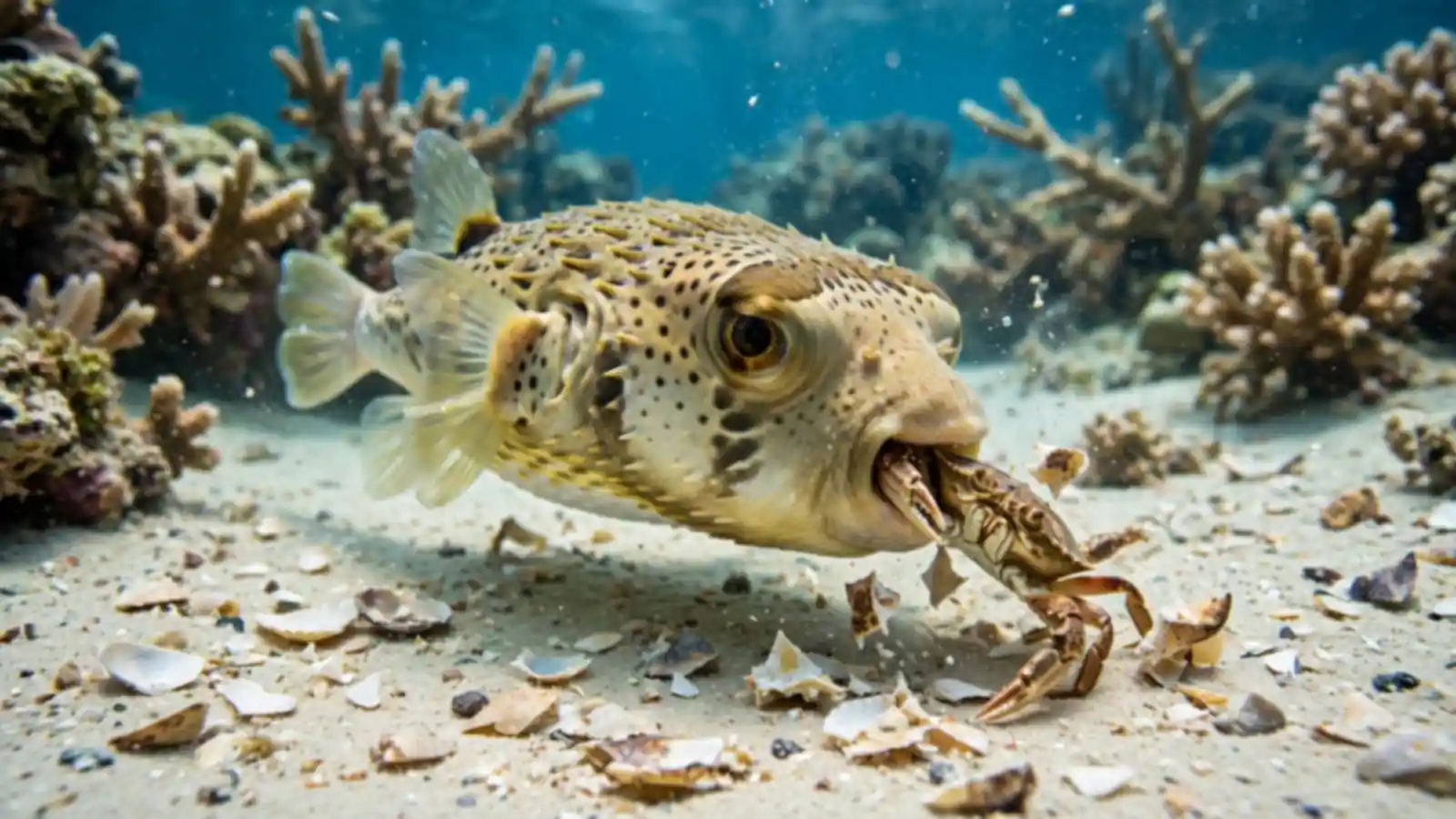
The diet is built around things in armour: crabs, shrimps, snails, clams, sea urchins and other hard-shelled invertebrates, cracked open by the fused-tooth beak. That beak never stops growing, and the hard diet is what wears it down — the tool and the food maintain each other. Many species add algae and plant matter, and some hunt with a party trick, blowing jets of water into sand and sediment to uncover buried prey.
Feeding makes puffers bold, curious foragers, nosing into crevices and investigating anything new — the same confidence divers meet when a puffer swims up to inspect them. It also explains their one weakness as prey: a fish this slow and this interested in the world needs its balloon, its spines and its poison.
Fugu: The Deadly Delicacy
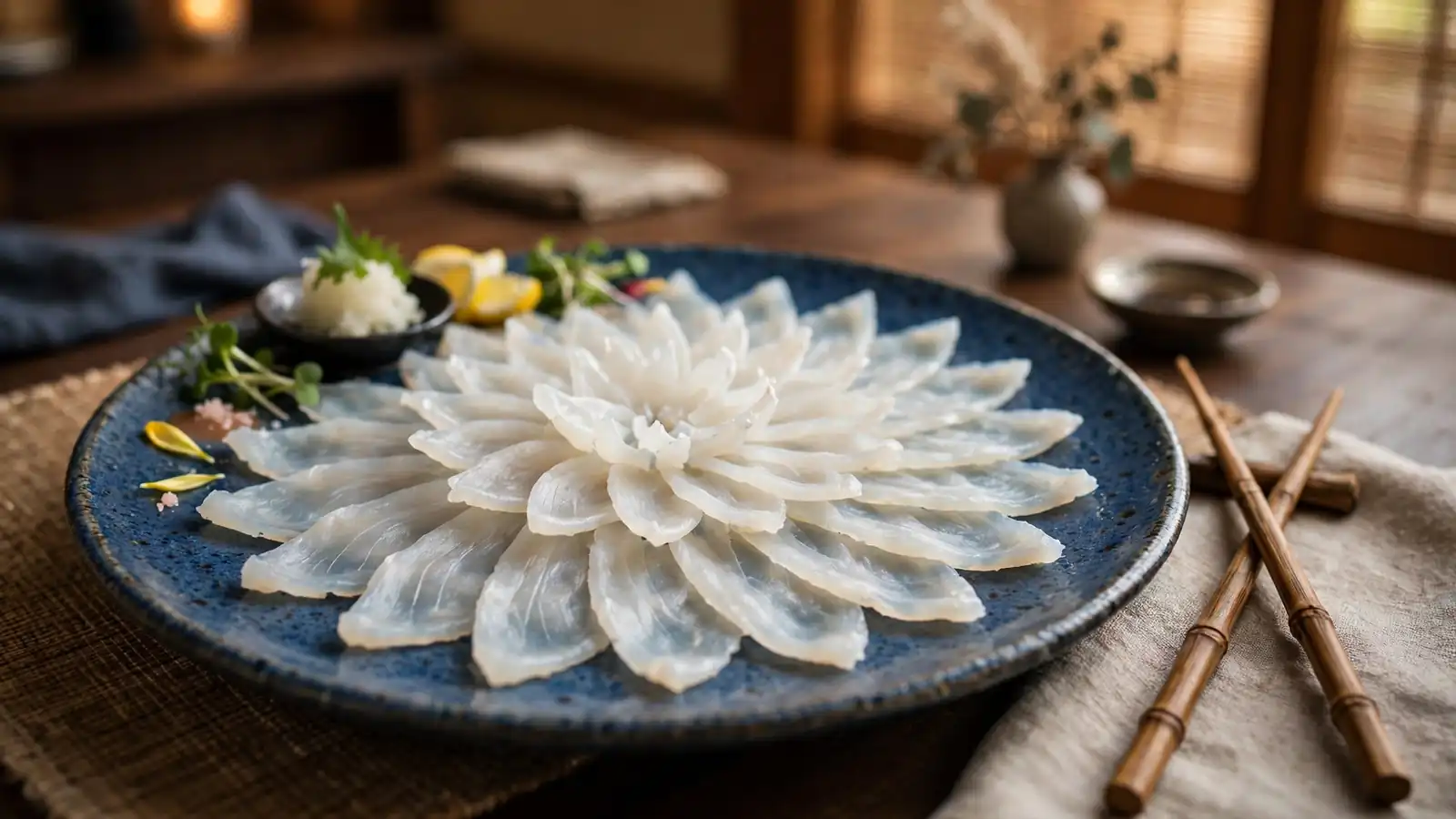
In Japan, it is fugu — a prized delicacy served as gossamer sashimi, hot pot and even fin-infused sake, and the only dish in the world whose preparation is licensed like surgery. Only about 22 species may legally be served. Chefs train for two to three years and must pass written and practical examinations to earn a fugu licence, learning to remove the liver, ovaries and other toxic parts without ever nicking them. The city of Shimonoseki, the historic fugu capital, handles much of the trade.
The modern record shows the system works — and where the real danger lies. In Japan between 2008 and 2018 there were 295 recorded fugu poisonings and three deaths, and every fatal pattern points the same way: amateurs preparing fish they caught themselves. Poisonings from licensed restaurants are vanishingly rare. The rule for everyone else is absolute: never prepare a wild one at home, whatever you have seen online.
Fun Facts
- It is not born poisonous: the toxin arrives through its food, and puffers raised on a clean diet grow up harmless.
- The family name Tetraodontidae literally means “four teeth” — the beak is four tooth plates fused together.
- A male white-spotted puffer spends about a week building his two-metre sand sculpture, and decorates it with shell fragments.
- An inflated puffer can barely swim at all; the defence works because predators abandon the spiky ball, not because the fish escapes.
- The tiger puffer was one of the first vertebrates ever to have its full genome sequenced.
- Viral videos claim dolphins use its toxin to get high; scientists remain sceptical, and the dolphins may simply be playing.
Frequently Asked Questions
What Is a Pufferfish?
It is any of the roughly 200 species in the family Tetraodontidae — mostly warm-water fish with teeth fused into a beak, an inflatable body and, in most species, the potent toxin tetrodotoxin. They are slow, precise swimmers found on reefs, in estuaries and in some tropical rivers.
Are Pufferfish Poisonous?
Most are. The majority of species carry tetrodotoxin, concentrated in the liver, ovaries, intestines and skin, and eating those parts can be fatal. A few parts and a few species are far less toxic, which is why trained, licensed chefs can serve fugu safely.
Why Are Pufferfish Poisonous?
The poison is not made by the fish. Tetrodotoxin is produced by bacteria and accumulates in the fish through the food chain, lodging in its organs as chemical armour against predators. Fish raised on toxin-free diets in aquaculture grow up without any poison at all.
What Is Tetrodotoxin (TTX)?
Tetrodotoxin is a powerful neurotoxin that blocks the sodium channels nerves need to send signals, causing numbness and paralysis that can stop breathing. It is roughly 1,200 times more potent than cyanide, a few milligrams can kill an adult, and there is no antidote — treatment is breathing support until it passes.
How Do Pufferfish Defend Against Predators?
In layers. First, camouflage and a quick dart for cover. If pursued, it inflates by pumping water into its elastic stomach until it is a large, spiny ball most predators cannot swallow. And if it is eaten anyway, its tetrodotoxin may kill or teach the predator — a lesson passed on to every hunter that witnesses it.
What Is a Pufferfish’s Habitat?
Warm, shallow water is the classic habitat: coral reefs, lagoons, seagrass beds and estuaries in tropical and temperate seas, with none in cold waters. Around 35 species have moved fully into tropical rivers in South America, Africa and Southeast Asia.
Can You Eat Pufferfish?
Yes — but only in the right hands. As fugu in Japan, it is prepared exclusively by licensed chefs who train for years to remove the toxic organs from the roughly 22 approved species. Never attempt to prepare a wild one yourself: almost all modern poisonings come from amateur preparation.
Similar Species Worth Exploring
Keep Exploring
Keep touring the reef’s defensive specialists with the glowing anglerfish of the deep, meet the venom-spined lionfish, see how the spiny porcupinefish inflates the same trick with quills instead of poison, or browse the full types of fish guide — then float back to the one and only pufferfish.