Common Cuttlefish
Common Cuttlefish: The Colour-Change Master of the Seabed
The common cuttlefish changes colour in the blink of an eye, vanishes into sand, and then strikes at a crab faster than the eye can follow. It is the eastern Atlantic’s master of disguise — and it does it all with a brain the size of a walnut and a lifespan of just one or two years.
By Emily Carter · Reviewed by our vet team · Updated 10 November 2026 · 9 min read
Mantle to 49 cmLives 1–2 yearsDown to 200 m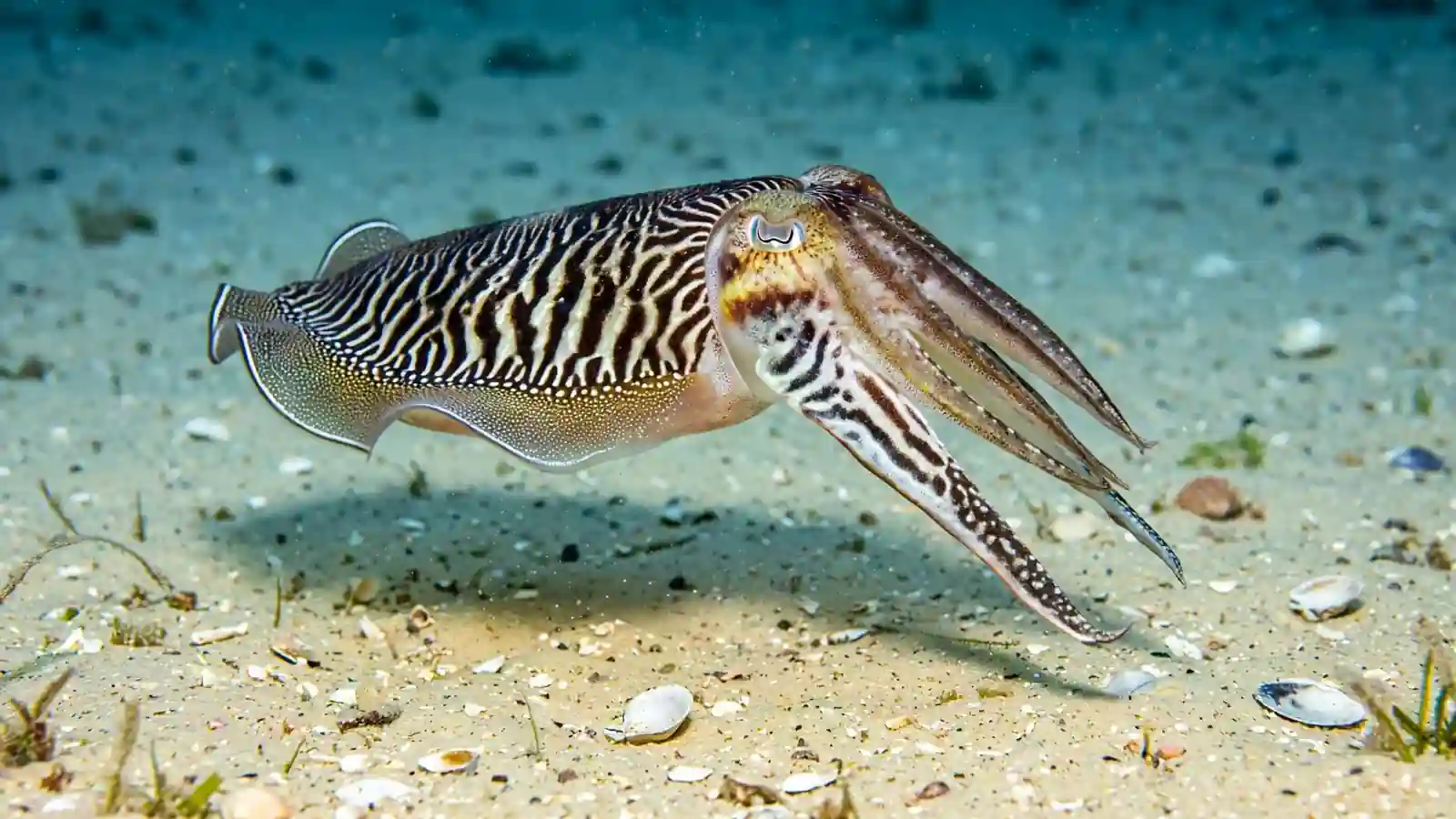
At a Glance
The common cuttlefish is a nocturnal ambush hunter of the eastern Atlantic and the Mediterranean, a cephalopod that spends its days hidden on sandy seabeds and its nights hunting crabs, shrimp and small fish. It is famous for two things: a colour change so fast it looks like a trick of the light, and a chalky internal shell — the cuttlebone — that works as a buoyancy tank.
Common Cuttlefish Size: Up to 49 cm of Camouflage Expert
It grows a mantle up to 49 cm long in temperate waters, with big animals weighing up to 4 kg — about the length of a school ruler and the weight of a small bag of flour. In warmer subtropical waters the same species stays smaller, around 30 cm and 2 kg, because warm water speeds up growth and shortens life. One exceptional specimen measured 60 cm, but that is a single outlier, not the norm, and this guide uses the 49 cm temperate maximum.
Size matters for how the animal hunts: a big cuttlefish can take crabs and fish nearly its own size, while a small one sticks to shrimp and tiny molluscs. The W-shaped pupils are part of the size story too — they give the animal sharp vision in murky water, letting it judge the distance to prey before it strikes. Few reef animals combine this bulk with this much precision.
How Cuttlefish Change Colour in a Blink
It changes colour with chromatophores — tiny sacs of pigment in its skin that open and close like camera shutters, each one wired directly to the brain. A cuttlefish can switch from sandy beige to zebra stripes to rippling dark bands in less than a second, and it can change its skin texture at the same time, raising papillae that turn smooth skin into a lumpy, rock-like surface. No paint, no delay: the animal simply thinks a colour and wears it.
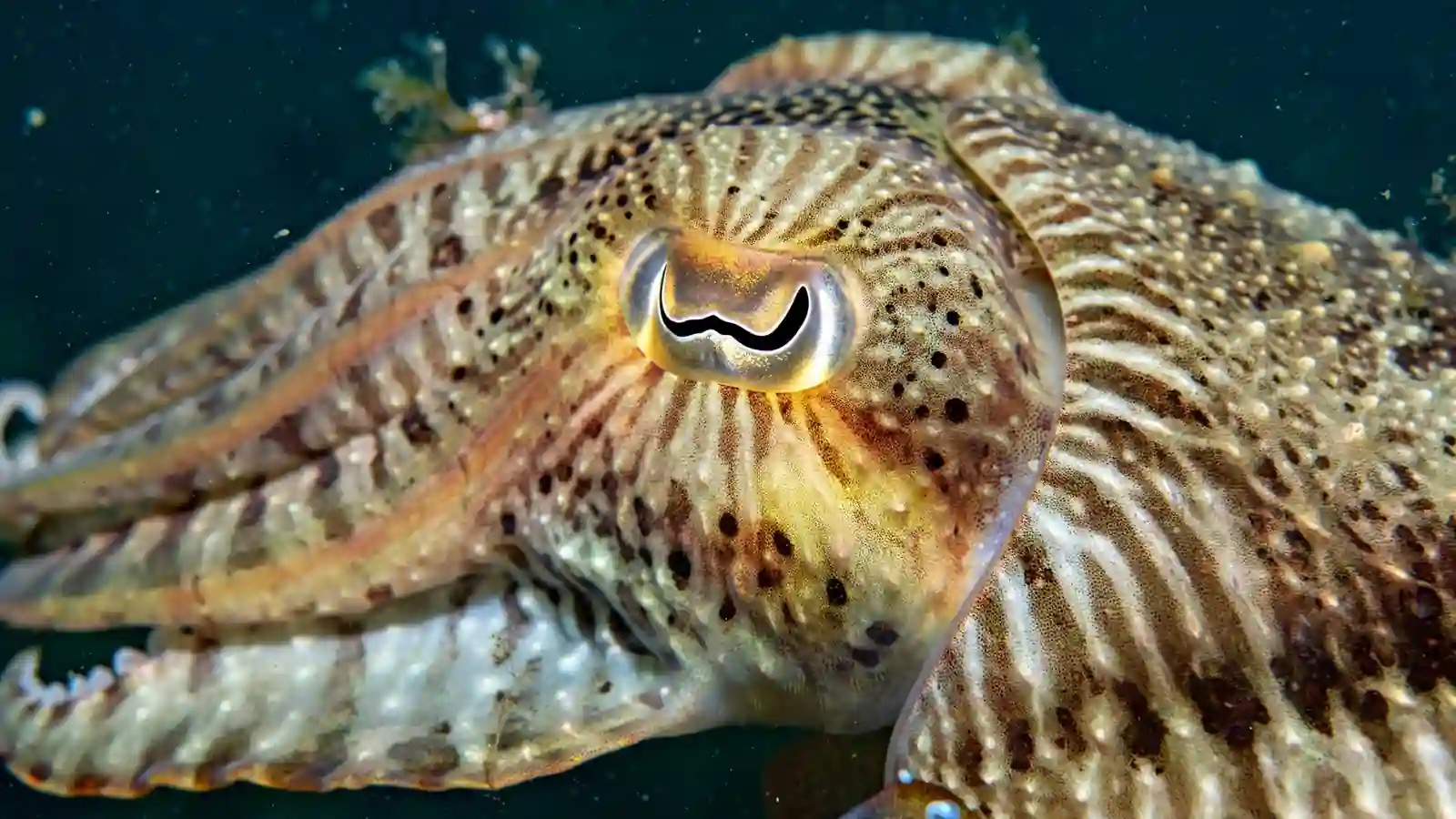
The display is not only camouflage. Males flash rippling bands at females and at rival males, and a hunting cuttlefish may sweep dark waves across its body to hypnotise prey before the strike. The W-shaped pupils watch everything while the skin does the talking. For a closer look at the species, see this cuttlefish profile from the marine species guide, which covers the colour-change system in detail.
What Do Common Cuttlefish Eat? Crabs, Shrimp and Fish
It eats crabs, shrimp, small fish and molluscs, and it hunts mostly at night. It is an ambush hunter: it drifts over the seabed or buries itself in sand, waits for prey to wander close, and then fires its two long feeding tentacles — which shoot out, grab the prey with suckered clubs, and pull it back to the eight arms and the sharp beak. The whole strike takes a fraction of a second.

Crabs are the favourite prey, and the cuttlefish has a trick for them: it can squirt a jet of water to flip a crab over, exposing the soft underside to the beak. Shrimp are snatched mid-water, and small fish are caught the same way. It eats often and grows fast, which is why it reaches full size in a single year.
Where Cuttlefish Live: Sandy Seabeds to 200 m
It lives on sandy and muddy seabeds, in seagrass meadows and over rocky ground, from the surface down to about 200 m. Its range runs along the eastern Atlantic, from the British Isles and the North Sea down to South Africa, and right through the Mediterranean. It is a shallow-water animal by cephalopod standards — it stays where the light reaches and the crabs live.

During the day it hides: buried in sand with only its eyes showing, or pressed flat against the seabed in perfect camouflage. At night it rises to hunt, and in spring it moves into shallow water to breed, laying its eggs on seaweed and other structures. It follows the seasons inshore and offshore, and it is never far from a sandy bottom it can vanish into.
The Cuttlebone: A Built-In Buoyancy Tank
It carries a cuttlebone — a chalky, boat-shaped internal shell full of tiny gas-filled chambers — and it is the organ that lets the animal hover without swimming. By pumping gas and liquid in and out of the chambers through the siphuncle, the cuttlefish adjusts its buoyancy the way a submarine adjusts its ballast tanks, rising and sinking without spending energy on swimming.
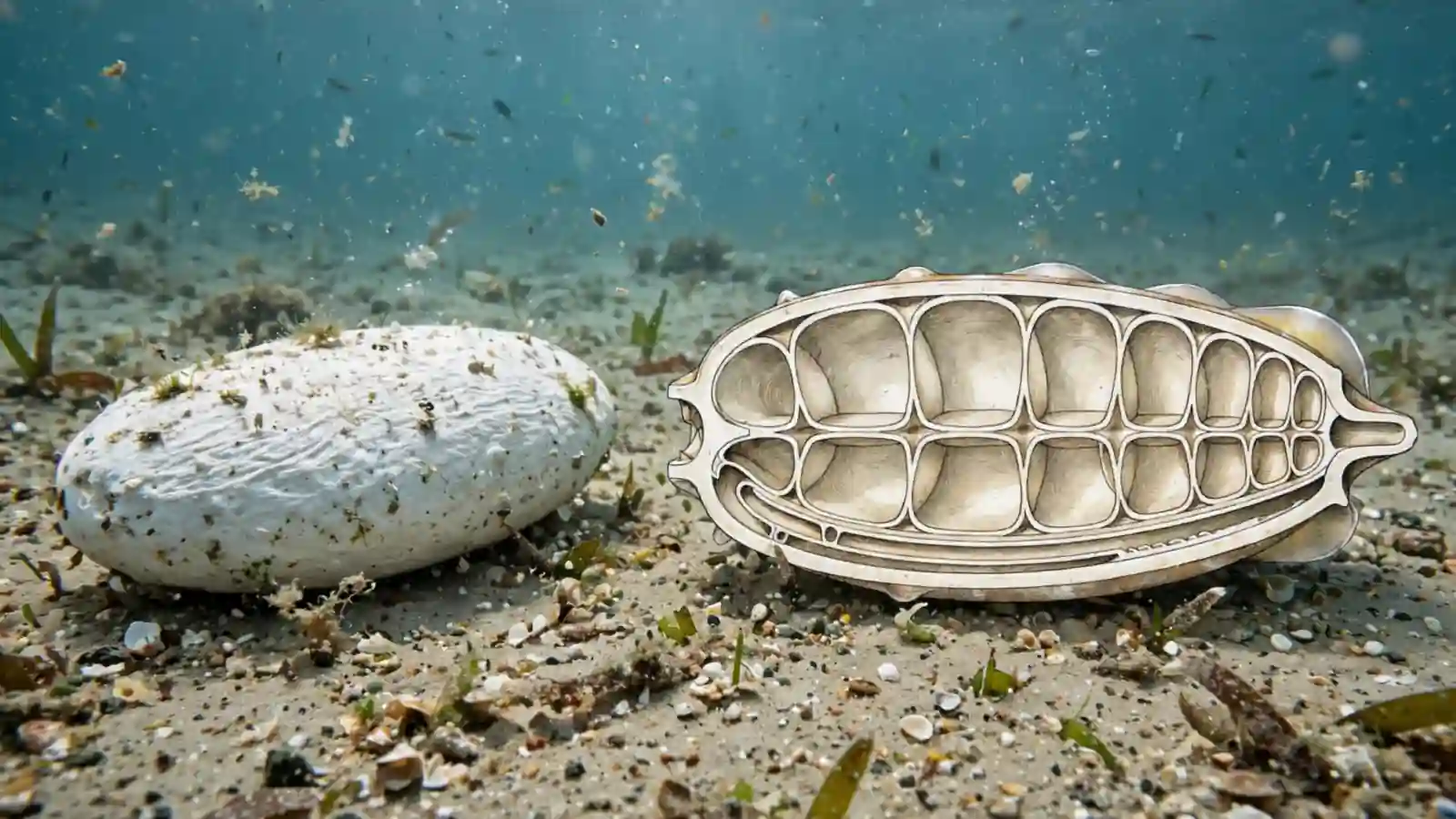
The cuttlebone is also the reason the species has a familiar afterlife: cuttlebones wash up on beaches all over its range, and pet owners buy them as calcium supplements for caged birds. Inside the living animal, though, the cuttlebone is a precision instrument — a cuttlefish with a damaged cuttlebone cannot control its depth, and a cuttlefish that cannot control its depth cannot hunt.
Lifespan: One to Two Years
It lives just one to two years, and it spends almost all of that time growing. It hatches from a grape-like egg as a miniature adult, hunts and grows through its first summer, breeds once in the following spring, and then dies — a life built around a single breeding season. Males put on their brightest displays during that season, flashing rippling bands at females and fighting rival males for the right to mate.
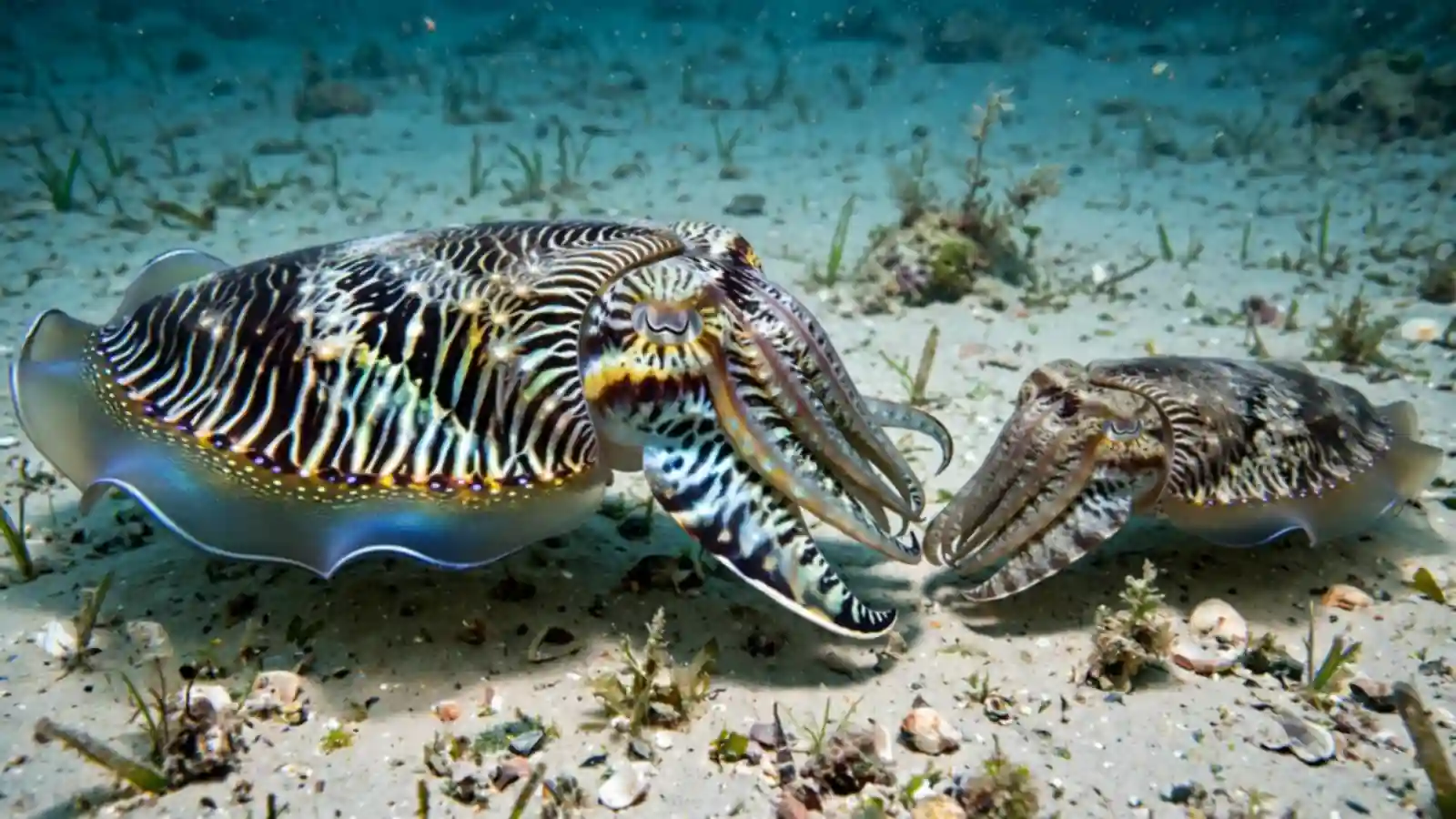
The short life is the price of the fast life: the cuttlefish burns energy at a furious rate, grows to full size in months, and then gives everything to reproduction. There is no second season, no slow old age — just one brilliant year of hunting, hiding and showing off, and then the next generation takes over the seabed.
Cuttlefish vs Squid: How to Tell Them Apart
It and a squid look alike at a glance, but the differences are easy once you know them. The cuttlefish has a cuttlebone — a solid internal shell — while a squid has only a thin, feather-shaped pen. The cuttlefish has eight arms plus two feeding tentacles, and it is a broad, flattened animal that hovers and walks on the seabed; a squid is torpedo-shaped, built for fast swimming in open water.
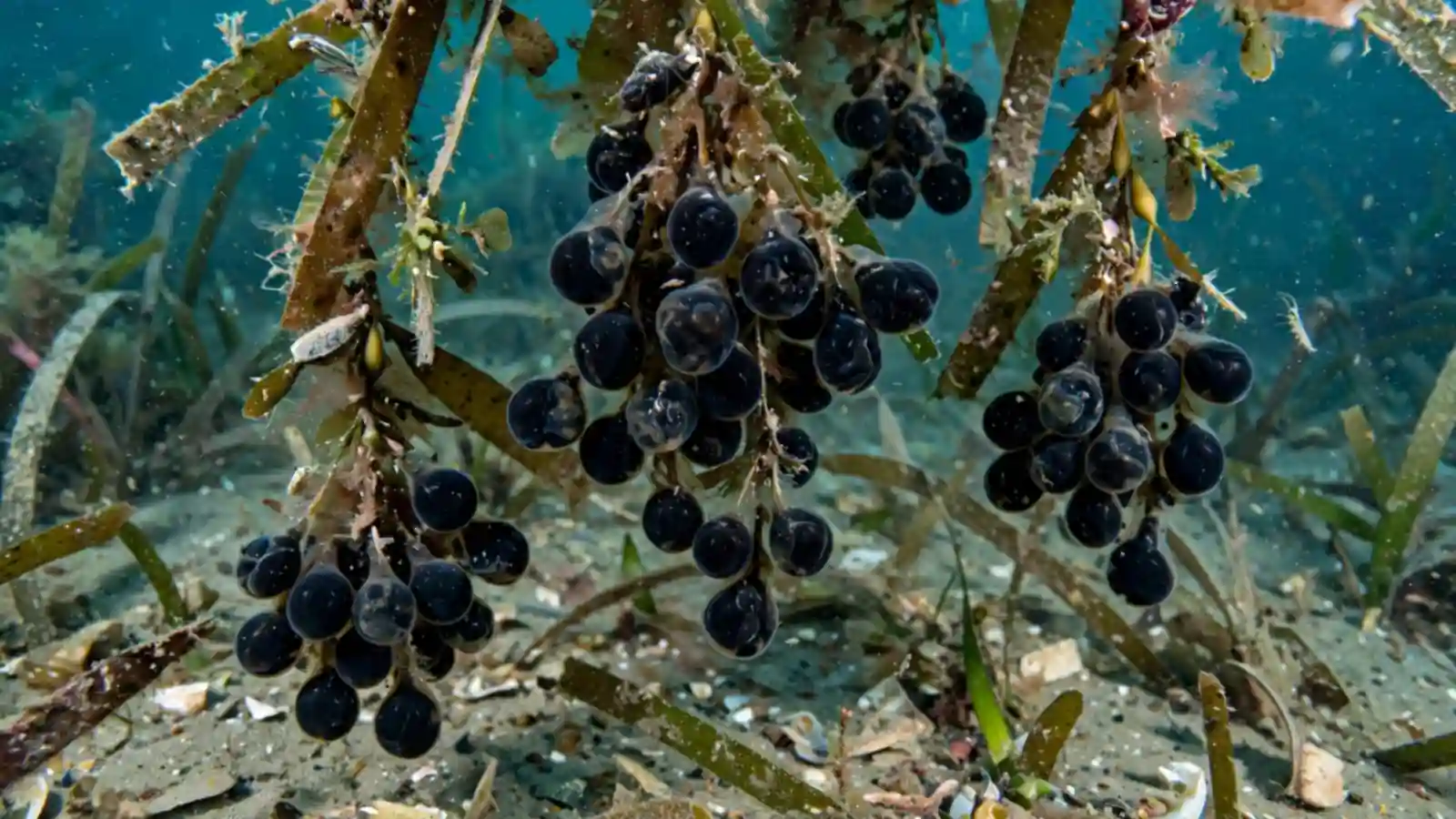
The eggs tell the story too: a cuttlefish lays individual grape-like eggs, each one attached to seaweed like a tiny black bunch of grapes, while squid lay their eggs in capsules or mops. And the pupils give it away — the cuttlefish’s W-shaped pupils are unlike any squid’s round ones. Next time you see one hovering over sand, check the pupil: if it is W-shaped, you are looking at a cuttlefish.
Fun Facts
- It can change colour and skin texture in less than a second.
- Its W-shaped pupils give it sharp vision in murky water.
- It fires two feeding tentacles at prey faster than the eye can follow.
- The cuttlebone works like a submarine’s ballast tank, controlling buoyancy.
- It can squirt a jet of water to flip a crab onto its soft underside.
- Washed-up cuttlebones are sold as calcium supplements for pet birds.
Frequently Asked Questions
How big do common cuttlefish get?
It grows a mantle up to 49 cm long in temperate waters, with big animals weighing up to 4 kg. In warmer subtropical waters the same species stays smaller, around 30 cm and 2 kg. One exceptional specimen measured 60 cm, but that is a single outlier, not typical.
What do common cuttlefish eat?
Crabs, shrimp, small fish and molluscs. It is a nocturnal ambush hunter: it waits buried in sand or camouflaged on the seabed, then fires its two long feeding tentacles to grab prey and pull it to its beak. Crabs are the favourite prey.
Where do common cuttlefish live?
On sandy and muddy seabeds, in seagrass meadows and over rocky ground, from the surface down to about 200 m. Its range runs along the eastern Atlantic, from the British Isles and the North Sea down to South Africa, and throughout the Mediterranean.
How do cuttlefish change colour?
With chromatophores — tiny pigment sacs in the skin that open and close like camera shutters, each wired directly to the brain. It can switch colour and skin texture in under a second, matching sand, rock or weed, or flashing rippling bands to communicate.
How long do common cuttlefish live?
Just one to two years. It hatches as a miniature adult, grows to full size in its first year, breeds once in the following spring, and then dies. Its whole life is built around a single breeding season.
Are common cuttlefish dangerous to humans?
No. It is not dangerous to people — it has no venom that matters to humans, and it avoids swimmers. Its beak can nip if the animal is handled, so it is best admired from a respectful distance, as with any wild cephalopod.
What is a cuttlebone and what does it do?
The cuttlebone is its chalky internal shell, full of tiny gas-filled chambers. By moving gas and liquid in and out of the chambers, the cuttlefish adjusts its buoyancy like a submarine with ballast tanks, hovering without swimming. Washed-up cuttlebones are also sold as calcium for pet birds.
Similar Species Worth Exploring
Keep Exploring
Meet the giant Australian cuttlefish, the largest of the family, then the flamboyant cuttlefish, the tiny walker that flashes purple and yellow, and browse the whole family in our types of cephalopods hub — then come back to the colour-change master of the seabed, the common cuttlefish.