Pacific Cod Facts: Size, Habitat, Diet and the Barbel
Pacific Cod: The Barbelled Hunter of the North Pacific
The Pacific cod is the North Pacific’s great bottom fish — a metre-long hunter with a chin barbel that tastes the seabed for food, and a female that can spawn more than a million eggs.
By Emily Carter · Reviewed by our vet team · Updated 10 November 2026 · 7 min read
Chin barbelTo about 1 mNot Evaluated
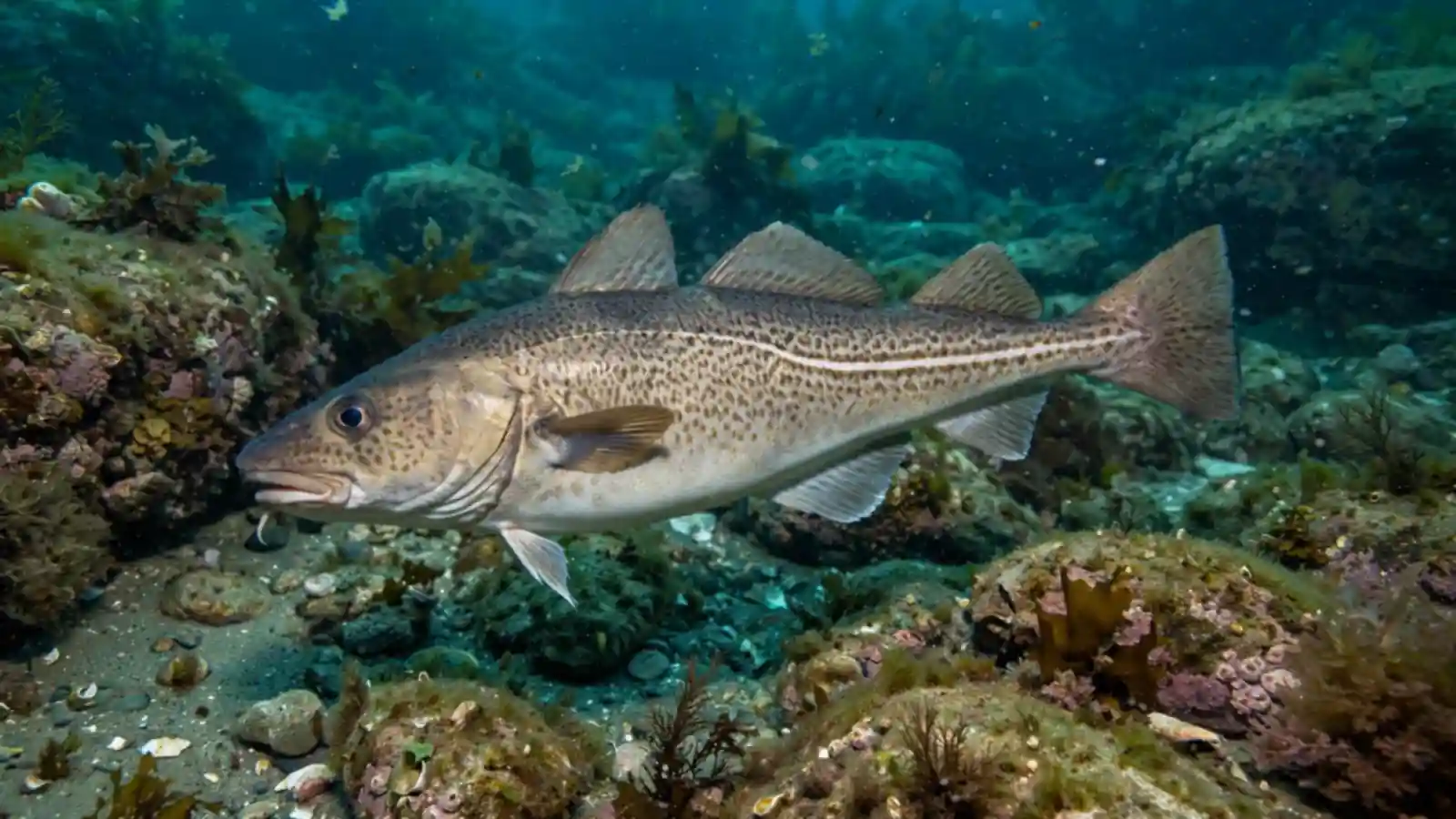
At a Glance
The Pacific cod is the fish that built the North Pacific’s fishing fleets. It grows to about a metre long, lives on the seabed from the Bering Sea to Japan and California, and hunts with a small chin barbel that tastes the bottom for crabs, shrimps and fish. It has never been formally assessed for the global Red List, which makes it an unusual case: one of the most heavily fished animals in the sea, with no global conservation status at all. This guide covers the barbel, the habitat, the million-egg spawning, and what its unassessed status really means.
Size: A Metre-Long Bottom Fish

They usually measure 60 to 80 cm, and grow to about a metre long. The largest recorded fish reached 119 cm and 22.7 kg, a big animal by any measure, but most of the cod that end up on the seabed — and on the line — are in the 60 to 80 cm range. For the full species record, see the full species profile.
The size is a slow business for this fish. It grows steadily on a diet of crabs, shrimps and fish, and the biggest animals are the oldest — fish that have survived a decade or more on the bottom. A metre of cod is a decade of eating, and the fishery takes the biggest first.
A decade of eating is written into every metre of fish. The growth is steady rather than fast — crabs and shrimps converted year by year in cold water — which is why the biggest animals are always the oldest, and why a ground swept of its old fish takes a decade to grow them back.
The Chin Barbel: Tasting Food on the Seabed

It carries a small chin barbel — a fleshy whisker under its jaw — that tastes the seabed for food. The barbel is covered in taste buds, and the cod drags it across the bottom as it swims, sensing the crabs, shrimps and worms buried in the sand and mud before it ever sees them.
The barbel is its key tool, and it is what separates the cod from the fish that hunt by sight. In the murky water of the deep North Pacific, where the light is faint and the bottom is soft, the cod finds its food by taste — and the barbel is the tongue it tastes with.
Taste is the right sense for that seabed. The bottom at 300 metres is dark, soft and murky, and the food hides buried in it — eyes are nearly useless there. A whisker dragged through the mud, covered in taste buds, reads the ground the way a hand reads braille, finding what sight never could.
Where Pacific Cod Live: The North Pacific Rim
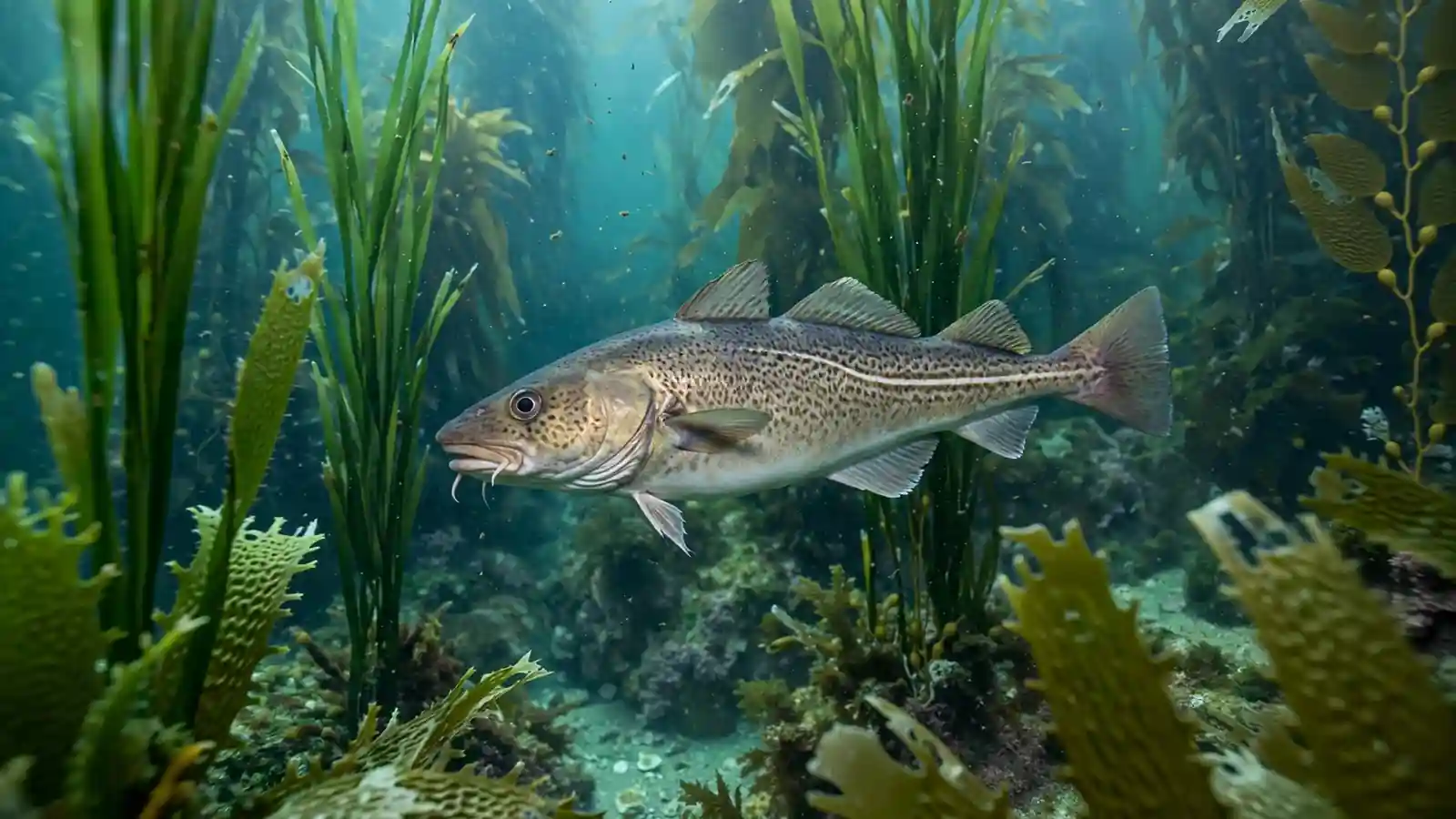
They live around the rim of the North Pacific, from the Bering Sea to Japan and down the coast of California. They are bottom fish, usually found at 100 to 400 metres down, though they have been recorded to about 900 metres, and they follow the cold currents and the prey that lives on the seabed.
They are strongly tied to particular grounds, and individuals return to the same feeding areas year after year. Its world is a small one — a few hectares of seabed — and it knows every hollow and channel in it. The fishery follows those grounds too, which is why the cod’s habitat and the fleet’s catch are the same map.
A few hectares of seabed, known hollow by hollow, is a small world for a metre-long fish — but it is a rich one. Home grounds concentrate everything: the crabs in the sand, the shrimps in the mud, the channels the prey fish run. Knowing one patch completely beats roaming a whole ocean thinly.
What Does It Eat? Crabs, Shrimps and Fish
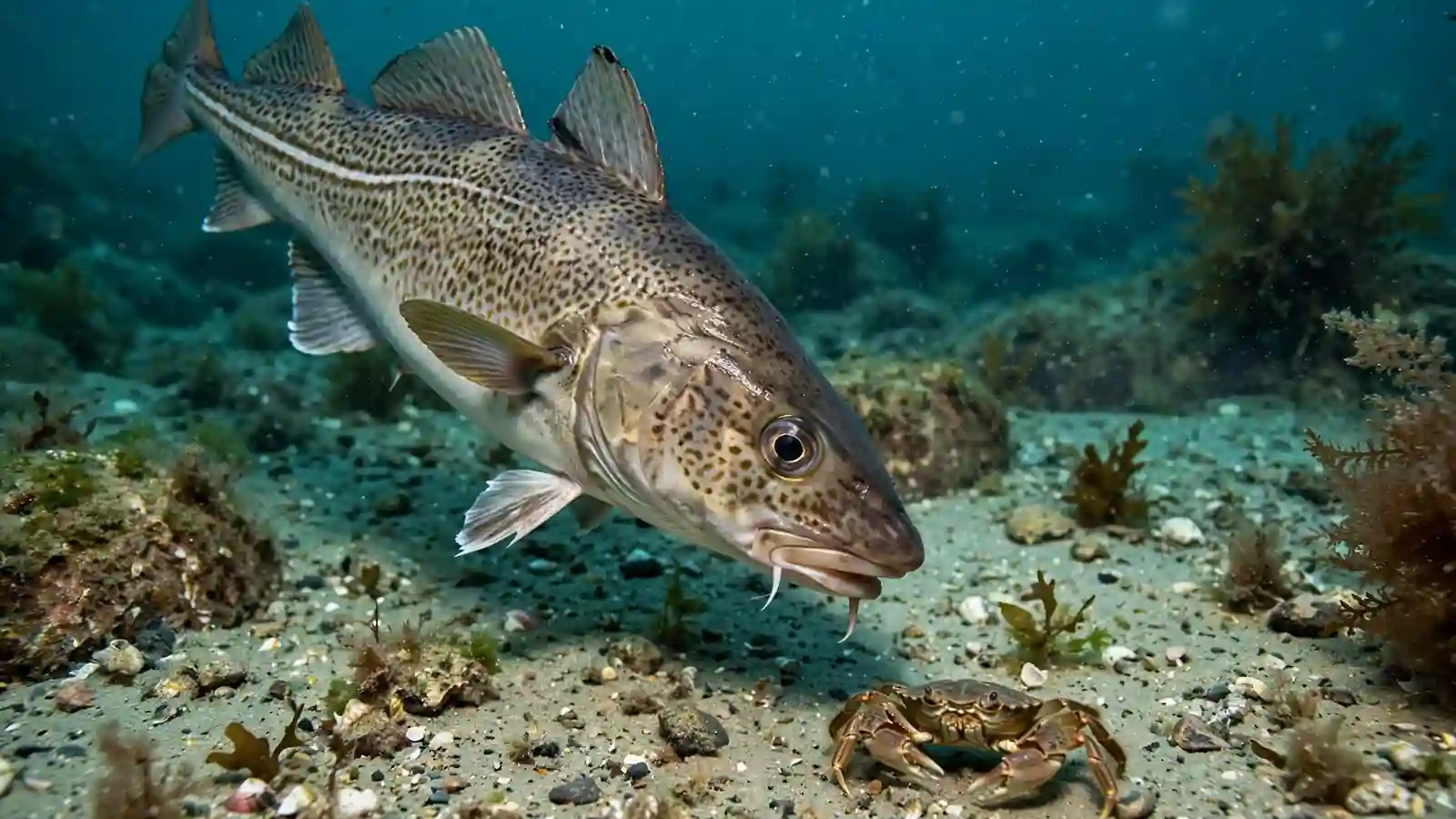
It eats fish, crabs, shrimps, octopus and molluscs, all taken near the bottom. It finds them with its barbel, then takes them with a sudden rush — a cod’s mouth opens wide and sucks the prey in before it can escape.
The diet is a bottom diet, and it is what keeps the fish on the seabed. The crabs and shrimps it hunts live in the sand and mud, the fish it eats are the ones that swim close to the bottom, and the cod is the animal that turns all of that into the flesh that feeds the fleets.
Pacific Cod Spawning: Over a Million Eggs
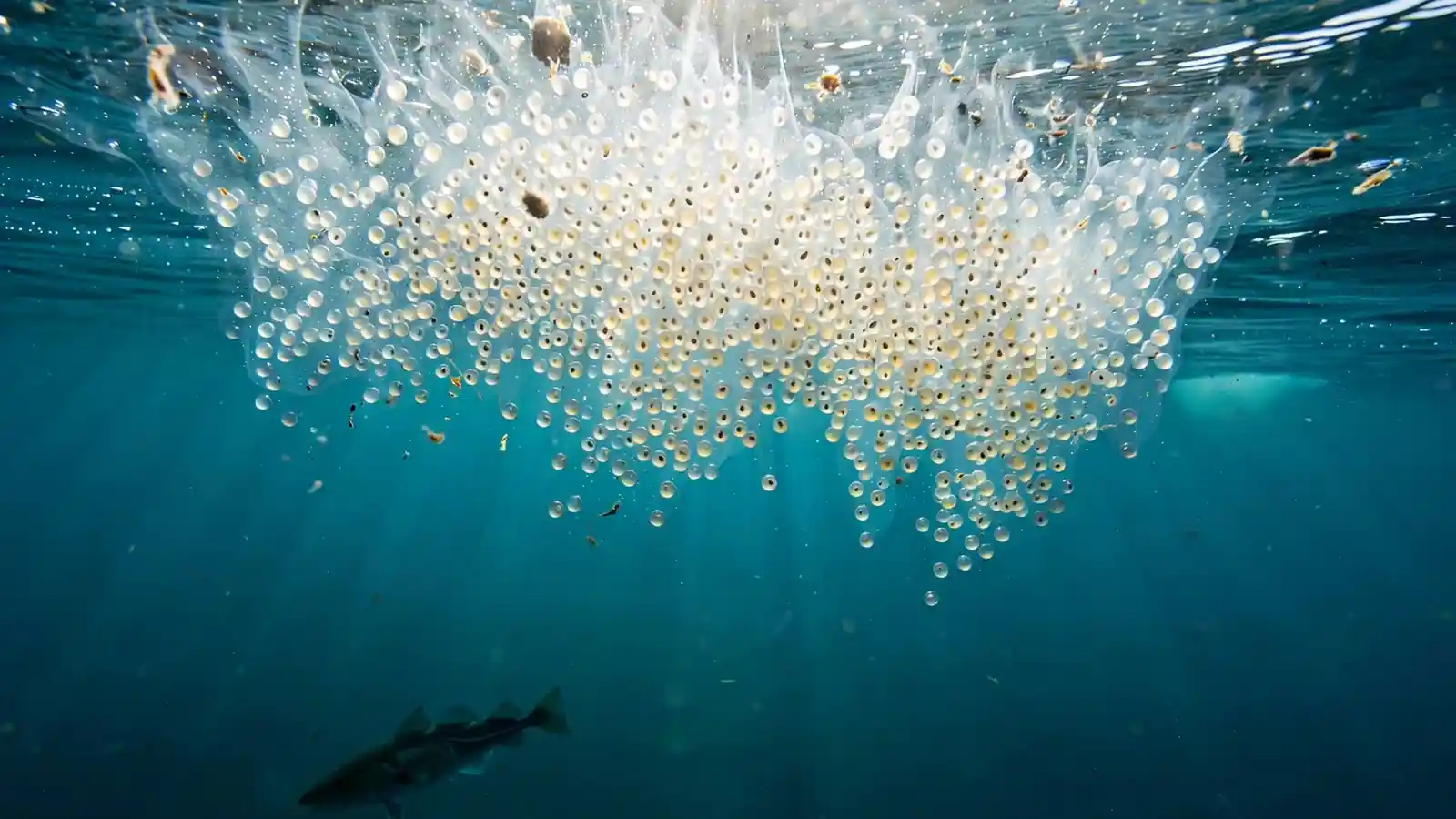
A female spawns more than a million eggs, released into the water to drift near the surface. The eggs float in the open sea, hatching into larvae that drift with the currents until they grow large enough to sink to the bottom and join the adult population.
The million-egg spawning is its whole strategy. It is a fish that bets on numbers: most of the eggs will be eaten, most of the larvae will die, but the few that survive are enough to keep the population going — as long as the fishery leaves enough adults to spawn.
A million eggs sounds like insurance, and in an unfished sea it was. The drift near the surface feeds everything — the eggs and larvae are plankton, and plankton is everyone’s food. The strategy only balances when enough adults survive to repeat it year after year; take the adults, and the million becomes a fraction.
Behaviour: Huge Schools in Deep Water
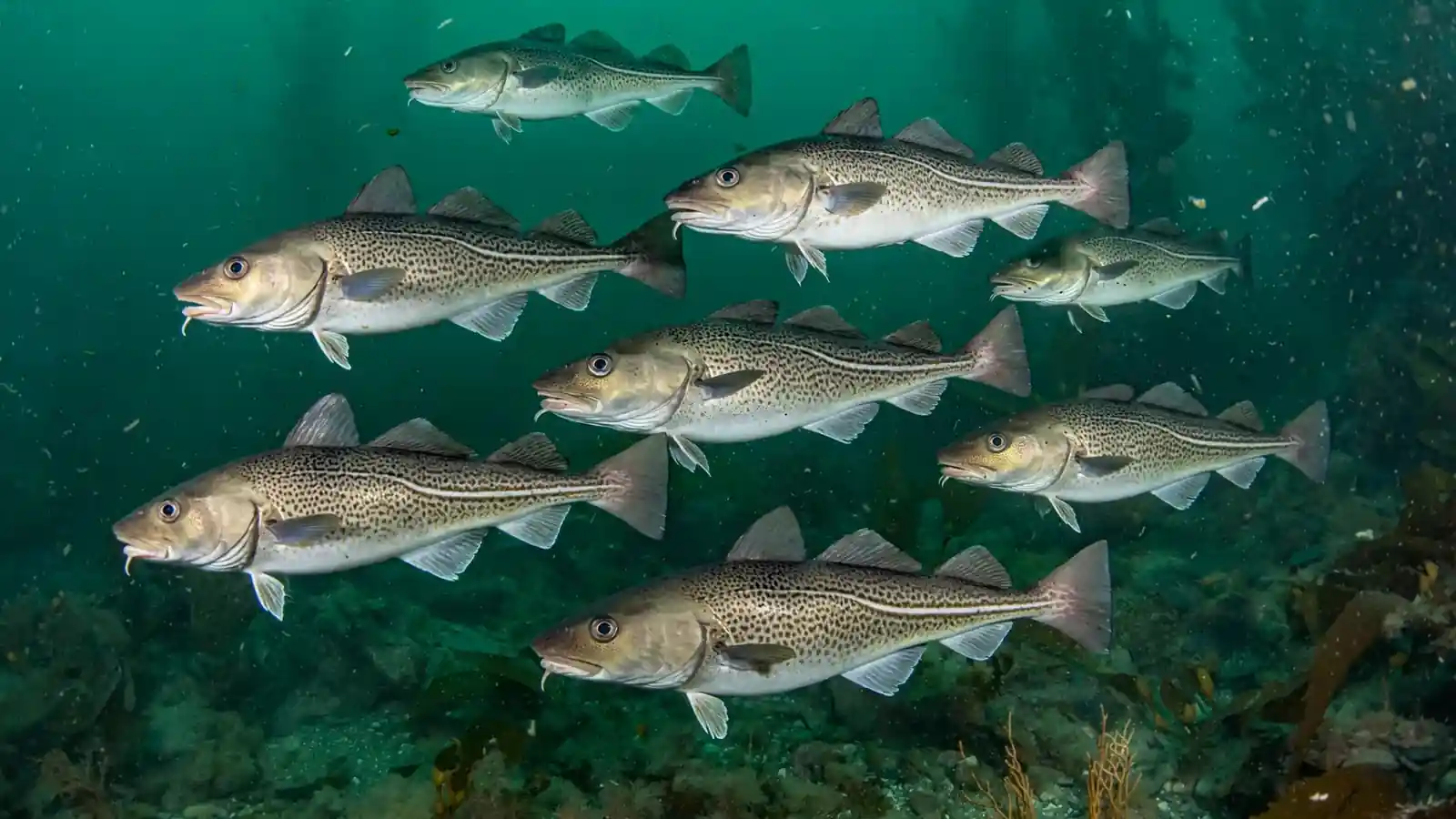
They gather in huge schools in deep water, sometimes in such numbers that they darken the seabed. The schools move together, following the prey and the currents, and they are the reason the fishery can catch so many fish in a single tow — a school of cod is a target the fleet cannot miss.
A school that darkens the seabed is a paradox afloat. The same crowding that hides one fish among thousands also draws the nets, and the fleet’s sonar finds the school as easily as any seal does. Numbers protect the individual and expose the population, both at once, in the same dark water.
The schooling is its defence and its vulnerability in one. A school is safety in numbers against seals and sharks, but it is also a concentrated target for a trawl, and a single tow can take tonnes of fish from a school that took years to build.
Conservation: A Heavily Fished North Pacific Species
It has never been formally assessed for the global Red List, and its status is listed as Not Evaluated. That does not mean the fish is safe — it means no one has done the global assessment. The cod is one of the most heavily fished animals in the North Pacific, and its stocks are managed by quota, with individual populations watched closely.
What it needs most is what every heavily fished animal needs — catch limits that leave enough adults to spawn, and a recognition that a fish that produces a million eggs still needs its adults to survive. The Salish Sea population is already listed as a species of concern in the United States, a warning that even a fish this abundant can decline where the pressure is highest.
Not Evaluated is the strangest status a famous fish can hold. It does not mean safe, or rare, or stable — it means the global paperwork was never done, while regional managers watch their own stocks by quota. The Salish Sea listing is what fills the gap locally: a warning filed where the pressure showed first.
Fun Facts
- A female spawns more than a million eggs.
- Its chin barbel tastes the seabed for food — it is covered in taste buds.
- They have never been formally assessed for the global Red List — their status is Not Evaluated.
- The largest recorded one reached 119 cm and 22.7 kg.
- They gather in huge schools in deep water, sometimes darkening the seabed.
- It is smaller than its Atlantic cousin, with a shorter barbel and a smaller head.
Frequently Asked Questions
How Big Do Pacific Cod Get?
They usually measure 60 to 80 cm and grow to about a metre. The largest recorded fish reached 119 cm and 22.7 kg.
Where Do Pacific Cod Live?
They live around the rim of the North Pacific, from the Bering Sea to Japan and California, usually at 100 to 400 metres down.
What Do Pacific Cod Eat?
It eats fish, crabs, shrimps, octopus and molluscs, all taken near the bottom and found with its chin barbel.
How Many Eggs Do Pacific Cod Lay?
A female spawns more than a million eggs, released to drift near the surface before hatching into larvae.
What Is the Pacific Cod’s Barbel For?
Its chin barbel is covered in taste buds and is dragged across the seabed to sense buried crabs, shrimps and worms.
How Long Do Pacific Cod Live?
They live well over a decade, with the biggest animals being the oldest fish on the ground.
What Is the Difference Between Pacific Cod and Atlantic Cod?
It is smaller than the Atlantic cod, with a smaller head and a shorter barbel. The Atlantic cod grows larger and lives in the North Atlantic.
Similar Species Worth Exploring
Keep Exploring
Still exploring the North Pacific? Meet the giant flatfish, the Pacific Halibut, compare it with its larger Atlantic cousin, the Atlantic Cod, browse the family in the Types of Fish hub, and then come back to the seabed to meet the Pacific cod.