Types of Cephalopods
Types of Cephalopods: Octopus, Squid, Cuttlefish and Nautilus
Types of cephalopods fall into four living groups: octopuses, squid, cuttlefish and nautiluses. They are mollusks with big brains, camera-like eyes, three hearts and blue blood. This guide profiles 25 of them, from the tiny blue ringed octopus to the colossal squid, the heaviest invertebrate on Earth.
By Emily Carter · Reviewed by our vet team · Updated 10 November 2026 · 7 min read
800+ living species4 living groups25 profiles in this guide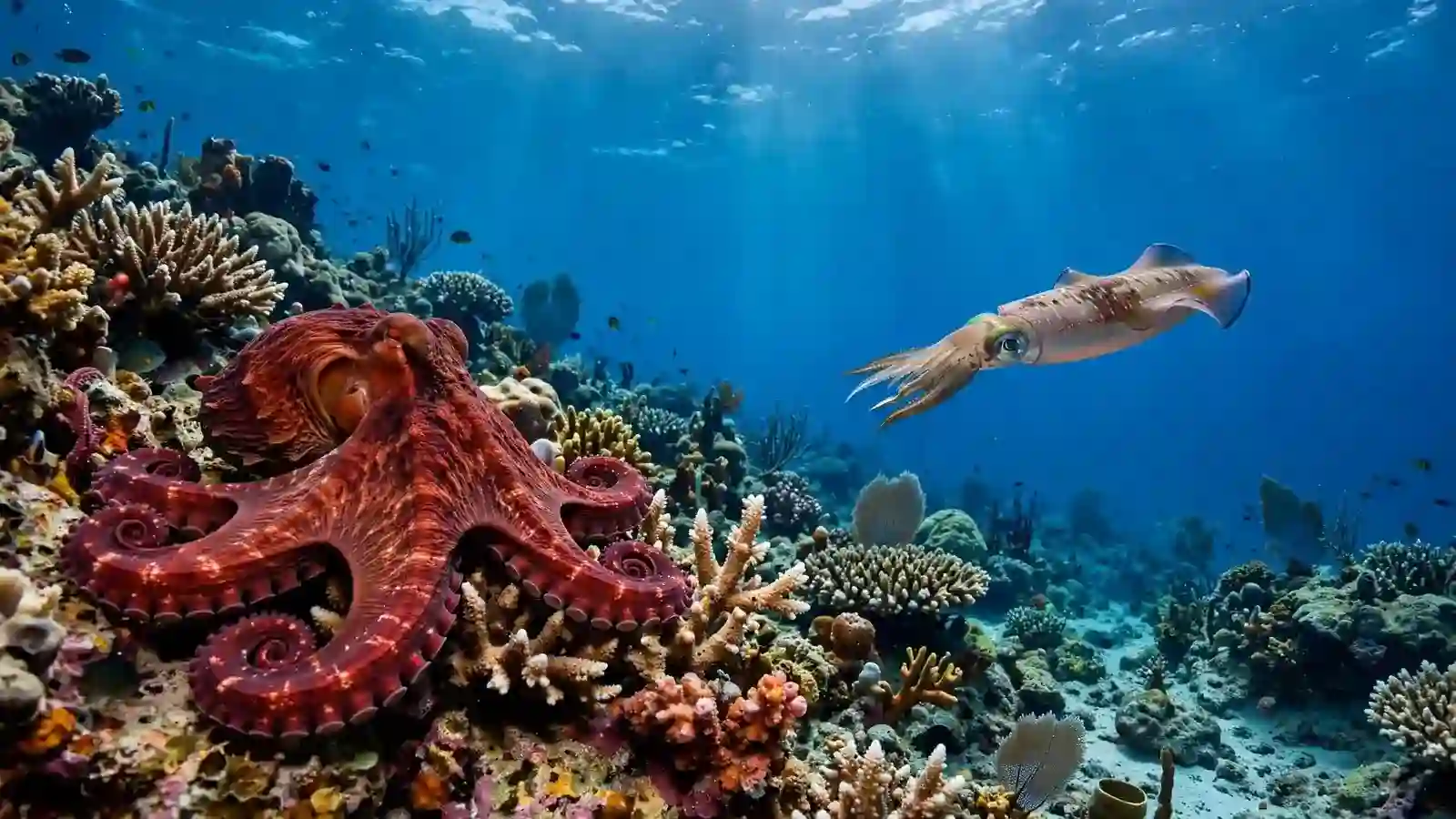
At a Glance
The types of cephalopods in this guide are mollusks that traded the shell for speed, camouflage and brains. Most change colour in a blink, swim by jet propulsion and hunt with arms lined with suckers. A few, like the nautilus, kept the ancestral shell. The four groups below cover every cephalopod profiled on this site, and the cards are ordered so the familiar octopuses come first, then the squid and cuttlefish that share their ten-appendage body plan.
The Four Main Types of Cephalopods
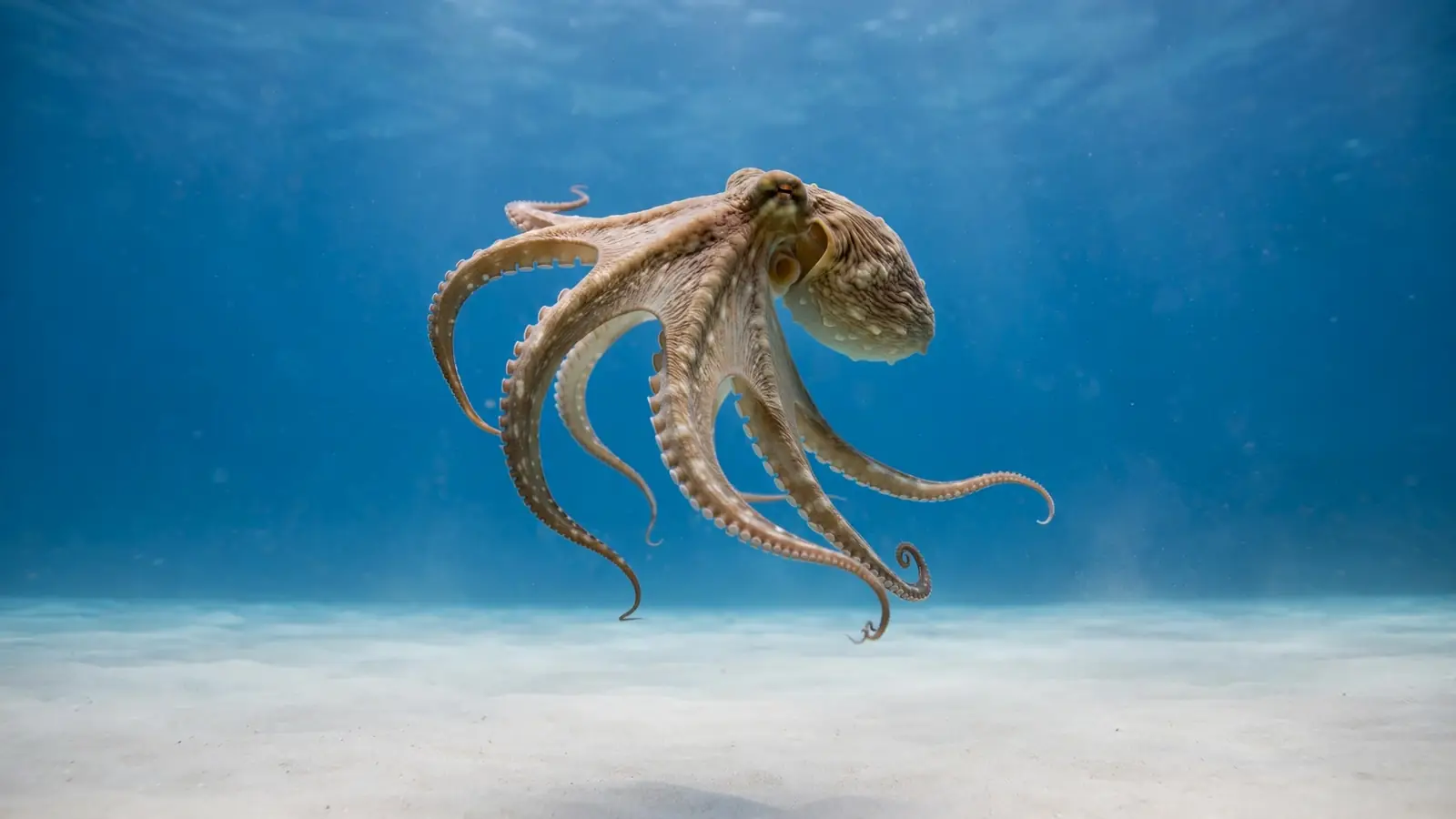
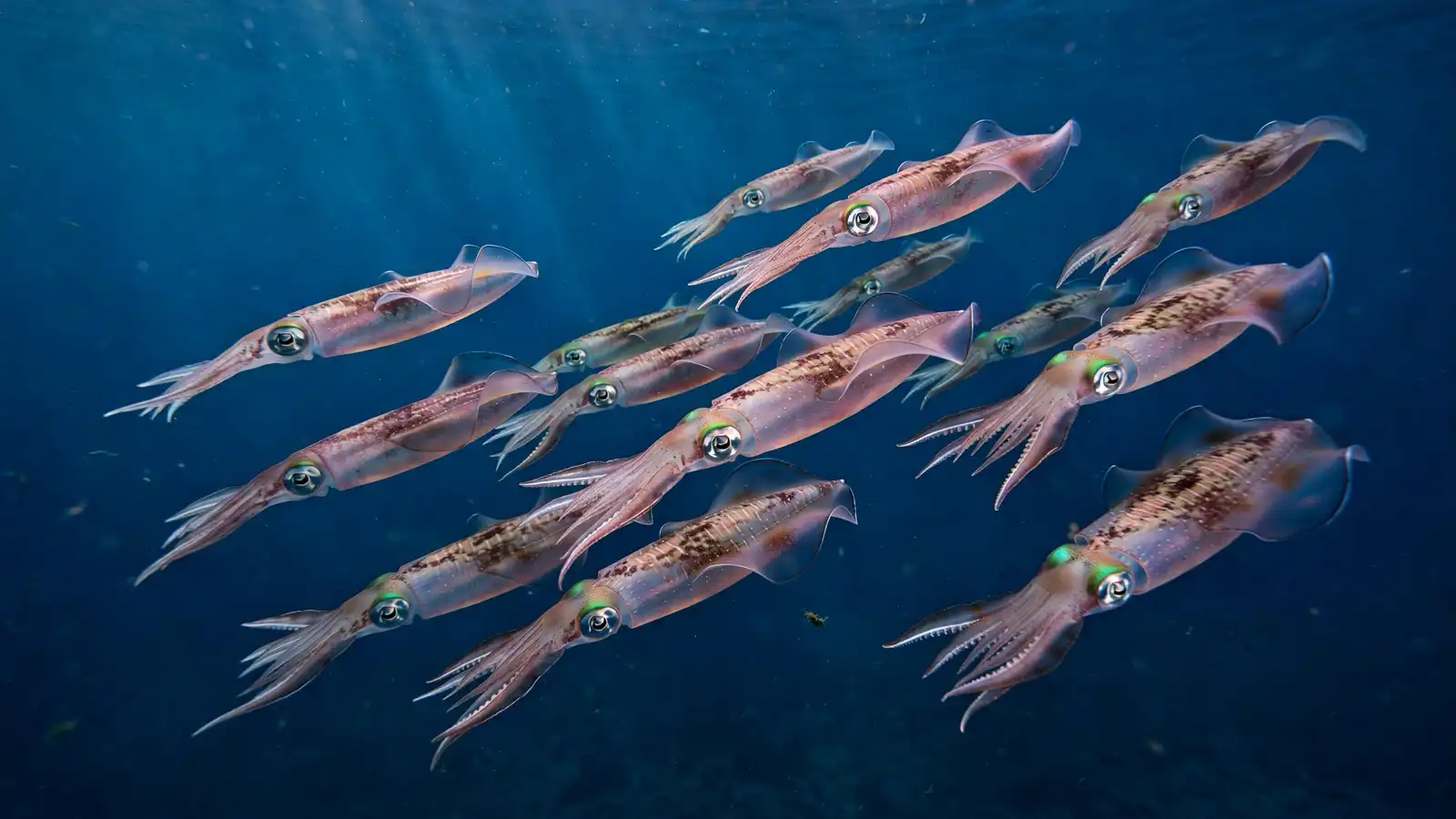
Octopuses have eight arms, no shell and a talent for squeezing through gaps and solving puzzles. Squid have eight arms plus two long feeding tentacles and a slim internal shell called a pen. Cuttlefish are broad and flat, hovering on wavy fins, with an internal cuttlebone for buoyancy. Nautiluses are the outsiders: they keep a coiled outer shell and swim slowly by jet propulsion.
Together the groups hold more than 800 living species, from thumbnail-sized bobtail squid to giants longer than a bus. Most live fast and die young, often within two years, yet they pack in learning, elaborate courtship and the fastest colour change in the animal kingdom.
Fossils push the family far back: shelled cephalopod relatives ruled the seas hundreds of millions of years before fish became common, and the ammonites were cephalopod cousins. The living groups are the streamlined survivors of that ancient radiation, which is why a nautilus looks like a fossil that never stopped swimming.
Are Cephalopods Intelligent? Brains, Blue Blood and Three Hearts
Yes, by invertebrate standards remarkably so. Octopuses learn mazes, open jars and recognise individual people, and the coconut octopus carries shells as portable shelter, a clear case of tool use. Squid coordinate in schools with skin signals, while cuttlefish run complex colour displays. Their nervous systems evolved separately from ours, making cephalopods the closest thing to an independent experiment in intelligence.
The body matches the brain. Three hearts pump blue, copper-based blood, and large eyes work much like our own. For more on the giants of the group, read this giant squid profile from a national ocean science portal, then meet all 25 cephalopods below.
How Cephalopods Move, Hunt and Hide
Jet propulsion is the family transport: water drawn into the mantle is squirted out through a funnel that can point in almost any direction, so most cephalopods swim backwards, arms trailing. Octopuses also crawl, and a few deep-sea species drift with fins. Funnels double as ink guns, and a cloud of ink buys the seconds needed to vanish.
Hunting is hands-on. Arms lined with suckers taste as they touch, a parrot-like beak bites, and in squid and cuttlefish two long tentacles shoot out to grab prey beyond arm’s reach. Defence is faster still: pigment cells called chromatophores repaint the skin in milliseconds, matching colour, pattern and even texture to rock, sand or coral.
Octopuses
Eight arms, no bones and a reputation for escapes, problem-solving and camouflage. These are the twelve octopus profiles on this site, from reef species to deep-sea drifters.
Squid and Cuttlefish
Fast swimmers and colour-change artists of the open sea and the reef, from the legendary giant squid to cuttlefish that walk the seabed.

Fun Facts
- Octopuses have three hearts and blue blood, and two-thirds of their neurons are in their arms.
- A cuttlefish can change colour and texture in less than a second.
- The colossal squid has the largest eyes of any known animal, living or extinct.
- Most cephalopods live fast: many species survive only a year or two.
- Nautiluses have changed little in hundreds of millions of years and are often called living fossils.
- Squid swim backwards by jet propulsion, squirting water through a funnel.
- An octopus tastes with its arms: its suckers carry chemoreceptors, so it feels and tastes at the same time.
Frequently Asked Questions
What Is a Cephalopod?
A cephalopod is a marine mollusk whose arms surround its head, with a beak, large eyes and jet propulsion. The living types of cephalopods are octopuses, squid, cuttlefish and nautiluses. The name means head-footed, because the arms attach directly to the head. All are active predators of fish, crabs and shrimp, and all live only in the sea.
What Are the Four Main Types of Cephalopods?
The four main living types are octopuses, with about 300 species, squid, also about 300, cuttlefish, around 120, and nautiluses, just a few species. Octopuses have eight arms, squid and cuttlefish add two feeding tentacles, and nautiluses carry many small tentacles and an outer shell.
How Many Species of Cephalopods Are There?
More than 800 living cephalopod species have been described, and deep-sea surveys keep adding more. They range from tiny bobtail squid a few centimetres long to the giant and colossal squid, the largest invertebrates in the ocean.
How Many Arms and Tentacles Do Cephalopods Have?
Octopuses have eight arms and no tentacles. Squid and cuttlefish have eight arms plus two long feeding tentacles, ten appendages in total. Nautiluses are the exception, with around 90 small tentacles and no suckers.
Are Cephalopods Intelligent?
Yes. Octopuses solve puzzles, learn by watching, use tools and recognise individual people, while cuttlefish and squid show learning, memory and complex signalling. Their intelligence evolved independently from vertebrates, built on a very different brain, which is why scientists study them so closely and why welfare laws increasingly protect them.
Do Cephalopods Really Have Blue Blood and Three Hearts?
They do. Cephalopod blood uses copper-based haemocyanin, which is blue when carrying oxygen. Two hearts pump blood through the gills and a third pumps it around the body. In octopuses, the body heart can pause while swimming, one reason they tire quickly.
Which Cephalopod Still Has an Outer Shell?
The nautilus is the only living cephalopod with a true outer shell. Its coiled, chambered shell works as a buoyancy tank, filled with gas and liquid. Squid and cuttlefish keep only internal shells, and octopuses have lost the shell entirely.
Similar Guides
Keep Exploring
If the types of cephalopods have you hooked, meet their distant cousins in the types of mollusks, or swim with the types of sharks. For a head-to-head, see how the giant squid compares with the colossal squid, and what sets an octopus apart from a squid. Every profile here links onward through the mollusks that chose brains over shells: the types of cephalopods.