Fire Coral
Fire Coral: The Stinging Coral That Is Not a Coral
Fire coral looks like reef coral, builds like reef coral, and lives on the reef — but it is not a coral at all. It is a stinging hydrozoan, and a brush against it can burn for two weeks.
By Emily Carter · Reviewed by our vet team · Updated 10 November 2026 · 9 min read
Not a true coralBurn lasts 2 weeks15–16 species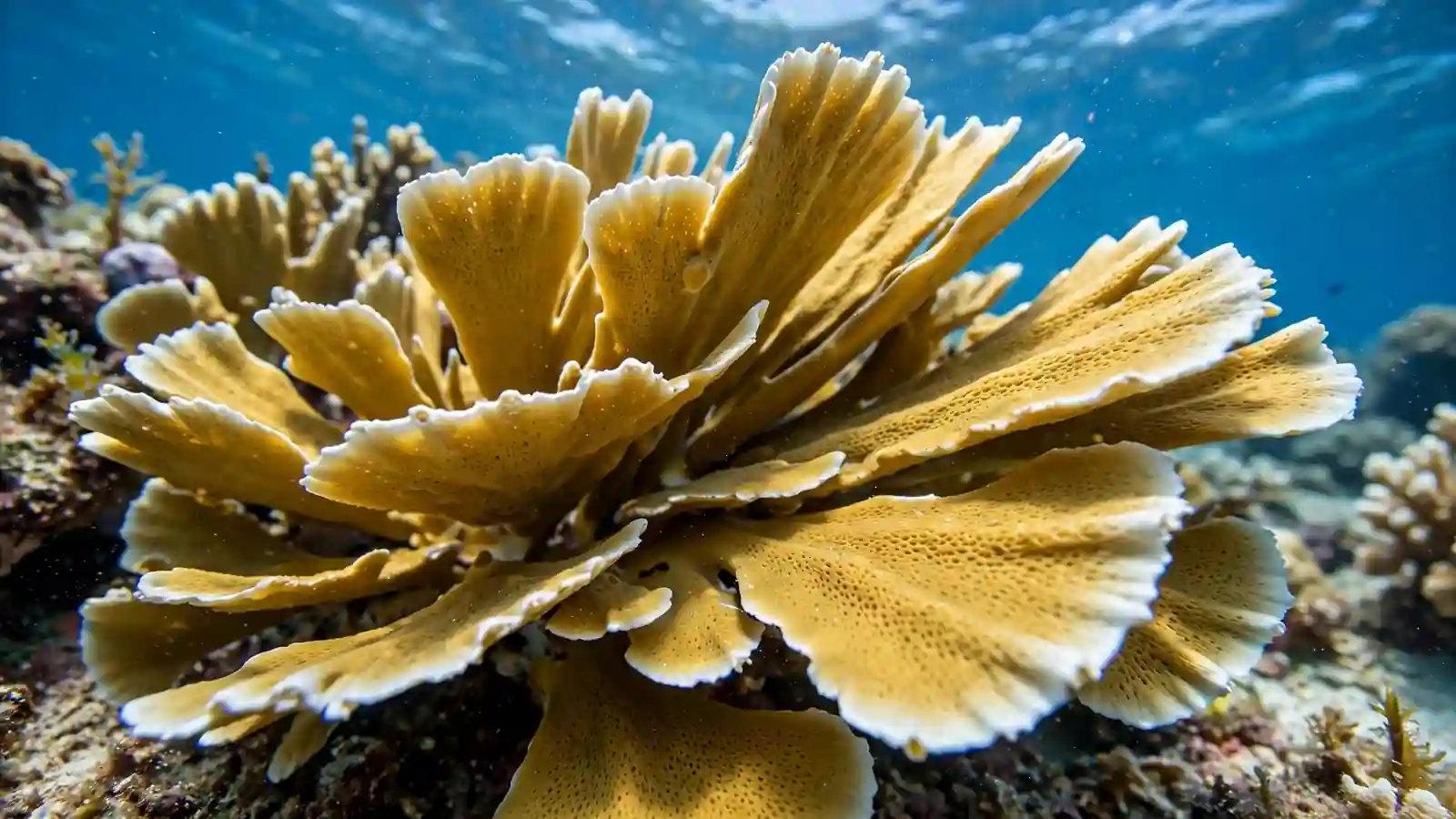
At a Glance
Fire coral is the most common diver sting on tropical reefs, and the most misunderstood animal on them. It looks like coral, it builds a limestone skeleton like coral, and it hosts algae like coral — but it is a hydrozoan, related to hydroids and siphonophores, and it stings like a jellyfish.
Fire Coral Anatomy: A Thousand Pores
It is a smooth, mustard-yellow crust or blade, and its surface is covered in tiny pores — thousands of them, each the mouth of a polyp. The polyps are of two kinds: feeding polyps that catch plankton, and stinging polyps that carry the nematocysts behind the name.
The two polyp kinds divide the work cleanly. Feeders hang out to catch what drifts past in the dark, while the stingers stand guard between them, too small to see and quick to fire. A brush against the surface meets thousands of those guards at once, which is why the burn spreads so wide.
The colour is the first clue: mustard-yellow, ochre or tan, often with pale white tips on the growing edges. True stony corals are rarely that colour, and the smooth, pore-covered surface is unlike any true coral’s skeleton. Look closely and the pores give it away.
Not a True Coral: The Hydrocoral Identity
It is not a true coral. It is a hydrocoral — a hydrozoan, in the same class as hydroids and siphonophores — that builds a limestone skeleton and hosts zooxanthellae, the symbiotic algae, exactly as a true coral does. It does a coral’s job with a jellyfish’s body plan.
The confusion is ancient: it was called a coral long before anyone knew what it was, and the name stuck. But the animal is closer to a hydroid than to a stony coral, and its sting is the proof — true corals do not sting like this.
Where It Grows: Shallow Tropical Reefs
It grows on shallow tropical reefs worldwide: the Caribbean, Brazil, the Red Sea, East Africa and French Polynesia. It likes the shallows — the sunlit water where its algae can photosynthesise — and it grows on rock, on dead coral, and on the edges of living reefs.
The shallows rule every part of that range. Sunlit water feeds the algae, and the algae feed the colony, so depth is a hard limit rather than a preference. Storm surf does not trouble it much: crusts and blades hug the rock, letting the water pass over a surface built low and smooth.
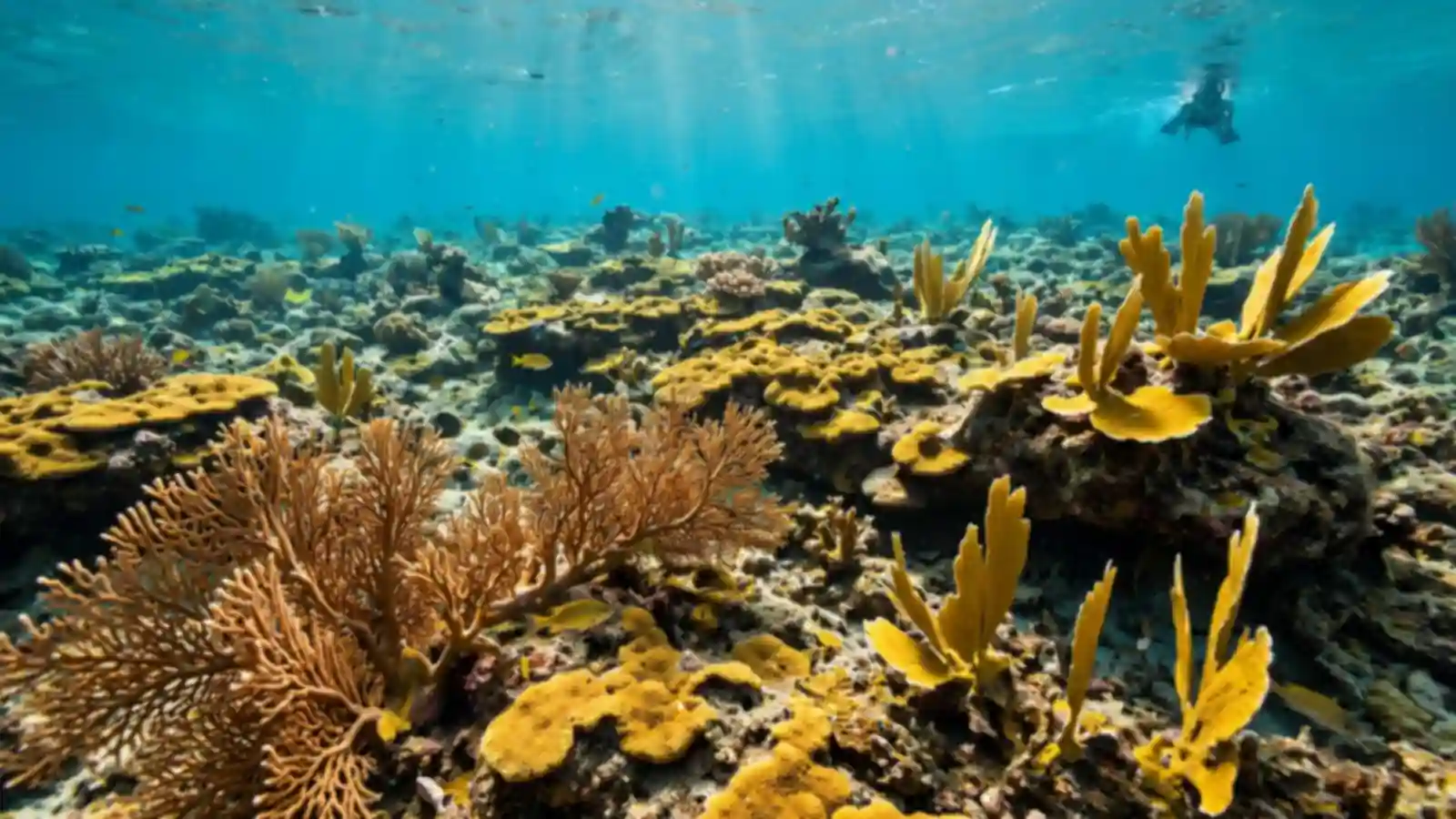
It is one of the first animals a snorkeller meets on a Caribbean reef, and one of the last a diver forgets: the blades and crusts are everywhere in the shallows, mustard-yellow against the reef, and the unwary brush against them.
It is also a reef builder in its own right: its limestone skeleton adds to the reef framework, and its crusts cement loose rubble into solid reef. It is a hydrozoan doing a coral’s structural job, and the reef would be poorer without it — which is why the animal is protected even though it stings.
What Do They Eat? Plankton and Sunlight
It eats plankton, caught by its feeding polyps at night, and it eats sunlight — or rather, its zooxanthellae do. The algae live inside the polyps, photosynthesise in the sun, and share the sugars with the animal, exactly as in a true coral.
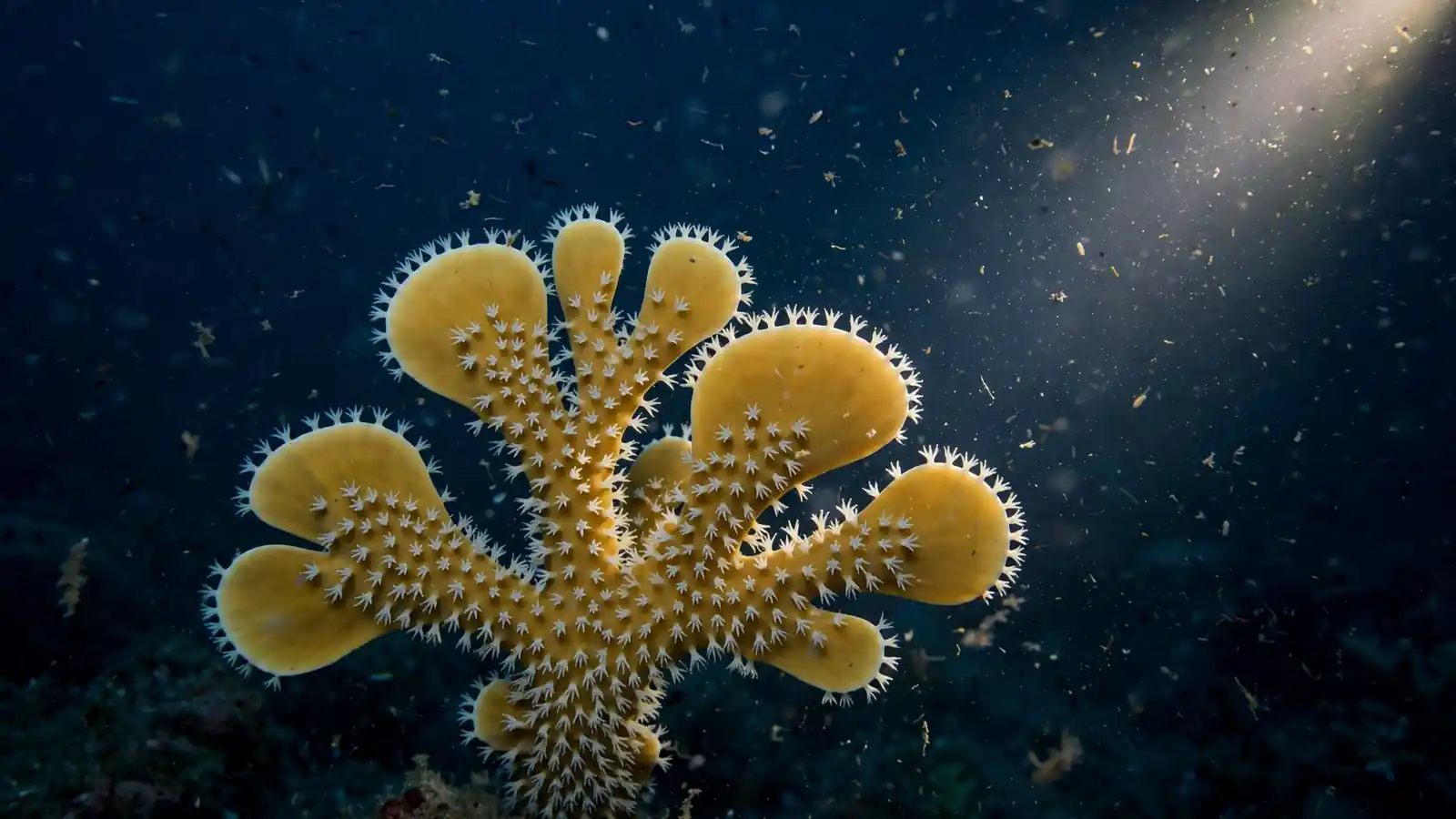
The partnership is why it needs the shallows: without light, the algae starve, and without the algae, the colony grows slowly. At night the polyps extend and feed; by day the algae work. It is a coral’s diet, run by a hydrozoan.
The Sting: Two Weeks of Burning
The sting is a burning pain with redness and welts, and it can last two weeks: the pain lasts two days to two weeks, and the itching can relapse after it fades. The venom is not lethal to people, but it is the most common diver sting on tropical reefs for a reason. Divers learn to spot it by colour and by surface: mustard-yellow, smooth, and covered in pores — and they learn to give it room, because the burn is the price of a careless touch.
The burn has a timetable of its own. Pain and redness arrive within minutes, welts rise over the first hours, and the itch can fade only to flare again days later. Two weeks is the outer limit for most cases, and the skin usually settles without scarring once the relapse passes.

If you touch it, rinse with seawater, apply vinegar, and use a cold pack — and do not rub the spot, which spreads the stinging cells. The burn is the animal’s defence, and it works: most divers touch it exactly once. For a fuller account of the sting, see this guide to the Millepora genus.
Fire Coral Species: Blade, Box and Branching
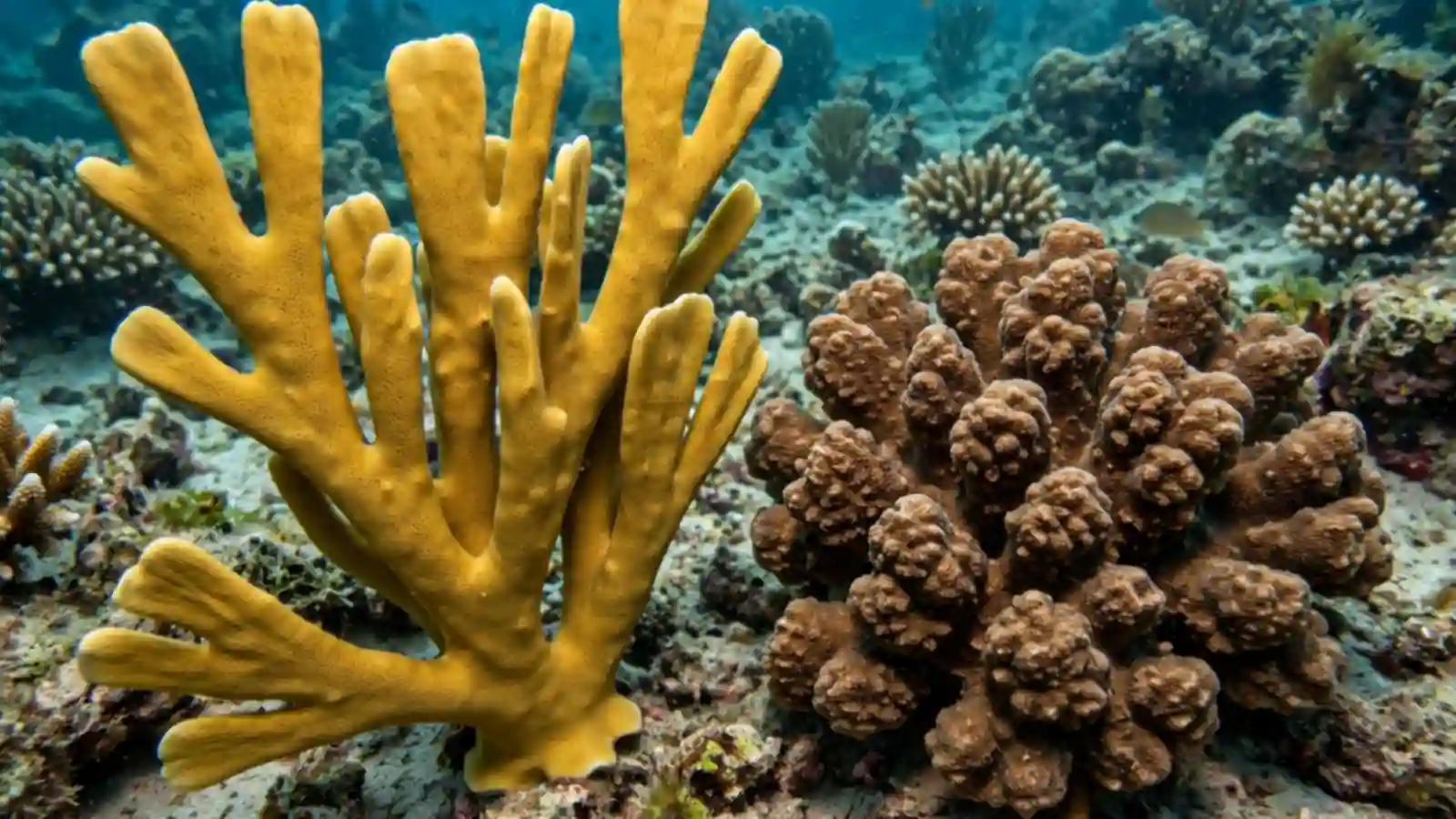
There are around 15–16 recognised species in the genus — one source says 15, another says 16 as of 2026, and the count is not settled. They grow in three main forms: blade, box and branching, and the form depends on the species and the reef.
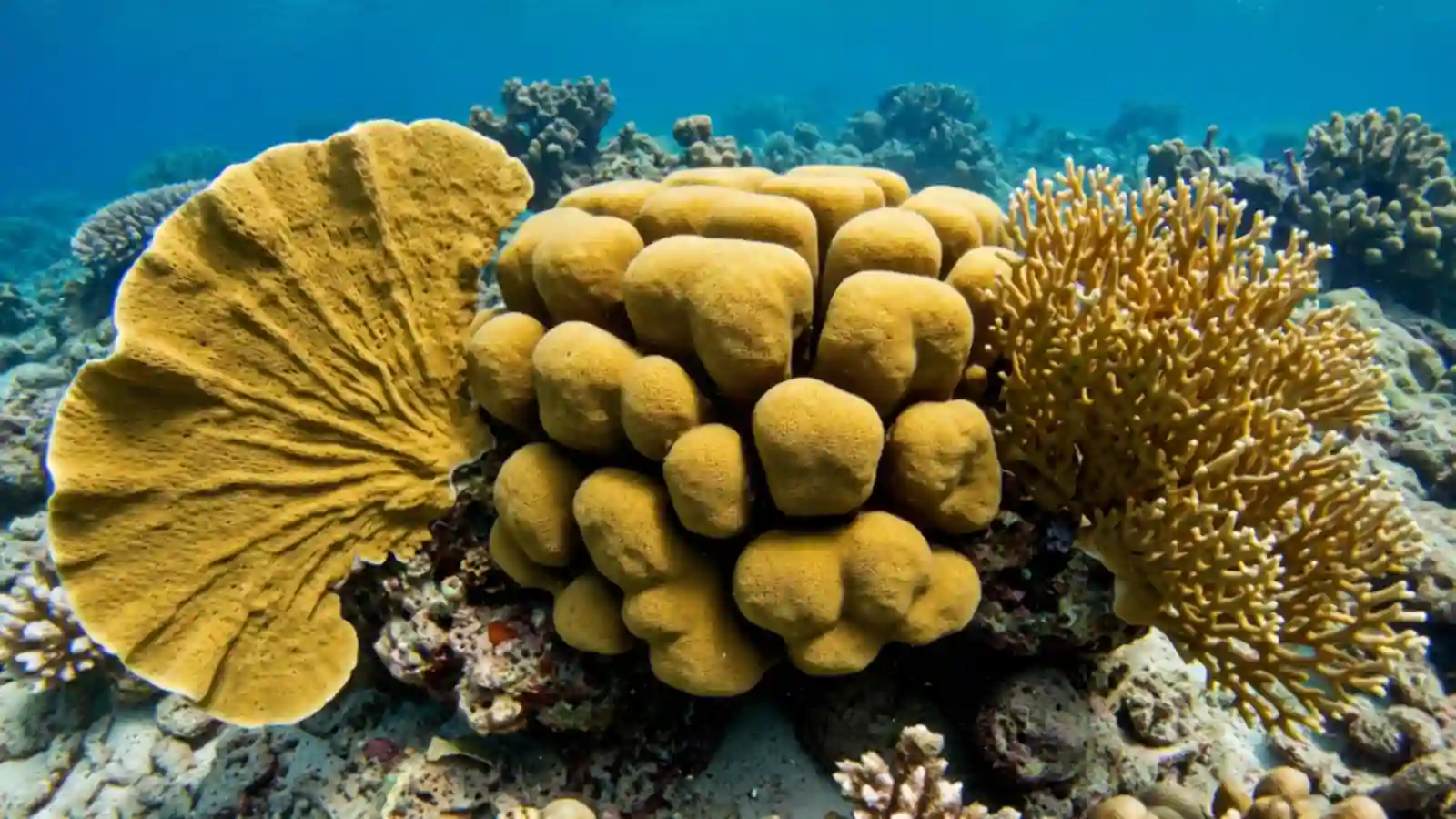
The blade form is the classic Caribbean one, a flat yellow plate standing on edge. The box form is a hollow, honeycombed shape, and the branching form grows like a small tree. All three sting the same way, and all three are the same genus — Millepora, the thousand-pored coral.
The name is literal: a thousand pores, each one a polyp’s mouth, cover every blade and crust. That crowded surface is also why the genus matters to the reef — few other animals turn bare rock and rubble into living, cemented framework at quite the same pace in the shallows.
The three forms are not just shapes: blade colonies grow in the surge zone, box colonies grow in the calm, and branching colonies grow where the current is strong. The form follows the water, and the species follows the form.
Reading the form reads the water. A flat blade tells of surge sweeping across the reef top; a honeycombed box tells of calm, sheltered water; branches tell of steady current bringing plankton past. Divers who learn the three shapes can place the animal before they are close enough to be stung.
Conservation: Critically Endangered Fire Corals
Some fire corals are in real trouble. The Caribbean Millepora complanata and M. squarrosa, and Brazil’s M. braziliensis and M. nitida, are Critically Endangered in the 2021–2024 reassessments — the highest threat level — and the genus is listed in CITES Appendix II, which controls its trade.
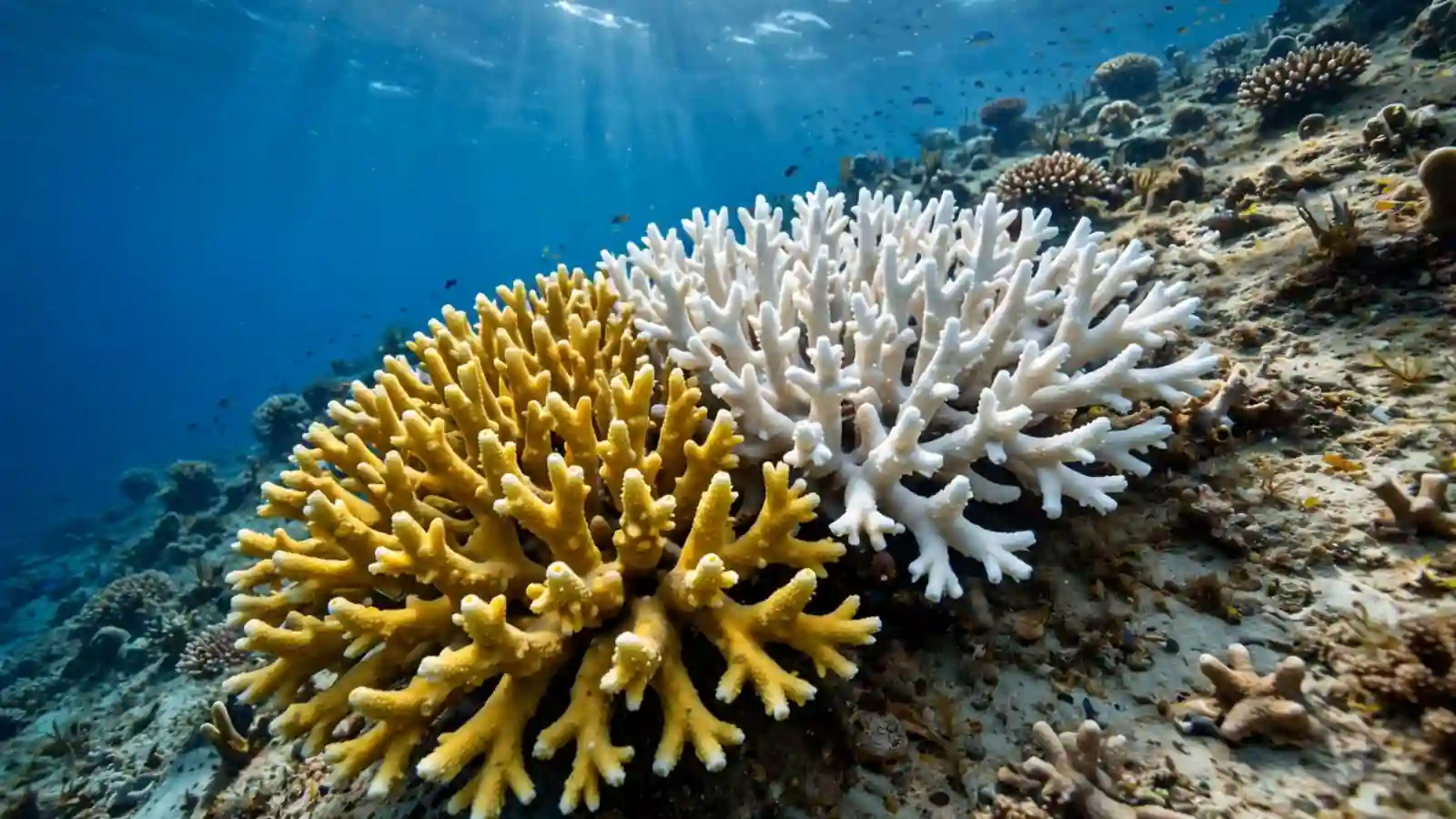
The threats are the reef’s threats: warming water, bleaching, disease and coastal damage, and the fire corals’ shallow habitat puts them in the firing line. They are tough animals — they sting, they grow fast, they colonise bare rock — but toughness is not the same as safety, and the rarest fire corals are now the ones that need the reef most.
Fun Facts
- It is not a true coral — it is a hydrozoan, related to hydroids and siphonophores.
- Its sting can burn for two weeks, with itching that can relapse after it fades.
- There are around 15–16 recognised species, and the count is not settled.
- It grows in blade, box and branching forms.
- It hosts zooxanthellae and eats sunlight, exactly like a true coral.
- Four of its species are Critically Endangered, and the genus is in CITES Appendix II.
Frequently Asked Questions
What Is Fire Coral?
A hydrocoral in the genus Millepora — a stinging hydrozoan that builds a limestone skeleton and hosts symbiotic algae, just like a true coral. It grows in mustard-yellow blades and crusts on shallow tropical reefs.
Is Fire Coral a Real Coral?
No. It is a hydrocoral, related to hydroids and siphonophores, not a true stony coral. It does a coral’s job — building a limestone skeleton and hosting zooxanthellae — with a jellyfish’s body plan, and its sting is the proof.
How Bad Is a Fire Coral Sting?
Burning pain with redness and welts — the most common diver sting on tropical reefs. The venom is not lethal to people, but the burn is memorable, and the itching can relapse after the pain fades.
How Long Does a Fire Coral Sting Last?
The pain lasts two days to two weeks, and the itching can relapse after it fades. Rinse with seawater, apply vinegar, use a cold pack, and do not rub the spot.
What Should You Do If You Touch Fire Coral?
Rinse the spot with seawater, apply vinegar, and use a cold pack. Do not rub it, which spreads the stinging cells. Seek medical help if the reaction spreads or breathing is affected.
Where Does Fire Coral Grow?
On shallow tropical reefs worldwide: the Caribbean, Brazil, the Red Sea, East Africa and French Polynesia. It likes sunlit, shallow water where its symbiotic algae can photosynthesise.
Is Fire Coral Endangered?
Some species are. The Caribbean Millepora complanata and M. squarrosa, and Brazil’s M. braziliensis and M. nitida, are Critically Endangered in the 2021–2024 reassessments, and the genus is listed in CITES Appendix II.
Similar Species Worth Exploring
Keep Exploring
Meet the hydroid, its hydrozoan relative, then the precious coral, the red coral of jewellery, and browse the whole family in our types of jellyfish hub — then come back to the stinging coral that is not a coral, the fire coral.