Basket Star
Basket Star: The Star With a Thousand Branches
The basket star spreads five arms that split again and again into thousands of hooked branchlets, forming a living basket to catch drifting plankton — and it is a brittle star, not a true sea star at all.
By Emily Carter · Reviewed by our vet team · Updated 10 November 2026 · 9 min read
5 arms, 1,000s of branchesSpan ~75 cmBrittle star, not sea star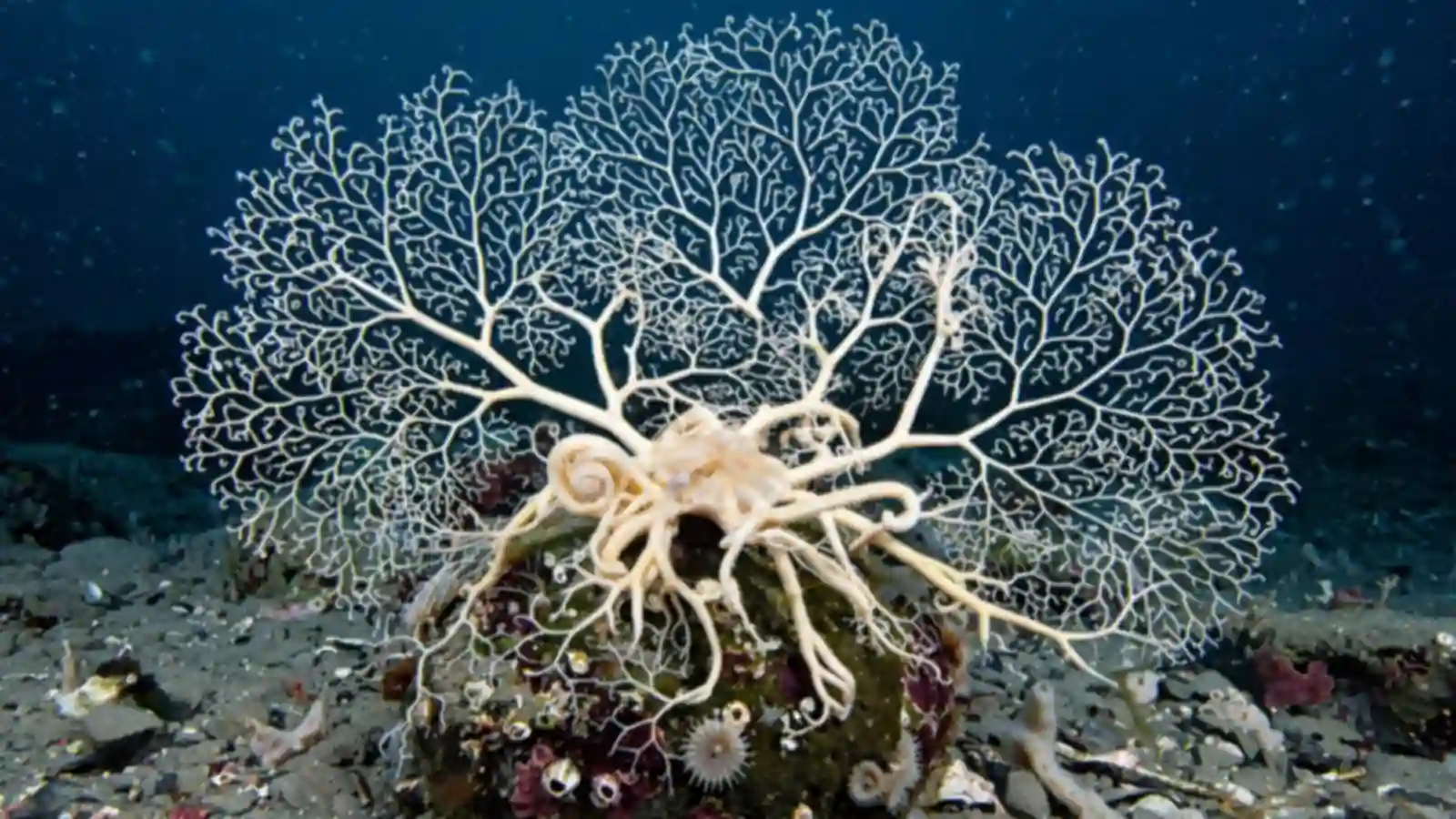
At a Glance
The basket star is the most elaborate animal in the sea: five arms, each branching 12 or more times into thousands of hooked branchlets, forming a basket that catches drifting plankton. It is a brittle star — a member of the class Ophiuroidea — not a true sea star, and its arms are the giveaway.
Basket Star Arms: Five Arms, Thousands of Branches
It has five arms, and each one branches 12 or more times, splitting again and again into thousands of hooked branchlets. The disc reaches 14.3 cm across, the arms reach 70 cm long, and the whole animal can span about 75 cm — a star the size of a dinner plate, made of branches.
The branches are lined with hooks, and the hooks are the basket’s teeth: they snag plankton, krill and small fish from the current, and they hold the catch while the arm coils it towards the mouth. It is a net that builds itself, branch by branch, from a single arm.
The Living Basket: How It Catches Food
It catches food by perching high on a rock or a sponge, spreading its arms into the current, and waiting. The arms uncoil into a basket, the branchlets spread like a net, and the current brings the plankton to it — the animal does not hunt, it fishes, with a net it grew itself.

The basket is not fixed: the arms coil and uncoil, the net tightens and loosens, and the animal adjusts its shape to the current. When the catch is good, the arms coil the food towards the mouth; when the current dies, it folds its arms and waits for the tide to turn.
The basket is a net that the animal wears: when the current is strong, the arms spread wide, and when it is weak, they fold. It reads the water the way a fisherman reads the tide, and it fishes only when the fishing is good.
Where They Live: Cold Water, Deep and Shallow
Basket stars live in cold water worldwide — the Arctic, the North Atlantic and the North Pacific — from about 30 feet down to over 6,000 feet, on seamounts, on rocky bottoms, and on the slopes of the deep sea. They are a cold-water animal, and they are at home in the dark.
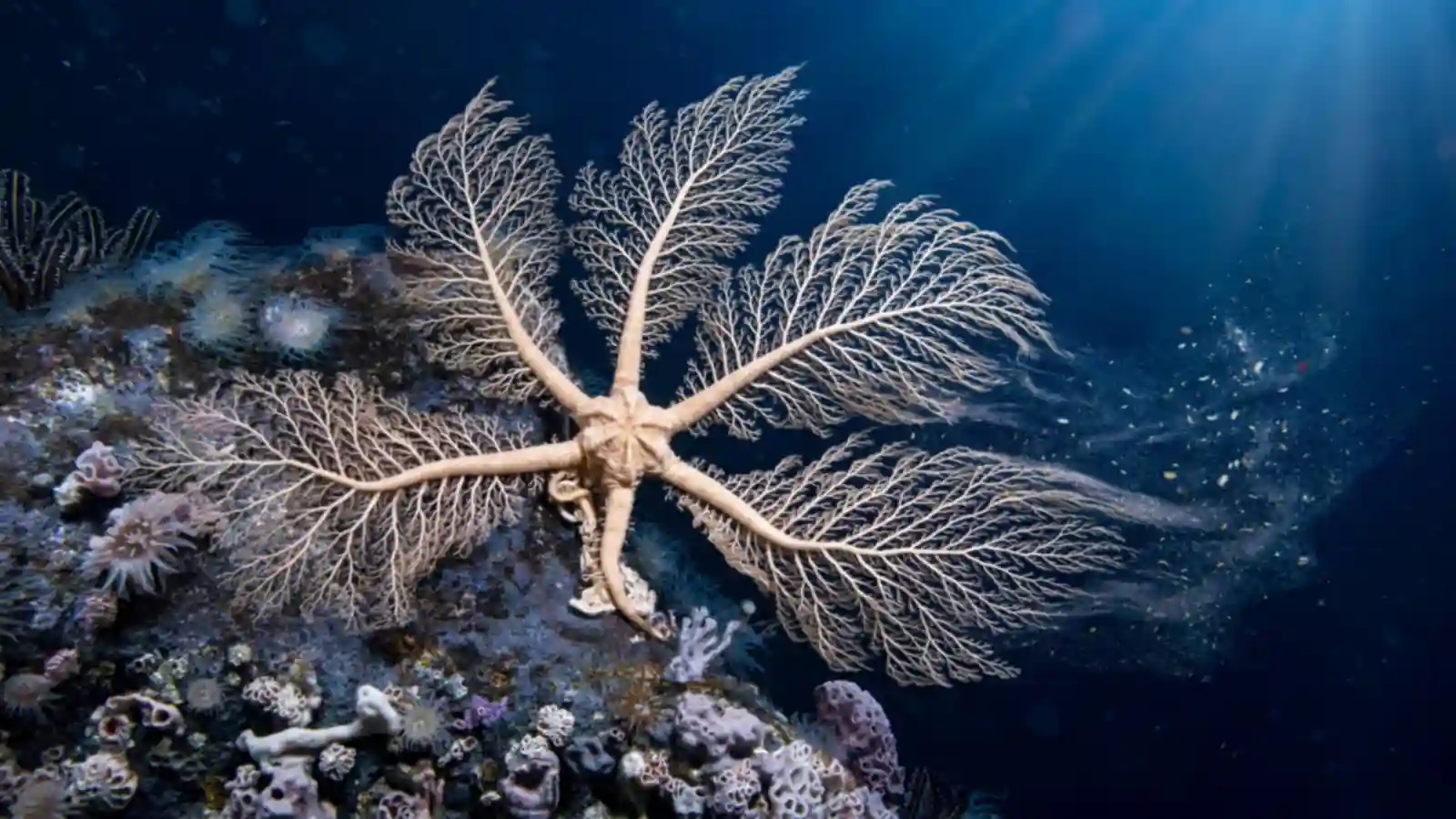
They live in groups, sometimes in dense fields on seamounts, where the current is strong and the plankton is rich. The fields are a sight: hundreds of basket stars, arms spread, fishing the current together, each one a basket in a field of baskets.
What Do They Eat? Plankton, Krill and Small Fish
Basket stars eat zooplankton and krill, caught on the hooks of their branchlets, and small fish that blunder into the basket. The arms are coated in mucus that helps the food stick, and the hooks hold it while the arm coils it towards the mouth.
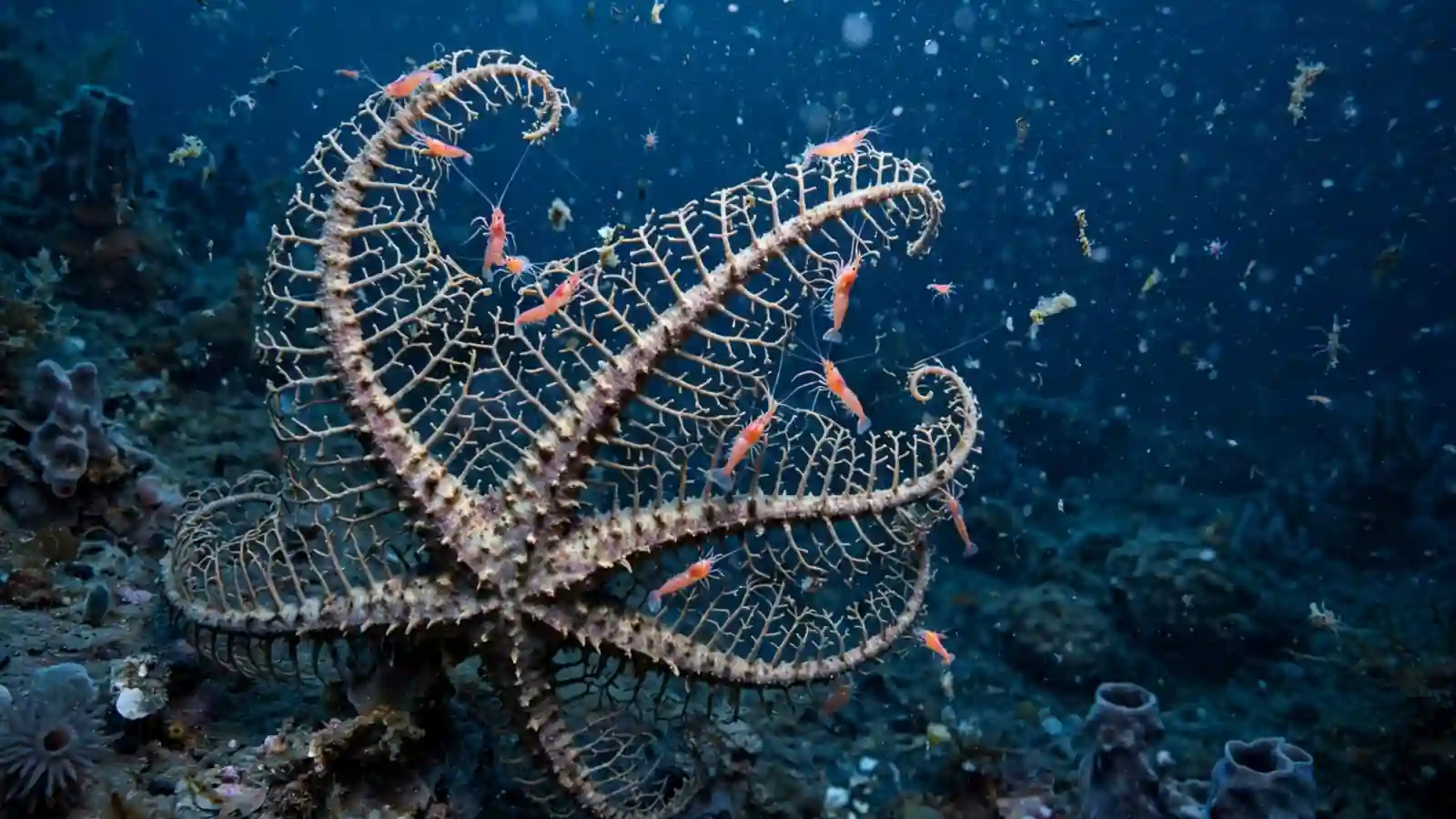
The diet is whatever the current brings: plankton, krill, small fish, and the occasional unlucky swimmer. It does not choose its food — it catches what comes, and the current is generous. For more, see this guide.
Basket Star vs Brittle Star: Branched or Not
It is a brittle star — a member of the class Ophiuroidea — and its closest relatives are the brittle stars, which have five arms that do not branch. Its arms branch 12 or more times; the brittle star’s arms do not branch at all.

The difference is the whole animal: the brittle star is a snake-armed crawler, and this one is a net. Both are brittle stars, both have five arms and a central disc, but it took the brittle star’s body plan and turned it into a fishing net.
The Tight Ball: Defence Against Predators
When a predator approaches, it coils its arms into a tight ball — the branches fold in, the hooks retract, and the animal becomes a hard, spiny knot that is difficult to eat. The ball is its armour, and it works: predators that cannot open the ball leave it alone.
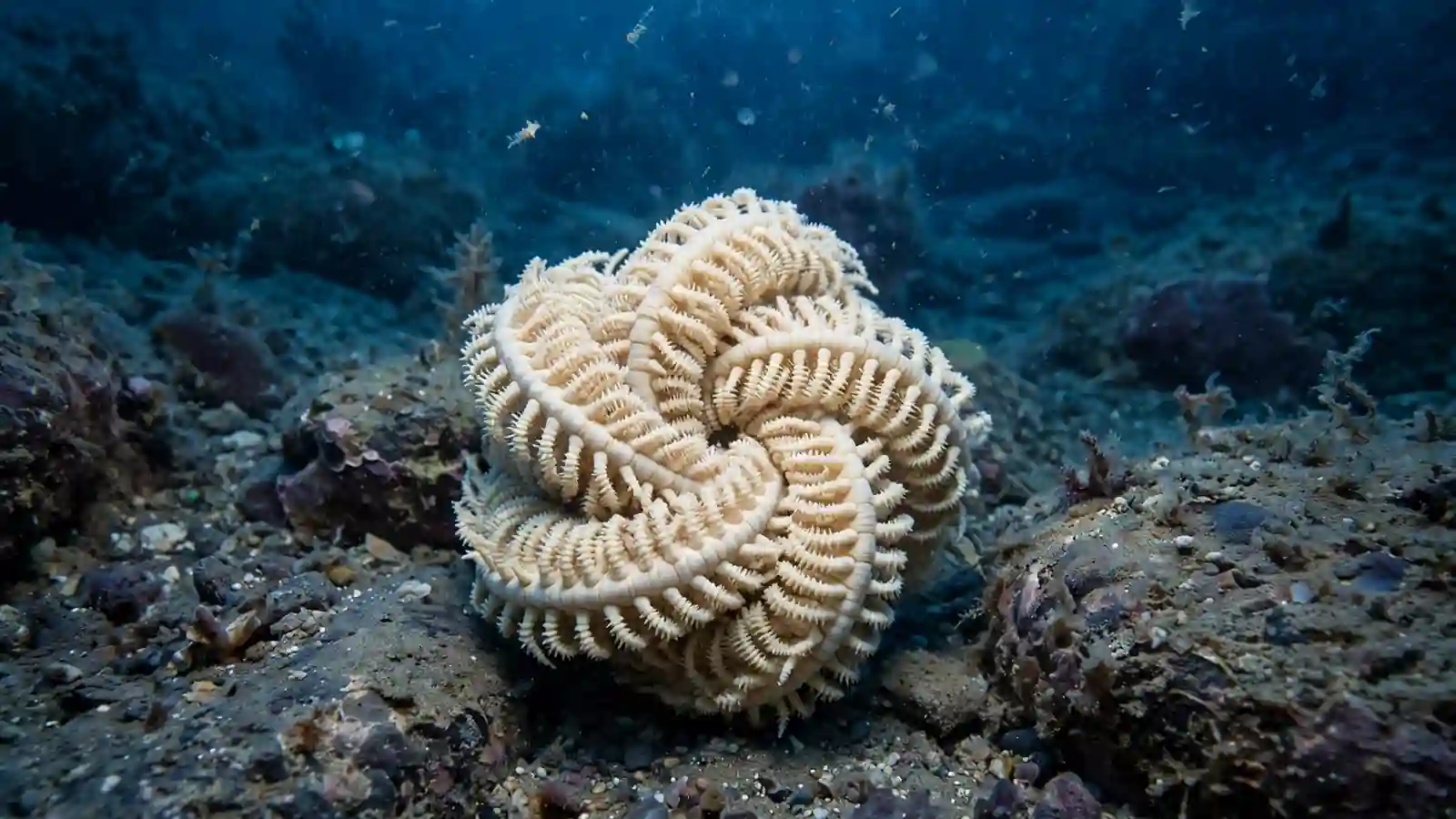
The ball is also its resting shape: when the current dies, it folds its arms and waits, and when the current returns, it unfolds and fishes again. The basket is a net, and the ball is a fortress, and the animal switches between them as the sea demands.
Reproduction: Broadcast Spawning in Summer
Basket stars reproduce by broadcast spawning, releasing eggs and sperm into the water together from June to November. The fertilised larvae drift with the currents before settling on the sea floor and growing their arms.
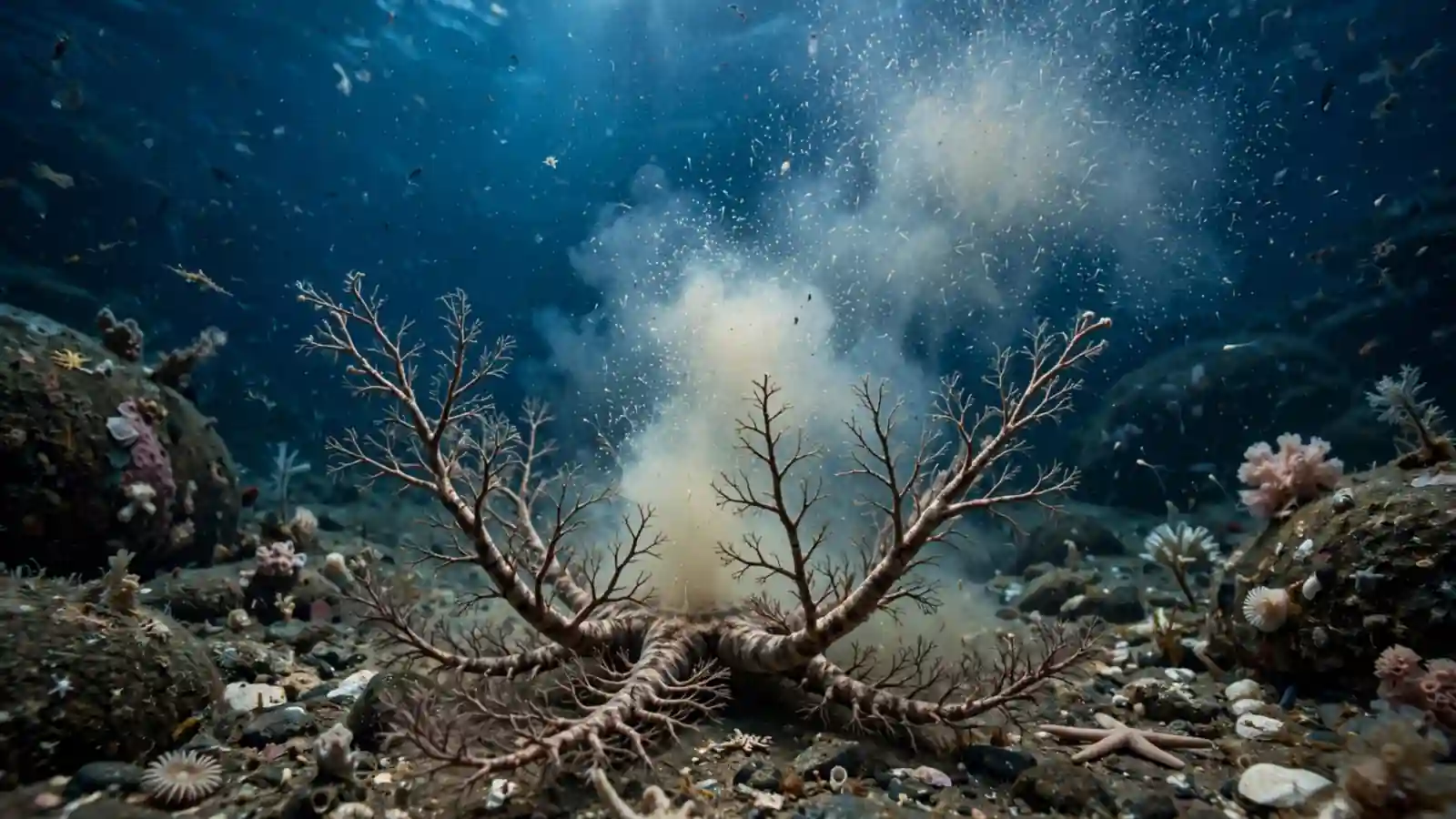
The spawning is a numbers game: millions of larvae, almost all eaten, and a handful that find a bare rock and settle. A new one begins as a single larva the size of a grain of sand, and it will take years to grow a basket — and it is reported to live up to 35 years, though that figure has no traceable scientific source behind it, so it is printed here as a report, not a fact.
Fun Facts
- Basket stars have five arms, each branching 12 or more times into thousands of hooked branchlets.
- They are brittle stars, not true sea stars — the class is Ophiuroidea.
- Their disc reaches 14.3 cm across, and their arms reach 70 cm long.
- They live from about 30 feet down to over 6,000 feet.
- They catch food by spreading their arms into the current like a basket.
- When threatened, they coil their arms into a tight, spiny ball.
Frequently Asked Questions
What Is a Basket Star?
A brittle star in the genus Gorgonocephalus, best known as G. eucnemis, with five arms that branch 12 or more times into thousands of hooked branchlets, forming a living basket to catch plankton. It is a member of the class Ophiuroidea, not a true sea star.
Is a Basket Star a Sea Star?
No. The basket star is a brittle star — a member of the class Ophiuroidea — not a true sea star. Its arms branch 12 or more times into thousands of branchlets, and its closest relatives are the brittle stars, whose arms do not branch.
How Many Arms Does a Basket Star Have?
Five, and each one branches 12 or more times into thousands of hooked branchlets. The disc reaches 14.3 cm across, the arms reach 70 cm long, and the whole animal can span about 75 cm.
How Big Do Basket Stars Get?
The disc reaches 14.3 cm across, the arms reach 70 cm long, and the whole animal can span about 75 cm — a star the size of a dinner plate, made of branches.
Where Do Basket Stars Live?
In cold water worldwide — the Arctic, the North Atlantic and the North Pacific — from about 30 feet down to over 6,000 feet, on seamounts, on rocky bottoms, and on the slopes of the deep sea.
What Do Basket Stars Eat?
Zooplankton and krill, caught on the hooks of their branchlets, and small fish that blunder into the basket. The arms are coated in mucus that helps the food stick, and the hooks hold it while the arm coils it towards the mouth.
How Long Do Basket Stars Live?
They are reported to live up to 35 years, but that figure has no traceable scientific source behind it, so it is printed here as a report, not a fact. Basket stars grow slowly, and their long lives are consistent with what is known of deep-sea animals — but the number itself is unproven.
Similar Species Worth Exploring
Keep Exploring
Meet the brittle star, its unbranched cousin, then the feather star, the crinoid that crawls and swims, and browse the whole family in our types of echinoderms hub — then come back to the star with a thousand branches, the basket star.