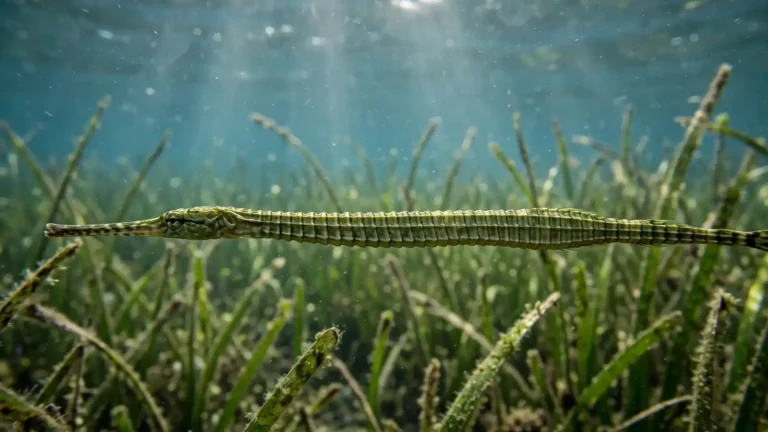
Giant Grouper
Giant Grouper: The Reef Giant That Grows Bigger Than a Diver
The giant grouper is one of the largest bony reef fish on Earth, a mottled giant that can reach 2.7 metres and 400 kg on Indo-Pacific reefs.
By Emily Carter · Reviewed by our vet team · Updated 10 November 2026 · 9 min read
Up to 2.7 m400 kgVulnerable
At a Glance
The giant grouper is the heavyweight of the reef, a fish so large that divers mistake it for a boulder until it moves. It is a solitary ambush predator of the Indo-Pacific, often confused with its Atlantic cousin the goliath grouper — a different species with its own story, told in the comparison section below.
Giant Grouper Size: How Big Do They Get?

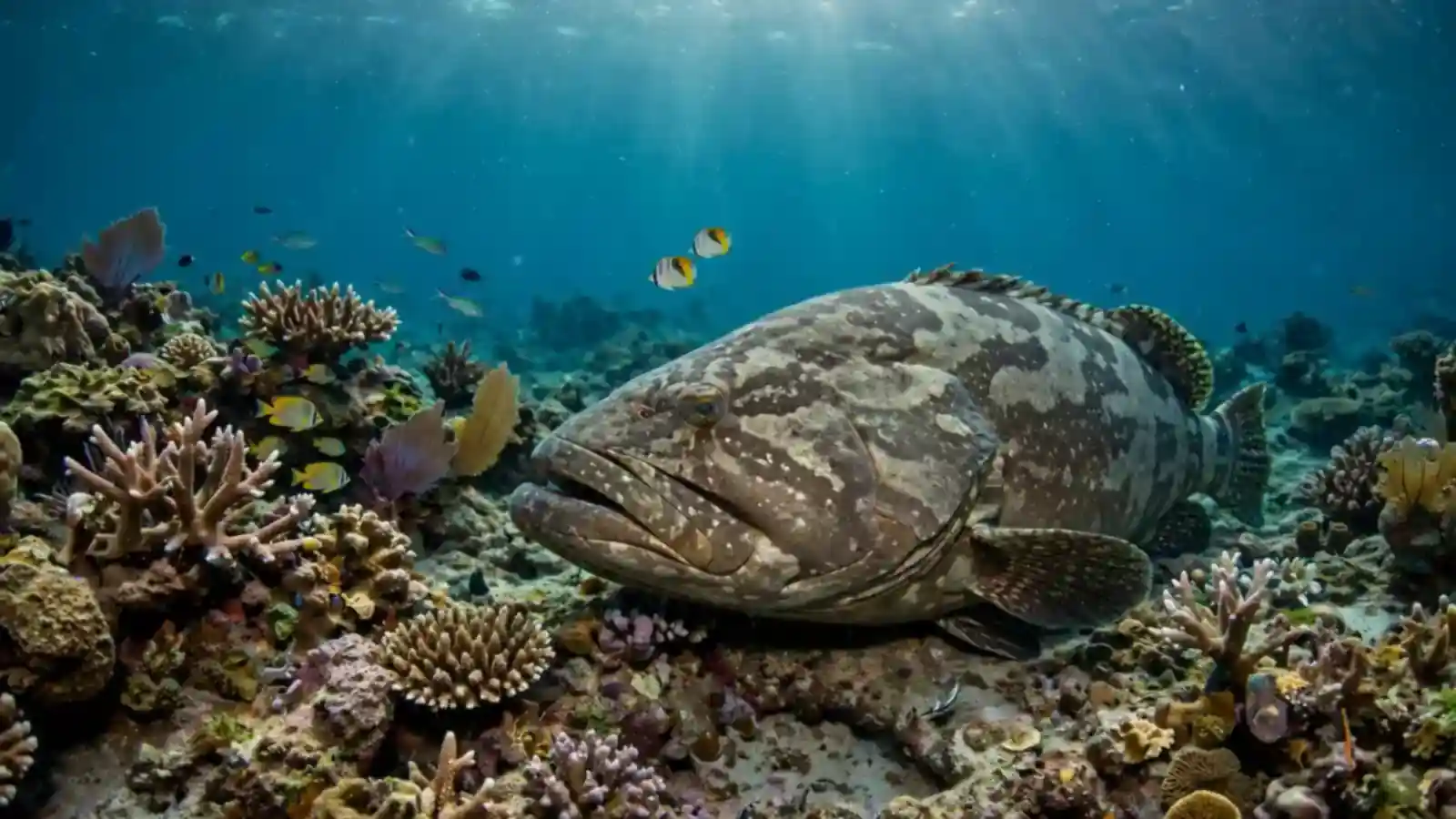
It can reach 2.7 metres long and 400 kg in weight, making it one of the largest bony reef fish in the world. Most adults are smaller — a metre or two of mottled brown muscle — but the biggest individuals are genuinely enormous, longer than a tall diver and heavier than a grand piano. Size like that takes decades to build: giant groupers grow slowly, and the largest fish on a reef are usually the oldest ones there.
Next to a diver, the scale is startling. A full-grown one is wider than a diver’s shoulders and longer than the diver is tall, with a mouth big enough to swallow a basketball. Yet the fish is not built for speed or aggression — it is built for patience, lying on the reef floor or in a cave mouth and waiting for food to come close enough to inhale.
Giant Grouper vs Goliath Grouper

It is often confused with the goliath grouper, and the confusion is understandable — both are enormous, mottled, reef-dwelling groupers. But they are different species with different homes. It is Epinephelus lanceolatus, a fish of the Indo-Pacific; the goliath grouper is Epinephelus itajara, a fish of the Atlantic. The goliath grows to about 2.5 metres and 363 kg, slightly smaller than it at its biggest. For the full comparison of the world’s biggest groupers, see Biology Insights’ guide to the biggest grouper.
There is one more mix-up worth clearing up. Some older pages still list the goliath grouper as Critically Endangered, but that status is outdated: the goliath has been listed as Vulnerable since 2018. It is also listed as Vulnerable. Both species suffered heavy fishing pressure in the past, and both are now protected in parts of their range — but their stories, and their oceans, are different.
Where Giant Groupers Live
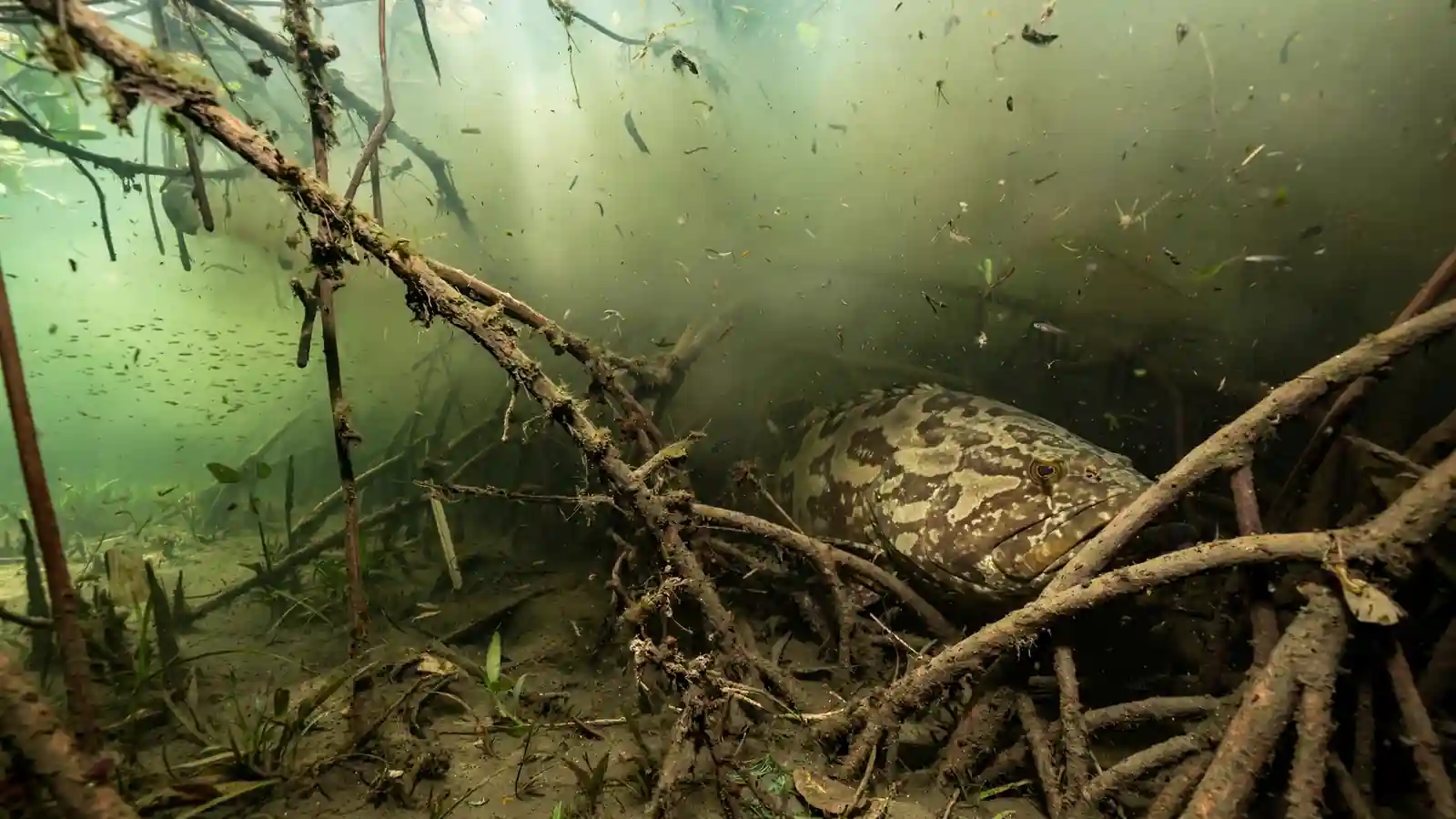
Giant groupers live on coral reefs, rocky shores and in estuaries across the Indo-Pacific, from the Red Sea and East Africa to the western Pacific. Adults hold territory on the reef itself — a cave, a wreck, a coral bommie — and they return to the same shelter again and again. Young fish live inshore, in estuaries and mangrove-fringed shallows, where the water is murky and the cover is thick.
Depth is not a limit for them. Giant groupers have been seen from the shallows down to around 100 metres, and they move between depths with the seasons and the tides. What matters is shelter and food: a big cave to hide in, a reef edge to hunt from, and enough fish, crabs and lobsters passing by to feed a 400 kg body. A reef that can support one is a healthy reef.
What Do Giant Groupers Eat?
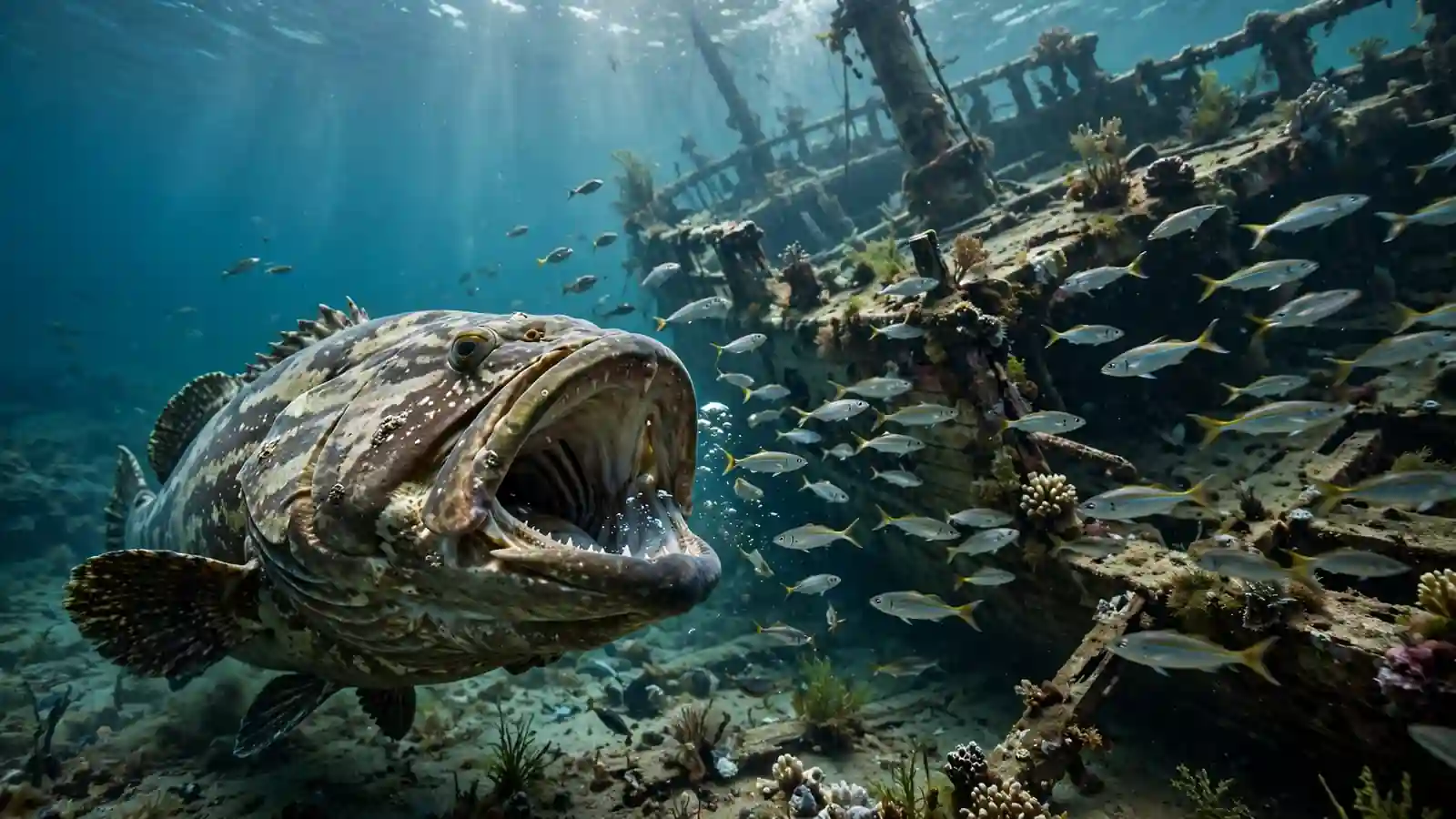
Almost anything it can fit in its mouth. Giant groupers eat reef fish, lobsters, crabs and shrimp, and large adults have been recorded taking small sharks and even sea turtles. They are ambush predators: they lie still, wait for prey to come within range, and then open their huge mouths to create a sudden suction that pulls the victim in whole. There is no chase and no struggle — one gulp, and the meal is over.
That vacuum-cleaner feeding style is what lets a slow fish catch fast prey. The grouper’s mouth can expand in a fraction of a second, and the rush of water carries the prey straight in. It is a technique shared by many groupers, but it does it on a scale no other reef fish can match — a mouth that wide can swallow prey a diver would call a good-sized fish on its own.
Behaviour: Curious Giants and Divers
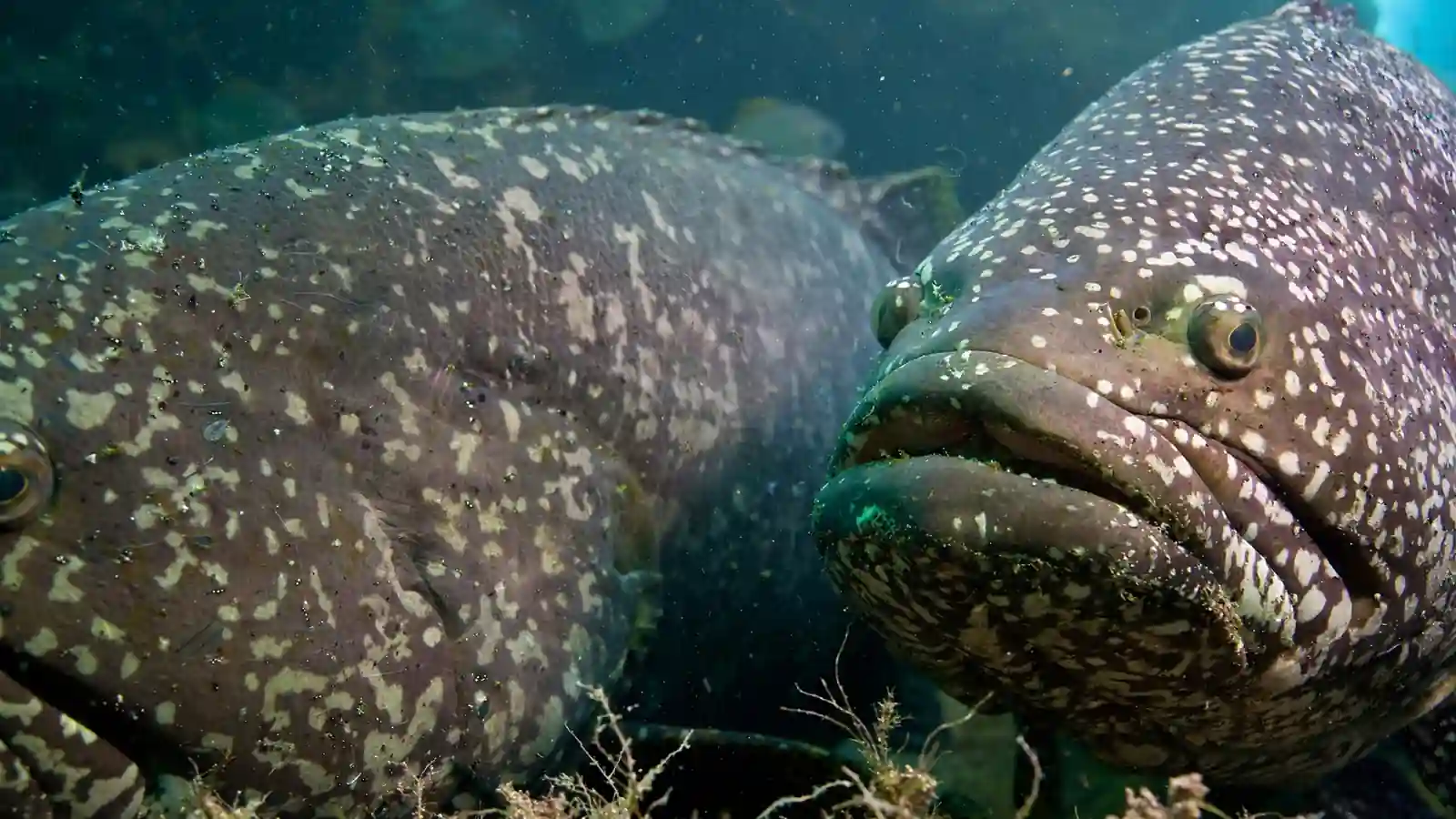
For all their size, giant groupers are famously curious rather than aggressive. Divers regularly report being approached by one that wants a closer look, circling slowly, opening its mouth, and following the diver around the reef. Some individuals become so used to people that they recognise regular dive boats and come to investigate the bubbles. They are not tame — they are wild animals with a mouth full of teeth — but they are not the monsters their size suggests.
They are also solitary and territorial. An adult holds a patch of reef and defends it from other groupers, though it tolerates the small fish that clean its skin and pick parasites from its gills. Younger groupers are shyer, hiding in caves and crevices until they are big enough that nothing on the reef can threaten them. Once it reaches full size, it has almost no natural enemies at all.
Life Cycle and Growth

It starts life as a tiny larva drifting in the open ocean, then settles on a shallow reef as a juvenile — a small, mottled fish a few centimetres long, hiding among coral branches and in rock pools. It grows slowly, adding bulk year by year, and it takes many years to reach the metre mark. The mottled pattern is there from the start, breaking up the outline against the reef and helping a young fish that is still small enough to be eaten.
Growth slows as the fish ages, and the largest individuals are the oldest fish on their reef. How long it can live is not well documented — the species is hard to study across its full lifespan — but slow growth and late maturity mean the population recovers slowly from fishing. That is why the species is listed as Vulnerable, and why protecting the big breeding adults matters more than protecting the juveniles.
Conservation Status
It is listed as Vulnerable, and the reason is straightforward: it grows slowly, matures late, and is a prized catch. A single large fish can feed a family for days, and in some parts of its range the species was fished heavily for decades. Reef loss and the destruction of mangrove nurseries have added to the pressure, because young groupers need sheltered inshore water to grow up in.
Protection is working where it exists. Giant groupers are protected in several countries and in marine reserves, and in protected areas their numbers have recovered — divers in some reserves now see giant groupers on most dives. The lesson is the same as for most slow-growing reef fish: leave the big adults alone, protect the nurseries, and the population comes back.
Fun Facts
- It can swallow a small shark whole — its mouth opens wide enough to inhale prey in a single gulp.
- The largest giant groupers are longer than a tall diver and heavier than a grand piano.
- Giant groupers are curious about divers and will often circle slowly to inspect the bubbles.
- The mottled pattern is there from birth, camouflaging a juvenile that is still small enough to be eaten.
- An adult has almost no natural enemies — nothing on the reef can threaten a 400 kg fish.
- The goliath grouper, its Atlantic cousin, is a different species — and it is Vulnerable, not Critically Endangered as older pages claim.
Frequently Asked Questions
How Big Do Giant Groupers Get?
A giant grouper can reach 2.7 metres and 400 kg, making it one of the largest bony reef fish in the world. Most adults are smaller, around one to two metres, and the biggest individuals are the oldest fish on their reef.
What Is the Difference Between a Giant Grouper and a Goliath Grouper?
They are different species in different oceans. The giant grouper (Epinephelus lanceolatus) lives in the Indo-Pacific; the goliath grouper (Epinephelus itajara) lives in the Atlantic and grows to about 2.5 metres and 363 kg. Both are listed as Vulnerable.
Where Do Giant Groupers Live?
On coral reefs, rocky shores and in estuaries across the Indo-Pacific, from the Red Sea and East Africa to the western Pacific. Adults hold a cave, wreck or coral bommie on the reef; juveniles shelter inshore among mangroves and estuaries.
What Do Giant Groupers Eat?
Reef fish, lobsters, crabs and shrimp — and large adults have taken small sharks and sea turtles. They are ambush predators that open their huge mouths to suck prey in whole, with no chase.
Are Giant Groupers Dangerous to Divers?
No. They are curious rather than aggressive and often approach divers to investigate. They are wild animals with a large mouth, so divers keep a respectful distance, but there is no record of giant groupers hunting people.
How Long Do Giant Groupers Live?
Their lifespan is not well documented, because the species is hard to study across its full life. They grow slowly and the largest fish are the oldest on their reef, which is why slow growth matters so much for their conservation.
Are Giant Groupers Endangered?
They are listed as Vulnerable, not endangered. Slow growth, late maturity and heavy fishing pressure put them at risk, but protection in several countries and marine reserves has helped numbers recover where it exists.
Similar Species Worth Exploring
Keep Exploring
Still exploring reef-giant country? Meet a smaller cousin in the Coral Trout guide, watch the reef’s other ambush hunter in the Great Barracuda guide, size up the whole family in the Types of Reef Fish hub, and then come back to the reef to meet the giant grouper.