Pipefish
Pipefish: the seahorse relative where the males give birth
The pipefish is a seahorse stretched straight — a long, thin fish with a tube snout, a curled tail it rarely uses, and a family secret: the males get pregnant. The male carries the eggs in a pouch or glued to his belly, and he gives birth to tiny, perfect young. It is a fish that hides in plain sight, swaying like seaweed.
By Emily Carter · Reviewed by our vet team · Updated 10 November 2026 · 8 min read
Males carry the babiesA seahorse stretched straightHides by swaying like seaweed
At a Glance
The pipefish is a straight-bodied relative of the seahorse, a long thin fish of the family Syngnathidae that looks like a seahorse pulled straight. It has the same tube snout, the same tiny fins and the same upright posture, but instead of curling its tail around a stem it swims horizontally, drifting through seagrass and seaweed like a swaying stem. And like the seahorse, it hands the eggs to the male — he carries them in a brood pouch or glued to his belly, and he gives birth to live young.
What Is It?
It is a fish of the seahorse family, Syngnathidae, built like a straight, armoured tube: a long snout, a body covered in bony rings instead of scales, a tiny dorsal fin that beats almost invisibly, and a tail it uses for swimming rather than gripping. It swims upright or horizontally, moving slowly through seagrass and seaweed, and it is so well camouflaged that it is often mistaken for a piece of weed drifting in the current.
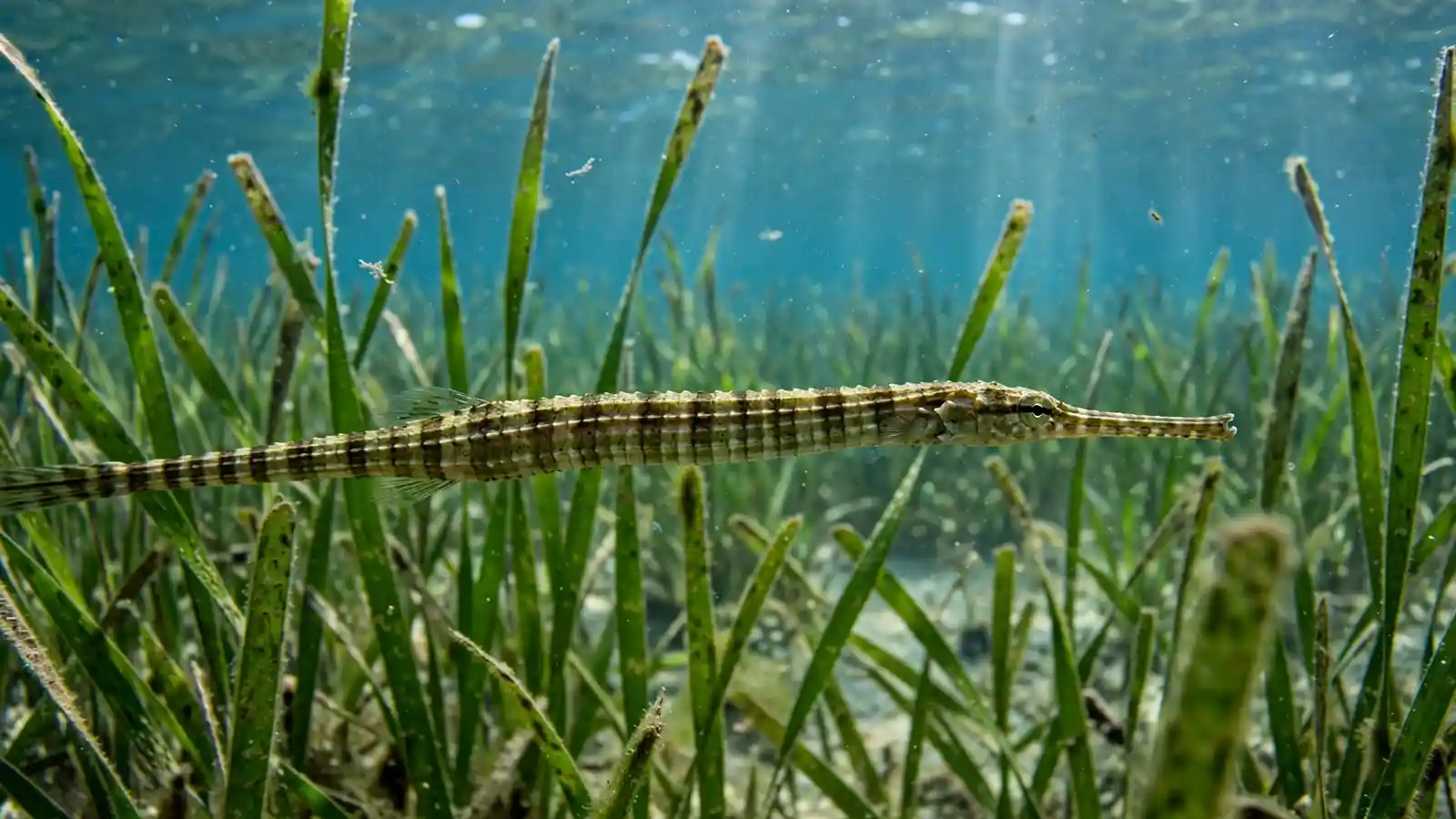
There are over 200 species in the family, in many shapes and sizes, from the tiny dwarf forms of a few centimetres to the large flagtail forms of half a metre. They live in tropical and temperate seas around the world, in seagrass meadows, seaweed beds, coral reefs, estuaries and even freshwater. The pregnant male story explains the family’s most famous trick — the male that carries the babies.
Pipefish Size and Appearance
Most are 10 to 30 centimetres long, and most species stay under 50 centimetres — a conservative figure, since one source’s claim of 65 centimetres is not well supported and is not used here. Their bodies are long and thin, covered in bony rings that make them stiff, and they have no pelvic fins and no real tail fin: the tail is a small, fan-like fin, or just a pointed tip. The head is small, with a long tube snout and eyes that move independently, like a seahorse’s.
The colour is camouflage. They are green, brown, yellow or reddish, to match the seagrass or seaweed they live in, and some species can change colour a little to match their surroundings. The body is often banded or mottled, which breaks up the outline, and the fish sways with the water, moving like a stem rather than a fish. It is a disguise that works: predators swim straight past one, and divers often miss it entirely.
Vs Seahorse: How to Tell Them Apart
These fish and seahorses are close cousins, and they share the tube snout, the bony rings, the tiny fins and the male pregnancy. The difference is the shape: a seahorse stands upright, with a curled prehensile tail that grips a stem, a coronet on its head and a body bent at a right angle. This fish swims horizontally, with a straight body, a small tail fin and no coronet, and it rarely grips anything.
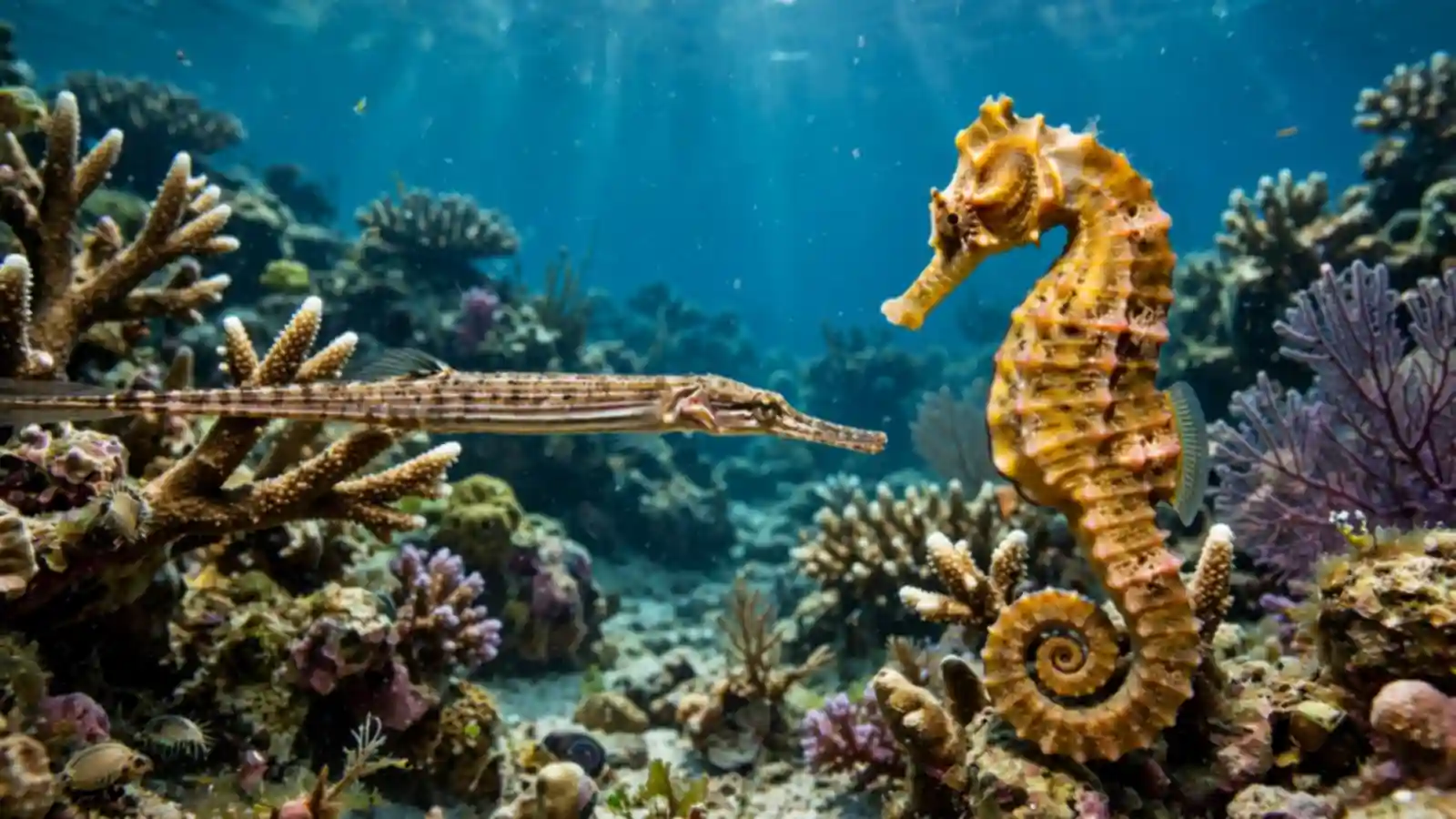
The difference is also in the life. A seahorse waits, curled around a stem, and ambushes prey that drifts past. This fish drifts and swims, moving slowly through the seagrass and picking off tiny crustaceans as it goes. Both are poor swimmers, both are masters of camouflage, and both hand the eggs to the male — but the seahorse is the waiter and this fish is the drifter. The seahorse guide tells the story of the family’s most famous member.
Habitat: Seagrass and Reefs
They live in seagrass meadows, seaweed beds, coral reefs, estuaries and mangroves, in tropical and temperate seas around the world. They are most common in shallow, sheltered water, where the seagrass is thick and the current is gentle, and they are rarely found far from cover. An individual that drifts into open water is easy prey, so it stays where the weed is.
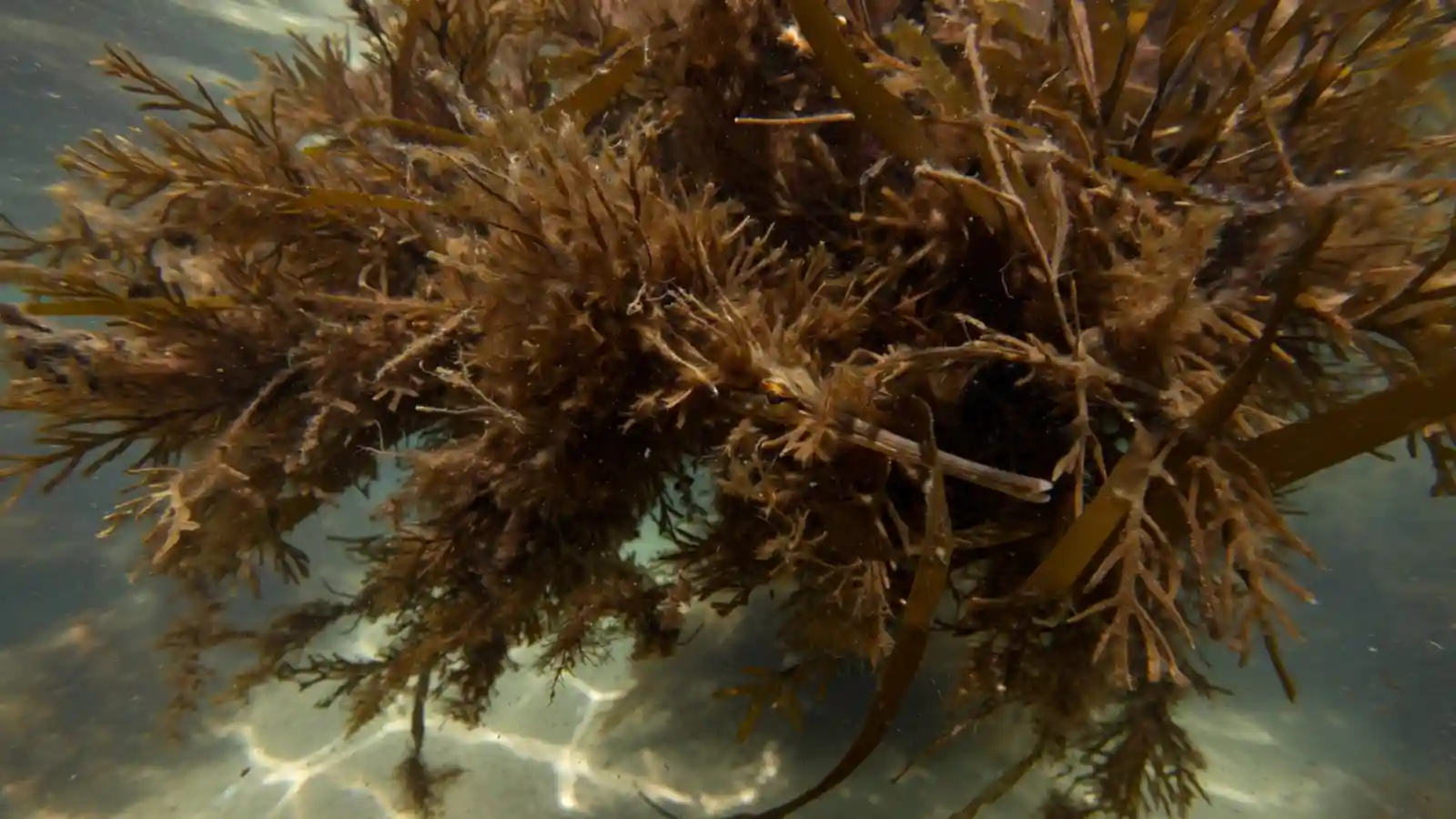
The seagrass meadow is its home, hunting ground and nursery in one. The fish sways with the blades, picks off the tiny crustaceans that live on them, and hides from predators among the stems. When the meadow is damaged — by pollution, dredging or warming water — they disappear with it, which makes them good indicators of seagrass health. Protecting the meadows protects everything that hunts, hides and raises its young among the blades. That cover is the whole strategy: stay hidden, stay close, and let the food drift within reach. The weedy seadragon, another seahorse relative, lives the same drifting life in southern Australian kelp.
Pipefish Male Pregnancy Explained
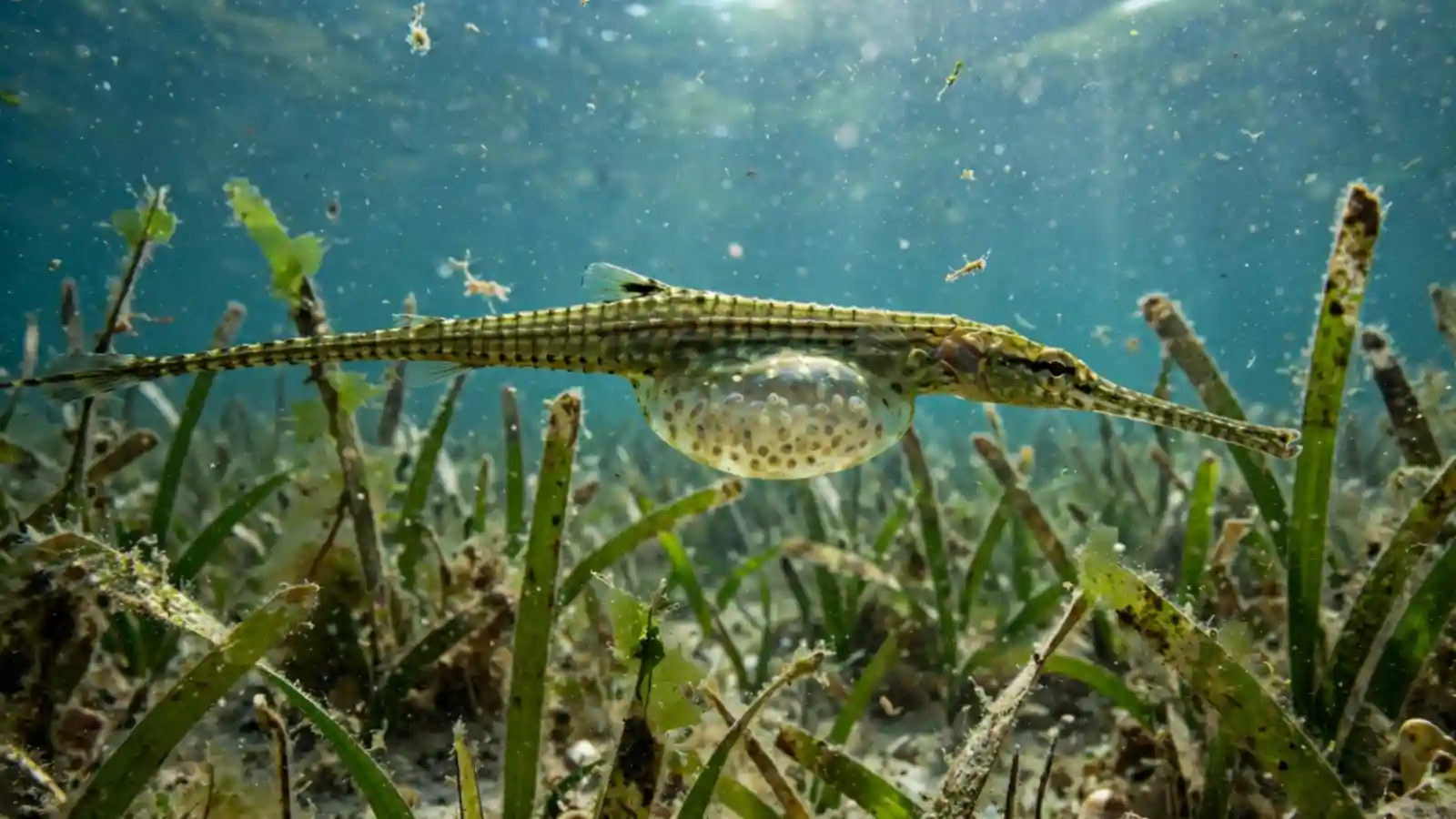
Male pregnancy is its most famous trait, and it works like this: the female deposits her eggs onto the male, and he carries them until they hatch. In some species the male has an enclosed brood pouch, like a seahorse’s; in others the eggs are glued to a spongy patch on his belly, open to the water. Either way, the male fertilises the eggs, protects them, and gives birth to live young — tiny, perfect young, a few millimetres long.
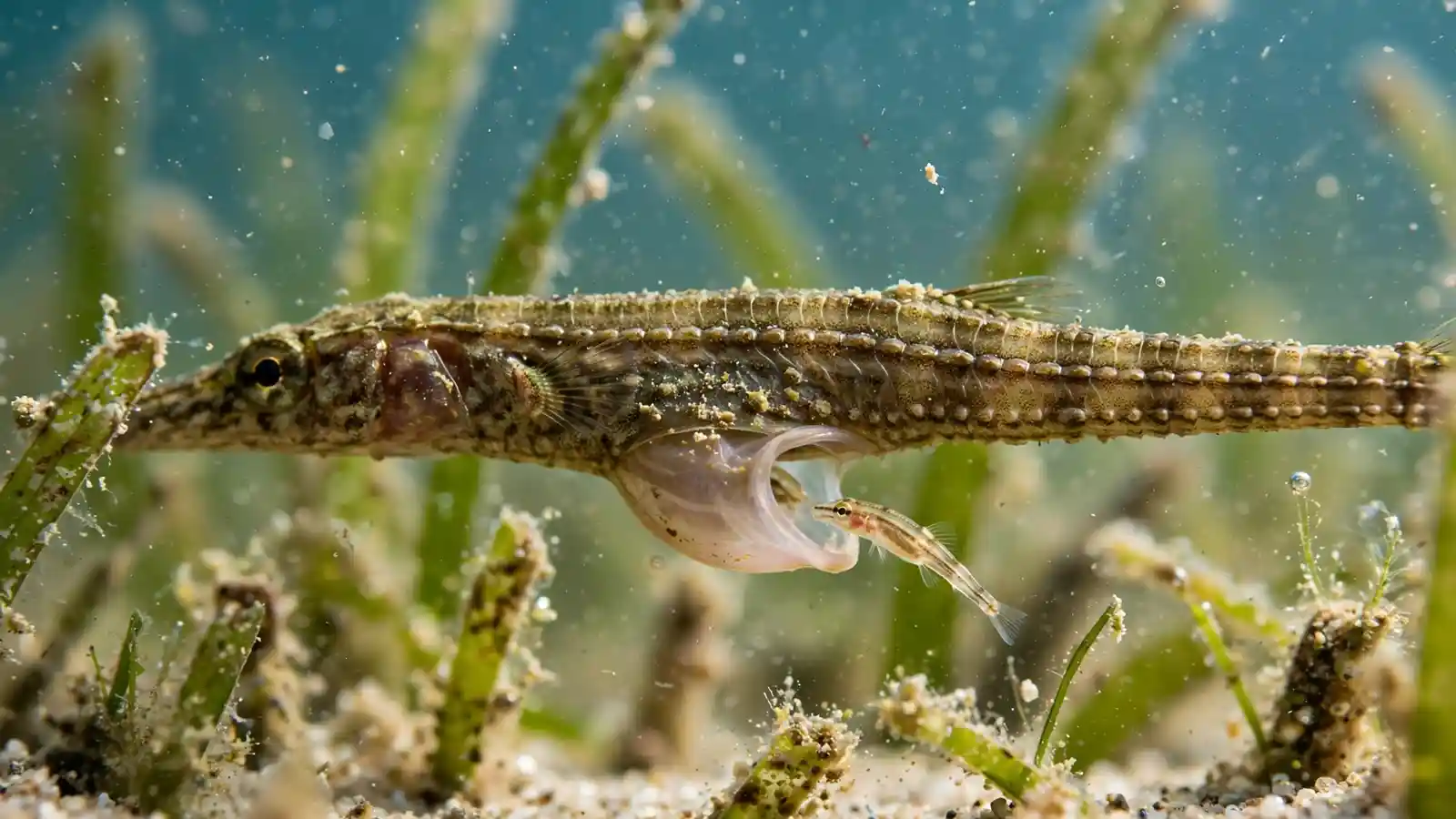
The male’s care goes further than carrying. He supplies the eggs with oxygen and nutrients, and he can even adjust how much he invests depending on how attractive he finds the female — a finding that made them famous in the study of sexual selection. A male may carry dozens to hundreds of eggs at a time, and he may carry several broods in a season. The babies are on their own from birth, drifting in the plankton until they settle into the seagrass.
Diet and Hunting
They eat tiny crustaceans — copepods, mysid shrimp, amphipods and the larvae of larger animals — sucked in whole through the tube snout. They have no teeth and they do not chew: they creep up on their prey with slow, almost invisible movements, then snap the snout forward and inhale the prey in a single gulp. The strike takes a fraction of a second, and it may eat dozens of tiny crustaceans in a day.

Hunting is a waiting game, and it is patient. It hangs in the seagrass, watching with eyes that swivel independently, and strikes only when prey drifts within reach of the snout. It cannot chase — a burst of speed would break the disguise — so it feeds where the current brings the food to it. The diet is the same across the family, from the smallest dwarf form to the largest flagtail, and it is why this fish needs rich, plankton-filled water to survive. A meadow that loses its plankton loses the small hunters that depend on it.
Fun Facts
- The males get pregnant — they carry the eggs in a pouch or glued to the belly, and give birth to live young.
- This fish is a seahorse stretched straight, with the same tube snout and bony rings.
- They sway with the seagrass so predators mistake them for weed.
- There are over 200 species in the family, from a few centimetres to about half a metre.
- A male can adjust how much he invests in the eggs depending on the female.
- They have no teeth and no scales — their bodies are covered in bony rings.
Frequently Asked Questions
Do Male Pipefish Really Get Pregnant?
Yes — males carry the eggs until they hatch. In some species the male has an enclosed brood pouch, like a seahorse’s; in others the eggs are glued to a spongy patch on his belly. He fertilises the eggs, protects them, and gives birth to live young.
What Is the Difference Between a Pipefish and a Seahorse?
A seahorse stands upright with a curled tail that grips a stem, while it swims horizontally with a straight body and a small tail fin. Both share the tube snout, bony rings and male pregnancy, but the seahorse waits and it drifts.
How Big Do Pipefish Get?
Most are 10 to 30 centimetres long, and most species stay under 50 centimetres. The smallest dwarf forms are only a few centimetres, and the largest flagtail forms reach about half a metre.
Where Do Pipefish Live?
They live in seagrass meadows, seaweed beds, coral reefs, estuaries and mangroves in tropical and temperate seas around the world. They stay in shallow, sheltered water close to cover, and they are rarely found in open water.
What Do Pipefish Eat?
They eat tiny crustaceans — copepods, mysid shrimp, amphipods and larvae — sucked in whole through the tube snout. They have no teeth and do not chew, and they strike only when prey drifts within reach.
How Many Babies Do Pipefish Have?
A male may carry dozens to hundreds of eggs at a time, depending on the species, and he may carry several broods in a season. The babies are born live, a few millimetres long, and are on their own from birth.
Are Pipefish Endangered?
It varies by species. Most are not well studied, and their status is uncertain, but they depend on seagrass meadows, so they are vulnerable to seagrass loss from pollution, dredging and warming water. A few species are listed as threatened.
Similar Species Worth Exploring
Keep Exploring
Keep exploring the seahorse family through the seahorse, the upright cousin that curls its tail and waits, the weedy seadragon, the drifting kelp look-alike, and the wider world of the types of fish. No fish carries its babies quite like the pipefish.