Cannonball Jellyfish
Cannonball Jellyfish: the stingless cannonball
The cannonball jellyfish has no tentacles at all — just frilly mouth-arms and a rubbery bell that leatherback turtles love to eat. This guide follows Stomolophus meleagris through the warm coastal waters of the western Atlantic, and the frilly oral arms that do the work the tentacles would do.
By Emily Carter · Reviewed by our vet team · Updated 10 November 2026 · 10 min read
No tentacles at allBell to 25 cm, like a rubber ballLeatherback turtles love to eat it
At a Glance
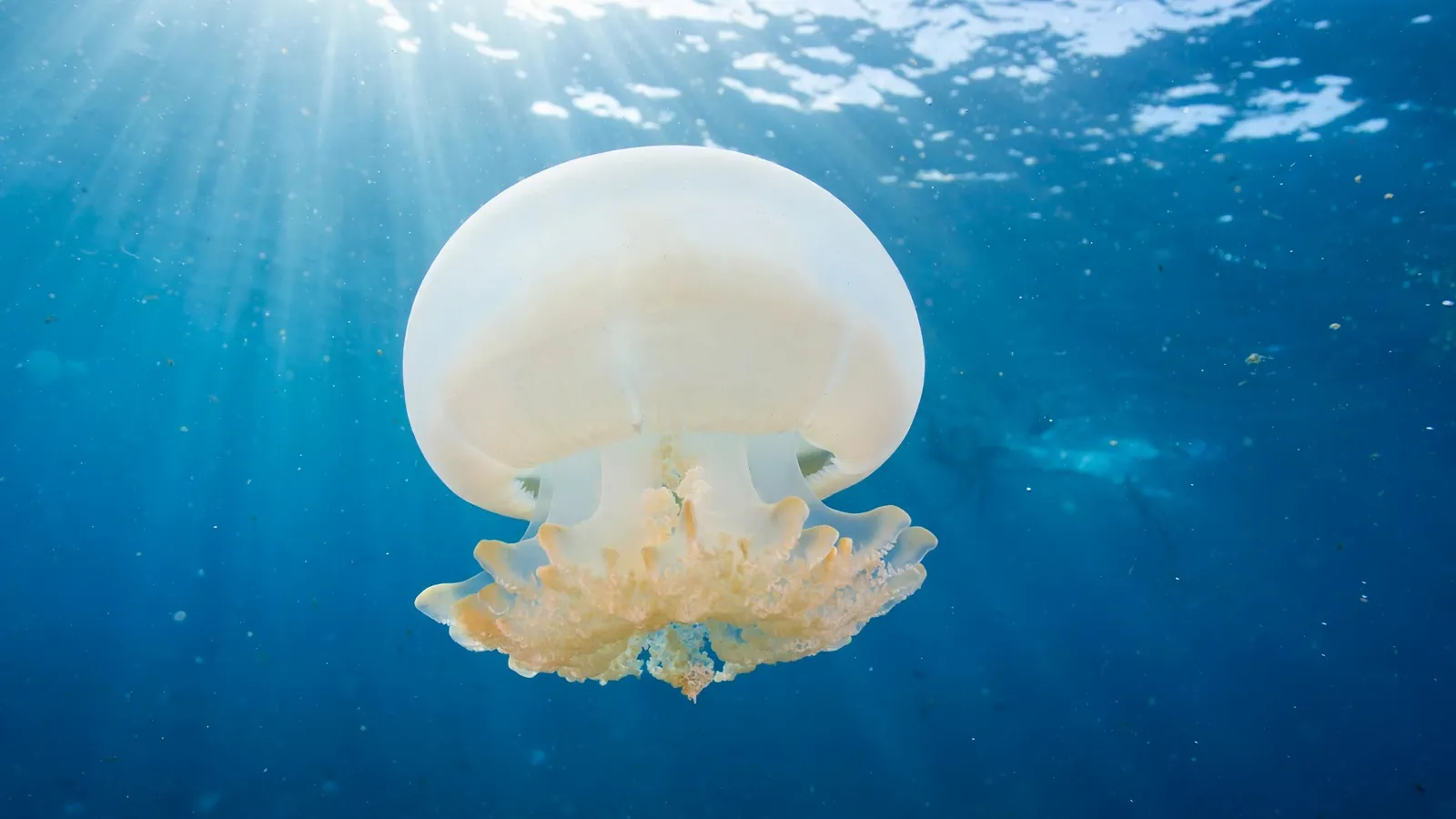
A cannonball jellyfish is a rubbery ball in the sea, and it has no tentacles at all — just a dome of a bell and a frill of mouth-arms underneath. It is the jellyfish that looks least like a jellyfish, and the one that leatherback turtles love to eat. This is the whole animal, at a glance, before the detail begins.
Cannonball Jellyfish Size: A Rubber Ball in the Sea
It has a bell up to 25 centimetres across, a firm rubbery dome that feels like a ball in the hand, and the size is the reason for the name. The bell is not the soft saucer of a moon jellyfish — it is a tough, rounded dome, and it holds its shape out of the water where a moon jellyfish would collapse.
The firmness changes how the animal travels. A soft bell flattens and spills in a beachgoer’s bucket, but this dome keeps its ball shape in a hand, in a net and in a turtle’s mouth. It is packaging as much as anatomy: a meal that holds together on the way down.
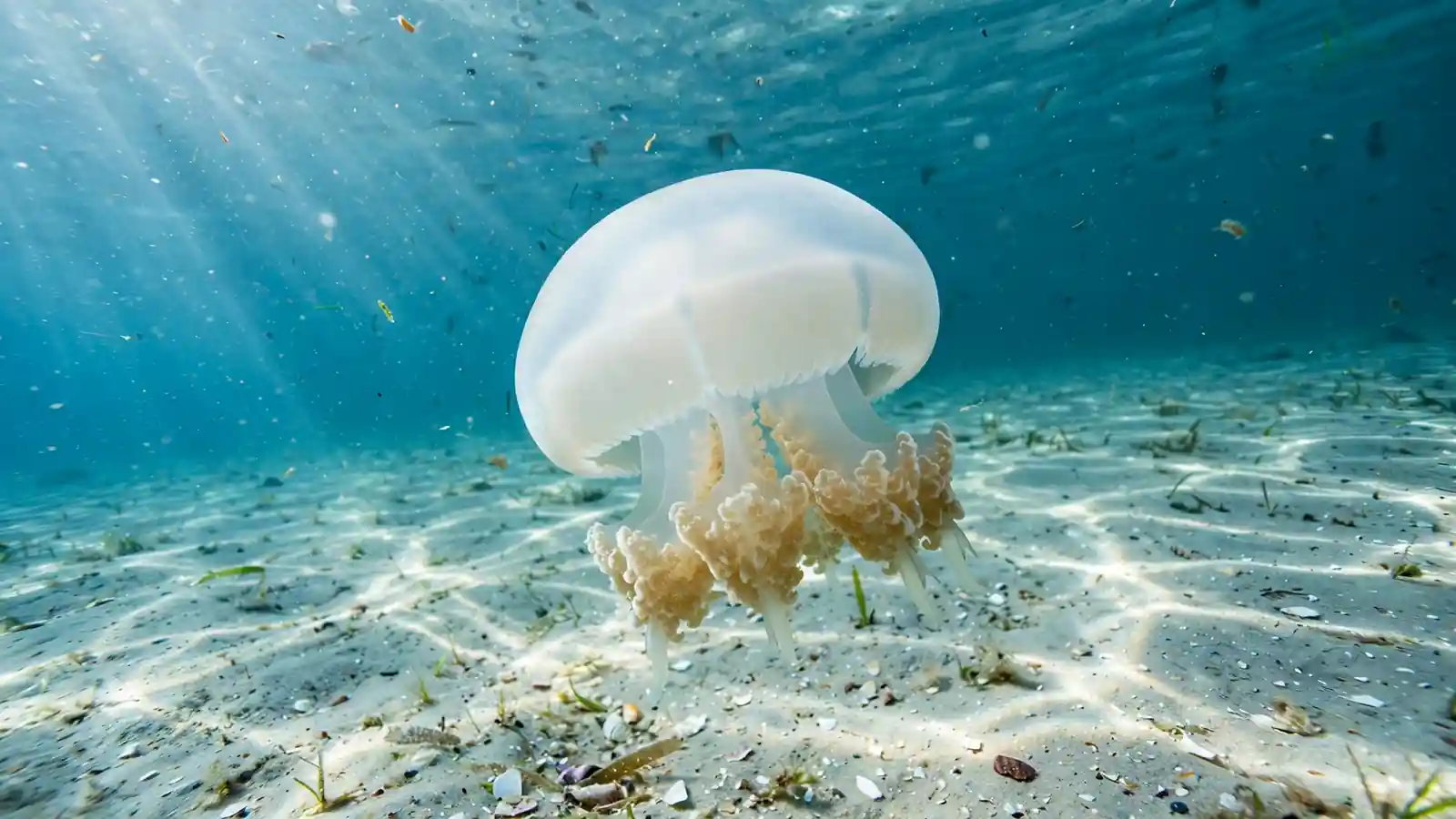
The size is modest for a jellyfish, and the firmness is the point. It is built to be eaten — its bell is the part the leatherback turtle takes, and the rubbery dome is tough enough to survive the journey through the water to the turtle’s mouth.
No Tentacles: The Frilly Oral Arms Instead
It has no tentacles at all. Where other jellyfish trail long stinging threads, the cannonball has fused frilly oral arms — a ruff of folded tissue beneath the bell that does the work the tentacles would do, catching food and passing it to the mouth.
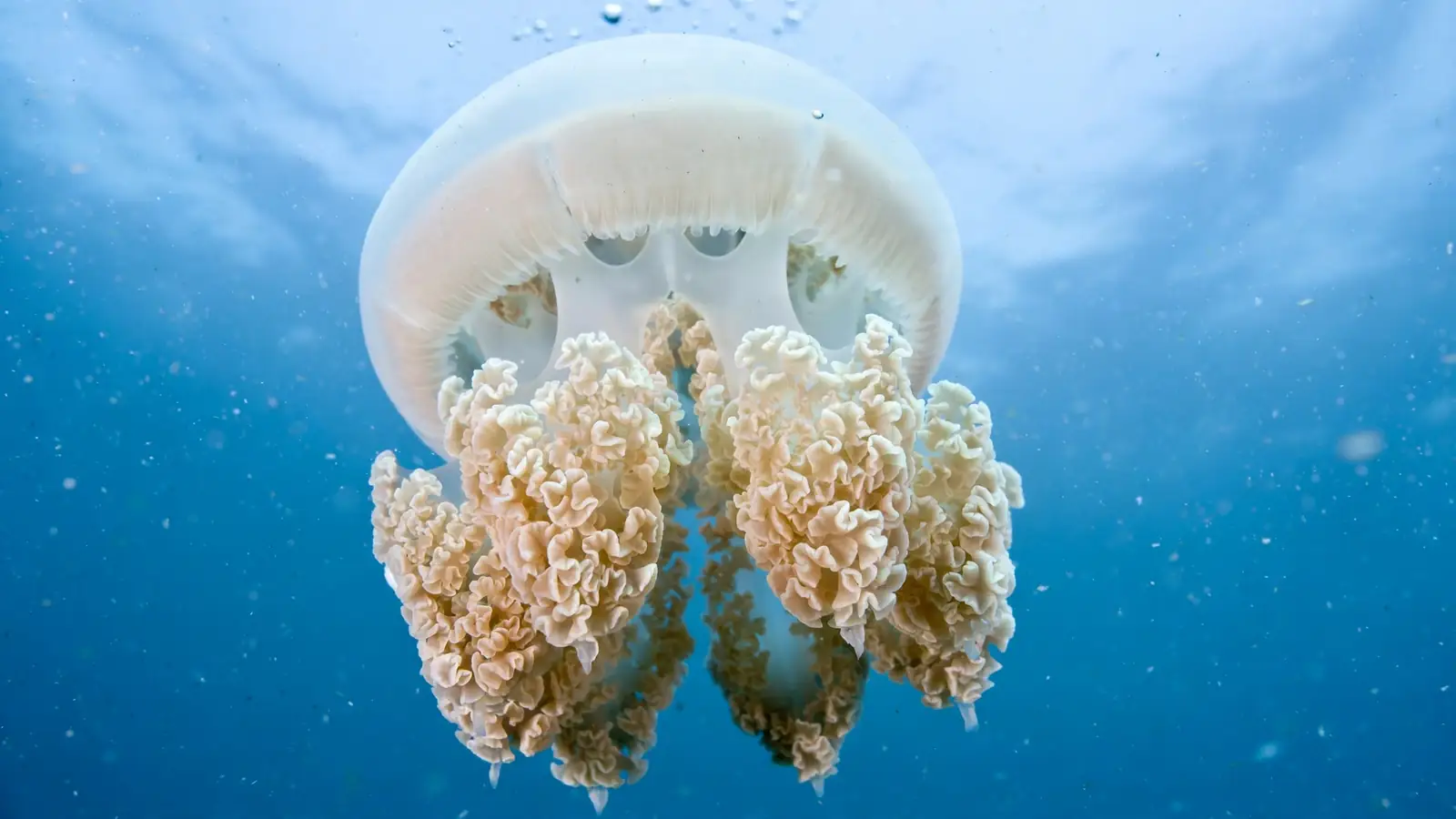
The arms are the defining feature of the animal. They are the reason the cannonball is called stingless, and they are the reason it looks so different from other jellyfish: a dome above, a frill below, and nothing trailing behind. The frill is the mouth, the stomach and the fishing net, all in one.
Where They Live: Warm Coastal Waters
They live in the warm coastal waters of the western Atlantic and the Gulf of Mexico, in shallow water near the shore, where the plankton is rich and the water is warm. They gather in large numbers in the summer, and the strandings on the beaches of the south-eastern United States are a familiar sight.
Summer is the season of crowds. Warm water and thick plankton pull the drifters together in bays and estuaries, sometimes in fleets that stretch along a beach for miles. The same currents that feed them also strand them, and a morning tide line can be dotted with rubbery domes.
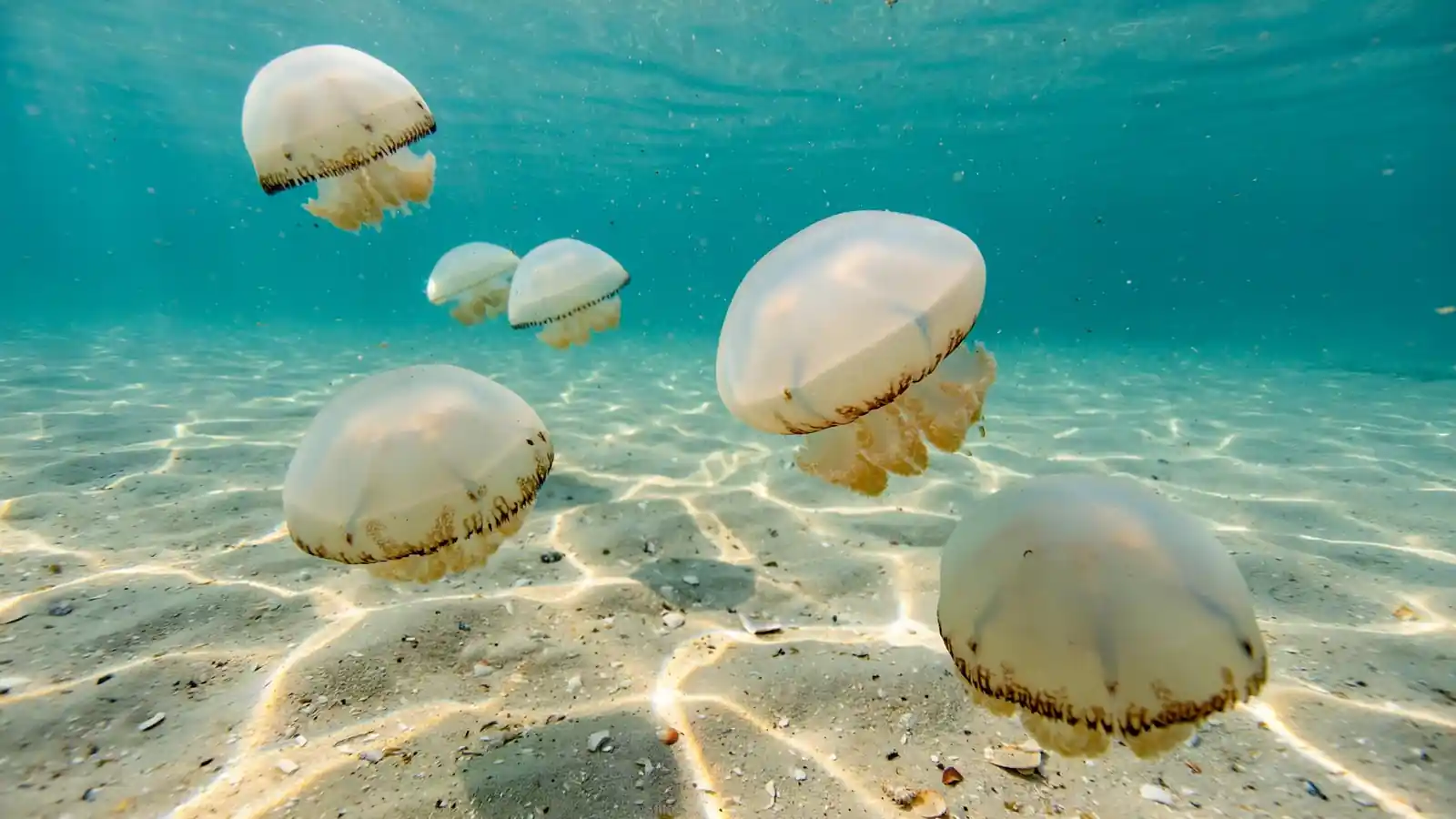
The habitat is the shallow coast, not the open ocean. It stays where the water is warm and the food is near the surface, and it drifts with the currents along the coast, gathering in bays and estuaries where the plankton blooms.
What Do They Eat? Plankton and Small Fish
It eats plankton and small fish, caught in the frill of its oral arms as it drifts. The arms filter the water, trapping the small animals and passing them to the mouth, and the jellyfish feeds continuously as it drifts through the plankton-rich coastal water.
Feeding never really stops. The frill works like a slow sieve dragged through the surface layer, and whatever small animals it traps are passed steadily to the mouth. There is no chase and no strike — just drift, filter and swallow, repeated for every hour the animal spends in rich water.
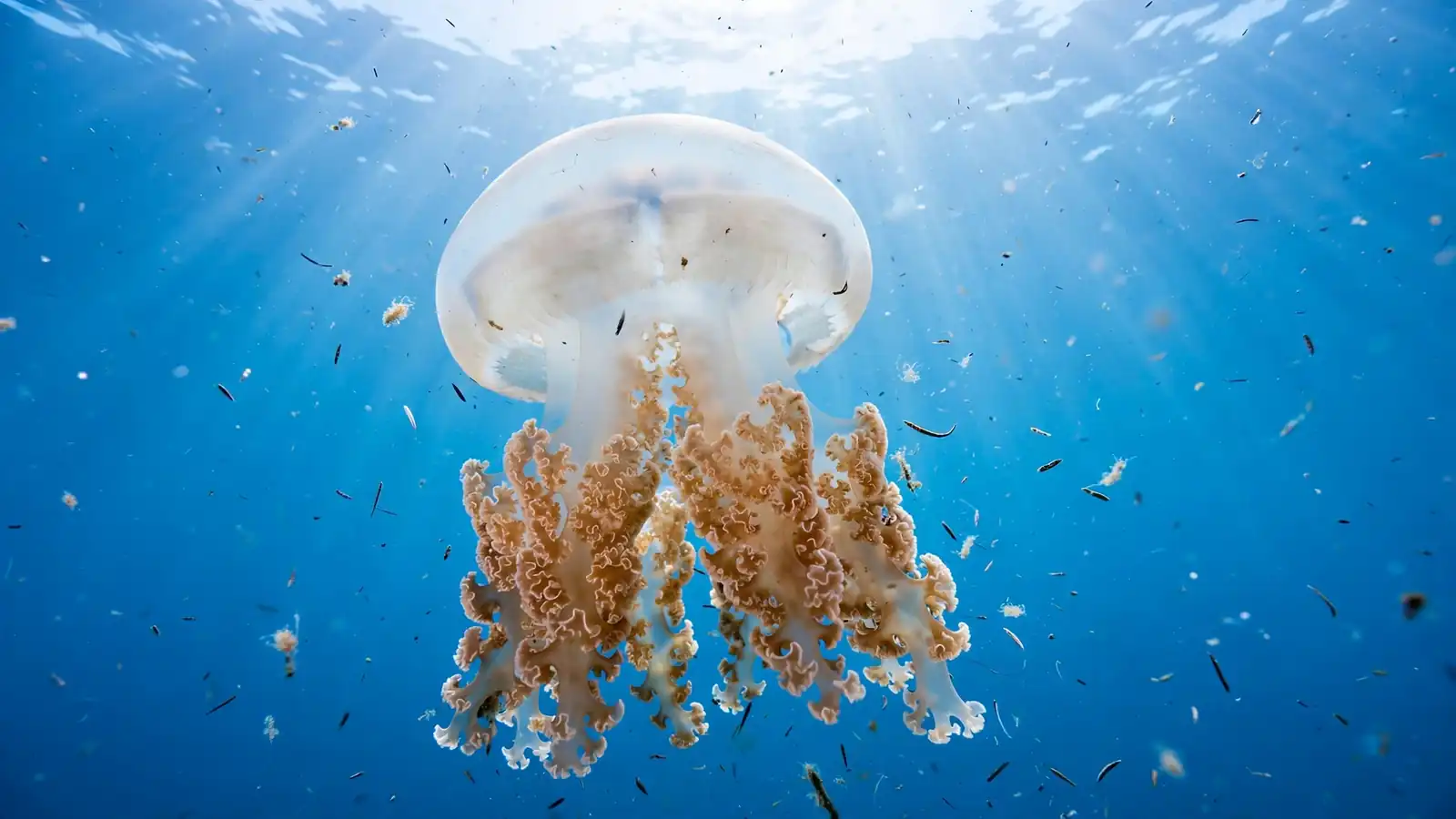
For a wider survey of the species, see this species guide. The diet is the diet of a drifter, and the frill is the net: the cannonball does not chase its food, and the food comes to it in the current.
The Sting: Mild, But Mind Your Eyes
It stings only mildly, and it is often called stingless — but the name is not quite true. When disturbed, the jellyfish releases a toxic mucus, and the mucus can irritate the skin, and the eyes worst of all. A swimmer who touches one and then rubs their eyes will regret it.
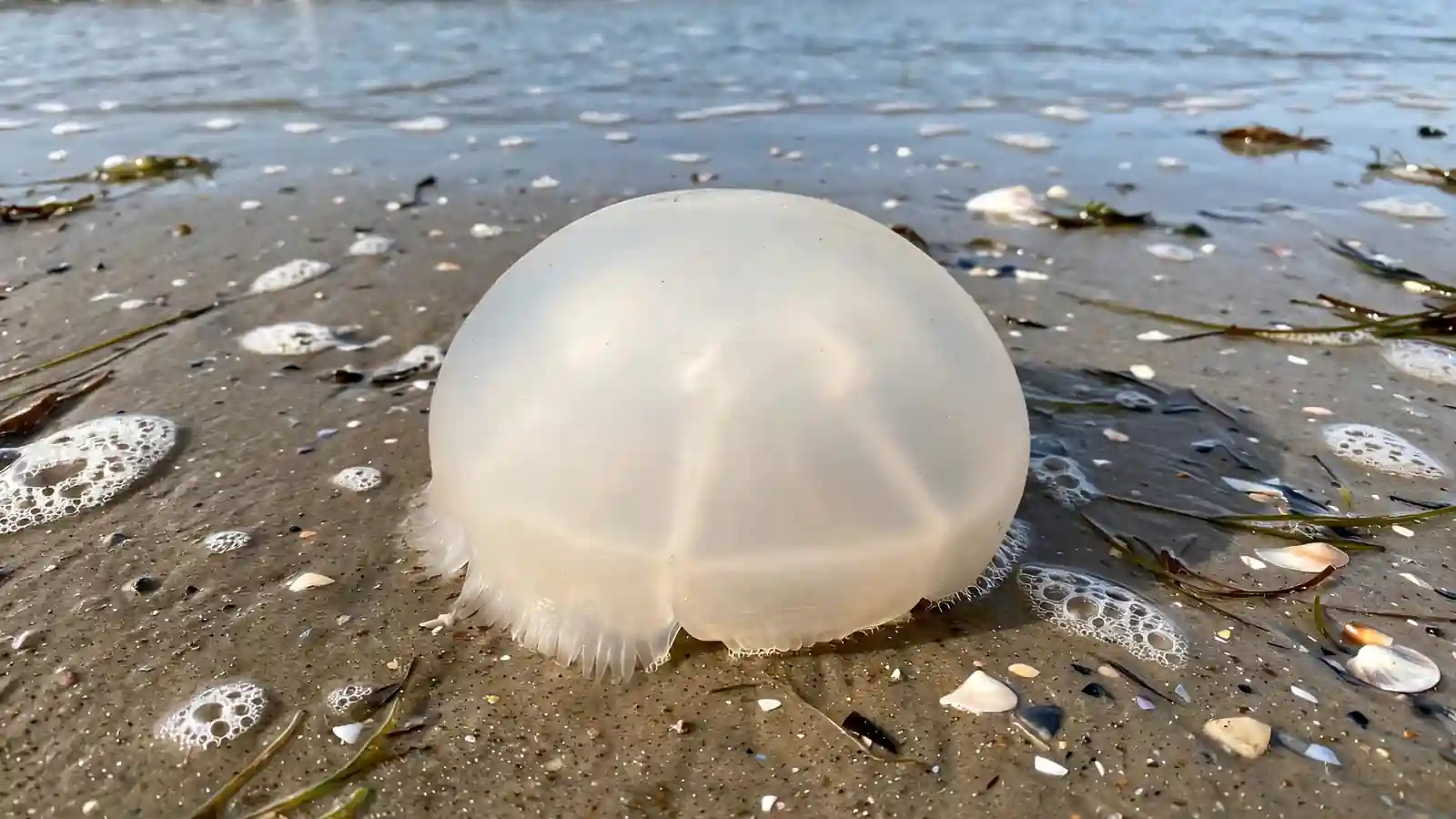
The warning is the eyes. The sting on the skin is mild, a rash at most, but the mucus in the eyes is painful, and the advice is simple: do not touch one, and if you do, wash your hands before you touch your face. The jellyfish is gentle, but its mucus is not.
The eyes warning is the one that matters. Skin contact usually means a rash and a story, but mucus rubbed into an eye means real pain and a ruined swim. Hands that have handled a stranded dome should be rinsed in the sea before they go anywhere near a face.
Cannonball Jellyfish and Leatherbacks: Food for Giants
It is food for giants: the leatherback sea turtle eats it by the hundred, and the jellyfish is one of the leatherback’s favourite foods. The turtle’s mouth and throat are lined with spines that grip the jellyfish, and the rubbery bell is swallowed whole, frill and all.
For the leatherback, the dome is perfect food. The turtle cruises the same warm coastal water, taking the drifters one after another, and the spines in its throat point backwards so each slippery ball slides down and cannot wash back out. Hundreds can go down in a single day’s feeding.
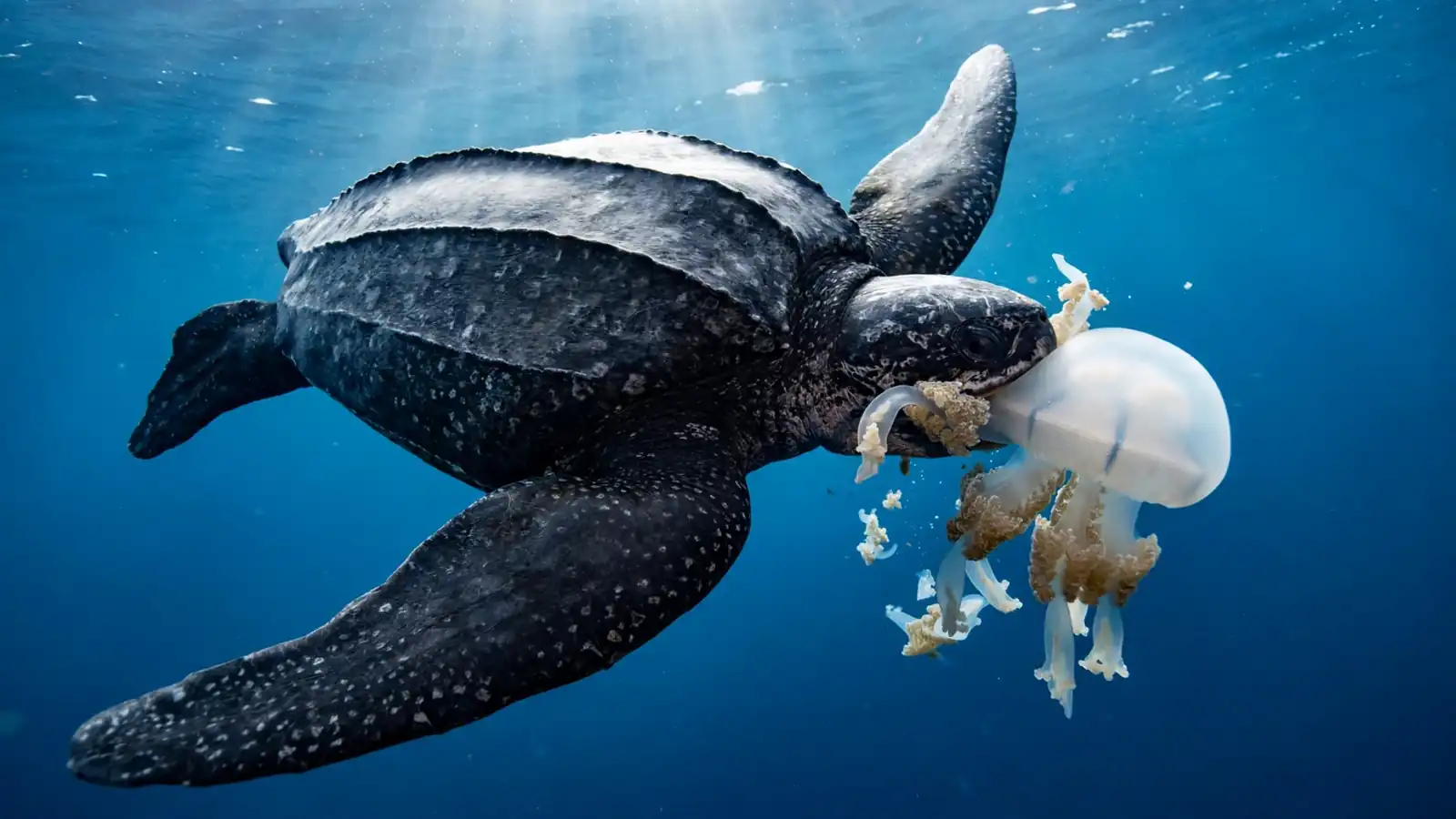
The relationship is the reason the cannonball matters. The leatherback is the largest turtle in the world, and it lives on jellyfish, and the cannonball is one of the jellyfish it lives on. The jellyfish is also a host: juvenile spider crabs ride inside its bell, sheltered by the frill, and the cannonball carries them through the water like a small floating reef.
Life Cycle: A Short Medusa Life
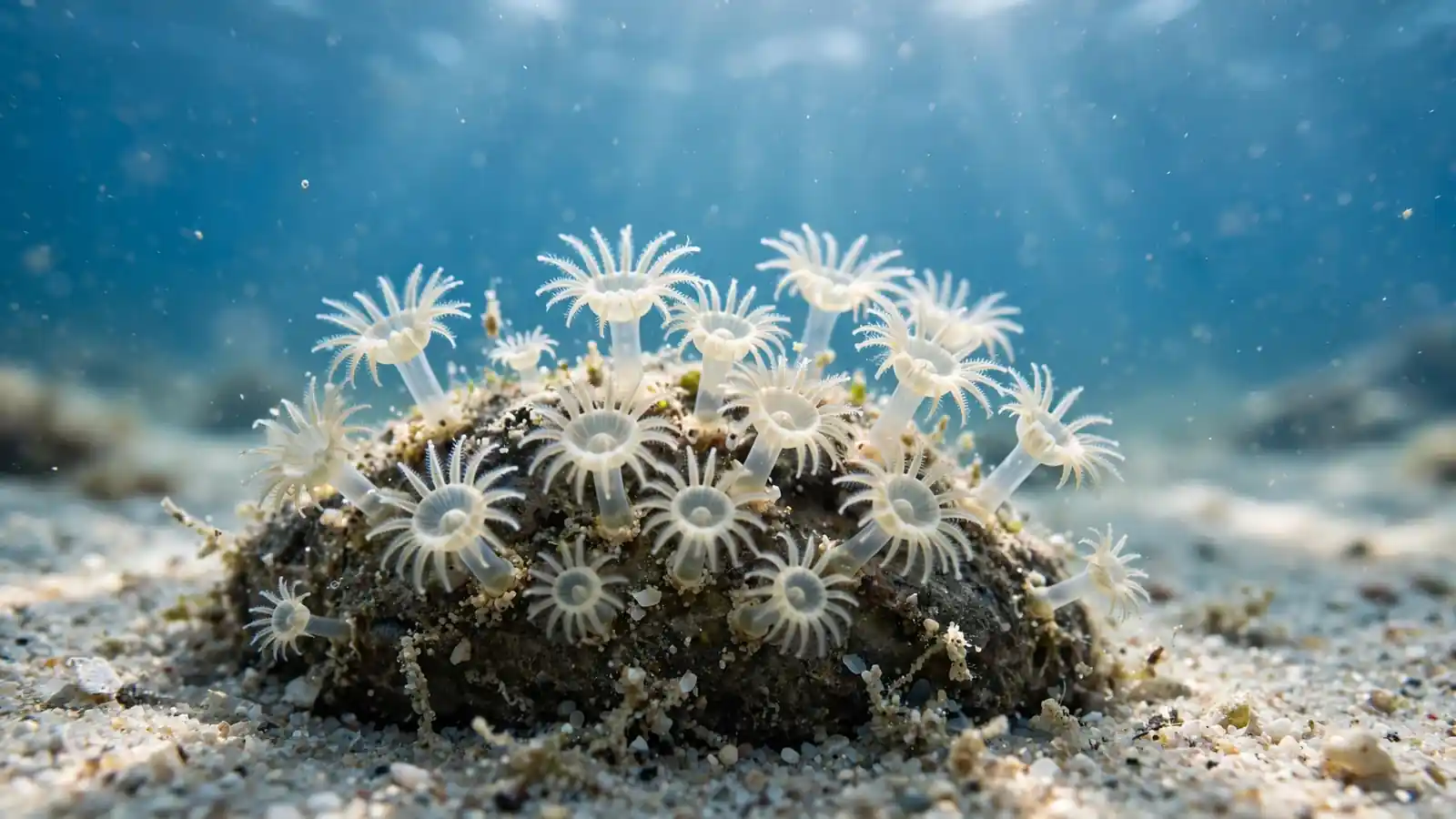
It begins life as a polyp on the seabed, a tiny stalked animal that buds off young medusae, and the medusa is the animal we know — the rubbery bell that drifts in the coastal water. The polyp stage is long and hidden, and the medusa stage is the part that swims.
The medusa’s summer is short and complete. Three to six months is the whole of it: growth, mating and death inside a single warm season. What carries the species through winter is the hidden half — polyps waiting on the seabed, ready to bud off the next summer’s drifters.
The medusa lives for only 3 to 6 months, according to the Georgia fishery plan, and it grows fast, mates, and dies within a single summer. The life is short, and the jellyfish makes the most of it: a summer of drifting, feeding, and being eaten, and then the next generation begins again from the polyps on the seabed.
Fun Facts
- It has no tentacles at all — just frilly oral arms.
- Its bell grows to 25 cm and feels like a rubber ball.
- The medusa lives for only 3 to 6 months.
- Leatherback sea turtles eat them by the hundred.
- Juvenile spider crabs ride inside its bell, sheltered by the frill.
- When disturbed, it releases a toxic mucus — worst in the eyes.
Frequently Asked Questions
What Is a Cannonball Jellyfish?
It is a jellyfish with a firm, rubbery bell, Stomolophus meleagris, that lives in the warm coastal waters of the western Atlantic and the Gulf of Mexico. It has no tentacles at all — just frilly oral arms beneath its bell.
Do Cannonball Jellyfish Sting?
Only mildly. It is often called stingless, but when disturbed it releases a toxic mucus that can irritate the skin, and the eyes worst of all. Do not touch one, and wash your hands before touching your face.
Why Do Cannonball Jellyfish Have No Tentacles?
It has no tentacles because its oral arms are fused into a frilly ruff that does the work instead. The frill catches food and passes it to the mouth, so the jellyfish needs no trailing tentacles.
How Big Do Cannonball Jellyfish Get?
It grows to a bell of about 25 centimetres across. The bell is a firm, rubbery dome that holds its shape out of the water, unlike the soft saucer of a moon jellyfish.
Where Do Cannonball Jellyfish Live?
They live in the warm coastal waters of the western Atlantic and the Gulf of Mexico, in shallow water near the shore. They gather in large numbers in summer and often strand on south-eastern United States beaches.
What Eats Cannonball Jellyfish?
Leatherback sea turtles eat them by the hundred, and the jellyfish is one of the leatherback’s favourite foods. The turtle’s mouth and throat are lined with spines that grip the jellyfish as it is swallowed whole.
How Long Do Cannonball Jellyfish Live?
Its medusa stage lives for only 3 to 6 months, according to the Georgia fishery plan. It grows fast, mates, and dies within a single summer, and the next generation begins again from the polyps on the seabed.
Similar Species Worth Exploring
Keep Exploring
Keep exploring the jellyfish: meet the leatherback sea turtle, the giant that eats the cannonball, or browse the whole family in our guide to the types of jellyfish. Then come back to the warm coast, home of the cannonball jellyfish.