Atlantic Puffin: Burrows, Beak and Colony Life Facts
Atlantic Puffin: Burrows, Beak and Colony Life Facts
The Atlantic puffin is the clown of the sea — a small seabird with a bright, striped bill, a black-and-white body and an upright, penguin-like stance. It spends the winter far out in the North Atlantic and returns each spring to the same cliff colonies, digging burrows and raising a single chick, the puffling.
By Emily Carter · Reviewed by our vet team · Updated 10 November 2026 · 8 min read
Colourful billBurrow nester60% in Iceland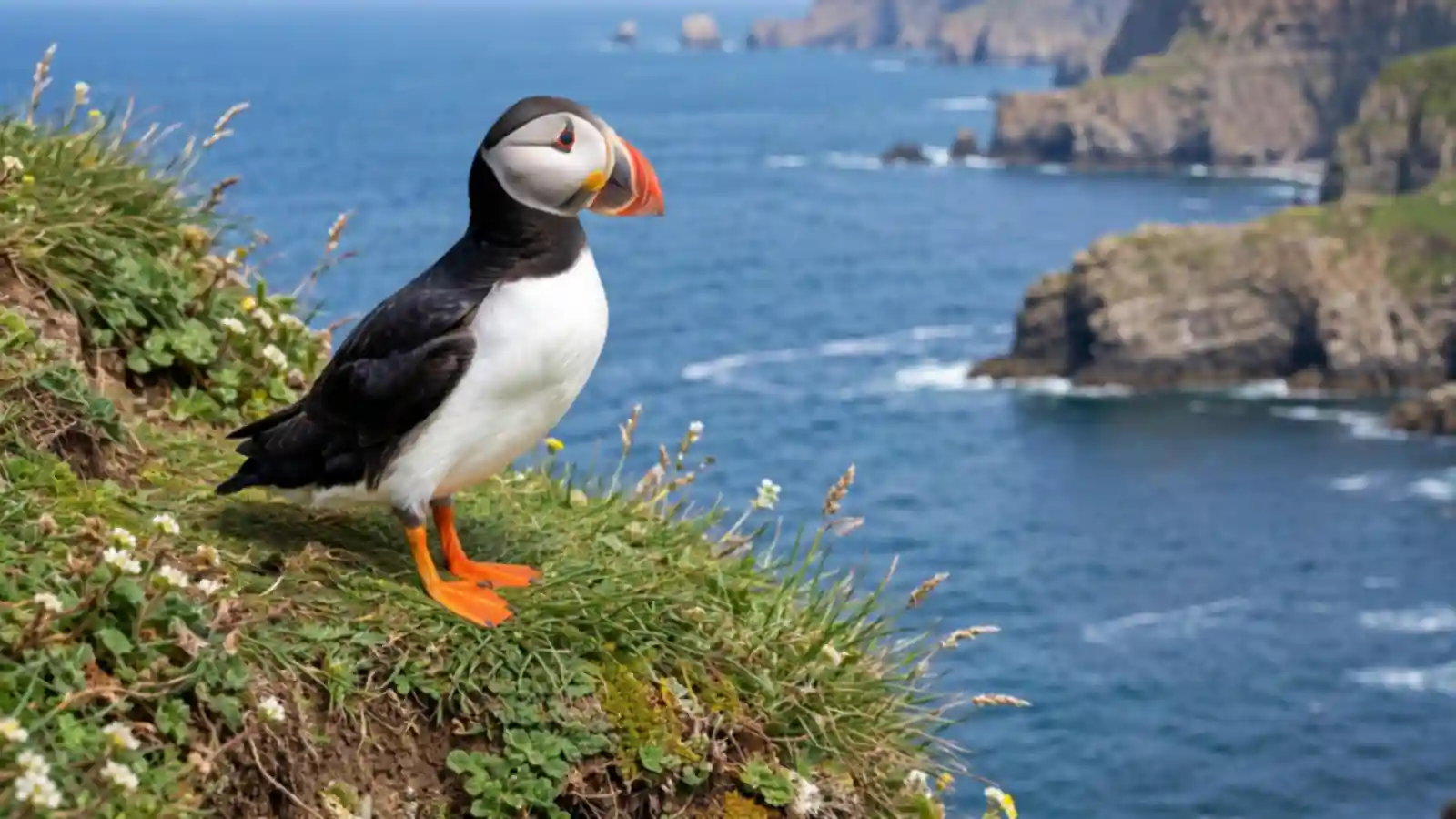
At a Glance
The Atlantic puffin is a small seabird of the North Atlantic, and one of the most recognisable birds in the world. It is a member of the auk family, a group of diving seabirds, and it spends most of its life at sea — coming ashore only to breed, on the cliffs and islands of the North Atlantic, where it digs a burrow and raises a single chick. Its bright, striped bill, its black-and-white plumage and its upright stance have made it the clown of the sea, and the mascot of the North Atlantic coast.
What Is an Atlantic Puffin?
The puffin is a seabird in the auk family, and its scientific name is Fratercula arctica — “little brother of the north”, for the black-and-white plumage that looks like a monk’s habit. It is one of three puffin species in the world, alongside the tufted puffin and the horned puffin of the North Pacific, and it is the only puffin of the Atlantic.
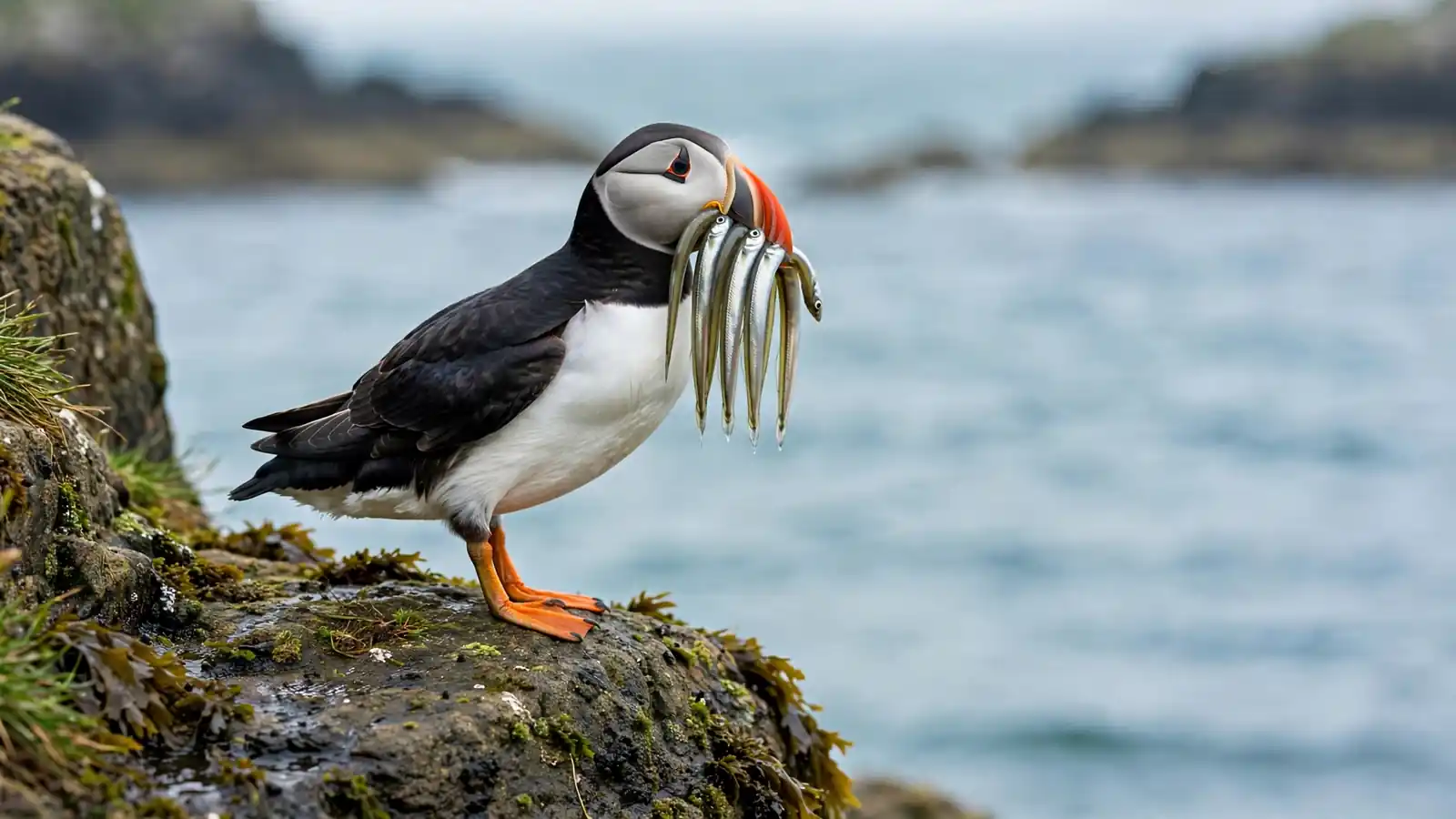
The puffin is small — 28 to 30 centimetres long, with a wingspan of 47 to 63 centimetres — and it is built for two worlds: it flies with fast, whirring wingbeats, and it swims underwater with its wings, chasing small fish in dives that can reach 60 metres. On land it stands upright, waddling on orange legs, and its bright bill — red, yellow and blue-grey in the breeding season — is the most colourful part of the bird.
Atlantic Puffin Bill: The Colourful Beak
The puffin’s bill is its signature: a large, triangular beak, striped in red, yellow and blue-grey, with a bright orange-red base. The bill grows its colours in spring, for the breeding season, and sheds the outer plates in winter, becoming smaller and duller — a seasonal change that is unique among seabirds, and the reason the puffin looks so different in summer and winter.
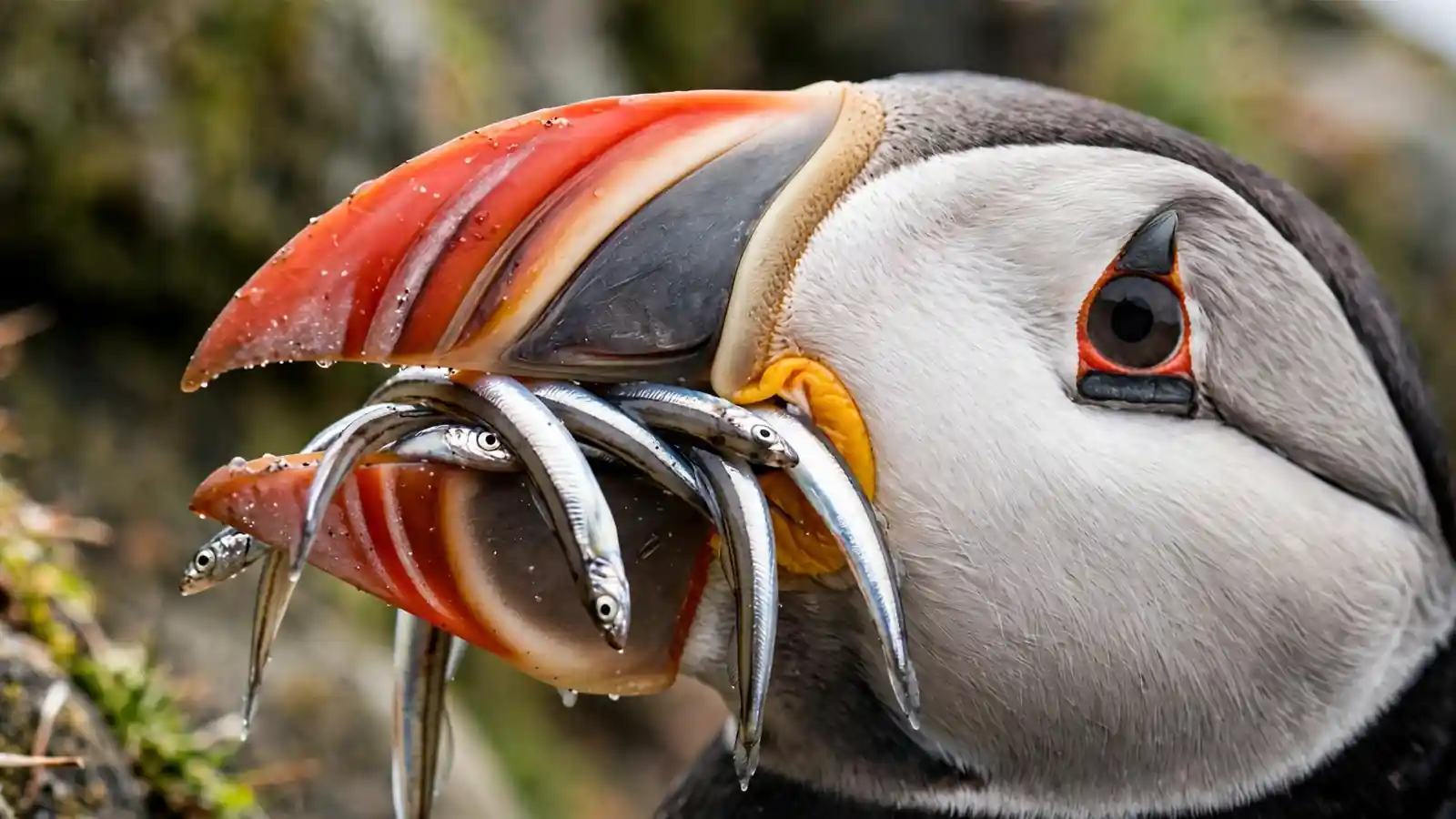
The bill is also a tool. Its serrated edges grip fish, and the puffin can hold a row of small fish crosswise in its beak — sometimes a dozen or more at once — while it catches another, thanks to a spiny tongue that pins the fish against the roof of the mouth. The record is a puffin photographed with 62 small fish in its bill, a feat that has made the puffin’s fishing technique famous.
Iceland: Home to 60% of the World’s Puffins
Iceland is the puffin’s heartland: about 60 percent of the world’s Atlantic puffins breed there, on the cliffs and islands around the coast. The largest colonies are on the Westman Islands, off the south coast, and on Grimsey Island in the north — colonies of hundreds of thousands of birds, so dense that the cliffs seem to move with them.
The Icelandic colonies are also where the puffin’s troubles are most visible. The population has fallen in recent decades, as warming seas have reduced the sand eels the puffins feed their chicks, and the Icelandic colonies have shrunk by a third or more in some places. The puffin’s story in Iceland is the story of the North Atlantic in miniature: a bird that depends on cold water and small fish, in a sea that is warming.
Atlantic Puffin Colonies: Cliff Cities
Atlantic puffins breed in colonies — cliff cities of burrows, sometimes hundreds of thousands of birds strong, on islands and headlands around the North Atlantic. The colonies are noisy, crowded and full of coming and going: birds arriving with fish, birds leaving for the sea, birds standing at their burrow entrances, calling to their mates. The colonies are also fiercely faithful: a puffin returns to the same colony, and often the same burrow, year after year.
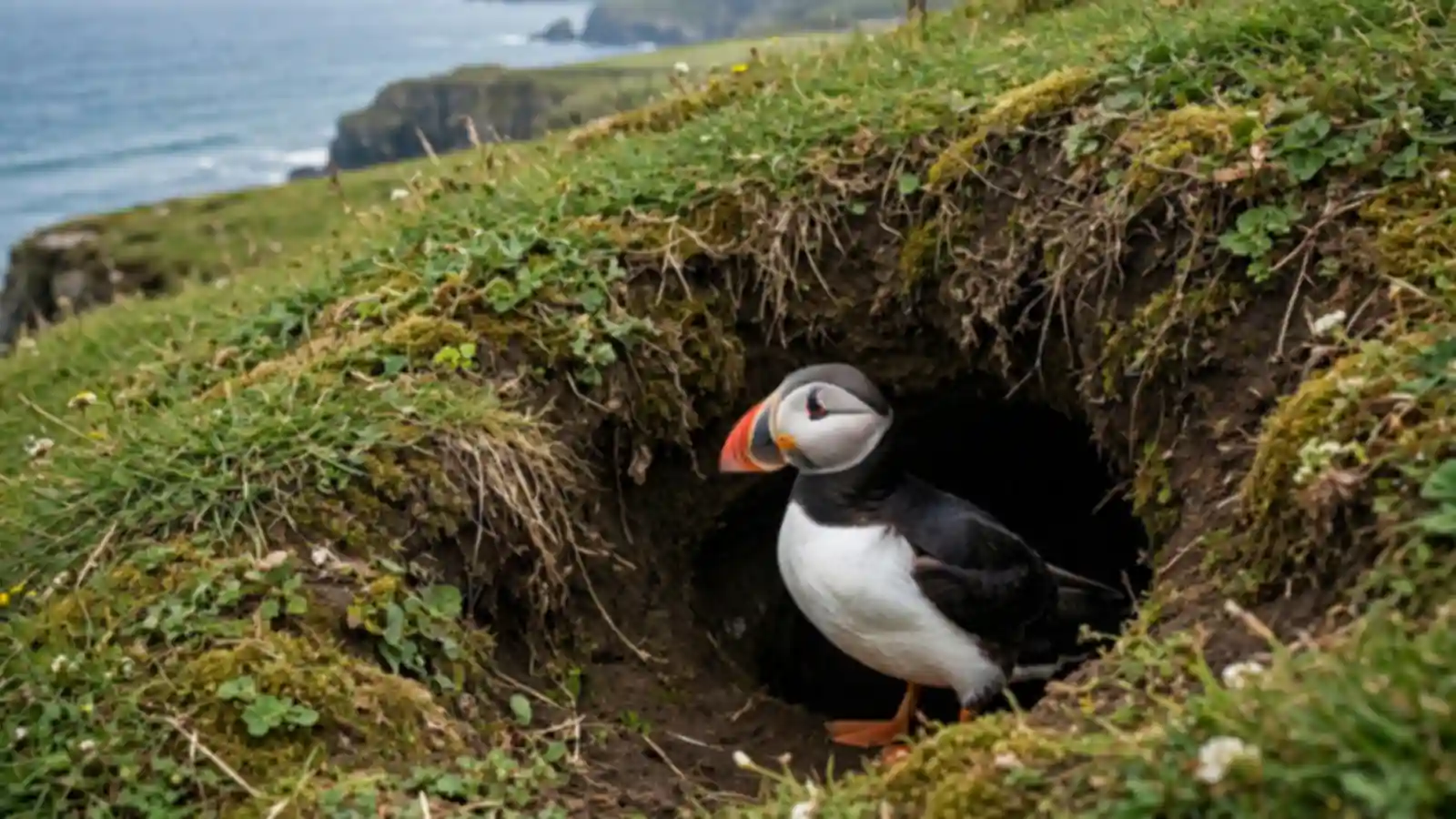
The colonies’ other residents are the puffin’s neighbours and its enemies: gulls that steal fish and snatch chicks, skuas that chase puffins in the air, and rats and mink that raid the burrows on islands where they have been introduced. The puffin’s defence is the burrow itself — a tunnel in the turf, a metre or more deep, where the chick is safe from all but the most determined predator.
Atlantic Puffin Diet: Sand Eels and Small Fish
The Atlantic puffin eats small fish — mostly sand eels, with herring, sprat and capelin as extras — and it catches them underwater, swimming with its wings and steering with its feet. A puffin can dive to 60 metres and stay down for a minute, chasing fish in the cold North Atlantic water, and it brings the catch back to the chick in its bill, holding a row of fish crosswise while it catches another.
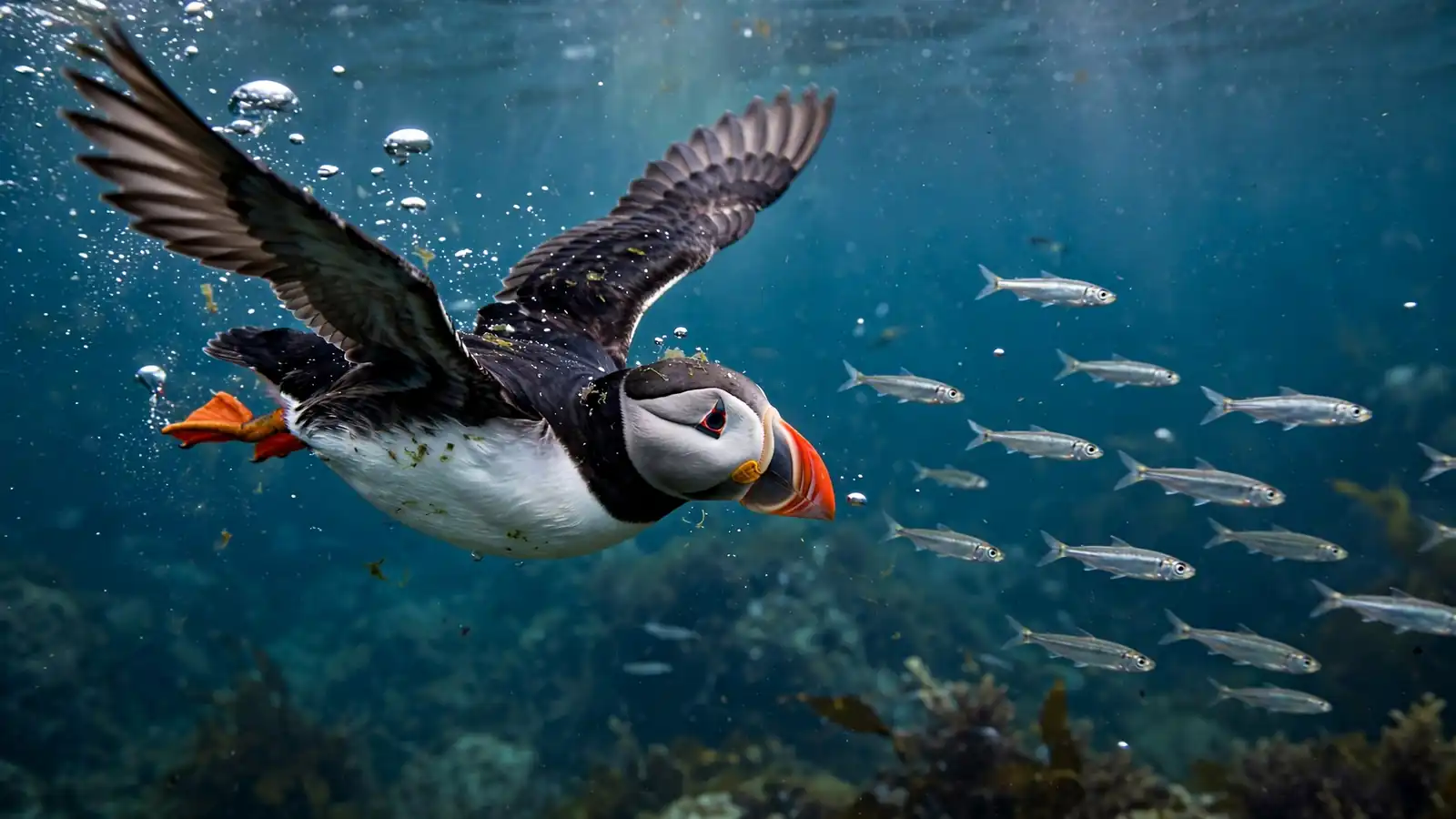
The diet is the puffin’s weak point. Sand eels are sensitive to sea temperature, and as the North Atlantic has warmed, the sand eels have become scarcer and smaller — and the puffins’ chicks have starved. The link between warming seas, sand eels and puffin chicks is one of the clearest examples of climate change hitting a seabird, and it is the main reason the puffin is now listed as Vulnerable.
Puffin Burrow: The Underground Nursery
The puffin nests in a burrow — a tunnel dug into the turf on top of a cliff or island, a metre or more deep, ending in a nesting chamber lined with grass and feathers. The puffin digs with its bill and its feet, and the pair takes turns: one digs while the other stands guard, and the burrow is used year after year, deepened and repaired each spring.
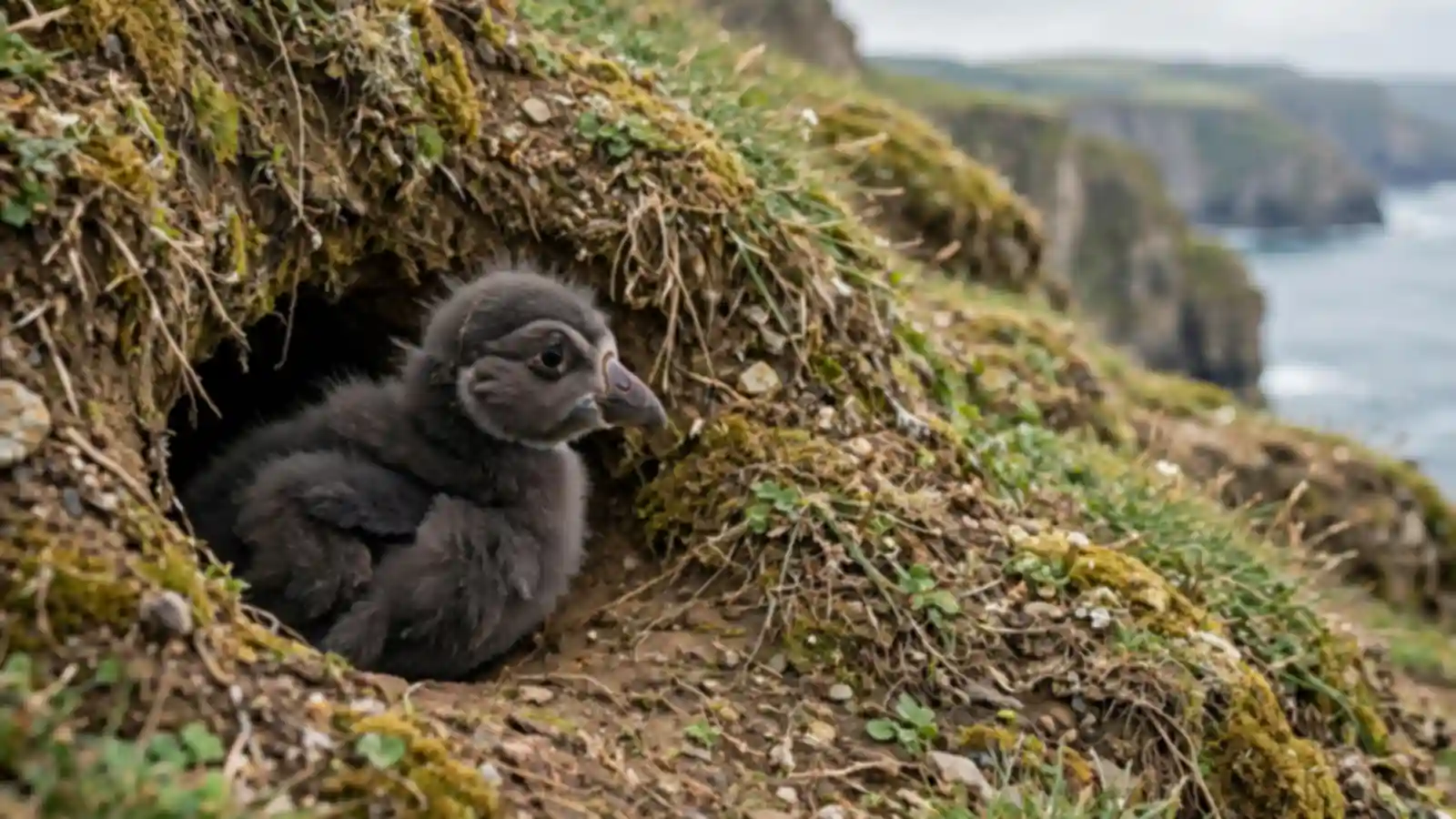
The burrow is the chick’s world. The puffling — the single chick — hatches in the dark chamber and stays there for six weeks, fed by its parents on fish brought in from the sea. When it is ready, the puffling leaves the burrow at night, alone, and walks to the cliff edge and flies to the sea — a journey it makes without its parents, and the first time it has ever seen the ocean.
Life Cycle and Lifespan
A puffin’s life begins in a burrow on a North Atlantic cliff, hatching from a single egg laid in the dark chamber. The chick — the puffling — is fed by its parents for six weeks, then leaves the burrow at night and flies to the sea alone. It spends the next two or three years at sea, returning to the colony only when it is ready to breed, at three to five years old.
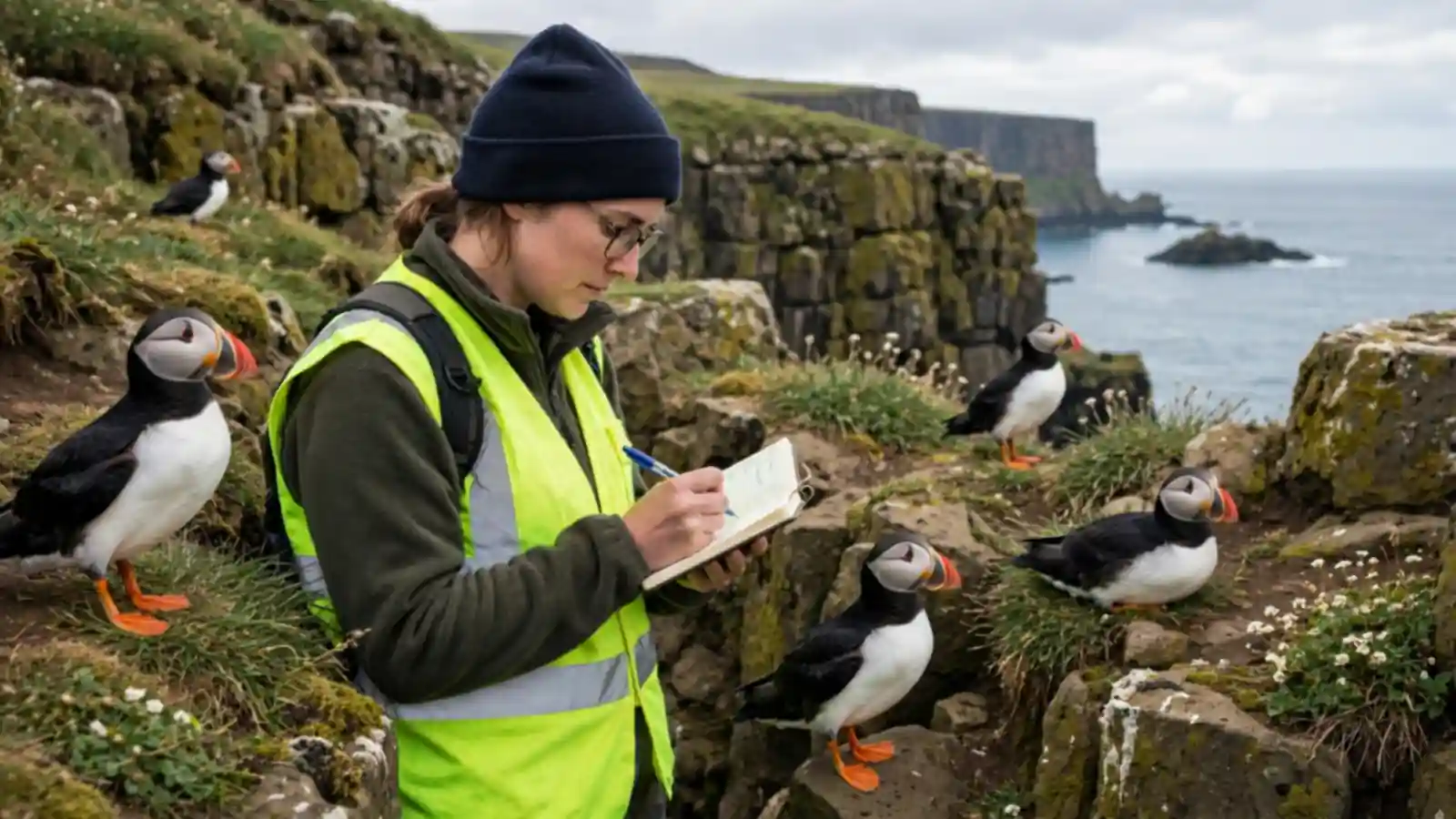
Adults typically live for 20 to 30 years, and the oldest recorded bird lived just over 40 years. They mate for life, returning to the same colony and often the same burrow each spring, and they raise a single chick a year. The species is listed as Vulnerable on the IUCN Red List, after decades of decline in its largest colonies. The Atlantic puffin profile from the Marine Conservation Society describes the bird and its colonies in detail.
Fun Facts
- About 60 percent of the world’s Atlantic puffins breed in Iceland.
- A puffin was once photographed holding 62 small fish in its bill at once.
- The puffin’s bill sheds its colourful outer plates in winter and grows them back in spring.
- A puffin can dive to 60 metres and stay underwater for a minute.
- The chick, the puffling, leaves the burrow at night and flies to the sea alone.
- Puffins mate for life and return to the same burrow year after year.
Frequently Asked Questions
How Big Is an Atlantic Puffin?
Small — 28 to 30 centimetres long, with a wingspan of 47 to 63 centimetres and a weight of around 400 grams. The puffin is one of the smallest auks, and its bright, striped bill makes it look bigger than it is.
Where Do Atlantic Puffins Live?
Around the North Atlantic: Iceland, Norway, the Faroe Islands, Scotland, Ireland, and the Atlantic coast of North America. About 60 percent of the world’s Atlantic puffins breed in Iceland, on the cliffs and islands around the coast. In winter the birds disperse far out into the North Atlantic, alone at sea.
What Do Atlantic Puffins Eat?
Small fish — mostly sand eels, with herring, sprat and capelin as extras. The puffin catches them underwater, swimming with its wings and steering with its feet, diving to 60 metres. It brings the catch back to the chick in its bill, holding a row of fish crosswise while it catches another — the record is 62 fish in one bill.
Why Is Iceland Famous for Puffins?
Because about 60 percent of the world’s Atlantic puffins breed there. The largest colonies are on the Westman Islands, off the south coast, and on Grimsey Island in the north — colonies of hundreds of thousands of birds. Iceland’s puffin watching is famous, and the Icelandic colonies are where the puffin’s troubles are most visible, as warming seas have reduced the sand eels the puffins feed their chicks.
How Many Eggs Do Puffins Lay?
One. The female lays a single egg in the burrow’s nesting chamber, and both parents take turns incubating it and feeding the chick — the puffling — for six weeks, until it leaves the burrow at night and flies to the sea alone. One egg a year is why the puffin’s numbers recover slowly when a colony declines.
Are Atlantic Puffins Endangered?
They are listed as Vulnerable on the IUCN Red List. The population has fallen in recent decades, especially in Iceland, where the largest colonies have shrunk by a third or more — driven by warming seas reducing the sand eels the puffins feed their chicks, and by introduced predators on the breeding islands.
How Long Do Atlantic Puffins Live?
Typically 20 to 30 years, with the oldest recorded bird living just over 40 years. They mate for life, returning to the same colony and often the same burrow each spring, and they raise a single chick a year.
Similar Species Worth Exploring
Keep Exploring
Start with the tufted puffin, the Pacific cousin with golden plumes, then meet the Arctic tern, the longest migrant on Earth, and browse the whole family in our types of seabirds hub — then come back to the clown of the North Atlantic, the Atlantic puffin.