Brown Pelican: Plunge Dive, Pouch and DDT Comeback
Brown Pelican: Plunge Dive, Pouch and DDT Comeback
The brown pelican is a seabird that fishes by falling out of the sky — a big, grey-brown bird that spots a fish from 20 metres up, folds its wings, and plunge-dives headfirst into the sea, scooping the fish up in a pouch that holds three gallons of water. It is the smallest pelican in the world, and the hero of one of conservation’s great comebacks: driven to the edge by DDT, then brought back by a ban and a rescue.
By Emily Carter · Reviewed by our vet team · Updated 10 November 2026 · 8 min read
Plunge-dives from 60 ftPouch holds 3 gallonsDDT comeback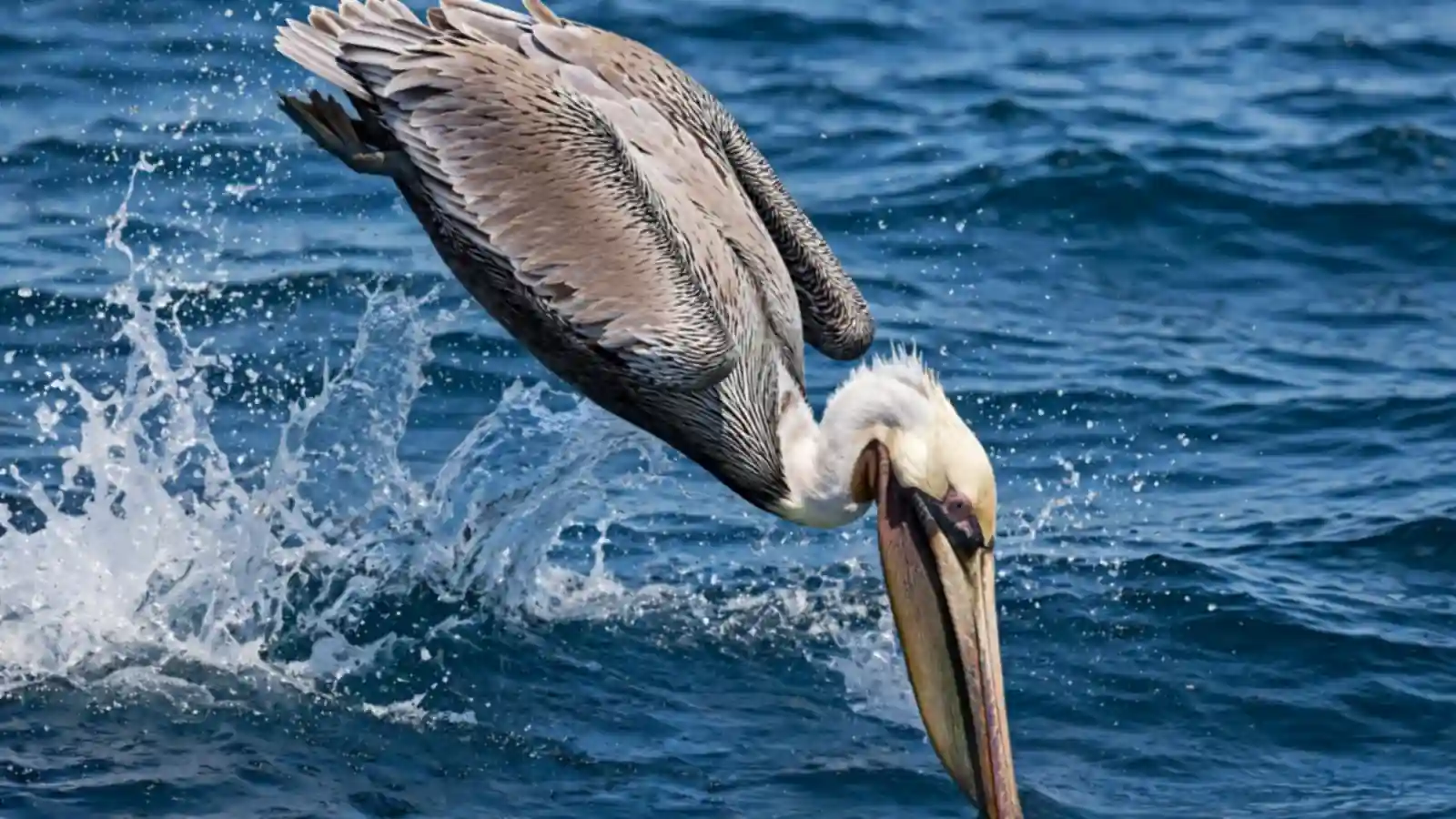
At a Glance
The brown pelican is the smallest of the eight pelican species, and the only one that plunge-dives. It lives along the coasts of the Americas, from the Atlantic seaboard of the United States south to the Caribbean and Brazil, and along the Pacific coast from California to Peru. It is a bird of the harbours and the piers, the fishing boats and the mangroves — and its story is the story of a comeback: by the early 1960s it had vanished from Louisiana, poisoned by DDT, and today it numbers around 650,000, by recent estimates.
What Is a Brown Pelican?
It is a large seabird in the family Pelecanidae, the pelicans, and its scientific name is Pelecanus occidentalis. It is a grey-brown bird with a long bill and a huge pouch, a bird that flies in formation over the ocean, rests on pier pilings, and fishes by plunge-diving — the only pelican that does. The other seven pelican species fish by swimming and scooping, but it fishes by falling out of the sky.
The pelican is a bird of the American coasts, and it is one of the most recognisable birds on them: the long bill, the pouch, the slow, powerful wingbeats, and the habit of flying in formation just above the waves. It is the state bird of Louisiana, where it vanished in the 1960s and was brought back by one of the great rescue efforts in conservation history.
Brown Pelican Size and Wingspan
It measures 100 to 137 centimetres long, with a wingspan of 1.8 to 2.1 metres and a weight of 2 to 3.6 kilograms. It is the smallest of the eight pelican species, but it is still a big bird — and its bill, with the pouch, is one of the longest of any bird, reaching up to 35 centimetres in breeding adults.

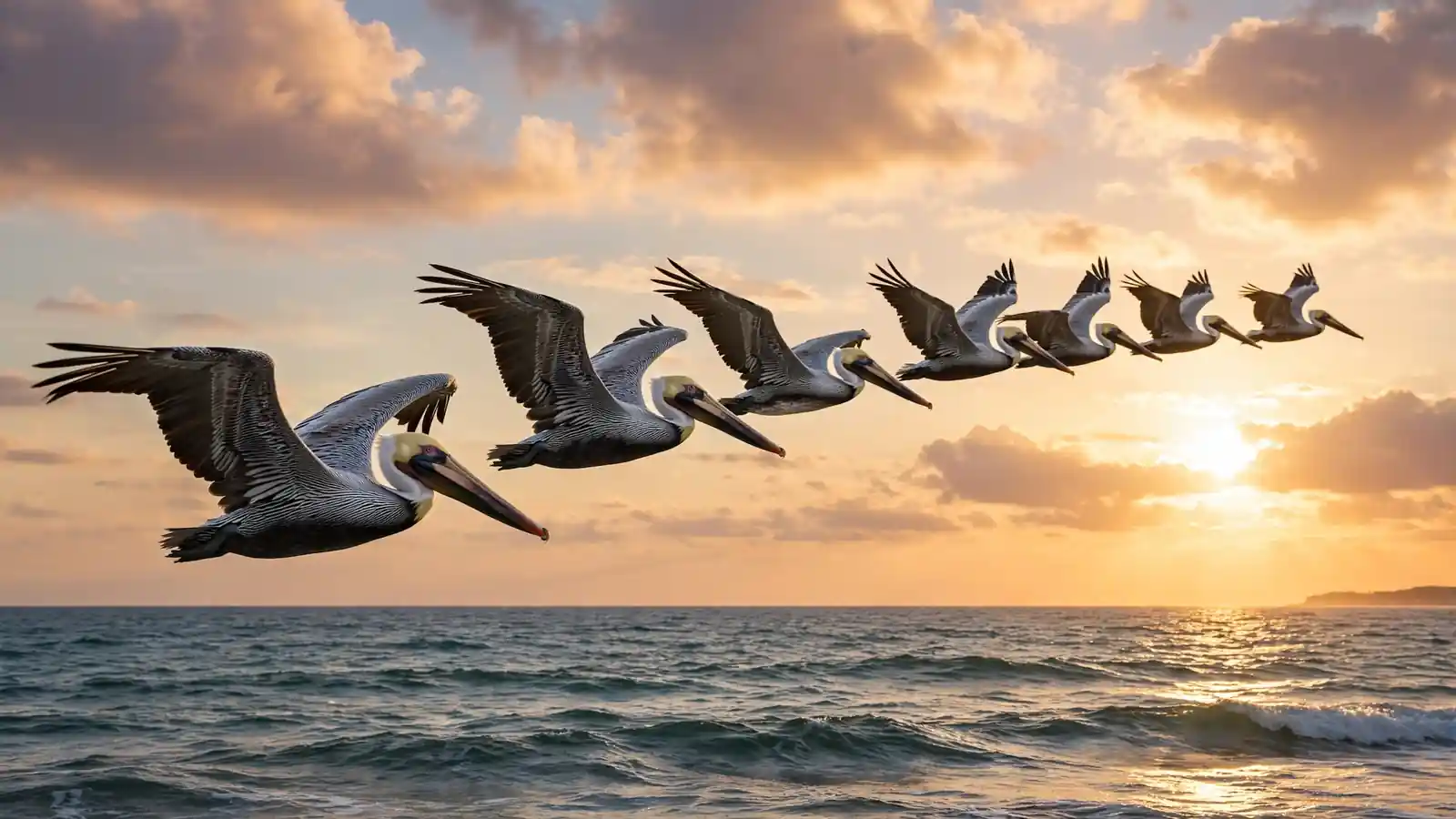
The sexes look alike, though the male is slightly larger, and the breeding adult wears a white head with a pale yellow wash, a dark brown neck and a bright yellow bill. In flight the pelican is unmistakable: slow, powerful wingbeats, a long bill held straight ahead, and a formation that glides just above the waves, rising and falling with the swell.
The Pouch: A Built-In Fishing Net
Its pouch is one of the great tools in the bird world: a huge, stretchy sac of skin hanging from the lower bill, which the pelican uses as a fishing net. When the bird plunge-dives, the pouch opens like a net and scoops up fish and water together — up to 2 to 3 gallons, about 13 litres, of water and fish in a single scoop. Then the pelican drains the water out, keeping the fish inside, and swallows them headfirst.
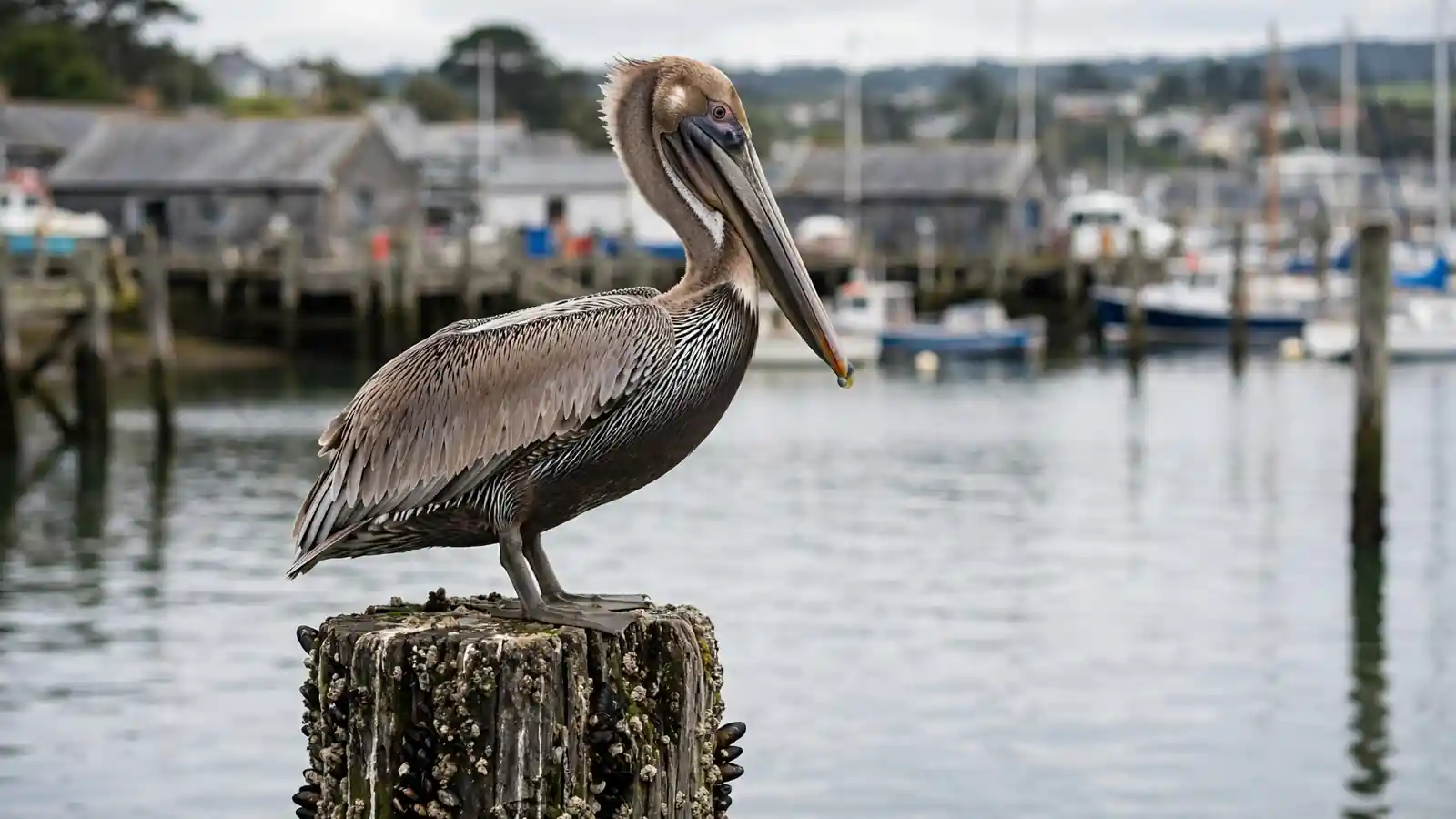
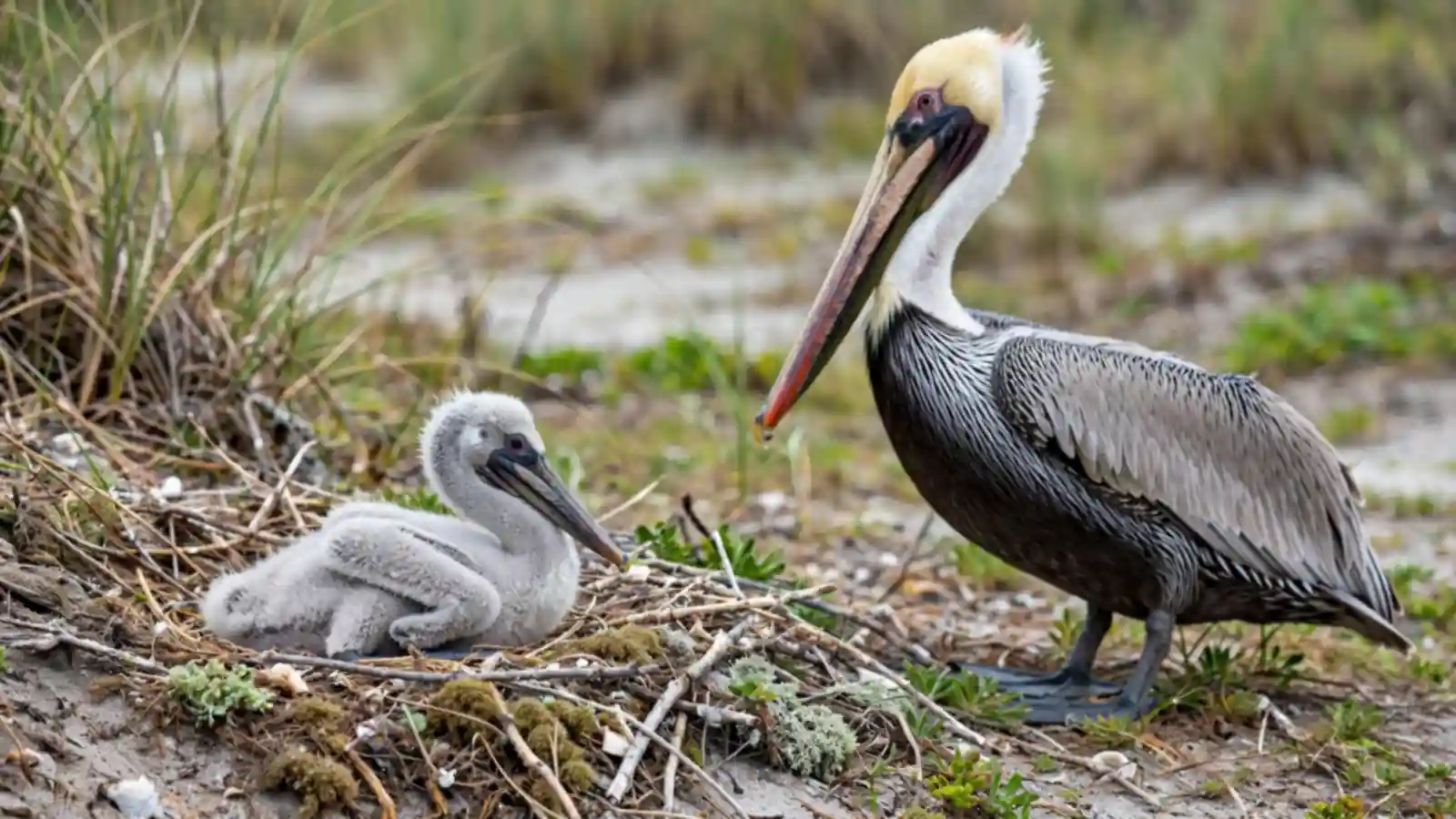
The pouch is also a nursery. The chick is fed from the pouch: the parent opens its bill, and the chick reaches deep inside to take the regurgitated fish, headfirst into the pouch. The pouch is the pelican’s net, its larder and its nursery in one — and it is what makes it a pelican, rather than just another big seabird. Between fishing trips, the pelican rests on a pier piling, its long bill tucked, its pouch folded away, waiting for the next dive.
The Plunge Dive
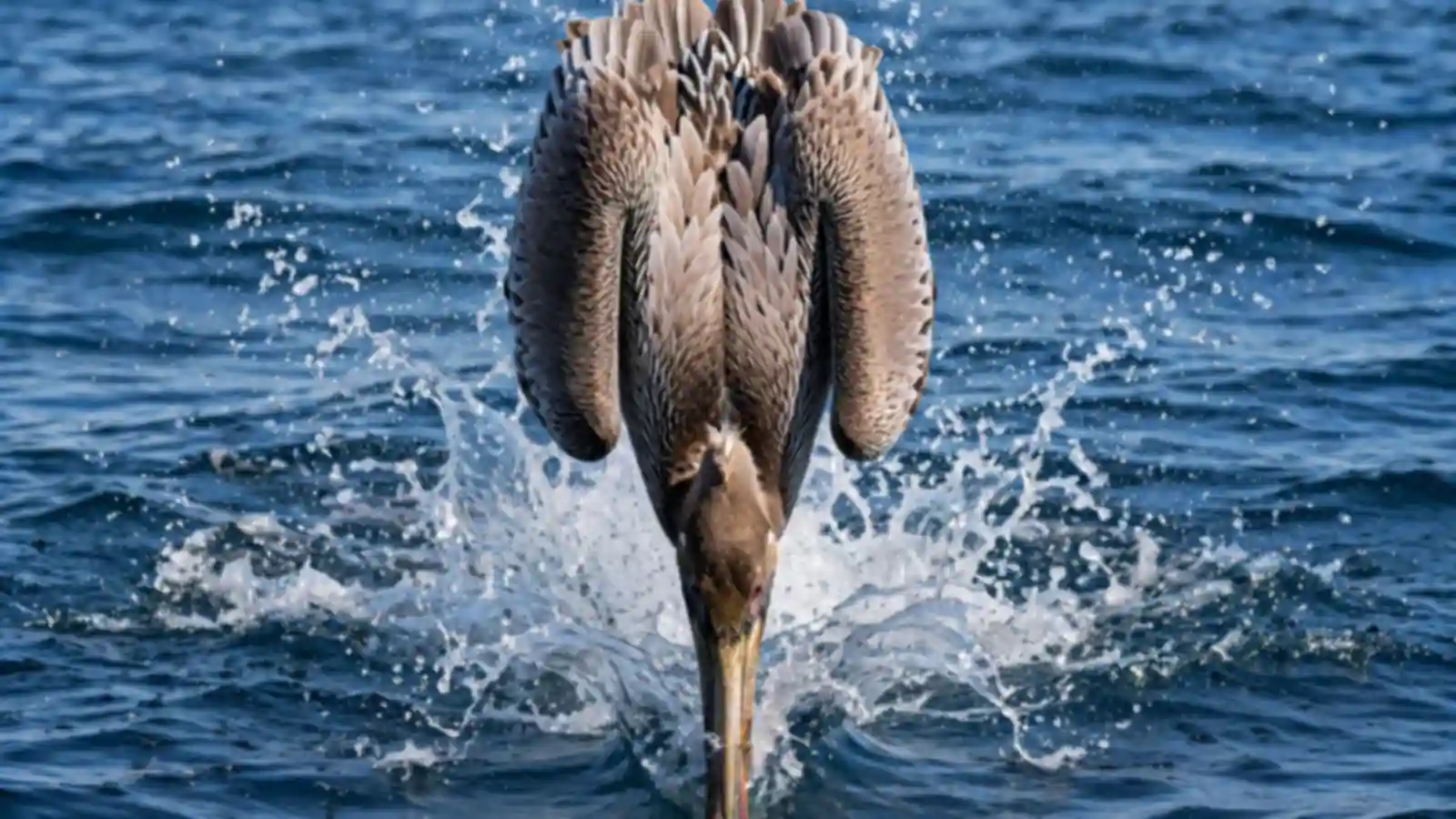
The plunge dive is its signature. The bird spots a school of fish from 10 to 20 metres up — as high as 60 feet — folds its wings back, and drops headfirst into the sea, hitting the water with a splash and a shock that would break a lesser bird’s neck. Air sacs under the skin cushion the impact, and the pouch opens as a net, scooping fish and water together in a single motion.
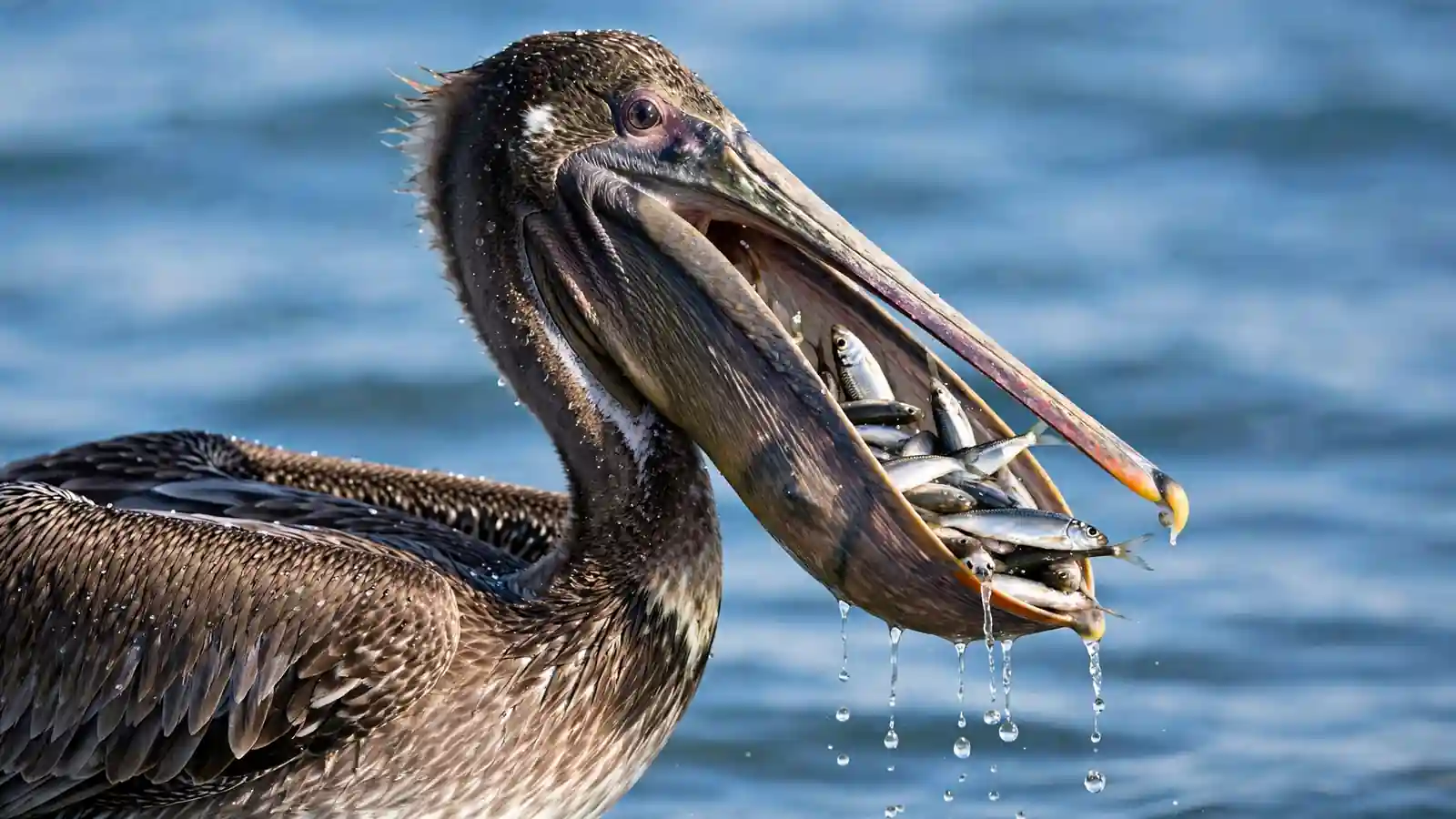
The dive is learned, not instinctive: young pelicans watch adults dive, and they practice, starting from low heights and working up. A pelican that dives well can catch several fish in a single dive, and a colony of pelicans diving together can work a school of fish like a team. The dive is also why the pelican needs the pouch: without it, the bird would have no way to hold the fish it catches in the split second of the impact.
Diet and Daily Catch
It eats fish — mostly menhaden, anchovies, sardines and mullet, with crabs and the occasional small crustacean as extras — and it catches them by plunge-diving, scooping them up in its pouch. A pelican needs about 2 kilograms of fish a day, and it fishes in the morning and the evening, resting on a pier piling in between.
The pelican’s fishing is also why it is a familiar sight at the harbours: it follows the fishing boats, waits for the offal, and begs from the fishermen — a habit that has made it a mascot of the American coast and a regular at the docks. The chick is fed from the pouch, headfirst into the parent’s bill, and a growing chick can eat as much as an adult.
Nesting and Colonies
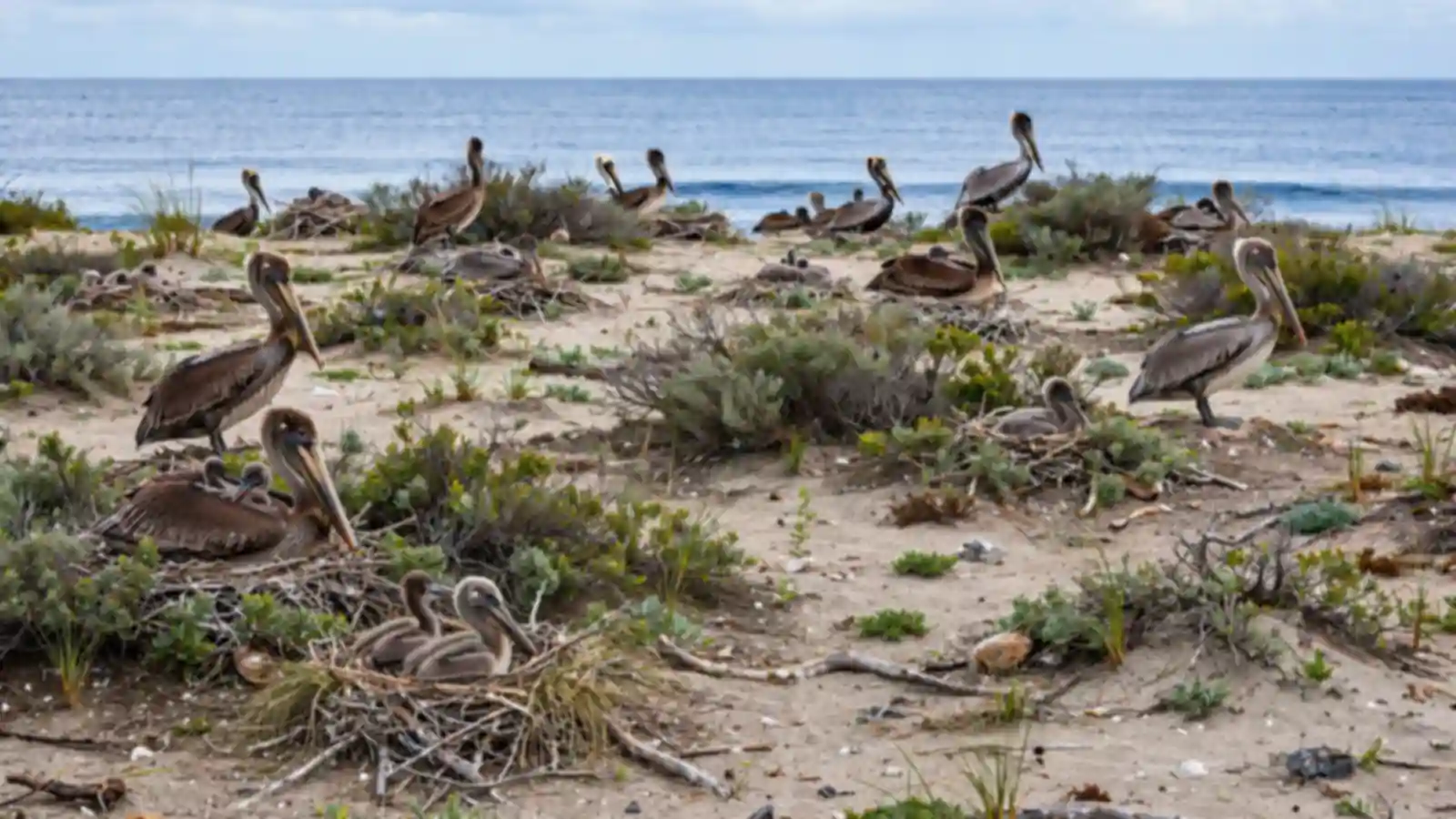
Brown pelicans nest in colonies — in mangrove trees, on low bushes and on the ground on islands, along the coasts of the Americas. The nest is a platform of sticks, and the female lays two or three eggs, which both parents incubate for about a month. The chicks hatch naked and helpless, and they are fed by their parents for two to three months, reaching into the pouch for the regurgitated fish.
The colonies are near the fishing grounds — the harbours, the estuaries and the mangroves where the adults fish — and they are noisy, crowded places, full of adults coming and going with fish, and chicks begging from the pouch. The colony is the pelican’s home, and its fate is tied to the coast’s health: where the mangroves are cut and the fish are gone, the pelicans go too.
The DDT Crash and the Comeback
Its story is the story of DDT. In the 1950s and 1960s, the pesticide DDT washed into the coastal waters, built up in the fish the pelicans ate, and thinned the pelicans’ eggshells until they broke under the parents’ weight. By 1963, it had vanished from Louisiana — the state whose bird it is — and it was listed as Endangered in the United States.
The comeback began with a ban and a rescue. DDT was banned in the United States in 1972, and Louisiana brought back the pelican by transplanting more than 1,200 chicks from Florida, raising them and releasing them on the Louisiana coast. The pelicans returned, the population recovered to around 650,000 by recent estimates, and in 2009 it was removed from the United States Endangered Species List — the first bird ever delisted. The spotlight from the National Wildlife Federation tells the recovery story in full.
Fun Facts
- Its pouch can hold 2 to 3 gallons of water and fish — about 13 litres.
- The pelican plunge-dives from as high as 60 feet, cushioned by air sacs under its skin.
- It is the smallest of the eight pelican species.
- Louisiana’s pelicans vanished by 1963 — more than 1,200 Florida chicks were transplanted to bring them back.
- It was the first bird ever removed from the US Endangered Species List, in 2009.
- A pelican chick is fed by reaching its head deep inside its parent’s pouch.
Frequently Asked Questions
How Big Is a Brown Pelican?
The smallest pelican: 100 to 137 centimetres long, with a wingspan of 1.8 to 2.1 metres and a weight of 2 to 3.6 kilograms. Its bill, with the pouch, is one of the longest of any bird, reaching up to 35 centimetres in breeding adults.
How Does a Brown Pelican Catch Fish?
By plunge-diving. The pelican spots a school of fish from 10 to 20 metres up, folds its wings back, and drops headfirst into the sea. Air sacs under the skin cushion the impact, and the pouch opens as a net, scooping fish and water together — up to 2 to 3 gallons in a single scoop. Then the pelican drains the water and swallows the fish headfirst.
How Much Can a Pelican’s Pouch Hold?
Two to 3 gallons of water and fish — about 13 litres — in a single scoop. The pouch is a huge, stretchy sac of skin hanging from the lower bill, used as a fishing net: the pelican scoops up fish and water together, drains the water out, and keeps the fish inside.
How High Do Brown Pelicans Dive From?
From 10 to 20 metres up — as high as 60 feet. The bird spots a school of fish, folds its wings back, and drops headfirst into the sea, hitting the water with a splash. Air sacs under the skin cushion the impact, and the pouch opens as a net in the split second of the impact.
What Happened to Brown Pelicans and DDT?
DDT nearly wiped them out. In the 1950s and 1960s, the pesticide washed into coastal waters, built up in the fish the pelicans ate, and thinned their eggshells until they broke. By 1963, the brown pelican had vanished from Louisiana. DDT was banned in 1972, Louisiana transplanted more than 1,200 chicks from Florida, and the population recovered to around 650,000 — the pelican was removed from the US Endangered Species List in 2009.
Where Do Brown Pelicans Live?
Along the coasts of the Americas, from the Atlantic seaboard of the United States south to the Caribbean and Brazil, and along the Pacific coast from California to Peru. They live in harbours, estuaries, mangroves and piers — wherever the fish are — and nest in colonies in mangrove trees and on islands.
Are Brown Pelicans Endangered Now?
No. The brown pelican is listed as Least Concern on the IUCN Red List, and its population is around 650,000 by recent estimates. It was removed from the United States Endangered Species List in 2009 — the first bird ever delisted. The recovery is one of conservation’s great comebacks, but the pelican still depends on healthy coasts, mangroves and fish.
Similar Species Worth Exploring
Keep Exploring
Start with the magnificent frigatebird, the sky pirate that steals the pelican’s fish, then meet the herring gull, the clever gull of the harbours, and browse the whole family in our types of seabirds hub — then come back to the plunge-diving comeback bird of the American coasts, the brown pelican.