Scorpionfish
Scorpionfish: the reef’s invisible ambush hunter
The scorpionfish is a reef fish you walk past without seeing: a mottled ambush hunter with 11 to 17 venomous dorsal spines, a mouth that sucks prey in whole, and camouflage so complete that the fish seems to be the rock itself. This guide covers its venom, its hunting, its sting first aid and how to tell it from its stonefish and lionfish cousins.
By Emily Carter · Reviewed by our vet team · Updated 10 November 2026 · 11 min read
11–17 venomous spinesA master of camouflageStings hurt, rarely kill
At a Glance
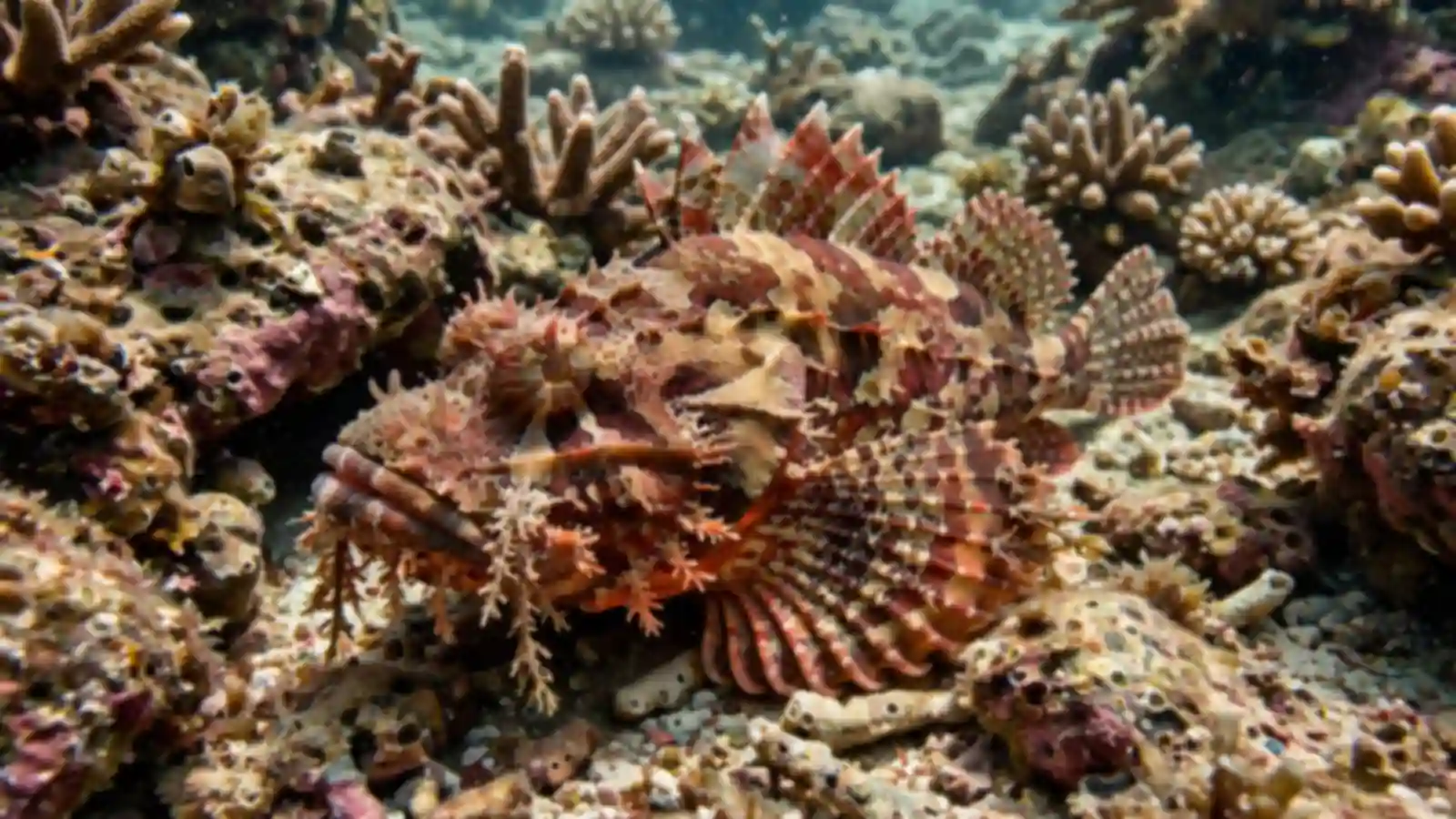
A scorpionfish is a reef that learned to bite: a mottled, tasselled, wide-mouthed fish that sits on rock and coral so still, and matches its background so well, that the reef itself seems to have grown a mouth. It is the stonefish’s cousin and the lionfish’s relative, and it is the fish most divers swim past without ever knowing it was there.
What Is a Scorpionfish?
It is any member of the family Scorpaenidae, a large and varied family of venomous reef fishes found in tropical and temperate seas worldwide. They are ambush hunters by design: wide heads, big upturned mouths, mottled skin in reds, browns and greys, and fleshy tassels and flaps that break up the outline, so the fish vanishes against reef and rock.
The family is the same one the lionfish belongs to, and the stonefish is a close relative, which is why the three are constantly compared. They are the middle child of that family: less flamboyant than the lionfish, less extreme than the stonefish, and more common than either, which is why they are the venomous reef fish most people actually meet.
Size and Species
Most species run 15 to 50 centimetres long, a hand-sized to forearm-sized fish, and the family is large enough that the range is the honest figure: some species are smaller, a few are larger, and the common reef species sit squarely in the middle. The body is stocky and the head is large, so a 30-centimetre fish looks bigger than it measures.
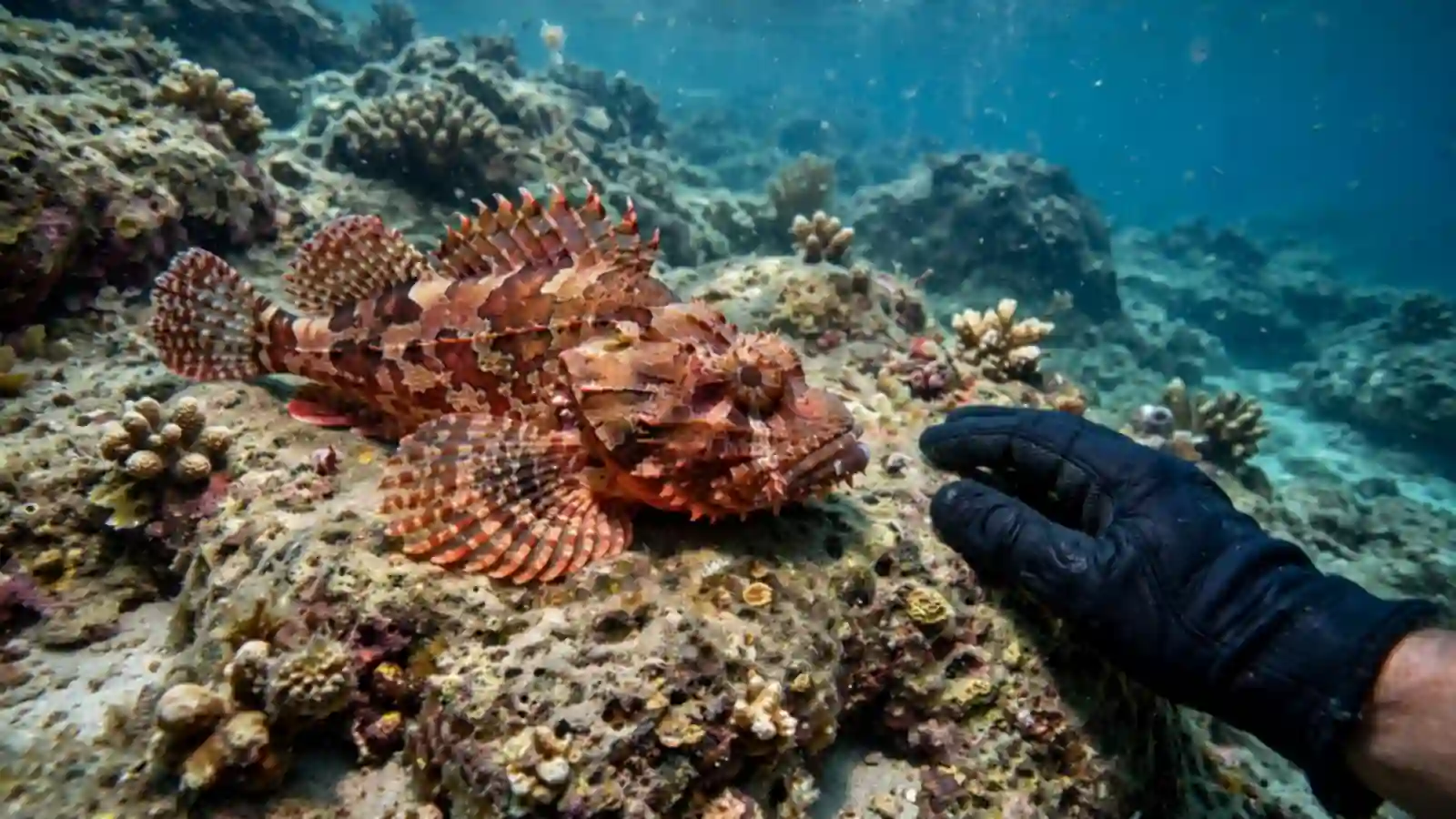
The family holds hundreds of species across dozens of genera, from the small, brightly coloured reef species to the larger, drabber rockfish of cold water, and the variety is the point: there is one for almost every reef and rocky bottom in warm seas, all of them following the same plan of camouflage, patience and a sudden sucking strike.
The Venomous Spines: How They Work
It carries eleven to seventeen venomous dorsal spines, depending on the species, and the range is the honest figure rather than a single number. Each spine is grooved and connected to a venom gland, and pressure on the spine — a hand, a foot, a curious finger — drives the venom in, which is why the spines are a defence and never a hunting weapon.

The venom is painful but rarely dangerous to a healthy adult: a sting brings immediate, sharp pain, swelling and redness, sometimes nausea, and the pain can last for hours. It is a world away from the stonefish’s venom in severity, and it is treated the same way — hot water, rest and medical attention if the pain is severe — but its sting is a warning, where the stonefish’s is an emergency.
Camouflage and Ambush Hunting
It hunts by being the reef. It settles on rock or coral, spreads its pectoral fins, and waits, and its mottled skin, its fleshy tassels and its broken outline do the rest: the fish becomes a lump of reef with eyes, and small fish and crustaceans swim within reach without ever seeing it. Then the mouth opens, the prey is sucked in whole, and the reef has a mouth again.
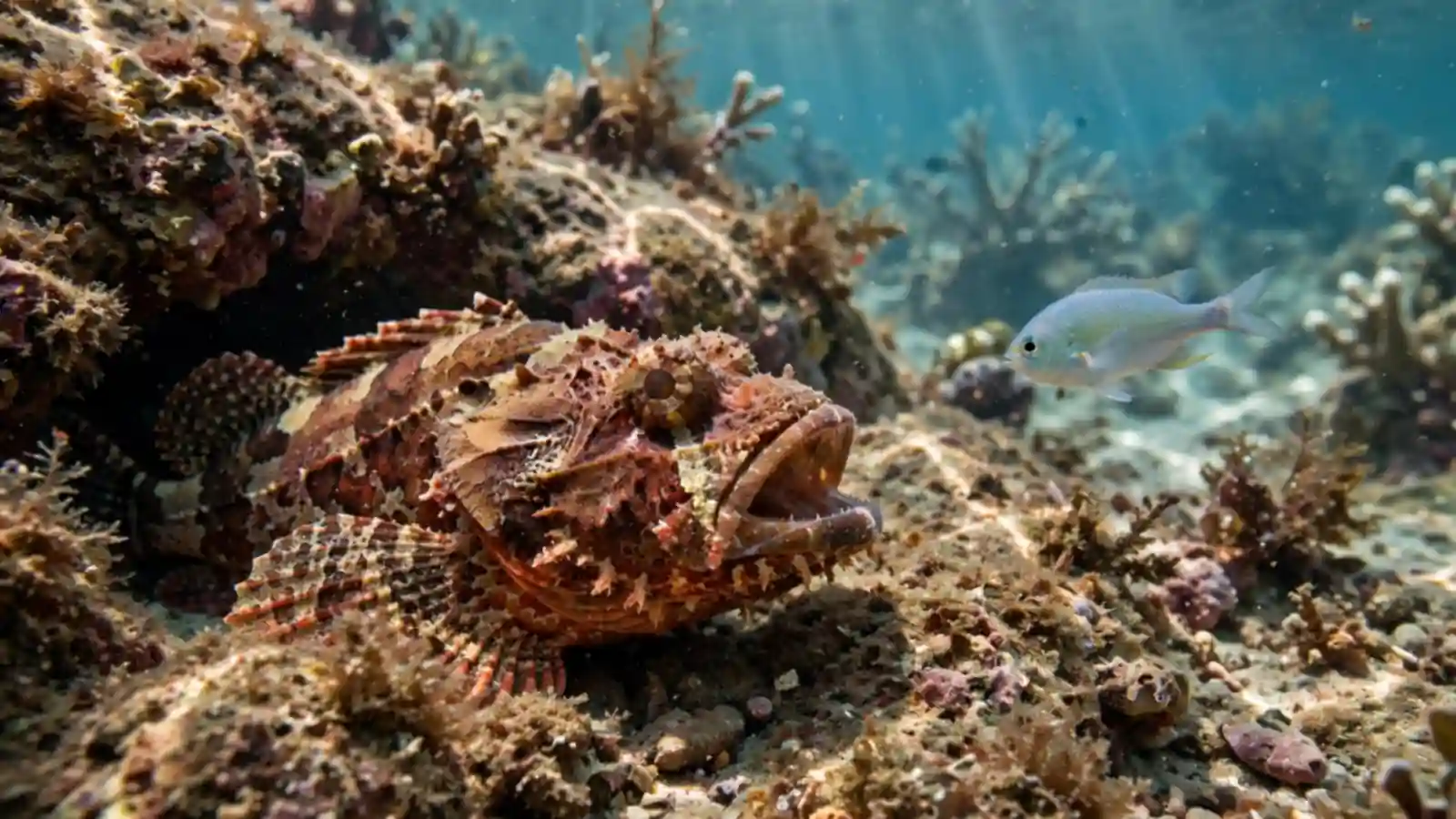
The ambush is the whole life. They do not chase, do not school and do not patrol; they pick a spot, match it, and wait, sometimes for hours, and they change colour slowly to match a new background when they move. It is a patient way to live and a successful one, and it is why the fish is so hard to spot: the camouflage is not a trick the fish plays, it is the fish itself.
Stings and First Aid
Most stings happen to hands, not feet: a diver or a rock-pooler reaches for something on the reef and brushes the spines, and the venom goes in. The pain is immediate and sharp, the area swells and reddens, and the sting is frightening more often than it is dangerous, though any sting deserves respect and attention.
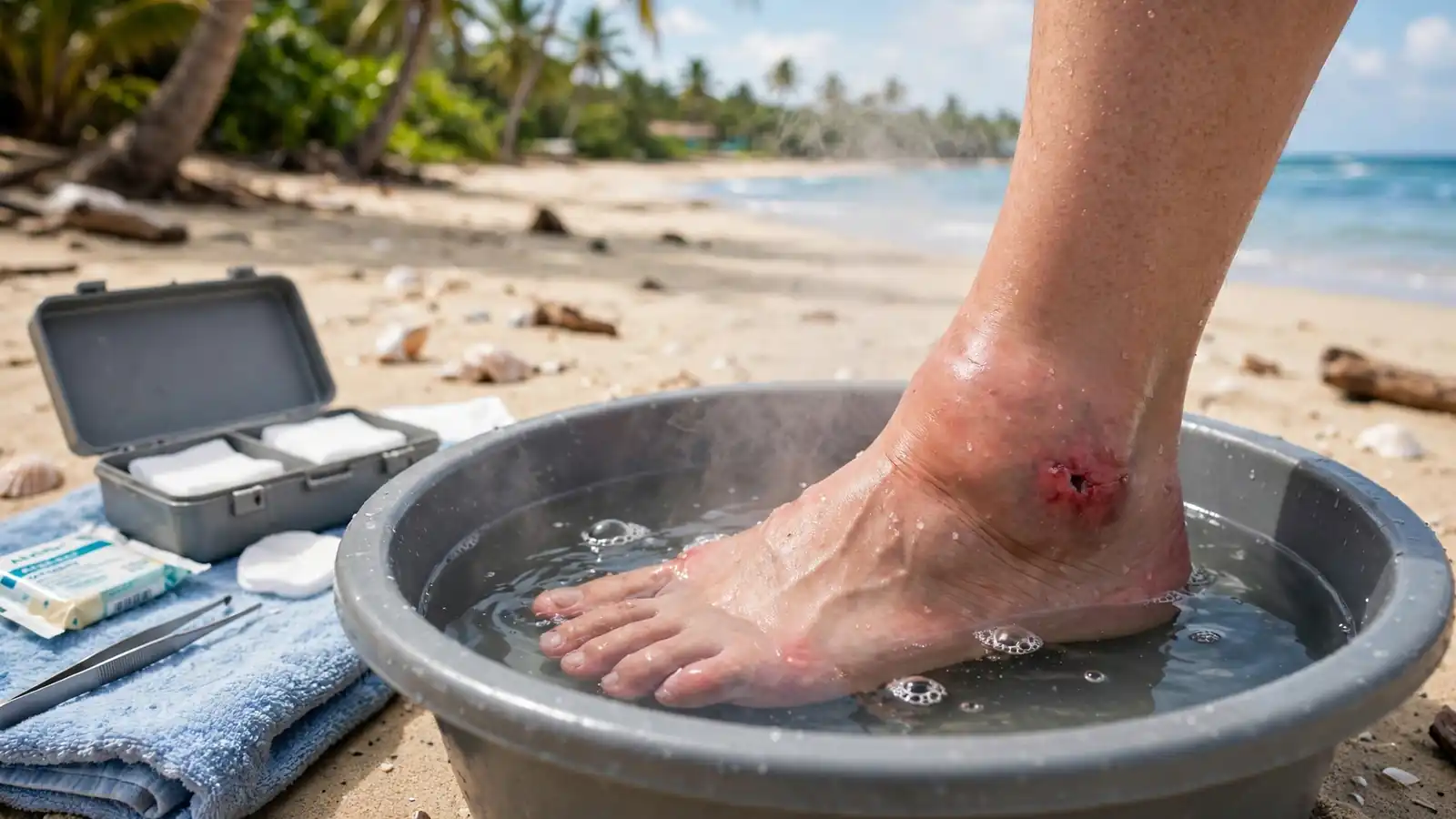
The first aid is hot water. Immersing the stung area in water as hot as the victim can tolerate, around 45 degrees Celsius, for 30 to 90 minutes breaks down much of the venom and eases the pain, and it is the standard advice for these fish, stonefish and lionfish alike. Seek medical help if the pain is severe, if the sting is near the face or if the victim has trouble breathing, and the shuffle-step and the look-before-you-touch rule will keep most people safe.
Stonefish and Lionfish: Telling Them Apart
The three venomous cousins are easy to separate once you know what to look for. The lionfish is the flamboyant one: long, striped, flowing fins that advertise the venom, impossible to miss. It is the middle one: mottled, tasselled, scaled, with a more ordinary fish shape and eleven to seventeen spines. The stonefish is the extreme one: scaleless, warty, rock-like, with exactly thirteen spines and no swim bladder.
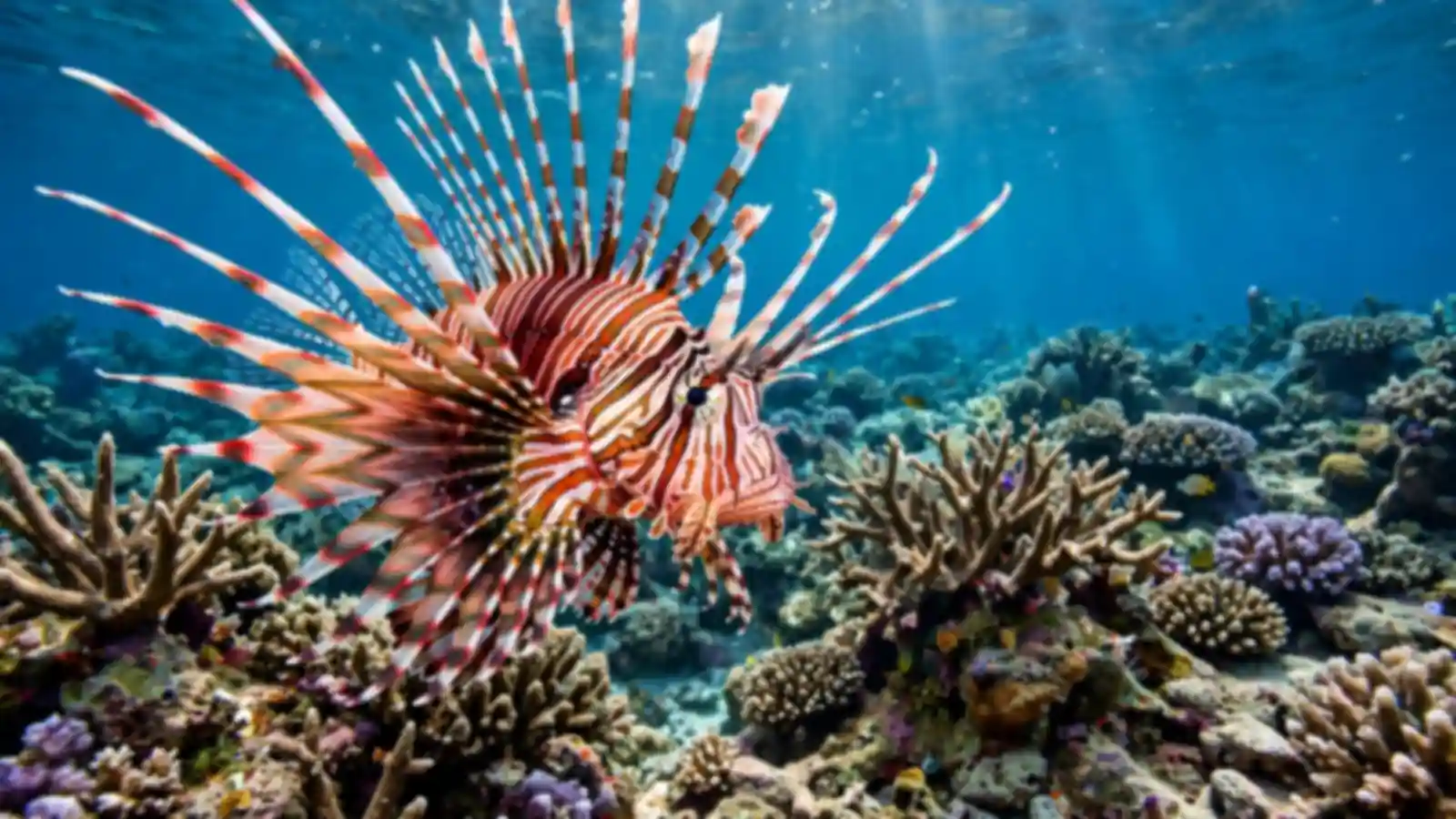
The rule for all three is the same: look, do not touch, and shuffle your feet on reef flats. A lionfish you can see coming, one you might spot if you look hard, and a stonefish you will not see at all, which is why learning the family matters: the same hot-water first aid, the same caution, and the same respect for a reef that hides its defences in plain sight.
Habitat and Range
They live on reefs and rocky bottoms in tropical and temperate seas worldwide, from shallow rock pools to depths of several hundred metres, wherever there is cover to match and prey to ambush. They favour the reef edge, the rubble slope and the rocky shore, and they are as common in harbours and estuaries as on open reefs. The family account maps the full range and the family in detail.
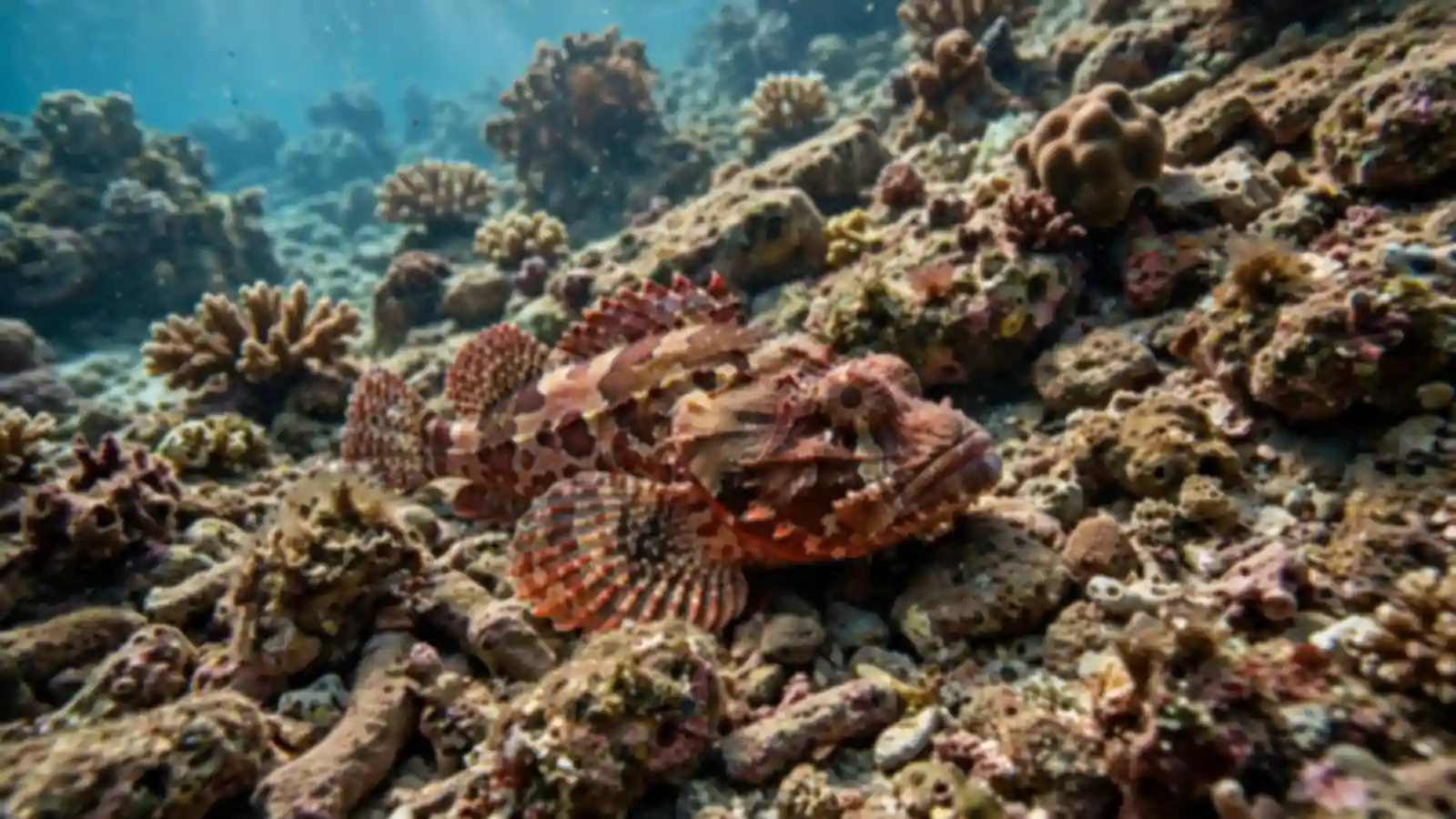
They are solitary fish, each one holding a small patch of reef, and they are most active at dawn and dusk, when small fish move and the light is low. By day they sit and wait, and by night they hunt a little more openly, but the camouflage never comes off: it is a reef first and a fish second, and it stays that way for its whole life.
Fun Facts
- It has 11 to 17 venomous dorsal spines, depending on the species.
- It can change colour slowly to match a new background when it moves.
- It sucks prey in whole with a sudden gulp, without chasing it at all.
- It is in the same family as the lionfish, and the stonefish is a close relative.
- Most stings happen to hands, not feet, when someone reaches for something on the reef.
- Its fleshy tassels and flaps break up its outline so it vanishes against rock and coral.
Frequently Asked Questions
Are scorpionfish dangerous to humans?
They are venomous but rarely dangerous. Its sting causes immediate sharp pain, swelling and redness, sometimes nausea, and the pain can last hours. It is painful and frightening, but rarely life-threatening to a healthy adult — very different from a stonefish sting, which is a medical emergency.
What happens if a scorpionfish stings you?
Immediate sharp pain at the sting site, followed by swelling, redness and sometimes nausea. The pain can last for hours. The venom is delivered through the dorsal spines when pressure is applied, usually by a hand or foot brushing the fish.
How do you treat a scorpionfish sting?
Immerse the stung area in water as hot as you can tolerate, around 45 degrees Celsius, for 30 to 90 minutes. Hot water breaks down much of the venom and eases the pain. Seek medical help if the pain is severe, the sting is near the face, or breathing is affected.
How big do scorpionfish get?
Most species run 15 to 50 centimetres long. The family is large and varied, so the range is the honest figure: some species are smaller, a few are larger, and the common reef species sit in the middle.
What is the difference between a scorpionfish and a stonefish?
It has scales, a more ordinary fish shape, and 11 to 17 dorsal spines. A stonefish is scaleless, wartier and rock-like, with exactly 13 dorsal spines and no swim bladder. The stonefish’s venom is far more dangerous; its sting is painful but rarely an emergency.
Where do scorpionfish live?
On reefs and rocky bottoms in tropical and temperate seas worldwide, from shallow rock pools to depths of several hundred metres. They favour reef edges, rubble slopes and rocky shores, and are as common in harbours and estuaries as on open reefs.
What do scorpionfish eat?
Small fish and crustaceans. It is an ambush hunter: it sits camouflaged on the reef and sucks prey in whole with a sudden gulp when a small fish or shrimp strays within reach.
Similar Species Worth Exploring
Keep Exploring
Keep exploring the venomous reef: meet the extreme cousin in our stonefish guide, or browse the whole reef in the types of reef fish. Then come back to the reef that learned to bite: the scorpionfish.