Whelk
Whelk: the carnivorous snail that drills shells
The whelk is a carnivorous sea snail that hunts other shellfish by drilling a neat hole through their shells and eating the animal inside. The common species of the North Atlantic grows a shell 6 to 10 centimetres long, and its American cousins carry heavy spiked shells on the sandy bottom. This guide covers the true whelks, the dog snail that is not one, and the tetramine warning in its saliva.
By Emily Carter · Reviewed by our vet team · Updated 10 November 2026 · 9 min read
Drills through other shellsCommon species to 10 cmDog snail is not a true one
At a Glance
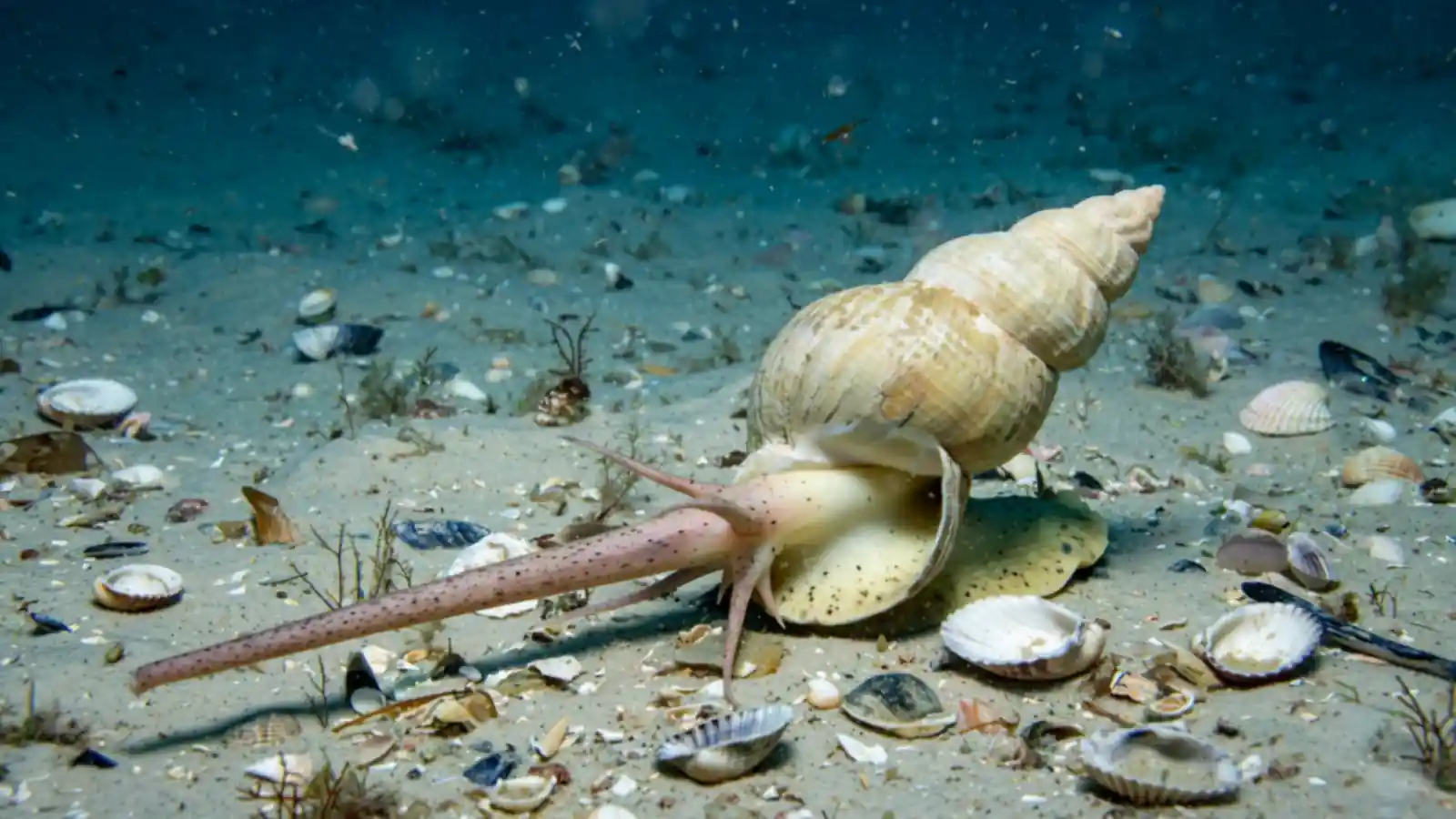
A whelk is a sea snail with a tall spiral shell and a long siphon, and it is a hunter. It crawls the seabed on a broad foot, tasting the water for the scent of bivalves, and when it finds one it sets to work with a radula and a boring gland. Here it is at a glance.
Species: The True Whelks and Their Relatives
The true whelks belong to the family Buccinidae, which holds around 1,500 species, though sources give different exact counts. They are the classic whelks: tall spiral shells, a long siphon, a broad crawling foot, and a carnivorous diet. The family is spread across the world’s cold and temperate seas, and the common species of the North Atlantic is its best-known member.

Around the true whelks sit a crowd of relatives carrying the same name, and the names are not always honest. The American Busycon species, the knobbed and channeled whelks, were formerly placed in a different family, the Melongenidae, and are now also classified in Buccinidae, so the family has grown. The dog snail, by contrast, belongs to a different family entirely, and it is not a true one at all. For the full detail, see the whelk species account.
The Common Whelk: Buccinum undatum
The common species, Buccinum undatum, is the one the North Atlantic is known for, found from the Arctic to the English Channel and across to North America. Its shell grows 6 to 10 centimetres long, pale brown or cream, with a tall spire and a wide opening, and it lives on the seabed from the shallows down to about 1,200 metres.

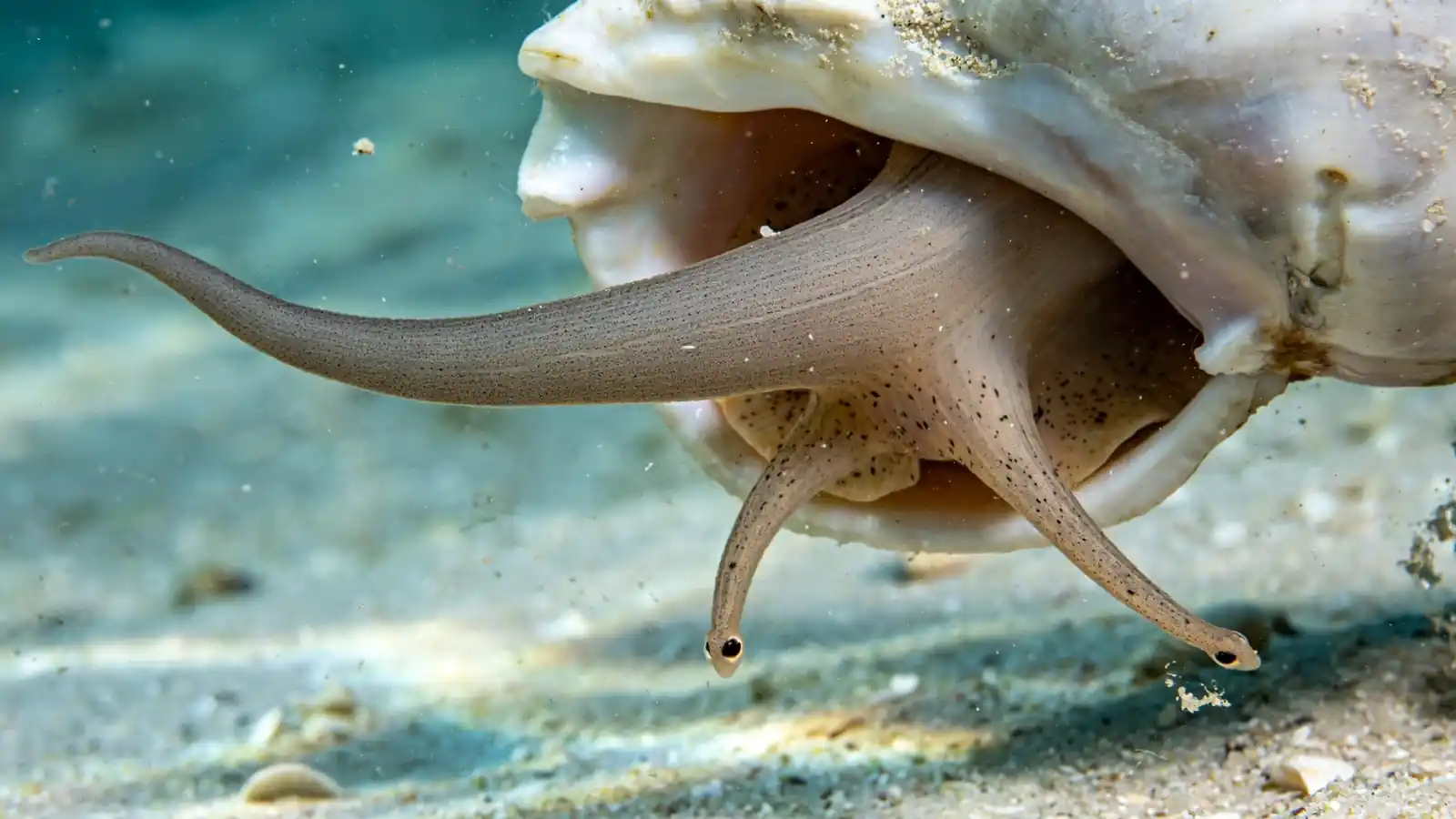
The animal inside is a patient hunter. It crawls the seabed on its broad foot, waving its long siphon to taste the water, and it feeds on bivalves, worms and carrion, prising open weak shells and drilling through strong ones. In the North Sea it is also a fished species, caught in pots baited with fish, and its meat is eaten in Europe, where it is sold as food under that name.
True vs Dog: Not the Same Animal
The dog snail, Nucella lapillus, is not a true one. It belongs to the family Muricidae, the rock snails, and it is a small, dark-shelled animal of the rocky shore, not the sandy seabed. The name is a confusion of shape: both animals are spiral-shelled snails, but the dog snail is a different animal in a different family.
The dog snail is famous for two things. It drills into mussels and barnacles with its own radula, and it was once the source of a purple dye, the Tyrian-type purple made from its glands, which was worth more than gold in the ancient world. The true one has no such history, and the two should not be confused, however similar their shells look at a glance.
The American Whelks: Knobbed and Channeled
The American whelks are the heavyweights of the family. The knobbed, Busycon carica, carries a large, heavy shell with knobs on the shoulder, and the channeled, Busycotypus canaliculatus, has a smooth shell with a deep channel between the whorls. Both live on the sandy bottom of the western Atlantic, from New England to Florida, and both are larger than the common species.

These are the whelks of the American beach, and their empty shells are the ones collectors find washed up after storms. They hunt in the same way as their European cousin, drilling and prising, and they are also fished for food, though their meat is tougher and less prized. Their size makes them the most visible whelks in the family, and their shells are the ones that end up on mantelpieces.
How They Drill: The Radula and the Boring Gland
It drills with two tools working together. The radula, the rasping tongue, scrapes at the shell of its prey, and the boring gland, also called the accessory boring organ, secretes acid that softens the shell at the drilling point. Together they cut a neat round hole through the victim’s shell, and then pushes its proboscis through the hole to eat the animal inside.

The drilling is slow work, and it can take hours or even a day to finish a thick shell. It holds on with its foot throughout, and the hole it leaves is the signature of its work: a clean, round, bevelled opening, different from the ragged break of a crab. Beachcombers who find a drilled shell have found its dinner, and the hole tells the whole story.
What Do Whelks Eat? Hunters and Scavengers
Whelks eat bivalves, worms and carrion. They hunt mussels, clams and other bivalves, drilling through the shells of the ones they cannot prise open, and they scavenge dead fish and crabs on the seabed, gathering in numbers at a carcass. The diet makes them both predators and cleaners of the seabed, and their numbers track the abundance of their prey.

The hunting is patient rather than fast. It crawls slowly, tastes the water with its siphon, and follows the scent of a bivalve bed, and it may spend a day on a single mussel. It is a slow life, but it is built for it, with a shell that protects it from crabs and fish, and a foot that can hold it steady while it drills.
Tetramine: The Salivary Warning
Whelks carry tetramine in their salivary glands, and the warning is a food-safety note, attributed to the toxicology sources that describe it. Tetramine is a neurotoxin that can cause numbness, headache and, in larger doses, more serious symptoms, and it concentrates in its salivary glands. The glands are normally removed before the meat is eaten, and the risk comes from eating them whole or undercooked.
The tetramine is not a weapon it uses on its prey — it is a chemical in its saliva, and its role in the animal’s life is not fully understood. For people, the rule is simple: buy whelks from a reputable source, and do not eat the glands. The warning is a small footnote in its story, but it is worth knowing, and it is the reason its preparation takes care.
Fun Facts
- It drills a neat round hole through its prey’s shell using its radula and an acid-secreting boring gland.
- The dog snail is not a true one: it belongs to the Muricidae family and was once the source of purple dye.
- The common species, Buccinum undatum, lives down to about 1,200 metres deep.
- There are around 1,500 true species in the family Buccinidae.
- The knobbed one’s heavy spiked shell is the classic shell of the American beach.
- Whelks carry tetramine in their salivary glands, a food-safety note for anyone eating them.
Frequently Asked Questions
What is a whelk?
A whelk is a carnivorous sea snail of the family Buccinidae, the true whelks, with a tall spiral shell, a long siphon and a broad crawling foot. Whelks hunt bivalves, worms and carrion on the seabed, drilling through shells with their radula and boring gland.
What is the difference between a true whelk and a dog whelk?
A true one belongs to the family Buccinidae, while the dog snail, Nucella lapillus, belongs to the family Muricidae, the rock snails. The dog snail is a small dark-shelled animal of the rocky shore, once the source of Tyrian-type purple dye, and it is not a true one.
What do whelks eat?
Whelks eat bivalves, worms and carrion. They hunt mussels, clams and other bivalves, drilling through the shells of the ones they cannot prise open, and they scavenge dead fish and crabs on the seabed.
How do whelks drill through shells?
It drills with its radula, the rasping tongue, and its boring gland, which secretes acid that softens the shell at the drilling point. Together they cut a neat round hole, and it pushes its proboscis through the hole to eat the animal inside. Drilling can take hours or a day.
Are whelks edible?
Yes, whelks are edible and eaten in Europe, where the common whelk is caught in pots and sold as food. The salivary glands, which carry tetramine, are normally removed before eating. This guide covers the animal, not the kitchen.
What is tetramine in whelks?
Tetramine is a neurotoxin found in the salivary glands of whelks. It can cause numbness and headache, and in larger doses more serious symptoms. The glands are normally removed before the meat is eaten, and the risk comes from eating them whole or undercooked.
Where do whelks live?
True whelks live on seabeds in cold and temperate seas around the world. The common species, Buccinum undatum, lives on the North Atlantic seabed from the shallows down to about 1,200 metres, while the American knobbed and channeled whelks live on the sandy bottom of the western Atlantic.
Similar Species Worth Exploring
Keep Exploring
Keep exploring the mollusks: meet the cone snail, a gastropod that fires a venomous harpoon, or browse the whole family in our guide to the types of mollusks. Then come back to the slow hunter with the drill, the whelk.