Yellow Bellied Sea Snake
Yellow Bellied Sea Snake: the snake that never touches land
The yellow bellied sea snake is the only sea snake that never touches land — it is born at sea, hunts at sea, and dies at sea, drifting the open ocean on the currents. It has the widest range of any snake on Earth, and a venom that is potent in the laboratory but rarely dangerous in real life.
By Emily Carter · Reviewed by our vet team · Updated 10 November 2026 · 8 min read
Never touches landThe widest range of any snakePotent venom, rarely dangerous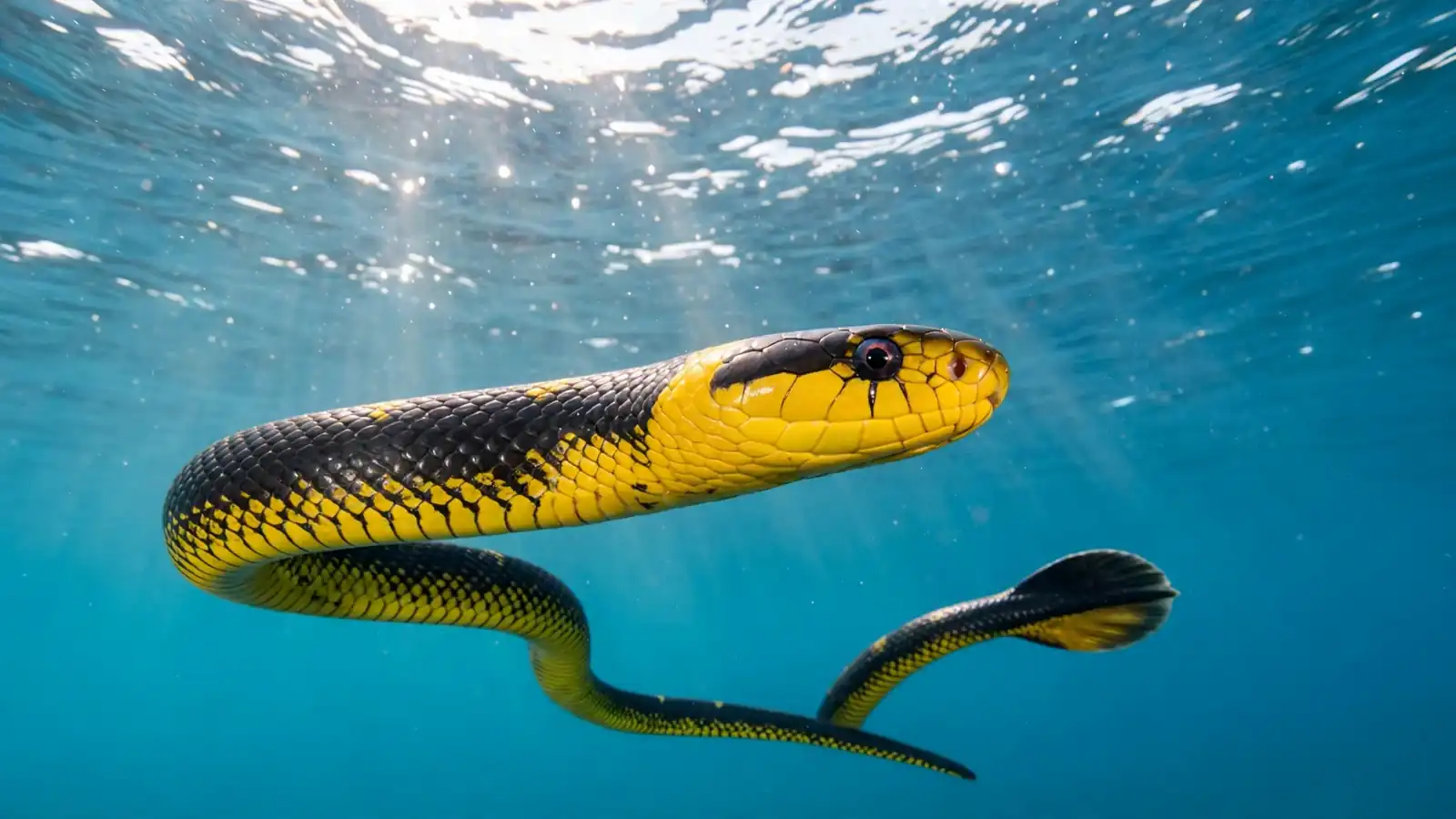
At a Glance
The yellow bellied sea snake, Hydrophis platurus, is the only fully pelagic sea snake, and it is the most widely distributed snake in the world: it drifts across the tropical Indian and Pacific Oceans, and it is the only sea snake found in the eastern Pacific and around Hawaii. It never comes ashore — it cannot move on land, and a beached yellow-bellied sea snake dies. It is a snake of the open water, and it lives its whole life there.
What Is a Yellow Bellied Sea Snake?
It is a sea snake of the family Elapidae, the same family as cobras and coral snakes, and it is the only sea snake that is fully pelagic — it lives its whole life in the open ocean, never touching land or the sea floor. It is a slender snake with a yellow belly and a dark brown or black back, and a flattened, paddle-shaped tail that it uses to swim. Its scientific name has changed over time: it was long known as Pelamis platurus, and it is now placed in Hydrophis.
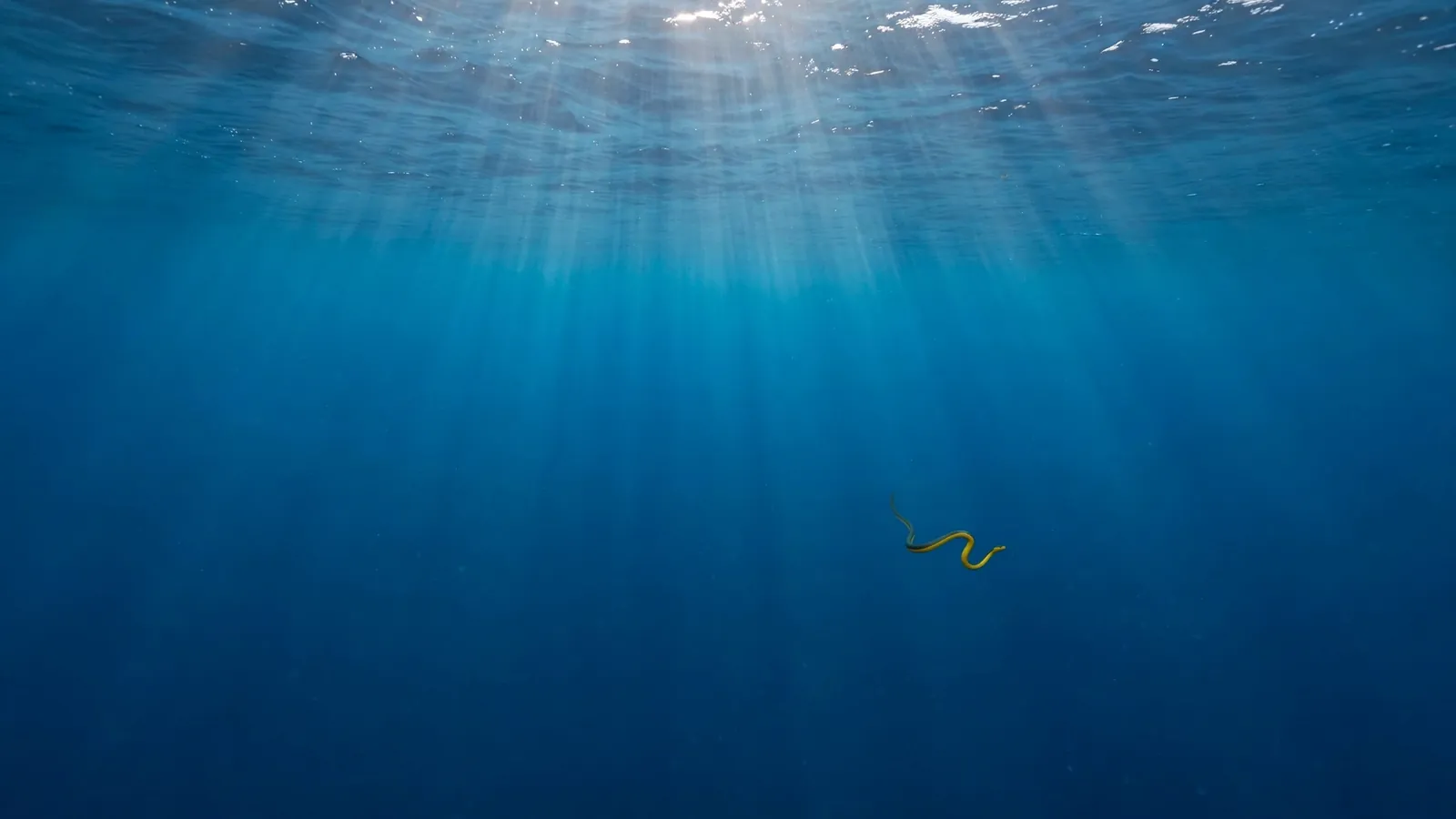
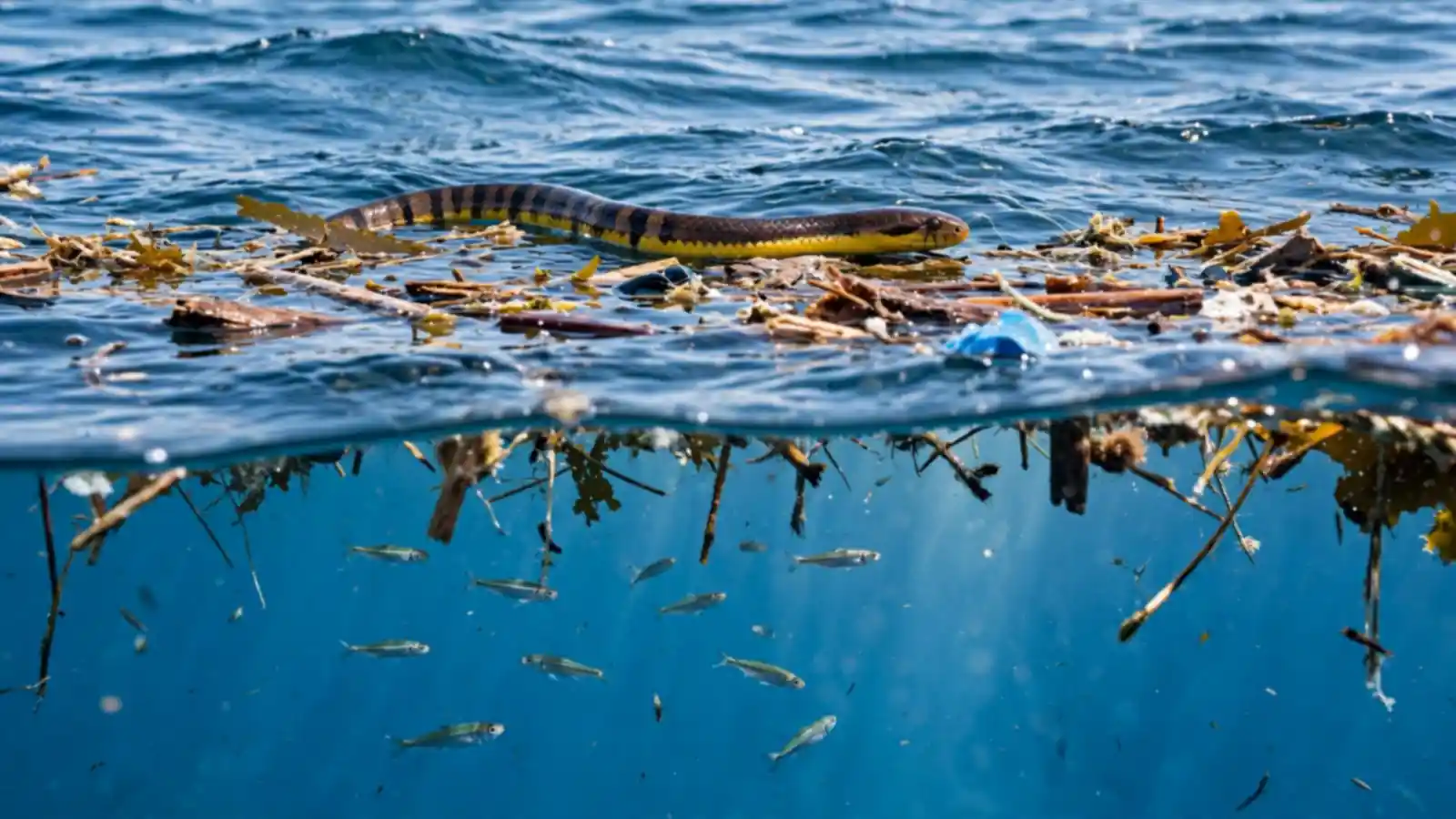
This snake is a drifter. It spends much of its life floating at the surface, carried by the currents, and it gathers in large numbers along drift lines and slicks — the smooth lines of floating debris where small fish shelter. It is a poor swimmer by land-snake standards, but it is a superb one in the water, and it is at home in the open ocean in a way no other snake is. The banded sea krait, its amphibious cousin, hunts at sea but must return to land — the yellow-bellied never does.
Size and Appearance
It is about 72 to 88 centimetres long — females reach about 88 centimetres, males about 72 — and it is a slender snake, built for the water rather than for strength. Its colours are its field mark: a bright yellow belly and a dark brown or black back, a two-tone pattern that is unmistakable, and a tail flattened from side to side into a paddle.
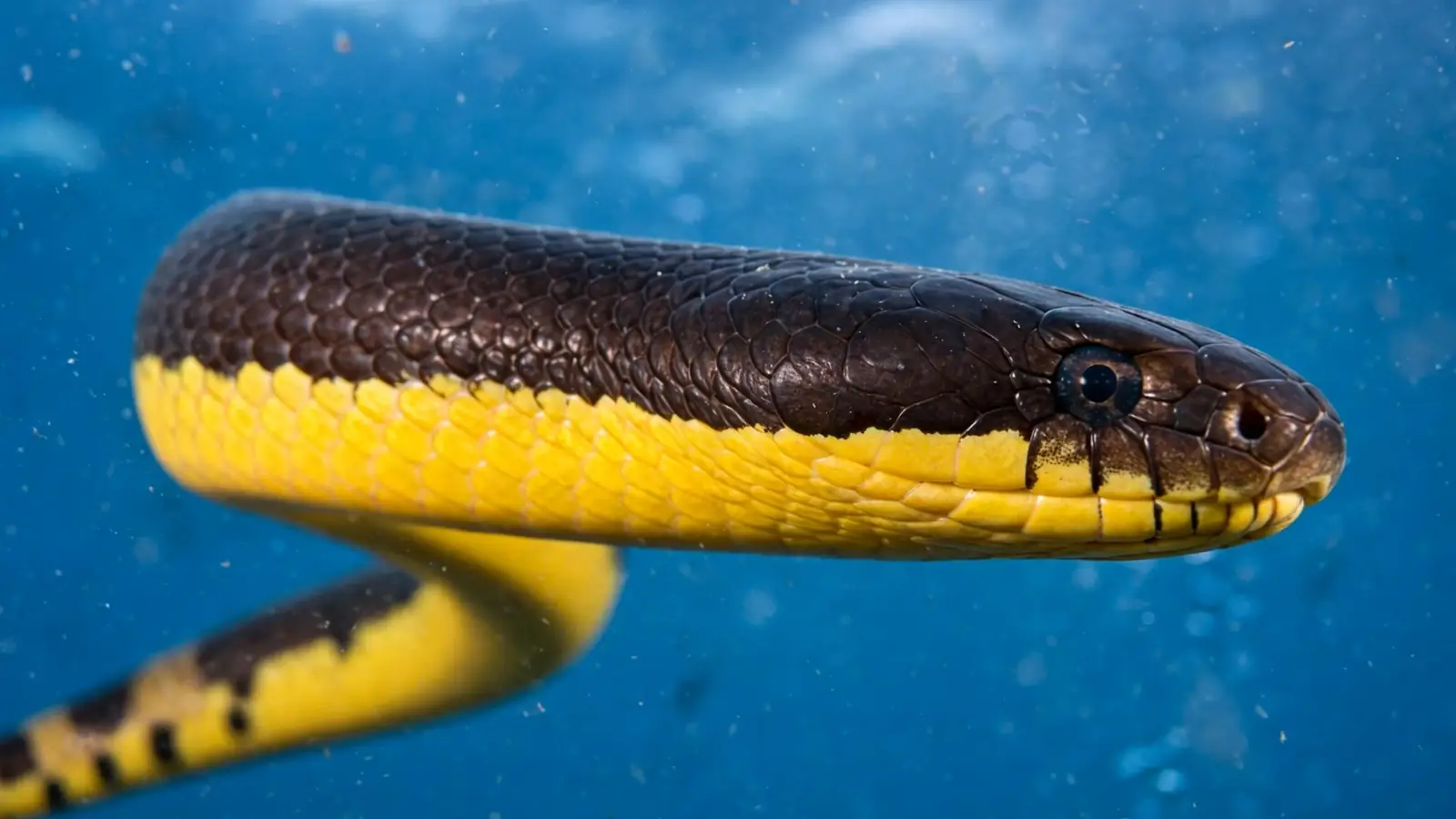
The two-tone colouring is camouflage for the open ocean: from below, the yellow belly blends with the bright surface; from above, the dark back blends with the deep water. The paddle tail is the swimming organ, and it is the reason the snake cannot move on land — a tail built for the water is useless on the beach, and a beached yellow-bellied sea snake cannot crawl back to the sea.
Range: The Widest of Any Snake
It has the widest range of any snake on Earth. It is found across the tropical Indian Ocean and the Pacific, from the east coast of Africa to the west coast of the Americas, and it is the only sea snake found in the eastern Pacific and around Hawaii. It is absent from the Atlantic and from the Red Sea, which it has never colonised.
The range is a product of drifting. The snake rides the ocean currents, and the currents carry it thousands of kilometres — a snake found off Costa Rica may have drifted from Asia, and a snake off Hawaii may have ridden the currents from the Americas. It is a range no land snake can match, because no land snake can ride a current. The yellow-bellied sea snake guide records the size, range and venom figures behind this guide.
A Life That Never Touches Land
It never touches land — not to rest, not to mate, not to give birth. It is born at sea, and it gives birth to live young at sea, unlike the banded sea krait, which must return to land to lay eggs. Mating happens in the water, the young are born in the water, and the snake’s whole life is spent drifting, hunting and resting at the surface.
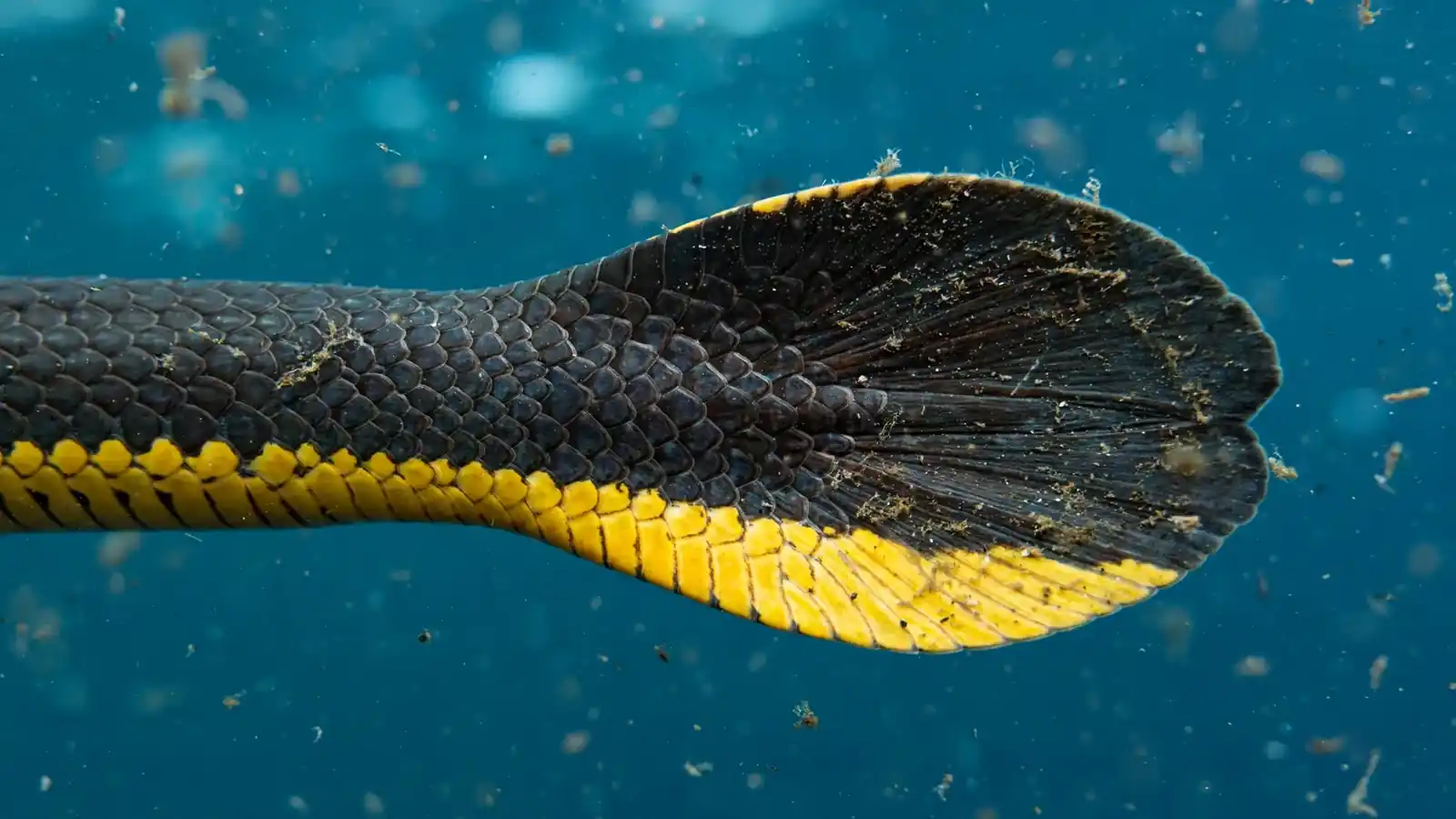
The life is possible because the snake has solved the problems of the sea. It breathes air, rising to the surface to breathe, and it can stay down for hours, absorbing some oxygen through its skin. It drinks rainwater, not seawater, and it eats small fish caught at the surface. It is a complete life, lived without land — the only snake that has ever managed it.
Yellow Bellied Sea Snake Venom: Potent but Rarely Dangerous
Its venom is potent in the laboratory: its LD50 — the dose that kills half of test mice — is about 0.067 milligrams per kilogram, which makes it one of the most potent snake venoms measured in a laboratory. But potency is not the same as danger, and the snake is rarely dangerous to people: a bite delivers only 1 to 4 milligrams of venom, the snake’s mouth is small, and bites are rare.

Bites happen mostly to fishers handling snakes caught in nets, and even then they are uncommon. No death toll is printed here, because none is established, and the snake should not be called the most venomous — that title depends on how venom is measured, and the laboratory number is not the real-world risk. There are no recorded deaths in Australian waters for this species, and the snake is not aggressive: it bites only when handled or threatened.
Diet and Drinking Rainwater at Sea
Yellow bellied sea snakes eat small fish, caught with a quick strike at the surface. They hunt along drift lines and slicks, where small fish shelter under floating debris, and they strike from below, seizing the fish in their small mouths and swallowing it whole. The venom subdues the fish quickly, and the snake feeds on the move, drifting from one slick to the next.
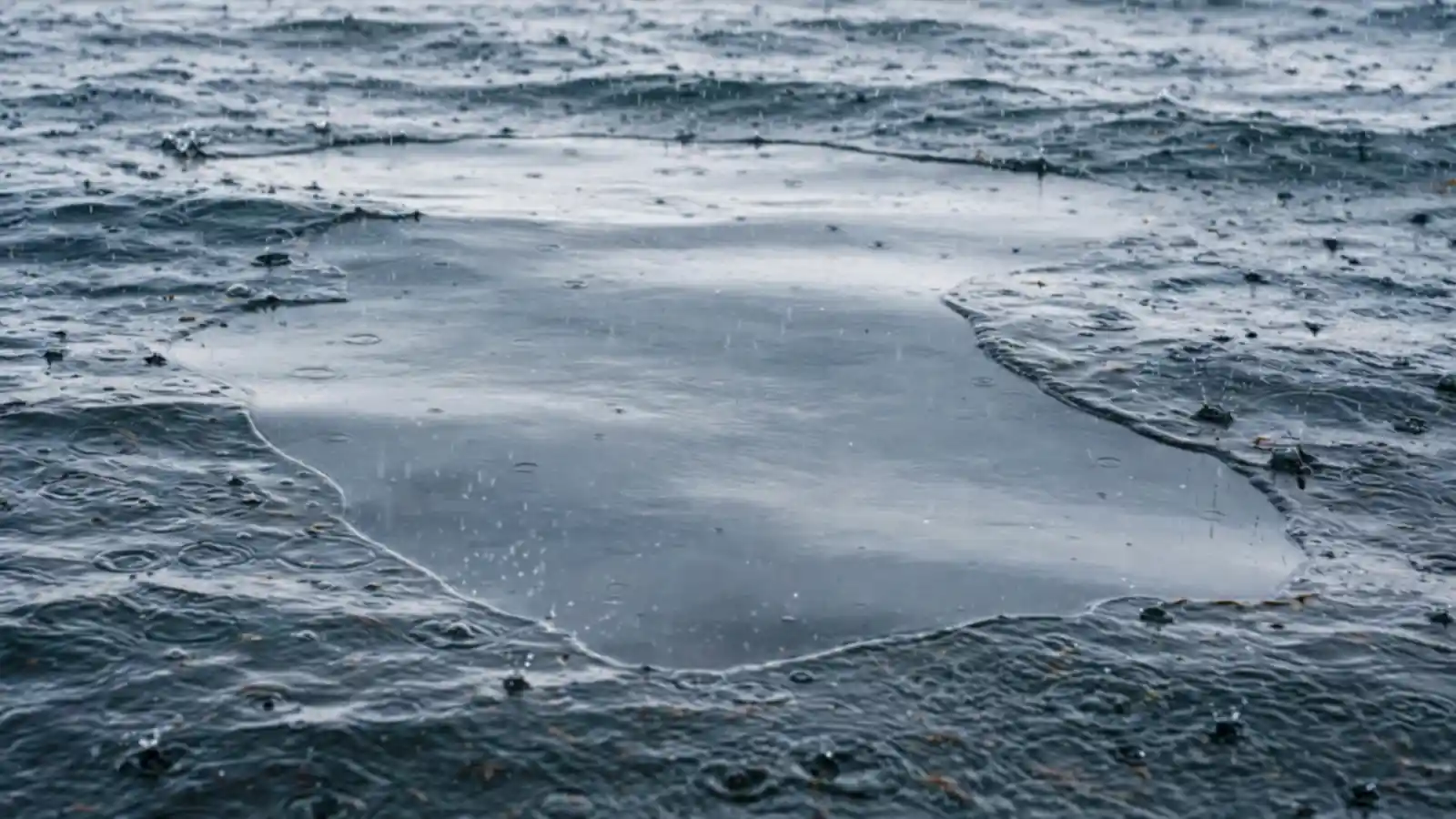
Fresh water is the snake’s other need, and it drinks rainwater. When it rains at sea, a thin lens of fresh water forms on the surface, and it drinks from it, lapping at the fresh layer before it mixes with the salt water below. It can go for months without fresh water, and it dehydrates slowly at sea — the rain is its lifeline, and a snake that has not drunk for months will drink eagerly when the rain comes.
Fun Facts
- It never touches land — it is born, mates and gives birth at sea.
- It has the widest range of any snake on Earth, across the Indian and Pacific Oceans.
- It is the only sea snake found in the eastern Pacific and around Hawaii.
- Its venom is potent in the laboratory, but bites are rare and mostly happen to fishers handling net-caught snakes.
- It drinks rainwater from the thin fresh layer that forms on the sea surface after rain.
- It can stay submerged for hours, absorbing some oxygen through its skin.
Frequently Asked Questions
Is the Yellow Bellied Sea Snake Venomous?
Yes — the yellow bellied sea snake is venomous, and its venom is potent in laboratory tests, with an LD50 of about 0.067 milligrams per kilogram in mice. But it is rarely dangerous to people: bites are rare, the mouth is small, and a bite delivers only 1 to 4 milligrams of venom.
Has a Yellow Bellied Sea Snake Ever Killed Anyone?
No death toll is printed here, because none is established for this species, and there are no recorded deaths in Australian waters for the yellow bellied sea snake. Bites are rare and happen mostly to fishers handling snakes caught in nets. The snake is not aggressive and bites only when handled or threatened.
How Big Is a Yellow Bellied Sea Snake?
A yellow bellied sea snake is about 72 to 88 centimetres long: females reach about 88 centimetres, males about 72. It is a slender snake, built for swimming, with a yellow belly, a dark back and a flattened paddle tail.
Where Do Yellow Bellied Sea Snakes Live?
Yellow bellied sea snakes live in the tropical Indian and Pacific Oceans, drifting on the currents, and they are the only sea snake found in the eastern Pacific and around Hawaii. They are absent from the Atlantic and the Red Sea.
Do Yellow Bellied Sea Snakes Ever Come on Land?
No — the yellow bellied sea snake never comes on land. It is born at sea, mates at sea and gives birth to live young at sea. It cannot move on land, and a beached yellow-bellied sea snake dies.
What Do Yellow Bellied Sea Snakes Eat?
Yellow bellied sea snakes eat small fish, caught with a quick strike at the surface. They hunt along drift lines and slicks, where small fish shelter under floating debris, and they swallow their prey whole.
How Do Yellow Bellied Sea Snakes Drink Fresh Water?
Yellow bellied sea snakes drink rainwater from the thin lens of fresh water that forms on the sea surface after rain. They can go for months without fresh water, and they drink eagerly when the rain comes.
Similar Species Worth Exploring
Keep Exploring
Keep exploring the marine reptiles through the banded sea krait, the amphibious cousin that must return to land, the olive ridley sea turtle, the smallest and most abundant sea turtle, and the wider world of the sea turtles and marine reptiles. No snake lives its whole life at sea quite like the yellow bellied sea snake.