Blue Dragon Sea Slug
Blue Dragon Sea Slug: the tiny slug that steals venom
The blue dragon sea slug is a tiny sea slug with a stolen weapon — it eats the Portuguese man o’ war, keeps the stinging cells, and turns them into its own defence. It is only about 3 centimetres long, and its sting can be worse than the animal it ate.
By Emily Carter · Reviewed by our vet team · Updated 10 November 2026 · 8 min read
Steals stinging cells from its preyAbout 3 cm longFloats upside-down at the surface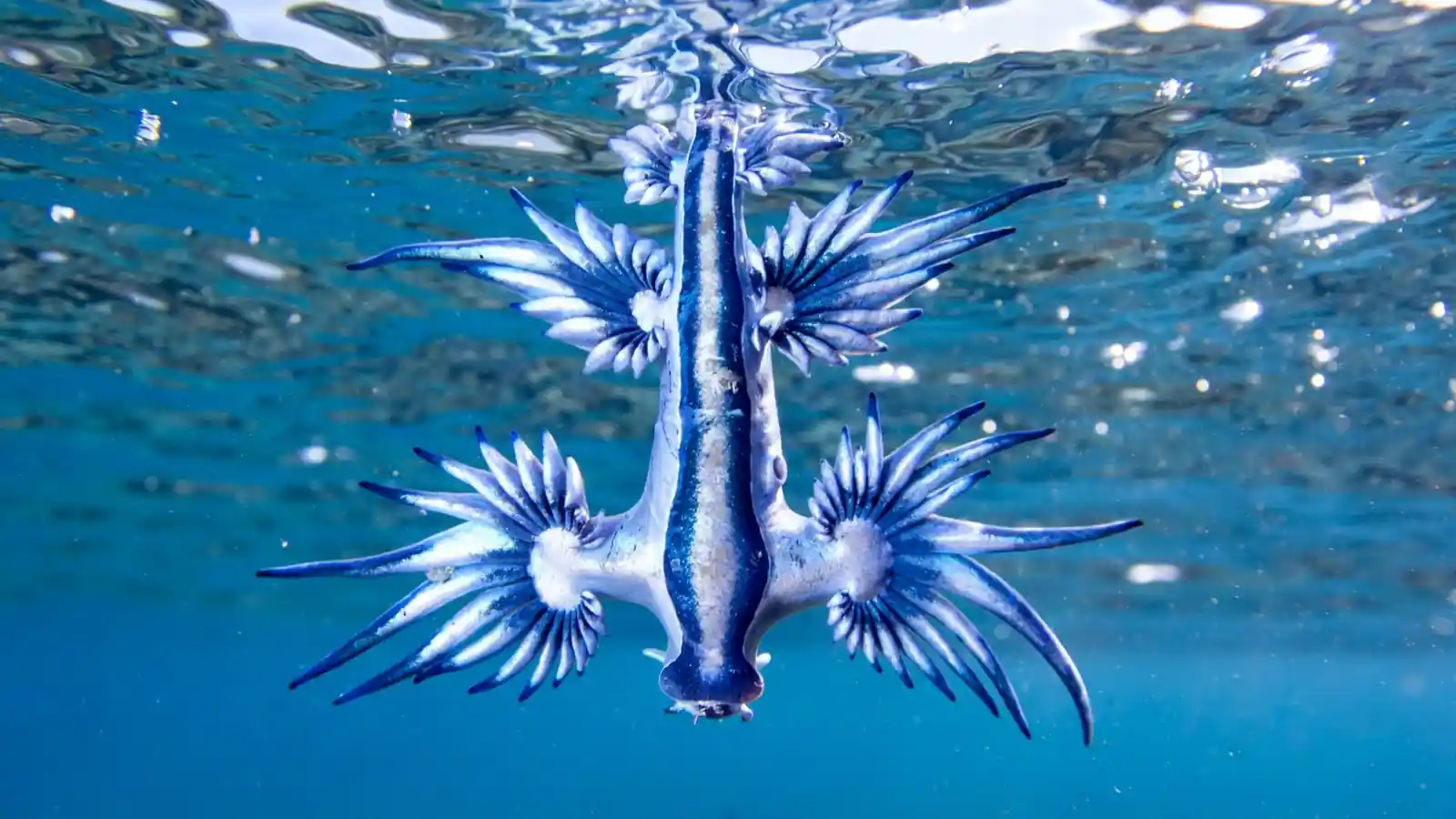
At a Glance
The blue dragon sea slug, Glaucus atlanticus, is a small nudibranch of the open ocean, and it is famous for a trick called kleptocnidae: it eats venomous animals — the Portuguese man o’ war above all — and stores their stinging cells in sacs at the tips of its finger-like cerata, ready to fire at anything that touches it. It concentrates the venom as it stores it, so its sting can be worse than the man o’ war’s. It is a beautiful animal, and it should not be touched.
What Is a Blue Dragon Sea Slug?
It is a small sea slug, a nudibranch, that lives at the surface of the open ocean. It belongs to the family Glaucidae, and it is the best known of the blue dragons — a group of small, blue, surface-drifting slugs that float upside-down on the sea, carried by the currents and the wind. It has no shell, and it needs none: its defence is stolen, and it is formidable.
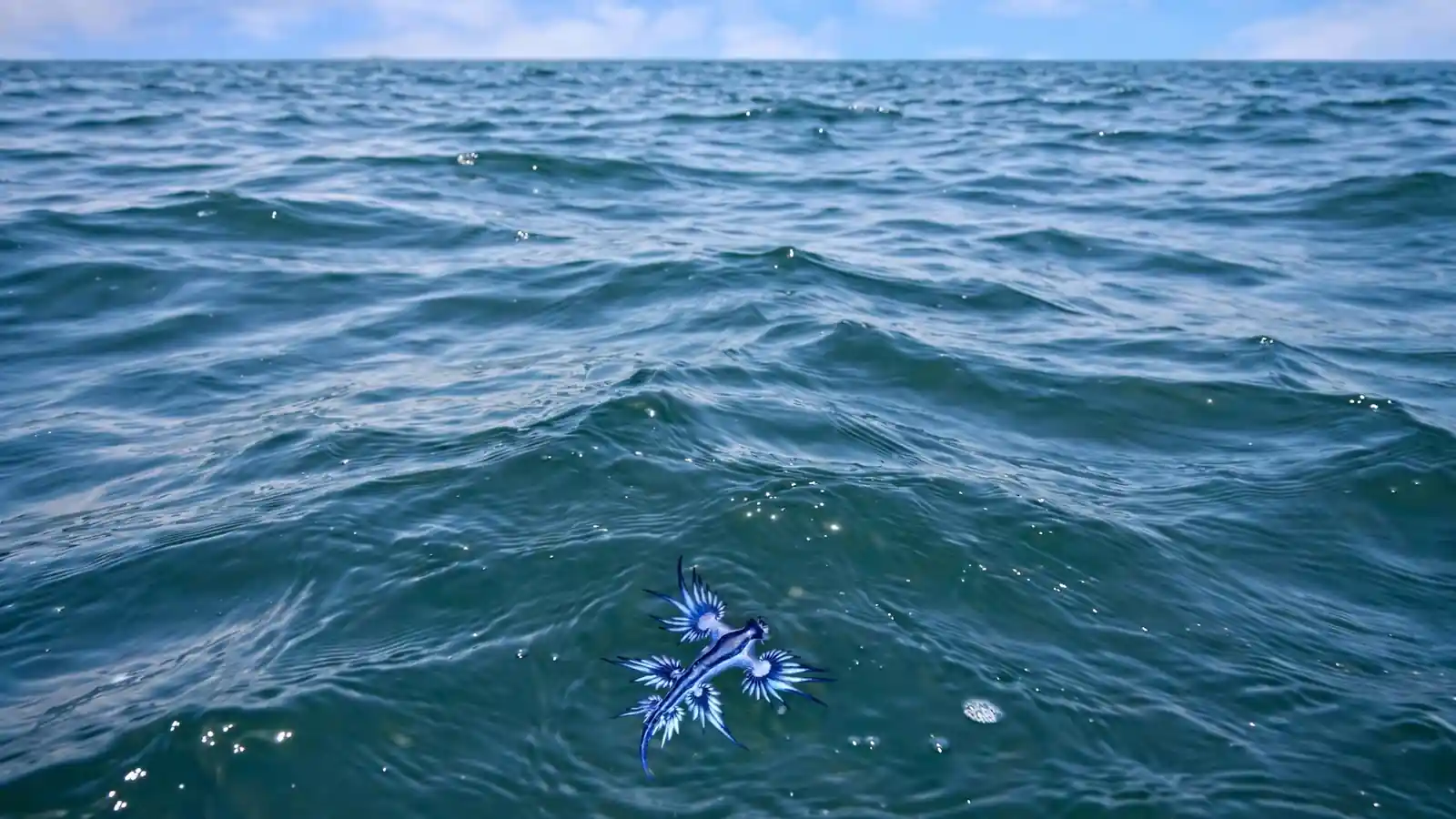
The blue dragon is a slug of the surface. It floats on its back, kept afloat by a bubble of air in its stomach, with its blue side facing down into the water and its silver side facing up at the sky — camouflage from both directions at once. It is a drifter, not a swimmer, and it goes where the currents take it, which is why it washes up on beaches after storms. The queen conch, the blue dragon’s fellow mollusk, lives a very different life on the sea floor.
Blue Dragon Sea Slug Size and Appearance
The slug is small: about 3 centimetres long, about the length of a thumbnail, with a slender body and three clusters of finger-like cerata on each side. Its colours are its camouflage — blue and grey-blue on the side that faces down, silver-grey on the side that faces up — and the cerata are tipped with the sacs that hold the stolen stinging cells.
The size is the warning. A 3-centimetre animal that eats the Portuguese man o’ war is not to be picked up, however beautiful it looks, and the blue dragon’s colours are a reminder: in the sea, bright blue often means ‘do not touch’. Claims of 5 to 6 centimetres are outliers and are not used here — 3 centimetres is the typical size.
How It Steals Venom
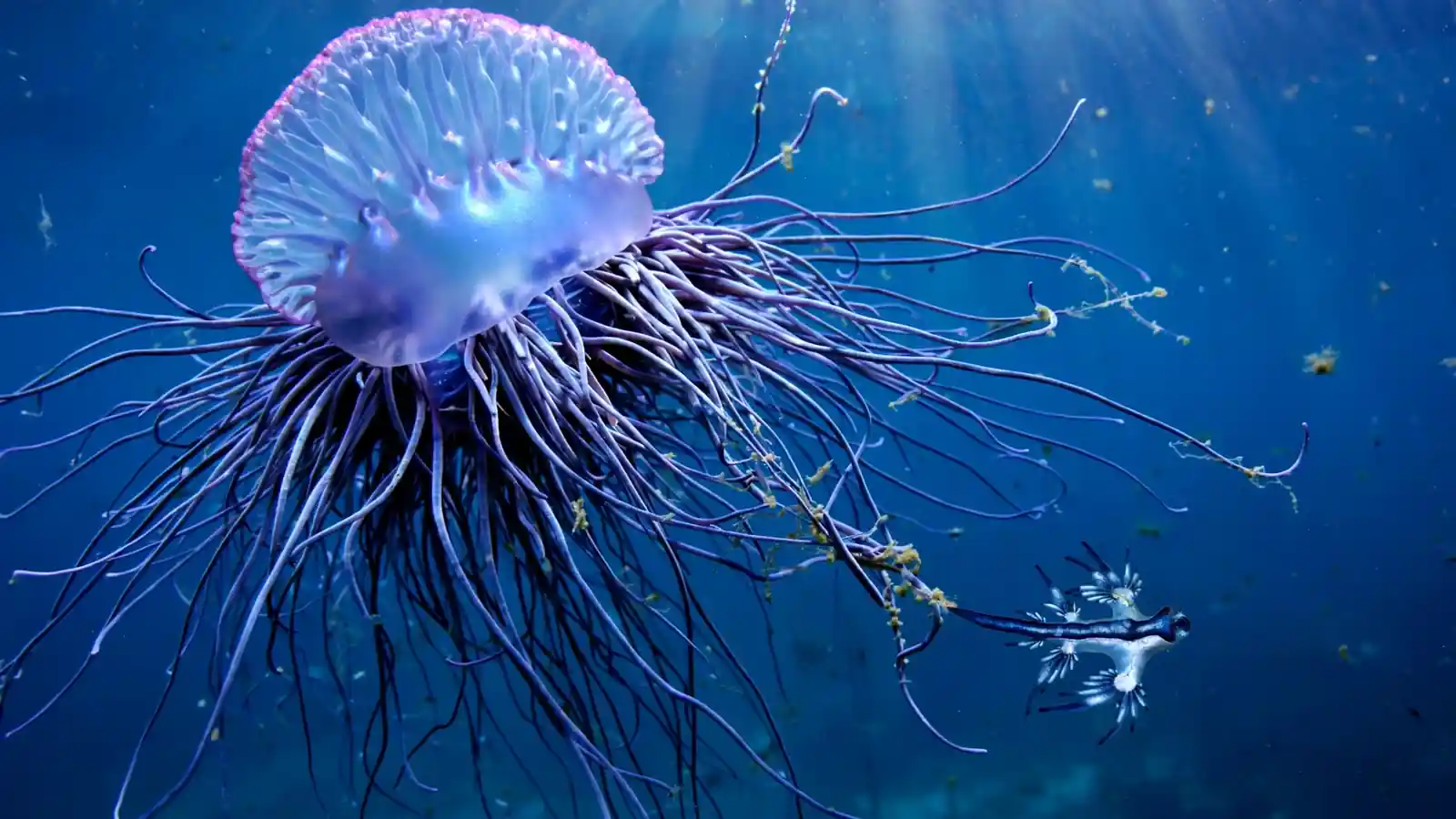
The theft works like this: the blue dragon eats a Portuguese man o’ war, and as it digests the tentacles, it sorts the stinging cells — the nematocysts — and passes the undischarged ones into sacs at the tips of its cerata, called cnidosacs. The cells stay live and ready to fire, and the slug can use them against anything that touches it. It is a weapon it did not make, and it is a good one.
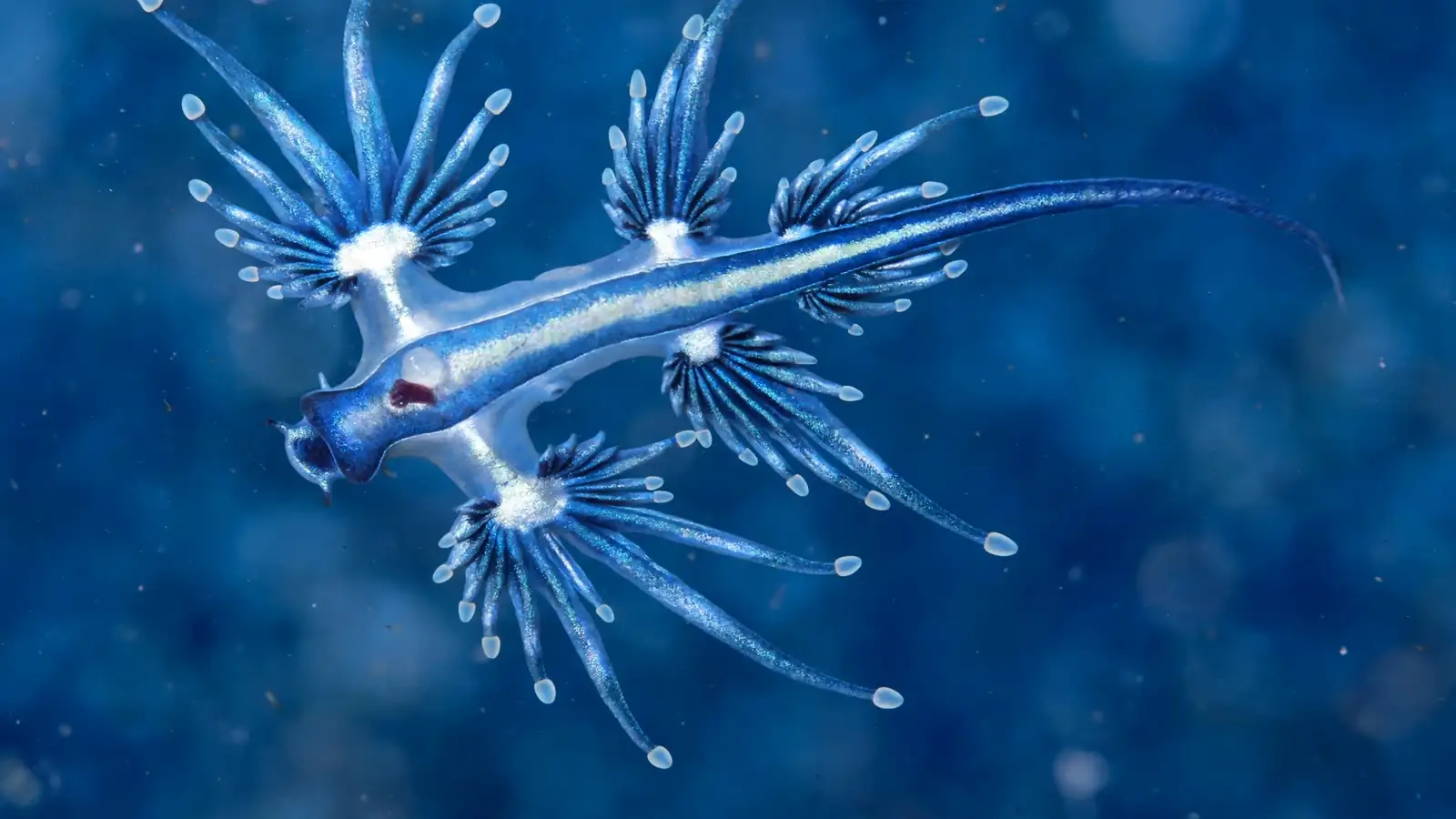
The slug concentrates the venom as it stores it, so its sting can be worse than the man o’ war’s — a small animal carrying a bigger animal’s weapon, made stronger by the carrying. Some reports claim the sting is three times as potent, but that figure is low-quality and is not used here; what is certain is that the concentrated venom makes a small sting a serious one. The profile records the size, diet and sting figures behind this guide.
Diet: Venomous Prey Only
Blue dragon sea slugs eat venomous prey only: the Portuguese man o’ war above all, and other surface drifters — the blue button, the by-the-wind sailor and other siphonophores. They are the only animals that can eat a man o’ war safely, and they do it by taking the tentacles first, disarming the prey as they eat it.
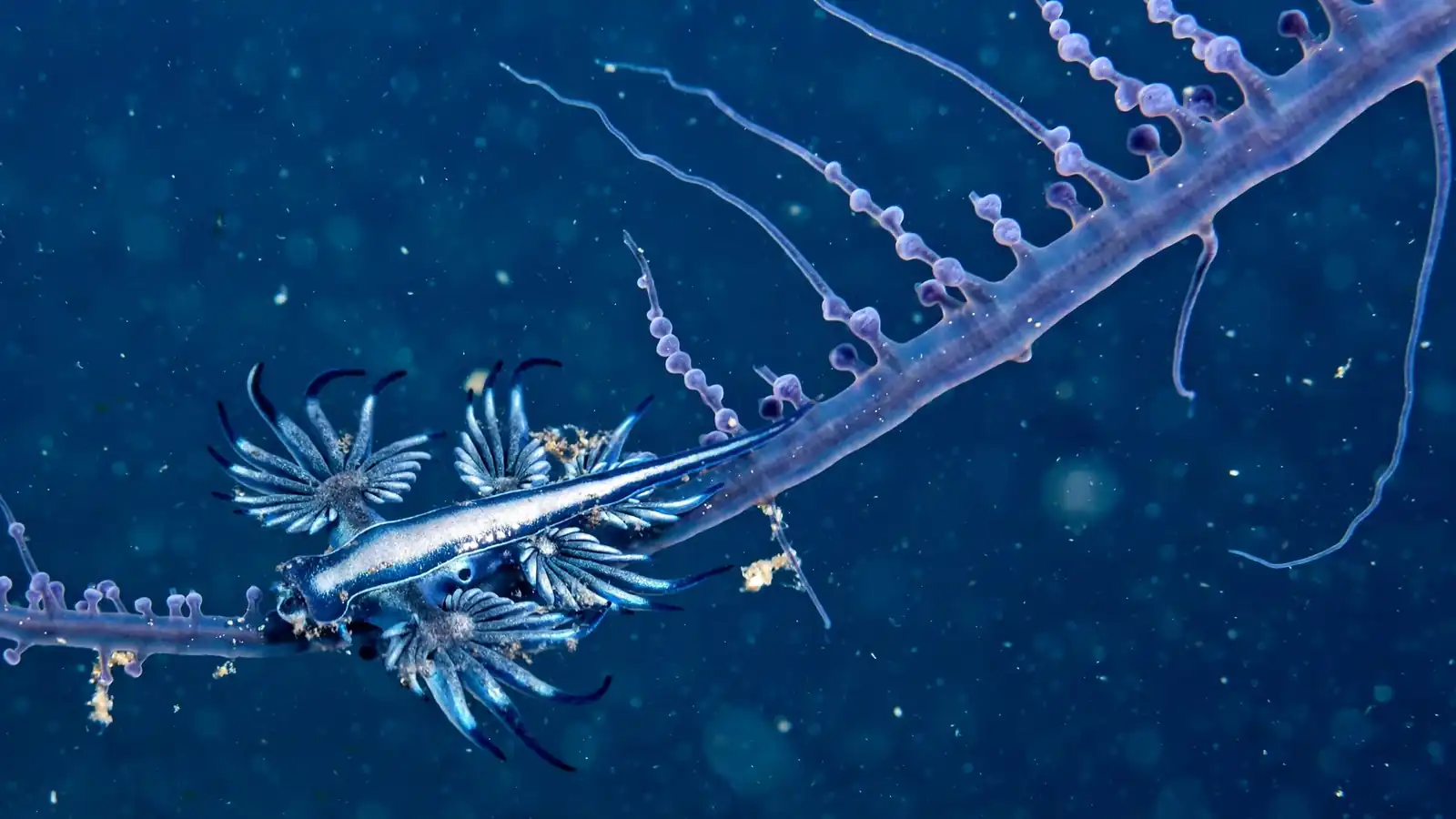
The diet is the defence. Every meal is a weapon restocked, and a blue dragon that has just eaten is better armed than one that has not. They also eat each other, on occasion — cannibalism is reported in blue dragons, and a hungry slug will take a smaller one. The Portuguese man o’ war, the blue dragon’s main prey, is a siphonophore, not a jellyfish, and it is the source of the slug’s stolen sting.
Sting and Safety
The slug’s sting is painful, and it can be worse than a man o’ war sting, because the venom is concentrated. The symptoms are like a man o’ war sting — pain, redness, welts, and in sensitive people nausea or more serious effects — and the sting can come from a dead slug too, because the stinging cells stay active after death. A blue dragon washed up on a beach can still sting, and it should never be picked up, alive or dead.
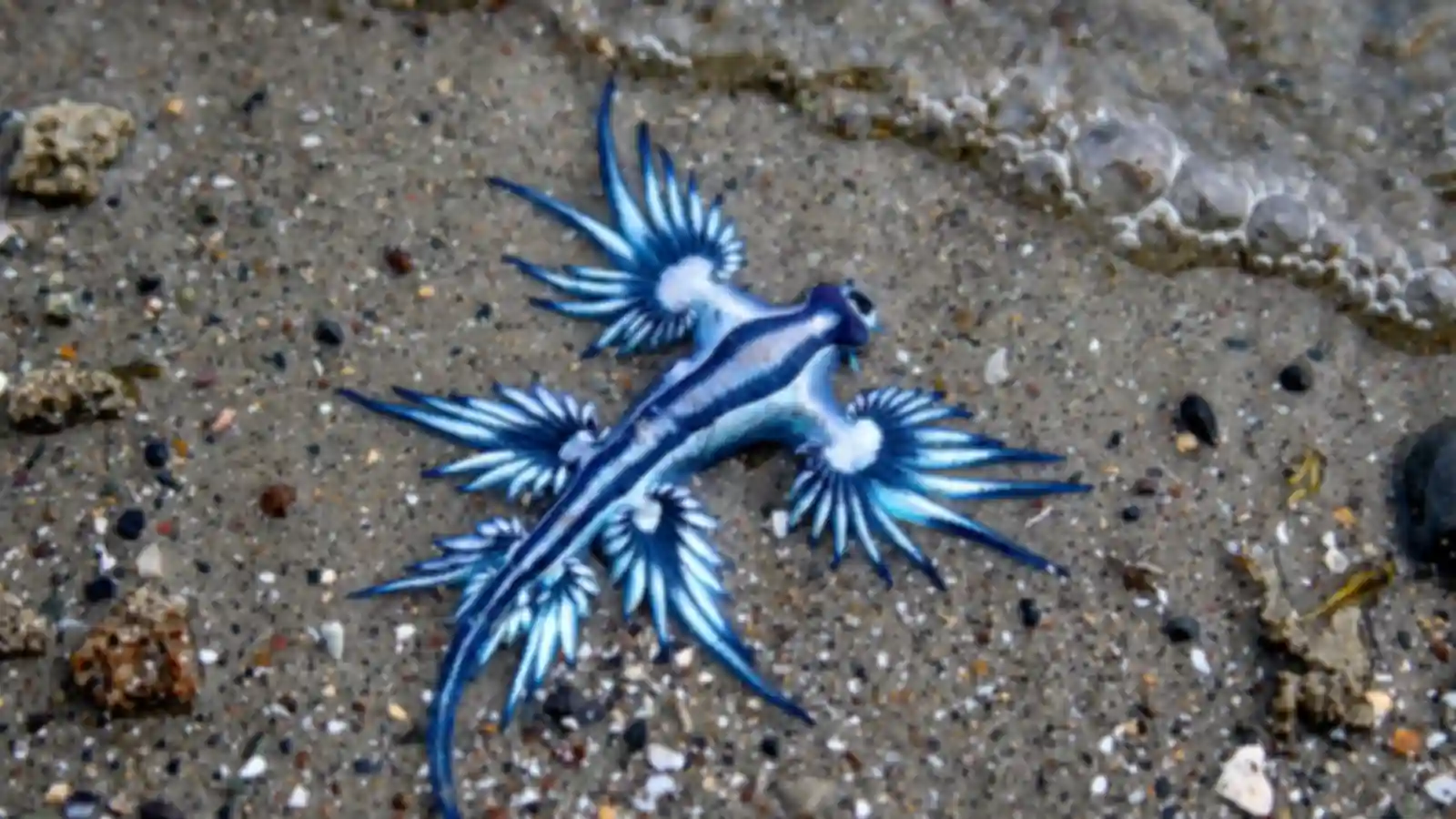
If you are stung, the general first aid is to rinse the area with seawater, remove any tentacle fragments with a stick or a gloved hand, and immerse the sting in hot water if it is available, then seek medical care — especially for children or anyone with a severe reaction. This is general information, not medical advice: if the pain is severe or spreading, or if there is difficulty breathing, get medical help at once. The best safety rule is simple: admire a blue dragon, and do not touch it.
Habitat and Reproduction: Drifting the Surface
Blue dragon sea slugs live at the surface of the open ocean, in tropical and subtropical seas around the world, drifting with the currents and the wind. They are found wherever the Portuguese man o’ war is found, because that is their food, and they wash ashore in numbers after storms — strandings make the news every year, from Australia to South Africa to Thailand.
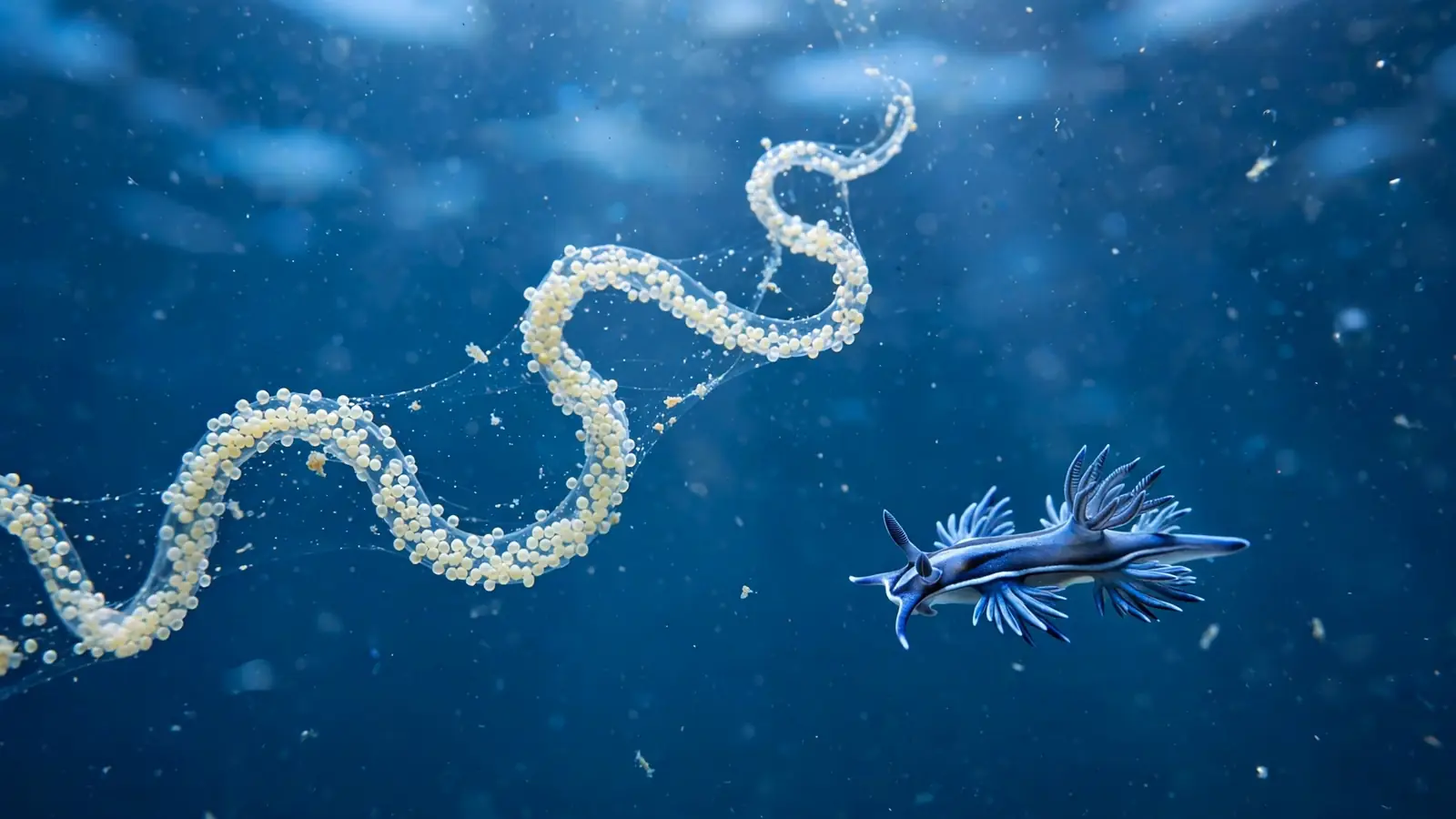
Blue dragons are hermaphrodites: each animal has both male and female organs, and two slugs exchange sperm when they meet. They lay their eggs in ribbons and strings, left floating in the water or attached to drifting debris, and the eggs hatch into larvae that drift with the plankton until they grow into the blue, stinging adults. It is a life spent at the surface, and it ends where the currents take it.
Fun Facts
- This slug steals stinging cells from the Portuguese man o’ war and stores them in its cerata.
- It concentrates the venom, so its sting can be worse than the man o’ war’s.
- It floats upside-down at the surface, blue side down and silver side up.
- It is only about 3 centimetres long — about the length of a thumbnail.
- A dead blue dragon can still sting, because the stinging cells stay active.
- Blue dragons are hermaphrodites, and they lay their eggs in ribbons in the water.
Frequently Asked Questions
Is a Blue Dragon Sea Slug Dangerous?
Yes — a blue dragon sea slug can give a painful sting, and it can be worse than a man o’ war sting because the venom is concentrated. It is not aggressive, but it should never be touched, alive or dead, because the stinging cells stay active after death.
How Does a Blue Dragon Sea Slug Steal Venom?
A blue dragon eats a Portuguese man o’ war and sorts the stinging cells, passing the undischarged ones into sacs at the tips of its cerata, called cnidosacs. The cells stay live and ready to fire, and the slug concentrates the venom as it stores it.
How Big Is a Blue Dragon Sea Slug?
A blue dragon sea slug is about 3 centimetres long, about the length of a thumbnail. Claims of 5 to 6 centimetres are outliers and are not used in this guide.
What Does a Blue Dragon Sea Slug Eat?
Blue dragon sea slugs eat venomous prey only: the Portuguese man o’ war above all, and other surface drifters such as the blue button and the by-the-wind sailor. They also eat other blue dragons on occasion.
Can a Dead Blue Dragon Sea Slug Still Sting?
Yes — the stinging cells stored in a blue dragon’s cerata stay active after death, so a dead slug washed up on a beach can still sting. Never pick one up, alive or dead.
What Should You Do If Stung by a Blue Dragon?
Rinse the area with seawater, remove any tentacle fragments with a stick or a gloved hand, and immerse the sting in hot water if it is available, then seek medical care. This is general information, not medical advice — get medical help at once if the pain is severe or spreading, or if there is difficulty breathing.
Where Do Blue Dragon Sea Slugs Live?
Blue dragon sea slugs live at the surface of the open ocean, in tropical and subtropical seas around the world, drifting with the currents wherever the Portuguese man o’ war is found. They wash ashore in numbers after storms.
Similar Species Worth Exploring
Keep Exploring
Keep exploring the surface drifters through the Portuguese man o’ war, the blue dragon’s venomous prey, the by-the-wind sailor, another surface drifter, and the wider world of the types of mollusks. No sea slug turns its dinner into a weapon quite like the blue dragon sea slug.