King Mackerel
King Mackerel: the largest Atlantic mackerel, fast enough to skyrocket and rich enough in mercury to warn about
The king mackerel is the biggest mackerel in the Atlantic: a silver torpedo that hunts in schools, leaps clear of the water after its prey, and carries so much mercury that food-safety agencies put it on their do-not-eat list. It is a magnificent game fish — and a fish to know before you eat.
By Emily Carter · Reviewed by our vet team · Updated 10 November 2026 · 9 min read
Largest mackerel in the AtlanticSkyrockets clear of the waterOn the FDA Choices to Avoid list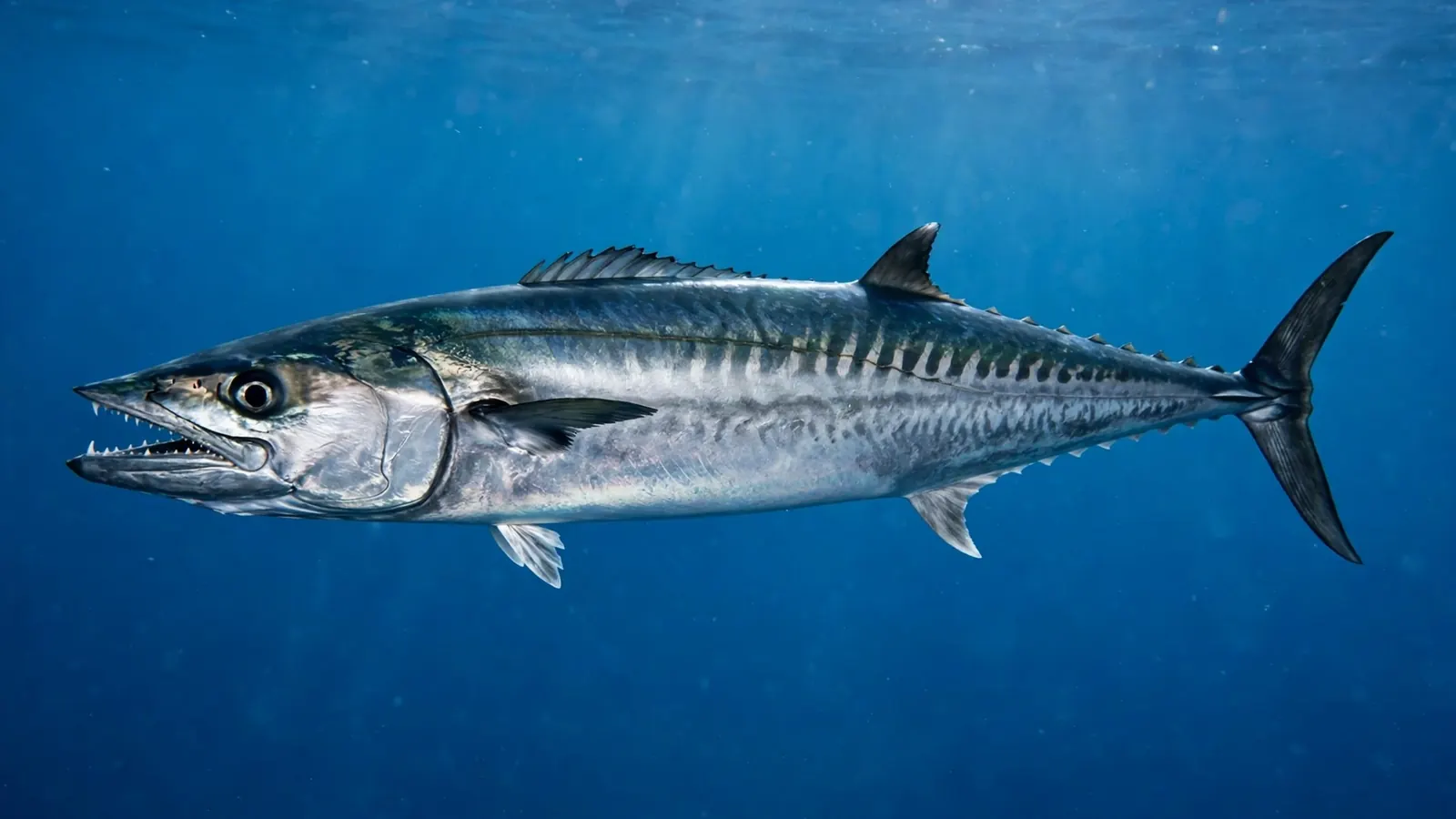
At a Glance
The king mackerel, Scomberomorus cavalla, is the largest mackerel in the Atlantic and one of the fastest fish on the coast: a long, silvery predator, also called the kingfish, that hunts schooling baitfish along the western Atlantic from Massachusetts to Brazil. It is a prized game fish and a popular food fish — and it is also one of the four highest-mercury fish on the food-safety list, which is why this guide treats its warnings as seriously as its speed.
What Is a King Mackerel?
It is a large, torpedo-shaped mackerel with a silvery body, a dark blue-green back, a deeply forked tail and a mouth full of sharp, triangular teeth. It is unspotted — the sides are plain silver, which is the quickest way to tell it from its smaller cousin, the Spanish mackerel, whose sides are marked with gold spots. The lateral line dips sharply below the second dorsal fin, another field mark that separates the king from its relatives.
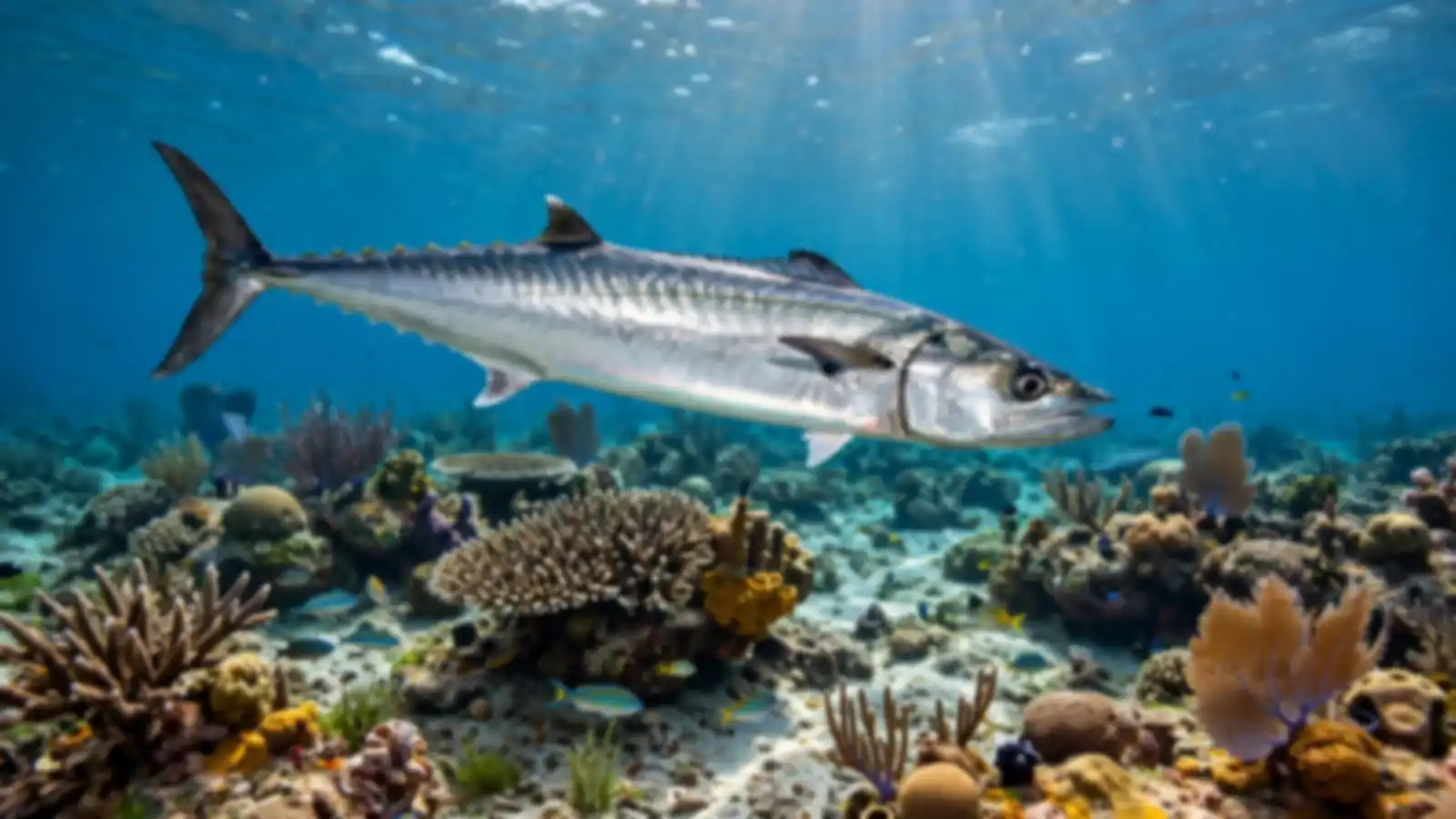
They live only in the western Atlantic, from Massachusetts south to Brazil, including the Gulf of Mexico and the Caribbean. One ranking source claims they live in tropical waters worldwide, including off India — that is wrong, and this guide uses only the western Atlantic range confirmed by the species records. Within that range they are coastal fish, hunting over reefs, around oil rigs and along beaches where baitfish gather.
King Mackerel Size and the 93-Pound Record
It grows to a maximum of about 184 centimetres and 45 kilograms, though most caught fish are far smaller, typically 20 to 35 inches long. The all-tackle world record is 93 pounds, caught off San Juan, Puerto Rico, on 18 April 1999 by Steve Perez Gaulau — a fish that has stood as the record for more than twenty-five years. Females grow larger than males, and a large female may release 1 to 2.5 million eggs in a spawning season.
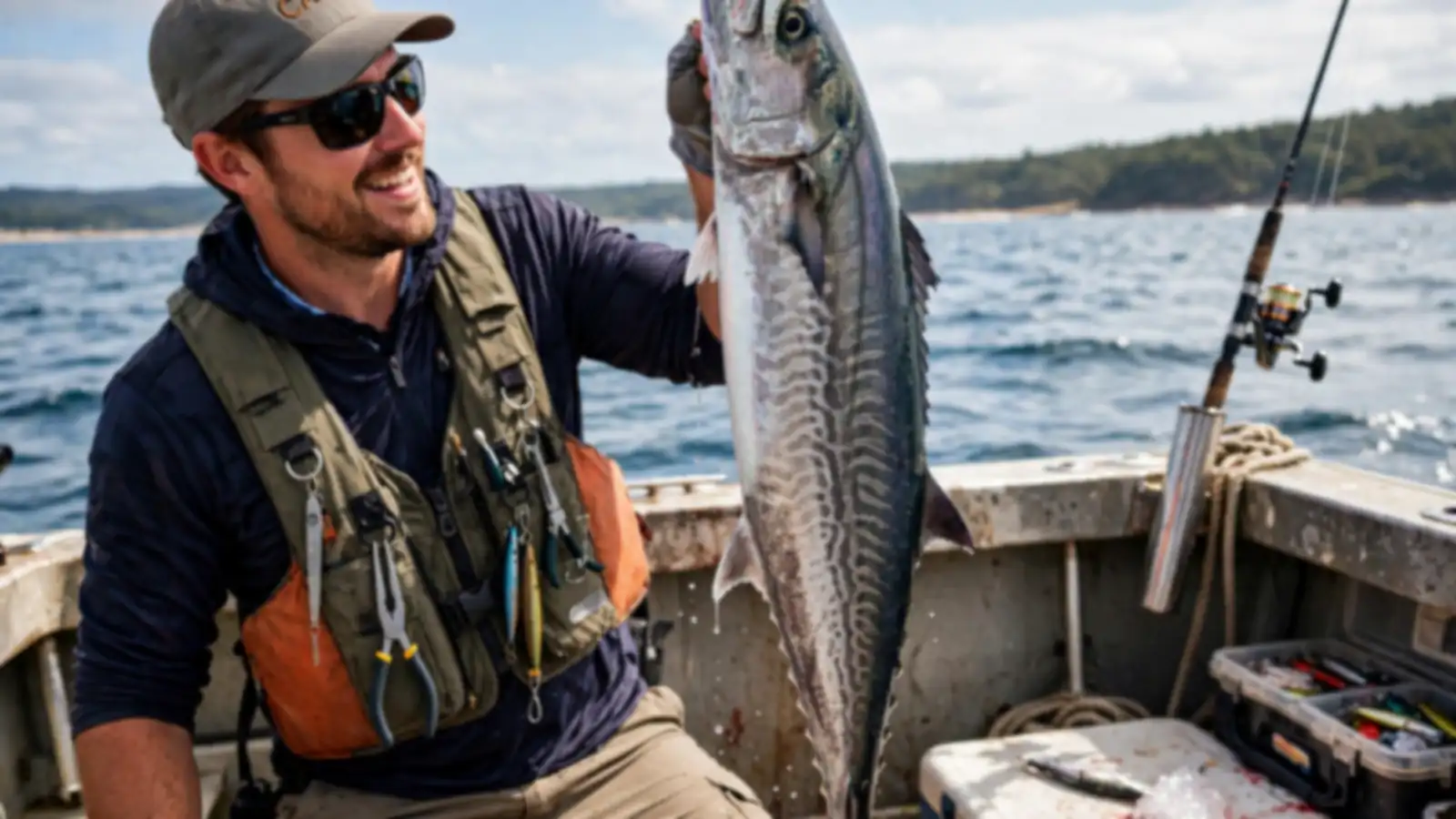
Size follows the coast: the biggest kings come from the warm waters of Florida, the Gulf of Mexico and the Caribbean, where the fish grow year-round on rich baitfish. Northern fish are smaller and seasonal, moving south as the water cools. A king of 30 pounds is a fine fish anywhere; a king of 50 pounds is a fish of a lifetime.
Speed and the Skyrocketing Strike
They are famous for speed, and for the skyrocketing strike: a king chasing baitfish will launch itself clear out of the water, sometimes several feet into the air, in pursuit of a fleeing fish. Bursts of over 40 miles per hour are claimed for the species, but that figure comes from a single source and is reported here as a claim, not as a measured fact — the same caution applies to fishing-writing claims that the king matches the wahoo for speed.

What is certain is the behaviour: kings hunt by speed, slashing through schools of baitfish and picking off the injured, and they strike lures trolled fast behind a boat with a violence that has made them one of the most exciting game fish on the American coast. A king on the line runs hard, jumps high and fights to the boat, and it does it all in water barely deeper than a swimming pool.
Habitat and Migration
They live in coastal waters of the western Atlantic, from Massachusetts to Brazil, and they migrate with the seasons and the baitfish: north in summer, south in winter, following the warm water and the schools of menhaden, sardines and anchovies they feed on. In the Gulf of Mexico they gather around reefs, wrecks and oil platforms, where baitfish shelter and the kings patrol the edges.
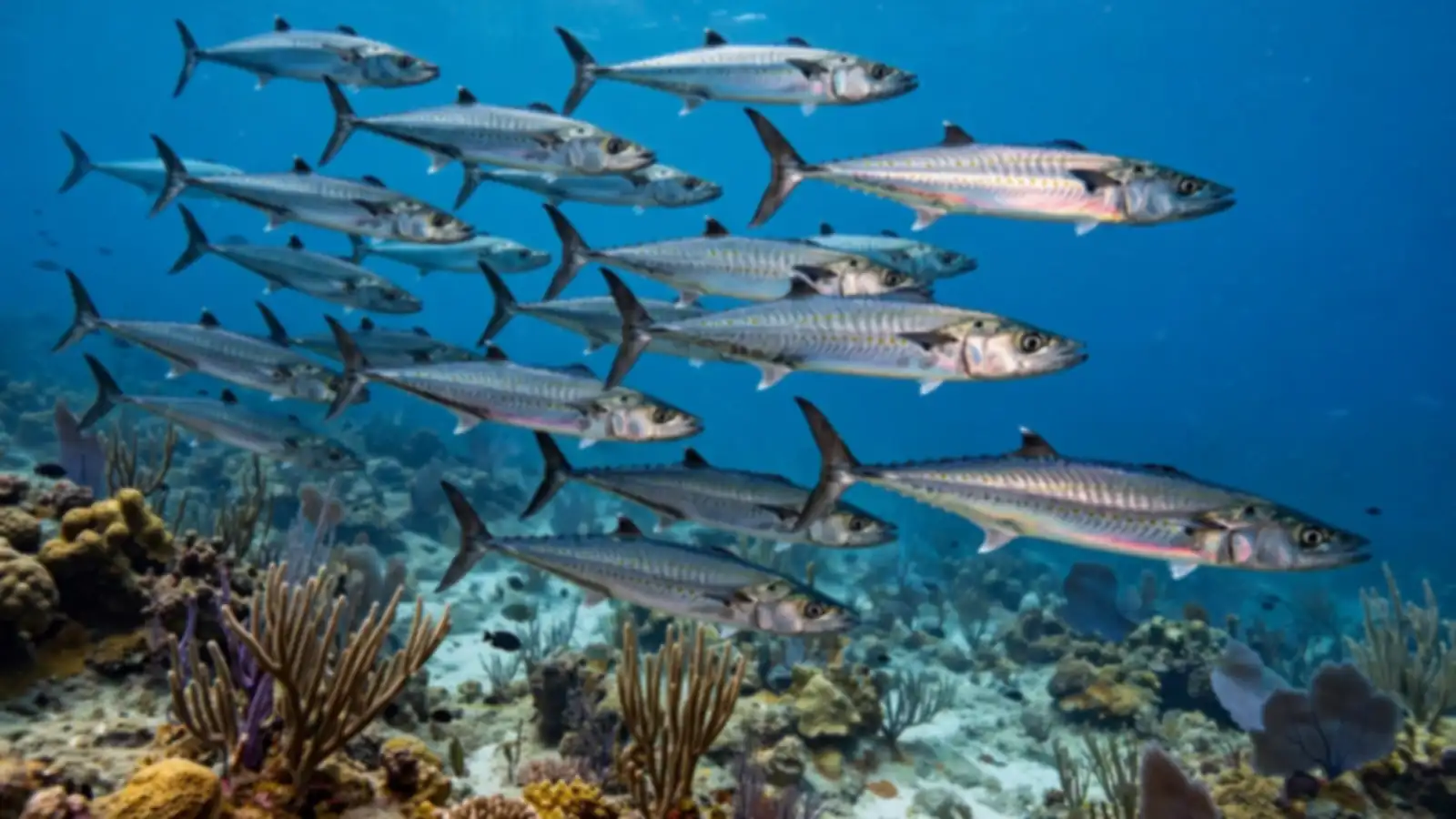
They are a fish of the surface layers, rarely found deeper than about 40 metres, and they prefer clear, warm, salty water. Young kings stay inshore, in bays and estuaries, while the adults move offshore to the reefs and the edge of the continental shelf. The migration is a circuit the fish repeat every year, and the fishing follows it, from the Carolinas in summer to Florida and the Gulf in winter.
Diet: Hunting Schooling Baitfish
They eat schooling baitfish above all — menhaden, sardines, anchovies and herrings — plus squid and the occasional shrimp. They hunt in schools of their own, herding baitfish into tight balls near the surface and slashing through them with their sharp teeth, picking off the injured fish one by one. A feeding frenzy of kings is a spectacular sight: silver fish exploding out of the water, baitfish scattering, gulls diving from above.
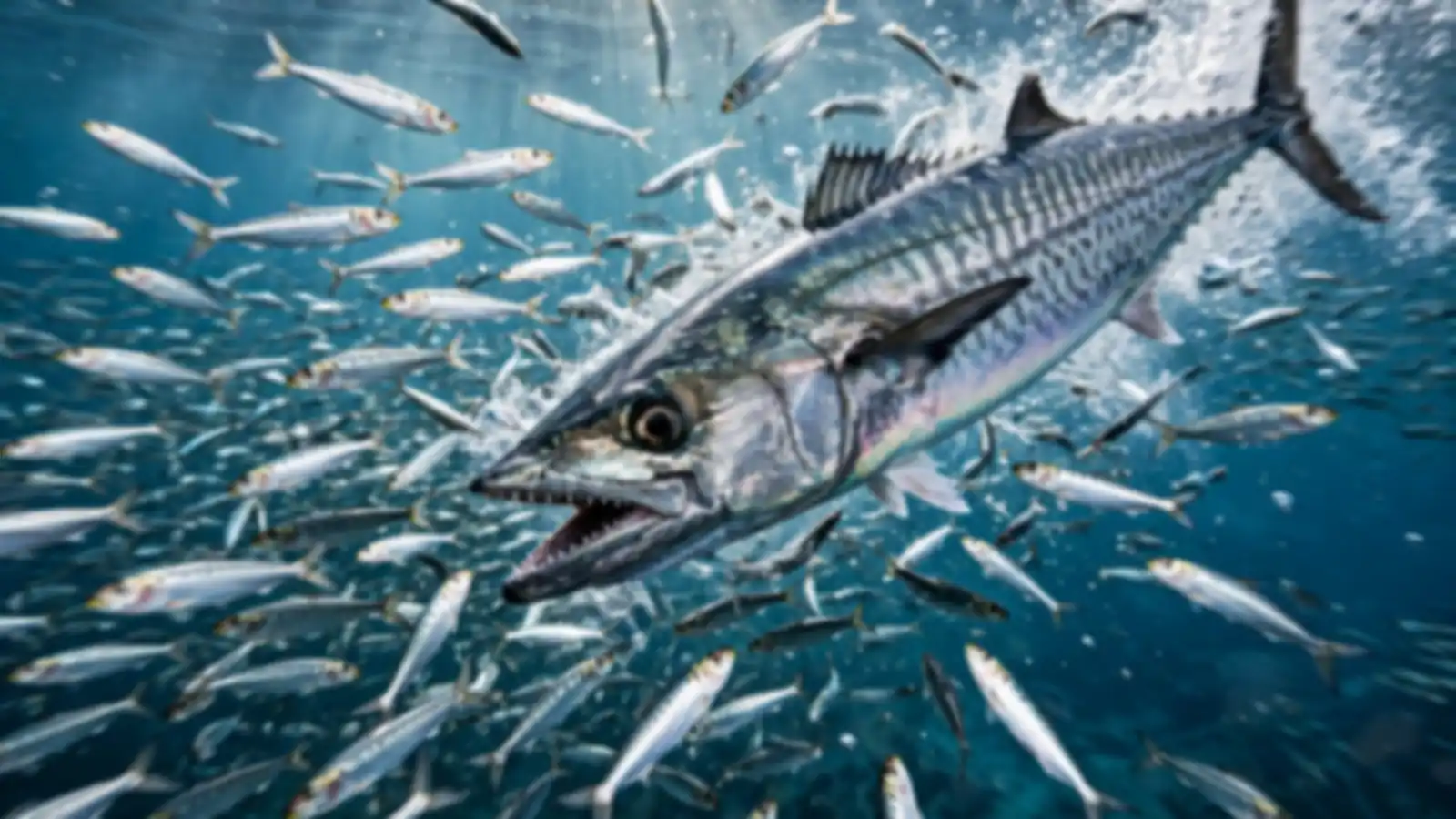
The diet is what makes the king a mercury risk: it eats other fish that have themselves eaten smaller fish, and mercury concentrates at each step up the food chain. The king is a top predator of the coastal food web, and its muscle carries the mercury of everything it has eaten over a life of ten years or more.
Mercury and Ciguatera: The Safety Warnings
It sits on the food-safety Choices to Avoid list, and it is one of the four highest-mercury fish on that list: pregnant and breastfeeding people and young children are advised not to eat it at all, and other adults are advised to eat it rarely. The mercury comes from the fish’s long life and its diet of other fish, and it accumulates in the muscle over the years — a big, old king carries far more mercury than a small, young one.

There is a second warning, too: ciguatera poisoning has been reported from this fish in some areas, a food poisoning caused by toxins that build up in reef fish, and it is recorded in the species accounts. The species summary for Scomberomorus cavalla records the size, record and range figures behind this guide, and the safety message is the one to take home: the king is a magnificent fish to catch, and a fish to eat rarely, if at all, and never in pregnancy.
Fun Facts
- The all-tackle world record weighed 93 pounds, caught off Puerto Rico in 1999.
- They are famous for skyrocketing: leaping clear out of the water after fleeing baitfish.
- A large female may release 1 to 2.5 million eggs in a spawning season.
- They live only in the western Atlantic — claims that they occur off India are wrong.
- They are one of the four highest-mercury fish on the food-safety Choices to Avoid list.
- Ciguatera poisoning has been reported from this fish in some areas, a second reason for caution.
Frequently Asked Questions
How Big Do King Mackerel Get?
They grow to a maximum of about 184 centimetres and 45 kilograms, though most caught fish are 20 to 35 inches long. The all-tackle world record is 93 pounds, caught off San Juan, Puerto Rico, on 18 April 1999. Females grow larger than males.
What Is the Difference Between King and Spanish Mackerel?
Kings are larger, unspotted and have a lateral line that dips sharply below the second dorsal fin, while Spanish mackerel are smaller, with gold spots on their sides and a lateral line that slopes gently. Kings also grow much bigger — Spanish mackerel rarely pass a few pounds, while kings can pass 90.
Is King Mackerel Safe to Eat?
It should be eaten rarely, if at all, and never in pregnancy or by young children: it is on the food-safety Choices to Avoid list as one of the four highest-mercury fish. Ciguatera poisoning has also been reported from this fish in some areas. It is a magnificent fish to catch and a cautious one to eat.
Does King Mackerel Have Mercury?
Yes — it is one of the highest-mercury fish there is. Mercury accumulates in its muscle over a long life of eating other fish, and big, old kings carry far more than small, young ones. The food-safety guidance is to avoid it in pregnancy and childhood, and to eat it only rarely otherwise.
Can King Mackerel Give You Ciguatera?
Yes, ciguatera poisoning has been reported from this fish in some areas. Ciguatera is a food poisoning caused by toxins that build up in reef fish, and it is recorded in the species accounts for this fish. It is a second reason, alongside mercury, to treat the fish with caution as food.
Where Do King Mackerel Live?
They live only in the western Atlantic, from Massachusetts to Brazil, including the Gulf of Mexico and the Caribbean. They migrate north in summer and south in winter, following warm water and baitfish, and they stay in coastal surface waters, rarely deeper than about 40 metres.
What Do King Mackerel Eat?
They eat schooling baitfish above all — menhaden, sardines, anchovies and herrings — plus squid and the occasional shrimp. They hunt in schools, herding baitfish into tight balls near the surface and slashing through them with sharp teeth.
Similar Species Worth Exploring
Keep Exploring
Keep exploring the mackerel clan through the Spanish mackerel, the smaller, gold-spotted cousin, the wahoo, the striped torpedo of the open ocean, and the wider world of the types of fish. Fast, silver and worth knowing before you eat it, the largest Atlantic mackerel is the king mackerel.