Wahoo
Wahoo: the striped torpedo built for one thing, speed
The wahoo is a torpedo with stripes, a mackerel-family sprinter that reaches speeds few fish on Earth can match and strikes prey like a thrown spear. This guide covers how fast it really swims, how big it grows, where it hunts and how to tell it from its king mackerel cousin, keeping the animal itself, not the menu, at the centre of the story.
By Emily Carter · Reviewed by our vet team · Updated 10 November 2026 · 8 min read
Among the fastest fish aliveRecord catch 184 lb (83.5 kg)Known as ono in Hawaii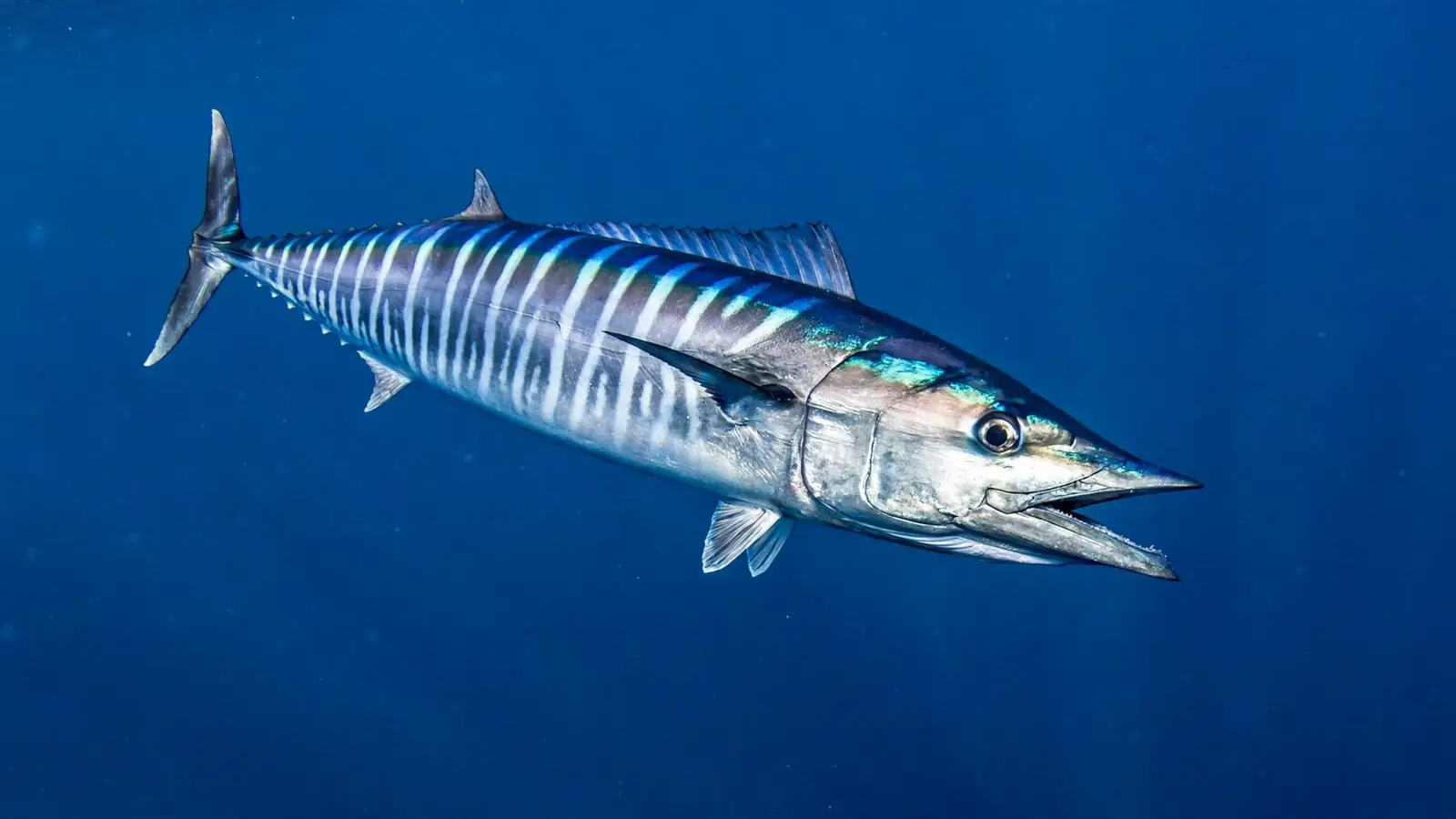
At a Glance
A wahoo announces itself with colour before anything else: catch the light right and its flanks light up with vertical bars of electric blue over silver. Beneath the paint sits one of the ocean’s purest sprinters, a fish so committed to the strike that its first dorsal fin folds flat into a groove along its back when the chase begins, smoothing the body for the final lunge.
Wahoo Speed: How Fast Is It Really?
The headline number follows this fish everywhere: bursts of about 97 kilometres per hour, 60 miles per hour, fast enough to sit at the top table of ocean sprinters. Treat the headline honestly. Hard, measured data on maximum fish speed is genuinely difficult to collect, and a study that timed hunting fish recorded about 77 kilometres per hour (48 mph), which is still faster than almost anything else with fins. What is not in doubt is the engineering: a rigid torpedo body, a deeply forked tail on a narrow, keeled stalk, and a first dorsal fin that folds away into a groove in the back at full speed.
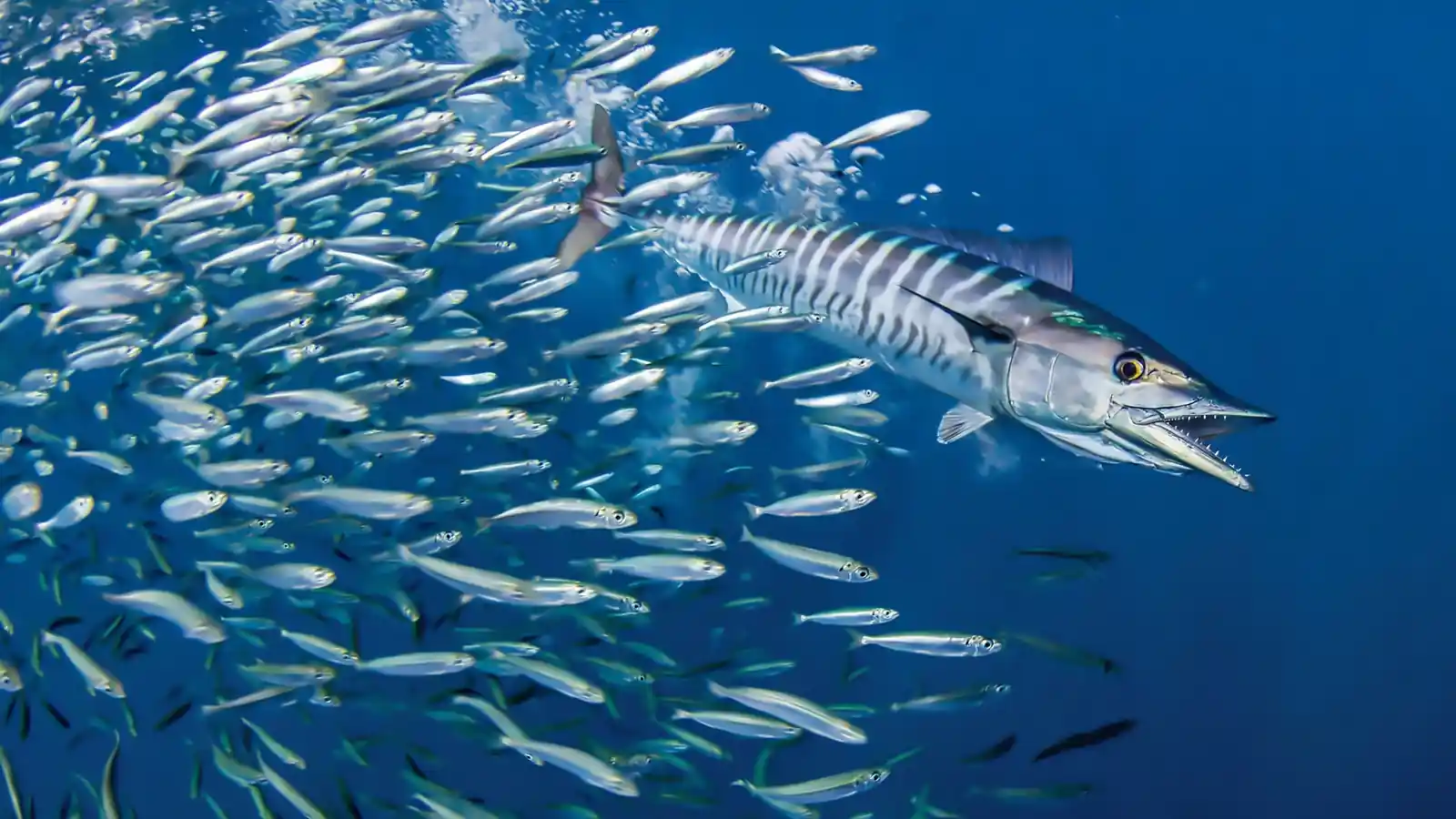
The hunting style matches the machinery. It attacks fish schools with slashing sideways passes, its serrated teeth slicing prey that the fish then circles back to swallow, and it hits single targets with a spear-straight rush. Speed this extreme is expensive: the whole animal, from the groove in its back to the finlets behind its tail fin, reads like a list of drag-reduction decisions, which is why the honest figures, measured or not, still put it in the fastest handful of fish alive.
How Big Do They Get? Wahoo Size and Weight
The one you are likeliest to meet is a fish of 8 to 30 kilograms and somewhere between one and one and a half metres, already an armful of muscle. The species’ ceiling is much higher: a maximum length around 2.5 metres, and at the top of the record books the all-tackle record fish of 184 pounds, 83.5 kilograms, taken off Cabo San Lucas in 2005. Between the everyday fish and the record sits the usual truth of fast predators, that very few survive long enough to reach the species’ full dimensions.
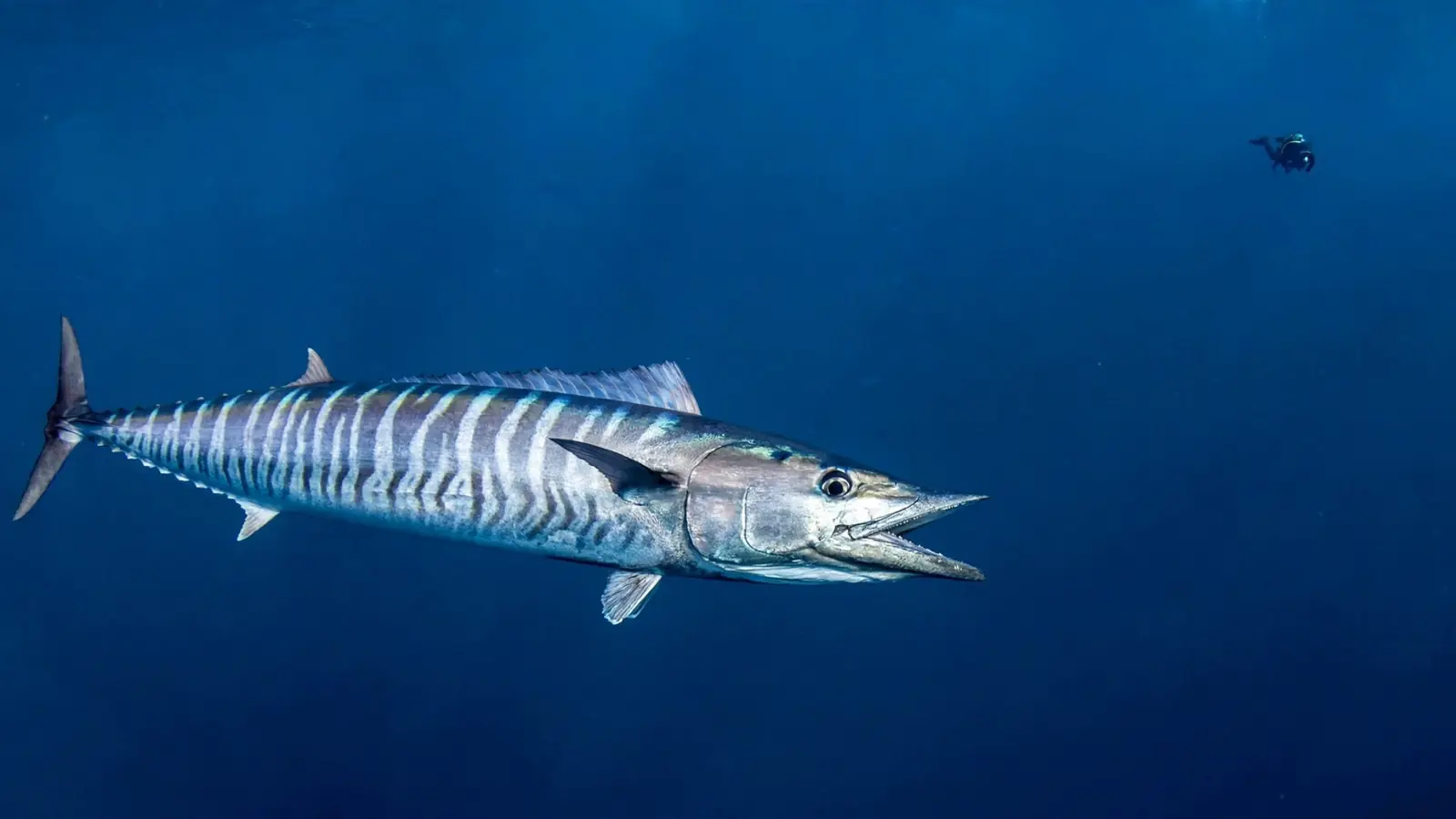
Growth is as fast as the swimming. They pile on length early, passing a metre while still young, and females outgrow males. It is a fish built on the sprinter’s schedule in everything: early size, early maturity and, as the lifespan section shows, an early finish too. Most of the animals in the sea at any moment are youngsters in their first few summers.
Stripes, Teeth and Torpedo Shape
No other mackerel dresses like this. The back is a deep cobalt blue, the belly silver, and down the flanks run some two dozen vertical bars of brighter blue, the species’ signature. The bars are not fixed paint: they intensify when the fish is excited, hunting or hooked, flaring electric against the silver, then fading as the fish calms. The body itself is the longest and leanest in its family, covered in small scales, more eel-tuned missile than the deep-bodied tunas it is related to.

The mouth completes the portrait: a long, beak-like snout, a jutting lower jaw and teeth that are compressed, finely serrated and unsettlingly sharp, closer to a set of small steak knives than to a typical fish’s pegs. Everything about the front end is for arriving fast and cutting clean, which is also why divers and anglers who meet the animal respect the business end first.
The Warm Open Ocean: Range and Habitat
If the water is warm and blue, a specimen may be in it. The species circles the globe through the tropical and subtropical Atlantic, Pacific and Indian Oceans, living at the surface and down to moderate depths over the open sea. It is an oceanic fish, not a coastal one, though it works the blue edges of reefs and islands where deep water comes close to shore, exactly the geography that made it famous in Hawaii, where it is the ono.
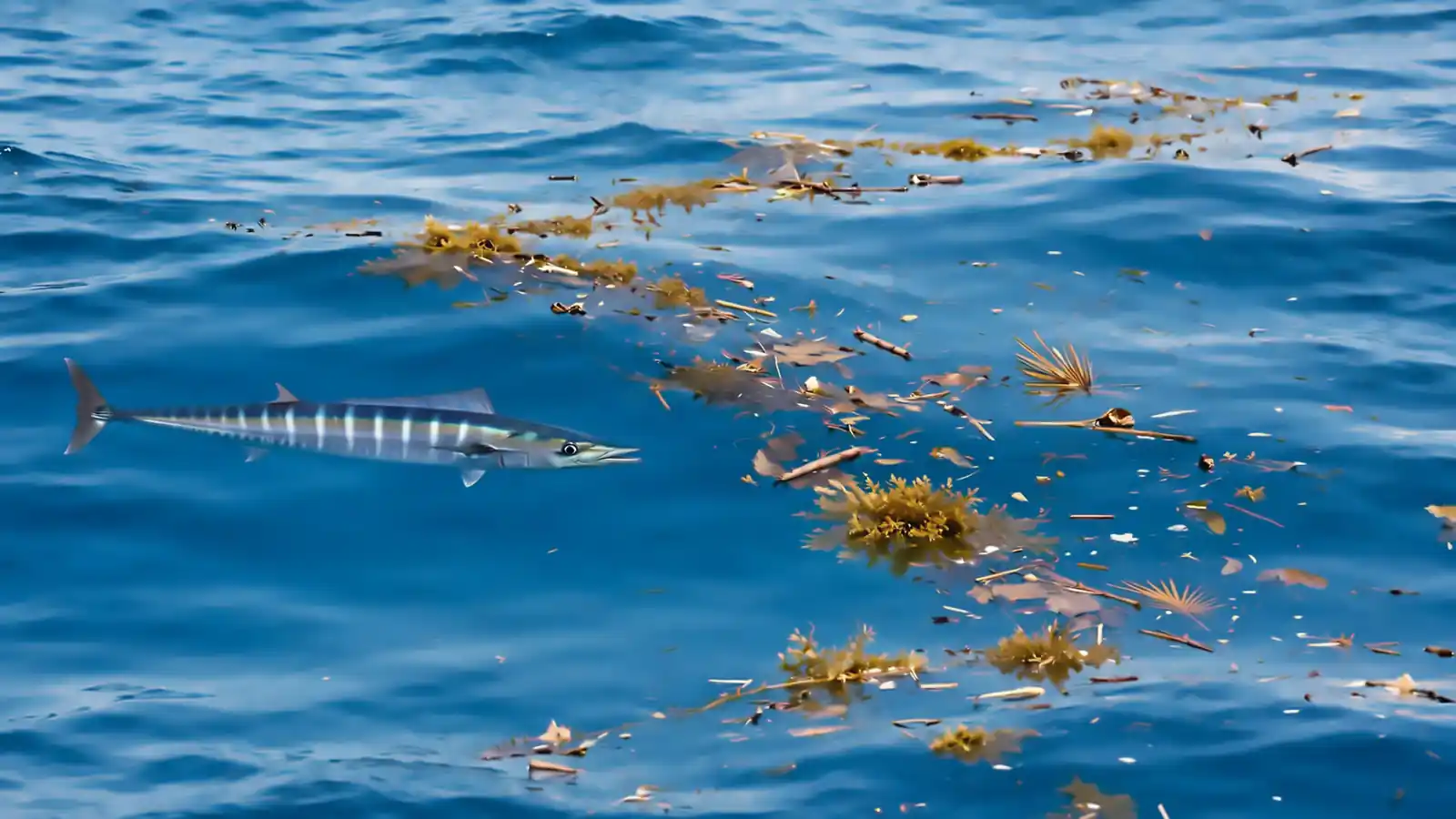
Within that blue world the fish is a structure hunter at heart. Floating logs and weed rafts, current boundaries where water colours change, seamounts, reef drop-offs and buoy lines all concentrate the baitfish and squid it hunts, and a lone fish or a loose pair will work the same feature for days. The species account at the animal’s species account maps the distribution and biology in full technical detail.
A Fast Life: Lifespan and Breeding
They live about five to six years, a short span for a fish that can outweigh a person, and the whole life is run at the same tempo as the swimming. Maturity comes early, at around two years in studied populations, and spawning is a summer, open-water affair: females release eggs in batches over a season rather than in a single event, scattering the next generation through the warm surface water where the young grow at sprint speed from the start.

The short life is also the species’ insurance. Fast growth and early spawning mean the population turns over quickly, and the fish is currently assessed as a species of least conservation concern, though any fish this popular with anglers and longliners is watched closely. The sprinter’s whole strategy, in the end, is turnover: live fast, breed early, and let the next striped generation take the chase.
Ono vs King Mackerel
The fish it is mistaken for is its American cousin, the king mackerel, and the separation is clean once you know the three marks. First, pattern: the fish is barred, the king is plain grey-green with no markings as an adult. Second, profile: the fish’s long beak-like snout and jutting jaw give it a pike’s face, while the king’s head is conventionally mackerel. Third, and most reliable of all, the lateral line: on a one it sweeps gently along the flank, while on a king mackerel it plunges abruptly downward under the second dorsal fin, a sudden kink visible from across the boat.
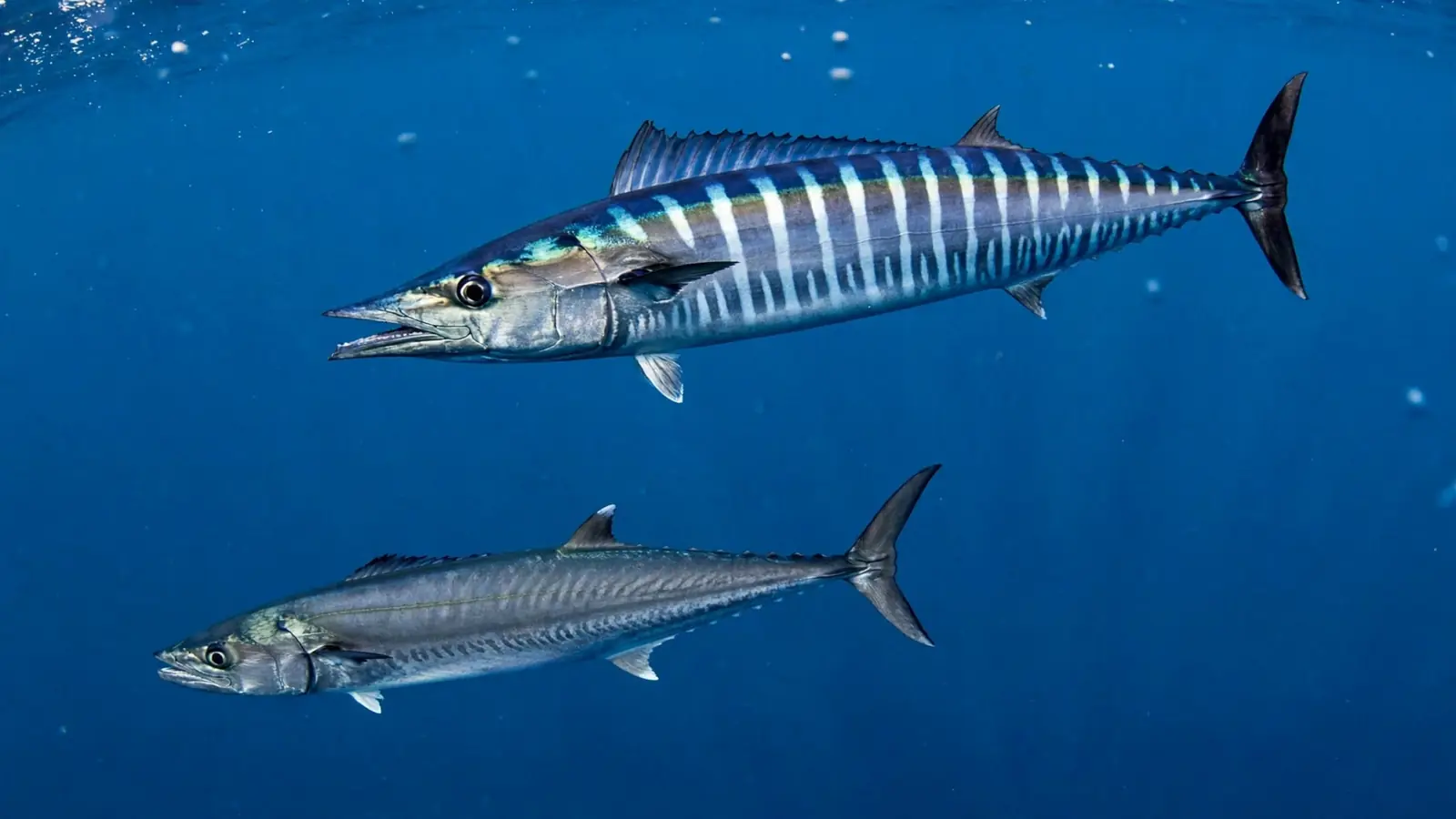
Two more cousins cause lesser confusion. The Spanish mackerel and cero carry spots and stripes of their own but are smaller, coastal fish with shallower bodies; neither approaches the fish’s length, beak or bars. Once the stripes, snout and lateral line are in your eye, the fish stops being a mackerel-shaped puzzle and becomes one of the easiest fast fish in the ocean to name on sight.
Fun Facts
- Ono is the fish’s Hawaiian name, echoing the local word for delicious, which tells you how the fish is regarded there.
- Its vertical stripes flare brighter when it is excited or feeding, a colour change few hunting fish can match.
- The all-tackle record fish weighed 184 pounds (83.5 kilograms) and was caught off Cabo San Lucas in 2005.
- Its teeth are serrated like a steak knife and set in a beak-like jaw built for slicing prey mid-chase.
- Its first dorsal fin folds away into a groove along the back, streamlining the body for the strike.
- They are near-loners, met singly or in twos and threes, never in the great travelling schools of their tuna cousins.
Frequently Asked Questions
How Fast Can a Wahoo Swim?
Very fast. They are routinely credited with bursts of around 97 kilometres per hour (60 mph), which would place them among the fastest fish alive. Hard measurements are rarer than the reputation: a measured study of hunting fish recorded speeds of about 77 kilometres per hour (48 mph). The truthful summary is a fish built for extreme speed, with the highest figures still awaiting perfect measurement.
How Big Do Wahoo Get?
Most fish encountered run from about 8 to 30 kilograms and a metre to a metre and a half long, but the species reaches roughly 2.5 metres. The heaviest ever recorded on rod and line, the all-tackle record, weighed 184 pounds (83.5 kilograms) and was caught off Cabo San Lucas, Mexico, in 2005. Females grow larger than males.
What Is a Wahoo Called in Hawaii?
Ono. In Hawaii the fish is the ono, a name shared with the Hawaiian word for delicious or excellent, which is how the fish is regarded there. The name is a reminder that the fish’s fame is double: a prized animal to encounter in the water and a prized catch wherever warm-water fishing happens.
Wahoo vs King Mackerel: What Is the Difference?
Look for stripes and the lateral line. A fish carries bold vertical blue bars, a long beak-like snout and a lateral line that curves only gently along the flank. A king mackerel is plain grey-green with no bars, and its lateral line drops abruptly downward beneath the second dorsal fin, a kink the fish never shows. Its teeth are also finer and more serrated.
Where Do Wahoo Live?
They live in warm open ocean worldwide, in the tropical and subtropical Atlantic, Pacific and Indian Oceans. They are surface-to-midwater hunters of the open sea, favouring blue water over the shelf edge, current lines, floating debris, weed rafts and the drops around reefs and seamounts, where prey concentrates.
How Long Do Wahoo Live?
About five to six years, and they live them fast. Growth in the early years is rapid, with fish passing a metre while still young, and maturity arrives at around two years old in studied populations. It is the classic sprinter’s bargain: a short life run at full throttle, which also lets the population renew itself quickly.
What Does a Wahoo Look Like?
A specimen is a torpedo-shaped fish with a deep cobalt blue back, a silver belly and some two dozen vertical bars of brighter blue down its flanks, a long beak-like snout, serrated teeth and a lateral line that curves only gently along the flank. Most run a metre to a metre and a half long, but the species reaches roughly 2.5 metres.
Similar Species Worth Exploring
Keep Exploring
Keep exploring the fast fish: meet the heavyweight cousin in our bluefin tuna guide, or browse the whole shoal in the types of fish. Then come back to the sprinter with the striped flanks and the steak-knife teeth: the wahoo.