Khao Manee Cat
Khao Manee: Thailand’s white gem
Pure white and jewel eyed, the Khao Manee cat is a rare Thai treasure prized for centuries as a living good luck charm. This complete breed guide covers its ancient history, striking appearance, personality, care, and health.
By Emily Carter · Reviewed by our vet team · Updated 21 October 2026 · 11 min read
Lifespan 10–12 yrs Weight 6–10 lb Playful & outgoing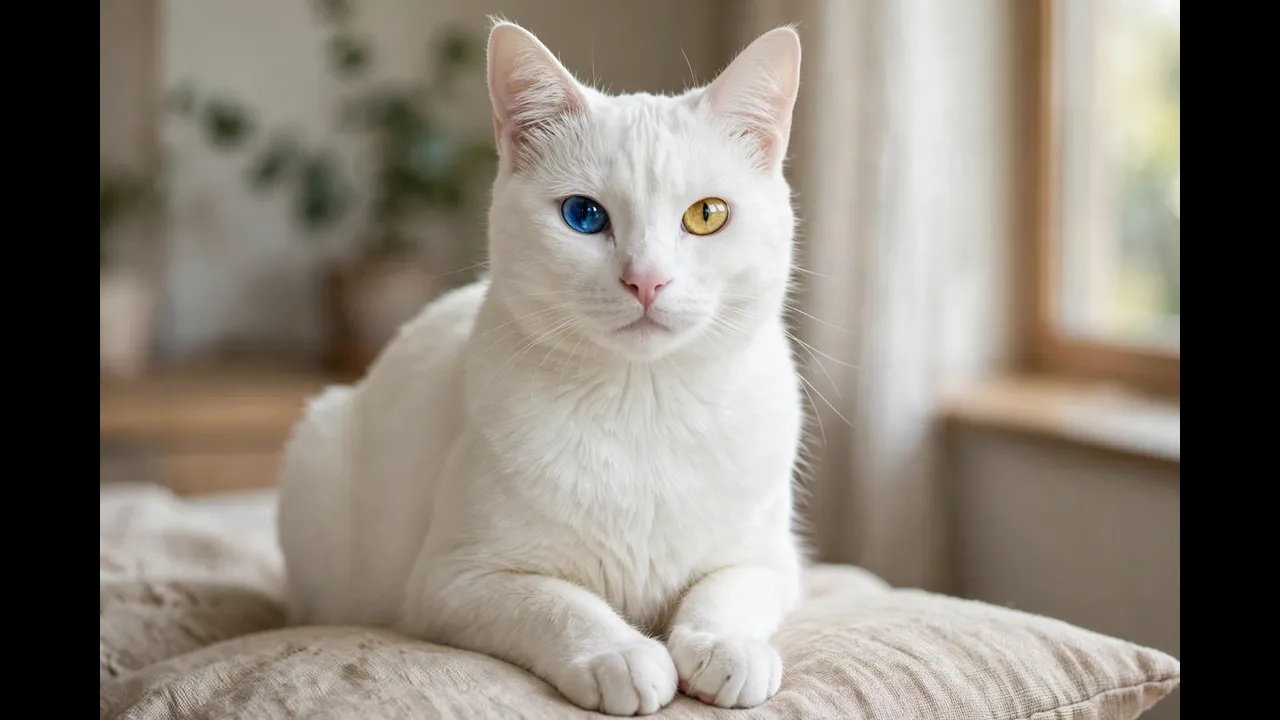
Pure white from nose to tail tip, with eyes like cut jewels: sapphire blue, emerald green, molten gold, or one of each. The Khao Manee cat, whose name means “white gem” in Thai, is one of the rarest and most storied cats in the world, treasured in Thailand for centuries as a bringer of good luck.
This complete guide covers everything about the Khao Manee: its ancient history, striking appearance, playful personality, care needs, health, and whether this living good luck charm is right for your home.
At a Glance
Size and Weight
The Khao Manee cat is a small to medium cat with an athletic build.
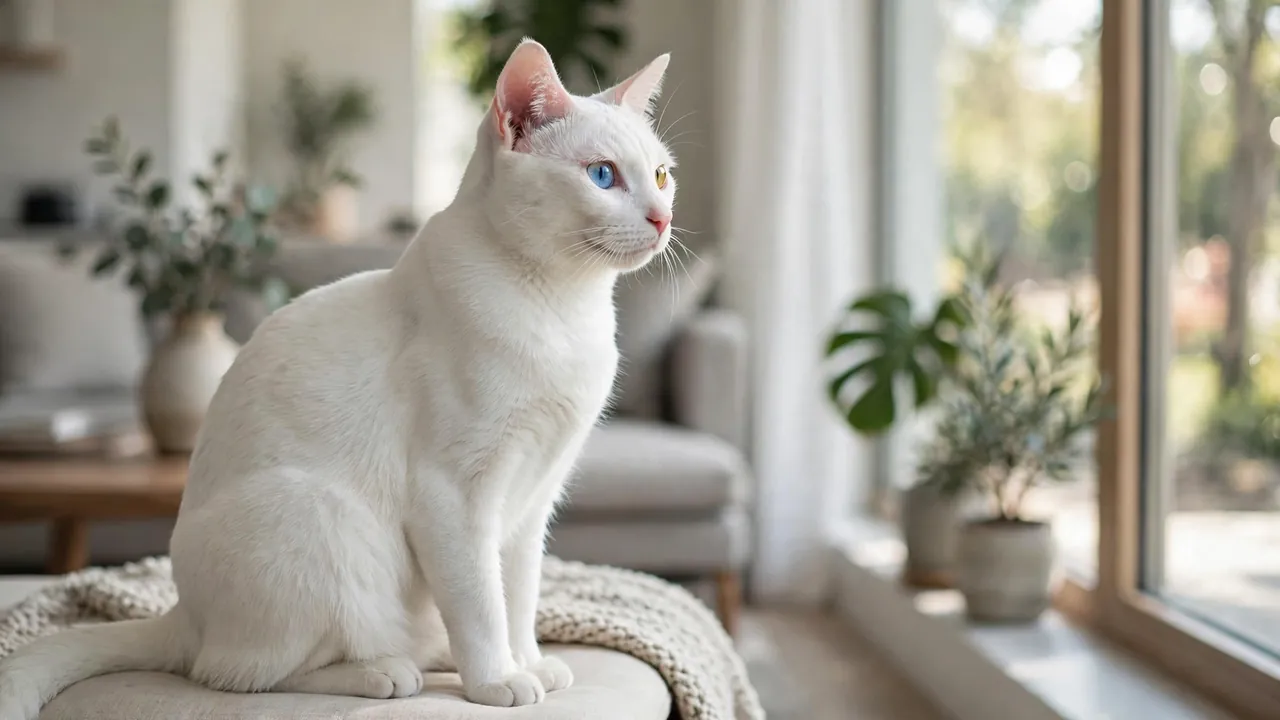
Adults typically weigh between 6 and 10 pounds, with males a little larger than females, and the long slender body can reach up to 18 inches in length. The frame is muscular and strong, with long legs, a medium length tail, and oval shaped paws. They are nimble, quick, and extremely agile, using their compact size to their advantage.
The body type is moderately oriental: lithe and elegant like a Siamese, but never as extreme. The overall impression is of a graceful, well proportioned athlete in a white silk suit.
Coat and Colors
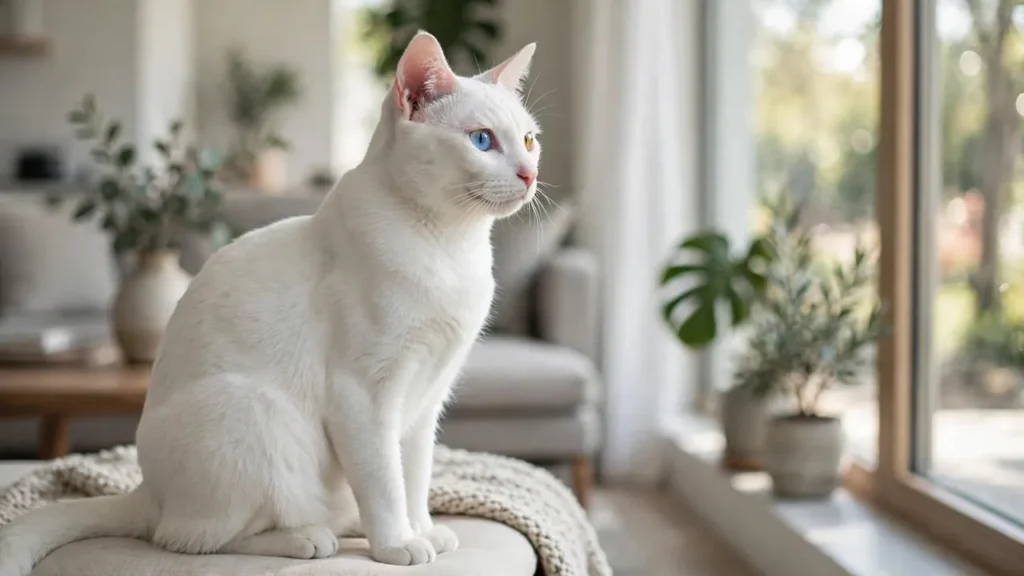
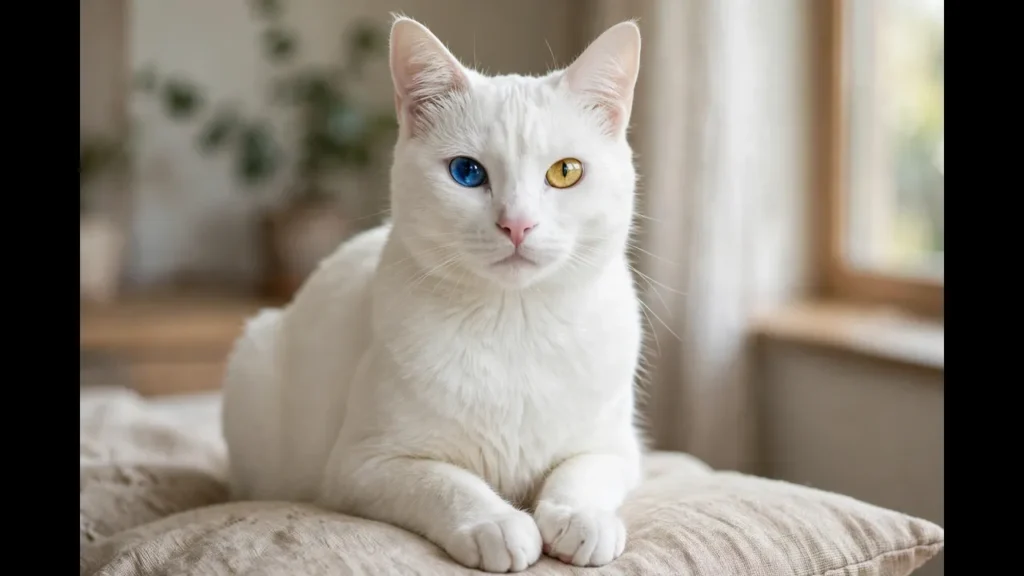
For the Khao Manee cat, there is exactly one acceptable coat color: pure white.
The Khao Manee’s coat is short, smooth, and close fitting, with a silky soft texture and only a sparse undercoat. That light undercoat makes the breed well suited to warmer climates, a legacy of its tropical homeland. No markings of any kind are permitted; the white must be absolute.
What truly sets the breed apart is the eyes. They must be jewel tones: blue, green, or gold, including odd eyed combinations where each eye is a different color. This is the source of the “diamond eye” nickname. The odd eyed variety, usually one blue eye and one gold, is the rarest and most prized of all.
Two physical details reflect the breed’s hot climate origins. The nose is slightly longer than in many breeds, which helps the cat breathe easier in heat and humidity, and the large ears, which may look almost too big for the head, make for excellent listeners. Open a treat packet anywhere in the house and a Khao Manee will be at your side in an instant.

History and Origins
The Tamra Maew, written by Siamese monks between the 14th and 18th centuries, records the breed among more than 20 Thai cat breeds.
In Thailand the breed was regarded as a good luck charm — and odd eyed cats, one blue eye and one gold, were considered even luckier.
Outside Thailand, the breed remained virtually unknown for centuries.
The first Khao Manee arrived in the United States in 1999 — and it is still very rare outside its homeland.
The Khao Manee (pronounced “cow man EE”) is an ancient natural breed that developed in Thailand without human intervention.
In Thailand, the breed was regarded as a good luck charm. The poems suggest that odd eyed Khao Manees, with one blue eye and one gold, were considered even luckier than the rest. If you ever meet one, local tradition says you should make a wish.
Is Your Cat a Khao Manee?
With such a rare breed, many owners wonder. A genuine Khao Manee cat should check every box:
If your cat matches all five, you may indeed have a white gem on your hands. Only pedigree papers from a registered breeder confirm it for certain.
The five checks: an all white, short coat with no markings; jewel toned eyes in blue, green, gold, or odd eyed; a medium, athletic build; a friendly, outgoing personality with no fear of strangers; and getting along well with other animals.
Physical Characteristics
The Khao Manee is a small to medium cat with a long, slender, athletic build. Adults weigh between 6 and 10 pounds, with males a little larger than females, and the body can reach up to 18 inches in length. The frame is muscular and strong, with long legs, oval shaped paws, and a medium length tail, in a moderately oriental body type that stays lithe and elegant without ever looking extreme. The nose is slightly longer than in many breeds, and the large ears can look almost too big for the head.
The coat is pure white with no markings of any kind: short, smooth, and close fitting, with a silky soft texture and only a sparse undercoat. The eyes are the breed’s signature, in jewel tones of blue, green, or gold, including odd eyed cats whose two eyes are different colors. The odd eyed variety, usually one blue eye and one gold, is the rarest and most prized of all, and it gives the breed its diamond eye nickname.
Khao Manee Personality and Behavior
If you want a cat that treats every stranger as a future best friend, you have found your breed.
Khao Manee cats are remarkably outgoing, playful, and devoted. They will run up to newcomers with zero fear, confident in themselves and their antics, mischievous but enormous fun. They are used to being treated well, even worshipped, so be prepared to make this cat the center of your world.
They are curious, intelligent, and people oriented, with a pleasant voice used mostly for purring and chirping rather than demanding yowls. They love to play and spend time with their people, but they are also independent, clever problem solvers. Their antics come with a warning label: if your Khao Manee suddenly goes quiet, it is probably getting into trouble.
They thrive on interaction. Trick training, puzzle toys, and leash walks all suit them; they are highly motivated to please and easy to train. They do not like being left alone for long stretches and can become lonely or depressed without enough human company. Another pet in the house helps, since they genuinely prefer the company of others.
They greet everyone who enters the house, happily share affection across the whole family, and involve themselves in games with children. They are somewhat talkative and will let you know when they want attention, in the most endearing way possible.
They treat every stranger as a future best friend, running up to newcomers with zero fear.
Curious, intelligent problem solvers — if one suddenly goes quiet, it is probably getting into trouble.
They thrive on interaction, greet everyone at the door, and dislike being left alone for long stretches.
- Outgoing and friendly with everyone
- Playful, clever and easy to train
- Short coat is low maintenance
- Needs company — lonely if left alone for long stretches
- Deafness risk, especially with blue eyes
- Extremely rare, with kittens over $10,000
Care Essentials
Age appropriate, high quality food in a couple of measured meals — never free feeding.
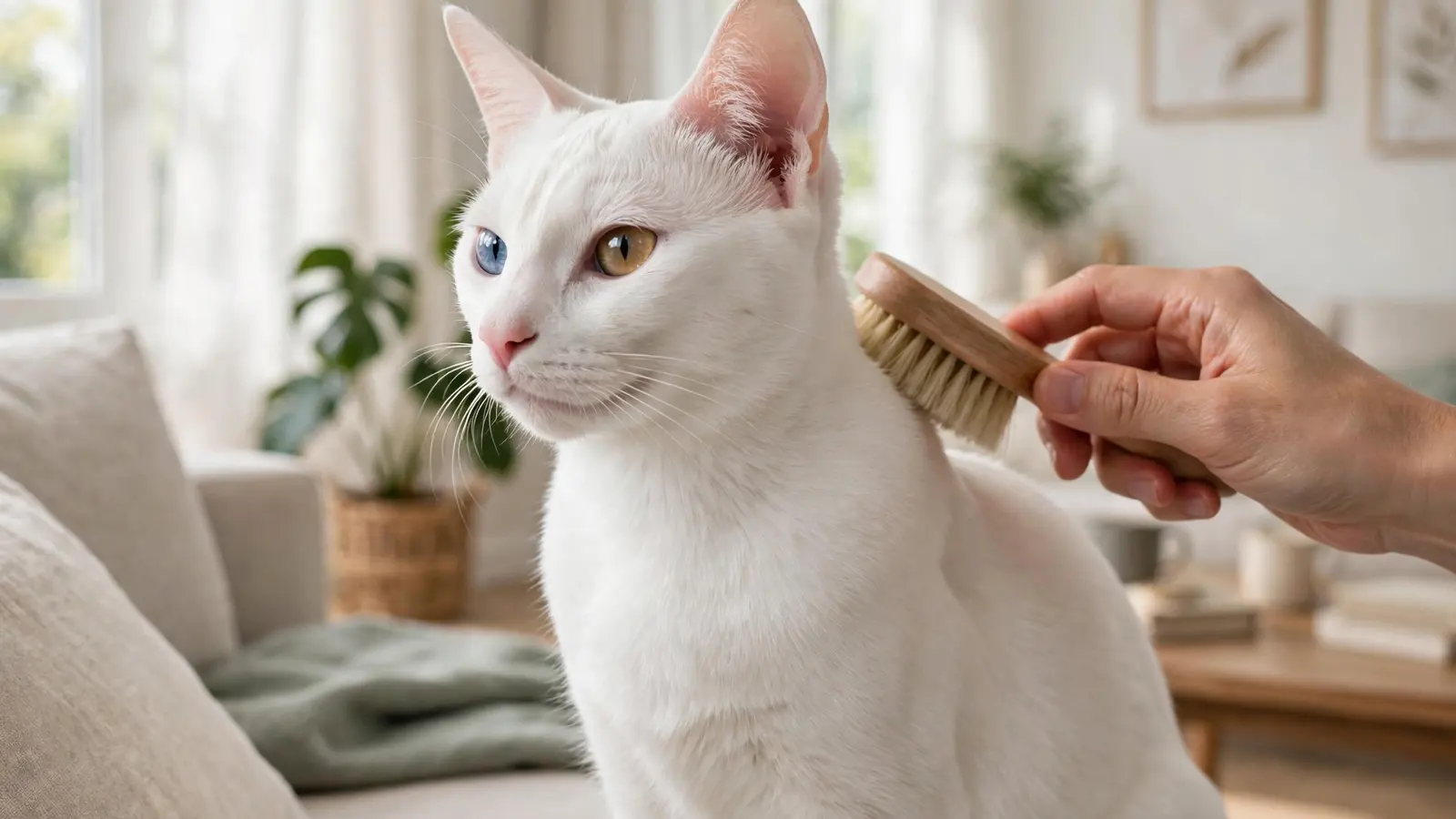
Weekly brushing with a soft brush; a bath every few months keeps the white pristine.
Cat trees, wall shelves, interactive toys and puzzle feeders — enrichment is not optional.
Best suited to indoor life with supervised outdoor access; shade and fresh water in heat.
Nutrition and Diet
Feed an age appropriate, high quality diet and watch portion sizes. Split the daily food amount into a couple of measured meals rather than free feeding, since some cats lack the self control to graze sensibly. Treats are fine in moderation, but too many will pack on the pounds. If you are unsure about ideal portions, your veterinarian can help.

Grooming
Good news: the short coat is low maintenance. A weekly brushing with a soft brush collects loose hairs and keeps the glistening white coat healthy, while also reducing hairballs. A bath every few months keeps the white in top condition. Trim nails monthly, check and clean ears regularly, and brush teeth a few times a week to guard against periodontal disease.
One practical tip for keeping that white coat pristine: maintain a fresh litter box. A self cleaning litter box means your cat always has a clean place to go.
Exercise and Enrichment
This is an active, energetic breed that needs an outlet. Provide plenty of cat trees and wall shelves for climbing, plus interactive toys and puzzle feeders for mental work. Play with your cat multiple times a day. A bored Khao Manee is a mischievous Khao Manee, so enrichment is not optional.

Health
The Khao Manee cat is generally a healthy breed with a lifespan of 10 to 12 years.
White cats with at least one blue eye are more likely to be deaf, in one ear or both; in odd eyed cats it typically occurs on the blue eyed side. Reputable breeders test kittens’ hearing.
Periodontal disease, ear infections and upper respiratory infections are among the more common reasons for vet visits — none unique to the breed.
Beyond that, insurance claims data lists periodontal disease, ear infections, stomatitis, diarrhea, and upper respiratory infections among the more common reasons for vet visits. None are unique to the breed, and all respond to the same fundamentals: yearly checkups, dental care, good nutrition, and prompt attention to anything unusual. Cats are experts at hiding illness, so never skip a scheduled visit just because your cat looks fine.
Indoor and Outdoor Living
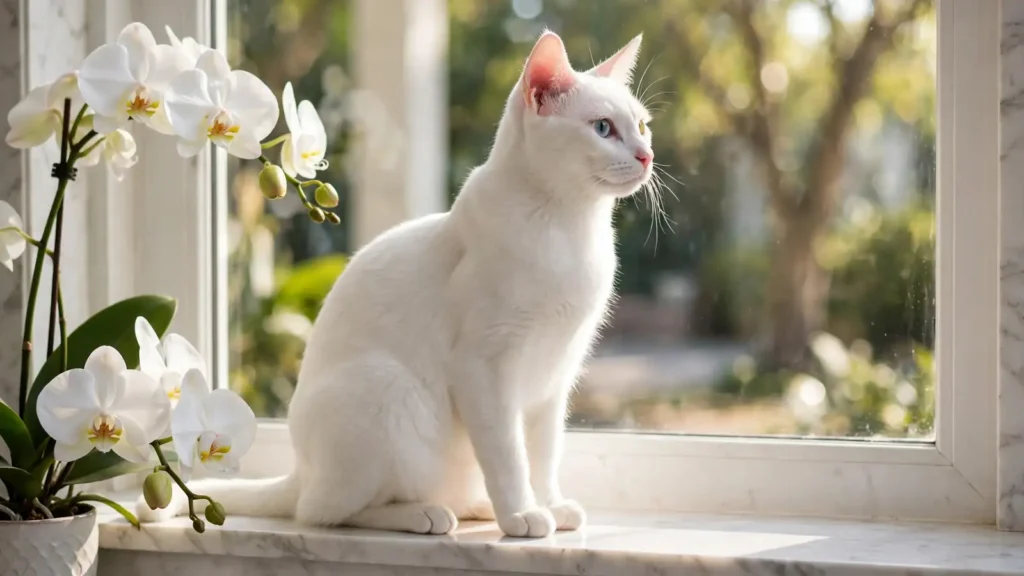
They do not mind warmer climates, but always provide shade and fresh water. They are best suited to indoor life with supervised outdoor access.
Family Suitability
Yes, with one scheduling caveat.
These Khao Manee cats are friendly and outgoing with everyone, including young children, and they get along well with other pets. In fact, they prefer company, so a second pet can be a genuine kindness. Their playful, high energy nature means they will not tire quickly during play sessions.
The caveat is time. This is not the breed for someone with a hectic schedule who is gone endless hours. They need their family around them. An experienced owner is ideal, though their easy going nature can suit a committed first time owner who is home often.
Supervise interactions with very young children until everyone learns the rules, and teach kids to handle the cat gently from the start.
Finding a Breeder or Rescue
Expect a search, a waiting list, and a serious price tag.
Genuine Khao Manee kittens from reputable breeders can cost $10,000 or more, reflecting the breed’s extreme rarity outside Thailand. Anyone researching khao manee price should know there is no standard market rate for such a rare breed; the figure depends entirely on the breeder and the kitten’s pedigree. Look for breeders registered with major associations who test kittens’ hearing, screen for health issues, and raise kittens in the home. Be deeply skeptical of cheap “Khao Manee” kittens or sellers without documentation; the breed is simply too rare for bargains to be legitimate.
- Ask for kittens’ hearing test results
- Health screening and documentation
- Kittens raised in the home
- Be skeptical of cheap kittens — the breed is too rare for bargains
Quick Quiz: Is a Khao Manee Right for You?
Answer four questions. Tap yes or no.
Frequently Asked Questions
Are Khao Manee cats hypoallergenic?
No. Despite the short coat, they produce the usual cat allergens and are not hypoallergenic.
Are Khao Manee cats deaf?
Not all, but white cats with blue eyes have a higher risk of congenital deafness, in one or both ears. Odd eyed cats are typically affected on the blue eyed side. Ask breeders for hearing test results.
How much does a Khao Manee cat cost?
Over $10,000 from a reputable breeder is common, due to extreme rarity outside Thailand.
What does Khao Manee mean?
“White gem” in Thai. The breed is also nicknamed the “diamond eye” cat.
Are Khao Manee cats good with dogs?
Yes. They are outgoing and sociable with other pets, and they prefer having company to being alone.
How long do Khao Manee cats live?
Typically 10 to 12 years with good care.
The Khao Manee cat is a living treasure: centuries old, vanishingly rare, and convinced that you are the luckiest person alive for having met it. For an owner with time to give and a lap to share, this white gem pays back every bit of devotion with interest.
Similar Breeds Worth Exploring
Related Breed Guides
Keep Exploring
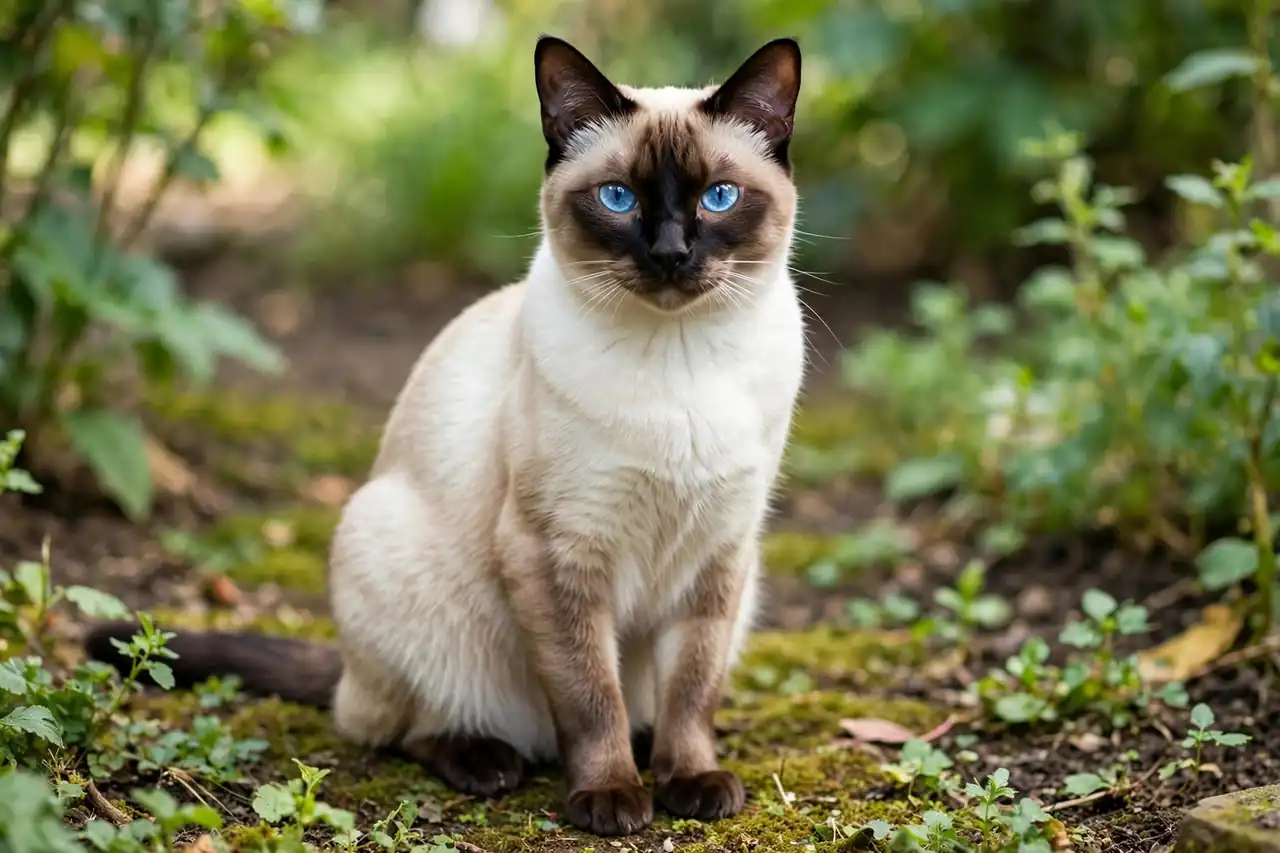
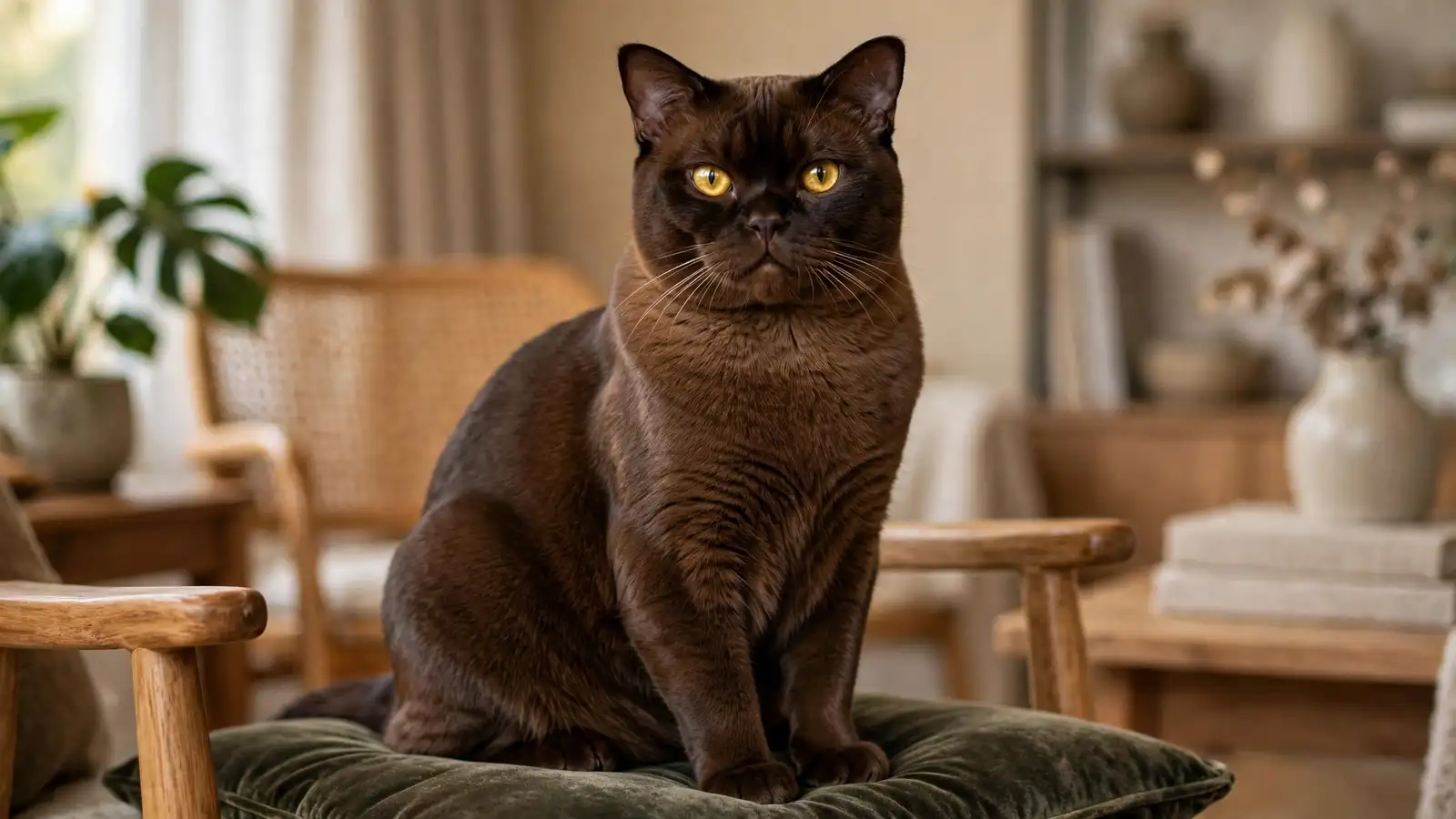
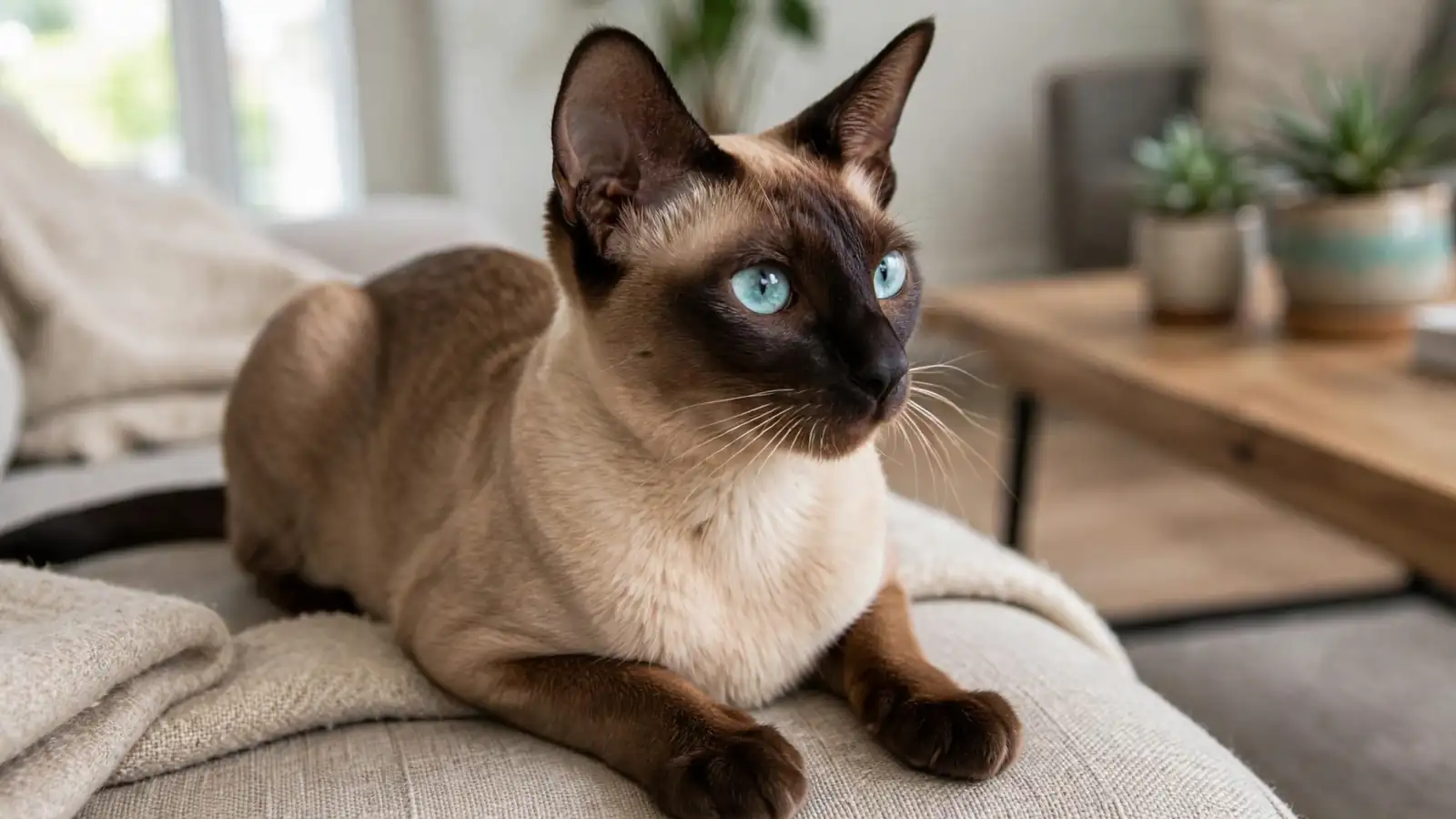
Keep exploring: the chatty Siamese, the silky Burmese and the mellow Tonkinese in the guides above.