Nudibranch
Nudibranch: the shell-less sea slug dressed in impossible colours
The nudibranch is a sea slug that threw away its shell and dressed for a carnival instead. More than 3,000 species cruise the world’s reefs in electric blues, solar yellows and warning reds, many of them armed with stinging cells stolen from their own prey. This guide meets the two great types, explains how their colours and chemistry work, and introduces the Spanish dancer, the giant that swims like a flamenco dress.
By Emily Carter · Reviewed by our vet team · Updated 10 November 2026 · 10 min read
3,000+ species worldwideShell lost after the larval stageSteals stinging cells from prey
At a Glance
A nudibranch begins life with a shell, then throws it away. What emerges is a bare-bodied hunter wrapped in colour: no armour, no shell, nothing between it and its predators except chemistry. That single trade, protection swapped for stolen weapons and warning paint, is the key to the whole group, from the thumbnail-sized species grazing your local reef to the giants drifting over tropical sand.
Nudibranch Size and Species
The sea slug clan covers an enormous size range for animals built on the same plan. The smallest species mature at about 4 millimetres long, little more than coloured specks on a sponge, while the largest, the Spanish dancer, can stretch to 40 centimetres. Most of the species a diver meets sit between 2 and 8 centimetres, small enough that finding them is half the pleasure.

More than 3,000 species have been described, and the count rises every year as divers photograph animals that science has never named. They live in every ocean, from polar water to the tropics, and from rockpools down to the deep sea floor, though warm shallow reefs hold the richest variety. Classification is still being redrawn: a major 2025 revision moved the dorids into their own order, a reminder that this family tree is a work in progress. For the full cast of relatives, from chitons to octopuses, browse the complete group overview and compare the body plans for yourself.
That variety has earned them a wardrobe of nicknames. Divers call the fluffy white Jorunna a sea rabbit, the scarlet Hexabranchus a dancer, banded Chromodoris species clowns, and the drifting blue Glaucus a dragon. The names stick because each animal looks less like a slug than like a small piece of costume jewellery that learned to crawl.
Types of Nudibranchs: Dorids and Aeolids
Almost every species belongs to one of two great camps, and you can tell them apart at a glance. Dorids are the classic sea slugs: smooth, oval and often vividly patterned, with a plume of feathery gills standing in a circle near the rear of the back. That plume is the whole point of the name, because the word means naked gills, and the dorid wears its breathing gear outside its body, where it can be withdrawn into a protective pocket when danger threatens.
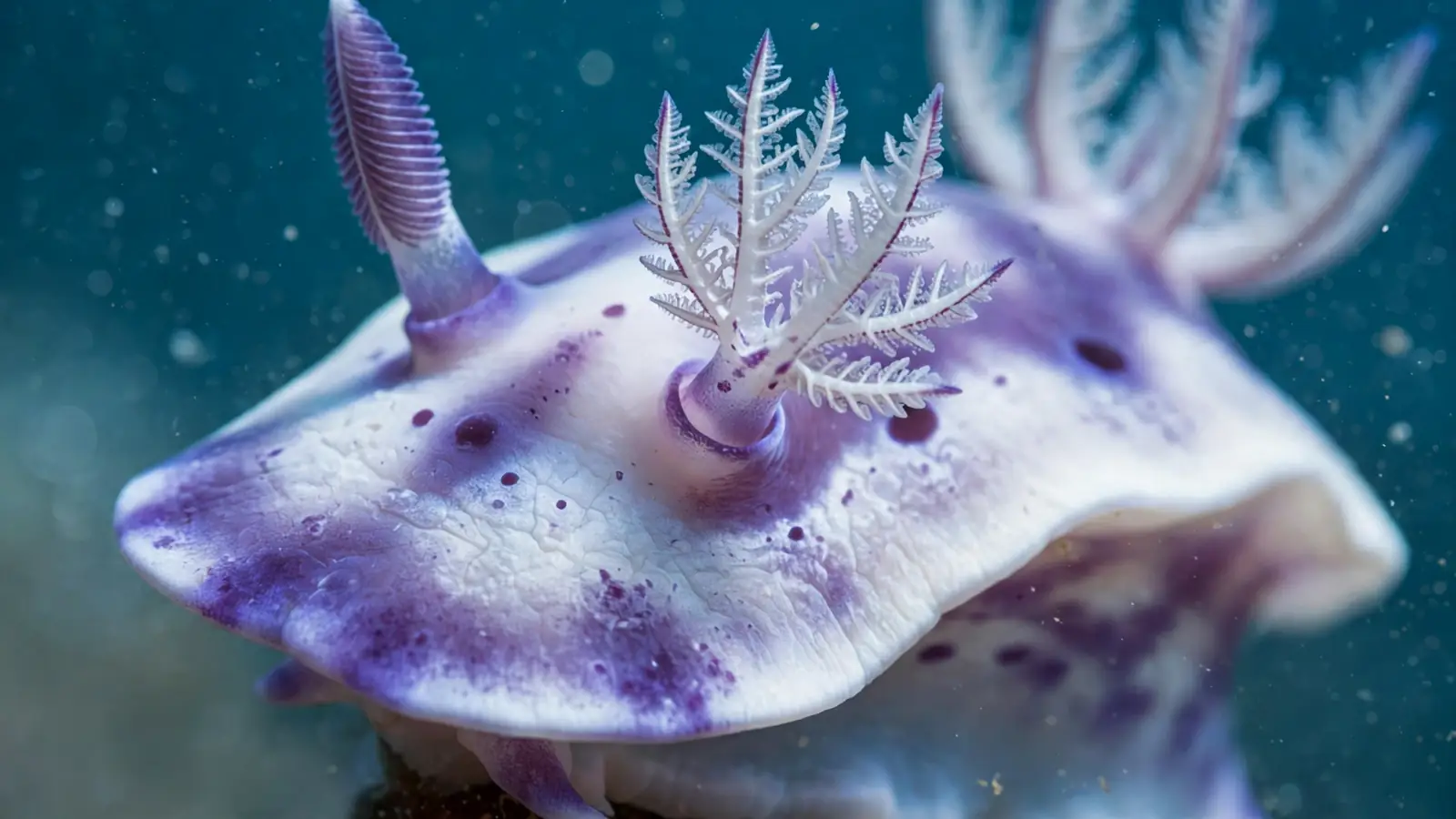
Aeolids take the opposite approach. Instead of a single gill plume, their backs carry rows of finger-like projections called cerata, which do several jobs at once: they breathe, they digest, and their tips hold the animal’s stolen weapons. Aeolids tend to look frilly, spiky or shaggy where dorids look sleek, and many are translucent, so the coloured digestive gland shows through the cerata like stained glass.
A handful of smaller branches sit outside the big two, including the arminids, which hide their gills under the mantle edge, and the dendronotids, whose backs branch like tiny trees. Whichever camp a species belongs to, the same kit recurs: two horn-like smell organs called rhinophores on the head, a rasping tongue called a radula, and no shell at all once the larval stage is past.
Why Are They So Colourful? Warning Paint and Camouflage
The colours of a slug are rarely decoration. In most of the bright species they are a warning, the marine version of a wasp’s stripes: animals that taste poisonous, or carry stolen stings, advertise the fact in reds, oranges and electric blues so that a fish makes the mistake only once. The pigments often come straight from the animal’s food, so a slug that eats scarlet sponge slowly turns scarlet itself.

Just as many species run the opposite strategy. Sponge-mimicking dorids match their food so precisely, in colour, texture and even spicule pattern, that they vanish against it, and some aeolids are nearly transparent. A few species go further and farm energy: certain aeolids keep single-celled algae alive inside their cerata and draw on the sugars the algae make in sunlight, a partnership that can keep the slug fed between meals.
For photographers and divers the colours are a field guide in themselves. Related species often share pattern families, and the exact arrangement of lines, spots and rhinophore colours is frequently the surest way to tell two lookalikes apart. In a group where shells, the usual identification tool for mollusks, have been thrown away, paint has to do the talking.
Stolen Defences: Kleptocnidae and Stored Toxins
The most famous sea slug trick is theft. Aeolids feed on stinging animals such as hydroids and sea anemones, whose tentacles fire microscopic harpoons called nematocysts. Somehow, and scientists still study exactly how, the slug swallows these weapons without triggering them, passes them intact through its gut, and stores them in sacs at the tips of its cerata. The stolen cells stay live for weeks, ready to fire into the mouth of anything that bites. Biologists call the theft kleptocnidae.
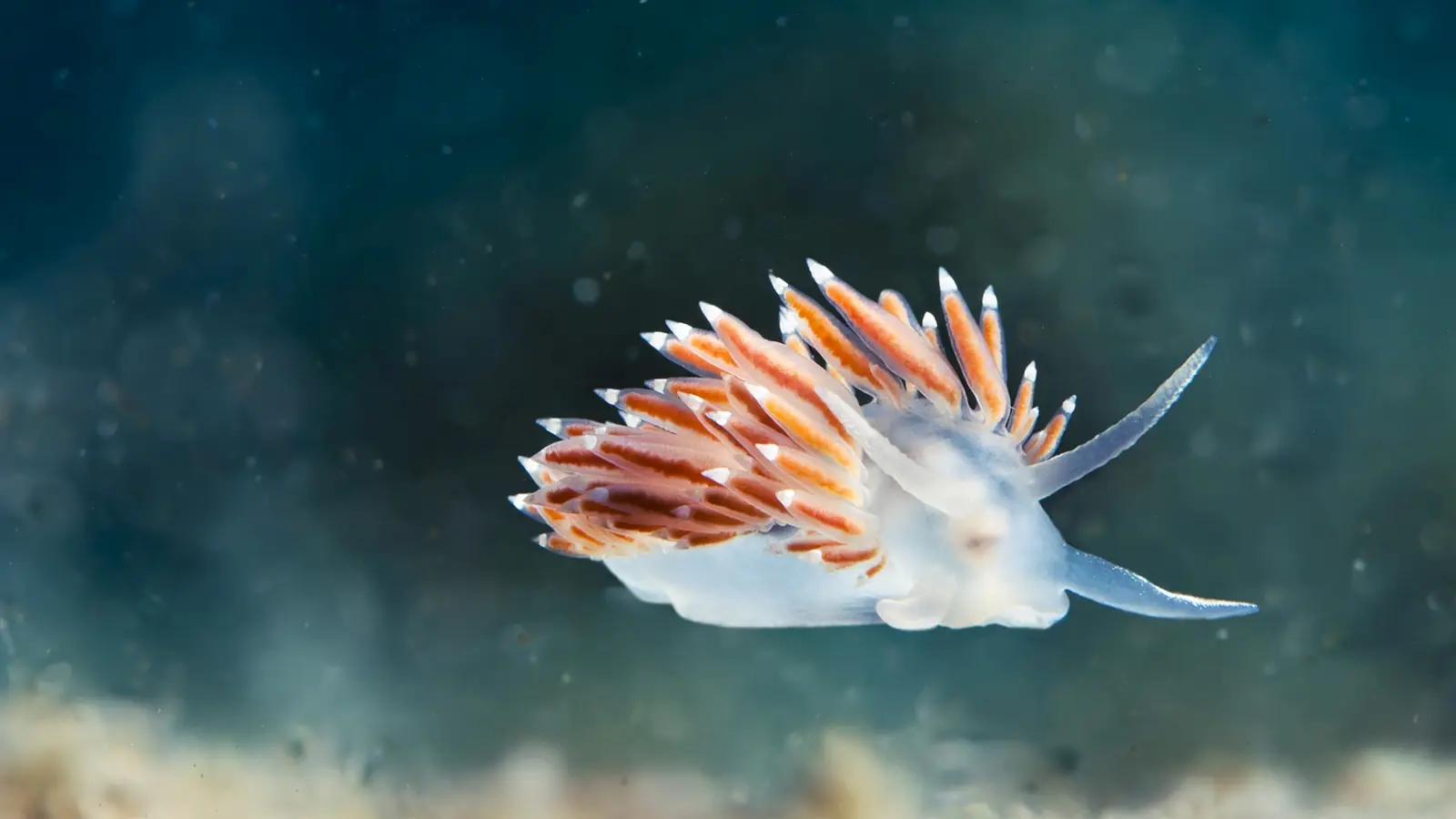
Dorids steal chemistry instead of hardware. Sponges are full of defensive compounds, and many dorids concentrate the worst of them in glands in their skin, becoming poisonous in proportion to what they eat. Some species add their own manufacture, synthesising defensive chemicals from scratch, and a few can release acid or distasteful mucus when attacked.
All of this replaces the shell. A shelled snail carries its fortress with it; a slug, having abandoned that weight as a larva, defends itself with an arsenal it gathers from its food. It is a lighter, more flexible strategy, and judging by 3,000 species and counting, it works.
What Do They Eat? Sponges, Hydroids and Anemones
Most nudibranchs are picky specialists. A given species may eat one kind of sponge, one hydroid, or one anemone and almost nothing else, which is why divers find the same slug in the same place dive after dive: it lives on its larder. The feeding tool is the radula, a ribbon of tiny teeth that rasps, drills or slices depending on the prey, and in sponge eaters it works like a slow sander on living rock.
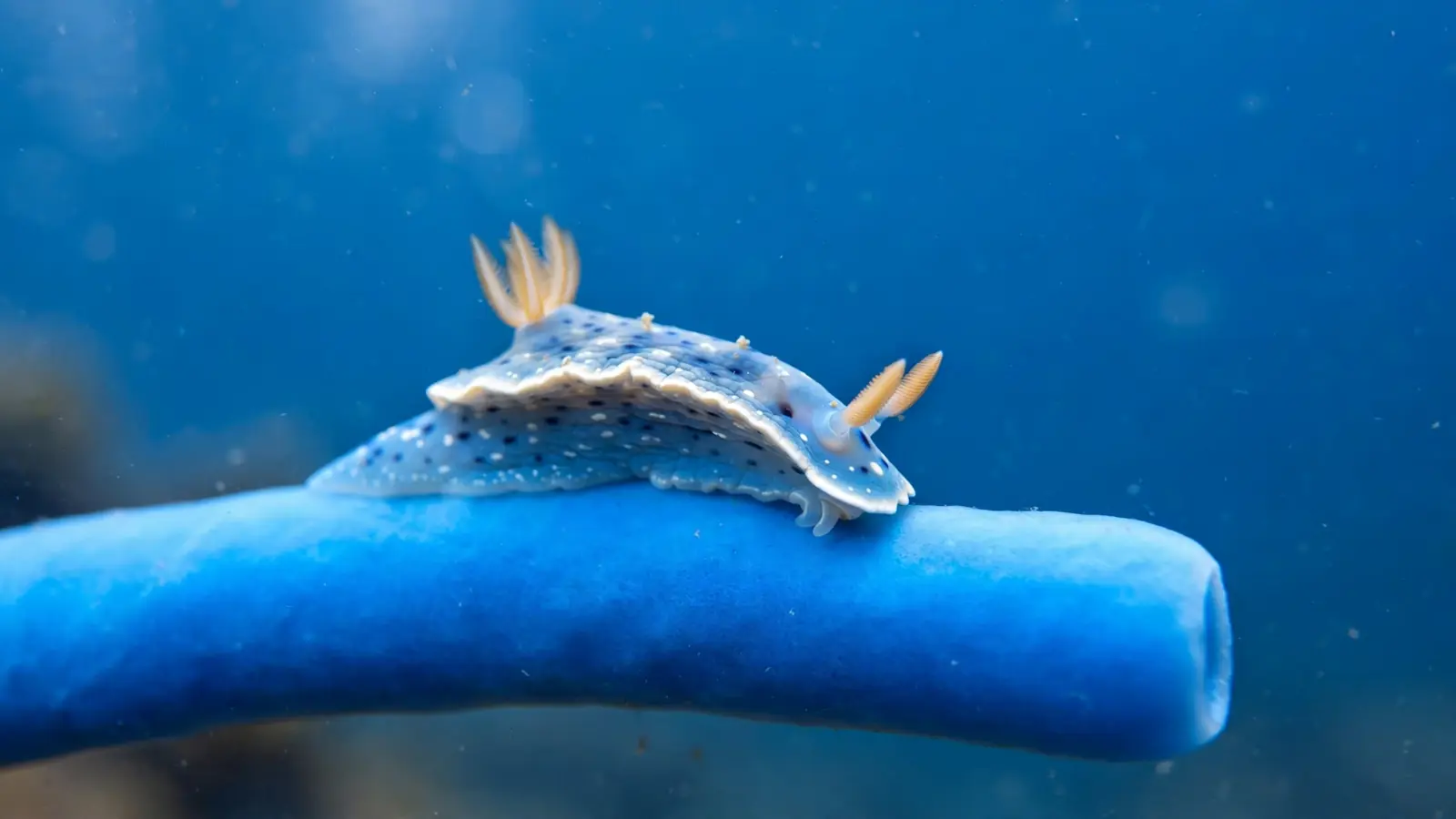
The menu across the group is wide. Bryozoans, the lacy moss animals, support whole families of small dorids; other species graze on tunicates, barnacles or the eggs of other sea slugs; and some aeolids have become hunters of fellow nudibranchs, following their slime trails like bloodhounds. The most extreme diner is the blue dragon, Glaucus atlanticus, which floats upside down at the surface eating Portuguese man o’ war and concentrating its sting.
Specialisation cuts both ways. A slug tied to one food lives where that food lives and nowhere else, so the distribution of many species is simply a map of their dinner. When a sponge garden or hydroid bed disappears, its nudibranchs go with it, one more reason these small animals are watched as early indicators of reef change.
The Spanish Dancer and Other Famous Forms
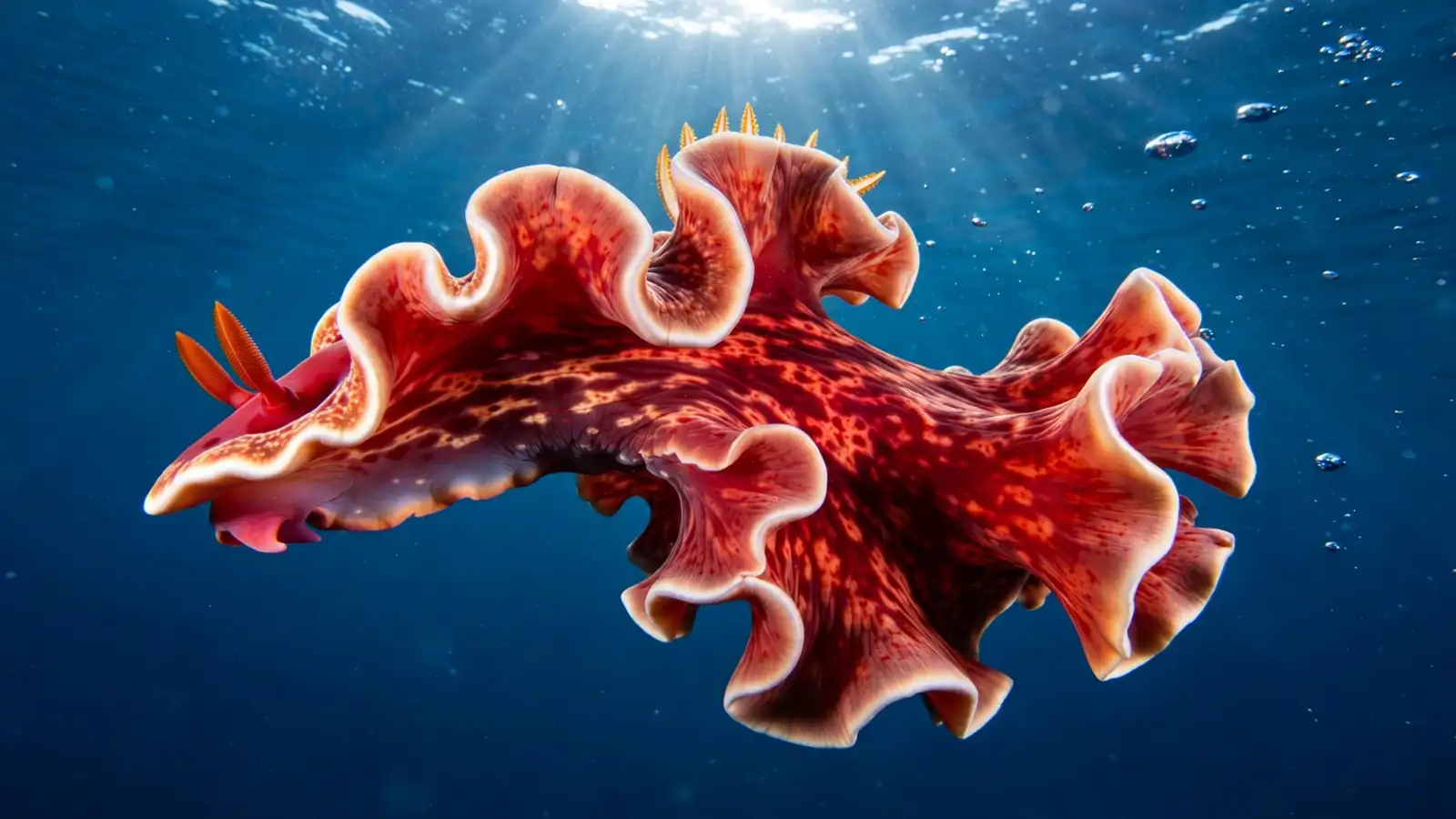
Every slug collection has a headline act, and it is the Spanish dancer, Hexabranchus sanguineus. Blood-red, broad as a dinner plate and up to about 40 centimetres long, it is one of the largest sea slugs on Earth. Disturbed on the reef, it does something almost no other slug can: it lets go, opens its frilled mantle and swims, rippling the edges of its body so that it seems to dance through the water in a scarlet flamenco dress.
The supporting cast is just as theatrical. The sea rabbit, Jorunna parva, wears a coat of fine papillae that makes it look soft and furry, though the coat is structural and the animal is toxic. Clown-bright Chromodoris species carry the classic warning bands, while the lettuce-like and dragon-like forms push the slug body plan about as far as it will go. Between them they explain why this group, of all sea slugs, gets the posters and the coffee-table books.
Almost none of these species has been formally assessed for conservation, and most live too small and too hidden for easy counting. What is known is that they depend on healthy sponge gardens, hydroid beds and reef structure, so their fate is tied to the fate of the reefs themselves. Protect the reef, and its smallest show-offs protect themselves.
Fun Facts
- The name nudibranch means “naked gills”: the feathery plume on a dorid’s back is its breathing gear, worn outside the body.
- Every one is both male and female at once, carrying both sets of organs, so two mating slugs can each leave the meeting expecting to lay eggs.
- The Spanish dancer is one of the very few sea slugs that can truly swim, rippling the frilled edge of its mantle like a flamenco skirt.
- The fluffy sea rabbit slug is not soft at all: its fur-like coat is made of tiny structural rods, and the animal beneath is toxic.
- An aeolid’s stolen stinging cells can stay live and loaded in its cerata for weeks after the hydroid they came from was eaten.
- Most nudibranchs live fast: many species complete the whole journey from egg ribbon to breeding adult in less than a year.
Frequently Asked Questions
What Is a Nudibranch?
A nudibranch is a shell-less marine gastropod, a sea slug whose gills sit exposed on its back. More than 3,000 species are known, from millimetre-long specks grazing a sponge to the 40-centimetre Spanish dancer, and nearly all are specialist predators of sponges, hydroids or anemones.
How Many Species of Nudibranch Are There?
More than 3,000 nudibranch species have been described, and new ones are named every year as divers photograph animals science has never recorded. They fall into two great camps: the dorids, with a feathery gill plume on the back, and the aeolids, with rows of finger-like cerata instead.
Why Are Nudibranchs So Colourful?
In most bright species the colours are a warning. A nudibranch that stores sponge toxins, or carries stinging cells stolen from its prey, advertises the fact in red, orange and electric blue so predators learn to leave it alone. Other species do the opposite and match their food sponge so closely that they disappear against it.
How Do Nudibranchs Defend Themselves?
Without a shell, a nudibranch defends itself with chemistry. Aeolids store undischarged stinging cells from the hydroids and anemones they eat in the tips of their cerata, ready to fire into a predator’s mouth. Dorids concentrate poisons from their sponge food in their skin, and some species can also release acid or foul mucus.
What Do Nudibranchs Eat?
Most nudibranchs are specialist feeders. Many dorids eat one kind of sponge and little else, aeolids hunt hydroids and sea anemones, and other species graze on bryozoans, tunicates or the eggs of other sea slugs. Food is gathered with the radula, a ribbon of tiny teeth that rasps or slices the prey.
Do Nudibranchs Have Shells?
Only as larvae. A young nudibranch begins life inside a tiny coiled shell, but the shell is cast off when the larva settles on the seabed and changes into its adult form. From then on the animal relies on toxins, stolen stings and warning colours instead of armour.
What Is a Spanish Dancer Sea Slug?
The Spanish dancer, Hexabranchus sanguineus, is one of the largest nudibranchs, reaching about 40 centimetres. This blood-red species is named for its swimming style: when disturbed it ripples the frilled edge of its mantle and dances through the water like a flamenco dancer’s skirt.
Similar Species Worth Exploring
Keep Exploring
Keep exploring the mollusk family: meet the blue ringed octopus, small and beautiful and best admired from a respectful distance, or browse the whole family tree in our guide to the types of mollusks. Then come back to the reef’s smallest show-offs, because once you learn to look, every sponge garden hides a nudibranch.