Lionfish
Lionfish: Beautiful, Venomous and Out of Place
The lionfish is the most beautiful problem in the Atlantic — a striped, feather-finned reef fish from the Indo-Pacific that arrived through the aquarium trade and now eats its way through Caribbean reefs that never evolved with it. This is both halves of the story: the superb natural predator, and the invasion the Atlantic is still learning to fight.
By Emily Carter · Reviewed by our vet team · Updated 10 November 2026 · 10 min read
18 venomous spinesNative to the Indo-PacificUp to 2 million eggs a year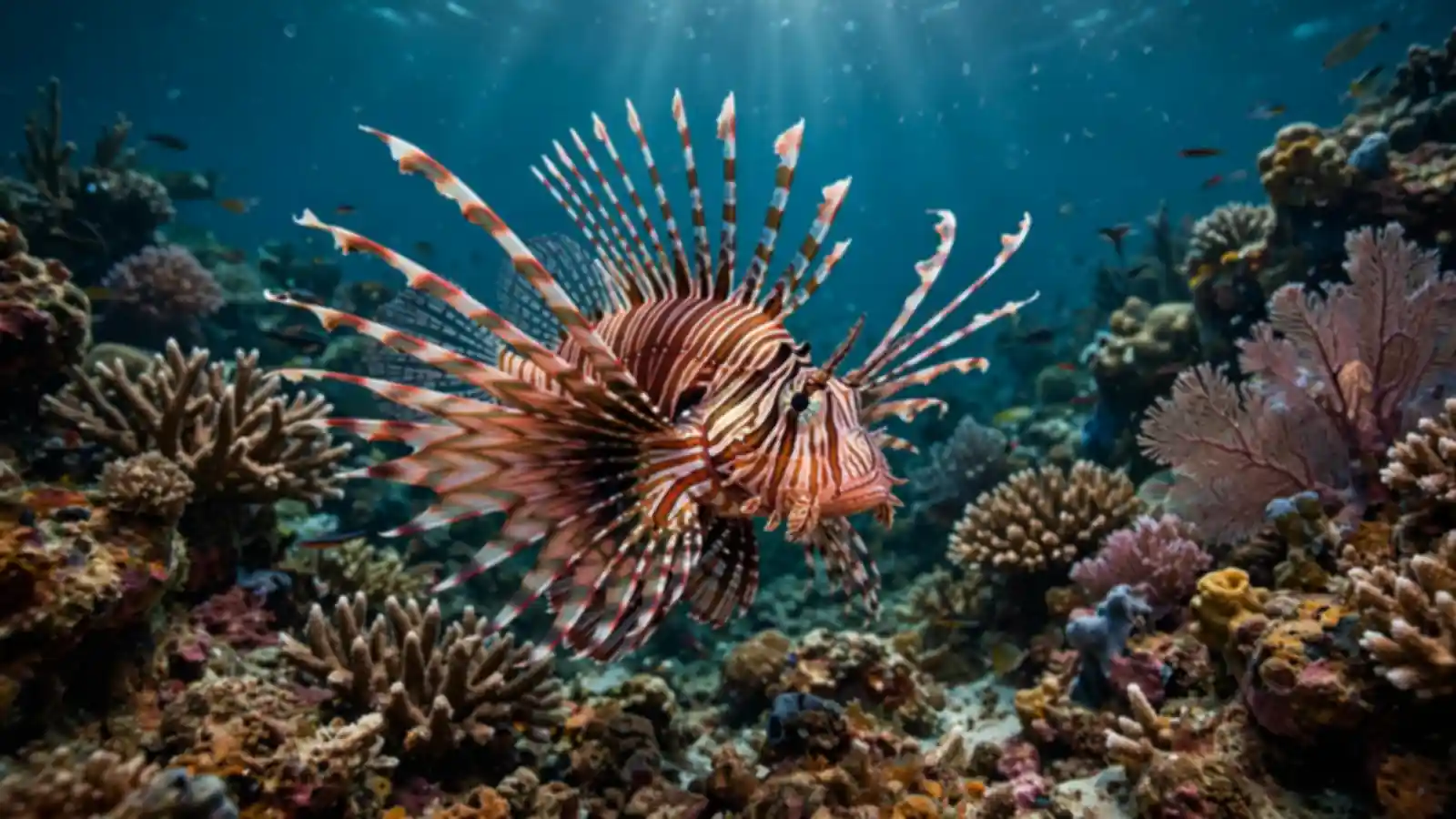
At a Glance
Lionfish are scorpionfish of the genus Pterois — the name comes from the Greek for “winged”, and one look at those spreading, feather-like fins explains it. At home in the Indo-Pacific they are respected but unremarkable reef predators, kept in balance by bigger hunters and stiff competition. In the Atlantic, where almost nothing recognises them, they have become the most studied marine invasion on Earth: a fish so well armoured, so fecund and so hungry that a single individual can measurably empty a patch of reef. Both stories — the elegant native and the runaway invader — are true, and both start with the same extraordinary animal.
Lionfish Size and Species: Volitans and Miles
Two species carry the invasion. The red one, Pterois volitans, is the western Pacific form — the one in most photographs and most aquariums — while the devil firefish, Pterois miles, rules the Red Sea and Indian Ocean. They are so alike that divers cannot reliably separate them, and the Atlantic population is mostly volitans with miles mixed in. Between them they front a genus of about a dozen Pterois species, all striped, all spined, all slow and stately swimmers.
Adults are substantial fish: the largest verified red one measured 45.7 centimetres and weighed 1.4 kilograms, and big Atlantic fish now rival anything in the native range. The bold maroon-and-white striping is warning colouration — honest advertising of the venom described below — and fleshy tentacles above the eyes and mouth break up the outline among corals. Longevity is respectable too, with a maximum reported age of about ten years.
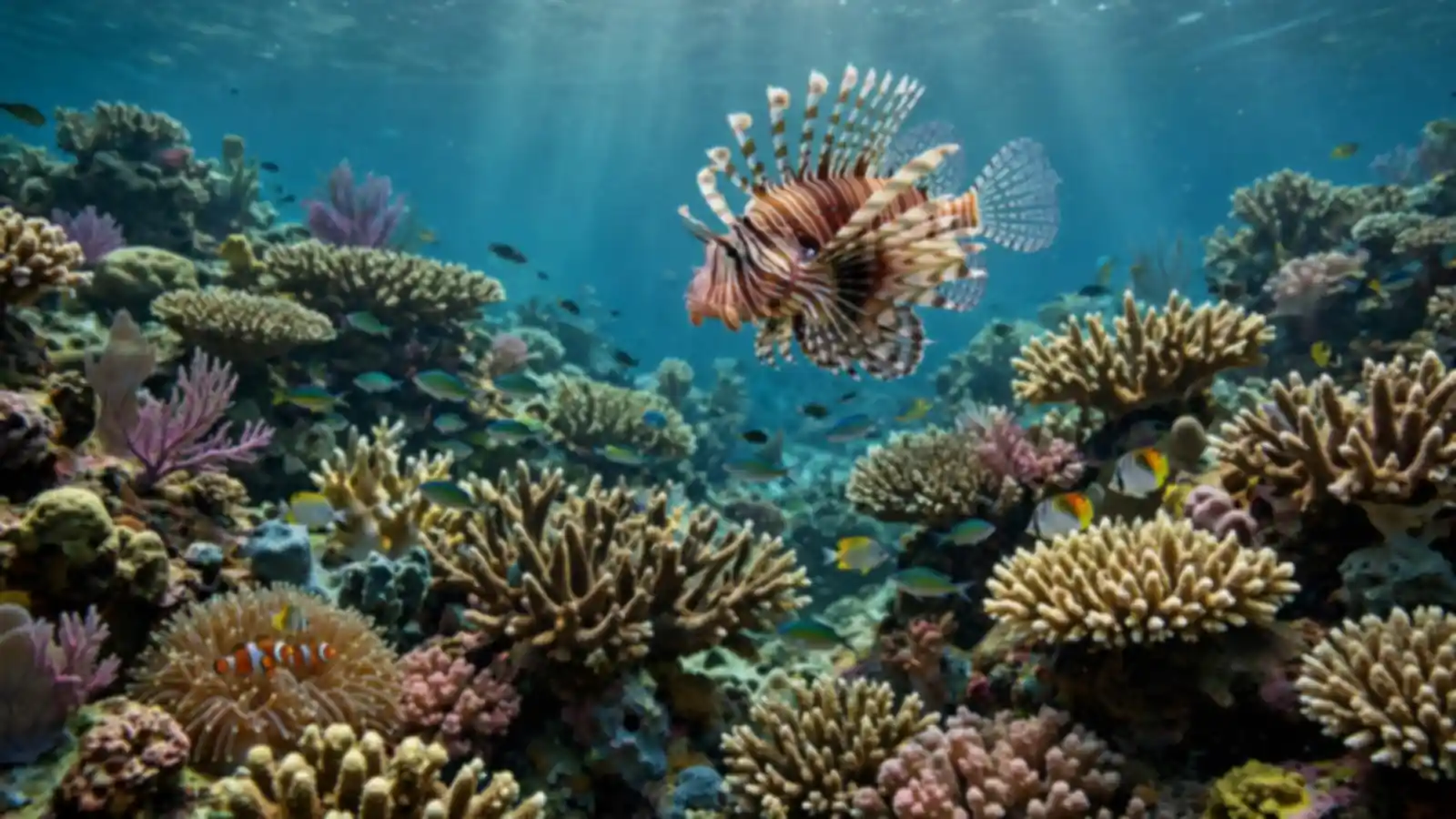
For the formal measures — depth range, fin counts and distribution — see the full species record for the red one, which also notes the trait that powers everything that follows: it hunts by trapping prey into a corner with those widespread fins.
Lionfish Venom: 18 Spines, Purely for Defence
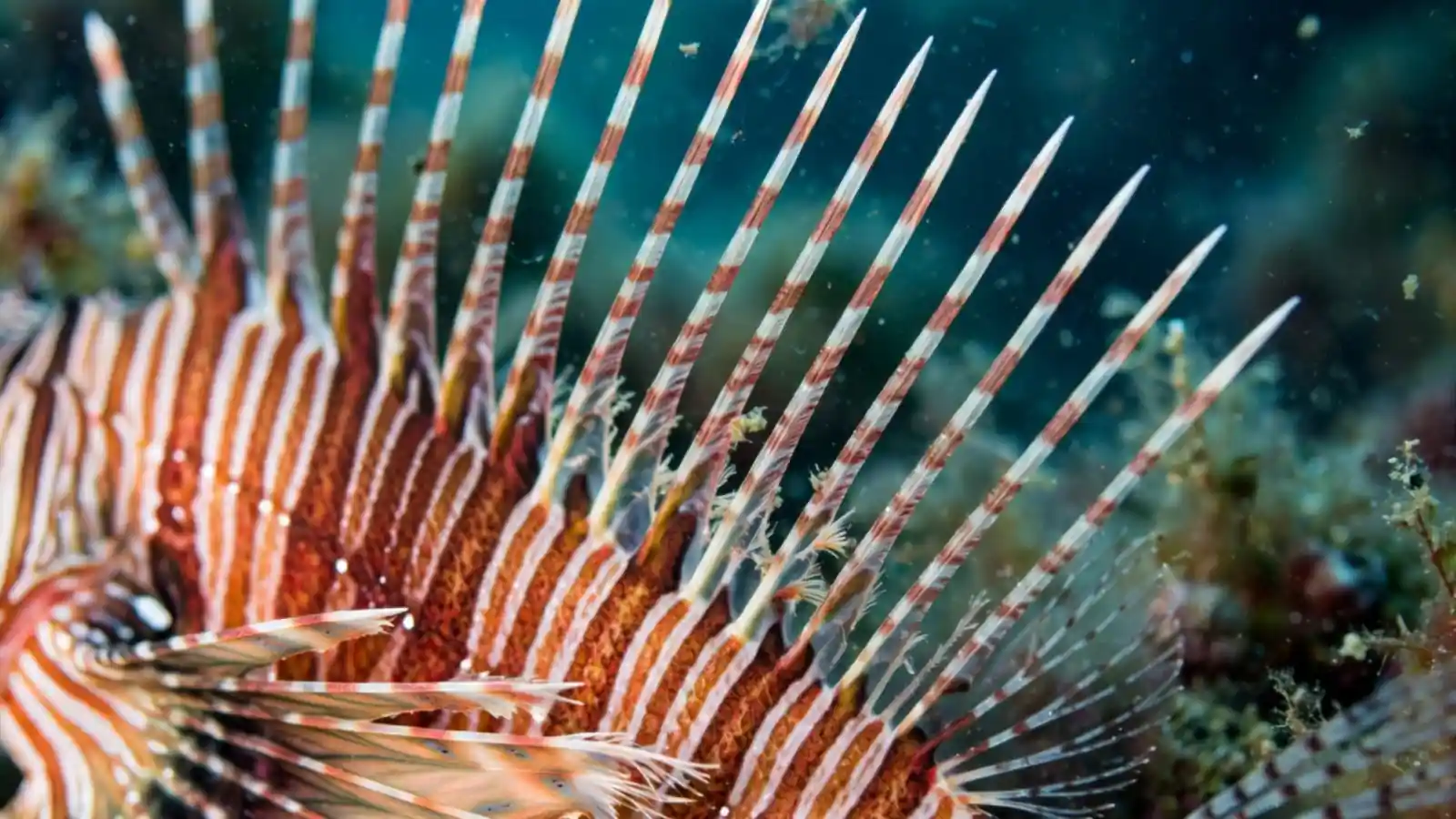
Count the armament: thirteen spines along the back, three on the anal fin and two on the pelvic fins — eighteen in all. Each is a hollow needle grooved with venom-producing tissue and wrapped in a thin sheath. When a spine punctures skin, the sheath slides back and venom tracks up the groove into the wound. Crucially, the system is entirely defensive: it never stings its food, hunting instead by suction, and it will actively aim its spines at a threat — even turning upside down to present the dorsal row to an attacker above.
For divers and fishers, a sting means intense, throbbing pain and swelling, occasionally with worse systemic symptoms — but despite the fish’s fearsome reputation, no human death from a sting has been recorded. The standard first aid is immersion in hot water, since heat helps break the venom down. On the reef, the message works: Atlantic predators that evolved without them mostly leave the striped stranger strictly alone.
What Do They Eat? The Cornering Hunter
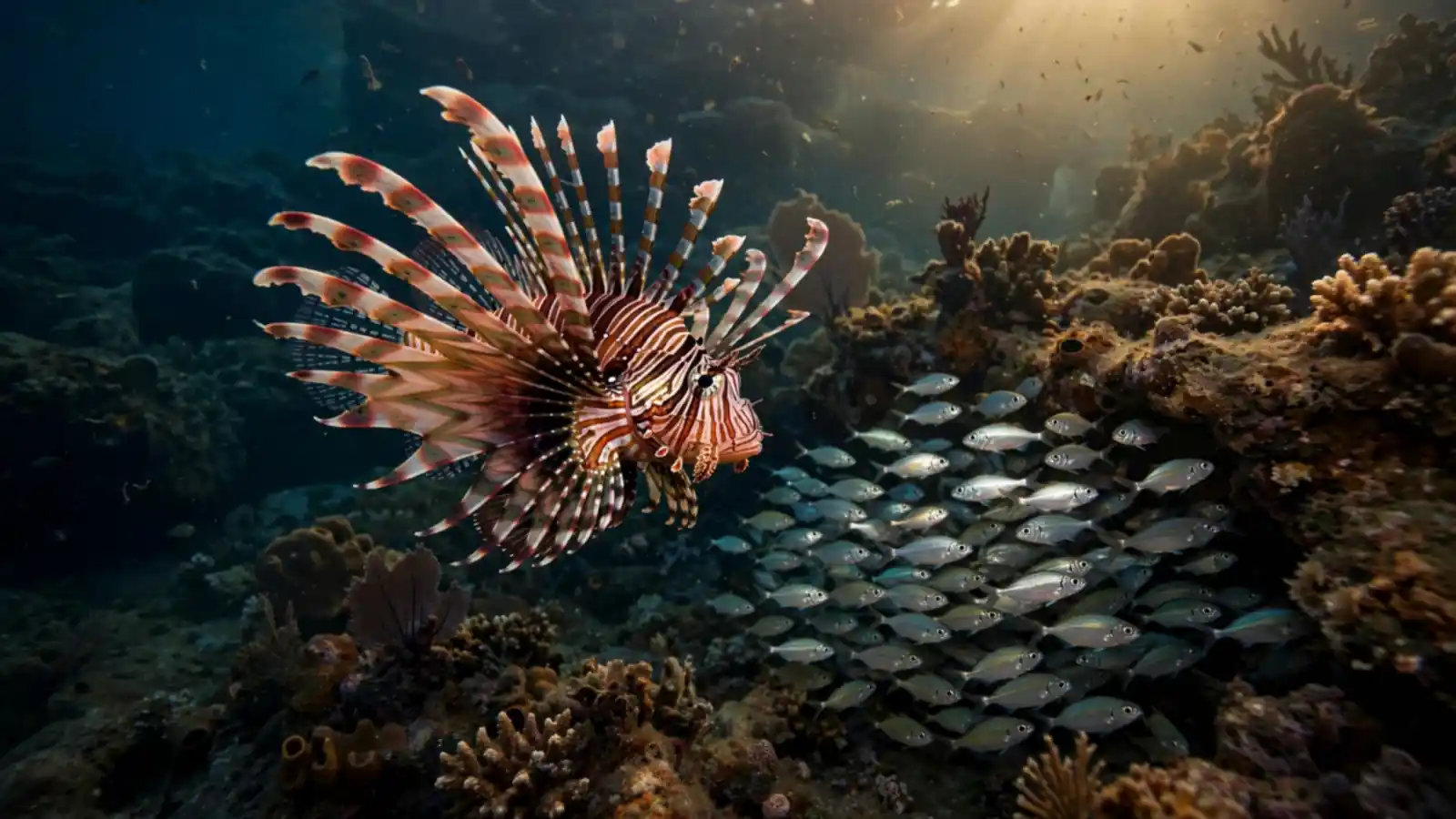
The hunt is a piece of theatre. Mostly active at night and at dusk, it drifts toward smaller fish with its great pectoral fins spread wide like a closing net, herding them gently against rock or coral. Trapped prey is then finished with a sudden suction strike — and some individuals first blow jets of water at their target, apparently to turn it head-first for an easier swallow. Prey up to nearly half the hunter’s own length can be taken whole.
The menu is the reef itself: more than 70 prey species have been recorded from their stomachs, including the juveniles of parrotfish and surgeonfish — the grazers that keep algae from smothering coral — plus grunts, damselfish, wrasses, shrimps and crabs. In their native range this appetite is one pressure among many. In the Atlantic, where the prey has no instinctive fear of the predator, it is a harvest.
The Invader: How the Atlantic Was Colonised
The first confirmed Atlantic record came off Dania Beach, Florida, in 1985. The overwhelming consensus is that the aquarium trade supplied the founders — released or escaped pets — and genetic studies point to a remarkably small founding group. A popular tale blames a beachfront aquarium smashed by Hurricane Andrew in 1992, but the genetics suggest the invasion was already seeded by then. From Florida, currents did the rest: a month-long larval drift is a built-in colonisation machine.
That machine runs on astonishing reproduction. They mature within about a year, and in warm water a female releases two gelatinous egg masses every few days, all year round — up to two million eggs annually from a single fish. The eggs hatch in about 36 hours. Within roughly two decades of the first record, they occupied the US east coast from North Carolina to Venezuela, the Gulf of Mexico and the entire Caribbean; Pterois miles has separately invaded the Mediterranean through the Suez Canal.
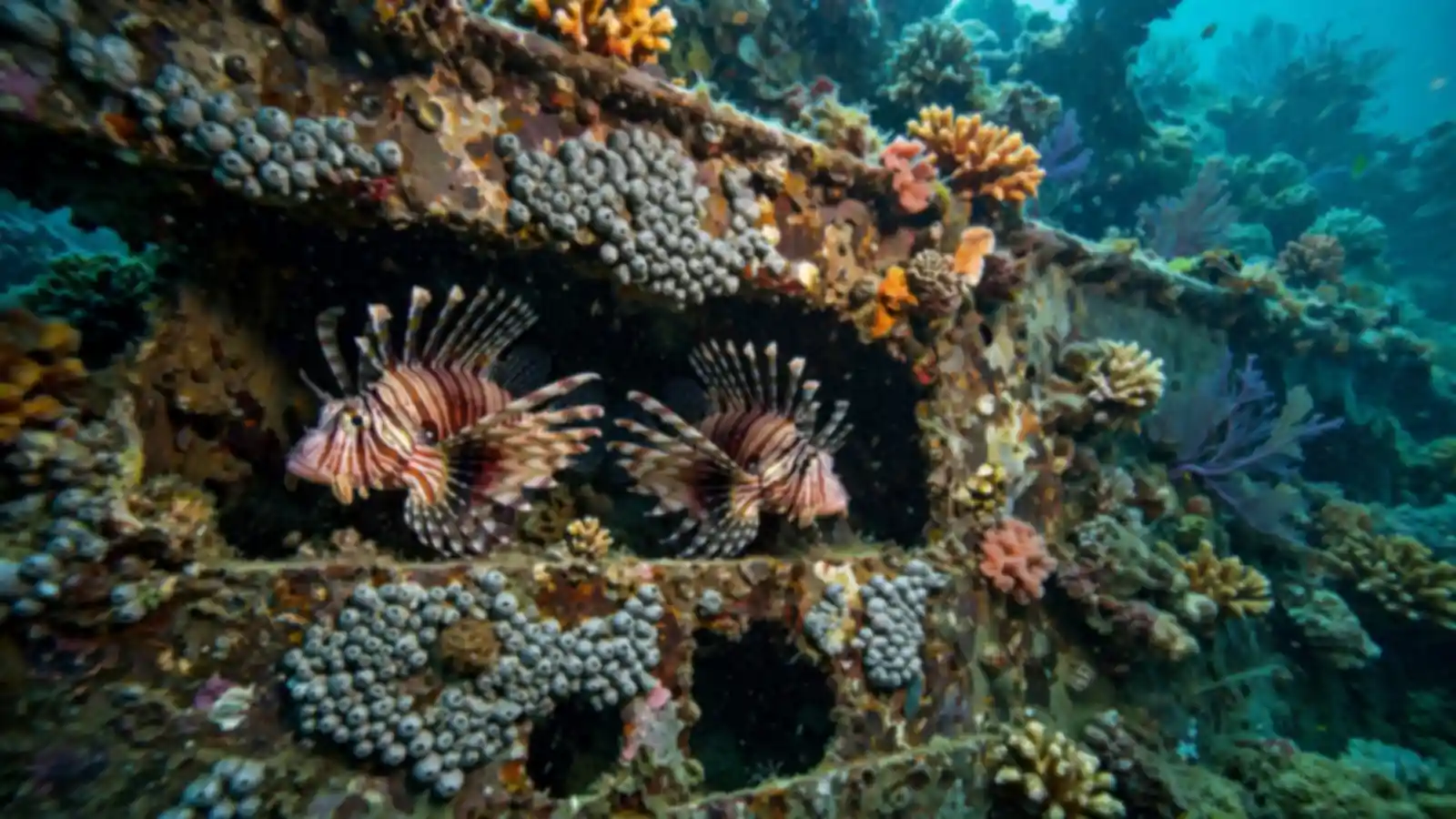
Why One Fish Can Empty a Reef
The number that made the invasion famous comes from a 2008 experiment in the Bahamas: researchers placed a single fish on small patch reefs and watched the recruitment of young native fish — the next generation arriving from the plankton — fall by 79 per cent within five weeks. Scale that up and the picture darkens: densities above 390 per hectare have been recorded on some invaded reefs, figures unheard of in their native waters.
The damage cascades. By cropping juvenile herbivores, they tilt reefs toward algae; by eating the young of snappers and groupers, they compete with — and undermine — the Atlantic’s own predators and fisheries. Native hunters have been slow to respond: groupers have occasionally been found with them in their stomachs, but no Atlantic predator has yet made a habit of it. The invader’s spines, stripes and sheer novelty keep it safe.
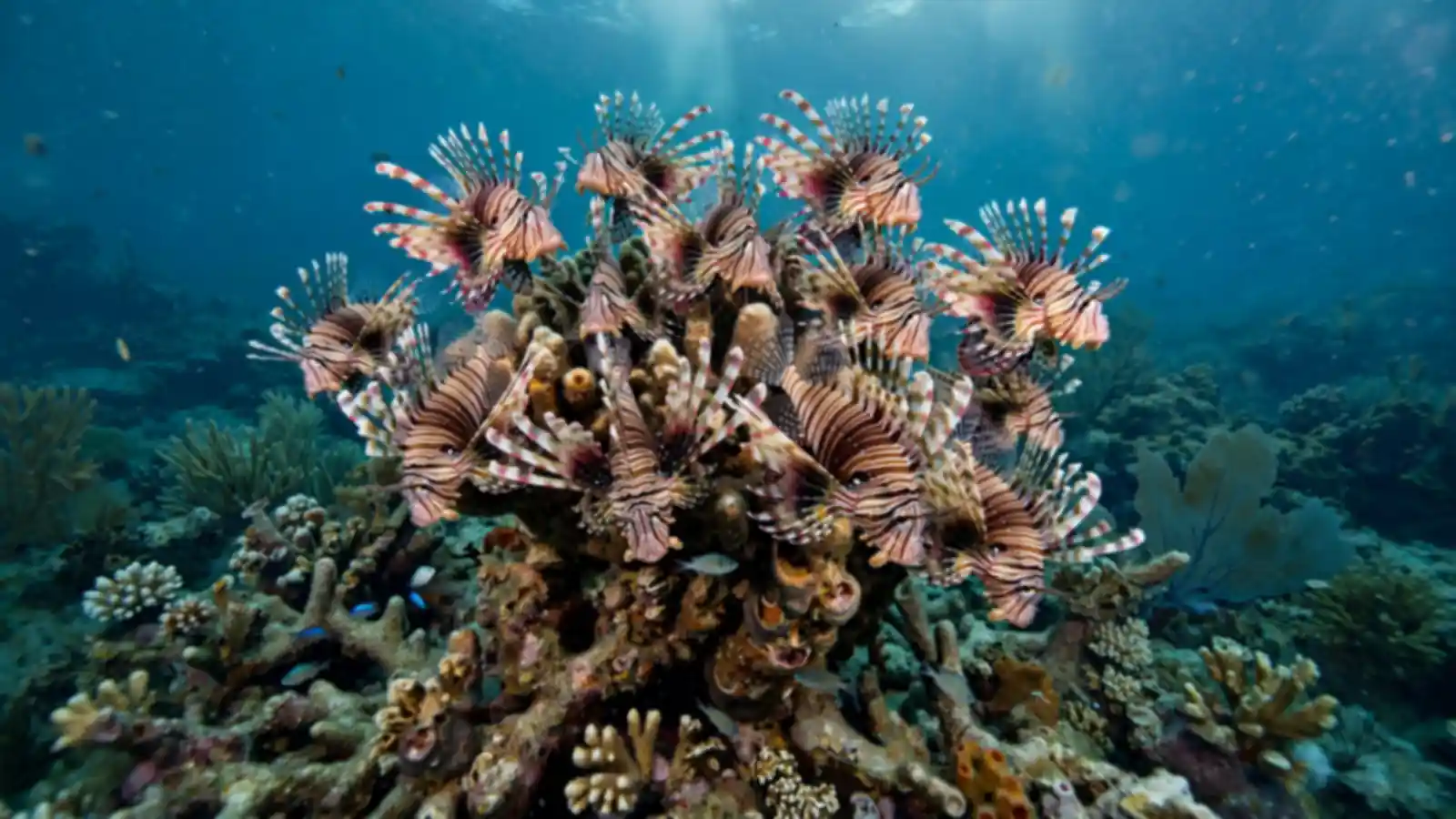
Fighting Back: Derbies, Divers and Dinner
Total eradication is no longer considered possible — they live too deep (Atlantic fish have been found hundreds of metres down) and breed too fast. But control works locally: reefs culled regularly by divers hold their numbers down and show measurable recovery of native fish. Removal derbies, where teams compete to spear the most fish in a day, have become fixtures of Caribbean conservation, and some marine parks now license dedicated hunters.
The most delicious strategy is a market. Its venom lives only in the spines — the flesh is clean, white, flaky and rich in protein, and chefs across the Caribbean and Florida now serve it precisely to create demand for removal. Handle with gloves, clip the spines, and heed local advisories that apply in a few areas. At home in the Pacific, groupers, moray eels and honest competition hold them in balance; in the Atlantic, for now, the balancing predator is us.
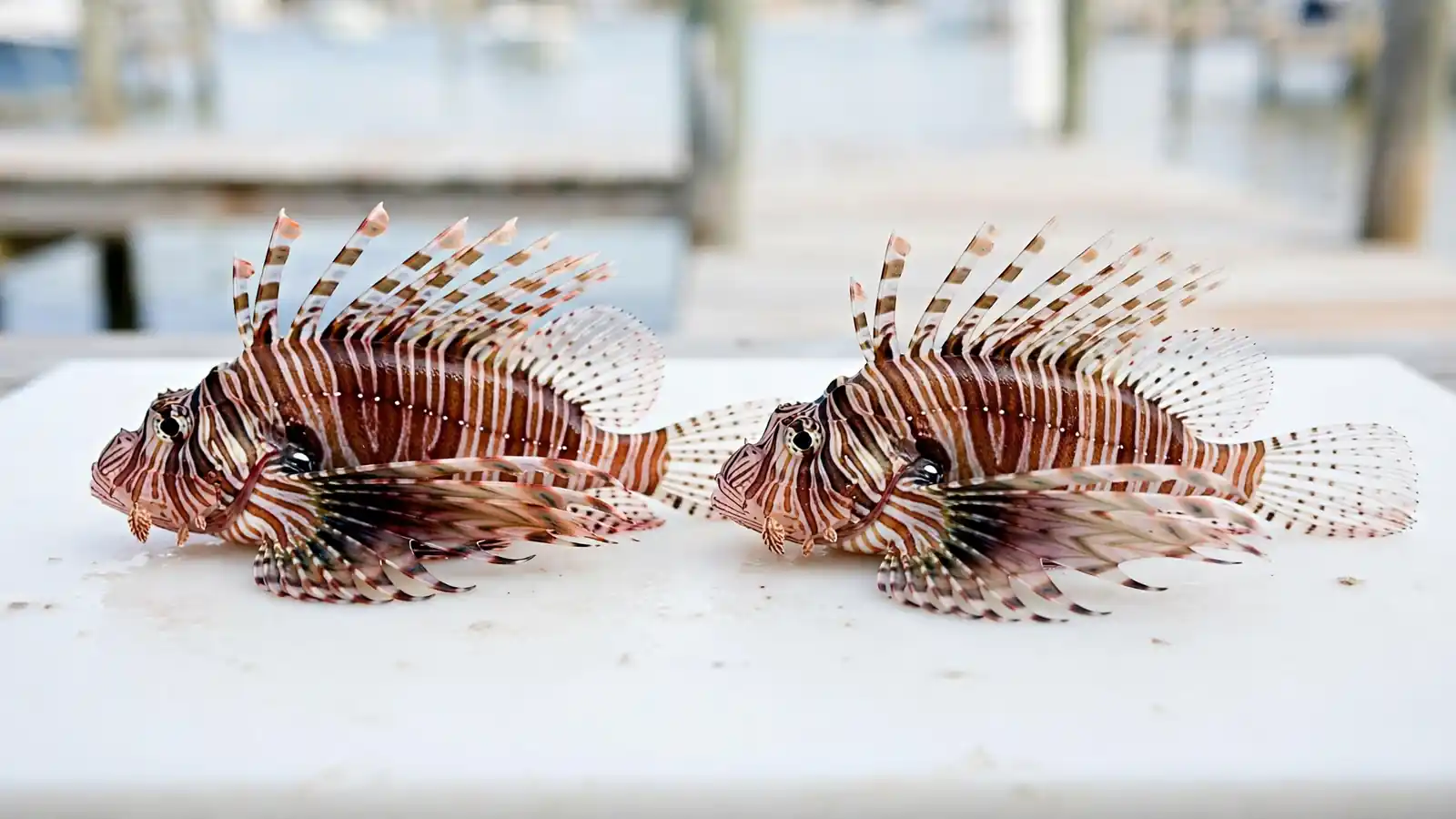
The cheapest control of all is prevention. They remain popular aquarium fish, and every release begins with a pet that outgrew its tank or its welcome. The responsible rules are simple: buy only if you can house a 40-centimetre predator for a decade, and if circumstances change, use a surrender or amnesty scheme — never, under any circumstances, the sea. The Atlantic’s most damaging fish arrived one well-meant release at a time.
Fun Facts
- Its 18 venomous spines are purely defensive — it catches dinner with suction, never poison.
- One placed on a Bahamian patch reef cut the arrival of young native fish by 79 per cent in five weeks.
- A female can release up to two million eggs a year, spawning every few days in warm water.
- They blow jets of water at prey to turn it head-first before the strike.
- The genus name Pterois comes from the Greek for “winged” — a nod to those feather-like fins.
- In their native Indo-Pacific, they are ordinary reef citizens, kept in check by groupers, morays and competition.
Frequently Asked Questions
What Is a Lionfish?
It is a venomous scorpionfish of the genus Pterois, recognisable by bold maroon-and-white stripes, feather-like fins and 18 venomous spines. About a dozen species live naturally in the Indo-Pacific and Red Sea; the red one and the devil firefish are the two now invading the Atlantic.
How Did Lionfish Become an Invasive Species?
Through the aquarium trade. The first Atlantic record came off Florida in 1985, and genetic evidence points to a small number of released aquarium fish as the founders. Their drifting larvae and relentless breeding spread them through the Caribbean and along the American coasts within about two decades.
Why Are Lionfish a Serious Ecological Threat?
Because nothing in the Atlantic controls them. They eat the young of more than 70 reef species — including the herbivores that protect coral from algae — breed all year, and shrug off local predators with venomous spines. In one experiment, a single fish reduced native fish recruitment on a patch reef by 79 per cent in five weeks.
Are Lionfish Venomous?
Yes — 18 spines carry venom: 13 dorsal, three anal and two pelvic. The venom is purely defensive and is never used in hunting. A sting is extremely painful and can cause swelling and, rarely, breathing difficulty, but no human death has been recorded; immersing the wound in hot water is the standard first aid.
What Do Lionfish Eat?
They eat small reef fish — more than 70 species have been recorded — plus shrimps and crabs. They hunt by spreading their fan-like fins to corner prey against the reef, sometimes blowing water jets to turn it head-first, then swallow it whole in a suction strike.
Can You Eat Lionfish?
Yes, and conservationists encourage it. The venom is only in the spines; the flesh is white, flaky and good to eat. Chefs across the Caribbean and Florida serve it to build a market that funds removal. Just handle the fish with gloves, remove the spines, and follow any local advisories.
Similar Species Worth Exploring
Keep Exploring
Compare defences with the pufferfish, meet the reef partner that stayed home in the clownfish, or browse the full types of fish guide — and spare a thought for the complicated lionfish.