Sawfish Facts: The Shark-Like Ray With a Saw Blade
Sawfish: The Shark-Like Ray With a Saw for a Nose
The sawfish is a shark-like ray with a toothed rostrum it swings like a chainsaw, stunning fish before it eats them — and it is one of the most endangered fish in the sea.
By Emily Carter · Reviewed by our vet team · Updated 10 November 2026 · 9 min read
Rostrum up to 1.8 mUp to 7.6 m longAll species endangered

At a Glance
The sawfish looks like a shark that swallowed a chainsaw: a long, flat, toothed blade where its nose should be. It is not a shark at all, but a ray — a shark-shaped ray that hunts in the shallows, slashing its saw through schools of fish. Every one of the five species is endangered or critically endangered, and the saw is the reason: it tangles in nets, and it was once sold as a trophy. This guide covers the saw, the five species, and the fight to save them.
Anatomy of the Saw: Rostrum, Teeth and Senses
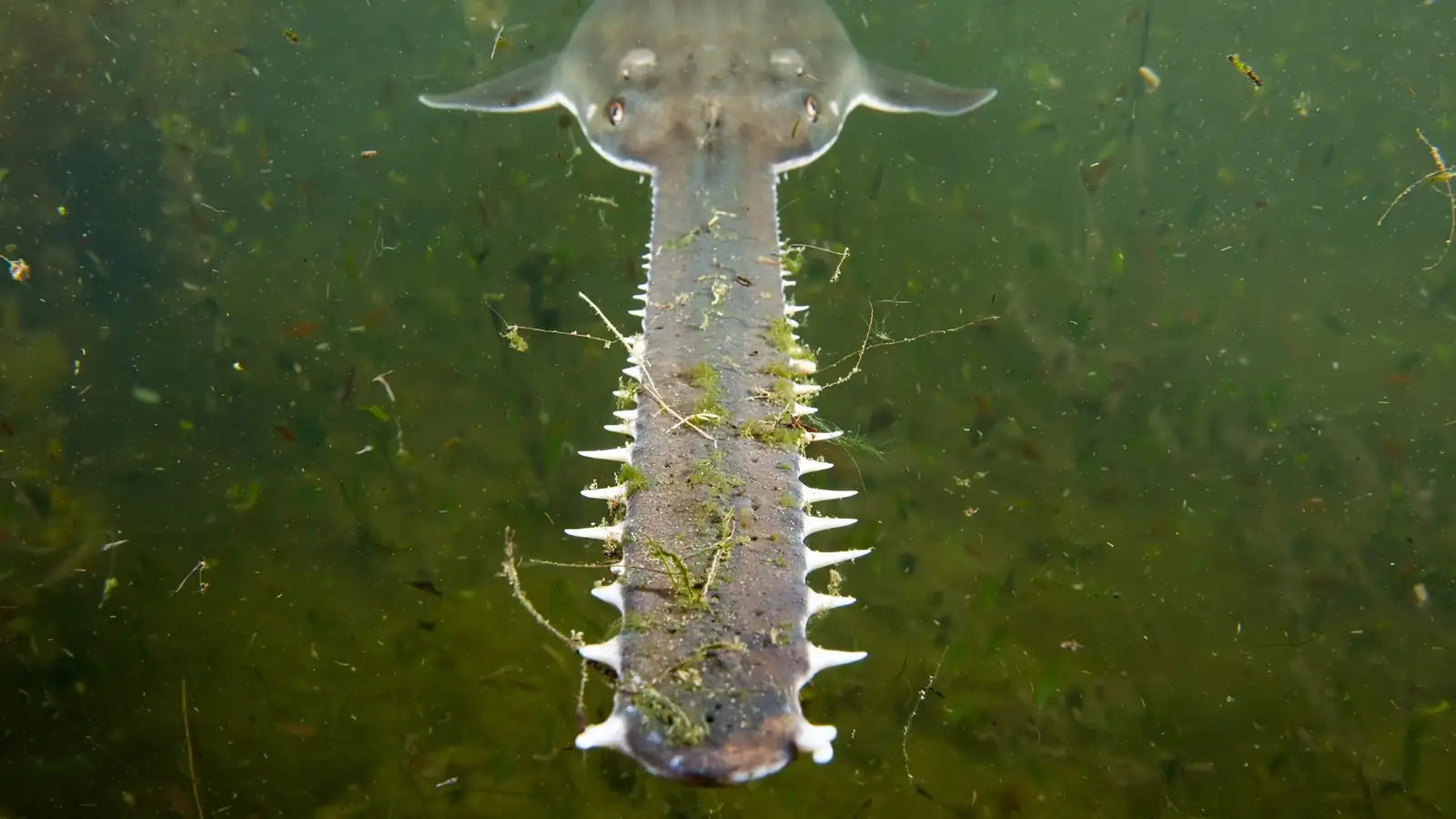
Its most famous feature is its rostrum: a long, flat blade lined with sharp teeth on each side, which can make up a quarter of the animal’s length. On a big largetooth the saw alone can reach 1.8 metres. The “teeth” are not teeth at all, but modified scales set into the blade — and unlike real teeth, they do not grow back if they are lost.
The rest of the body is built like a shark’s: a torpedo-shaped trunk, two tall dorsal fins and a powerful tail. But the gills sit on the underside, as they do in every ray, and the broad pectoral fins are fused to the head. The saw is also a sense organ: it is lined with tiny pores that detect the weak electric fields of hidden prey, so it can find a fish buried in sand without seeing it.
They come in five species, and the saw is how you tell them apart. The largetooth has widely spaced teeth on a broad blade; the smalltooth has many small, closely set teeth; the green has a long, narrow blade; the dwarf is small with a short, wide blade; and the narrow, as its name suggests, has the narrowest blade of all. Tooth count and spacing are the field marks that researchers use to identify one at a glance.
The Five Sawfish Species: Largetooth, Green, Dwarf and More

Five species swim the world’s warm shallows, and this guide covers them all. The largetooth (Pristis pristis) is the biggest, reaching 7.6 metres and ranging through the tropics worldwide. The green (Pristis zijsron) is the giant of the Indo-Pacific, reaching 7.3 metres in the waters off Australia and Asia. The dwarf (Pristis clavata) is the smallest, topping out at about 3.1 metres in northern Australia.
The smalltooth (Pristis pectinata) is the Atlantic species, once common along the coasts of Florida and the Gulf of Mexico and now found reliably only in Florida and the Bahamas — it gets its own full guide in our Smalltooth guide. All five are listed as Endangered or Critically Endangered. For the full species record, see the full largetooth species profile.
Where They Live: Shallow Water, Mangroves and Rivers

They live where the water is warm and shallow: estuaries, mangrove swamps, river mouths and coastal bays in the tropics and subtropics. They are as much river fish as sea fish — largetooth have been found hundreds of kilometres up the Amazon and other great rivers, and young grow up in the brackish water of estuaries where food is rich and big predators are few.
That shallow-water life is both their strength and their weakness. The murky estuary hides them from predators and feeds them well, but it is also where people fish, build and drain wetlands. When a river is dammed or a mangrove is cleared, a nursery disappears with it — and a species that needs those nurseries has nowhere else to raise its young.
How They Hunt: Slashing the Saw Through Schools

It hunts with its saw. It swims into a school of small fish and slashes the blade from side to side, stunning and injuring the fish around it, then turns back to pick them off one by one. The same blade digs in the sand for buried crabs, shrimps and molluscs, and the electroreceptors along its edge tell it exactly where to dig.
The diet is small prey, mostly: schooling fish, crustaceans and molluscs. It does not chase big prey or bite chunks out of whales — it is a bottom-feeder that works the shallows methodically, sweeping its saw through the sand and the water column. It is a quiet, efficient way to hunt, and it has worked for millions of years.
Life Cycle: Pups Born With a Saw
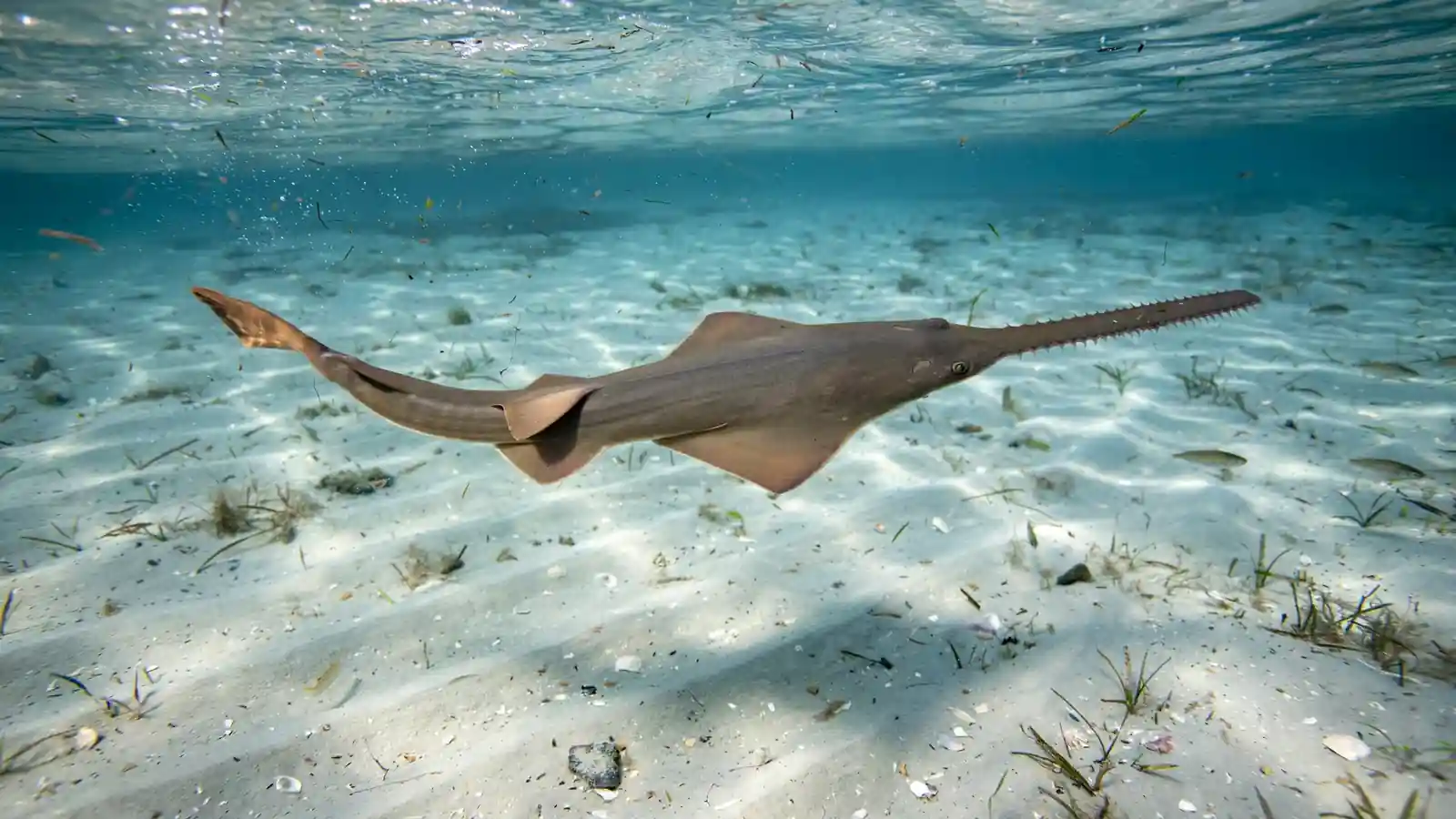
They give birth to live young, and the pups arrive ready for the world. A litter is usually 1 to 13 pups, each about 60–80 cm long, and each one is born with a soft sheath covering its saw — a neat piece of evolution that stops the blade from injuring the mother during birth. The sheath falls away within days, and the pup’s saw is already fully formed.
The young grow up in the safety of rivers and estuaries, feeding on small fish and crustaceans and growing fast. They take years to mature — a decade or more for the big species — and they can live 30 to 50 years. That slow life is the problem: a population that loses its adults takes decades to recover, and a species that matures at ten cannot replace itself quickly.
The Fifth Species: The Narrow-Bladed One
The narrow (Anoxypristis cuspidata) is the odd one out: it is the only member of the family outside the genus Pristis, and it has the narrowest blade of the family, with teeth only along the front half of the rostrum. It lives in the Indo-West Pacific, from the Arabian Sea to northern Australia, in coastal waters and estuaries.
It is also the least known of the five. The narrow is Endangered, and its numbers are falling for the same reasons as its cousins: nets, habitat loss and the trophy trade. Because it is rarely seen and hard to study, it may be in worse shape than the records show — a quiet decline in a species few people have ever heard of.
Endangered and Protected: The Fight to Save Them
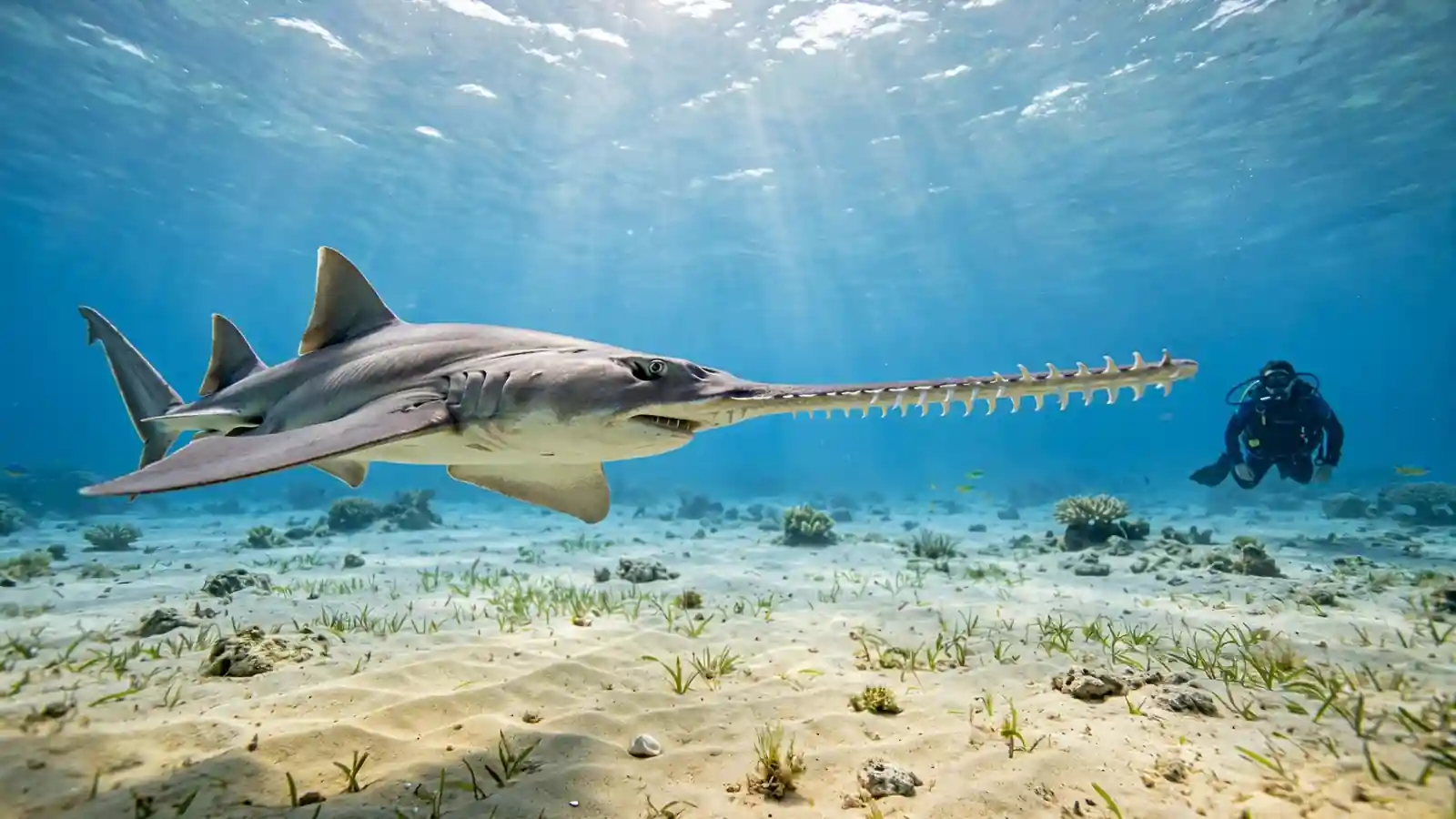
Every species is Endangered or Critically Endangered, and the family is one of the most threatened groups of fish in the world. The saw is the main problem: it tangles in fishing nets and trawls, and one caught in a net usually dies before it can be freed. Their shallow-water nurseries are being drained, dammed and built over, and their saws were once sold as trophies and curios.
The recovery is under way, but it is slow. They are protected in many countries, their trade is banned under international rules, and fishers are taught to cut them free safely. In Florida, the smalltooth has a dedicated recovery programme, and its numbers are slowly rising. The lesson is simple: one that survives its first ten years has decades of life ahead of it — if the nets and the nurseries let it.
What they need most is what they have always needed: clean, connected rivers and estuaries, nets that let them go, and people who know what a saw is for. The saw is not a weapon and not a trophy. It is a sense organ, a hunting tool and a nursery — and it belongs in the water, on a living fish.
Fun Facts
- Its saw can be a quarter of its body length — up to 1.8 metres on a big largetooth.
- The pups are born with their saw covered in a soft sheath, so it does not injure their mother.
- The saw’s teeth are not teeth at all — they are modified scales, and they do not grow back if lost.
- They can swim between fresh and salt water, travelling far up rivers.
- It can sense a buried fish by the tiny electric field its heartbeat gives off.
- They were once so common in Florida that hundreds were caught in a single day — now they are rare everywhere.
- The family is one of the most threatened groups of fish in the world.
Frequently Asked Questions
Are Sawfish Sharks or Rays?
Rays. They are shark-shaped rays: their gills sit on the underside of the body, like a ray’s, and their pectoral fins are fused to the head. They look like sharks because they swim like sharks, but they belong to the ray family.
How Big Do Sawfish Get?
The largest, the largetooth, can reach 7.6 metres (25 feet) and weigh up to about 600 kg. Most adults are 4 to 6 metres long, and the smallest species, the dwarf, tops out at about 3.1 metres.
What Do Sawfish Use Their Saw For?
Three things: to sense prey, to slash through schools of fish and stun them, and to dig in the sand for buried food. The saw is lined with electroreceptors that detect the tiny electric fields of hidden fish, and its teeth are not teeth at all, but modified scales.
Are Sawfish Dangerous to Humans?
No. They are gentle bottom-feeders that pose almost no threat to people. They only use the saw defensively if they are grabbed or cornered, and there are no confirmed fatal attacks on humans.
Where Do Sawfish Live?
In shallow tropical and subtropical waters worldwide: estuaries, mangrove swamps, river mouths and coastal bays. Young grow up in rivers and estuaries, and adults move between fresh and salt water.
Why Are Sawfish Endangered?
Because their saw tangles in fishing nets, because their shallow-water nurseries are being drained and built over, and because their saws were once collected as trophies. All five species are Endangered or Critically Endangered, and they have vanished from much of their former range.
How Many Sawfish Species Are There?
Five: the largetooth, smalltooth, green, dwarf and narrow. The largetooth is the largest, the dwarf is the smallest, and the narrow is the one with the narrowest blade. The smalltooth gets its own guide in Wave E.
Similar Species Worth Exploring
Keep Exploring
Still curious about the saw? Meet the largetooth’s Atlantic cousin in our Smalltooth Sawfish guide, glide with the biggest ray of all in our Manta Ray guide, and compare every ray in the Types of Rays and Skates hub — then come back to the shallows with the sawfish.