Spaghetti Worm
Spaghetti Worm: The Worm That Fishes With Its Tentacles
The spaghetti worm fishes with a crown of long, grooved tentacles spread over the sand, sweeping food to its mouth from a tube it glued together grain by grain.
By Emily Carter · Reviewed by our vet team · Updated 10 November 2026 · 9 min read
Body 3–15 cmTentacles to 30 cmSand-grain tubes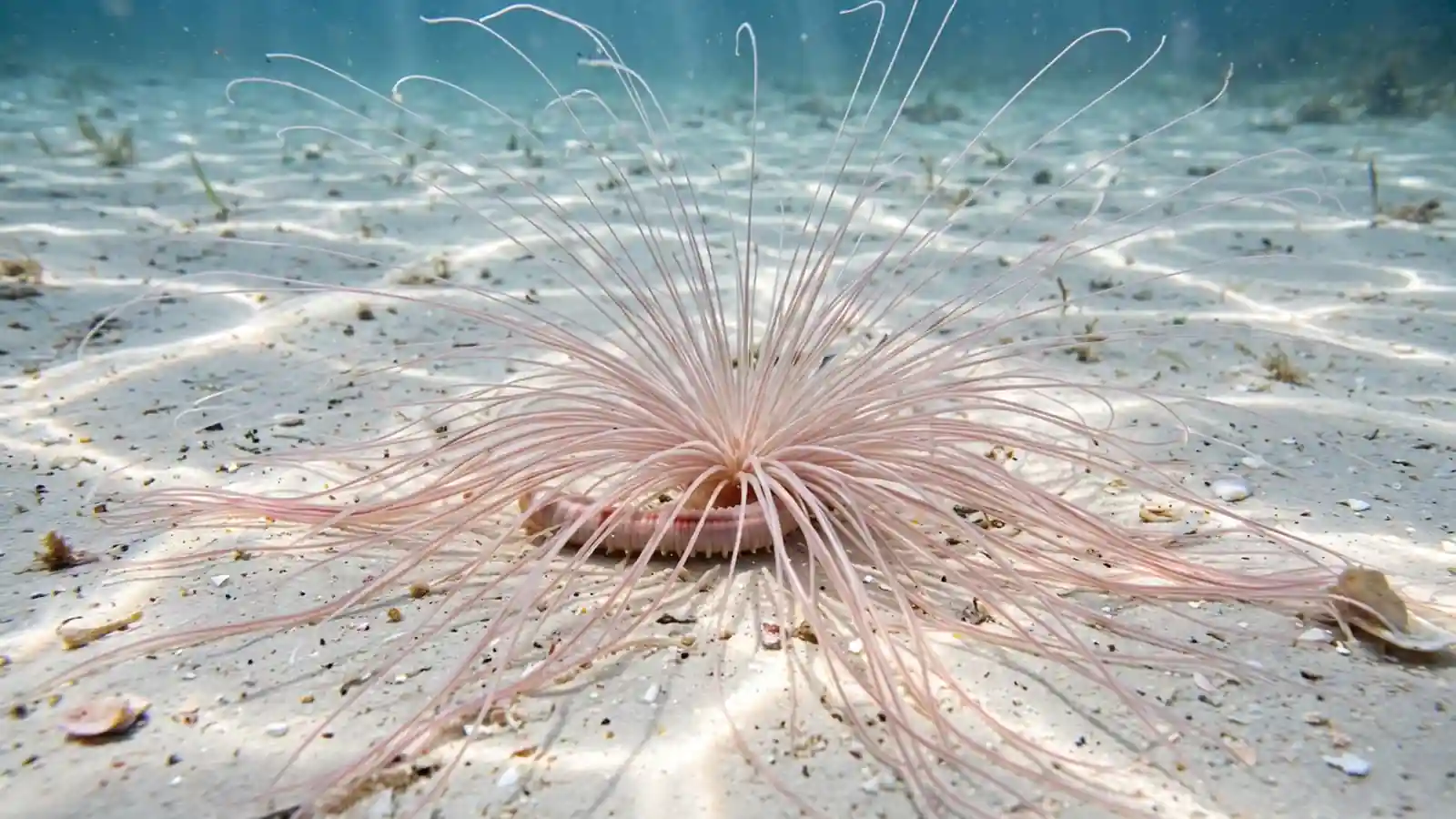
At a Glance
The spaghetti worm is a terebellid worm of shallow sandy seabeds, named for the crown of long tentacles it spreads over the sand like spilled pasta. It lives in a tube of glued sand grains and feeds by sweeping detritus to its mouth.
Spaghetti Worm Tentacles: A Crown That Fishes for Food
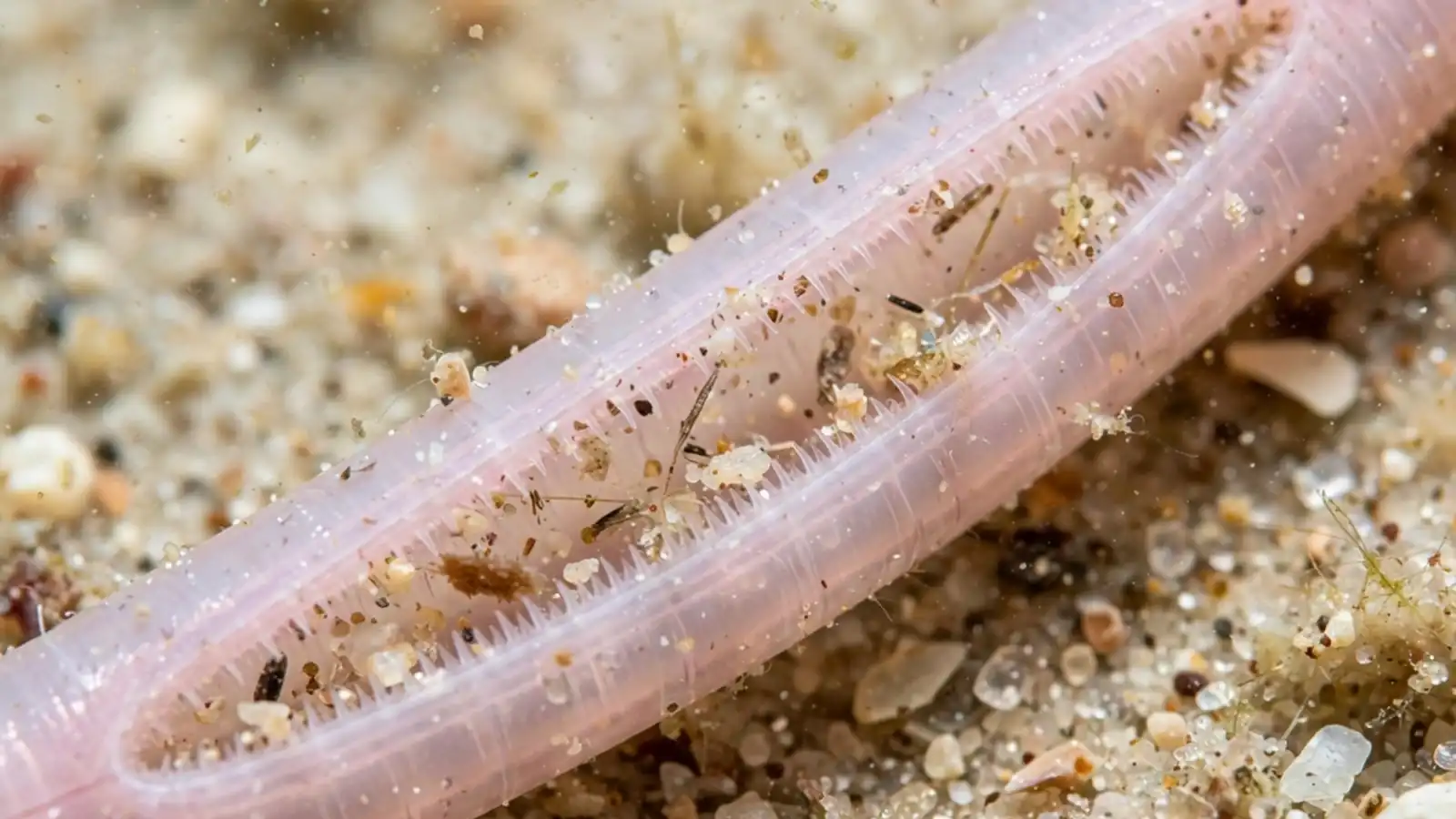
Its tentacles are its whole way of life. A crown of long, grooved tentacles spreads out from the mouth of its tube and lies across the sand, each one carrying food particles back to the mouth on a conveyor of tiny cilia. The tentacles are not arms and they are not legs — they are feeding lines, cast out over the seabed.
The scale of the crown is the surprise. The worm’s body is only 3–15 cm long, but its tentacles reach 5–30 cm, and in Eupolymnia crassicornis they can pass a metre. A single worm can sweep a patch of sand far wider than its own body, and when danger comes the whole crown vanishes into the tube in a blink, leaving nothing but sand behind.
Spaghetti Worm Size: Body Small, Tentacles Long
It is a small animal with a long reach. The body runs 3–15 cm, about the length of a finger, and the lead species, the sand mason worm Lanice conchilega, sits comfortably in that range. It is the tentacles that make the animal seem big: 5–30 cm of grooved feeding line, spread over the sand in every direction.
The longest tentacles belong to the biggest species. Loimia medusa reaches 30 cm in body length, and Eupolymnia crassicornis carries tentacles over a metre long — a crown wider than a dinner table, worked by a worm the size of a finger. The size of a worm is best measured twice: once for the body, once for the crown, because the crown is the animal’s real extent.
The Sand Tube: A Home Glued From Grains
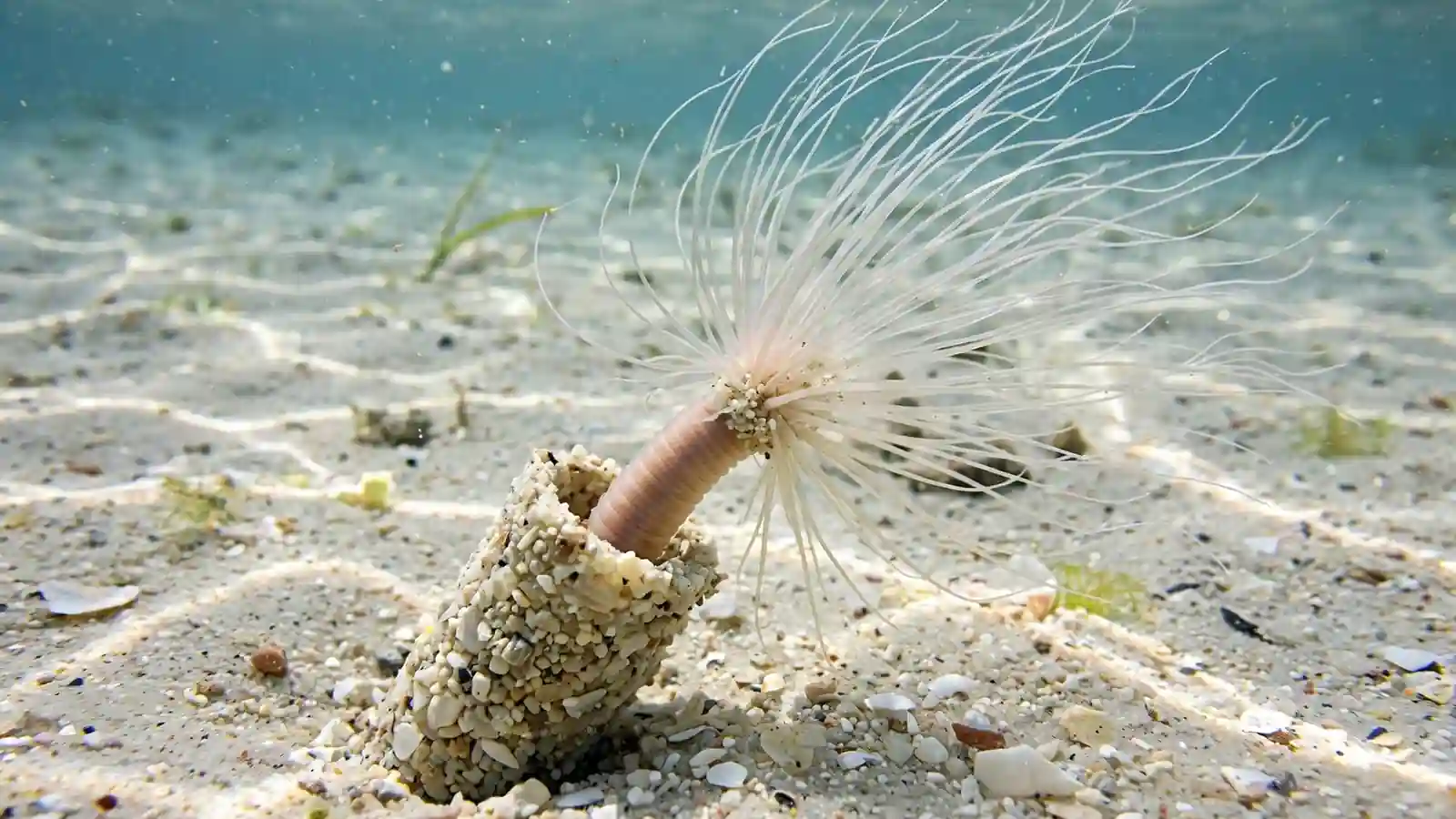
Every worm lives in a tube it built itself, grain by grain. The worm collects sand from the seabed and glues it together with mucus, building a tube that stands upright in the sand or lies along it, with the worm inside and the tentacle crown spilling from the top. The tube is the worm’s home, its fortress and its feeding station in one.
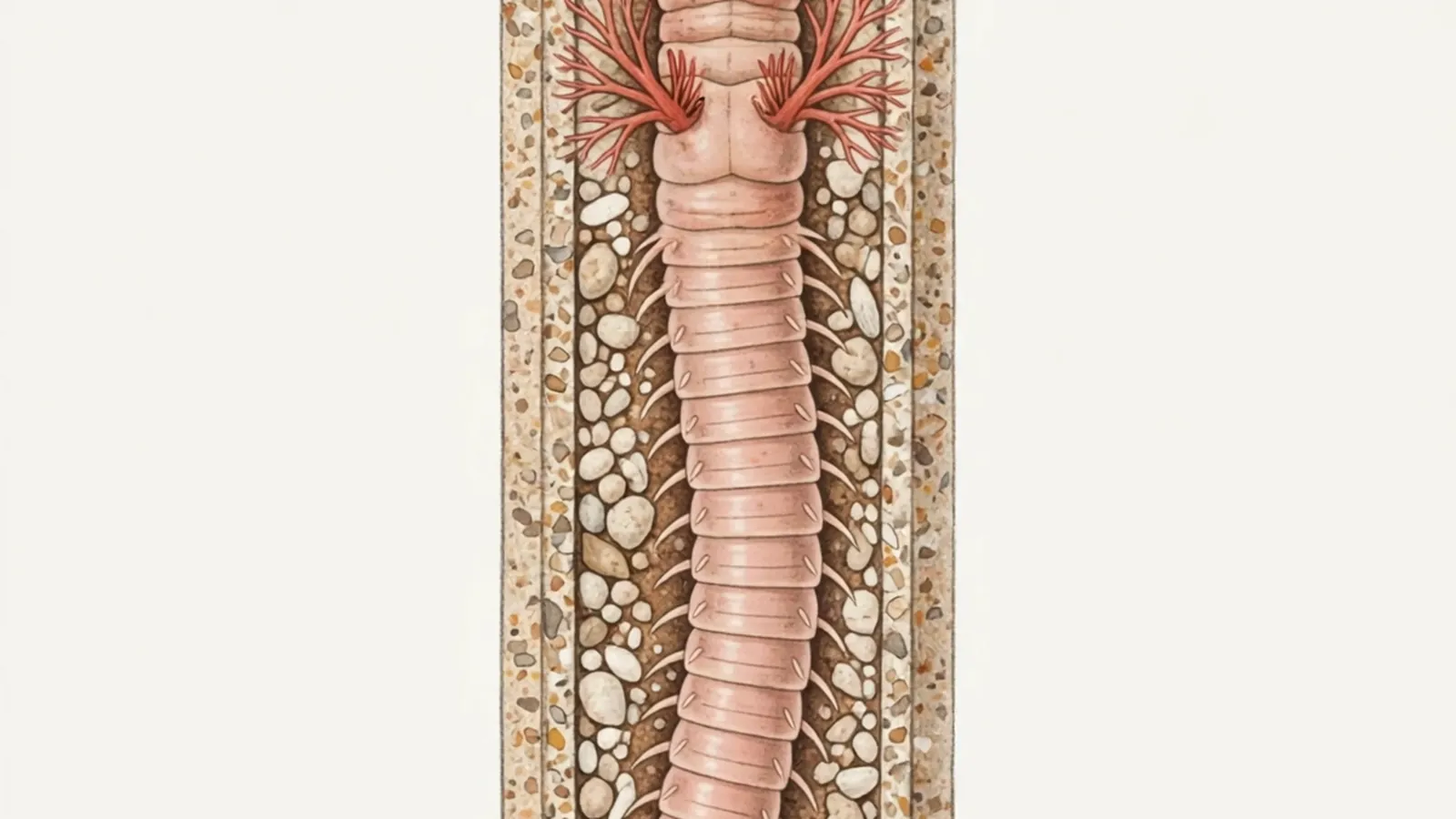
A cross-section of the tube shows the craft: sand grains set in mucus, layer on layer, forming a wall that holds its shape in the current but yields to the worm’s movements. The worm never leaves the tube — it feeds from it, retreats into it, and rebuilds it as the sand shifts. Take the tube away and the worm is defenceless; inside it, the worm is safe, fed and at home.
Where They Live: Sandy and Muddy Seabeds
Spaghetti worms live on shallow sandy and muddy seabeds, from the intertidal zone down to about 100 metres. They are animals of soft ground: the sand mason worm builds its tube reefs on tidal flats, and other terebellids work the muddy bays and the shallow shelf, wherever detritus settles and the current is gentle enough for a tube to stand.
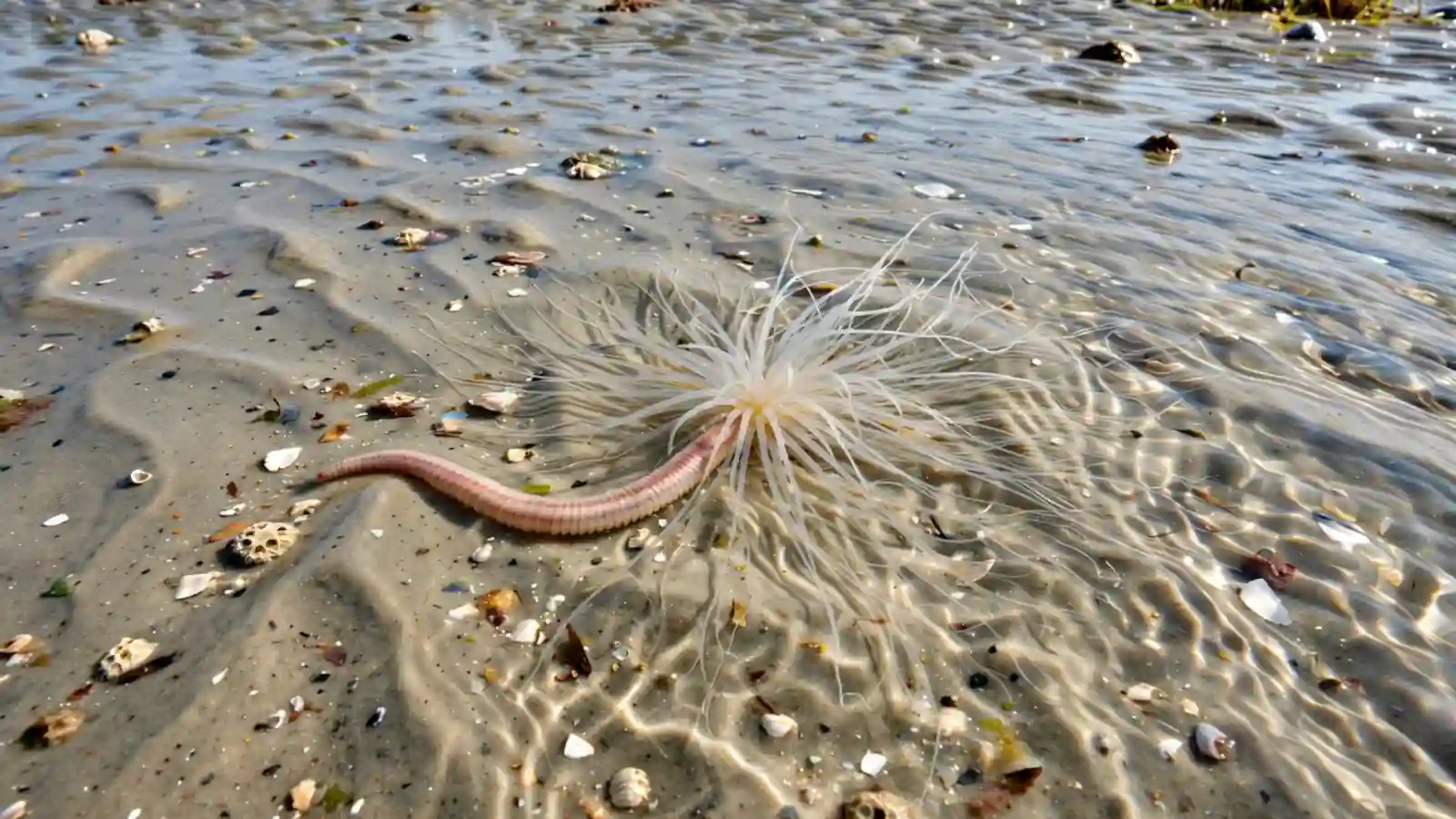
A shallow sandy bay at low tide can hold a whole field of them, though you would never know it from the surface. The tubes poke a centimetre or two above the sand, the tentacles lie flat and still, and the whole colony looks like nothing at all — until the tide comes in, the tentacles lift, and the sand begins to move with feeding worms.
What They Eat: Detritus on a Conveyor
Spaghetti worms are deposit feeders, and their tentacles are the conveyor. Each grooved tentacle picks up detritus — dead plankton, faecal pellets, the fine organic rain of the seabed — and the cilia lining the groove carry it back to the mouth, particle by particle. The worm does not chase food; it harvests the ground around its tube.
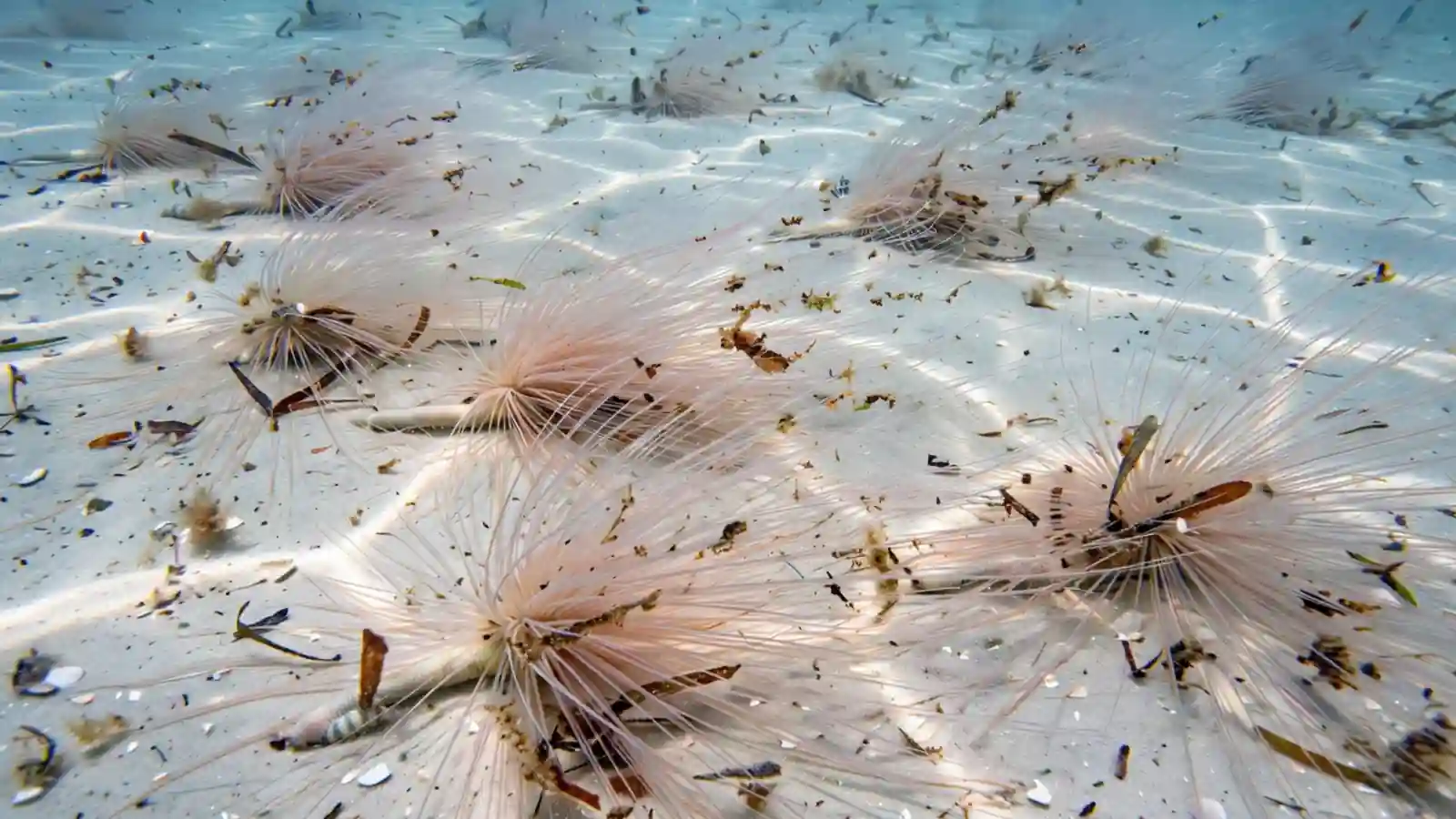
The diet is the seabed’s recycling in action. The detritus a worm eats would otherwise rot where it fell; the worm turns it into body, and the body feeds the fish and crabs that hunt the flats. A bay full of spaghetti worms is a bay being cleaned, and the tentacle crowns are the cleaning crew, working the sand one grain at a time.
The Sand Mason Worm: Reefs Made of Tubes
The sand mason worm, Lanice conchilega, is the best-known worm, and it builds something no other worm in its family does: a reef. Where sand masons are dense, their tubes stand so close together that they stabilise the sand, trap more sediment, and create a low reef of tubes that shelters other animals. The reef is not rock — it is worm-built, grain by grain.
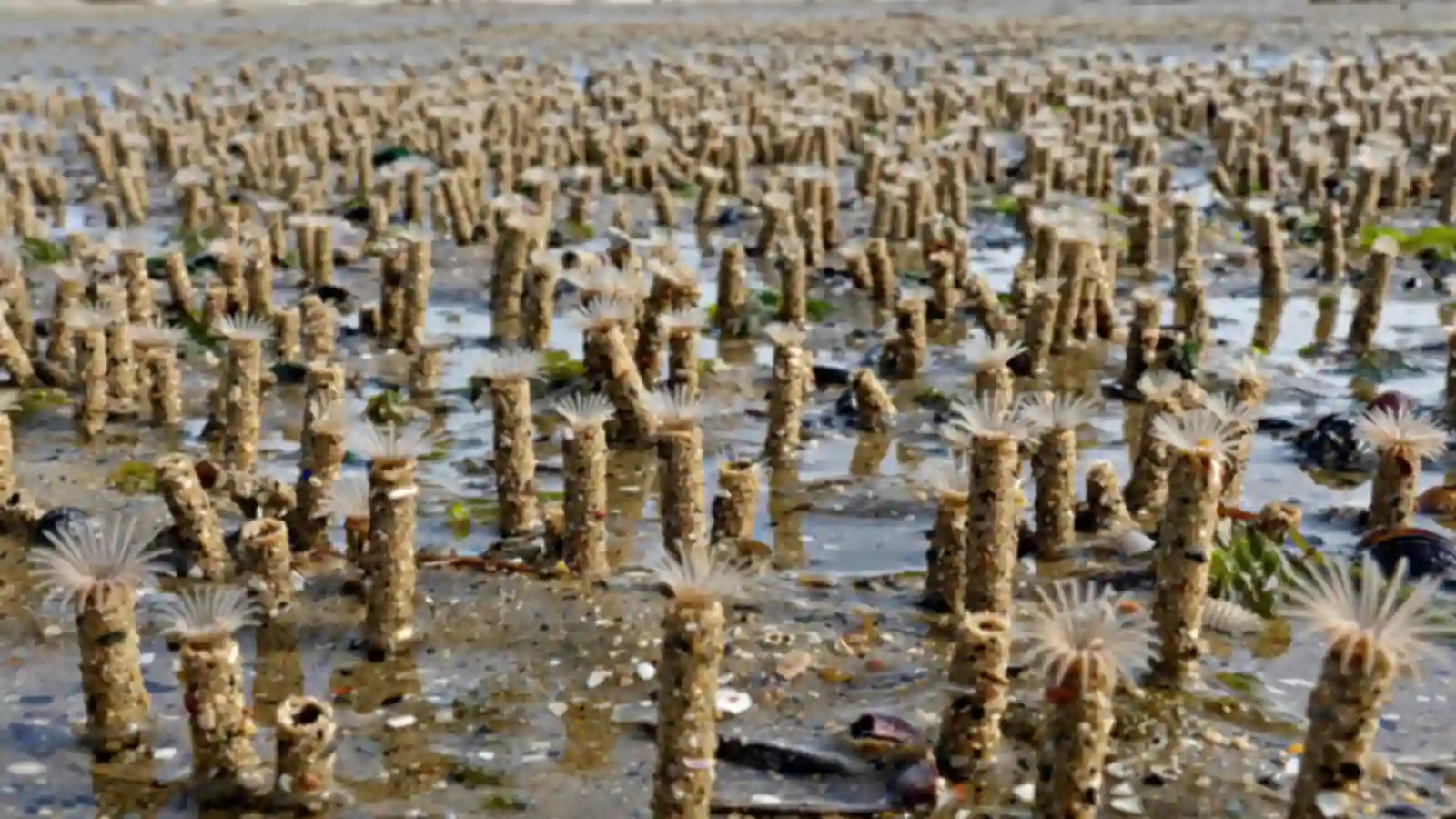
A sand mason reef changes its whole patch of seabed. The tubes slow the current, the trapped sediment feeds more worms, and the reef becomes a nursery for small fish and crustaceans. For the full profile of the worm that builds them, see this sand mason worm profile, which covers the species, its tube reefs and its habitat. Its greatest work is not its tentacles — it is the ground it builds.
Why the Seabed Needs Them
Spaghetti worms are ecosystem engineers in miniature. Their tubes stabilise the sand, their feeding turns detritus into worm, and their burrows aerate the sediment, letting oxygen reach the bacteria that do the seabed’s deeper chemistry. A flat without terebellids is a flatter, poorer place than a flat with them.
The effect is easy to miss because the worms are easy to miss. They do not swim, they do not hunt in the open, and they spend their lives in tubes with only their tentacles showing. But the seabed they work is richer for them — more oxygen, more trapped sediment, more small animals sheltering in the tube reefs — and the fish that hunt the flats know exactly where to find them.
Fun Facts
- Its tentacles can reach 30 cm — twice the length of its body.
- In Eupolymnia crassicornis, the tentacles can pass a metre long.
- It builds its tube grain by grain, gluing sand together with mucus.
- The sand mason worm builds reefs of tubes that shelter other animals.
- Its tentacles carry food on a conveyor of tiny cilia, particle by particle.
- The lead species, Lanice conchilega, is the sand mason worm.
Frequently Asked Questions
What Is a Spaghetti Worm?
A spaghetti worm is a terebellid worm in the family Terebellidae, named for the crown of long tentacles it spreads over the sand like spilled pasta. The lead species is the sand mason worm, Lanice conchilega. It lives in a tube of glued sand grains and feeds by sweeping detritus to its mouth.
Why Is It Called a Spaghetti Worm?
Because of its tentacles. The crown of long, pale, grooved tentacles spread over the sand looks like a plate of spaghetti dropped on the seabed — and the name has stuck to the whole family, not just one species.
How Do Spaghetti Worms Feed?
With their tentacles. Each grooved tentacle lies on the sand and picks up detritus — dead plankton and fine organic matter — and tiny cilia carry the particles along the groove back to the mouth. The worm does not chase food; it harvests the ground around its tube.
How Big Do Spaghetti Worms Get?
The body runs 3–15 cm, about the length of a finger, but the tentacles reach 5–30 cm — and in Eupolymnia crassicornis they can pass a metre. The size of a spaghetti worm is best measured twice: once for the body, once for the crown.
Where Do Spaghetti Worms Live?
On shallow sandy and muddy seabeds, from the intertidal zone down to about 100 metres. The sand mason worm builds tube reefs on tidal flats, and other terebellids work muddy bays and the shallow shelf, wherever detritus settles.
Do Spaghetti Worms Build Tubes?
Yes — every one lives in a tube it built itself, grain by grain, gluing sand together with mucus. The tube stands in the sand with the worm inside and the tentacle crown spilling from the top. The worm never leaves it.
Are Spaghetti Worms Dangerous?
No. Spaghetti worms are harmless deposit feeders with no sting, no bite and no venom. Their only defence is to pull the whole tentacle crown into the tube in a blink and wait for the danger to pass.
Similar Species Worth Exploring
Keep Exploring
Meet the feather duster worm, the other tentacle-crown worm, then the Christmas tree worm, its sabellid cousin in the coral, and browse the whole family in our types of marine worms hub — then come back to the worm that fishes with its tentacles, the spaghetti worm.