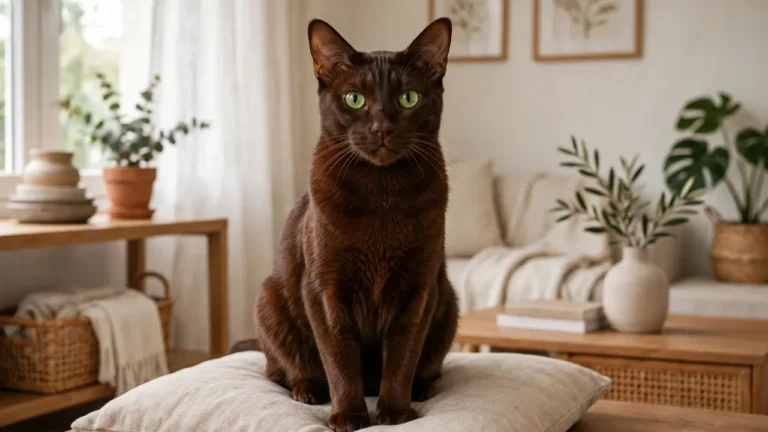
Thai Cat
Thai: the original Siamese
Chatty, clever, and devoted, the Thai preserves the classic look of the early Siamese. This complete breed guide covers its 700 year history, personality, care, and health.
By Emily Carter · Reviewed by our vet team · Updated 21 October 2026 · 11 min read
Lifespan 12–16 yrs Weight 8–15 lb Chatty & devoted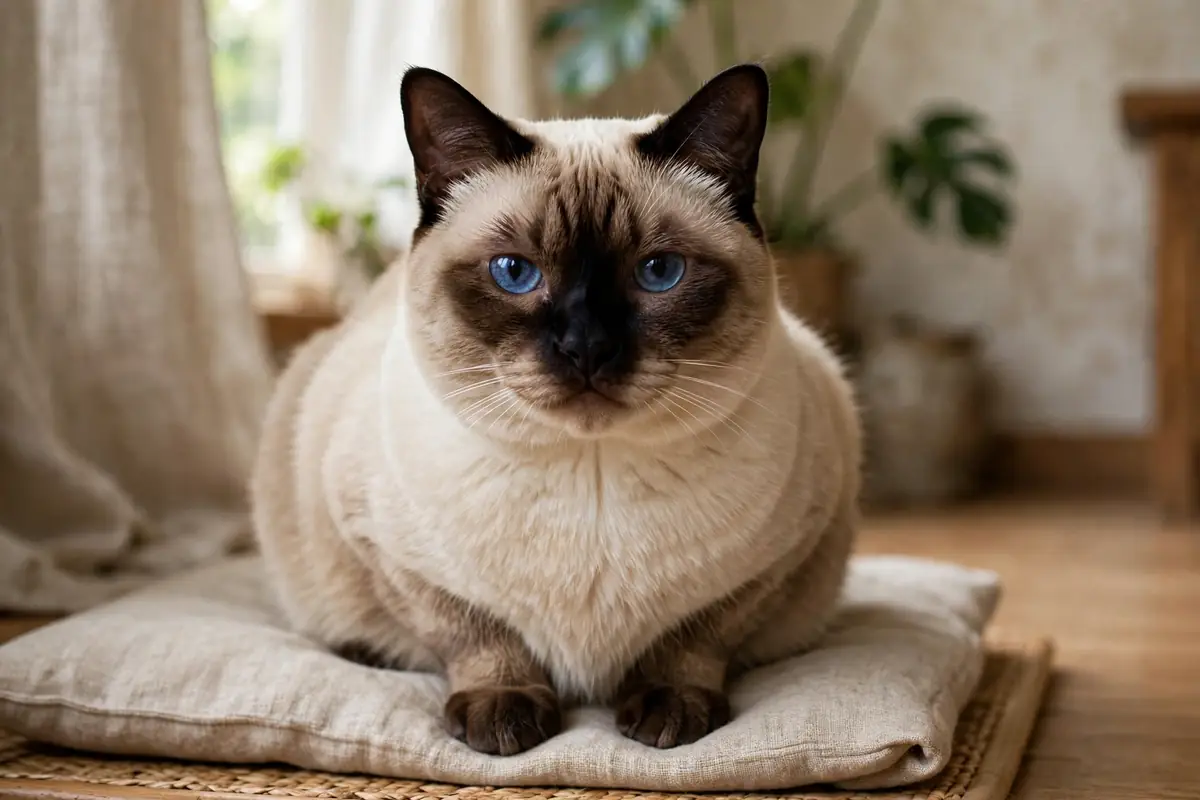
Before the modern Siamese became the slender, angular show cat we know today, there was the Thai cat: a moderate, rounded, blue eyed pointed cat cherished in Thailand for over 700 years. Known in its homeland as the Wichienmaat and elsewhere as the Old Style Siamese, the Thai preserves the original look of one of the world’s most beloved breeds.
This complete guide covers everything about the Thai cat: its ancient history, striking appearance, demanding but delightful personality, care needs, health, and whether this chatty companion is right for your home.
At a Glance
Size and Weight
The Thai cat is a medium sized cat, robust and cobby in build but never large or coarse.
Adults typically stand 10 to 12 inches tall and weigh between 8 and 15 pounds. The body is muscular and athletic, built for the active, playful life these cats lead. Despite the sturdy frame, the overall impression is one of elegance rather than bulk.
Coat and Colors
Every Thai cat wears the famous colorpoint pattern.
All Thai kittens are born snowy white. The points develop gradually as the kitten grows, thanks to the Himalayan gene behind the pattern. This gene causes temperature sensitive albinism: on warmer areas of the body the pigment never develops, leaving the coat pale, while on cooler areas like the ears, face, tail, and legs, the true color appears.
History and Origins
For at least 700 years the Wichienmaat — “moon diamond” — has been cherished in Thailand and recorded in the Tamra Maew cat poems.
Held in high esteem by Siamese royalty and believed to bring good luck, they were even given as diplomatic gifts.
In the 1880s the cats reached England, sent by the King of Siam, and won rapid popularity as the “Siamese.”
From the 1950s, breeders who preferred the moderate original preserved it while show breeding pushed the Siamese to an extreme.
Championship status under the name “Thai” came in 1990; from 2001, imports from Thailand protected the gene pool.
For at least 700 years, the Thai people have cherished a pointed breed called the Wichienmaat, which means “moon diamond” in Thai. Thailand’s famous Cat Poems, the Tamra Maew, record the breeding of these cats in the kingdom of Ayudhia, a tradition that continued as Ayudhia gave way to the kingdom of Siam and persists in modern Thailand today. These cats were held in high esteem by Siamese royalty, believed to bring good luck, and were even given as diplomatic gifts.
The Thai began to diverge as a separate breed in the 1950s, when breeders around the world chose to preserve the moderate, early 20th century type. By the 1980s, these moderate cats could no longer compete at shows against the extreme modern type, and the first breed clubs dedicated to the old style Siamese appeared in Europe and North America. In 1990, the World Cat Federation granted championship status under the name “Thai,” distinguishing the old type from the show style Siamese. Starting in 2001, breeders began importing indigenous pointed cats from Thailand to preserve a healthy gene pool. Preliminary New Breed status was granted in 2007, and the Thai advanced to Advanced New Breed in 2009.
Physical Characteristics
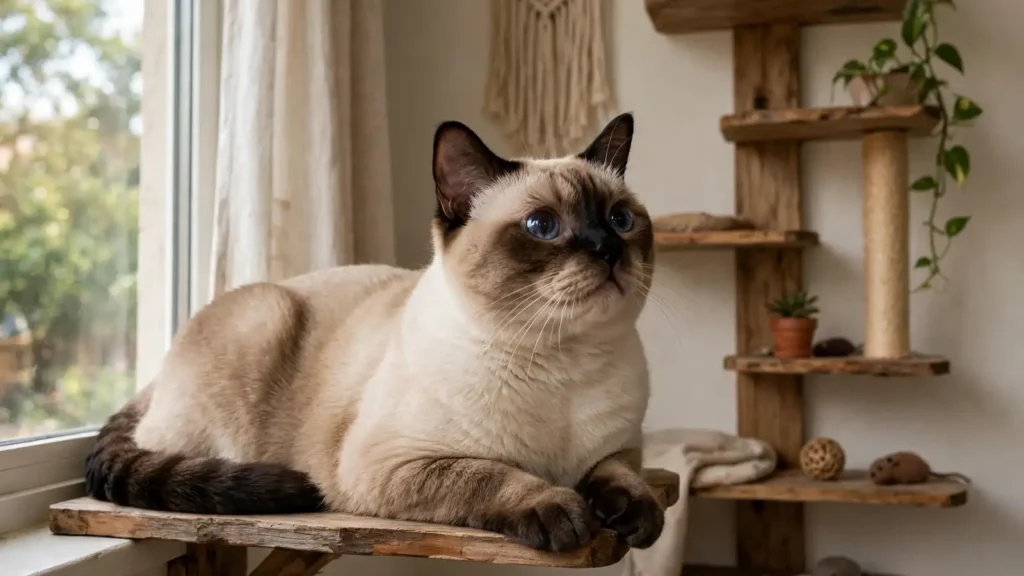
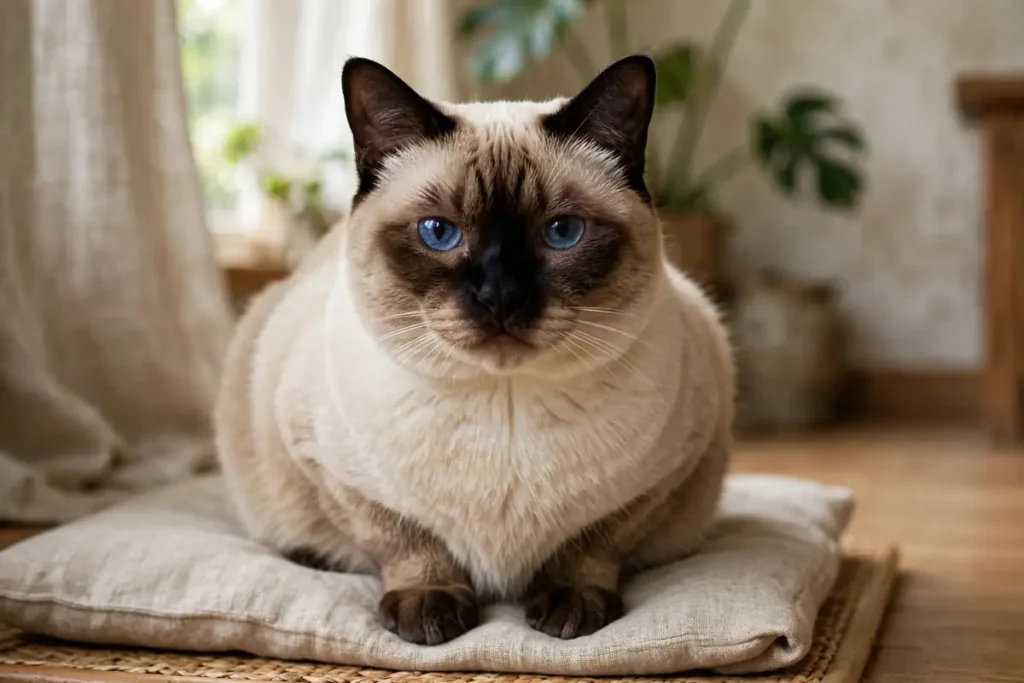
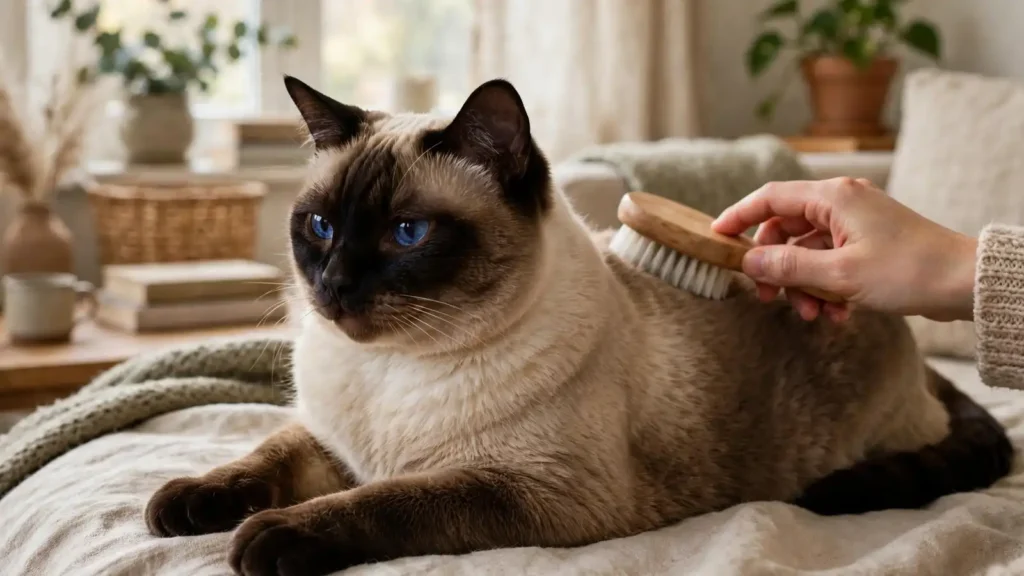
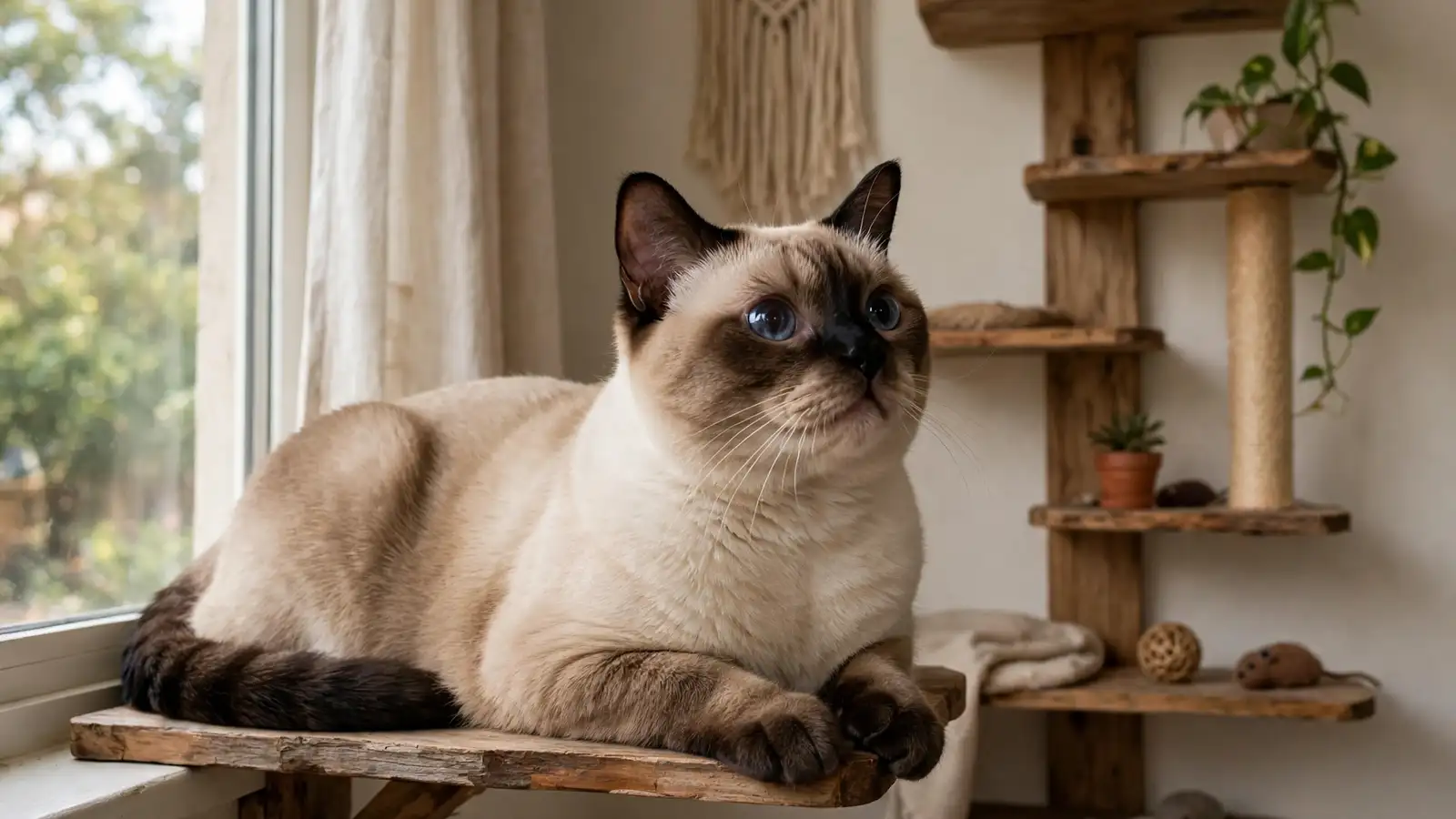
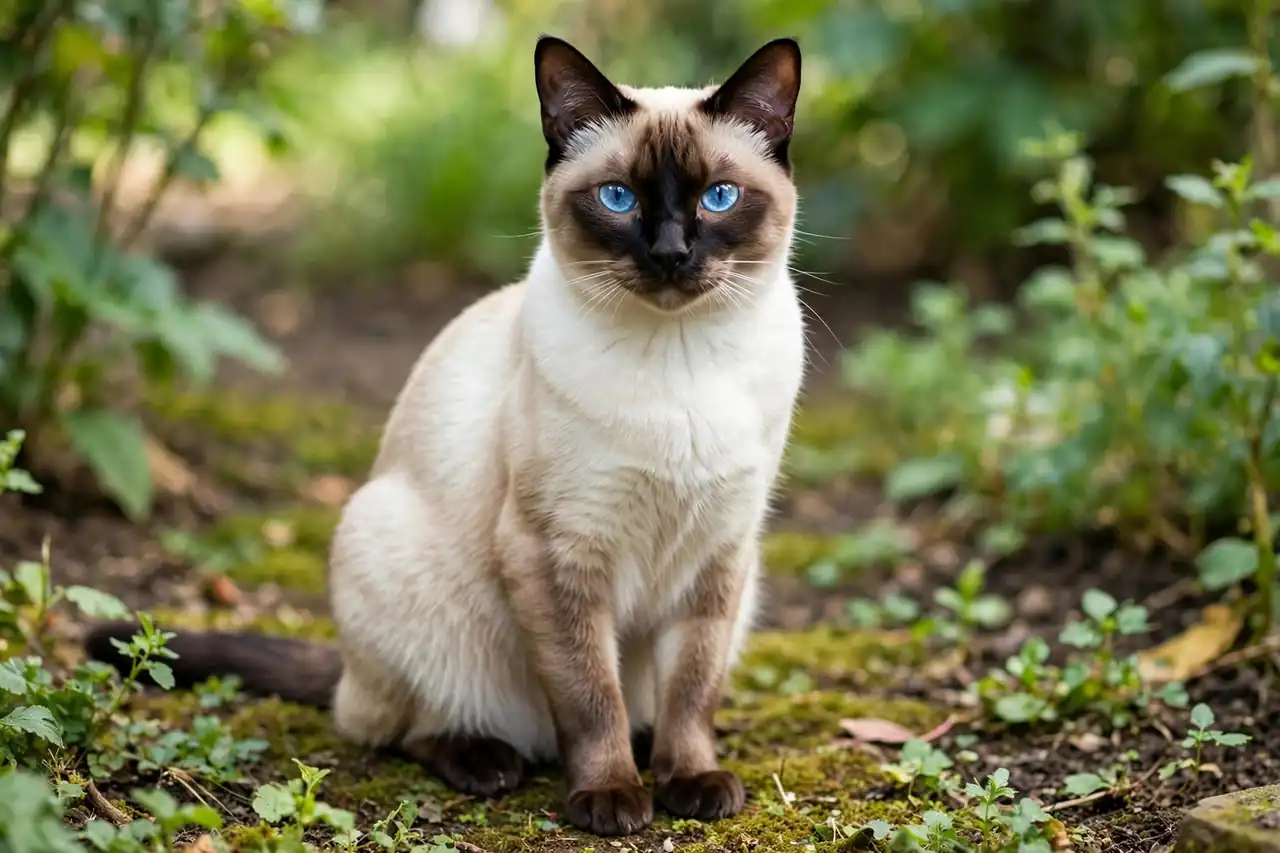
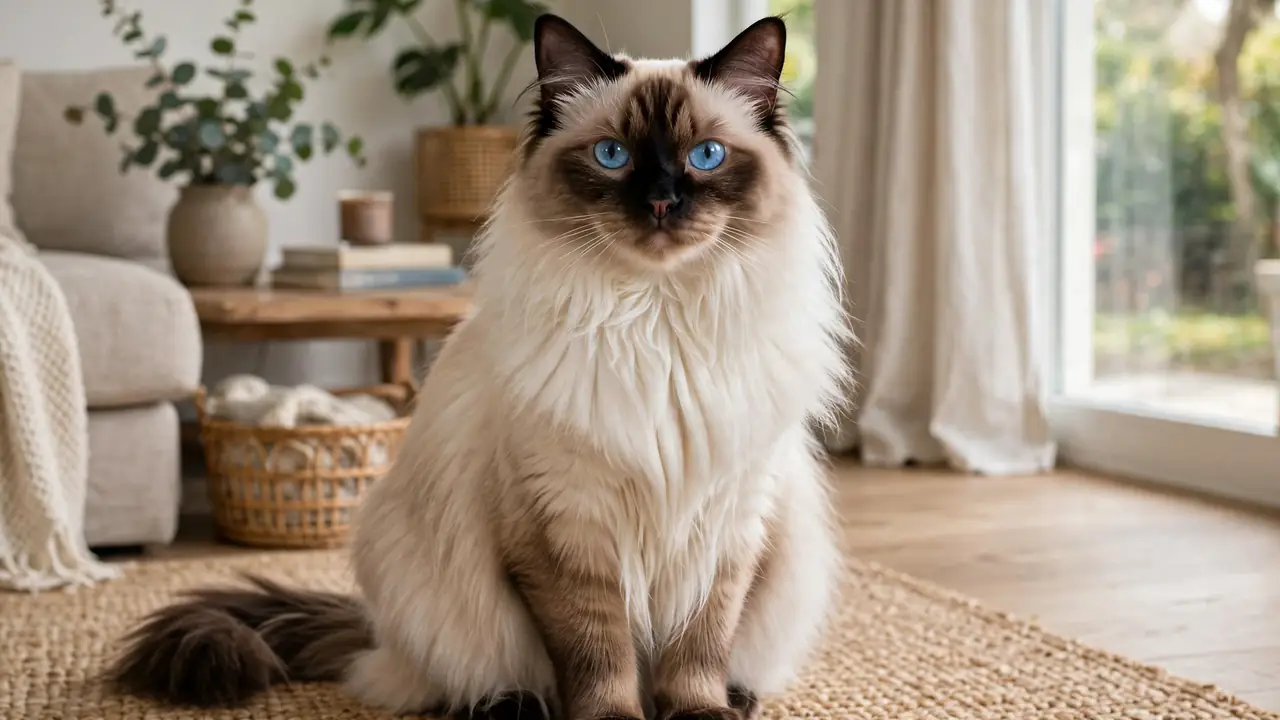
The body is a whitish beige, while the “points”, the ears, face mask, legs, and tail, show darker color. The eyes are a deep, striking blue. The coat itself is short, flat, and remarkably soft in texture, with a thin undercoat suited to the breed’s tropical origins.
The points can appear in almost any color, including seal, blue, chocolate, and lilac, in solid, tabby, or tortie variations. The head is the breed’s signature: a rounded, apple shaped head with large mobile ears, a wedge shaped muzzle, and a long flat forehead that distinguishes the Thai from the extreme wedge head of the modern Siamese. To some the Thai is synonymous with the “applehead Siamese,” though fanciers note that “applehead” is a colloquial American term, not an official breed name.
Thai Personality and Behavior
Living with a Thai is often compared to living with a small child: endlessly entertaining, occasionally exhausting, and never dull.
These Thai cats are highly intelligent, people loving, active, and curious, with a great sense of humor. They will get into everything you own, follow you from room to room, and appoint themselves your supervisor, “helping” with every task. Do not be surprised if you regularly fish your Thai out of the bathtub or extract paws from your coffee cup.
Thais are great talkers. They are not necessarily loud, but they are chatty, greeting you at the door with a running commentary on their day and conversing with you throughout it. They also communicate with taps of the paw and by jumping to the top of your shoulder and putting their face right in yours.
Here is the honest caveat: they are emotionally high maintenance. Physically they are easy, self cleaning with almost no grooming needed. But they need a response and daily attention from you. Without it, they suffer, and suffering, they act out. Leaving a Thai alone all day can make them stressed and anxious. They adore their families, sometimes bonding especially strongly with one person, and they thrive in homes where someone is around for most of the day.
They are playful well into adulthood, love climbing, and can be trained to walk on a leash, come when called, and even perform tricks like high five and roll over. They are also notably fond of travelling, though their preference for riding loose in the car is, of course, not safe.
Great talkers — expect a running commentary on their day, plus paw taps and face-to-face chats.
They follow you from room to room and appoint themselves your supervisor, helping with every task.
Physically easy, but they need a response and daily attention from you — without it, they suffer.
- Devoted and people loving
- Endlessly entertaining, with a great sense of humor
- Almost no grooming needed
- Demanding of time and attention
- Stressed and anxious when left alone all day
- Can be territorial with other cats
Care Essentials
High quality food with a high percentage of protein, matched to age and activity level.
A quick weekly brush — the short coat sheds minimally and almost never mats.
Simulated hunting games, climbing territory and rotating toys, plus puzzle feeders for that clever mind.
Someone around for most of the day; vertical territory and window perches indoors.
Nutrition and Diet
Thais are active and energetic, so choose a high quality food with a high percentage of protein to build lean, healthy muscle. Select food formulated for your cat’s age and activity level: kittens need far more energy per kilo than adults, while seniors need gentler formulas. Whether you choose wet food, kibble, or raw is a matter of your cat’s preference and your budget, with veterinary guidance.

Grooming
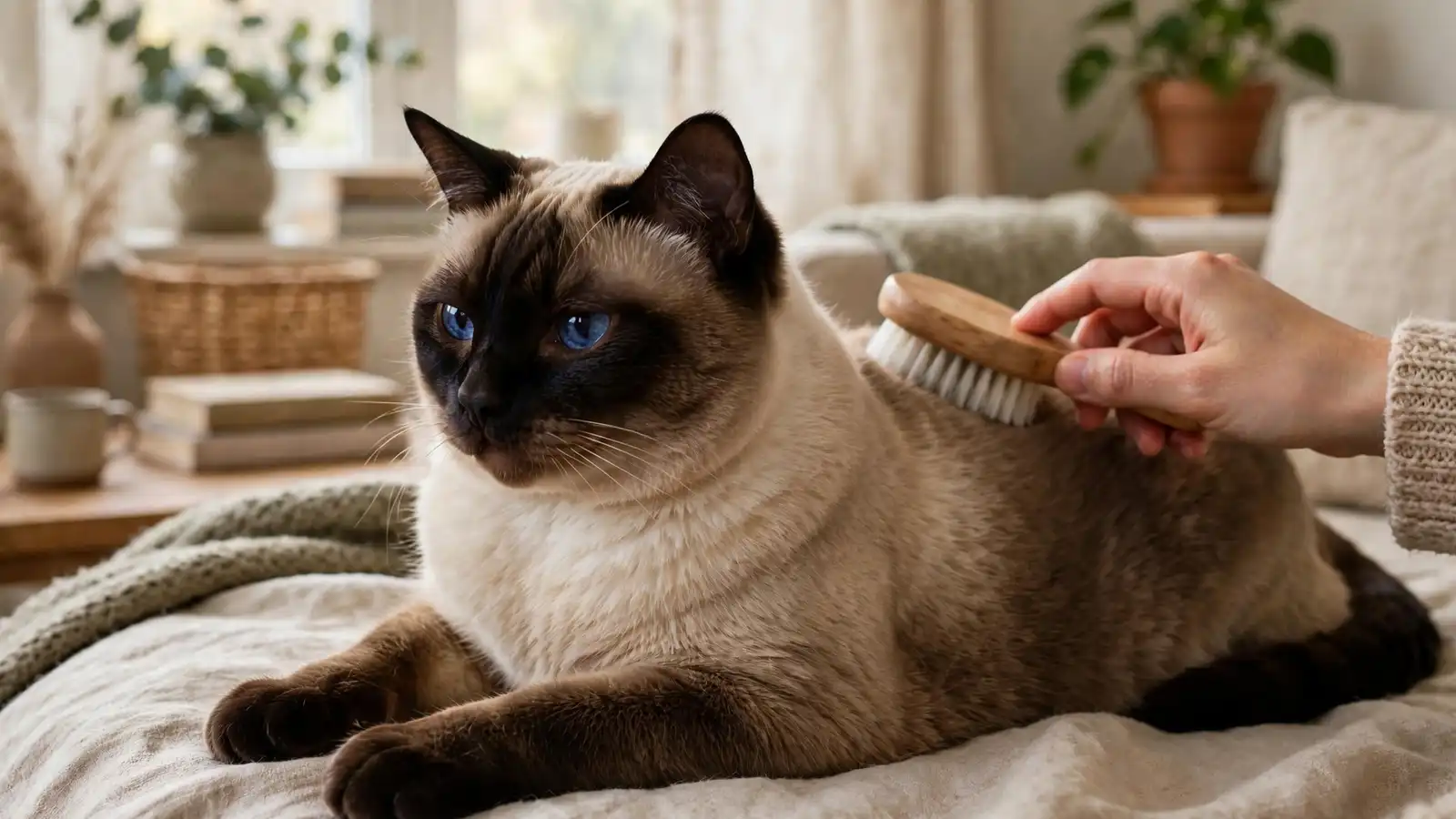
One of the easiest long term commitments in the cat world. The short, soft coat needs only a quick weekly brushing to stay in top condition. The thin undercoat means minimal shedding and almost no matting to worry about.
Exercise and Enrichment
This breed needs a high level of enrichment, including simulated hunting games and interactive play. Provide plenty of climbing opportunities, cat trees, wall shelves, or a sturdy cat condo, or your Thai will invent their own: bookshelves, wardrobes, and the top of the refrigerator are all fair game. Rotate toys to keep things fresh. Kicker toys, remote controlled toys, and catnip filled toys all go over well.
Mental challenge matters as much as physical exercise. Puzzle feeders and trick training sessions keep that clever mind occupied.

Health
The Thai cat is generally a healthy breed with a lifespan of 12 to 16 years, and no common breed specific disorders are reported.
Gingivitis and dental decay can affect Thais; regular tooth brushing and veterinary dental checks go a long way.
Portion control matters — left unresolved, excess weight can lead to joint issues and diabetes.
Keep vaccinations and parasite treatments current, and schedule yearly veterinary checkups.
Indoor and Outdoor Living
Thai cats suit a mix of indoor and outdoor life, but free roaming is risky for such a trusting, people focused breed. A secure garden or supervised outdoor time is the safer choice. Indoors, they need vertical territory and window perches to satisfy the climbing instinct.

Family Suitability
With the right household, yes, but this breed is not for everyone.
Thai cats love attention and do best with several people around to keep them entertained. Their curious, playful nature suits children who have been taught to interact with cats respectfully, and they are up for games and trick training sessions. They can adapt well to living with dogs, since a canine companion means they are never truly alone.
The cautions: they are demanding of your time and do not cope well in homes where everyone is gone all day. They can be territorial with other cats, so introducing a new cat to a resident Thai takes patience and slow, careful introductions with separate resources. Some Thais simply prefer not to share their home with another cat.
An experienced cat owner who works from home or has a busy household will get the best from this breed. If you want a calm, low maintenance cat, look elsewhere.
Finding a Breeder or Rescue
The Thai remains a rare breed, so patience is required.
There are not many breeders specializing in Thais, so expect a waiting list, and thai cat price information is best obtained directly from breeders since the rare breed has no standard market rate. You may need to register your interest before a litter is even born, and you may not get a choice of kitten sex. Look for breeders registered with major associations who health test their cats and raise kittens in the home.
Because the breed is uncommon, be cautious of sellers offering “Thai kittens” without pedigree documentation. A genuine Thai comes with registered papers tracing to recognized Thai lines.
- A genuine Thai comes with registered pedigree papers
- Health tested breeding cats
- Kittens raised in the home
- Expect a waiting list — the breed is rare
Quick Quiz: Is a Thai Right for You?
Answer four questions. Tap yes or no.
Thai vs Siamese
The Thai is essentially the original Siamese, preserved in its early 20th century form.
Frequently Asked Questions
Are Thai cats the same as Siamese cats?
Not exactly. The Thai preserves the original, moderate type of the early Siamese, while the modern Siamese has been bred for an extreme, stylized look. They are separate breeds with different standards.
What does Wichienmaat mean?
It is the breed’s name in Thailand, meaning “moon diamond” in Thai, a reference to the breed’s treasured status.
Are Thai cats hypoallergenic?
No. They have a short coat and shed moderately, but they produce the usual cat allergens.
Do Thai cats meow a lot?
They are chatty rather than loud. Expect frequent conversation throughout the day, but not the demanding yowl associated with some Siamese lines.
Are Thai cats good for first time owners?
They benefit from an experienced owner. Their emotional needs, energy, and demand for attention make them a challenging first cat, though a devoted beginner who is home often can succeed.
How long do Thai cats live?
Typically 12 to 16 years with good care.
The Thai cat is a living piece of history: the cat that enchanted Siamese royalty, crossed oceans with a king’s blessing, and survived a century of fashion to remain exactly what it always was. For the right owner, one with time, humor, and a tolerance for supervision, there is no more devoted or entertaining companion.
Similar Breeds Worth Exploring
Related Breed Guides
Keep Exploring
Keep exploring: the classic Siamese and the mellow Tonkinese in the guides above.