Abyssinian Cat Breed Guide
Abyssinian: athletic, bright, and always on the move
The Abyssinian cat is a slender, ticked-coated athlete with boundless curiosity. Playful, people loving, and endlessly entertaining, it suits active homes that enjoy an engaged companion.
By Emily Carter · Reviewed by our vet team · Updated 21 October 2026 · 12 min read
Lifespan 12–15 yrs Weight 6–10 lb Active & curious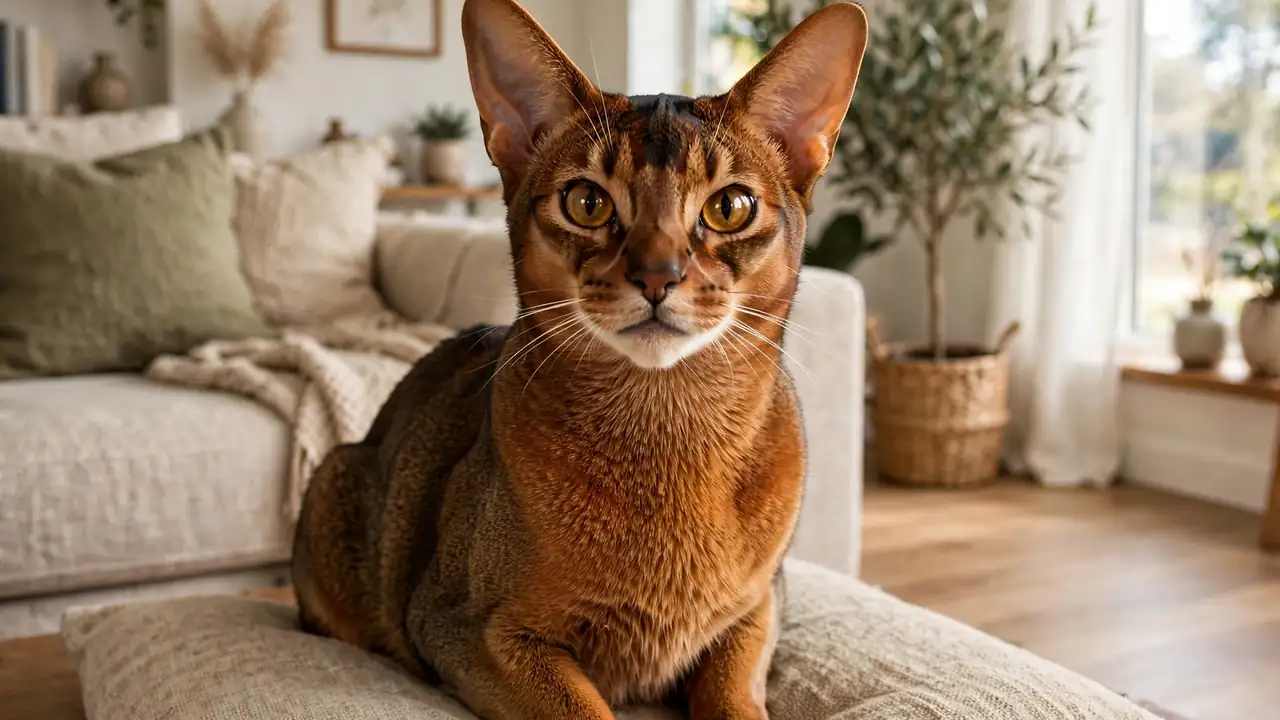
Everything about this cat says grace in motion.
At a Glance
Size and Weight
It is built like an athlete, not a couch companion.
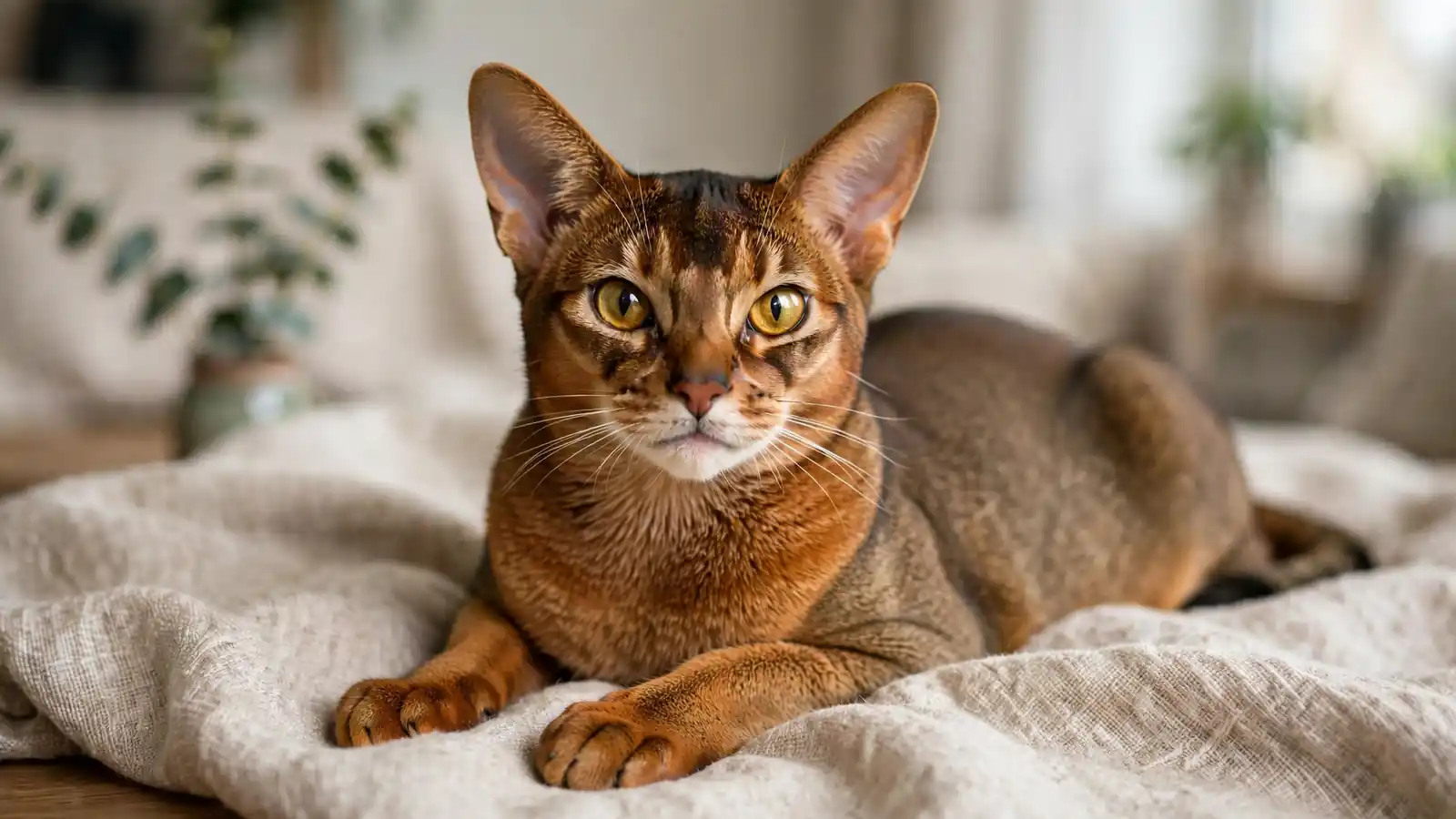
Most adults weigh between 6 and 10 pounds, which puts the breed squarely in the medium range. What stands out is not the number on the scale but how the weight is carried. The body is slender and muscular, with long legs, a tucked up midsection, and a fine bone structure that gives the cat a graceful, almost deerlike outline.
These cats move beautifully. They jump high, land softly, and cross a room like they own it. If you are used to stocky, heavy boned cats, the Abyssinian frame will feel noticeably light and nimble in your arms.
Coat and Colors
The coat is the first thing people notice about this breed, and it deserves a closer look.
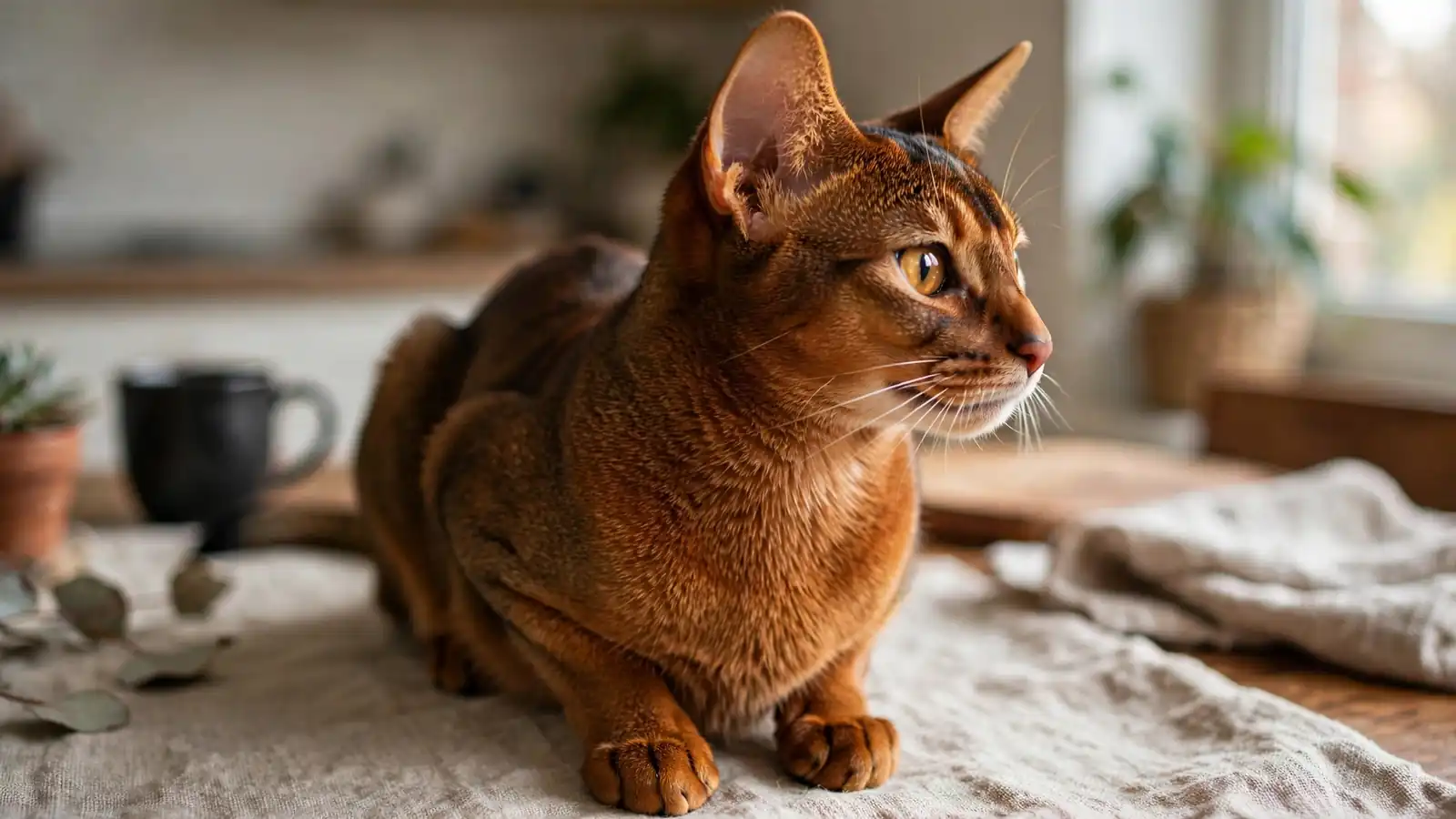
Each hair on an Abyssinian coat carries bands of alternating light and dark color, a pattern called ticking or agouti. The effect is a warm, shimmering finish that seems to glow in sunlight, quite different from the solid patches or stripes seen on most tabbies. True to the ticked pattern, the body itself shows almost no striping. You may spot faint tabby markings on the face, the ears, the tip of the tail, and sometimes the lower legs, but the torso stays smooth and even.
Abyssinian kittens are born with darker, woollier coats than they will carry as adults. The ticking sharpens and the true color settles in as the kitten matures, so a young kitten may look quite different from the adult it becomes. Patience pays off. The full richness of the coat develops over the first year or so of life.
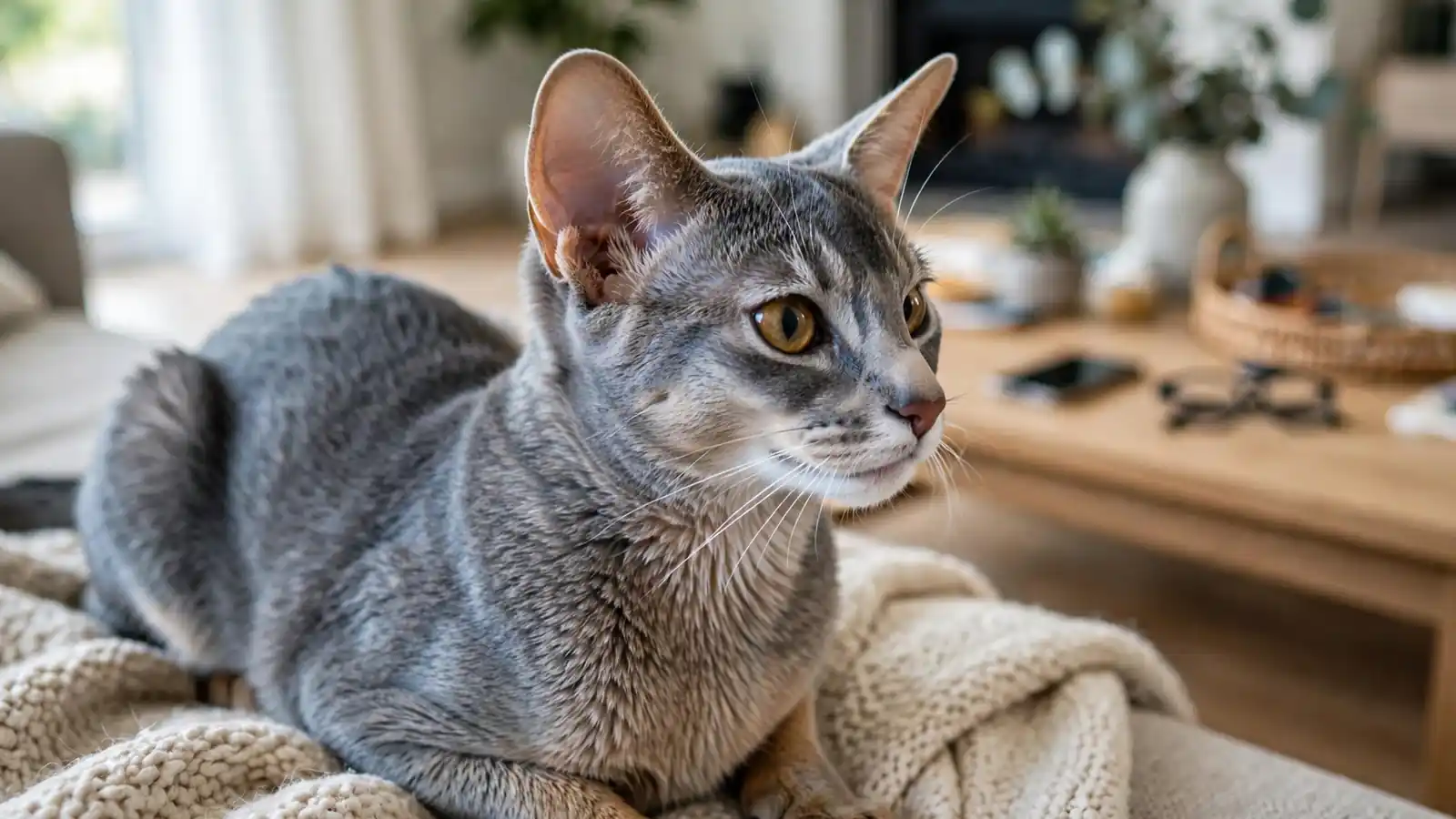
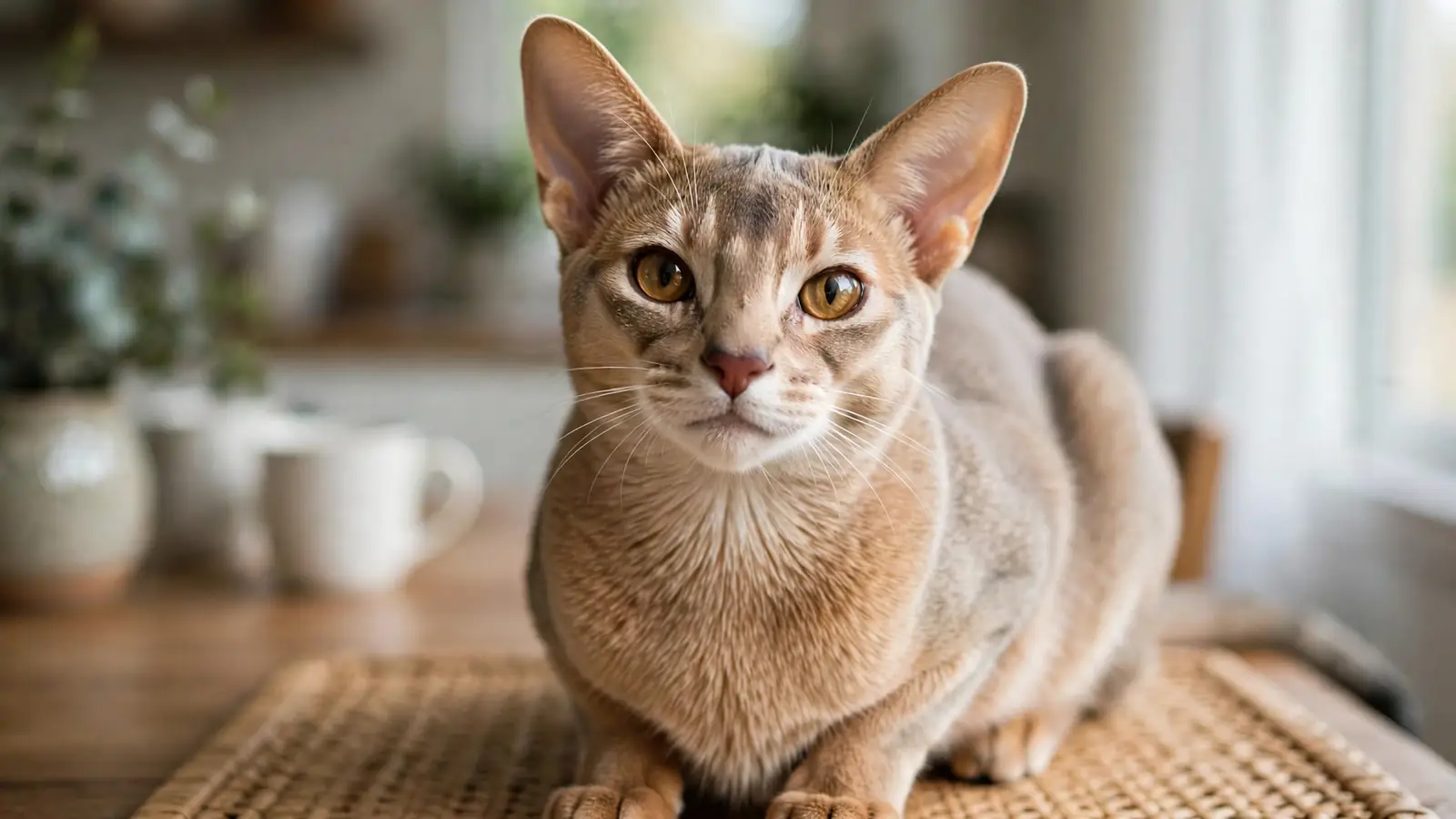
Four colors are widely accepted, and each has its own character:
- 𝐑𝐮𝐝𝐝𝐲: The classic Abyssinian color, featuring a warm golden-brown base coat with black or dark brown ticking that gives the fur a rich, glowing appearance.
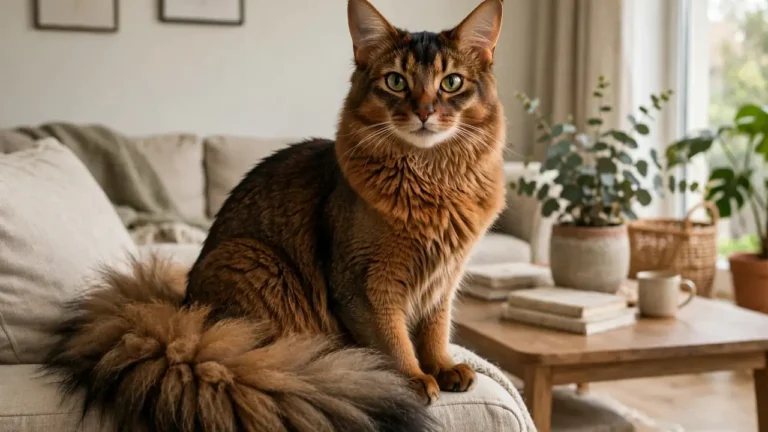
- 𝐑𝐞𝐝 (𝐒𝐨𝐫𝐫𝐞𝐥): A bright copper-red coat with chocolate-brown ticking, creating a warm, vibrant look that becomes richer as the cat matures.
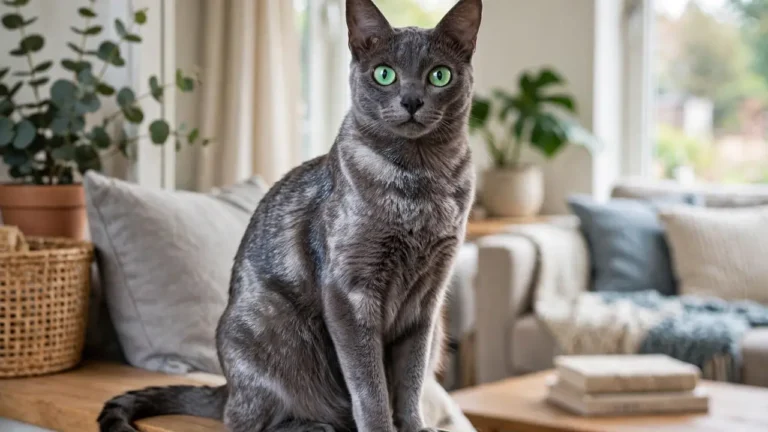
- 𝐁𝐥𝐮𝐞: A soft, warm blue-gray coat with deeper slate-blue ticking, giving the Abyssinian an elegant, muted appearance.
- 𝐅𝐚𝐰𝐧:The palest color variety, with a delicate rosy-beige base and light cocoa ticking that creates a soft, subtle look.
History and Origins
Counted among the oldest known cat breeds in the world, and its distinctive look has changed remarkably little over the decades.
The name comes from Abyssinia, the old name for Ethiopia, where early examples of the breed were said to originate.
Many historians now believe the breed developed along the Indian Ocean trade routes, possibly with roots in Southeast Asia.
From the trade routes, the breed made its way to Britain, where its story continued.
Few breeds carry as much mystery as this one.The name comes from Abyssinia, the old name for Ethiopia, where early examples of the breed were said to originate. The true story is less certain. Many historians now believe the breed developed along the Indian Ocean trade routes, possibly with roots in Southeast Asia, before making its way to Britain. What is not debated is the breed’s age. The Abyssinian is counted among the oldest known cat breeds in the world, and its distinctive look has changed remarkably little over the decades.
Physical Characteristics
The head is a soft wedge shape with large, pointed ears set wide apart, giving the cat an alert, almost regal expression. The eyes are almond shaped and come in amber, gold, or green, often ringed with a darker outline that makes them look even more striking. The body is medium in length, lithe, and muscular, carried on long, slim legs with small oval paws. The tail is long and tapering, thick at the base and narrowing to a point, and it moves constantly when the cat is excited or curious.
Abyssinian Personality and Behavior
Abyssinians love to run, jump, climb, and explore their surroundings. They need daily exercise and interactive play.
Expect your cat to claim the top of the refrigerator, high shelves, and tall furniture as its personal lookout.
They often follow their owners from room to room, supervise chores, and want to be part of whatever is happening.
- Playful, curious and endlessly entertaining
- Deeply people oriented
- Low grooming — a weekly brush is plenty
- Needs daily exercise and interactive play
- Dislikes solitude — struggles with long isolation
- Mischievous investigators get into everything
Care Essentials
Measured meals matched to activity level, with fresh water always available.
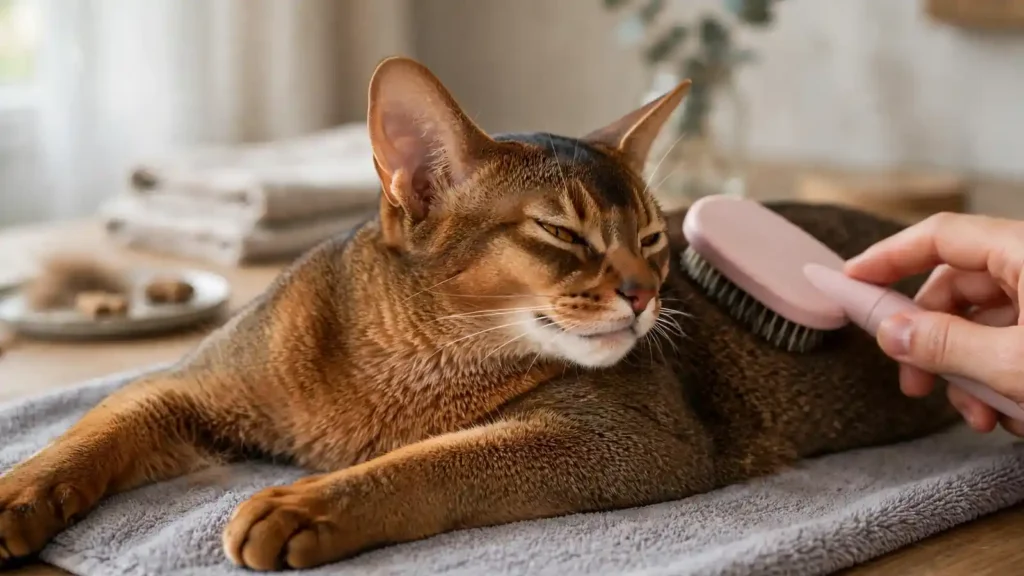
A quick weekly brush with a soft brush or grooming mitt is plenty.
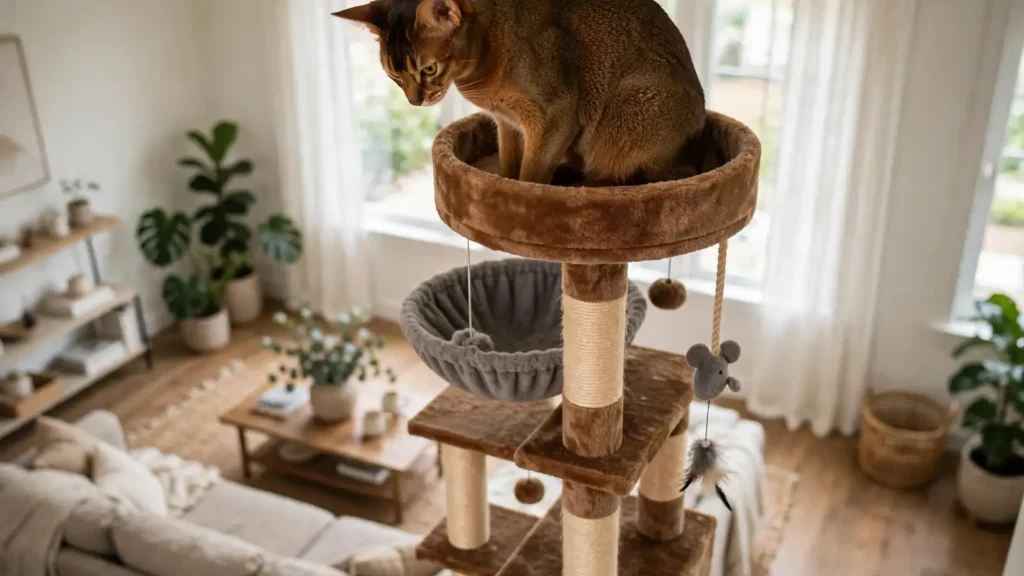
Real playtime every day — tall cat trees and wall shelves satisfy the climbing urge.
Someone home most of the day suits this breed best; secure windows and dangling cords.
Nutrition and Diet
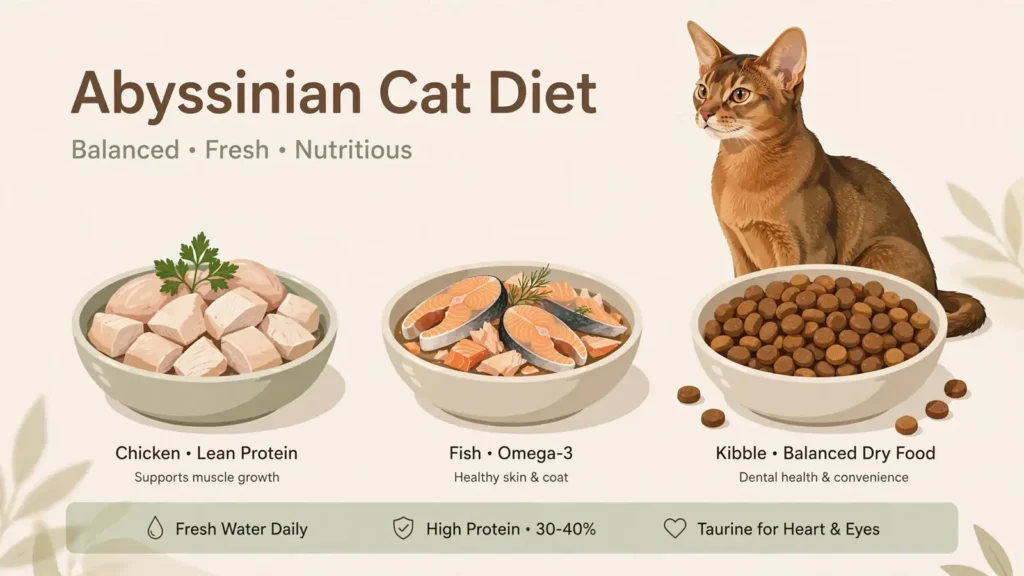
Feed a complete and balanced diet suited to your cat’s age, whether kitten, adult, or senior. Because these cats burn so much energy racing around the house, most individuals do well on measured meals that match their activity level. Fresh water should always be available, and many owners find their Abyssinian prefers running water from a fountain. Keep treats modest and talk to your veterinarian about portions as your cat moves through life stages.
Grooming
This is where the breed truly spoils its owners.The short, fine, close lying coat needs very little work. A weekly brushing with a soft brush or grooming mitt removes loose hair and keeps the ticking looking sharp. Trim the nails every couple of weeks, check the large ears for wax buildup now and then, and keep up with dental care as your veterinarian recommends. Compared with long coated breeds, grooming an Abyssinian feels almost effortless.
Exercise and Enrichment
A bored Abyssinian cat is a creative one, and you may not love the results.
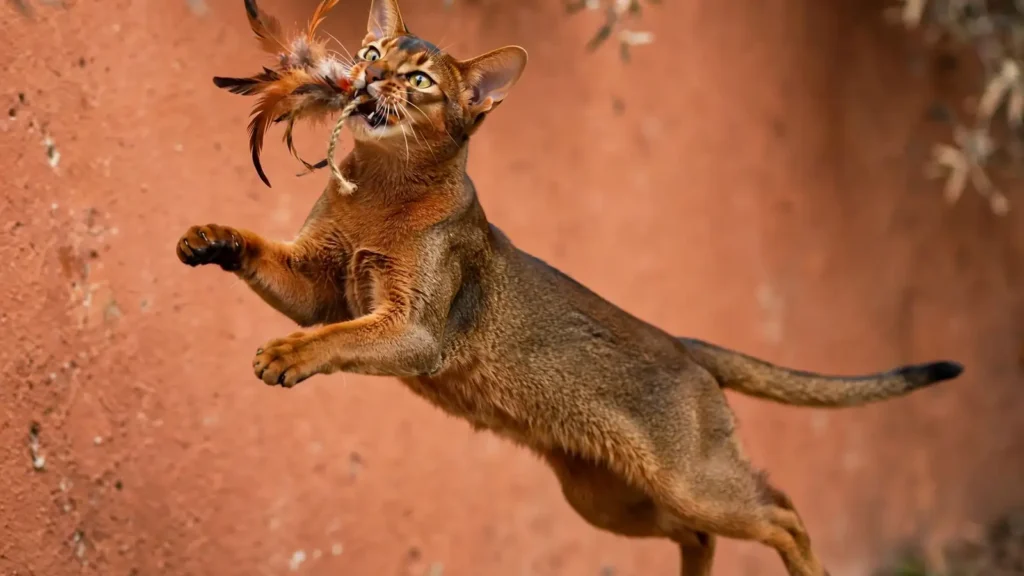
Think vertical. Tall cat trees, window perches, and secure shelving turn your home into the playground this breed craves. Puzzle feeders make mealtimes mentally engaging, and a rotating cast of wand toys, balls, and crinkle toys keeps play fresh. Two focused play sessions a day, morning and evening, go a long way toward a content cat.
Health
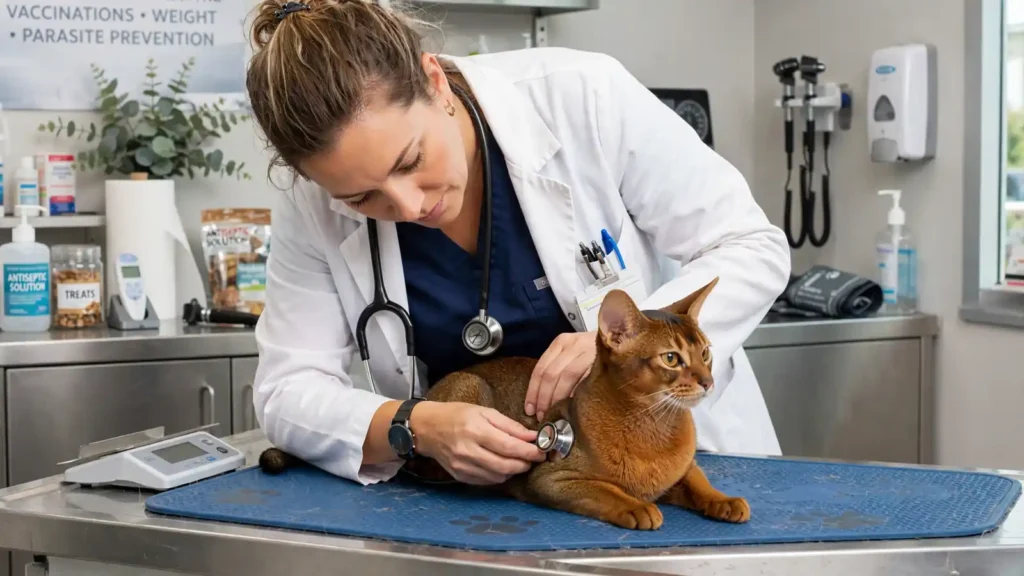
With good care, it typically lives 12 to 15 years. Like many pedigreed cats, the breed carries a higher risk for certain inherited conditions. Progressive retinal atrophy causes gradual vision loss over time. Pyruvate kinase deficiency is a red blood cell disorder that can lead to anemia. Renal amyloidosis involves protein deposits that affect kidney function. None of these are certainties for any individual cat, but they are reasons to choose a breeder who screens breeding cats and shares health records openly. Regular veterinary exams catch small issues before they grow.
Causes gradual vision loss over time.
A red blood cell disorder that can lead to anemia.
Involves protein deposits that affect kidney function.
Indoor and Outdoor Living
The outdoors is tempting, but the safest adventures happen inside. An indoor life suits the Abyssinian well. Its curiosity, which is one of its best traits, becomes a liability near traffic, unfamiliar animals, and other outdoor hazards. A screened catio, an enclosed balcony, or a secure garden run offers fresh air without the risks. Some owners successfully train their Abyssinians to walk on a harness for supervised outings, which can be a wonderful compromise for a cat that watches the world go by from the window.
Family Suitability
The Abyssinian cat is a wonderful match for active families who enjoy playtime and daily interaction. Gentle children who respect a cat’s boundaries and homes with cat-friendly pets can be a good fit. However, this energetic breed needs plenty of exercise, climbing opportunities, and companionship. Families who are away most of the day or prefer a quiet, low-maintenance pet may find an Abyssinian demanding.
Finding a Breeder or Rescue
Take your time with this step. It matters more than anything else here.
A responsible breeder will welcome your visit, let you meet the kitten’s mother, and show you a clean, lively home environment. Ask which health screenings the breeding cats have had and expect straightforward answers with paperwork to back them up. A written agreement covering health guarantees and return policy is a good sign. Breed specific rescues and general shelters also rehome Abyssinians and Abyssinian mixes, so adoption is well worth exploring. Avoid impulse purchases from unverified sellers, no matter how tempting the kitten in the photo looks.
- Ask which health screenings the breeding cats have had — expect paperwork
- Meet the kitten’s mother and see a clean, lively home
- A written agreement covering health guarantees and return policy
- Consider breed specific rescues and shelters too
Quick Quiz: Is a Abyssinian Right for You?
Answer four questions. Tap yes or no.
Frequently Asked Questions
Are Abyssinian cats good for first time owners?
They can be, provided you are home often and genuinely enjoy an interactive pet. Their energy and need for company make them a better match for engaged owners than for households wanting a low maintenance, independent cat.
Do Abyssinian cats shed a lot?
No. The short, fine coat sheds lightly, and a weekly brushing keeps loose hair under control. You will notice far less hair around the house than with most breeds.
Are Abyssinian cats hypoallergenic?
No cat is truly hypoallergenic. Abyssinians shed less than many breeds with heavier coats, which some allergy sufferers find easier to live with, but spend time around the breed before making a decision.
How long do Abyssinian cats live?
Around 12 to 15 years with good nutrition, regular veterinary care, and a safe indoor life.
Are Abyssinian cats lap cats?
Affectionate, yes. Lap cats, not quite. They would rather perch beside you, supervise your work, or play at your feet than sit still for long cuddle sessions.
What colors do Abyssinian cats come in?
Ruddy, red (also called sorrel), blue, and fawn. Every color shows the breed’s signature ticked pattern, with each hair banded in alternating light and dark shades.
Are Abyssinian cats expensive?
Yes, Abyssinian cats can be expensive, with kittens from reputable US breeders often costing $1,200 to $2,800. Food, vet visits, toys, and routine care add to the overall cost.
Is the Abyssinian cat rare?
The Abyssinian cat is not considered extremely rare, but it is less common than popular breeds like the Persian or domestic shorthair. Finding a reputable breeder may take time, depending on your location.
The Abyssinian cat is a wonderful match for active families who enjoy playtime and daily interaction — a slender, ticked-coated athlete with boundless curiosity that turns every day into an adventure.
Similar Breeds Worth Exploring
Related Breed Guides
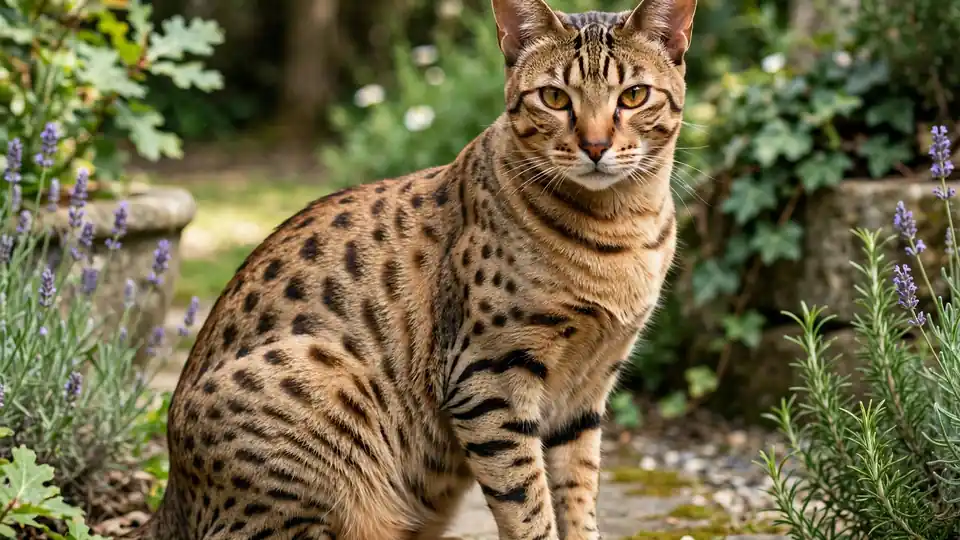
- Ocicat Cat Breed Guide
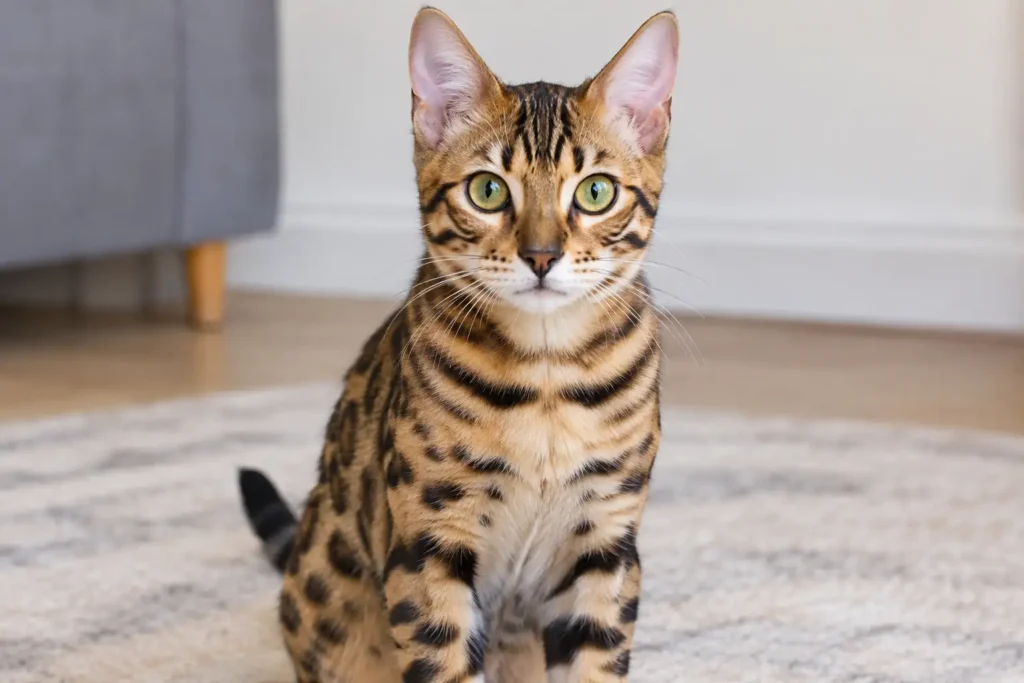
- Bengal Cat Breed Guide
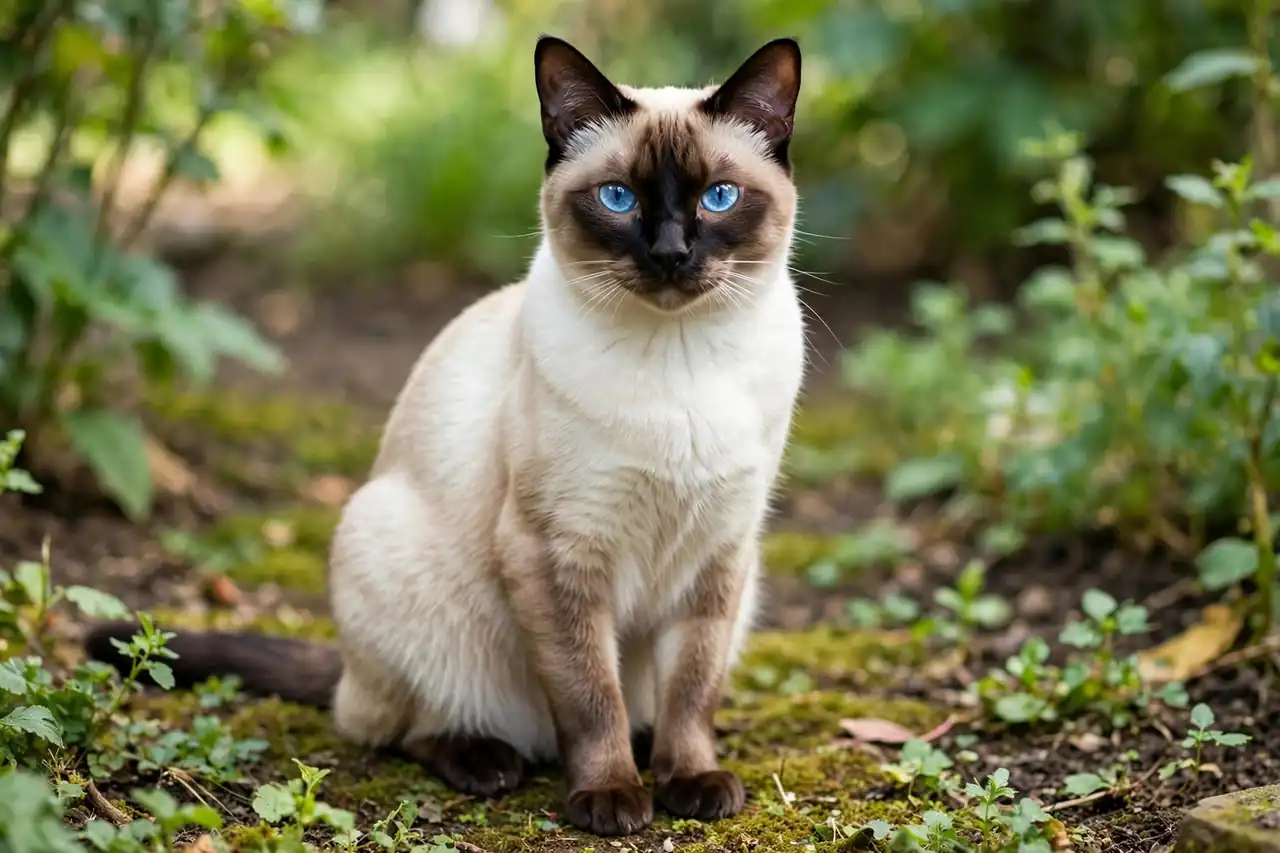
- Siamese Cat Breed Guide
- Singapura Cat Breed Guide
- Somali Cat Breed Guide
Keep Exploring
Browse the full A to Z cat breed collection to compare personalities, or find out your cat’s age in human years with the cat age calculator.