Yellowfin Tuna
Yellowfin Tuna: the golden-finned sprinter of the warm seas
The yellowfin tuna is a masterpiece of warm-water engineering: a torpedo of muscle wrapped around one of the fastest tailbeats in the ocean. Fish counters and sushi menus know it as ahi, but out in the blue it is something better — a travelling, schooling hunter whose long yellow fins trail behind it like pennants. Here is how big it grows, where it lives, what it eats and how to tell it from its famous bluefin cousin.
By Emily Carter · Reviewed by our vet team · Updated 10 November 2026 · 9 min read
Length up to 2.1 m (7 ft)Weight up to 180 kg (400 lb)Sold worldwide as ahi
At a Glance
The yellowfin tuna is one of the great travellers of the warm oceans, a fish that thinks nothing of crossing an entire sea basin in a single season. It is also one of the most valuable wild fish on Earth, which means its story mixes pure animal wonder with real pressure from the fleets that hunt it. To know this fish properly, start with its sheer physical presence.
Yellowfin Tuna Size and Weight
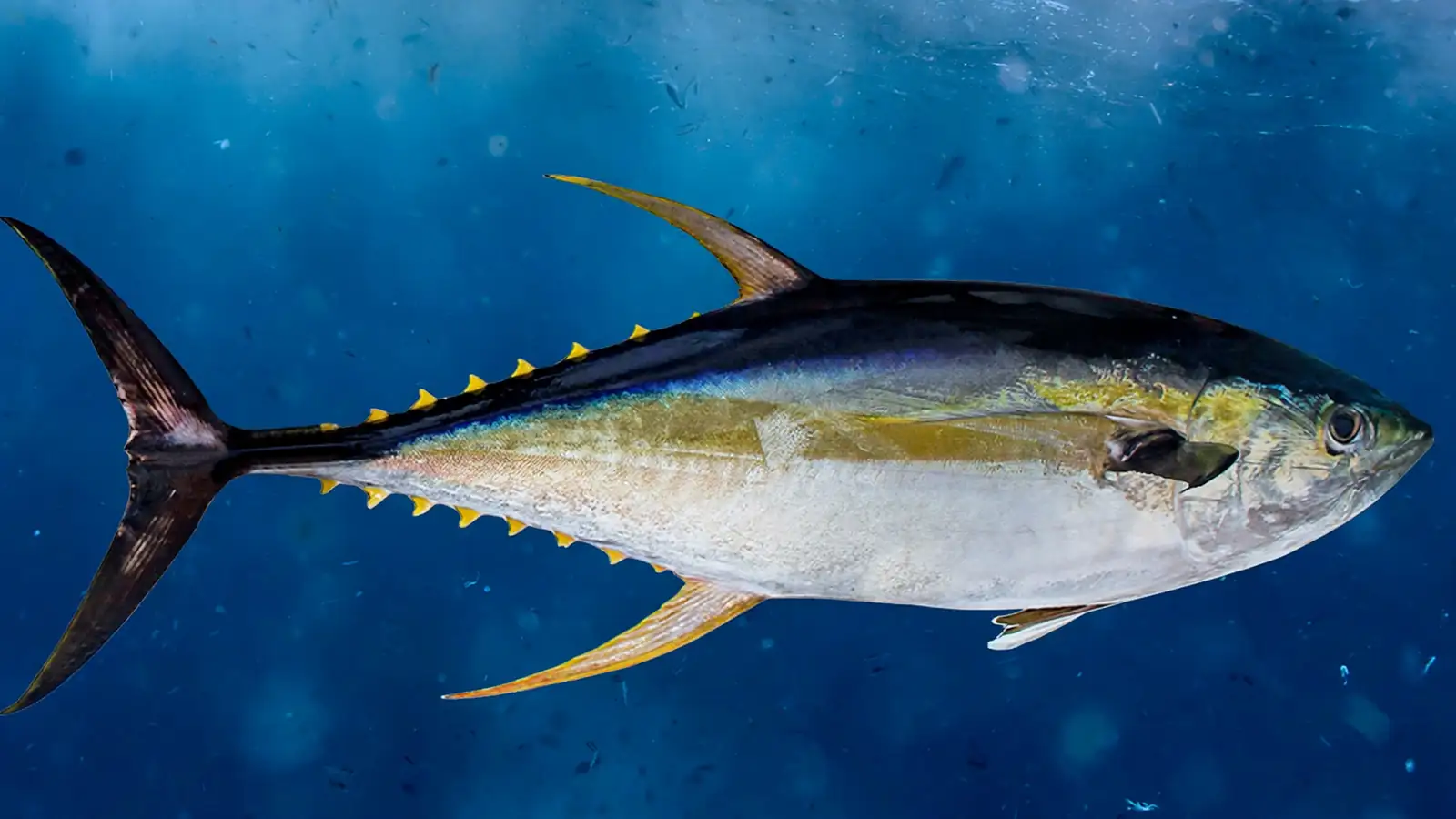
A This fish is a serious animal. The largest individuals reach about 2.1 metres (7 feet) from nose to tail fork and weigh in the region of 180 kilograms (400 pounds) — heavier than two adult men. Most of that weight is muscle. The body is deepest just behind the head and tapers to a narrow, keeled tail stalk, a shape built to push water aside with the least possible waste.
Growth is fast by fish standards. Young yellowfin in warm, food-rich water can pass a metre in length within their first two years, and fish are mature enough to spawn at around two to three years of age. After that the growth slows, and the real giants are older fish of five years and up. Lifespan estimates vary by ocean and by study, but most put the species in the region of seven to twelve years. That is a short, fast life compared with its bluefin cousin, which can live for decades.
Under the skin sits the machinery of an athlete. Like other tunas, this species keeps its swimming muscles warmer than the surrounding water, which lets the muscles contract faster and more powerfully. It is one reason a yellowfin can accelerate so violently when it hits a bait ball, and why it can keep travelling day and night without rest.
Ahi Tuna: How to Identify a Yellowfin
The name is the field guide. In a big adult yellowfin, the second dorsal fin on the back and the anal fin beneath it grow far beyond the proportions of any other tuna, sweeping out into long, bright yellow sickles that can reach a fifth of the body length. Behind them runs a row of small finlets, yellow with dark edges, like flags along the tail stalk. If the rear fins look extravagantly long and yellow, you are looking at a yellowfin.
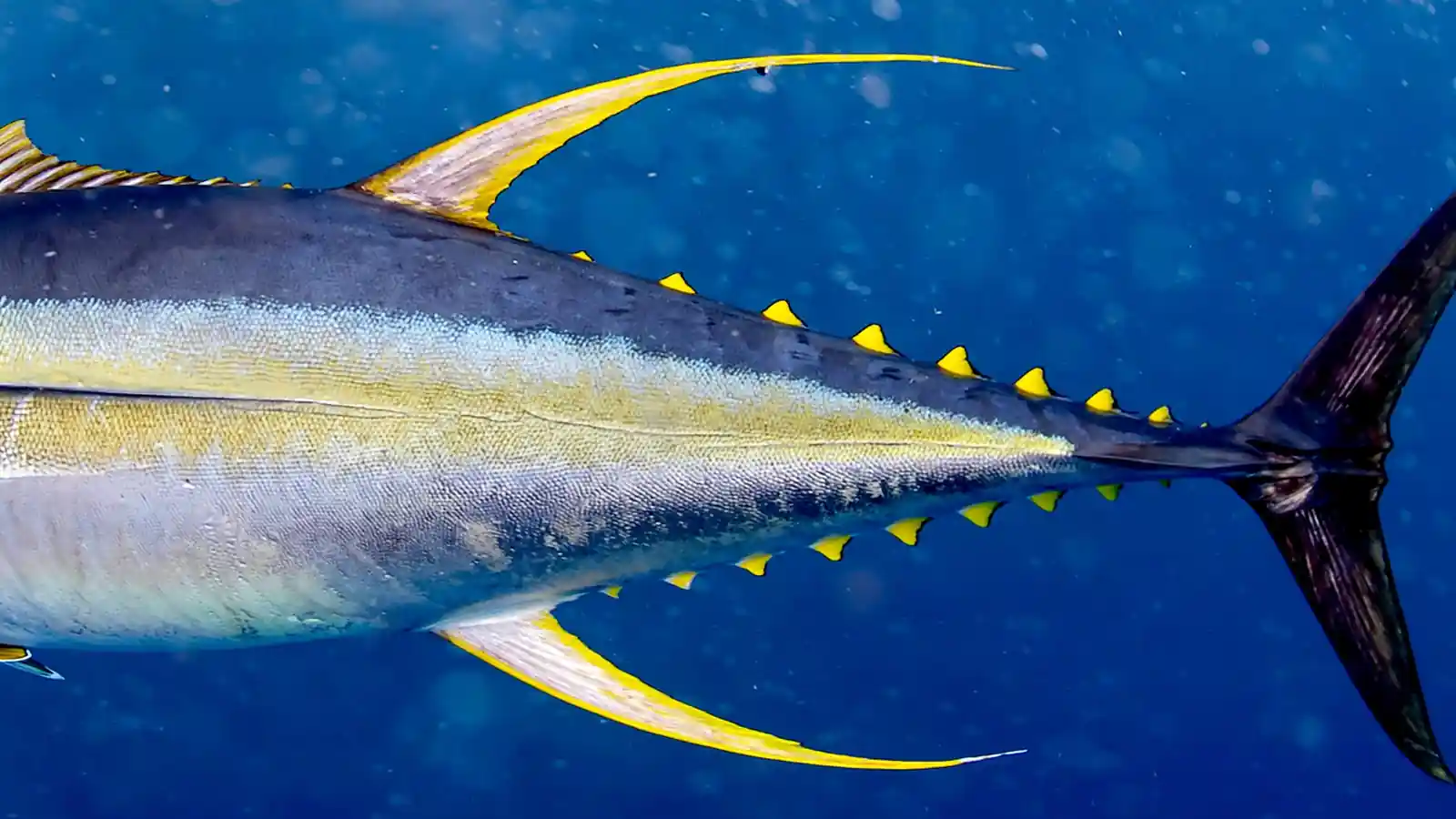
Juveniles are trickier, because the famous fins are still short, and young yellowfin are easily confused with young bigeye tuna. The giveaways are a slimmer, more torpedo-shaped body, a comparatively longer snout region and the absence of the bigeye’s deeper, heavier chest. On the fish counter the whole fish is rarely seen, which is why the market name matters: ahi on a menu is this species, while bluefin is usually sold under its own name at a far higher price. You can browse the full species record for Thunnus albacares to compare its measurements and fin counts with the other tunas.
Colour helps too. A living yellowfin is dark metallic blue above and silver below, split by a golden-yellow band along the flank that glows when the fish is excited or hunting. Like many open-ocean fish it is countershaded: dark from above to hide from seabirds, bright from below to vanish against the sunlit surface for anything hunting from underneath.
Where Do Yellowfin Tuna Live?
They live in warm water, full stop. Their range covers the tropical and subtropical belts of the Atlantic, Pacific and Indian Oceans — the only major sea they avoid is the Mediterranean. Within that huge range they are creatures of the upper ocean, spending most of their time in the top 100 metres where sunlight keeps the water warm and prey is plentiful.

They are not tied to coasts. A yellowfin may feed along a reef edge one month and be a thousand kilometres offshore the next, following temperature fronts where warm and cooler water meet and baitfish gather. Tagging studies have tracked individuals across entire ocean basins, although many populations also show loyalty to productive home regions such as island chains and upwelling zones.
Depth is a tool rather than a home. Yellowfin mostly cruise the mixed layer, but they regularly make short, fast dives to 200 metres or more to hunt squid and fish that hide in the cool water below, then return to the warmth to recover. That daily commute between warm surface and cold depths is possible because of the heat-exchange system in their muscles, which protects their core temperature while they raid the deep.
Diet and Feeding Frenzies
A yellowfin is an opportunist with a huge appetite. Its diet covers whatever the upper ocean offers: anchovies, sardines and other small schooling fish, young mackerel and flying fish, squid of many sizes, and crustaceans including pelagic red crabs where swarms of them occur. A big adult needs to eat a significant share of its own body weight every week just to fuel its warm muscles and constant motion.
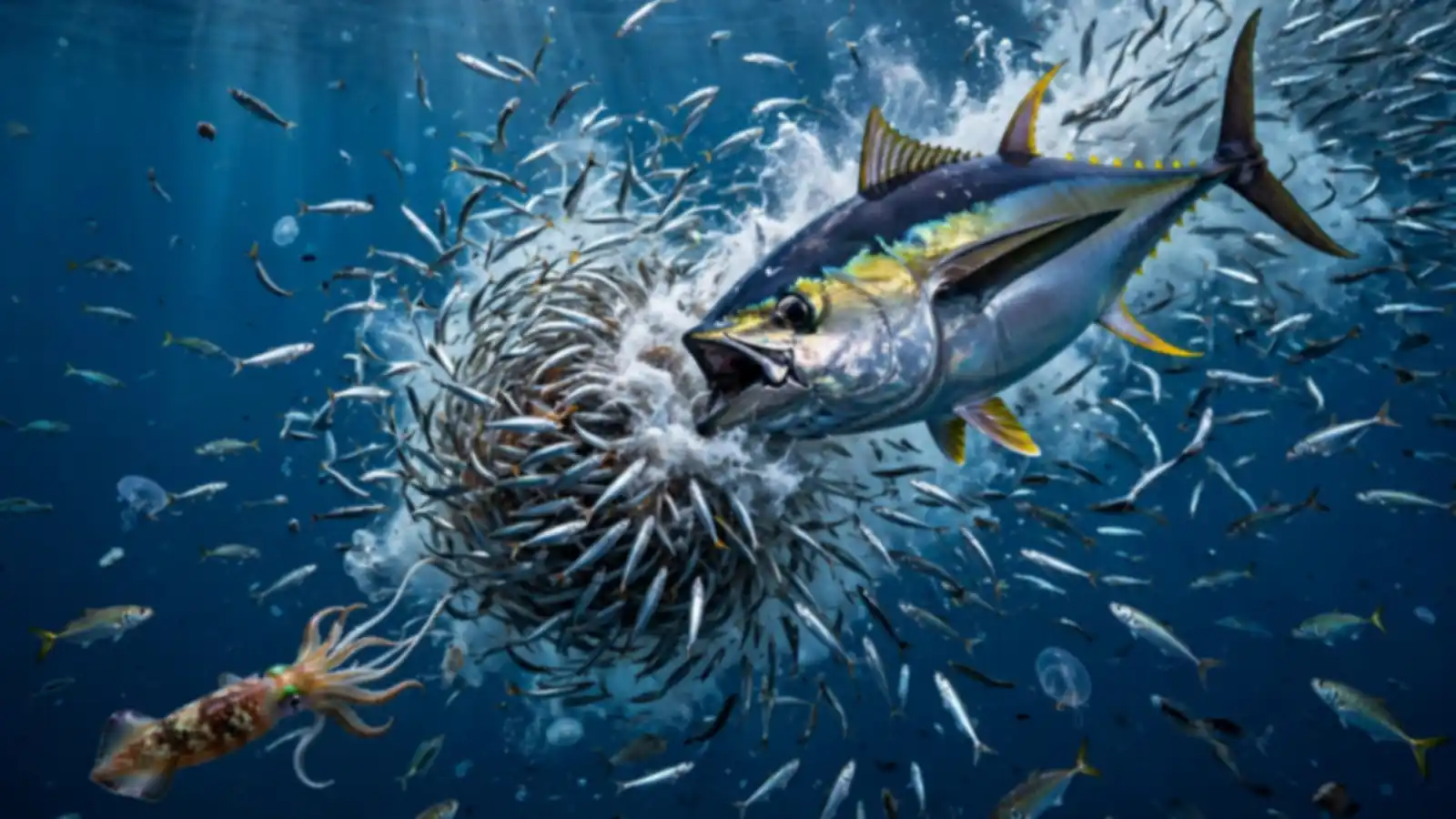
The classic hunt happens at a bait ball. Working with other tuna, and often with dolphins that find the prey first, the school drives small fish upward until they pack into a tight, spinning ball against the surface. Then individual tuna charge through the ball at speed, mouths open, snapping up fish on every pass. Seabirds rain down from above, and for a few frantic minutes the whole food web feeds in one place.
Feeding is mostly visual, so yellowfin hunt hardest at dawn and dusk and through the day. At night they slow down, rise closer to the surface and drift with the school. That rhythm — frenzy by day, rest by night — shapes everything from their eye size to the way fishing fleets, which work the same hours, find them.
Schooling, Dolphins and Life Cycle
Yellowfin are schooling fish for most of their lives. Young fish travel in large schools, often mixed with skipjack tuna of similar size, while the biggest adults form smaller, looser groups or roam with just a few companions. In the eastern Pacific, schools famously travel beneath pods of dolphins — an association so reliable that fleets once used the dolphins to find the tuna, with tragic results for the dolphins before fishing methods changed.

Spawning happens in warm surface water, mostly in the summer months of each hemisphere, and in the tropics it can continue almost year-round. A large female releases millions of tiny eggs into the current across multiple batches in a season. The eggs hatch within about a day, and the larvae drift in the plankton, growing fast on tiny crustaceans before graduating to small fish.
It is a numbers game played at staggering scale. Almost every egg and larva is eaten, but a single female produces so many that the few survivors are enough. The young that do make it join schools of their own size class and begin the travelling life, growing a kilogram a month in good conditions.
Mercury and Conservation
Because it sits high in the food web and lives for years, this species accumulates mercury in its flesh at moderate levels — higher than small, short-lived skipjack, lower than the big bluefin, bigeye and albacore tunas. The bigger and older the fish, the more it carries. That is why food-safety guidance in several countries treats yellowfin as an eat-sometimes fish rather than an everyday one, and why the size of the fish on the counter genuinely matters.

The conservation picture is mixed. This is one of the most heavily fished fish on the planet, taken by purse seine nets that circle whole schools and by longlines across every warm ocean. Some regional stocks have been assessed as overfished in the past and later rebuilt under catch limits, and the species is currently listed as Least Concern globally — but that status depends on management keeping pace with the fleets. Its fast growth and early maturity give it a resilience that slower tunas lack.
For the animal itself, none of this changes the daily equation: find food, avoid sharks and killer whales, and keep moving through warm, sunlit water. It remains one of the defining big fish of the tropics, and its golden fins are still a common and wonderful sight wherever warm currents run — the living proof of how much life the open ocean can hold in a single fish.
Fun Facts
- The name ahi comes from Hawaiian, where it is also the word associated with the smoke of cooking fires — a nod to how this fish has always been food as well as animal.
- A yellowfin’s second dorsal and anal fins keep growing through its life. In the oldest, largest fish they can stretch to a fifth of its total length.
- These tuna can raise the temperature of their swimming muscles well above the surrounding water, a trick called regional endothermy that they share with lamnid sharks.
- In the eastern Pacific, yellowfin schools travel under pods of spinner and spotted dolphins so reliably that scientists still debate exactly what each side gains.
- A large female can release several million eggs in a single spawning season, spread across many batches.
- The finlets behind the rear fins — small, yellow and dark-edged — help smooth the flow of water to the tail and cut turbulence at speed.
Frequently Asked Questions
Is Yellowfin Tuna the Same as Ahi?
Yes. Ahi is the Hawaiian market name for this species, Thunnus albacares, and on menus and fish counters the two names mean the same fish. The name yellowfin describes the animal itself: in large adults the second dorsal fin and anal fin grow into long, bright yellow sickles that no other tuna matches.
Yellowfin vs Bluefin Tuna: What Is the Difference?
A bluefin is the bigger, heavier animal, reaching 450 kilograms or more, with short pectoral fins, darker red flesh and a life spent in colder water. A yellowfin is slimmer, rarely passes 180 kilograms, and carries those long yellow rear fins. Bluefin flesh is fattier and far more expensive; yellowfin is leaner and the tuna most often sold as ahi.
How Big Do Yellowfin Tuna Get?
Yellowfin tuna grow to about 2.1 metres (7 feet) long and can weigh around 180 kilograms (400 pounds), although most fish caught are far smaller, in the 10 to 60 kilogram range. They grow fast, reaching maturity at roughly two to three years old, and the biggest individuals are usually at least five years old.
Where Do Yellowfin Tuna Live?
Yellowfin tuna live in the warm tropical and subtropical waters of the Atlantic, Pacific and Indian Oceans, everywhere except the Mediterranean Sea. They are surface-oriented fish that spend most of their time in the sunlit upper 100 metres, following warm currents, and only dive deeper for short hunting trips.
Is Yellowfin Tuna High in Mercury?
Yellowfin tuna carries moderate mercury levels: more than light canned skipjack, less than bigeye, albacore or bluefin tuna. Levels rise with the size and age of the fish, because mercury builds up as it eats smaller fish. Official dietary advice in several countries suggests enjoying it in moderation rather than daily, especially for children and during pregnancy.
Similar Species Worth Exploring
Keep Exploring
Ready for the heavyweight? Compare this fish with its giant cousin in our guide to the bluefin tuna, or browse every traveller of the warm seas in our guide to the types of fish. Few animals carry the whole story of the tropical oceans — the speed, the schools, the long migrations — in a single golden-finned body like the yellowfin tuna.