
Pug Dog Breed Guide
Pug: the charming little clown
Pug dog: funny, loving, and devoted to its people. Care, grooming, and health in one complete guide.
By Emily Carter · Reviewed by our vet team · Updated 22 October 2026 · 10 min read
Lifespan 12–15 yrs
Weight 14–18 lb
Charming & playful

Pug dog: the charming little clown: funny, loving, and devoted to its people.
They were treasured companions of Chinese emperors for centuries, later spreading to Europe where Dutch and English royalty adored them. They were always companions, never workers.
The companion heritage is the whole breed: they are purpose-built for love and laughter. This guide keeps that joy and adds the honest health picture, because loving this Pug dog well means managing its needs properly.
That combination — maximum clown, minimum personal space — is the daily reality, and this guide covers it plainly: the light exercise, the heavy shedding, the wrinkle care, and the breathing and eye issues to budget for.
At a Glance
Size and Weight
Small, sturdy, and compact: they weigh 14 to 18 pounds and stand 10 to 13 inches tall.
The build is cobby and muscular: a lot of dog in a small package.
Coat and Colors
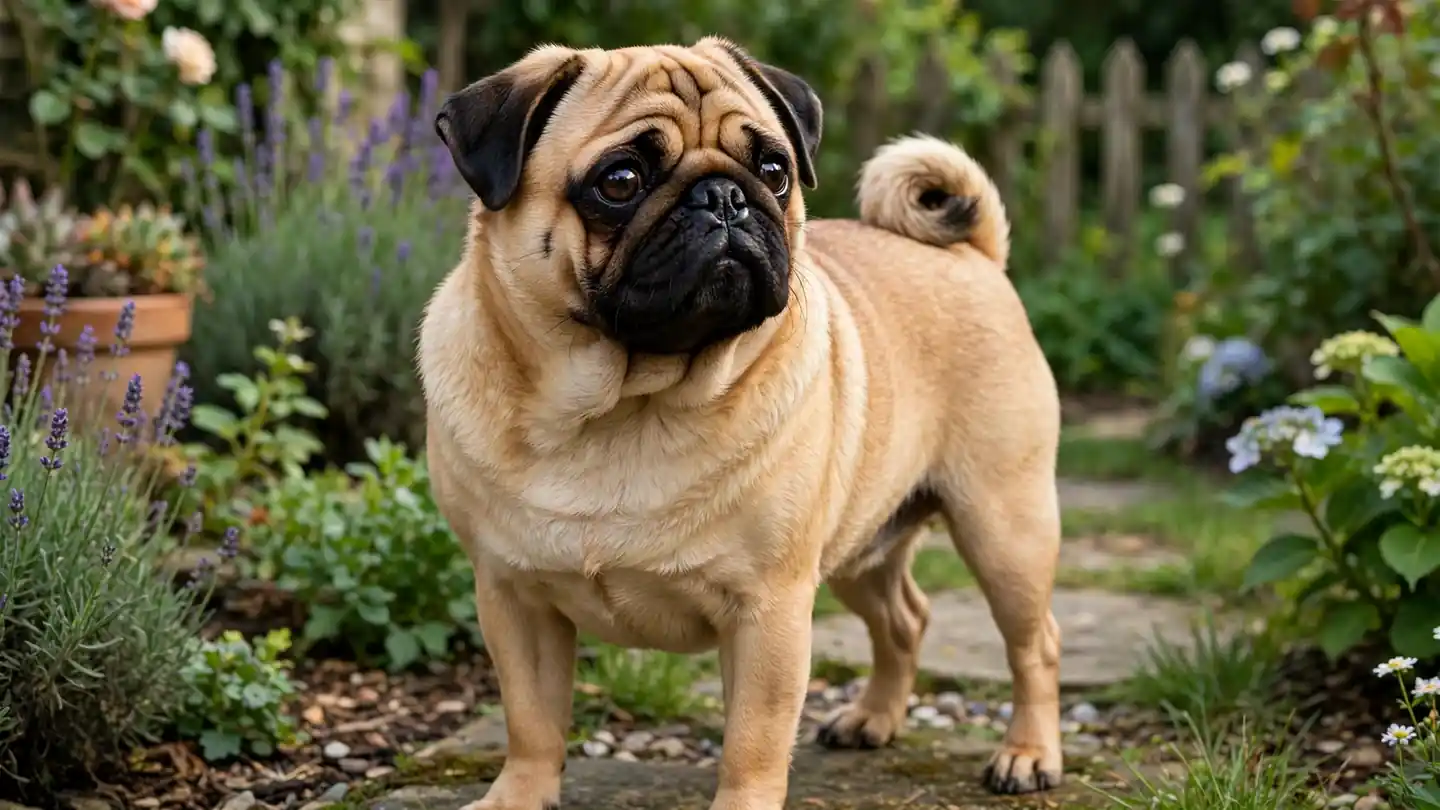
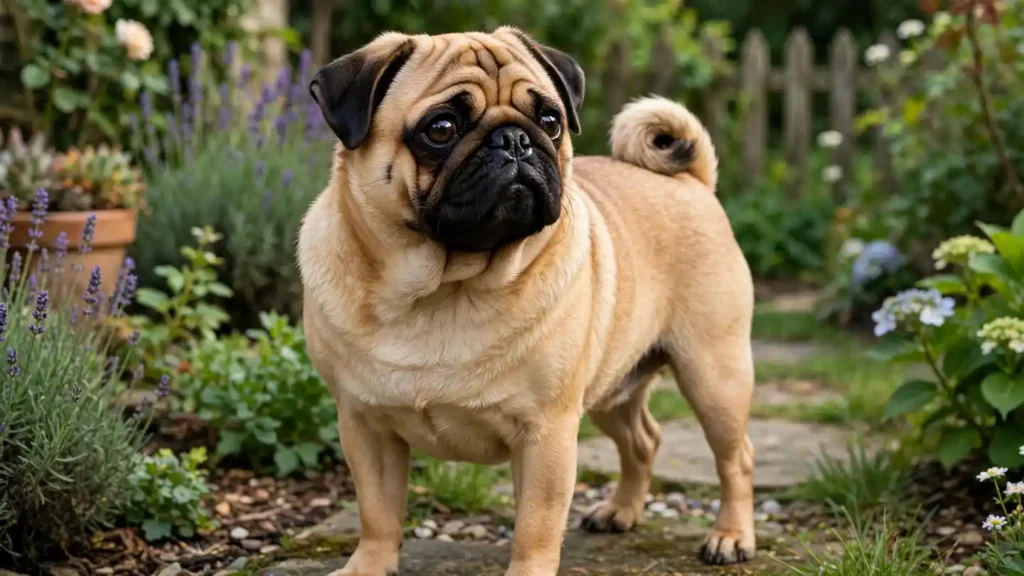
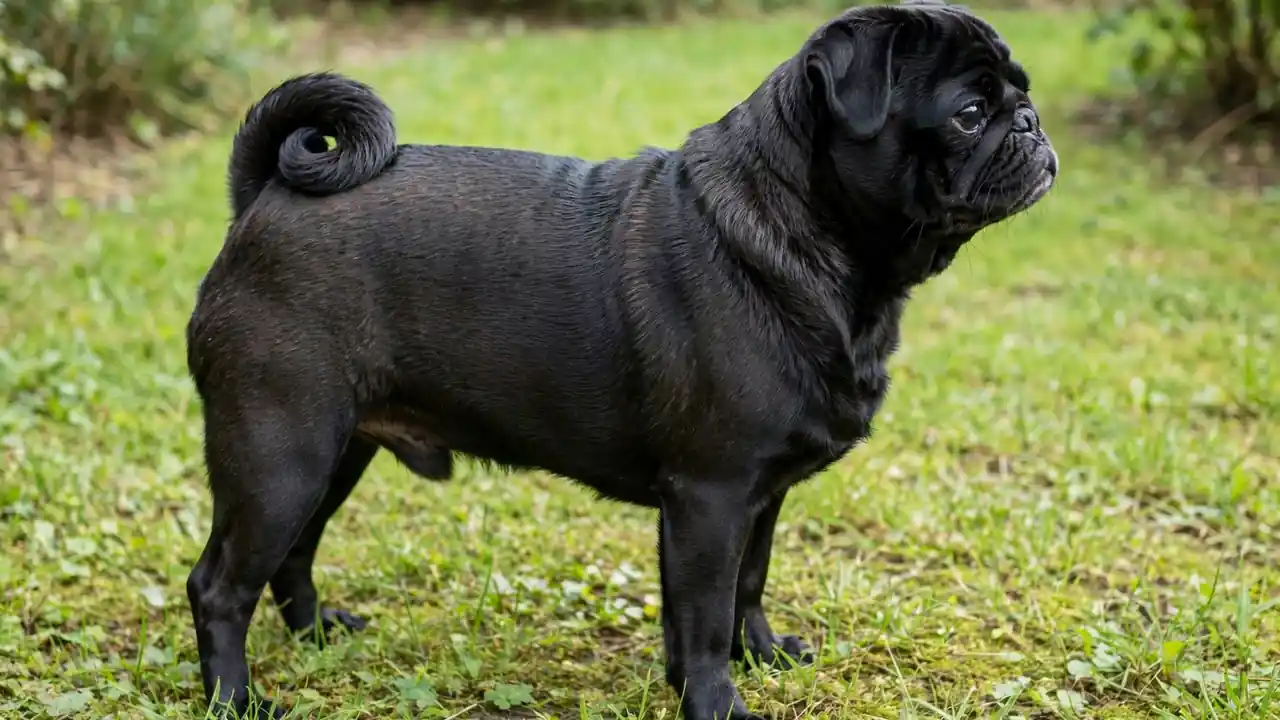
Short, smooth, and surprisingly sheddy: a short, smooth coat in fawn with black mask, silver, apricot, or black.
Despite the short coat, they shed heavily year-round. Weekly brushing helps. The facial wrinkles need regular cleaning.


History and Origins
Treasured companions of Chinese emperors for centuries.
They spread to Europe, where Dutch and English royalty adored them.
They were always companions — purpose-built for love and laughter.
Most ancient breeds earned their keep hunting, herding, or guarding. This one earned it by being wonderful company, a job description it has now held, uninterrupted, for centuries.
Physical Characteristics
A lot of dog in a small, wrinkled package: a compact, muscular body with a large round head, big expressive eyes, and the famous wrinkled face. The tail curls tightly over the back.
The flat face defines the health profile. Cuteness and breathing challenges come together.
Pug Personality and Behavior
A comedian who lives to love: famously charming, playful, and loving. They adore their people, love children, and are friendly with everyone. They are funny, expressive, and full of character.
They can be stubborn about training, but food motivation helps. They snore, snort, and wheeze. They are companion dogs through and through and hate being alone.
Owners consistently describe the Pug dog as charming, playful, and loving — and its hilarious devotion is why they recommend it to companion-dog lovers.
Expect a soundtrack: snuffles in conversation, snorts of commentary, and snoring that can be heard through a closed door. Most owners end up finding it endearing; light sleepers should consider themselves warned.
A comedian who lives to love is exactly right. The Pug dog is charming, playful, and loving, adoring its people and loving children, friendly with everyone, funny, expressive, and full of character. The companion heritage is the whole breed: treasured by Chinese emperors for centuries, always companions and never workers, purpose-built for love and laughter.
The stubbornness is manageable with food motivation. Training needs patience, but food motivation helps enormously, and the companion nature means the dog hates being alone. Expect a soundtrack: snuffles in conversation, snorts of commentary, and snoring heard through a closed door, which most owners end up finding endearing.
Funny, expressive, and full of character; the performance never really stops.
Adores its people and hates being alone; company is the whole point.
Stubborn about training, but food motivation unlocks surprising focus.
- Charming, playful, and loving with everyone
- Great with children; among the best apartment dogs
- Low exercise needs; relatively quiet (apart from the snoring)
- Breathing issues, eye problems, and dangerous heat intolerance
- Sheds heavily despite the short coat
- Prone to obesity; vet costs need budgeting
Care Essentials
Low exercise, high health awareness — here is the daily reality. They need 20 to 30 minutes of gentle daily exercise. They are extremely heat-sensitive due to the flat face; air conditioning is essential, and exercise happens in cool hours. They are indoor dogs who want to be with their people always.
Watch the weight: they gain easily and love food above all.
Two short outings beat one long one in warm weather, and a shady route with water carried along is always the plan.
Feeding
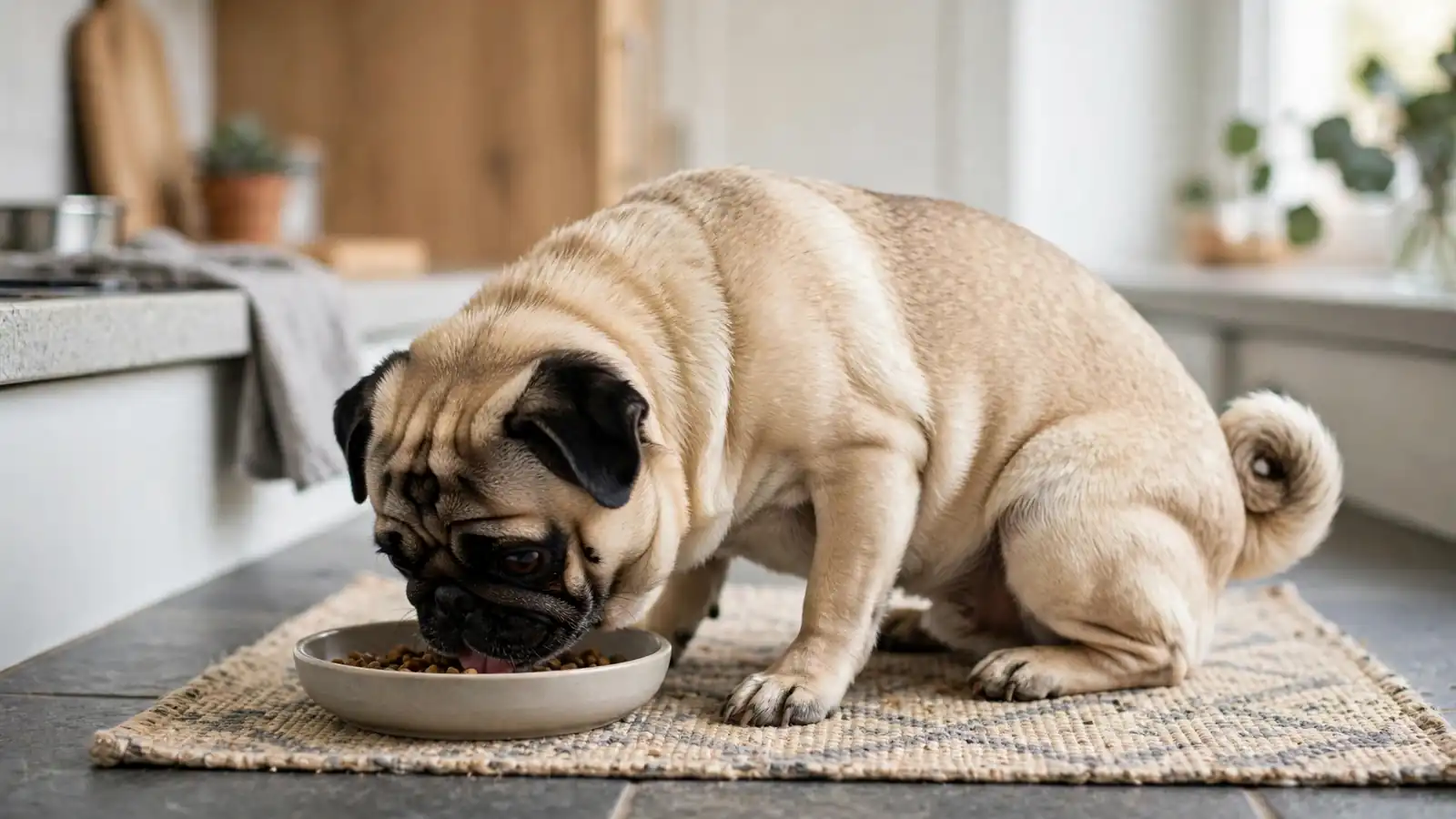
A measured diet in two meals a day; count every treat.
Grooming
Weekly brushing for the heavy shedding; clean facial wrinkles regularly and keep them dry.
Exercise
20 to 30 minutes of gentle walking daily, in cool hours only.
Home
Climate-controlled indoor living; never left outside unsupervised.
A typical day is low-exercise and high-awareness. Twenty to thirty minutes of gentle daily exercise cover the need, in cool hours only, with two short outings beating one long one in warm weather. Heat awareness is the real daily work: air conditioning is essential, and the dog must live in climate-controlled indoor comfort.
Nutrition and Diet
Food-obsessed easy keepers: feed a measured, high-quality diet in two meals a day.
They are famously food-driven; strict portions are essential. Count every treat. Keep them lean: extra weight worsens breathing in this Pug dog.
Weigh the Pug dog monthly if you can; on a small frame, two extra pounds is a significant percentage of body weight.
Feeding suits a food-obsessed easy keeper. A measured, high-quality diet in two meals keeps weight steady, with strict portions essential and every treat counted, since the breed is famously food-driven. Weighing monthly helps: on a small frame, two extra pounds is a significant percentage of body weight, and extra weight worsens breathing.
Grooming
Easy coat, watch the wrinkles: brush weekly for the heavy shedding.
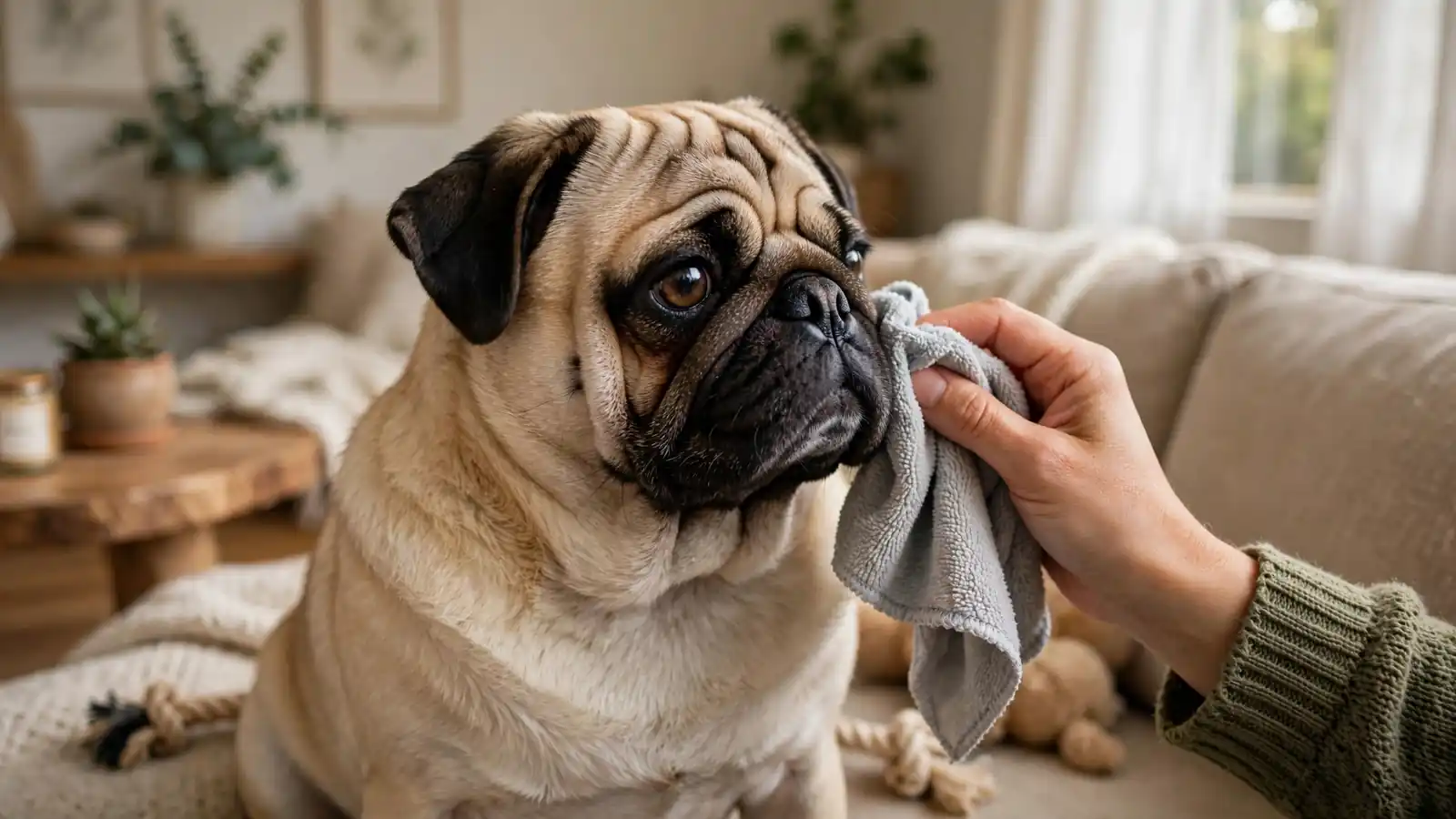
Clean facial wrinkles regularly and keep them dry. Clean ears, trim nails, brush teeth regularly.
Wrinkle care is the one non-negotiable: moisture and debris collect in the folds, so a gentle wipe and thorough drying keeps the skin comfortable.
The coat is easy and the wrinkles are the work. Weekly brushing covers the short, smooth coat and its heavy shedding, while facial wrinkles need regular cleaning and must be kept dry. Wrinkle care is the one non-negotiable, since moisture and debris collect in the folds, and the same session covers ears, nails, and teeth.
Exercise and Enrichment
Low to moderate energy: aim for 20 to 30 minutes of gentle walking daily.
Avoid heat, humidity, and strenuous exercise. Indoor play and gentle training provide enrichment.
Games count too: a few minutes of indoor fetch or gentle tug burns energy without challenging the breathing, and short training games work the mind that the body cannot tire.
Exercise is gentle and game-sized. Twenty to thirty minutes of gentle walking daily cover the need, with heat, humidity, and strenuous exercise all avoided. Indoor play and gentle training provide enrichment, and games count too: a few minutes of indoor fetch or gentle tug burn energy without challenging the breathing.
Health
Most live 12 to 15 years with real health needs. Here is the honest picture: Learn more about the Pug dog on Wikipedia.
The flat face affects breathing; manage heat and exertion.
They are dangerously heat-intolerant; air conditioning is essential.
Proptosis, ulcers, and dry eye are common with the prominent eyes.
This condition occurs in some lines; the breed is prone to obesity.
Budget for vet care. Schedule twice-yearly exams, and ask your vet about screening for conditions the Pug dog can be prone to, such as airway and eye issues. Consult your veterinarian promptly if you notice labored breathing, eye problems, or seizures.
Health care follows the familiar rhythm with airway and eye vigilance in focus. Twice-yearly exams are the schedule, and screening for airway and eye issues covers the ground the guide names, while the Pug dog’s breeders should health-test eyes, patellas, and hips and breed for better breathing. Day to day, labored breathing, eye changes, and changes in appetite, weight, or energy deserve a prompt vet call, and budgeting for vet care is part of owning this breed.
Indoor and Outdoor Living
Indoor dog, absolutely: they must live indoors in climate-controlled comfort.
They cannot handle heat and should never be left outside unsupervised. Short, supervised outdoor time in mild weather is enough. They are among the best apartment dogs.
Size helps too: at under twenty pounds they fit small homes, elevators, and laps equally well, and their exercise happens in short, civilized outings.
Indoor living is absolute for this breed. The dog must live indoors in climate-controlled comfort, cannot handle heat, and should never be left outside unsupervised, with short, supervised outdoor time in mild weather enough. Among the best apartment dogs, the breed fits small homes, elevators, and laps equally well.

Family Suitability
Wonderful companions for many households: great with children, friendly with strangers, usually good with other dogs and cats.
Their small size and gentle nature suit many living situations. The cautions are health costs, heat sensitivity, and the snoring.
They are also famously tolerant housemates: few dogs accept a household’s chaos — children, visitors, other pets — with this much good humor and this little drama.
With families, tolerance leads and health costs set the limit. The breed is great with children, friendly with strangers, and usually good with other dogs and cats, with small size and gentle nature suiting many living situations. Famously tolerant housemates, they accept household chaos with good humor and little drama, and the Pug dog’s charming, loving character shows best in homes that budget for its needs.
Families with childrenApartment livingCompanion-dog loversHomes with air conditioning
Hot climates without climate controlYou want a jogging or hiking partner
Finding a Breeder or Rescue
Careful breeding matters: the best breeders health-test (eyes, patellas, hips), breed for better breathing, and are transparent.
Breed rescues are full of wonderful dogs.
Ask to meet the parents and listen to their breathing at rest; quiet, comfortable breathing in the parents is exactly what you want to hear, and honest breeders welcome the question.
- Ask about testing — eyes, patellas, and hips
- Ask how the breeder selects for better breathing
- Ask how puppies are raised and socialized
- Consider a breed rescue
Quick Quiz: Is This Little Clown Right for You?
Answer four questions. Tap yes or no.
Frequently Asked Questions
Are Pugs good family dogs?
Wonderful. They are affectionate, playful, and great with children.
How much exercise does a Pug need?
Only 20 to 30 minutes of gentle walking daily.
Do Pugs shed a lot?
Yes, surprisingly heavily for a short-coated breed.
Do Pugs have health problems?
Honestly, yes. Breathing, eyes, and heat tolerance need management. Budget for vet care.
How long do Pugs live?
Typically 12 to 15 years.
Do Pugs bark a lot?
No. They are relatively quiet, though the snoring is legendary.
What do Pug owners say about living with the breed?
Owners consistently describe this breed as charming, playful, and loving. In practice, owners report that the Pug dog’s hilarious devotion is the main reason they recommend it to companion-dog lovers.
When should I ask my vet about my Pug’s health?
Schedule twice-yearly exams, and ask your vet about screening for conditions the breed can be prone to, such as airway and eye issues. Consult your veterinarian promptly if you notice labored breathing, eye problems, or seizures.
Charming, playful, and loving: a comedian purpose-built for companionship over centuries. Manage the breathing, the heat, and the waistline honestly, and the hilarious devotion owners describe is yours every day.
Similar Breeds Worth Exploring
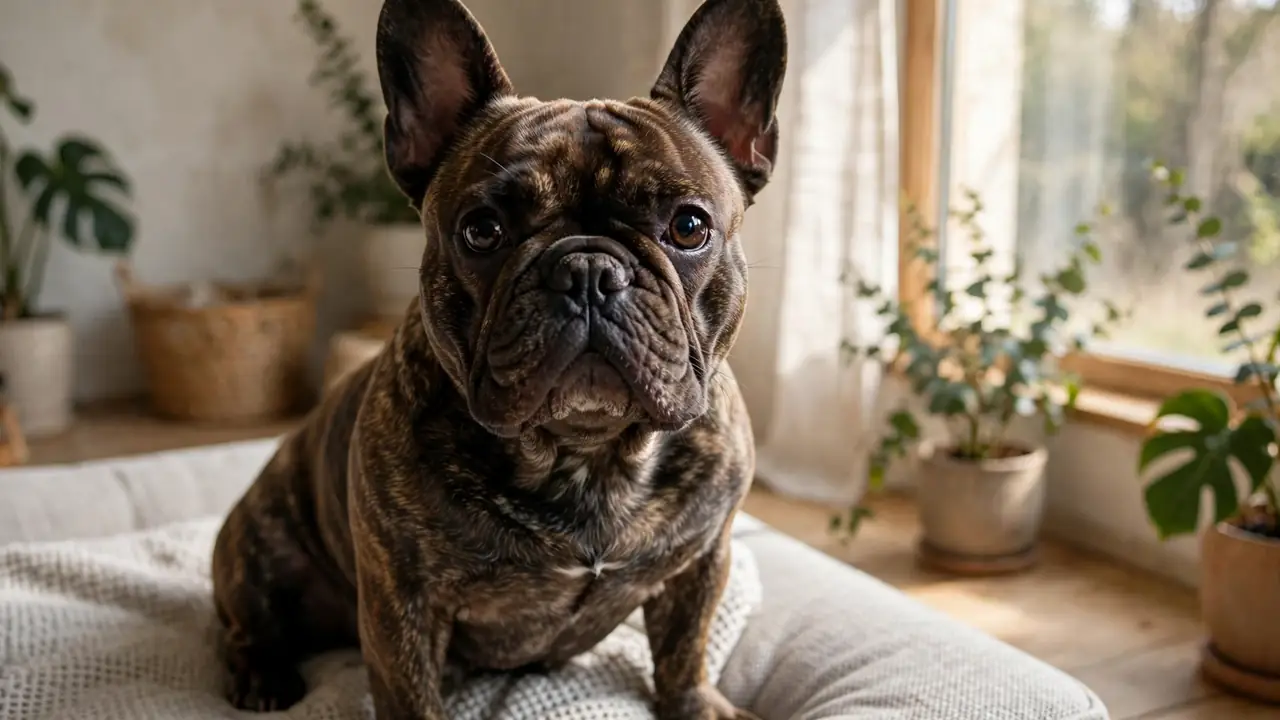
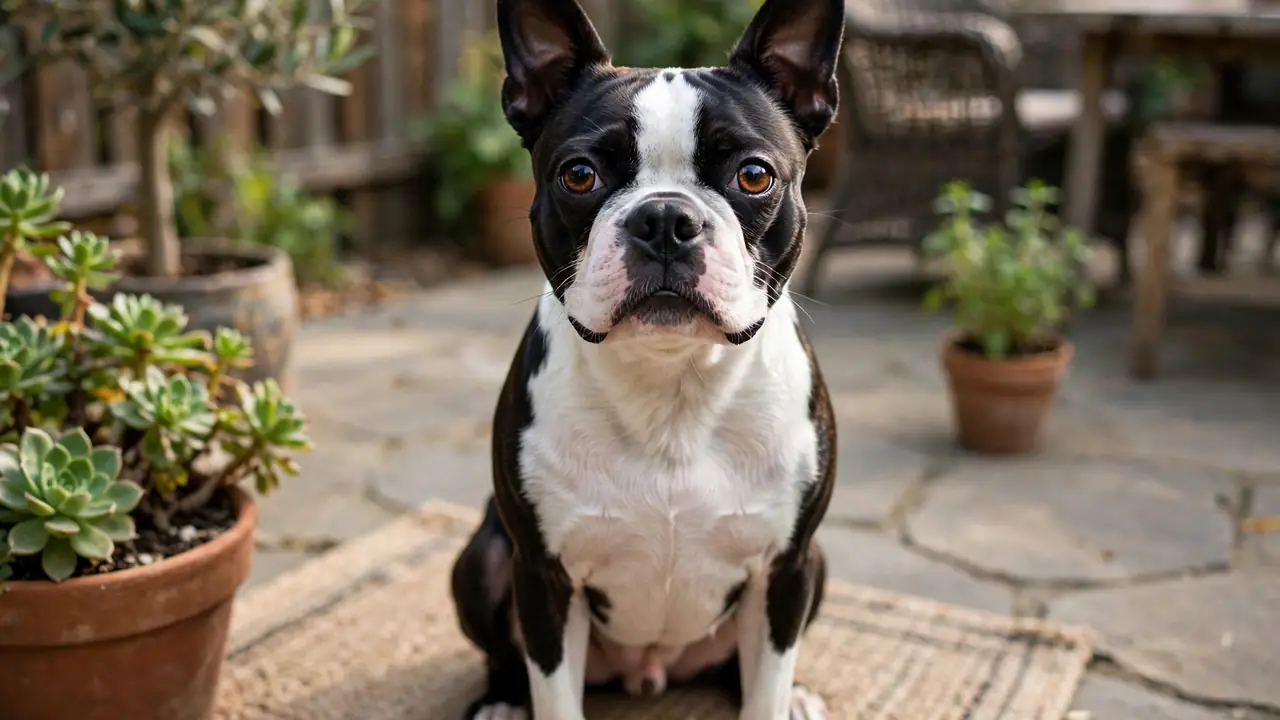
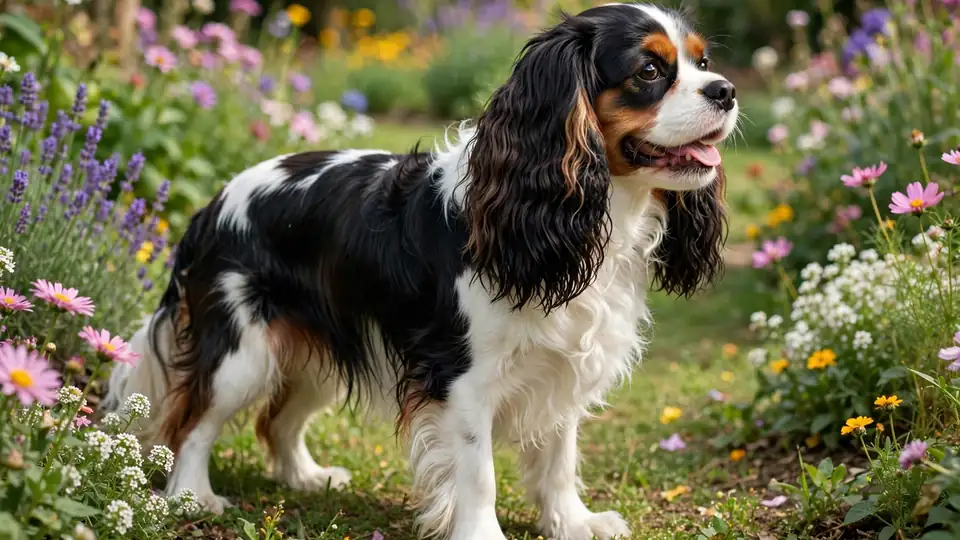
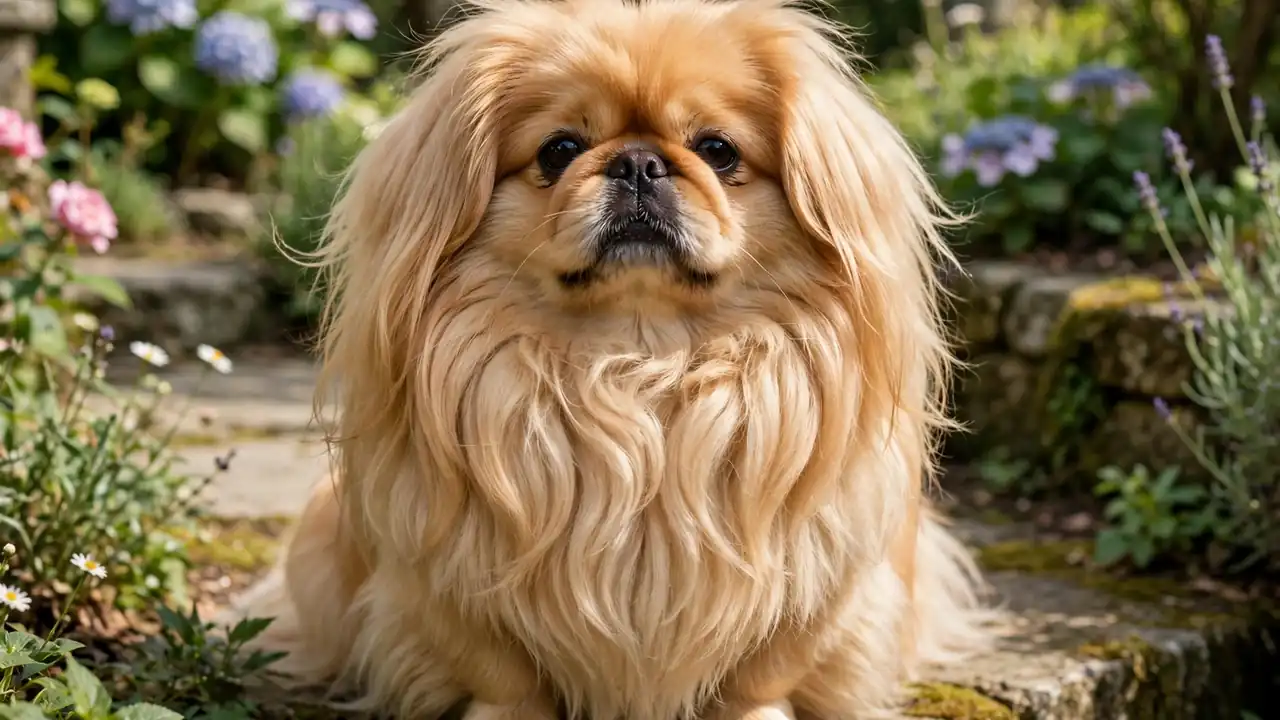
If this breed appeals to you, consider the French Bulldog (similar clown, bat ears), the Boston Terrier (similar size, more athletic), the Cavalier King Charles Spaniel (gentle companion), or the Pekingese (another Chinese royal companion).
Related Breed Guides
- French Bulldog Breed Guide
- Boston Terrier Dog Breed Guide
- Cavalier King Charles Spaniel Dog Breed Guide
- Pekingese Dog Breed Guide
Keep Exploring
Browse all our Dog Breed Guides, try the Dog Age Calculator, or explore our Cat Breed Guides. Every guide on this site follows the same layout, so the facts you need are always in the same place.