LaPerm Cat Breed Guide
LaPerm: at a Glance
A tousled coat of loose, bouncy curls on a devoted lap cat. Born on an Oregon farm in 1982, the LaPerm is affectionate, curious, and sheds far less than you would expect.
By Emily Carter · Reviewed by our vet team · Updated 21 October 2026 · 13 min read
Lifespan 12–15 yrs Weight 5–10 lb Devoted lap cat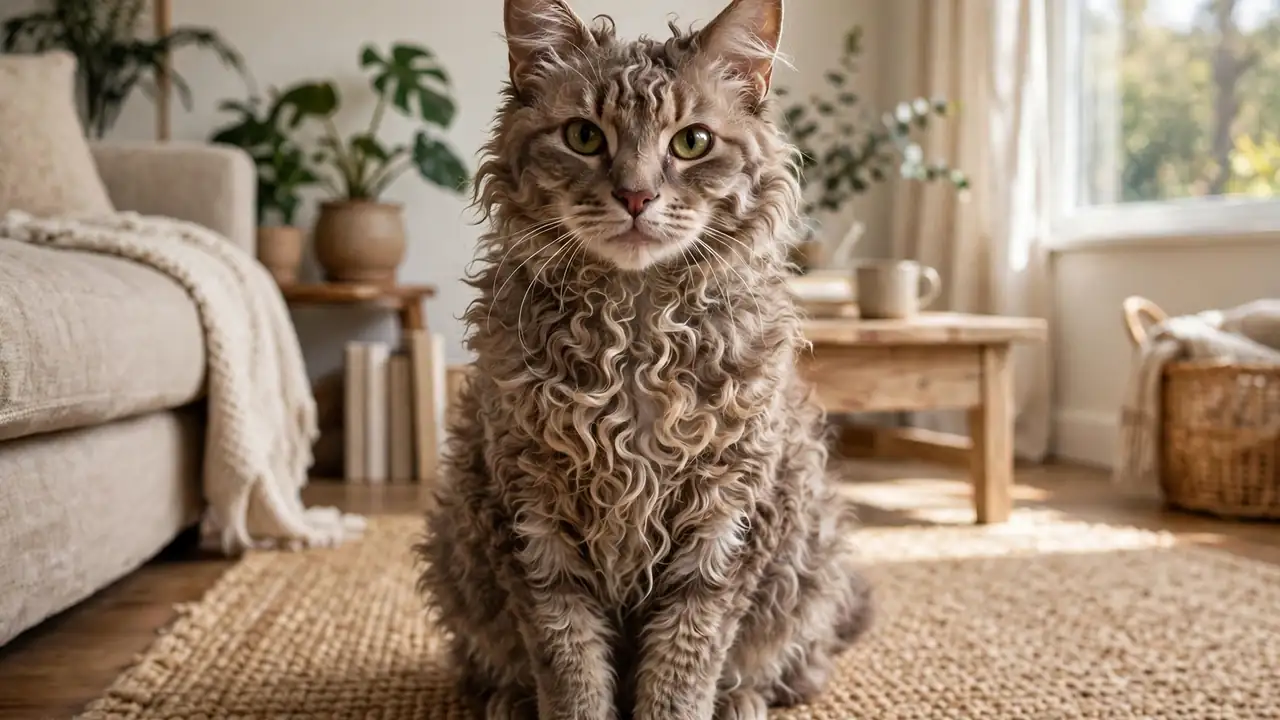
Short on time? Here is the LaPerm cat in a nutshell.
At a Glance
Size and Weight
The LaPerm cat is a study in graceful proportions, not bulk.
Most adults weigh between 5 and 10 pounds, which places the breed comfortably in the medium range. Females tend to sit at the lighter end while males fill out a bit more, but neither sex should look heavy or cobby. The frame is elegant with long legs and a neck that gives the cat a refined, alert outline.
Despite the light build, these cats are solid and well muscled. They move with an easy athleticism and a spring in their step. If you pick one up, expect a cat that feels substantial for its size, all wrapped in soft curls.
Coat and Colors
The coat is the whole story of this breed, and it deserves a long look.
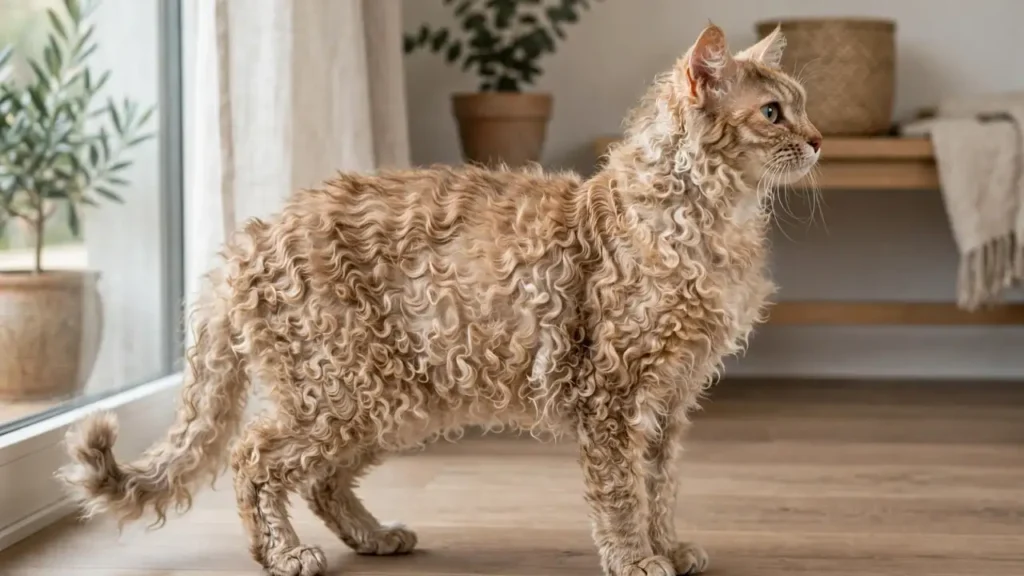
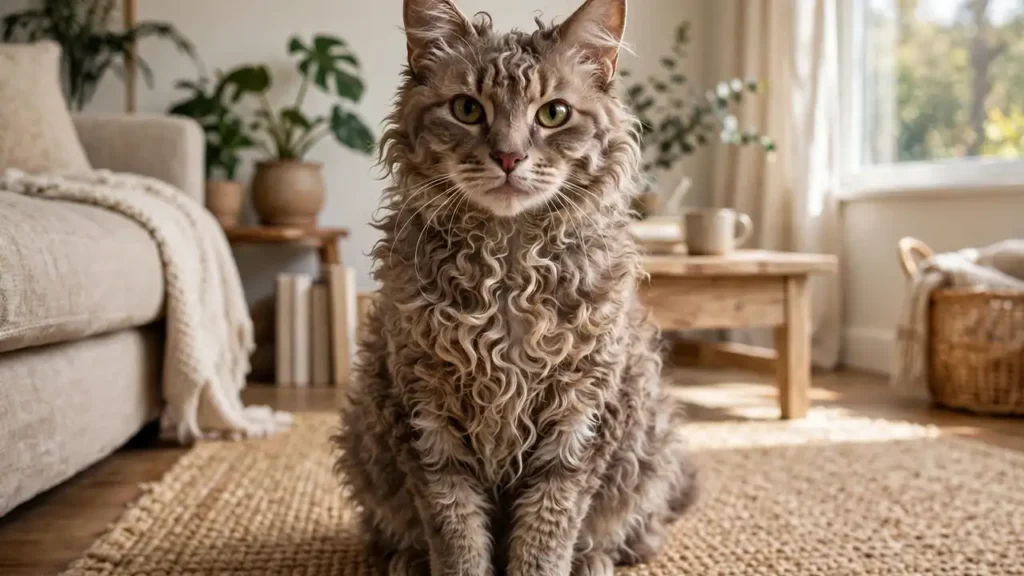
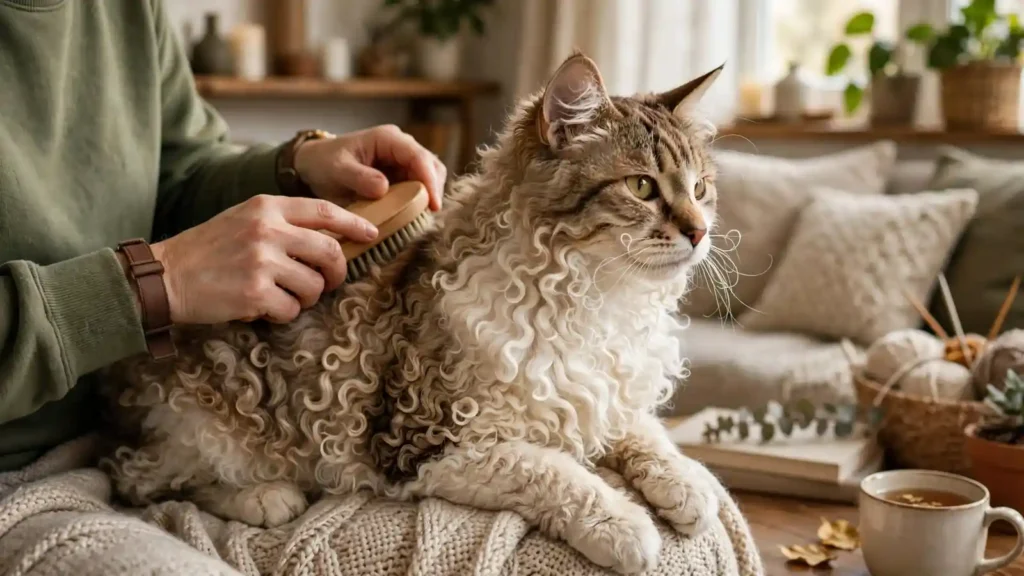
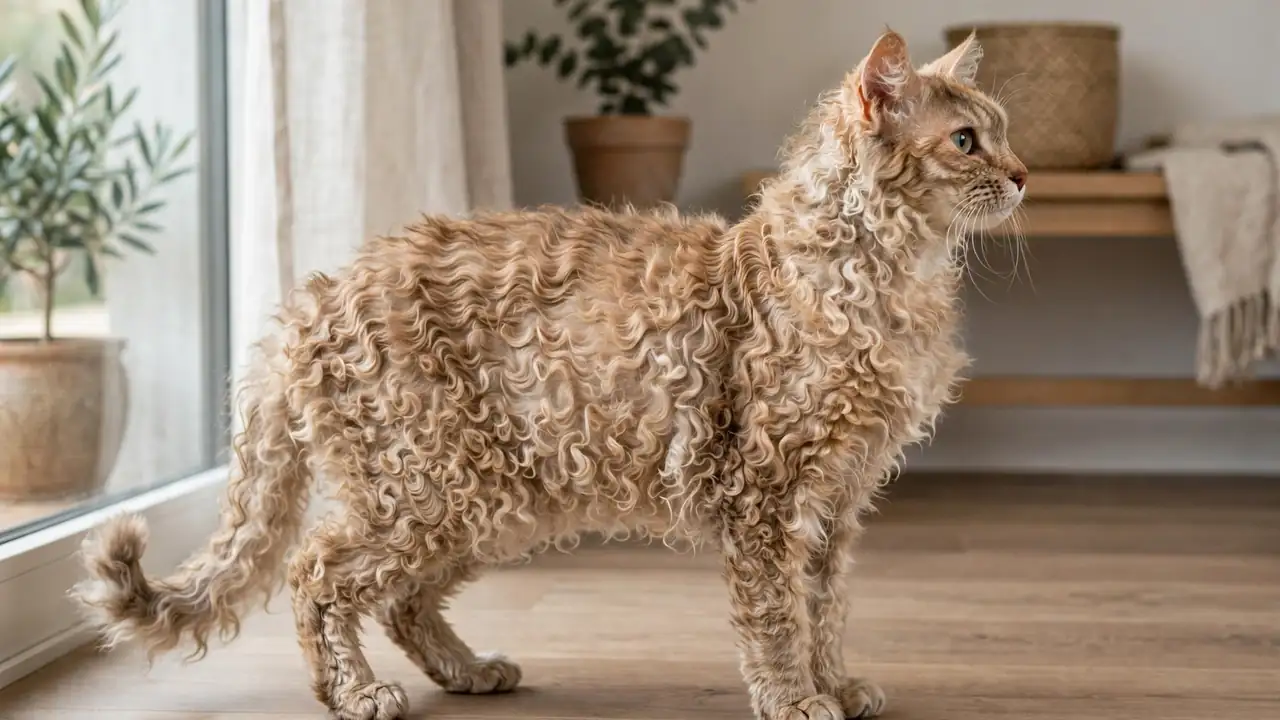
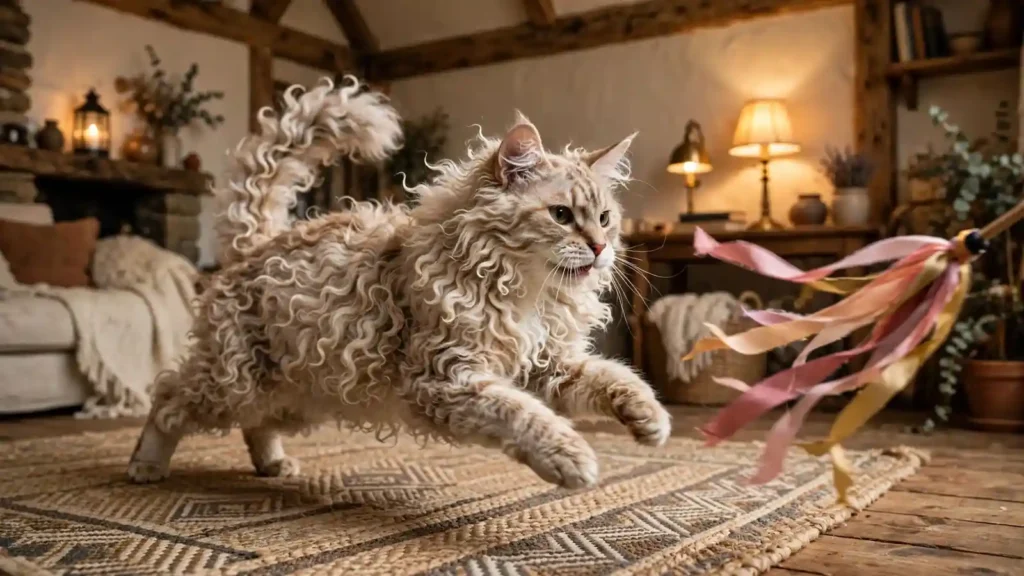
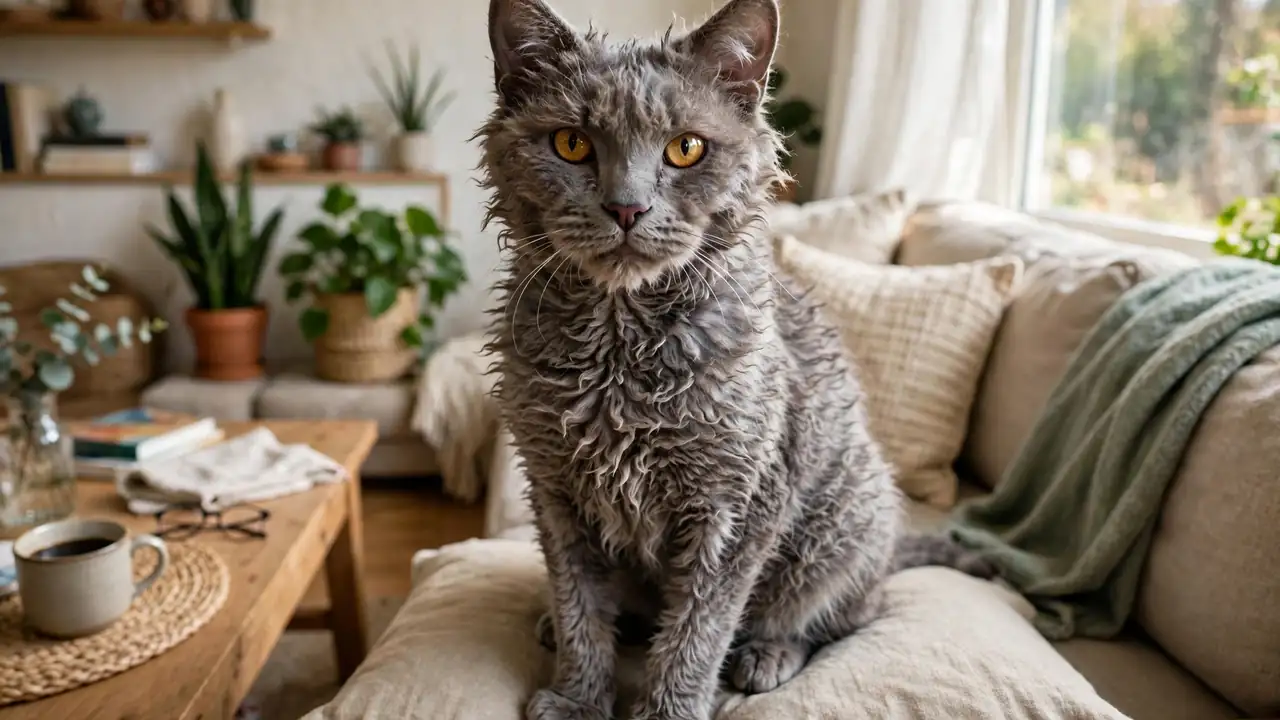
The LaPerm cat wears loose, bouncy curls and waves that look permanently tousled, like charming bedhead that never quite settles. The curls range from tight ringlets on the belly, throat, and base of the ears to soft waves along the back. Running your fingers through it feels like touching springy silk, light and airy rather than dense. Most LaPerms are happy to accept the petting that follows.
Two coat lengths exist. The shorthaired version has a springy, ruffled texture, while the longhaired version falls in soft corkscrew curls with a plumed tail. Both share the same defining curl, and both can appear in the same litter. The coat has very little undercoat, which keeps it light and reduces matting.
When it comes to color, nearly everything is on the table. Solids like black, white, blue, red, and cream show off the curls beautifully, because the waves catch light and shadow in a way straight fur cannot. Tabbies, tortoiseshells, bicolors, calicos, smokes, and shaded patterns are all common, and each takes on extra depth thanks to the texture. Pointed patterns appear too, with darker ears, face, paws, and tail. Eye color varies with coat color, from gold and copper to green and blue in pointed and white cats.
One of the most fascinating traits is how the coat changes over a lifetime. Kittens are often born with straight or only slightly wavy hair, and some are born nearly bald before the curls grow in. The full curl usually develops as the cat matures, and the coat can keep shifting with the seasons. An adult LaPerm may look quite different from the kitten you first met, which is part of the fun of living with the breed.
History and Origins
Every curly kitten in this breed traces back to one farm in Oregon.
In 1982, a farm cat in Oregon gave birth to a litter that included a hairless looking kitten. Within weeks she grew a soft curly coat, and as she matured she passed the curl on to her own kittens.
The curl came from a spontaneous natural mutation rather than a breeding plan. Breeders later refined the type while keeping the robust health of those farm origins, and the breed kept its natural, unexaggerated look.
Today the LaPerm is a distinct breed that still carries the easygoing spirit of its barnyard beginnings. The coat keeps shifting across its lifetime, from straightish kitten fluff to full adult curls.
In 1982, a farm cat in Oregon gave birth to a litter that included a hairless looking kitten. Within weeks the kitten grew a soft curly coat, and as she matured she passed the curl on to her own kittens. Because the curl came from a spontaneous natural mutation rather than a planned cross, the early LaPerms were simply hardy farm cats with an unusual coat.
Over time, breeders refined the type while keeping the robust health of those farm origins. The breed kept its natural, unexaggerated look, which is part of its appeal. Today the LaPerm cat is recognized as a distinct breed, but it still carries the easygoing spirit of its barnyard beginnings.
Physical Characteristics
Look past the curls and you will find a cat built on classic lines.
The head is a modified wedge, slightly rounded, with full whisker pads that give the muzzle a soft fullness. The ears are medium to large and often carry curly tufts at the tips. Eyes are medium to large, almond shaped, and expressive. The body is medium in length with a firm, athletic feel, and the tail is proportionate, plumed in the longhaired version.
Everything about the LaPerm reads as natural and unforced. There are no extreme features. The curls are the star, and the rest of the cat is simply a well made, balanced feline underneath.
LaPerm Personality and Behavior
A LaPerm cat does not do aloof. It does devoted.
They are gentle with children and generally accepting of other pets, as long as introductions are handled with patience.
Cautious with strangers, but they study you, approve of you, then love you with unusual intensity.
Meals, play and greetings at the door, on schedule. These cats notice routine, and notice when it slips.
- Affectionate lap cat and loyal shadow
- Minimal shedding, light coat care
- Gentle with children and other pets
- Wants company — hates being left out
- Curious paws open drawers and bags
- Curls need gentle handling, no rough brushing
These cats are affectionate to their core. They seek out laps, follow their people from room to room, and will pat your face with a paw to ask for attention. Many owners describe them as dog like in their loyalty, always nearby and interested in what you are doing. They tend to greet visitors warmly rather than hiding, which makes them easy cats to share a home with.
Alongside the affection runs a bright curiosity. LaPerms investigate everything, from grocery bags to open drawers, and they learn routines quickly. They are gentle with children and generally accepting of other pets, as long as introductions are handled with patience.
Care Essentials
A complete, balanced diet with real animal protein first — a mix of quality wet and dry works well. Portion control still matters, and a fountain encourages drinking.
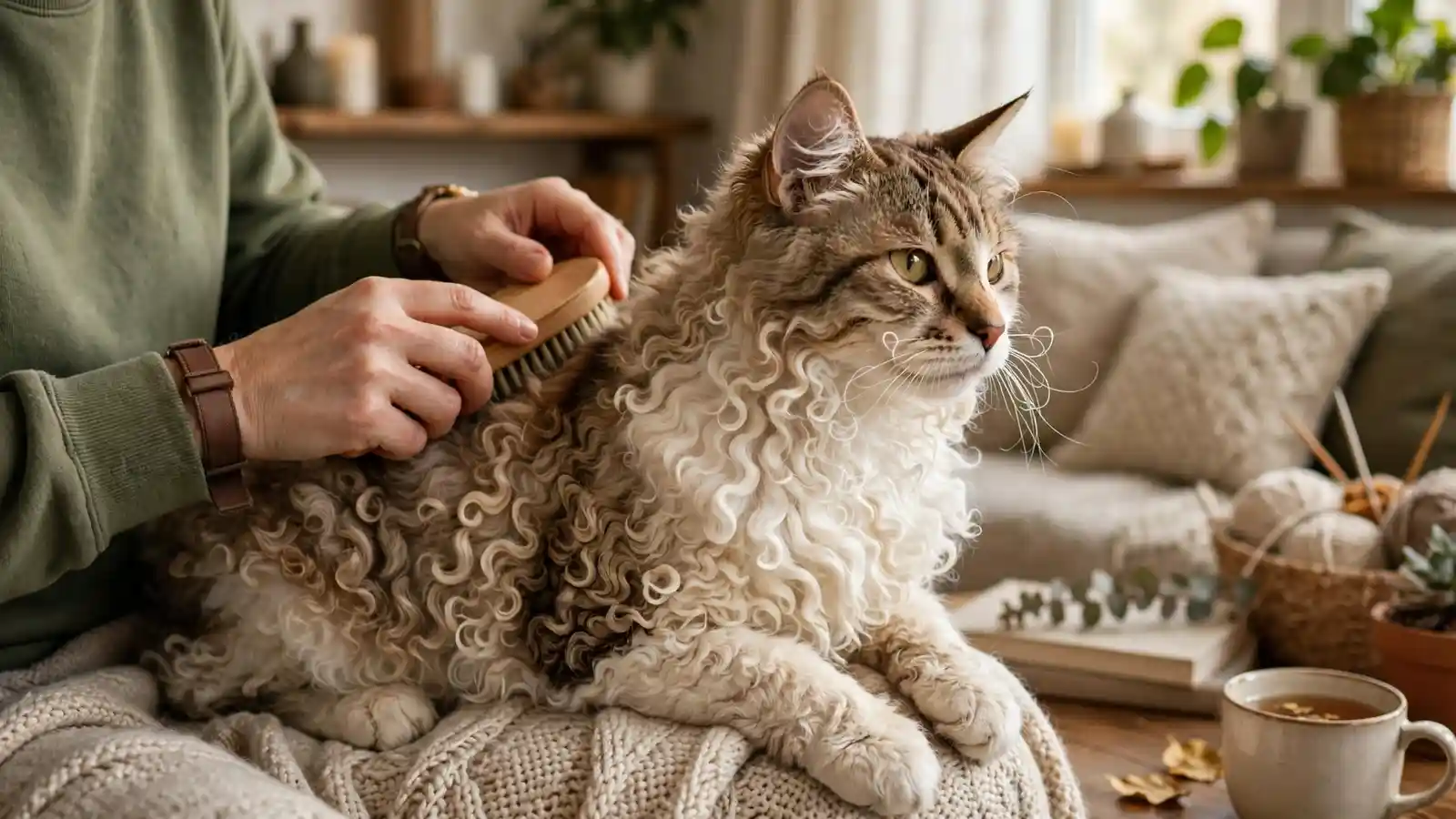
Once or twice a week, run a wide toothed comb or your fingers gently through the curls to remove loose hair. Rough brushing breaks the curl pattern.
Daily interactive play — wand toys, feather teasers and crinkle balls — plus puzzle feeders to engage the problem solving side.
Indoor living close to its people, with cat trees, window perches and shelves to climb. A secure catio or harness walks add safe fresh air.
Daily life with a LaPerm cat is refreshingly simple.
Provide the basics and they thrive: fresh water, quality food, a clean litter box, scratching posts, and safe places to climb. Because they are so people oriented, the most important part of their care is companionship. They do best in homes where someone is around much of the day, or where another friendly pet keeps them company.
Nutrition and Diet
Good food keeps the curls glossy and the energy steady.
Feed a complete, balanced diet formulated for the cat’s life stage, with real animal protein as the foundation. Most LaPerms do well on a mix of quality wet and dry food, with wet food supporting hydration. They are active and playful, so they burn calories, but portion control still matters to keep them at a healthy weight.
Fresh water should always be available, and many cats drink more from a fountain or a wide bowl. Treats are fine in moderation and work well as rewards during play.

Grooming
The curls look high maintenance. They are not, as long as you are gentle.
A LaPerm cat needs only light grooming. Once or twice a week, run a wide toothed comb or your fingers softly through the coat to remove loose hair and keep the curls defined. The key word is gentle. Rough brushing or fine toothed combs can break the curl pattern and frizz the coat, so a soft touch preserves those ringlets.
Bathing is rarely needed. When you do bathe, use a mild cat shampoo and let the coat air dry so the curls spring back naturally. Regular nail trims, ear checks, and dental care round out the routine.
Exercise and Enrichment
A bored LaPerm invents its own games, and you may not like the rules.
These cats are playful and clever, so daily interactive play keeps them content. Wand toys, feather teasers, and crinkle balls all get enthusiastic responses. Puzzle feeders engage their problem solving side and slow down fast eaters at the same time. Short sessions a few times a day work better than one long marathon.
Vertical territory matters too. Cat trees, window perches, and sturdy shelves let them climb and survey their kingdom. Because they love company, the best enrichment is often simply you, playing or letting them supervise your chores from a nearby chair.
Health
The LaPerm cat is generally a healthy breed with no major inherited issues tied to its name.
A generally healthy breed with no major inherited issues tied to its name, thanks to its natural farm cat origins. Checkups, vaccinations, parasite prevention and dental care do the rest.
Weight gain, urinary health and dental disease are the usual watch points — and the light coat makes the skin easy to check during grooming sessions.
Thanks to its natural farm cat origins, the breed has a reputation for hardiness. Annual veterinary checkups, vaccinations, parasite prevention, and dental care form the foundation of a long healthy life.
Watch for the everyday issues that affect all cats, such as weight gain, urinary health, and dental disease. Because the coat is light, skin is easy to check during grooming sessions, which is a nice bonus. With attentive care, a LaPerm cat commonly enjoys a full lifespan of 12 to 15 years.
Indoor and Outdoor Living
This is a breed that belongs indoors, close to its people.
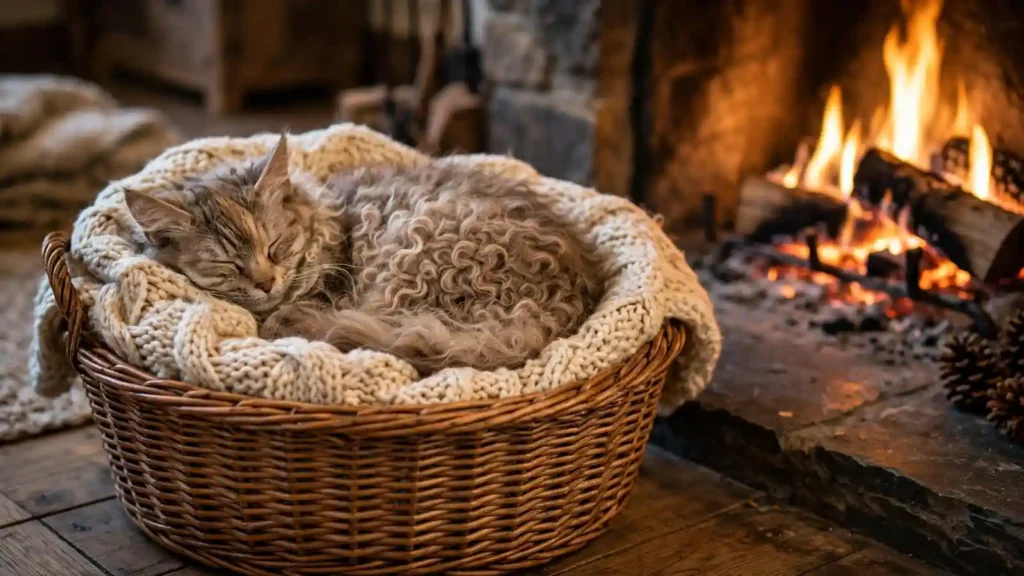
A LaPerm cat kept indoors lives a safer, longer life, protected from traffic, predators, parasites, and disease. The indoors also suits their social nature, since they want to be near their family rather than roaming the neighborhood. Sunny windows, climbing furniture, and interactive toys are all they need.
If you want to offer fresh air, a secure catio or a harness and leash lets them explore safely. Many LaPerms take to leash walks with patient training, and their curiosity makes the experience fun for both of you. Never let them roam unsupervised.
Family Suitability
Few breeds slot into family life as easily as the LaPerm.
Their gentle, affectionate temperament makes them excellent companions for children who have learned to handle cats respectfully. They tolerate the noise and activity of a busy household without retreating, and they rarely show a temper. Seniors living alone often find them ideal too, since the cats offer constant, undemanding company.
They also tend to get along with cat friendly dogs and other cats, especially when introductions are gradual. A LaPerm cat wants to be part of the group, whatever the group looks like.
Finding a Breeder or Rescue
Taking time to find the right source pays off for years.
If you choose a breeder, look for someone who raises kittens in the home, welcomes questions, and is transparent about health and temperament. A responsible breeder will want to know about your lifestyle too, because they care where their kittens go. Expect the kittens to stay with their mother until they are well socialized.
Do not overlook rescue. Breed specific rescue groups and local shelters sometimes have LaPerms or LaPerm mixes looking for homes. An adult rescue cat can be a wonderful choice, since its coat and personality are already fully developed.
- Kittens raised in the home, handled daily
- Breeder transparent about health and temperament
- Kittens stay with their mother for a good number of weeks
- Check breed rescue groups — LaPerms sometimes need homes
Quick Quiz: Is a LaPerm Right for You?
Answer four questions. Tap yes or no.
Frequently Asked Questions
Do LaPerm cats shed a lot?
No. The LaPerm cat is known for minimal shedding, thanks to its light coat with little undercoat. You will still find some hair around the house, especially during seasonal changes, but far less than with most breeds.
Are LaPerm cats hypoallergenic?
No cat is truly hypoallergenic, and the LaPerm is no exception. However, many allergy sufferers report reacting less to this breed, possibly because of the minimal shedding. If allergies are a concern, spend time with a LaPerm cat before committing.
Do LaPerm kittens have curly coats?
Not always. Kittens are often born with straight or only slightly wavy hair, and some are born nearly bald before their curls grow in. The signature curls usually develop as the kitten matures.
Are LaPerm cats good lap cats?
Yes, wonderfully so. The LaPerm cat loves laps and will happily settle in for long cuddle sessions. Expect a shadow as well as a lap warmer, since they also follow their people around the house.
How do you groom a curly coat?
Gently. Use a wide toothed comb or your fingers once or twice a week, and avoid rough brushing that can break the curl pattern. Bathe only when needed with a mild cat shampoo, and let the coat air dry so the curls spring back.
Are LaPerm cats good with children and other pets?
Their gentle, affectionate nature makes them a good fit for respectful children, and they usually accept other cats and cat friendly dogs with proper introductions. They thrive in social households with plenty of interaction.
The LaPerm wraps a classic, balanced cat in a tousled coat of loose curls — affectionate, gentle and devoted, with far less shedding and fuss than the curls suggest.
Similar Breeds Worth Exploring
Related Breed Guides
Keep Exploring
Browse the full A to Z cat breed collection to compare personalities, or find out your cat’s age in human years with the cat age calculator.