Devon Rex Cat Breed Guide
Devon Rex: big ears, bigger personality
The Devon Rex cat charms with oversized ears, an elfin face, and a mischievous streak. People obsessed and playful, it loves shoulders, laps, and being part of everything.
By Emily Carter · Reviewed by our vet team · Updated 21 October 2026 · 11 min read
Lifespan 9–15 yrs Weight 6–9 lb Mischievous & devoted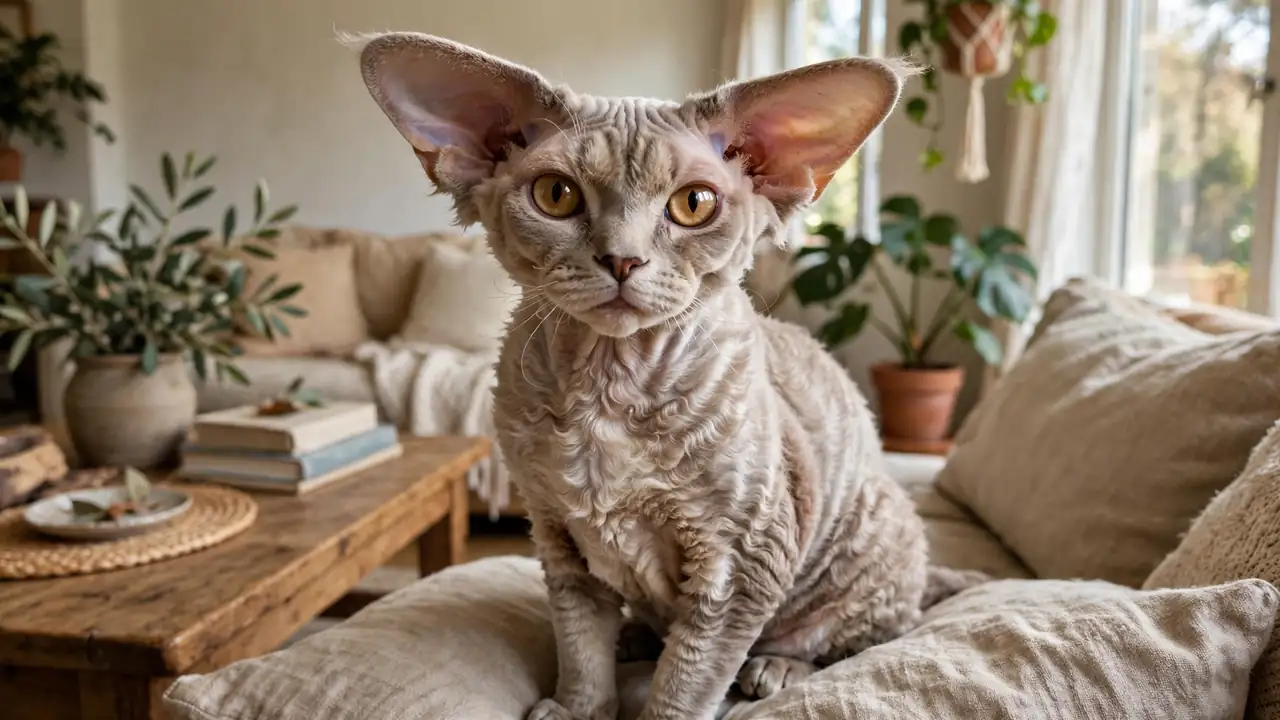
Short on time? Here is the Devon Rex cat in a nutshell.
At a Glance
Size and Weight
This is a lightweight wrapped in a big personality.
Most adults weigh between 6 and 9 pounds, which puts the breed in the small to medium range. The body is slender and fine boned, with long legs and firm muscle under a light coat. Nothing about this cat is bulky. It is built for quick movement and acrobatic play.
The large ears and expressive eyes draw attention away from the body, so the Devon Rex often looks bigger in photos than it feels in your arms.
Coat and Colors
The coat is what turns heads, and it deserves a close look.
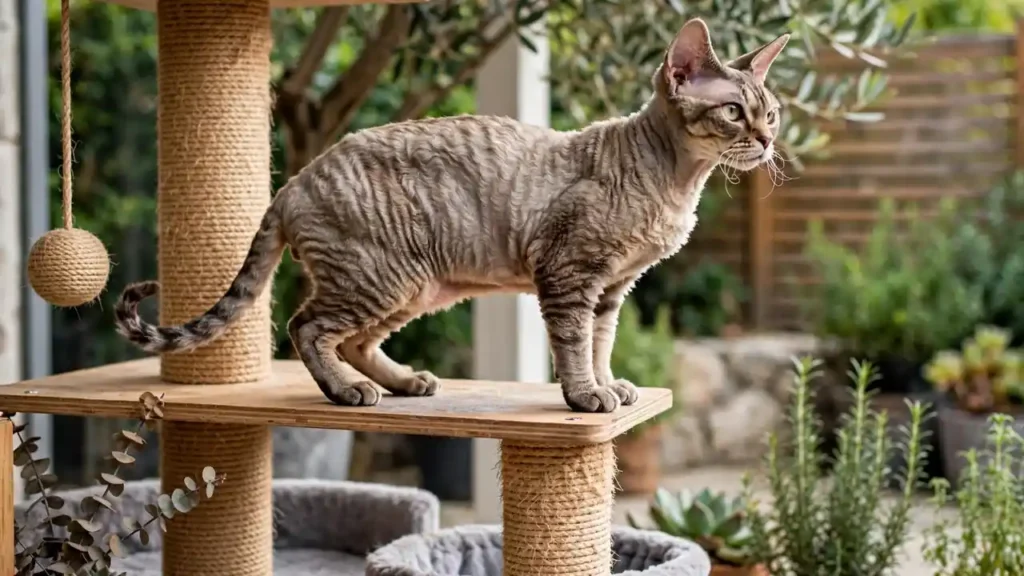
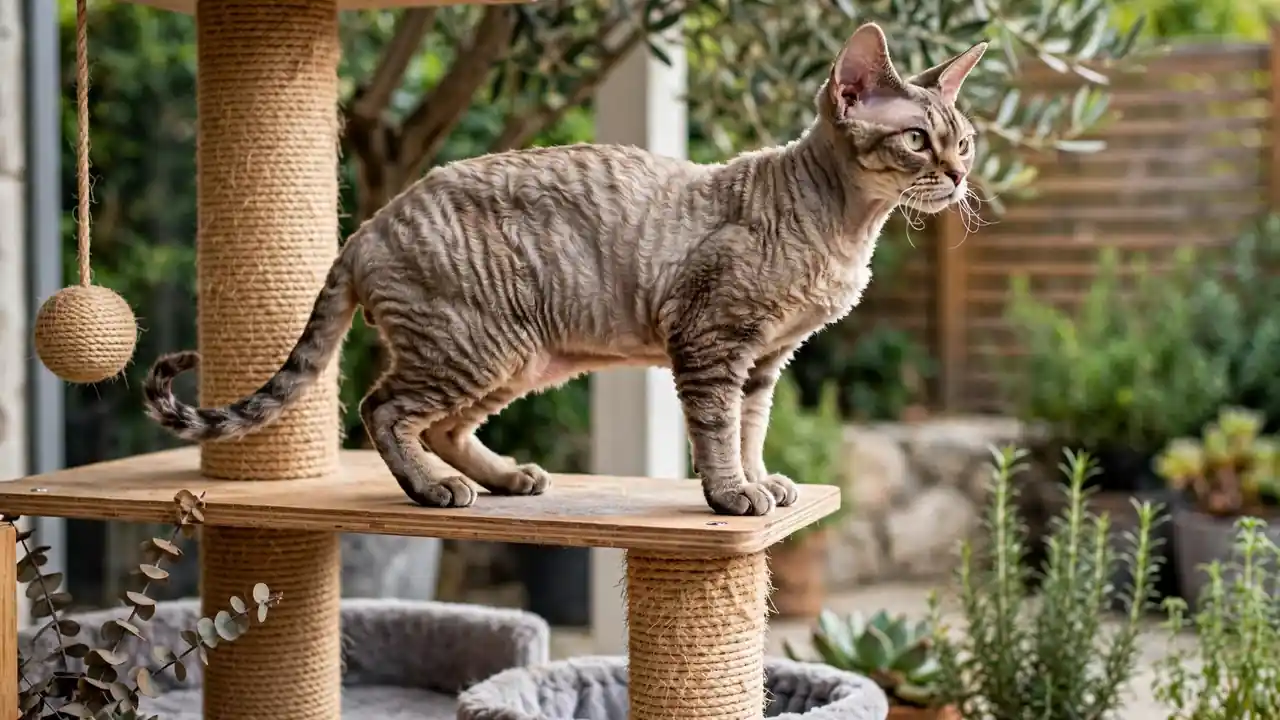
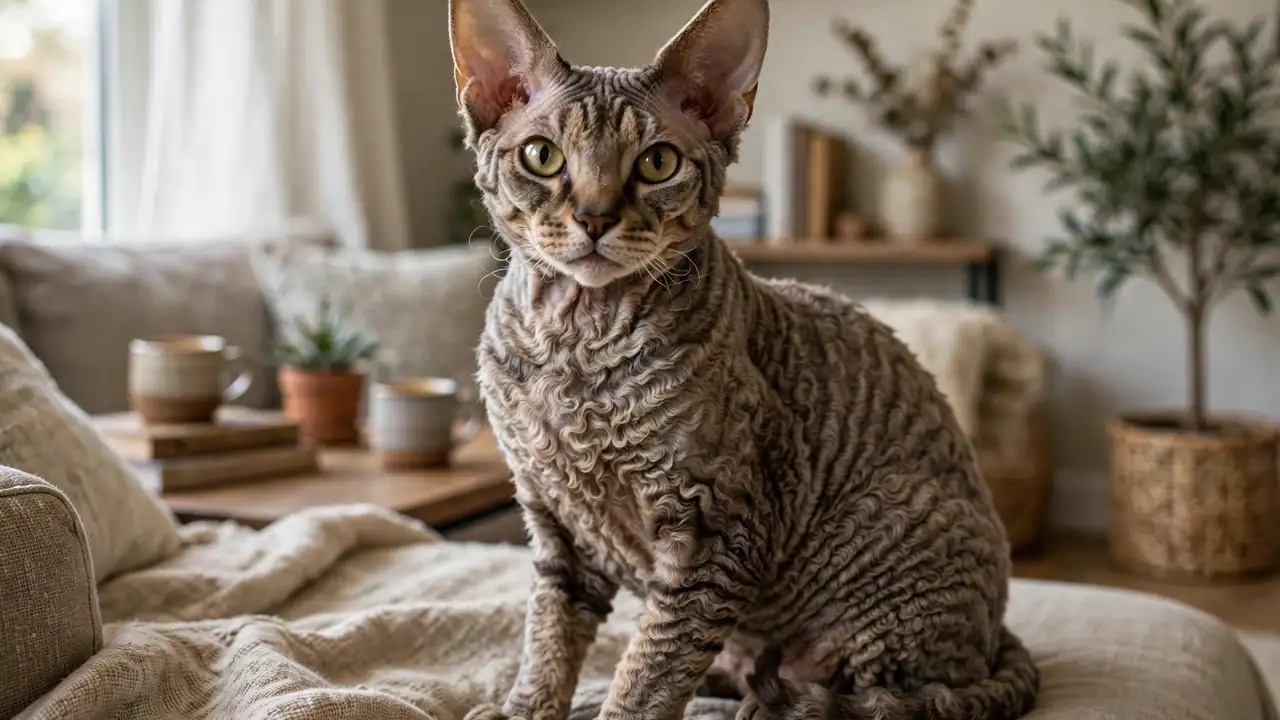
Each hair on a Devon Rex cat grows in a soft wave rather than lying straight. The result is a rippled, crushed velvet texture that feels delicate under your fingertips. The coat is short and close to the body, with the waves most visible along the back, sides, and tail. It is one of the most unusual coats in the cat world.
People sometimes confuse this breed with its curly coated cousin, but the two coats are genuinely different. The Cornish Rex has a tight, uniform marcel wave that looks almost sculpted. The Devon Rex cat wears a looser, softer, more varied wave. Some individuals have bold ripples all over, while others show gentle waves in patches. The texture also shifts with the seasons, growing slightly fuller in winter and thinning in summer. Some kittens go through a sparse stage before the adult waves settle in.
Nearly every color and pattern appears in the breed, and all look striking against the wavy texture. Solid colors like black, white, blue, and cream let the ripples take center stage. Tabby patterns, from classic swirls to mackerel stripes to spotted coats, follow the curves of the body in a way that looks almost painted on. Bicolor cats show the waves most dramatically at the borders between colors. Pointed, tortoiseshell, and calico patterns all occur too, and eye colors range across copper, gold, green, and blue.
History and Origins
The story starts in Devon, England, in 1960 — a stray cat with a curly coat gave birth to a kitten with the same unusual waves.
The gene behind the Devon wave turned out to be different from the one behind other curly coated cats, so the breed developed as its own distinct line.
Early breeders crossed the original curly cats with other domestic cats to build a healthy gene pool.
The breed arrived in the United States in the late 1960s and won over cat lovers quickly. Today it is established worldwide.
This breed began with one curly kitten in the English countryside.
The story starts in Devon, England, in 1960. A stray cat with a curly coat gave birth to a kitten with the same unusual waves. A local resident kept the kitten, and breeders soon realized the curly coat came from a spontaneous natural mutation. The gene behind the Devon wave turned out to be different from the one behind other curly coated cats, which is why the Devon Rex cat developed as its own distinct line.
Early breeders crossed the original curly cats with other domestic cats to build a healthy gene pool. The breed arrived in the United States in the late 1960s and won over cat lovers quickly. Today it is established worldwide.
Physical Characteristics
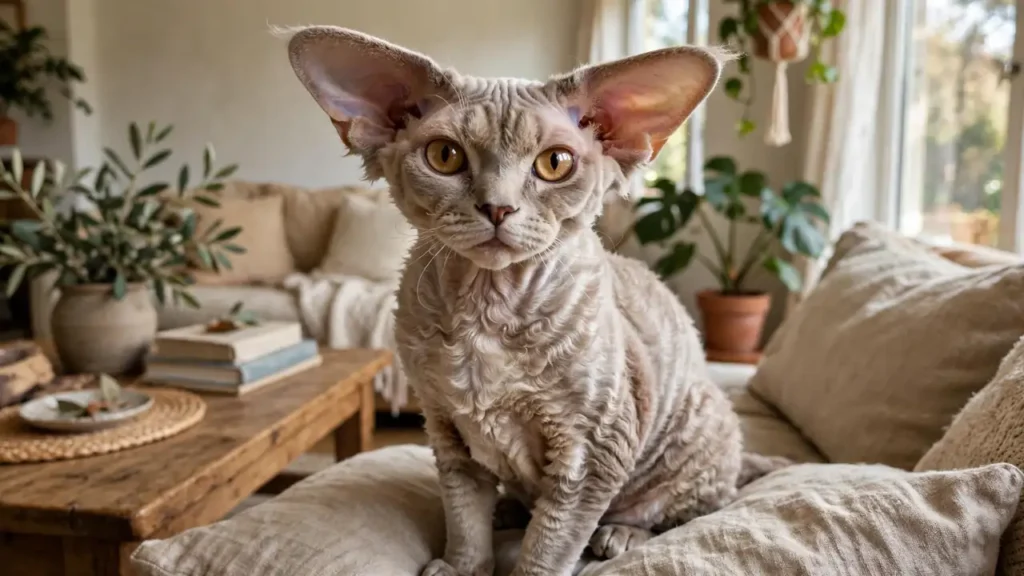
You can recognize this breed by its distinctive wedge-shaped head, high cheekbones, and small muzzle, which give the face an elfin appearance. Its large, oval eyes are set wide apart, adding to its alert and expressive look.
The ears are exceptionally large, wide at the base, and set low on the sides of the head. The slender, muscular body features a broad chest, long legs, and a tapering tail. Although the breed looks delicate, it is surprisingly strong and athletic.
Devon Rex Personality and Behavior
If you want a quiet, independent cat, keep looking. The Devon Rex cat is neither.
This is one of the most people oriented breeds you will ever meet. It wants to be involved in everything you do. It will follow you from room to room, supervise your cooking, and sit on your paperwork. One that is ignored will let you know about it, often by climbing onto your shoulder and purring directly into your ear.
These cats are clever, curious, and endlessly inventive. They learn to open doors and cabinets and invent games with whatever is handy.
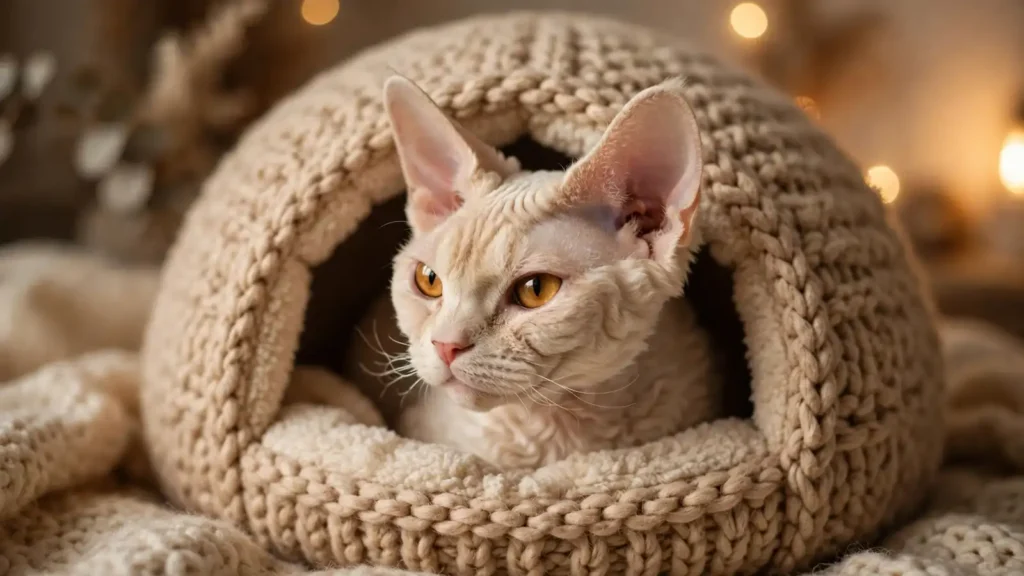
Affection runs deep. These cats love to snuggle under blankets and sleep pressed against their people. The famous shoulder perch is a breed specialty. The cat climbs up, settles around your neck like a living scarf, and rides along while you go about your day.
The famous shoulder perch is a breed specialty — the cat climbs up, settles around your neck like a living scarf, and rides along.
These cats learn to open doors and cabinets and invent games with whatever is handy.
It will follow you from room to room, supervise your cooking, and sit on your paperwork.
- Deeply affectionate — snuggles under blankets
- Minimal shedding
- A star with children
- Does not do well left alone for long hours
- Feels the cold — needs a warm home
- Ignored cats announce it — on your shoulder
Care Essentials
High quality food with a named animal protein first; portion control matters on a fine boned frame.
A gentle weekly wipe or light soft brush pass — never a stiff brush or metal comb. Check the large ears weekly.
Two or three play sessions a day, plus puzzle feeders and rotated toys.
Belongs indoors: climbing structures, scratching posts, cozy window seats and warm blankets.
Nutrition and Diet
A small body still needs complete nutrition.
Feed a high quality commercial cat food that lists a named animal protein first. This is an active, muscular breed, so adequate protein supports its energy and lean body condition.
Portion control matters. It is easy to overfeed a small cat, and extra weight is harder on a fine boned frame. Follow the feeding guidelines on the package as a starting point, then adjust based on body condition.

Grooming
Less is more when grooming a Devon Rex cat.
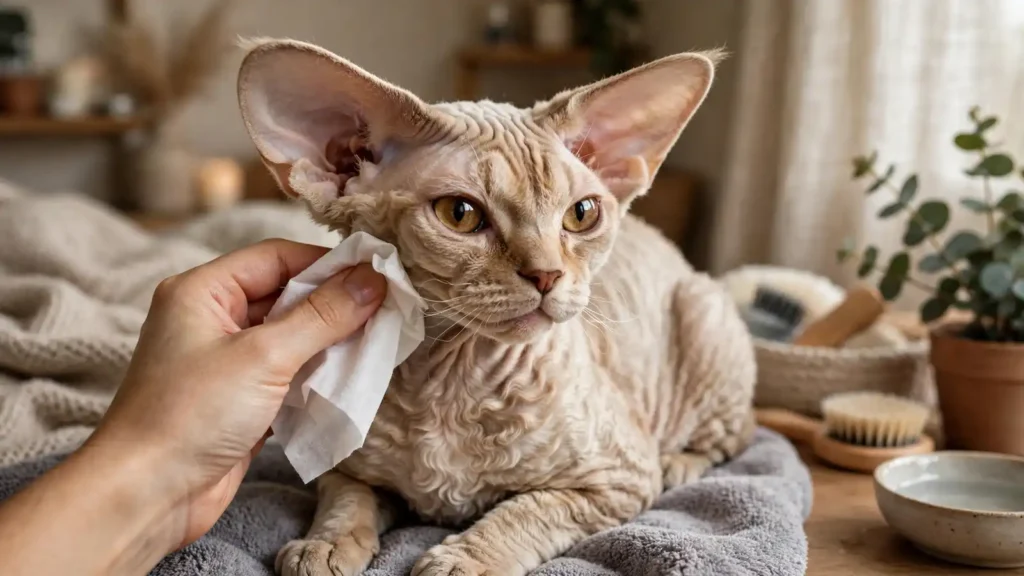
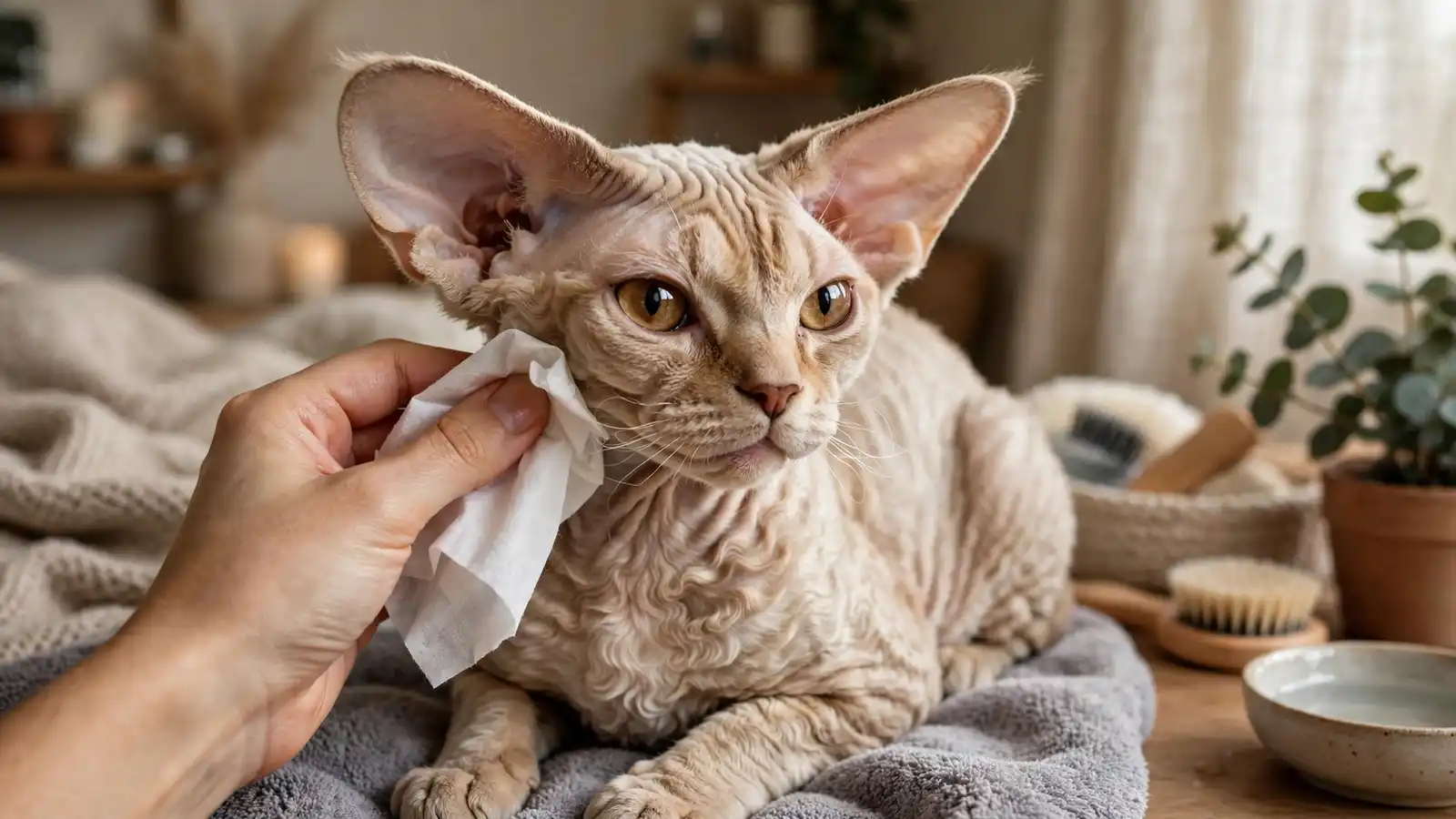
The wavy coat needs very little maintenance. A gentle wipe with a soft cloth or a light pass with a soft brush once a week is usually enough. The key word is gentle. The coat is fine and can break if brushed too hard. Never use a stiff brush or a metal comb.
Bathing is rarely needed. When a bath is necessary, use lukewarm water and a mild cat shampoo, then dry the cat thoroughly in a warm room. Check the large ears weekly and clean gently with a vet approved cleaner. Trim nails every couple of weeks and brush the teeth as often as your cat will allow.
Exercise and Enrichment
A tired Devon Rex is a well behaved Devon Rex.
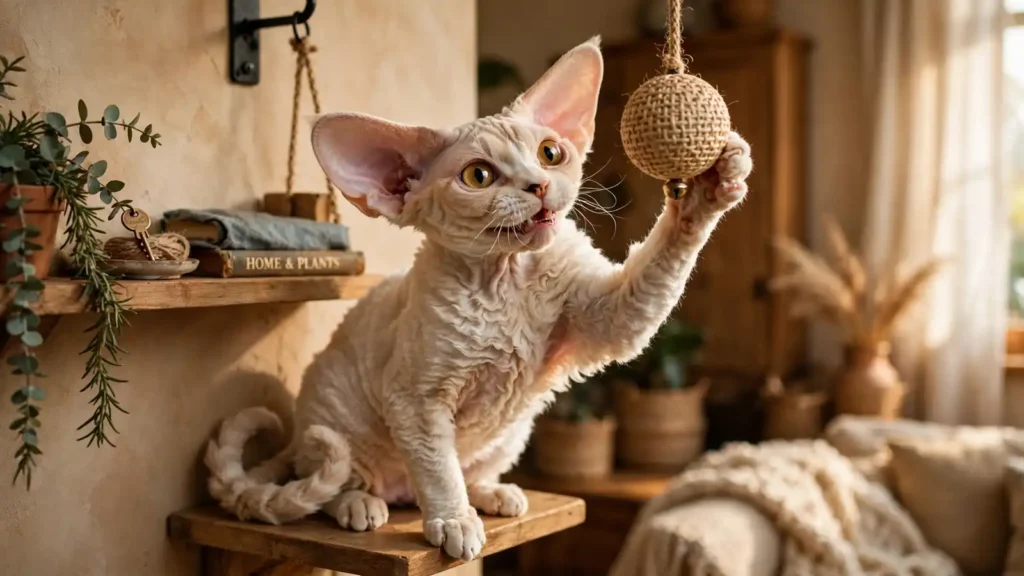
Daily interactive play is essential. Wand toys, feather teasers, and laser pointers all tap into the hunting instinct. This breed loves games that involve jumping and chasing. Two or three play sessions a day, even short ones, make a big difference.
Mental enrichment matters just as much. Puzzle feeders turn mealtime into a game. Rotate toys regularly, since a clever cat gets bored with the same mouse week after week. Cat trees, wall shelves, and window perches let the cat climb and burn energy. A tall cat tree near a sunny window is close to paradise for this breed.
Health
Knowing the health profile of the Devon Rex cat helps you stay ahead of problems.
Hypertrophic cardiomyopathy, a thickening of the heart muscle, is the most serious concern. It can develop silently, so regular vet checkups are important. Responsible breeders screen their breeding cats for heart disease, and you should ask about screening when choosing a kitten.
Hereditary myopathy is a muscle condition seen in some lines. Affected kittens may show weakness or an unusual gait. Patellar luxation, where the kneecap slips out of place, can also occur. Beyond breed specific issues, keep up with annual exams, dental care, parasite prevention, and a healthy weight.
A thickening of the heart muscle — the most serious concern. It can develop silently, so regular checkups matter; responsible breeders screen.
A muscle condition seen in some lines; affected kittens may show weakness or an unusual gait.
The kneecap can slip out of place.
Indoor and Outdoor Living
This breed belongs indoors.
The light coat offers little protection against cold, sun, or rough weather. Outdoors, the trusting and curious nature is a liability. These cats will walk up to strangers, dogs, and traffic with equal confidence.
Indoor life should be rich and interesting. Set up climbing structures, scratching posts, and cozy window seats. A secure catio or screened porch lets the cat enjoy fresh air safely. Some owners train their cats to walk on a harness and leash, which suits the love of new experiences.
Family Suitability
The Devon Rex cat fits families that want a full time companion.
With children, this breed is a star. These cats are sturdy enough for supervised play, patient with handling, and always up for a game. Teach children to be gentle with the fine coat.
Other pets are usually welcome. These cats tend to get along well with cat friendly dogs and other cats, and their social nature means they often prefer having a companion. The one caution is time. This breed does not do well left alone for long hours every day, so consider two cats for company or arrange for a pet sitter.
Finding a Breeder or Rescue
Take your time and choose carefully.
Look for a breeder who raises kittens in the home, handles them daily, and welcomes your questions. Ask about health screening for heart disease and muscle conditions in the breeding cats. A good breeder will ask you just as many questions. Expect a wait for a kitten from a reputable breeder.
Visit if you can. The kittens should be bright eyed, playful, and comfortable with people. Be wary of anyone who will not let you see where the cats live. Breed specific rescues and general shelters sometimes have Devon Rex cats or mixes looking for homes.
- Ask about screening for heart disease and muscle conditions
- Kittens raised in the home, handled daily
- Kittens bright eyed, playful, comfortable with people
- Check breed specific rescues and shelters
Quick Quiz: Is a Devon Rex Right for You?
Answer four questions. Tap yes or no.
Frequently Asked Questions
Are Devon Rex cats good for first time owners?
They can be, if you are ready for an involved pet. The Devon Rex cat is affectionate and fun, but it demands a lot of attention and play. Owners who are home often and enjoy an interactive cat usually do great.
Do Devon Rex cats shed a lot?
No, shedding is minimal. The fine wavy coat releases very little hair compared to most breeds. Regular gentle grooming keeps loose hair under control.
Are Devon Rex cats hypoallergenic?
No cat is truly hypoallergenic. This breed sheds less than many others, which helps some allergy sufferers, but it still produces the proteins that trigger allergies. Spend time with the breed before committing if allergies are a concern.
How long do Devon Rex cats live?
With good care, most live around 9 to 15 years. Regular vet visits, a quality diet, a healthy weight, and an indoor lifestyle all support a long life. Heart screening is especially valuable for this breed.
Why does my Devon Rex feel cold?
The light wavy coat provides less insulation than a normal coat. Many of these cats feel cool to the touch, especially on the ears and paws. Provide warm bedding and keep your home comfortably heated. Snuggling under blankets is normal behavior, but mention persistent shivering to your vet.
Can Devon Rex cats be left alone during the day?
They cope better than some clingy breeds but still prefer company. A typical workday is manageable for most adults, especially with toys, climbing spots, and a window view. Long or frequent absences call for a companion pet or a sitter.
The Devon Rex cat charms with oversized ears, an elfin face, and a mischievous streak. People obsessed and playful, it loves shoulders, laps, and being part of everything — a full time companion for families that want one.
Similar Breeds Worth Exploring
Related Breed Guides
Keep Exploring
Browse the full A to Z cat breed collection to compare personalities, or find out your cat’s age in human years with the cat age calculator.