Bull Shark
Bull Shark: The Shark That Swims From the Sea Into Rivers
The bull shark is the large shark that broke the rules of shark biology, thriving for weeks or months in freshwater rivers and lakes where no other big shark can follow. Stocky, blunt-snouted and armed with the strongest bite for its size of any shark measured, it lives closer to people than almost any other shark. This guide covers its freshwater secret, its size and diet, the truth about its dangerous reputation and the rivers — from the Amazon to the Zambezi — that it calls home.
By Emily Carter · Reviewed by our vet team · Updated 10 November 2026 · 10 min read
Thrives in fresh waterStrongest bite for its sizeFound on every warm coast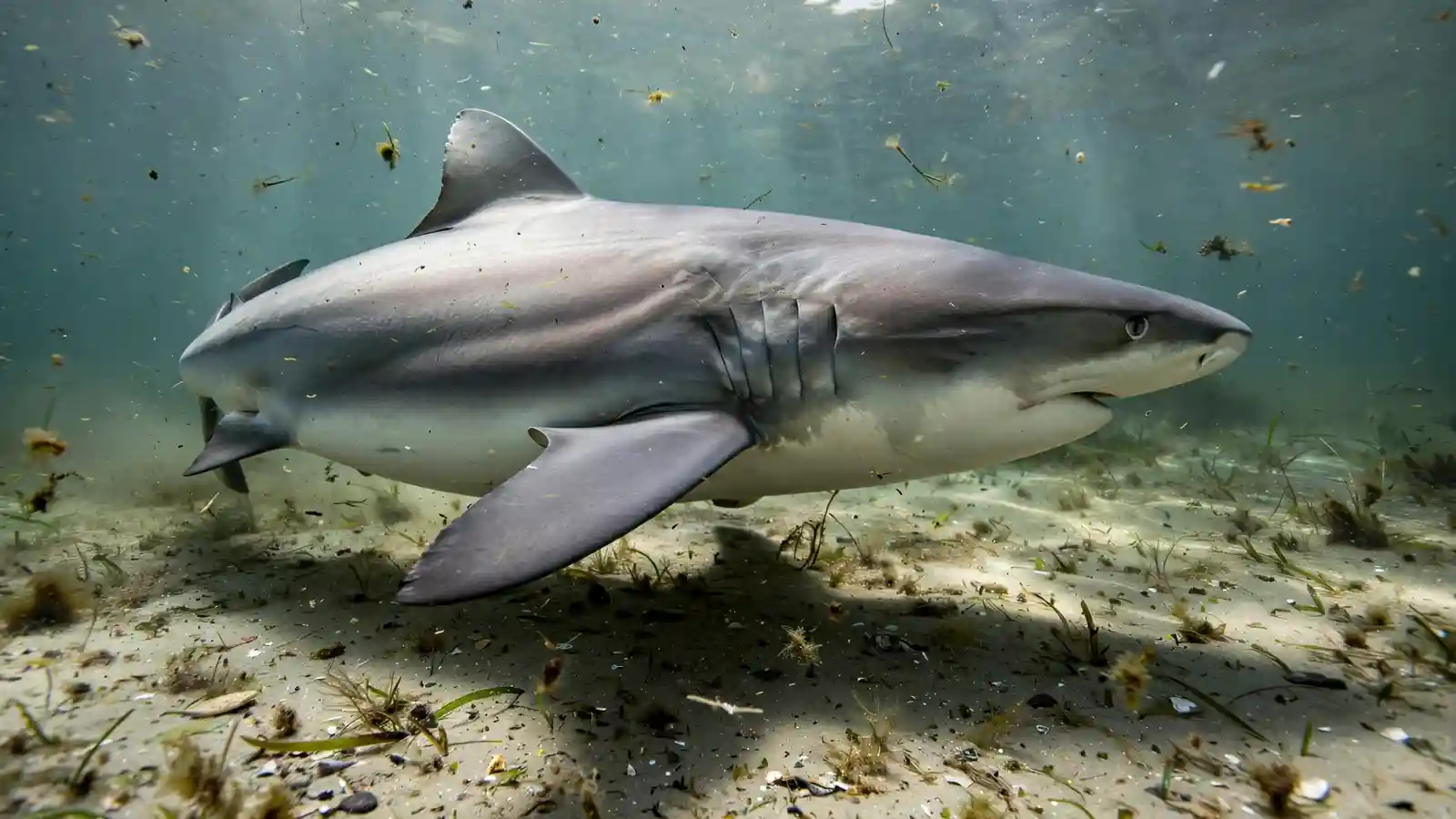
At a Glance
Bull Shark Size and Weight
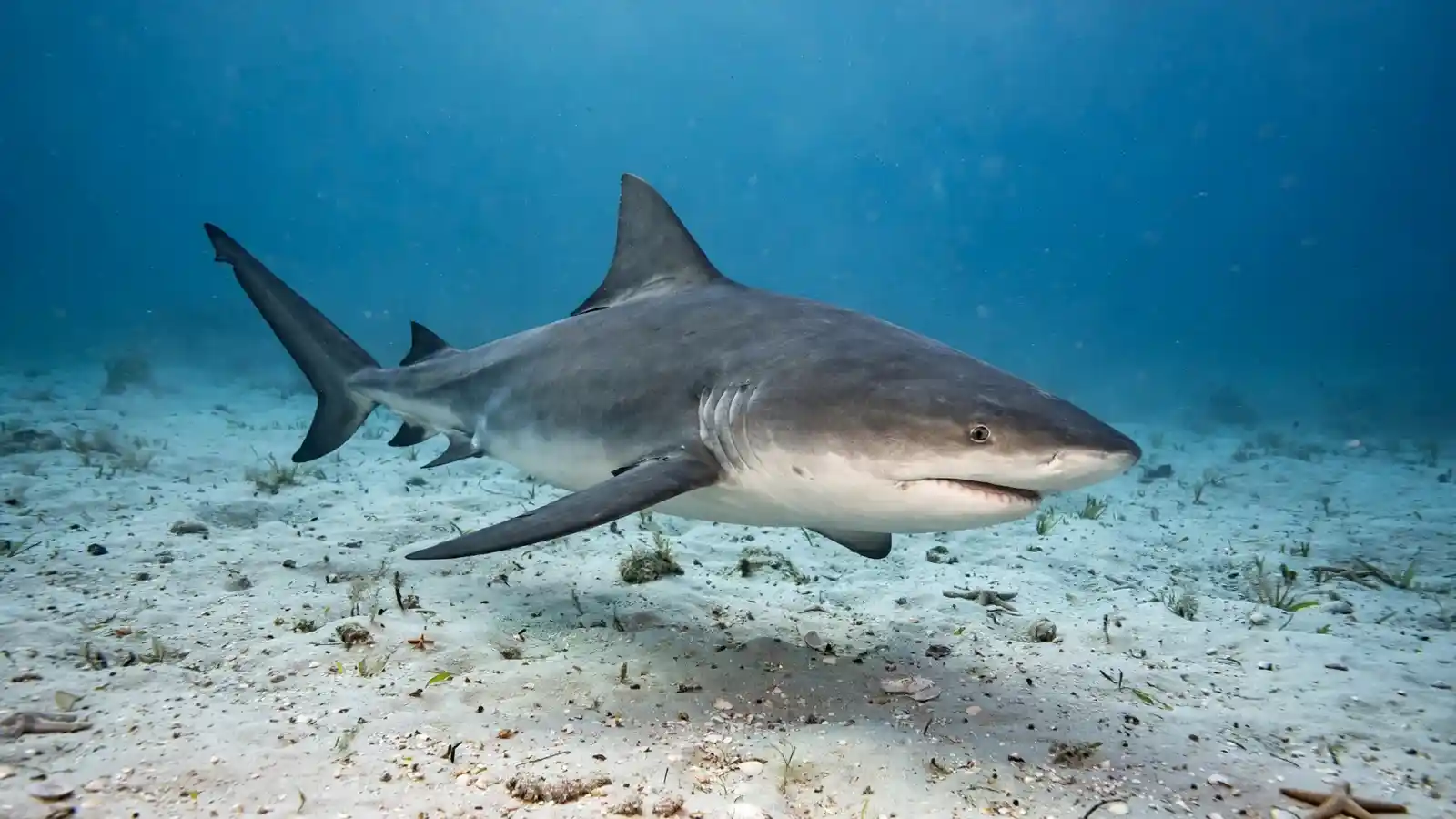
Bull shark size is more about bulk than length. Adults commonly measure about 2.3 to 3.4 metres (roughly 7.5 to 11 feet), with the largest animals reaching around 3.5 metres, and the body is exceptionally deep and heavy for its length — most adults weigh somewhere between about 90 and 230 kilograms, with big females at the top of that range. Females grow larger than males, maturing at around 2.4 metres and roughly 18 years of age, while males mature earlier, at about 14 to 15 years.
Growth is fast at first, around 18 centimetres in the first year, then slows steadily as the shark ages, and growth never truly stops. Longevity varies by region: studies in the Gulf of Mexico found females living into their late twenties, and a female off South Africa was aged at 32 years, around the maximum known for the species. It is a solid, middle-sized shark whose reputation rests not on record length but on power and where it chooses to swim.
Its proportions place it firmly among its relatives, and you can browse the full species record for Carcharhinus leucas to see how scientists classify it and what the research record holds. Among its kin it is unmistakable — which is exactly why it rewards a closer look.
Appearance: A Blunt Head Built Like a Bull
The name is written all over the animal. The snout is short, broad and bluntly rounded — more bull than shark — the eyes are small, and the whole front end looks built for pushing through murky water rather than slicing through clear blue seas. The back and sides are grey, fading to a pale belly, the pectoral fins are broad and stout, and the first dorsal fin is large and triangular. There is no ridge between the dorsal fins, a small detail that helps separate this species from some of its requiem shark relatives.

That stocky frame hides serious weaponry. The upper teeth are broad and triangular with serrated edges for cutting, the lower teeth narrower for gripping, and the jaws behind them are the strongest, weight for weight, of any shark yet measured. In turbid estuary water the shark hunts mostly by smell, by sensing pressure waves along its lateral line and, in the final moment, by the electroreceptors packed around that blunt snout — eyesight is the sense it needs least.
Bull Sharks in Freshwater: Rivers, Lakes and Estuaries
Bull sharks in freshwater are the species’ defining story. Most sharks die in fresh water because their bodies, loaded with salt and urea to match the sea, flood with water and lose salts. This shark instead rewrites its chemistry: entering a river, it cuts the urea in its blood by about half, urinates far more to shed the incoming water, and uses specialised kidneys and a rectal gland to hold on to salt. The result is a euryhaline shark that can stay in pure fresh water indefinitely, one of very few large sharks that can.

The records read like tall tales but are documented. Bull sharks have travelled about 4,000 kilometres up the Amazon to Iquitos in Peru, far up the Mississippi River in the United States, and up the Zambezi, Ganges, Brahmaputra and Tigris systems. In Africa the same shark is the Zambezi shark, named for its river. The Lake Nicaragua shark was once described as its own landlocked species, until tagging showed the lake’s sharks are bull sharks that run the San Juan River rapids between the lake and the Caribbean Sea. Females also pup in low-salinity estuaries, and the young grow up in those sheltered nurseries before moving to the sea.
Diet and Feeding
The diet is as flexible as the habitat. Sea catfish and stingrays are staple prey in many estuaries, along with mullet, menhaden, jacks and other bony fish; as bull sharks grow they add other sharks and rays, sea turtles, birds and the occasional small mammal, and they are not above eating their own species. In rivers the menu turns freshwater — local fish in the Amazon, the Ganges and Lake Nicaragua — which is exactly what a shark that can live anywhere would be expected to do. In the same warm shallows it often hunts alongside the hammerhead shark, whose wide head sweeps the bottom for the same buried rays.
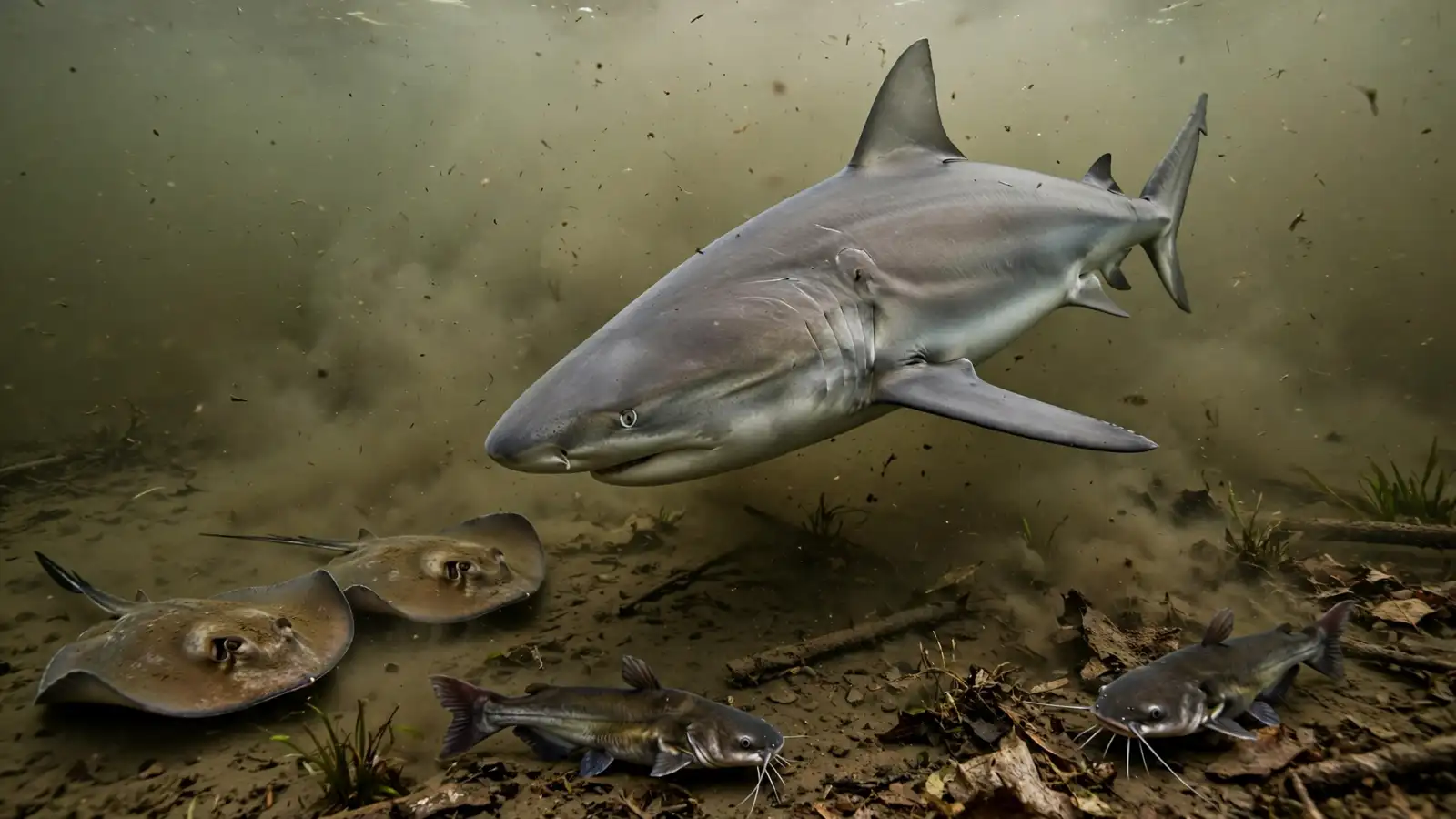
Hunting style matches the water. In murk where little can be seen, the shark works low over the bottom, often using a bump-and-bite approach: a nudge to test the object, then a bite if it proves to be food. The bull shark bite force behind that bite is exceptional — researchers measured about 5,914 newtons (roughly 1,330 pounds-force) in a 2.9-metre adult, the highest recorded for a shark of its size and more, weight for weight, than a great white delivers. Turtle shells and stingray spines are no obstacle to jaws like that.
Reproduction and Pups
Bull sharks are viviparous: females carry their young with a placental connection and give birth to live litters, commonly of around 1 to 13 pups, each roughly 60 to 80 centimetres long. Mating leaves its marks — males bite to hold on, and mature females often carry scars on their fins. After a gestation of roughly 10 to 12 months, females move into shallow estuaries and river mouths to pup, choosing the same low-salinity nurseries generation after generation.
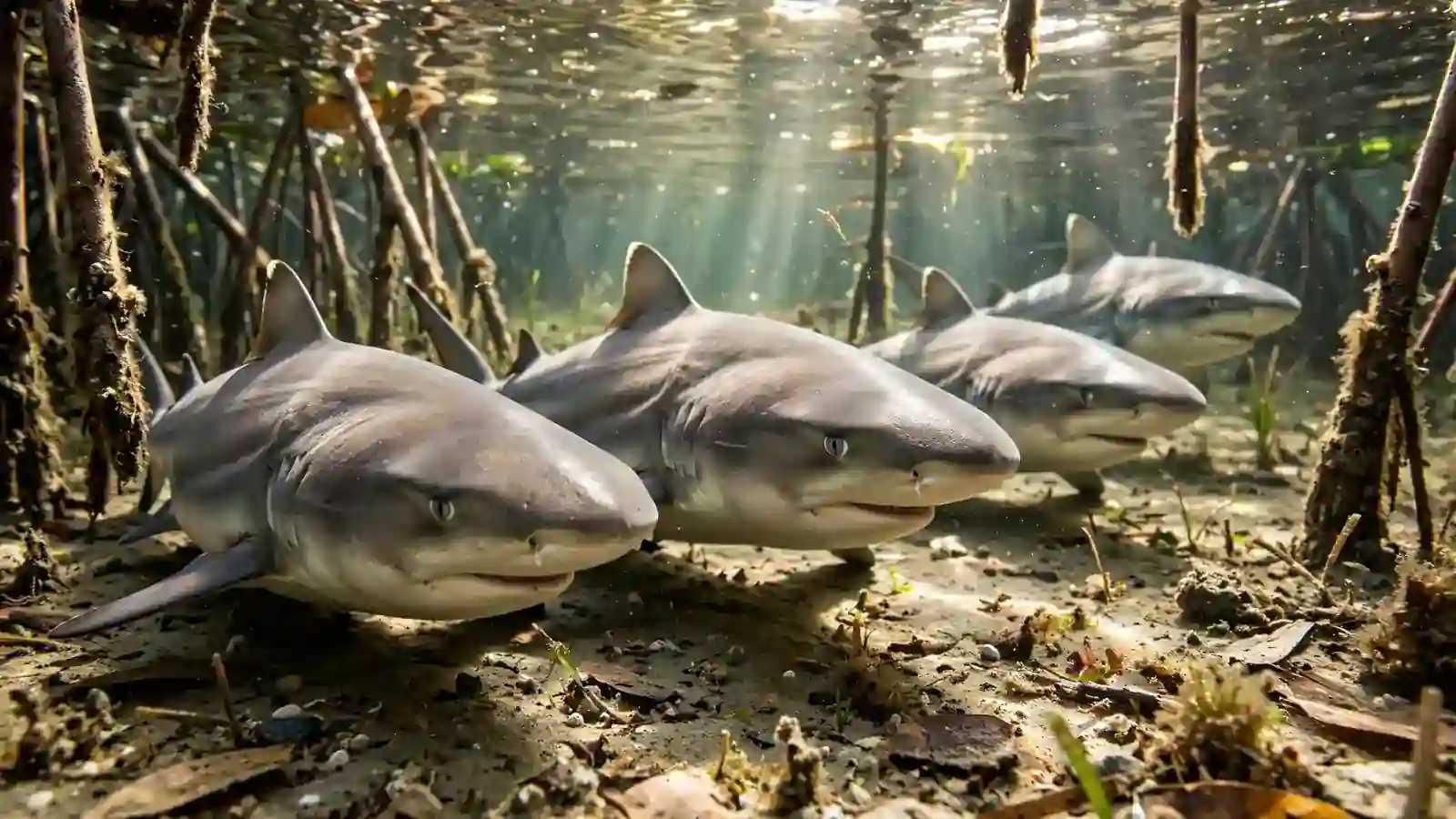
Those nurseries are the engine of the species. Young bull sharks spend their first years in water too fresh for most of their predators, growing quickly on abundant fish before gradually ranging into saltier water. It is a brilliant strategy with one weakness: estuaries are exactly where people build. Dredging, development and netting in nursery areas strike the species at its most vulnerable stage, long before a pup ever reaches the ocean.
Threats and Conservation
The bull shark is listed as Vulnerable, and its closeness to shore shapes its troubles. It is caught in coastal fisheries for meat, fins and liver oil, taken in gillnets and beach seines, and targeted in some shark-control programmes, while the estuaries its pups depend on are among the most developed and altered habitats on Earth. Long-term catch records from parts of its range show real declines, and a fish that matures at 14 to 18 years cannot quickly replace adults that are removed.
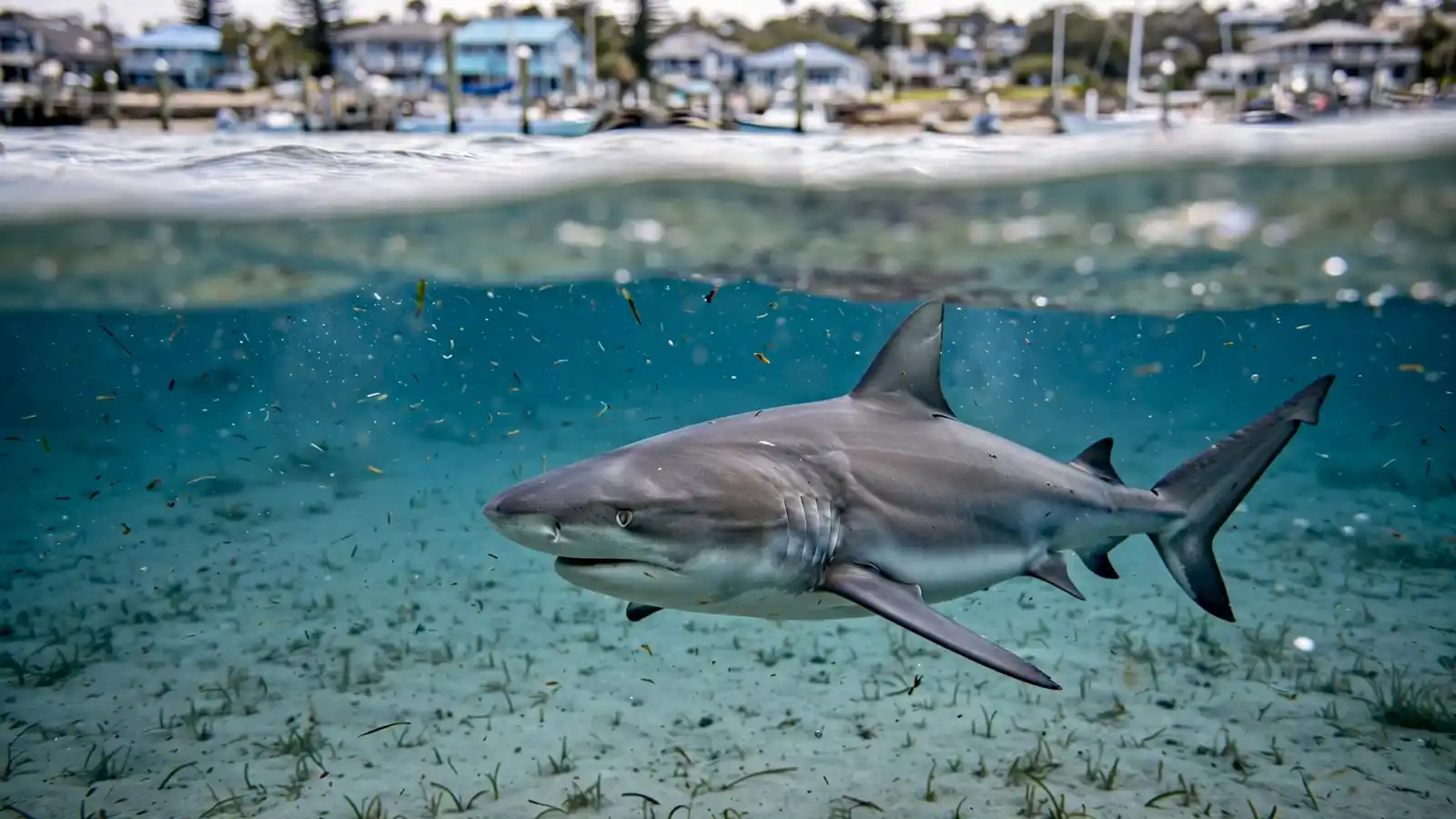
There are bright spots: several regions have restricted gillnetting in nursery estuaries, which appears to have helped young sharks survive, and the species’ toughness and wide range give it more resilience than many sharks. Still, conserving this shark means conserving muddy, unglamorous river mouths and mangrove creeks — the working water where the pups grow up — as much as protecting the adults in the sea.
Fun Facts
- A bull shark in the Amazon was recorded about 4,000 kilometres from the sea, near Iquitos in Peru.
- The Lake Nicaragua shark was once named as a separate species before tagging proved the lake’s sharks travel to the Caribbean and back.
- Its measured bite of about 5,914 newtons is the strongest, weight for weight, of any shark studied.
- Entering fresh water, it cuts the urea in its blood by about half and urinates far more to stay in balance.
- In southern Africa the very same species is called the Zambezi shark after the river it swims up.
- Pups are born in estuaries so fresh that most large predators cannot follow them there.
Frequently Asked Questions
Can Bull Sharks Really Live in Freshwater?
Yes. Bull sharks are euryhaline, meaning they can adjust their body chemistry to fresh water by reducing urea in the blood, urinating more and retaining salt through specialised kidneys and a rectal gland. They have lived for long periods in rivers and lakes, including the Amazon, the Mississippi, the Zambezi and Lake Nicaragua.
How Dangerous Are Bull Sharks to People?
Bull sharks deserve respect: they are large, powerful and often swim in the shallow, murky water where people swim and wade, including river mouths. Bites do occur and can be serious. Even so, attacks remain rare events, and the shark’s reputation owes as much to where it lives as to any unusual aggression.
Why Is the Bull Shark Considered the Most Dangerous Shark?
The bull shark is often called the most dangerous shark because of a combination rather than a single trait: a very powerful bite, a bold temperament, tolerance of shallow murky water and the unique ability to enter rivers and lakes. That mix puts it in contact with people more often than deep-water species.
How Big Do Bull Sharks Get?
Bull sharks commonly grow to about 2.3 to 3.4 metres (roughly 7.5 to 11 feet) and reach a maximum of around 3.5 metres. They are exceptionally heavy for their length, with most adults weighing about 90 to 230 kilograms. Females grow larger than males and can live to about 32 years.
What Do Bull Sharks Eat?
Bull sharks eat sea catfish, stingrays, mullet and other bony fish, plus other sharks, sea turtles, birds and small mammals as they grow. In rivers they switch to freshwater fish. They hunt low over the bottom in murky water, using smell, pressure sensing and electroreception more than eyesight.
How Powerful Is a Bull Shark’s Bite?
A bull shark’s bite has been measured at about 5,914 newtons, roughly 1,330 pounds-force, in a 2.9-metre adult. Weight for weight that is the highest bite force recorded for any shark, higher than a great white’s relative to size, and strong enough to crush turtle shells and stingray spines.
Where Do Bull Sharks Live?
Bull sharks live in warm coastal waters worldwide: the Americas from Massachusetts to Brazil and Baja California to Ecuador, Africa, India, Southeast Asia and Australia. They favour shallow water under about 30 metres and regularly enter estuaries, rivers and lakes, including the Amazon, Zambezi, Ganges and Lake Nicaragua.
Similar Species Worth Exploring
Keep Exploring
Keep exploring the shark family: meet the gentle whale shark, compare the ocean-going great white shark, or browse every species in our guide to the types of sharks. No shark blurs the line between river and sea, and none repays a closer look more, than the bull shark.