Blue Footed Booby
Blue Footed Booby: the bird that wears its CV on its feet
The blue footed booby is a Galápagos icon whose absurd turquoise feet are not decoration — they are an honest health certificate that fades within days if the bird stops catching fish, and the centrepiece of one of the great courtship dances in nature. Half the world’s breeding pairs live on a few dry Pacific islands.
By Emily Carter · Reviewed by our vet team · Updated 10 November 2026 · 8 min read
Half of all pairs breed in the GalápagosBlue fades in about 48 hours without fishPlunge-dives from up to 25 m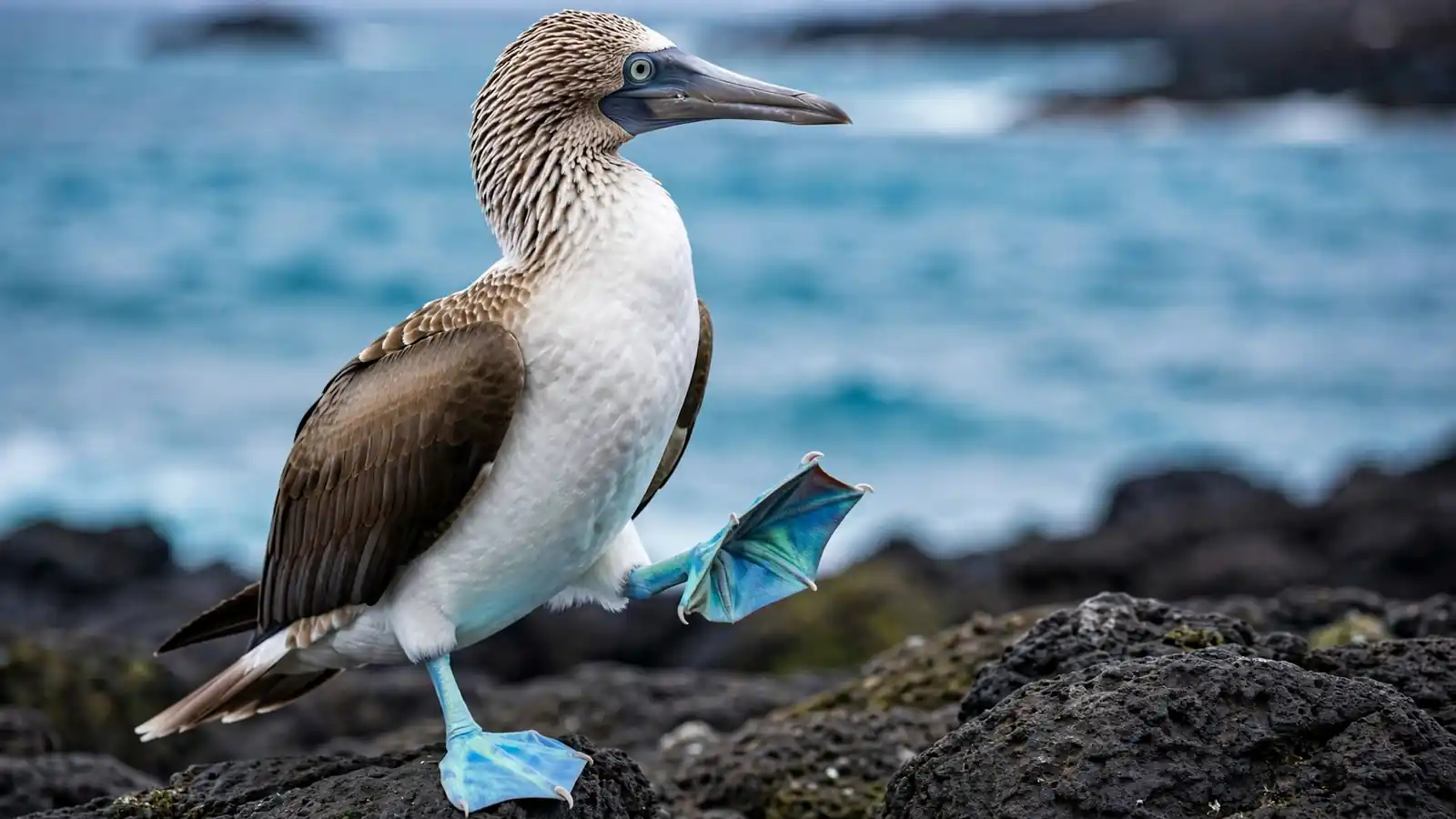
At a Glance
A blue footed booby looks like a bird designed by a committee with a sense of humour — chocolate-brown wings, snow-white belly, a streaked, piratical head, and feet the colour of a swimming pool. But the joke is serious science: those feet are a live readout of the bird’s health, its courtship revolves around displaying them, and its whole Galápagos population rises and falls with the sardine shoals. Silly name, serious bird.
Why the Blue Footed Booby Has Blue Feet
The blue is chemistry. Fresh fish are rich in carotenoid pigments; the booby’s body shunts those pigments into the skin of its feet, where collagen structure in the skin scatters light to sharpen the colour into that electric turquoise. It is the same family of pigments that makes carrots orange and flamingos pink — deployed here as a signal.
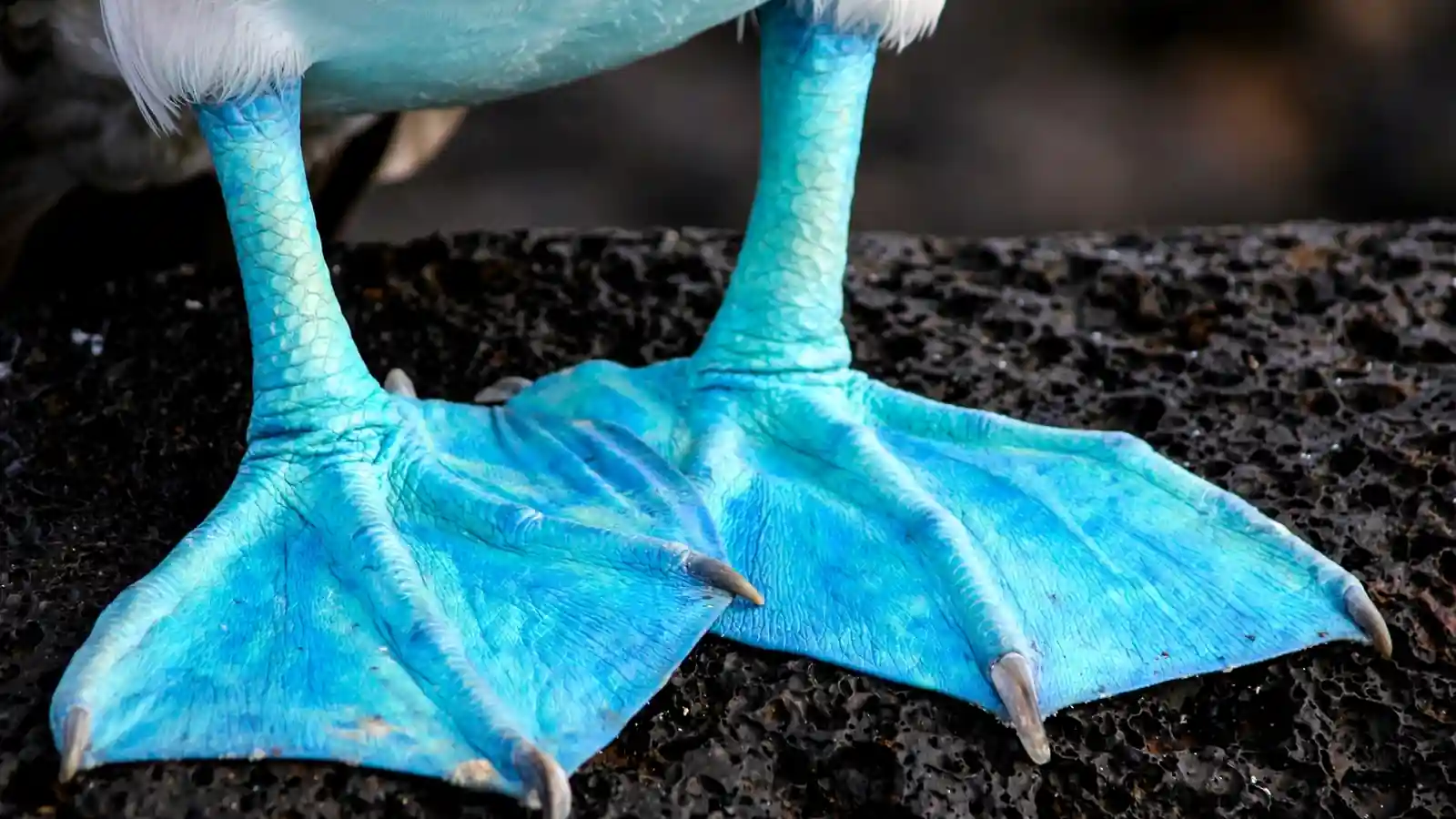
And the signal cannot be faked. A booby that stops eating well loses its brightness within about 48 hours, as the pigments are withdrawn to support the immune system. Experiments with the birds have shown that mates respond within days when a partner’s feet are dulled or brightened. So when a female inspects a male’s feet, she is not admiring the colour — she is reading his recent fishing record, his parasite load and his immune health, all in one glance. The species account at the blue footed booby’s profile covers the identification details.
The Blue Footed Booby Mating Dance: High Steps and Sky-Points
Courtship is a slow-motion parade. The male marches in place with absurd, exaggerated high steps, lifting each blue foot to display the sole, wings half-spread for balance. Then comes the sky-point: he throws his head back until his long bill aims at the clouds, sweeps his wings behind him, cocks his tail up and lets out a thin whistle. The female answers with a guttural honk — you can sex a calling booby by ear.
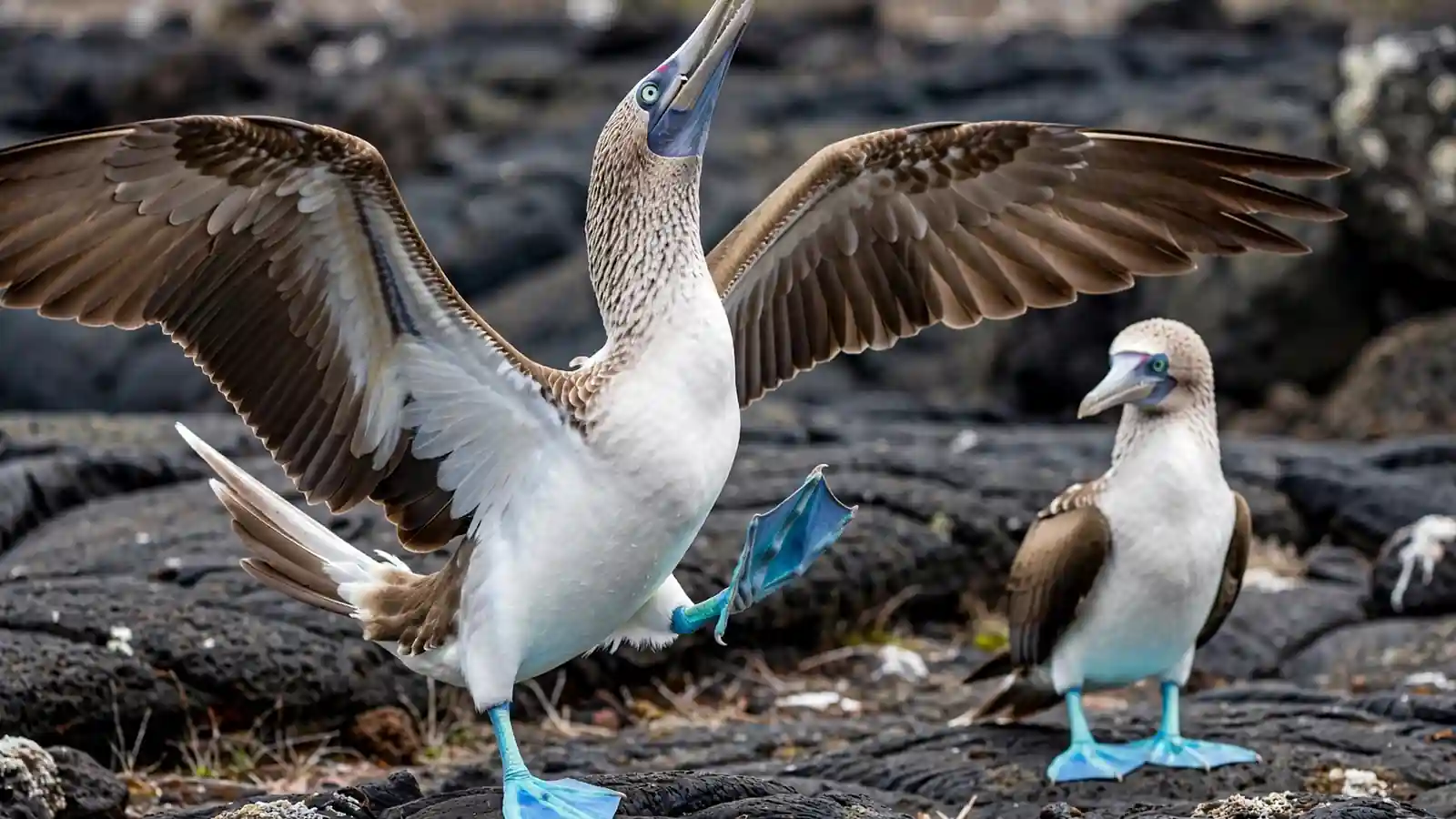
Both sexes also solemnly present each other with twigs and pebbles, carried in with great ceremony and then ignored — nesting material for a nest that will never be built, since boobies lay on bare ground. The whole performance is a negotiation: foot colour says ‘I am healthy’, the dance says ‘I am committed’, and pairs that pass both tests settle onto a patch of open ground, often for years — boobies are generally monogamous, returning to the same mate and the same few square metres.
Size, Build and a Name That Means ‘Clown’
The blue footed booby is a mid-sized seabird — about 81 centimetres (32 inches) long, 1.5 kilograms (3.3 lb), with long, narrow wings spanning roughly 1.5 metres (5 feet). The spear of a bill, the forward-facing eyes that give it a permanently startled, cross-eyed look, and the torpedo body are all fishing equipment. Even the nostrils are sealed shut, an adaptation to a life spent smashing face-first into the sea.
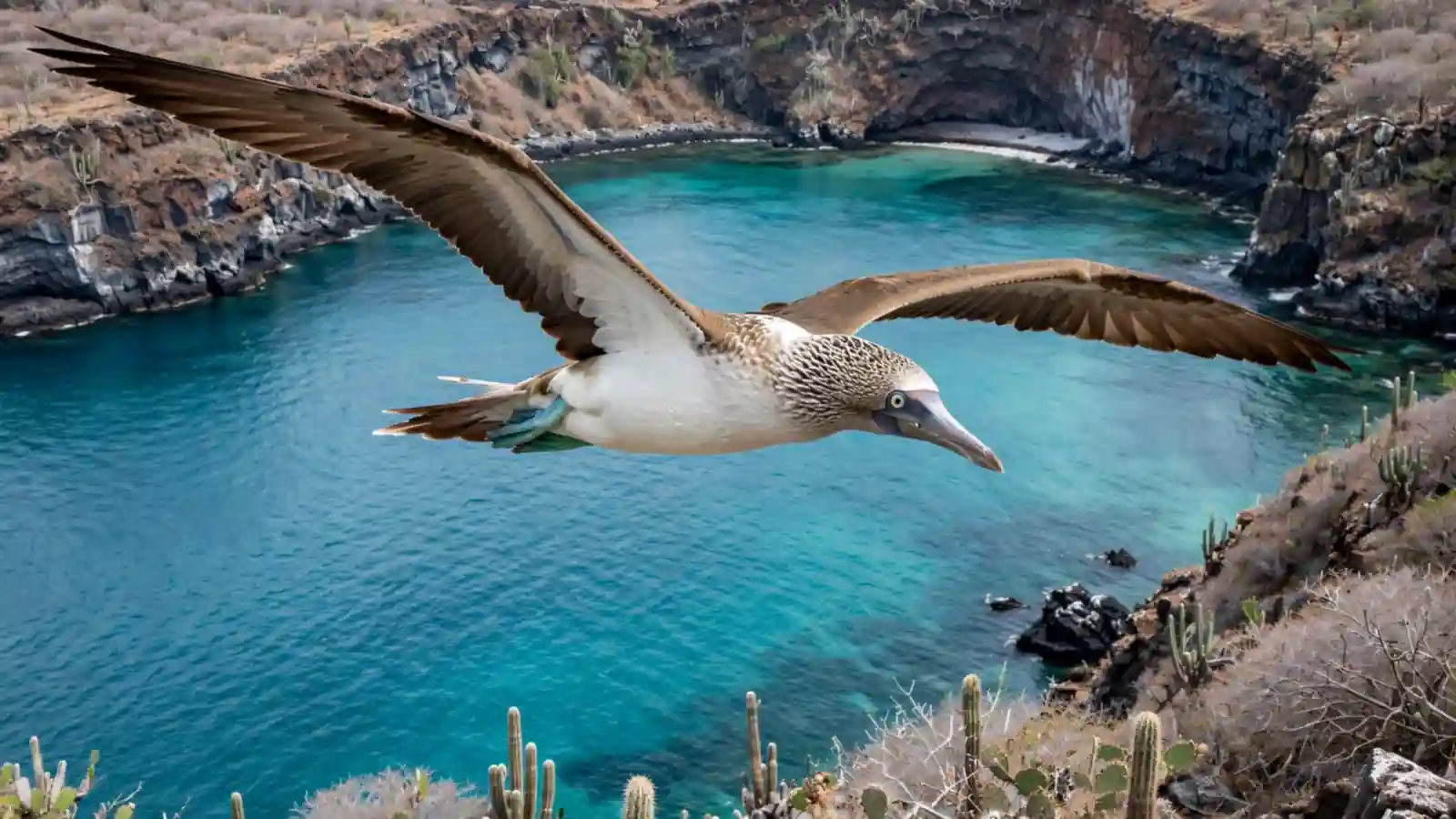
Females are slightly the larger sex, and the surest way to tell the two apart is the eye: the female’s pupil appears much bigger, ringed by a dark pigment patch, while the male’s eye looks like a small dark dot. As for the name — ‘booby’ comes from the Spanish bobo, fool or clown, a sailor’s slur on a bird so tame ashore it could be caught by hand. On land, admittedly, they are clowns. In the air and under water, they are anything but.
Diet: Plunge-Diving for Sardines
The booby hunts the way its gannet cousins do: on the wing, high over a bait ball, then folding into a dive. From as high as 25 metres it spears downward, wings swept back, hitting the water at highway speed and arrowing several metres down — snatching sardines and anchovies on the descent or paddling after them with half-open wings. Boobies often dive in loose parties, raining onto a shoal from all directions.
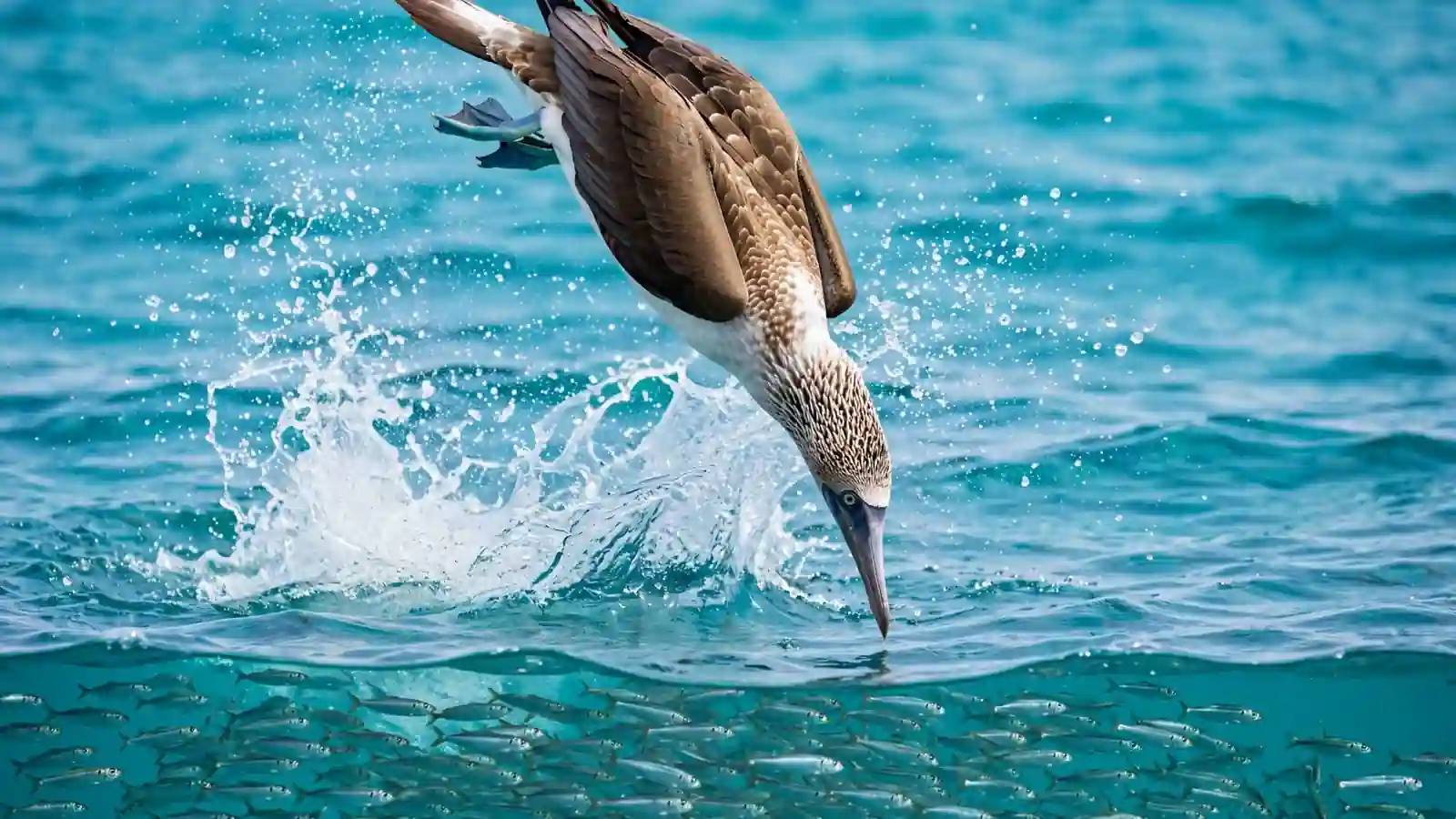
The menu is schooling fish — sardines first of all (meet them in our sardine profile), plus anchovies, mackerel and squid. That dependence is the booby’s vulnerability: Galápagos studies found the population declined as sardines grew scarce, and for years the birds largely stopped breeding — a seabird can survive lean seasons, but it will not raise chicks it cannot feed.
Eggs, Chicks and the Sibling Rule
A female lays two or three chalky eggs, spaced several days apart, directly onto bare ground inside a ring of guano that marks the territory. Both parents incubate for 41 to 45 days — not by sitting on the eggs, but by standing on them, wrapping those famous vascular feet over the shells like a warm blanket. The feet are incubators as well as ornaments.
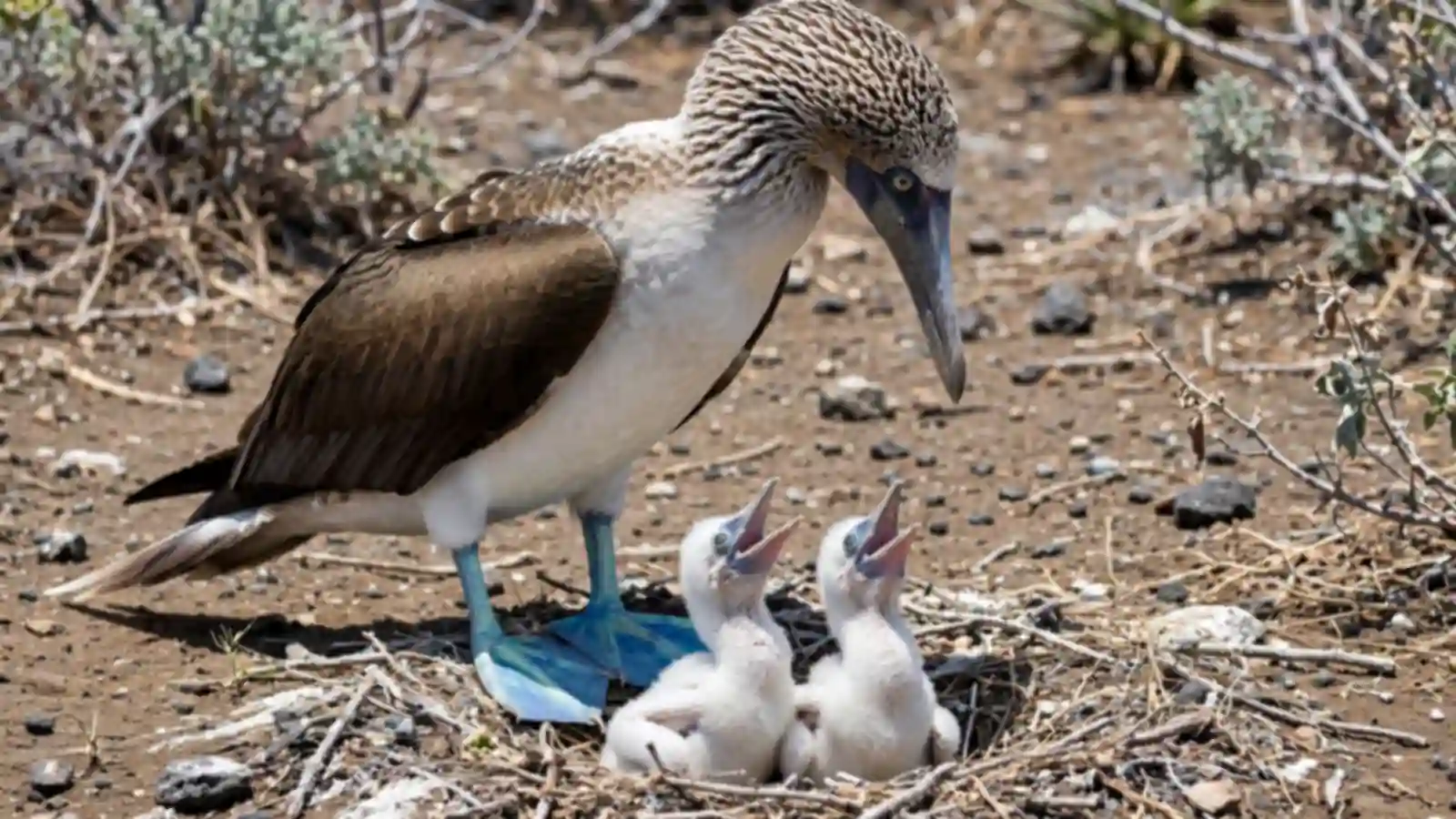
The staggered laying means staggered hatching, so the first chick is days older and significantly bigger than its siblings. In good years the whole brood thrives. In lean years the older chick’s dominance turns deadly: it monopolises food and may push its sibling out of the nest ring to die — a brutal insurance policy that concentrates scarce food on the chick most likely to survive. It sounds cruel; on an island where sardines fail, it is arithmetic.
Where They Live: The Galápagos Heartland
Blue footed boobies breed along the eastern Pacific from Mexico to Peru, but the species’ beating heart is the Galápagos, where roughly half of all breeding pairs nest on dry, open ground — lava fields, bare slopes, cliff edges — always within easy flight of productive water. Colonies are loose, noisy neighbourhoods of pairs, each defending its guano ring and not one inch more.
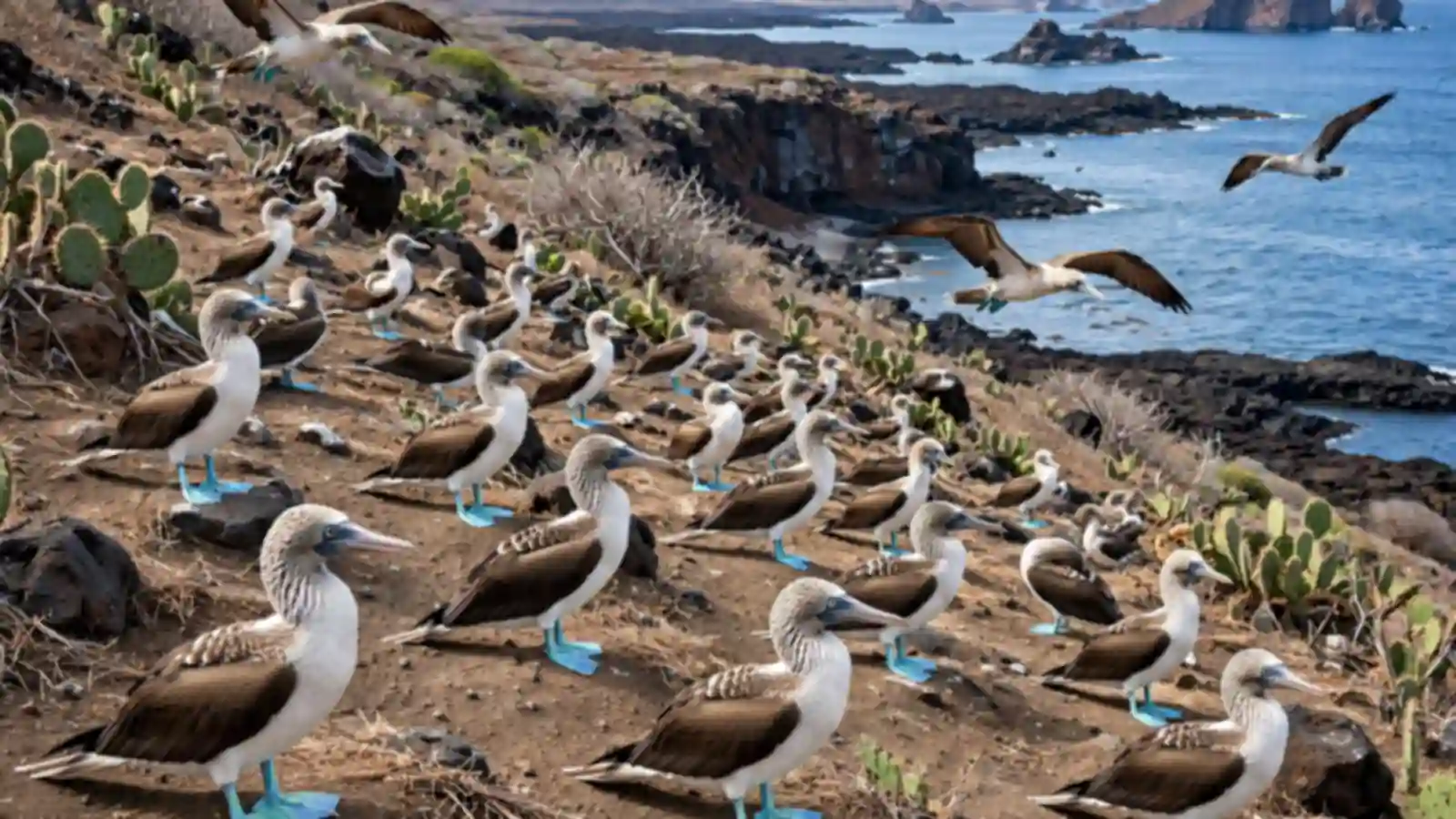
Globally the species is listed as Least Concern — it is still widespread and numerous. But the Galápagos chapter is a warning in progress: a long decline tied to missing sardines, with recovery now hinging on the fish. The booby belongs to our types of seabirds hub, alongside its close cousin the red footed booby — same family, different colour scheme, nests in trees instead of on the ground.
Fun Facts
- A booby’s blue feet can visibly dull within about two days of poor feeding — and brighten again just as fast when the fish return.
- Boobies incubate their eggs with their feet, wrapping the warm, blood-rich webs over the shells.
- The sexes sound different: males whistle, females honk — the opposite of what the sizes suggest.
- The female’s pupil only LOOKS bigger: a dark pigment ring around it creates the illusion, and birders use it to sex boobies at a glance.
- A plunge-diving booby can hit the water at around 95 km/h — its skull and sealed nostrils are built for the impact.
- Pairs exchange ceremonial twigs and pebbles during courtship, then nest on bare ground anyway.
Frequently Asked Questions
Why Are Blue Footed Booby Feet Blue?
Because of carotenoid pigments from the fresh fish the bird eats. The pigments collect in the skin of the feet, and the colour is structural as well as dietary: a booby that stops catching fish loses the brightness within roughly 48 hours. That makes the blue an honest, impossible-to-fake signal of health — which is why mates judge it so closely.
How Big Is a Blue Footed Booby?
About 81 centimetres (32 inches) long, with a wingspan of roughly 1.5 metres (5 feet) and a weight near 1.5 kilograms (3.3 lb). Females are slightly larger than males and can be told apart by the eye: the female’s pupil looks bigger, because a dark ring around it makes the eye appear larger.
What Is the Blue Footed Booby Mating Dance?
A slow, deliberate courtship routine built around showing off the feet. The male high-steps, lifting each bright foot in exaggerated strides, then sky-points — wings swept back, tail cocked, bill aimed at the sky with a whistle — while the female parades and honks in reply. Pairs also present each other with twigs and pebbles they will never build with.
Where Do Blue Footed Boobies Live?
Along the Pacific coast of the Americas, from Mexico to Peru — but the famous heartland is the Galápagos Islands, where around half of all breeding pairs nest. They are birds of dry, open ground near the sea: colonies sit on bare slopes and lava fields, always within commuting distance of fish-rich water.
What Do Blue Footed Boobies Eat?
Schooling fish — sardines above all, plus anchovies, mackerel and similar prey — caught by plunge-diving. A booby folds its wings and spears into the sea at speed, sometimes from 25 metres up, snatching fish on the way down or chasing them underwater with half-open wings. The Galápagos birds have struggled in years when the sardines fail.
How Many Eggs Does a Blue Footed Booby Lay?
Usually two or three, laid days apart — unlike most birds, which lay daily. Incubation lasts 41 to 45 days, with both parents taking turns warming the eggs not under the body but under their great webbed feet. Because the eggs hatch days apart too, the eldest chick is always bigger than its siblings.
Are Blue Footed Boobies Endangered?
Not globally — the species is listed as Least Concern, spread widely along the eastern Pacific. The concern is local: in the Galápagos, the population fell markedly over recent decades as sardines, their key food, became scarce, and breeding largely stalled for years. Protecting the fish protects the booby.
Why Is It Called a Booby?
‘Booby’ comes from the Spanish bobo, fool or clown — a sailor’s slur on a bird so tame ashore it could be caught by hand.
Do Blue Footed Boobies Mate for Life?
Generally, yes. Boobies are generally monogamous, returning to the same mate and the same few square metres of ground, often for years.
How Many Blue Footed Boobies Live in the Galapagos?
Roughly half of all breeding pairs in the world nest in the Galápagos, on dry, open ground — lava fields, bare slopes and cliff edges — within easy flight of productive water.
Similar Species Worth Exploring
Keep Exploring
Compare the whole family in our types of seabirds hub, meet the tree-nesting red footed booby, and follow the food chain down to the sardine shoals. Then come back to the dancer with the swimming-pool feet — the one and only blue footed booby.