Argonaut Octopus
Argonaut Octopus: The Paper Nautilus That Is Not a Shell
The argonaut octopus carries a paper-thin egg case that is not a true shell, and its males are 600 times lighter than its females. It is the paper nautilus — the octopus that sails the open ocean in a shell it makes itself.
By Emily Carter · Reviewed by our vet team · Updated 10 November 2026 · 9 min read
Paper-thin egg caseMales 600× lighterNot a true shell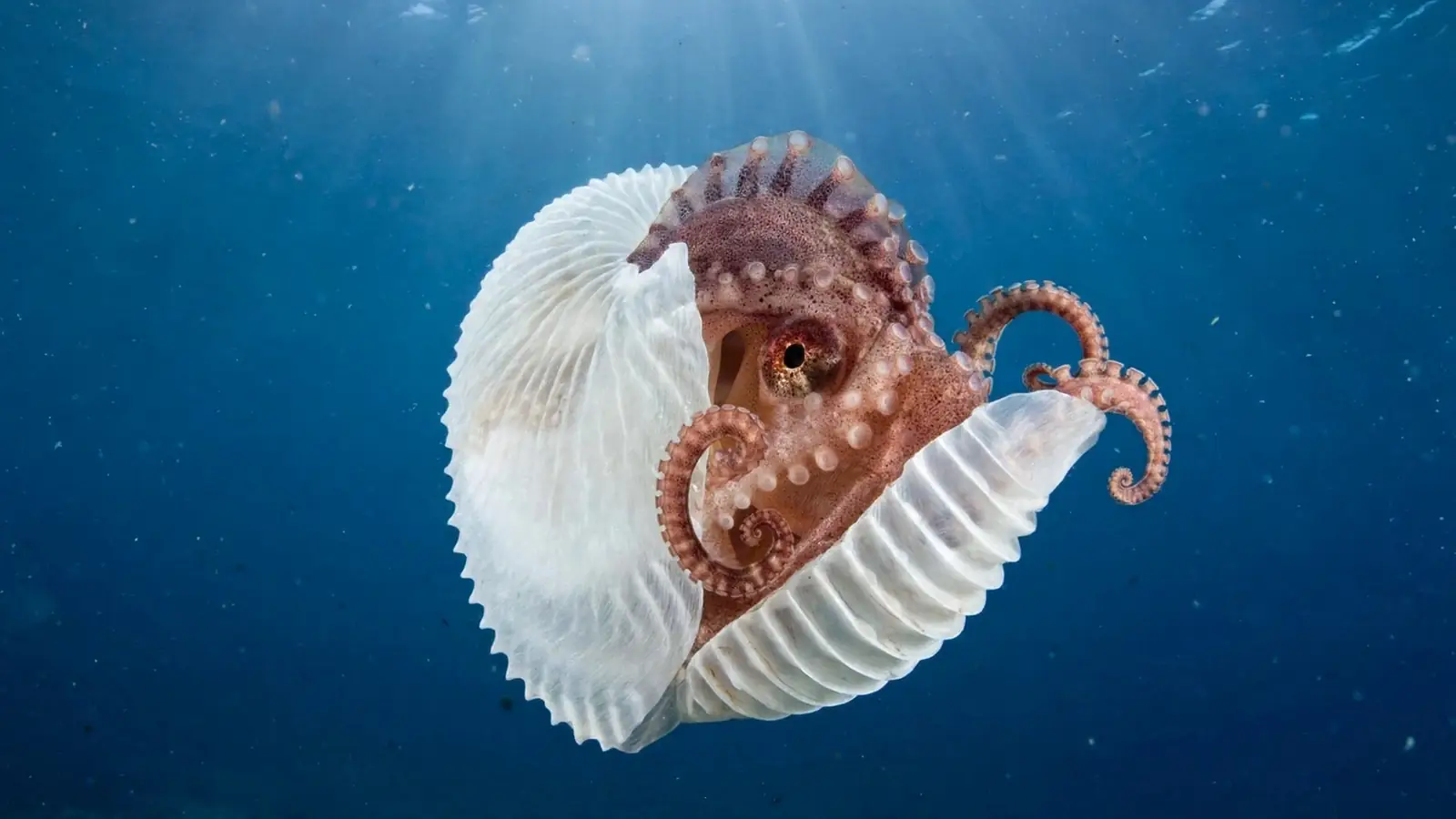
At a Glance
The argonaut octopus is a group of four living species in the genus Argonauta, the paper nautilus, whose females carry a paper-thin egg case that is not a true shell. Females reach 10 cm, their cases 30 cm, and the males are under 2 cm — about 600 times lighter.
Argonaut Octopus Size: Females 600 Times the Males
The argonaut octopus shows one of the most extreme size differences between the sexes in the animal kingdom. Females reach 10 cm, and their egg cases reach 30 cm; males are under 2 cm long and about 600 times lighter than the females. A male argonaut octopus is a speck beside the female, and the two look like different animals.
The size difference is the key to the argonaut’s life. The female is big enough to make and carry a 30 cm egg case; the male is small enough to live his whole life as a tiny drifter, finding a female, mating once, and dying. It is a division of labour written into the body: she builds the shell, he delivers the sperm, and neither could do the other’s job.
The Paper Shell: An Egg Case, Not a True Shell
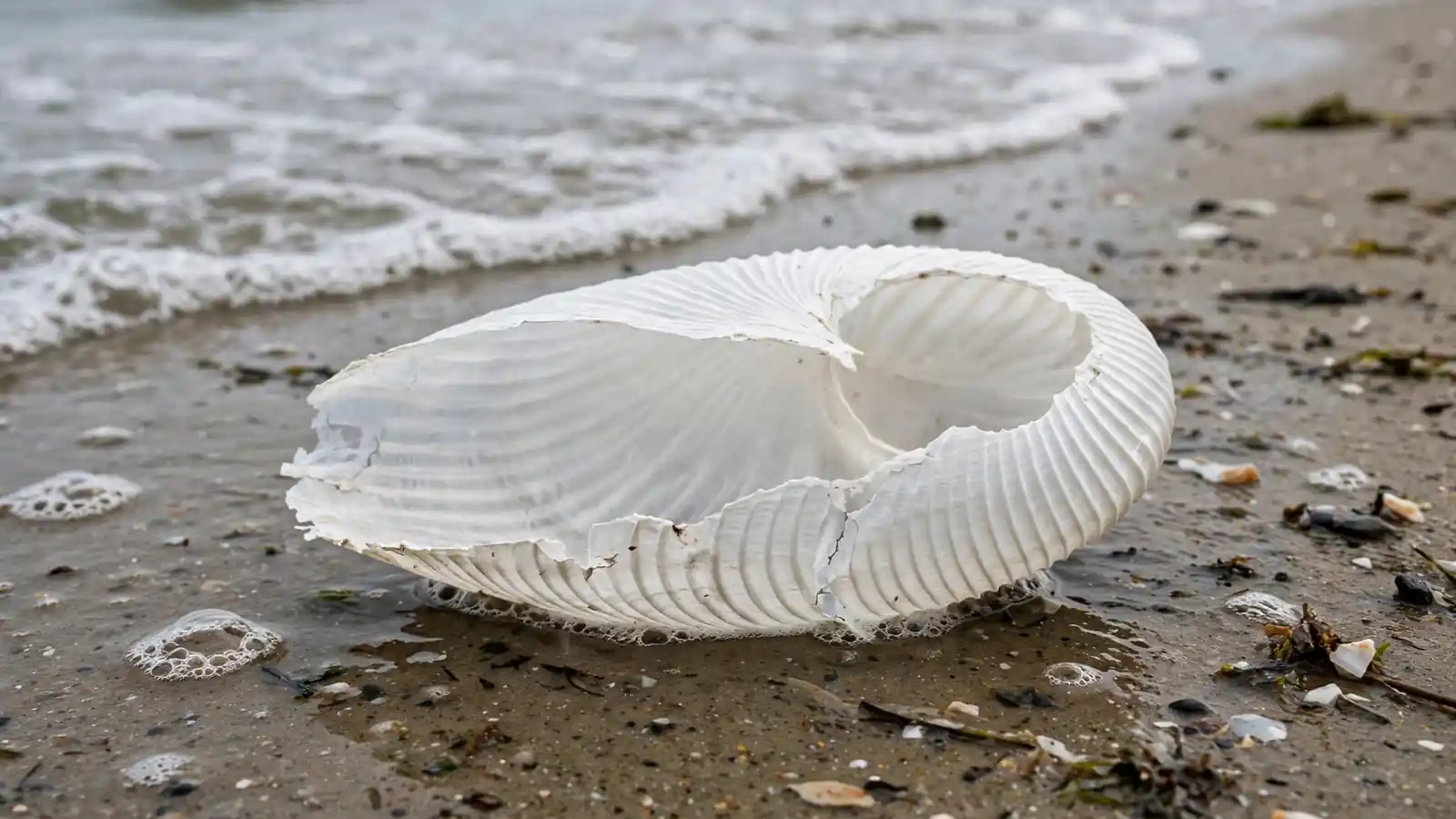
The argonaut’s “shell” is a paper-thin calcite egg case, not a true shell. It is secreted by the female’s expanded dorsal arms — not grown by a mantle, as a true mollusc shell is — and it has no chambers, no living tissue attached to it, and no connection to the animal’s body except the arms that hold it.
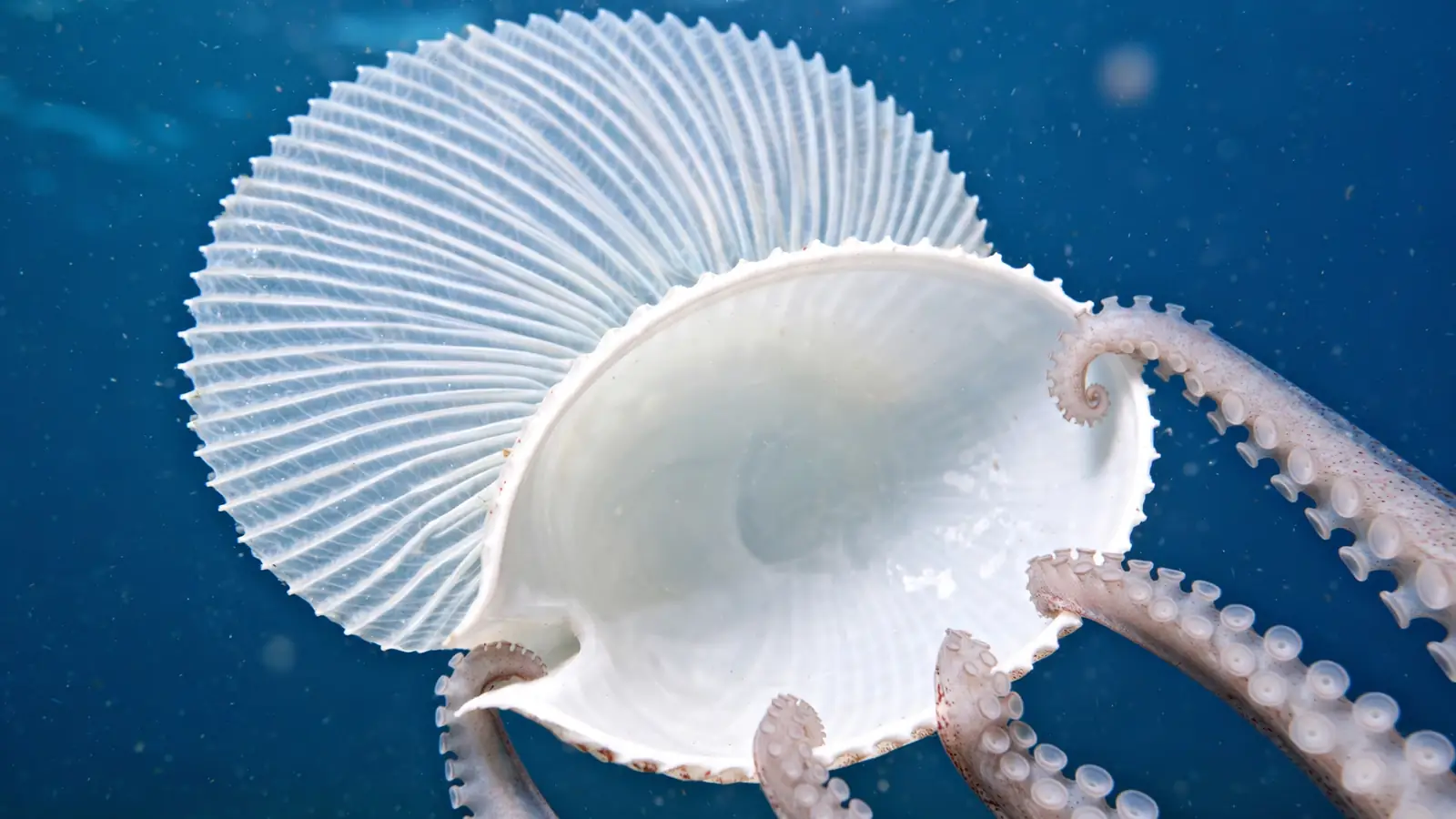
The case looks like a nautilus shell, which is why the animal is called the paper nautilus, but the resemblance is skin-deep: a nautilus shell is a true shell with chambers, grown by the animal inside it, while the argonaut’s case is a brood chamber the female makes, carries and abandons. It is a shell that is not a shell — and that is the whole point of the animal.
How Argonauts Use the Case: Brood Chamber and Buoyancy
The argonaut octopus uses its case as a brood chamber and as a buoyancy aid. The female lays her eggs inside the case, where they are protected, and she carries the case with her as she swims — and at the surface, the case traps air, which helps the animal control its buoyancy and stay at the depth it wants.
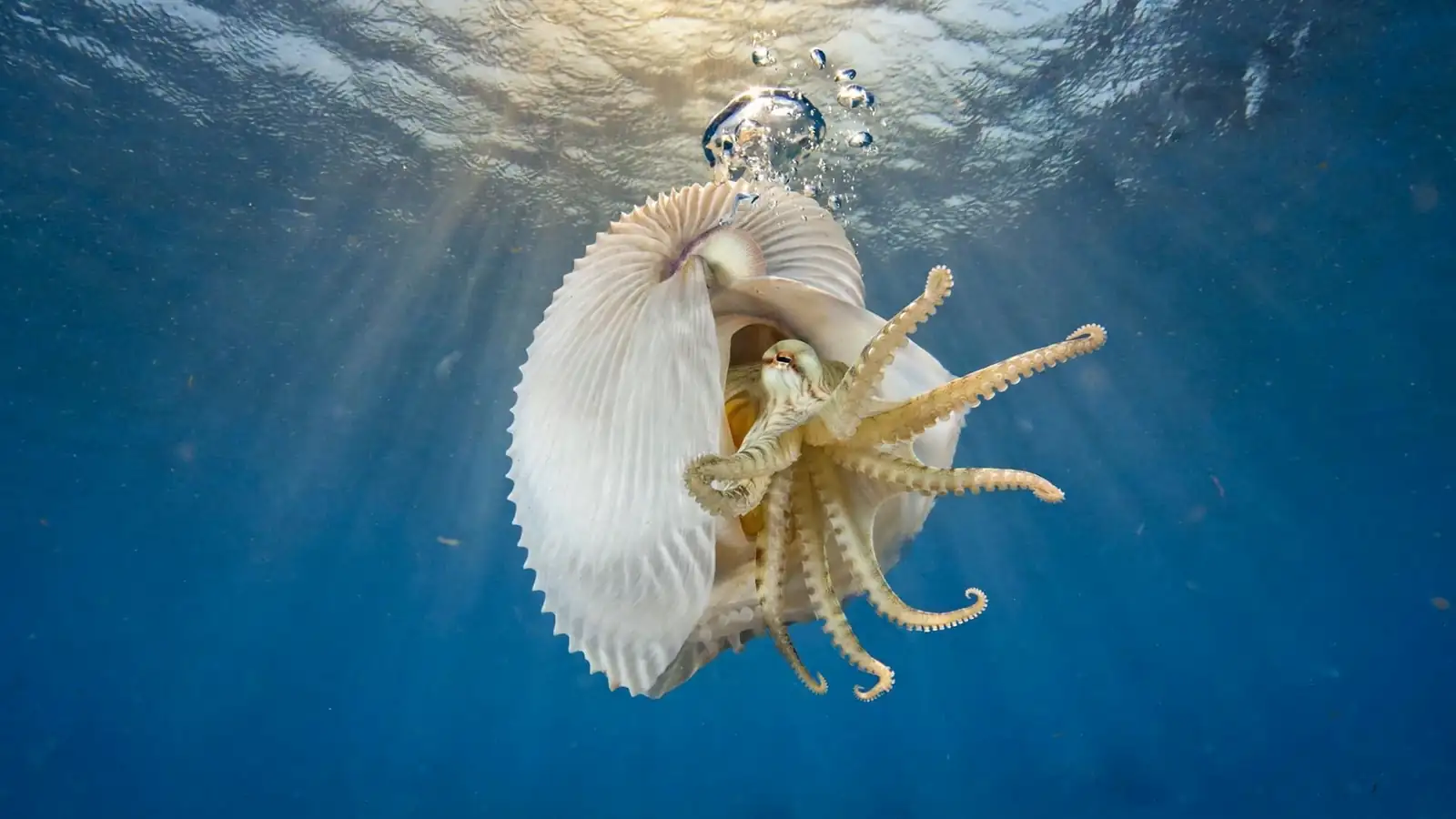
The air-trapping is the clever part: the argonaut goes to the surface, takes in air, and seals it in the top of the case, so the case becomes a float. It is not a lung and not a swim bladder; it is a paper case that doubles as a buoyancy device, and it is one of the most ingenious uses of a shell in the sea.
Where Argonaut Octopuses Live: Open Tropical Oceans
Argonaut octopuses live in the open ocean, in tropical and subtropical waters worldwide. They are pelagic animals, spending their lives at or near the surface of the open sea, far from the coast and far from the bottom — and they are most often seen when a case washes up on a beach.
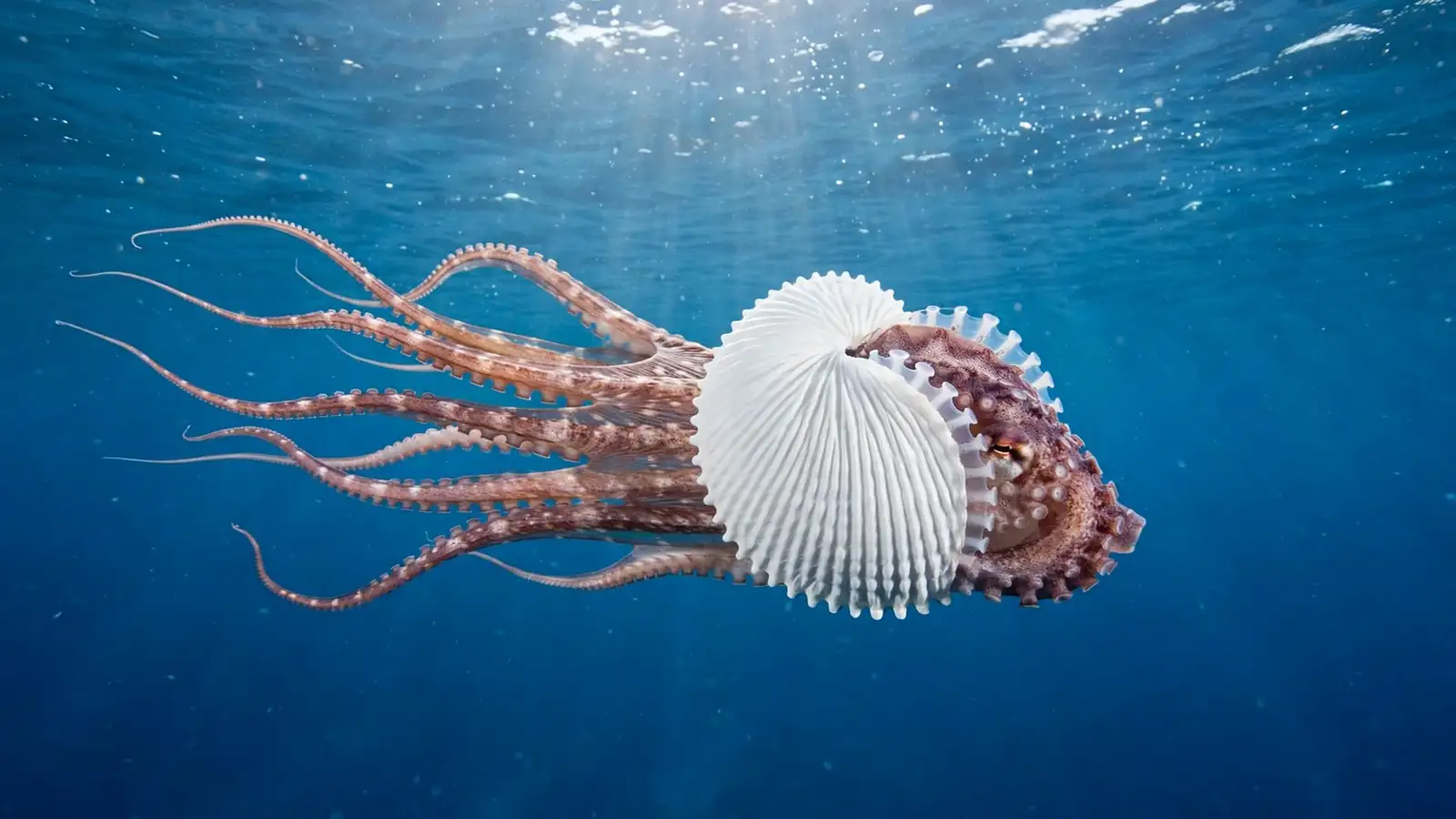
The open-ocean life is why argonauts are so rarely seen alive: they live where few people go, drifting with the currents and the wind. The cases are the evidence — a paper shell on a beach means an argonaut was there, and the beach is where most people meet the animal, long after it has gone.
What Do Argonaut Octopuses Eat? Small Crustaceans and Fish
Argonaut octopuses eat small crustaceans and fish, caught with their arms in the open water. They are hunters of the surface layer, snatching small animals as they drift past, and they are fast enough to catch fish that are nearly their own size — at least, the females are; the tiny males eat smaller prey.
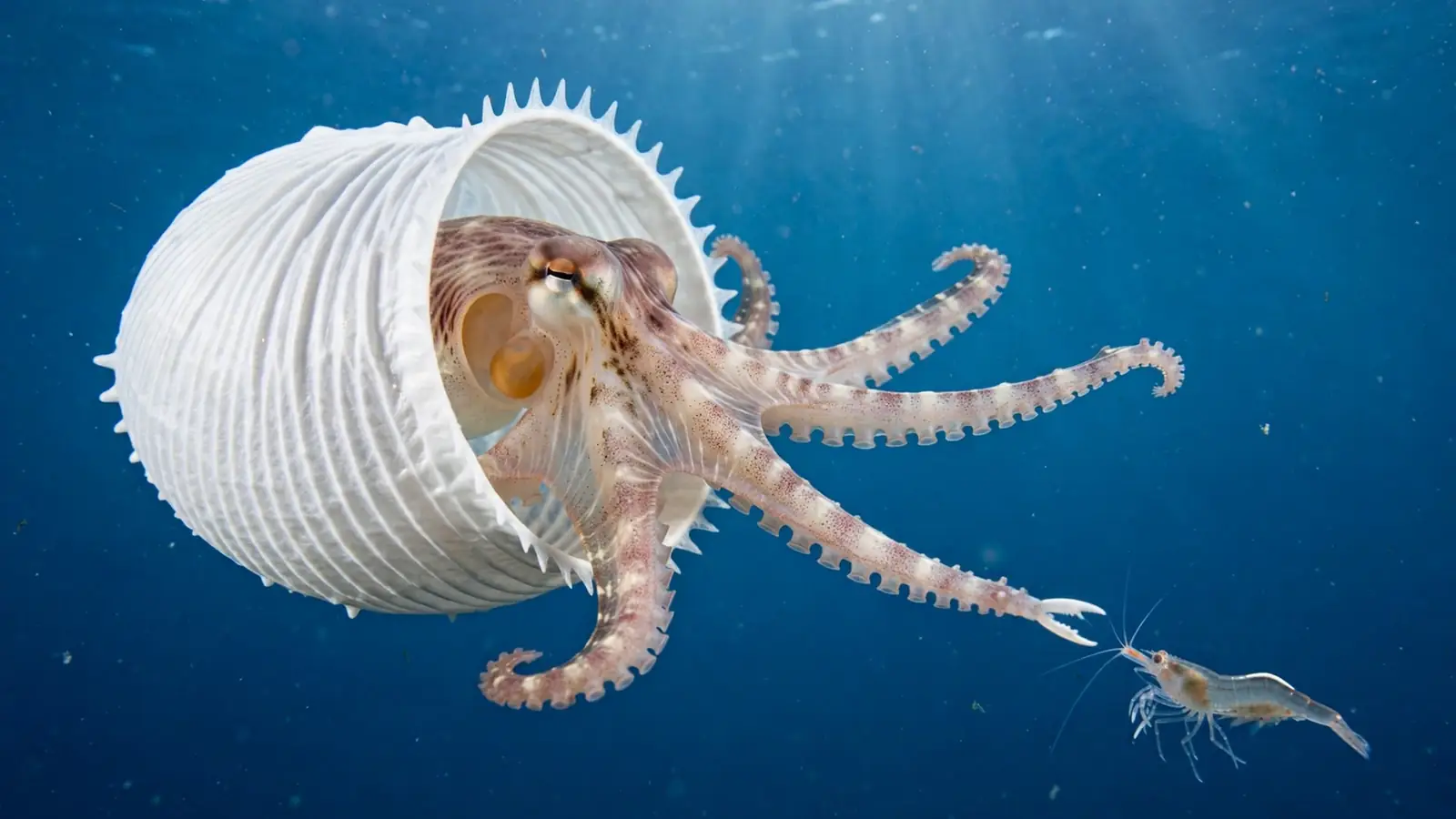
The diet is part of the open-ocean life: there is no reef to hunt on, no bottom to dig in, so the argonaut hunts what drifts past. It is a pelagic predator, and its paper case does not slow it down — the female carries the case and hunts with it, a shell-wearing hunter of the open sea.
The Detachable Arm: Argonaut Mating
The male argonaut’s hectocotylus — the mating arm — detaches during mating, carrying sperm to the female and then living on inside her. It is one of the strangest mating systems in the animal kingdom: the male gives up an arm, and the arm continues its work after it has left his body.
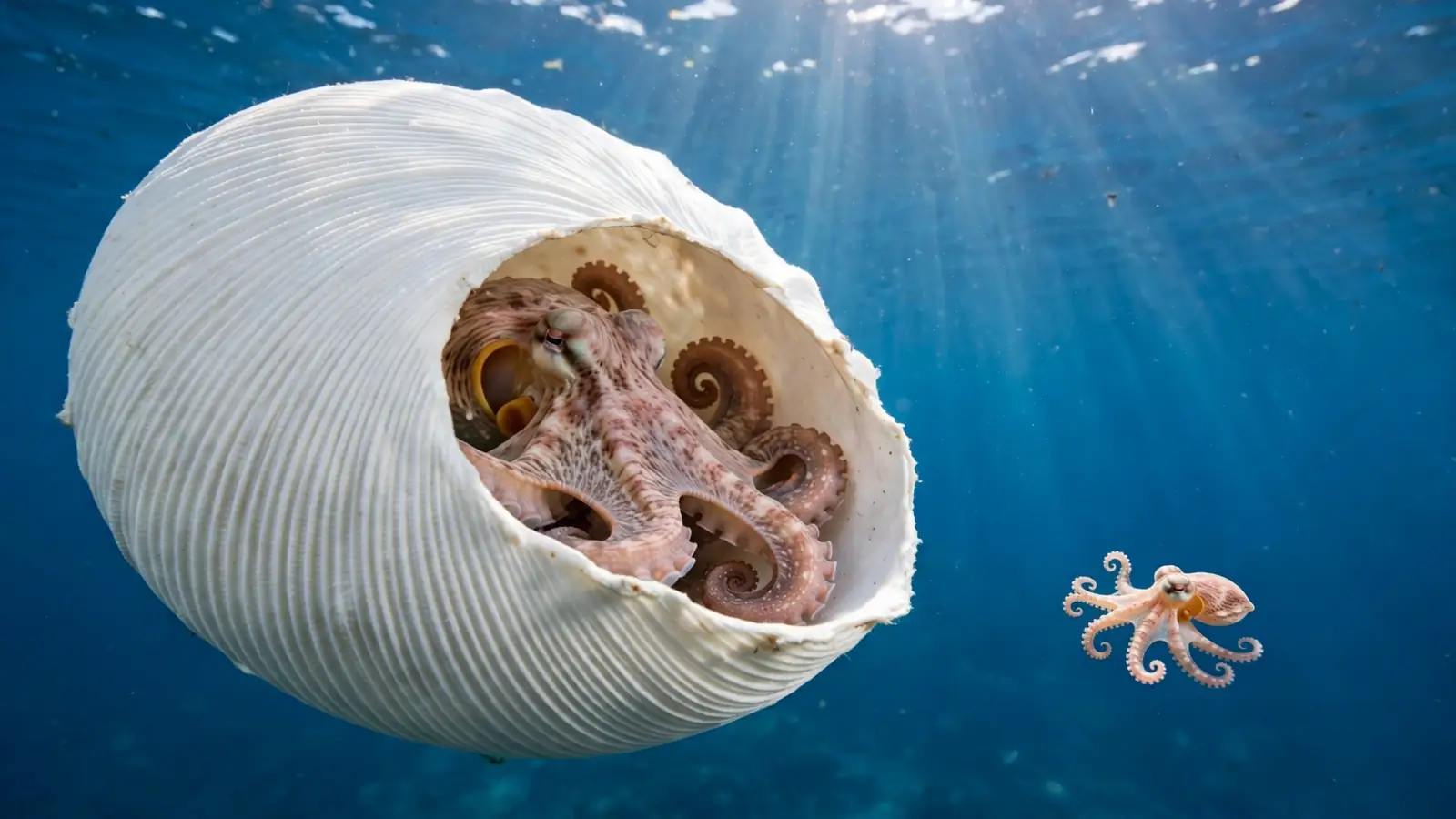
The detachment is why the male is so small: he does not need to be big, because his job is to find a female and deliver the arm. The female stores the sperm, fertilises her eggs in the case, and the male dies — a life spent in the service of a single arm, and an arm that outlives him.
Villepreux-Power: The Woman Who Proved Females Make the Case
Jeanne Villepreux-Power proved that female argonauts make their own cases. In the 1830s, she kept argonauts in aquariums in Sicily, watched the females secrete the paper case from their dorsal arms, and published the result — settling a debate that had run for centuries about whether the argonaut borrowed its shell from another animal.
Her work was ignored for decades, because she was a woman working outside the academies, but it was right: the female makes the case, the male never does, and the paper nautilus is an octopus that builds its own shell. The assessed species — Argonauta argo, Argonauta nodosus and Argonauta nouryi — are all listed as Least Concern by the IUCN (2014 assessments), widespread and not targeted by fisheries. For the full story of the argonauts, see this argonaut octopus profile from the Natural History Museum in London.
Fun Facts
- The argonaut’s shell is a paper-thin egg case, not a true shell — it has no chambers.
- Males are about 600 times lighter than females, and under 2 cm long.
- The male’s mating arm detaches and lives on inside the female.
- Jeanne Villepreux-Power proved females make their own cases — in the 1830s.
- The case traps air at the surface for buoyancy control.
- There are four living species: A. argo, A. hians, A. nouryi and A. nodosus.
Frequently Asked Questions
Is the Argonaut’s Shell a Real Shell?
No. The argonaut’s “shell” is a paper-thin calcite egg case, secreted by the female’s expanded dorsal arms — not grown by a mantle, as a true mollusc shell is. It has no chambers and no living tissue attached to it, and the female makes it, carries it and abandons it.
How Big Do Argonaut Octopuses Get?
Females reach 10 cm, and their egg cases reach 30 cm; males are under 2 cm long and about 600 times lighter than the females. It is one of the most extreme size differences between the sexes in the animal kingdom.
Where Do Argonaut Octopuses Live?
In the open ocean, in tropical and subtropical waters worldwide. They are pelagic animals, spending their lives at or near the surface of the open sea, far from the coast and the bottom — and they are most often seen when a case washes up on a beach.
What Do Argonaut Octopuses Eat?
Small crustaceans and fish, caught with their arms in the open water. They are hunters of the surface layer, snatching small animals as they drift past, and the females are fast enough to catch fish nearly their own size.
Why Are Male Argonauts So Small?
Because their job is small: find a female, deliver the mating arm and die. The male does not need to be big — he does not make a case, he does not brood eggs, and he lives his whole life as a tiny drifter. The female is big because she builds and carries the 30 cm case.
How Do Argonauts Use Their Shells?
As a brood chamber and as a buoyancy aid. The female lays her eggs inside the case, where they are protected, and at the surface the case traps air, which helps the animal control its buoyancy and stay at the depth it wants.
Who Discovered That Argonauts Make Their Own Shells?
Jeanne Villepreux-Power, in the 1830s. She kept argonauts in aquariums in Sicily, watched the females secrete the paper case from their dorsal arms and published the result — settling a centuries-old debate. Her work was ignored for decades because she worked outside the academies, but it was right.
Similar Species Worth Exploring
Keep Exploring
Meet the chambered nautilus, the true shelled relative with a chambered shell, then the common octopus, the classic camouflage master, and browse the whole family in our types of cephalopods hub — then come back to the paper nautilus that is not a shell, the argonaut octopus.