Butterflyfish
Butterflyfish: the bright reef fish that tell you how healthy a coral is
Butterflyfish are the bright, disc-shaped fish of coral reefs — small, boldly patterned, and almost always seen in pairs. They feed on coral polyps, and because they depend on living coral, their numbers tell scientists how healthy a reef is. There are around 130 species, and nearly all of them live on tropical reefs.
By Emily Carter · Reviewed by our vet team · Updated 10 November 2026 · 8 min read
Around 130 species worldwideAlmost always seen in pairsTheir numbers track reef health
At a Glance
Butterflyfish are small, brightly coloured reef fish of the family Chaetodontidae, and they are among the most familiar fish on any coral reef. Their bodies are deep and disc-shaped, like a butterfly’s wings, and they carry bold patterns — stripes, bands, spots and a dark bar across the eye that hides it from predators. There are around 130 species, most of them under 20 centimetres long, and they live on tropical reefs in the Atlantic, Indian and Pacific oceans, usually in pairs, picking at coral all day.
What Is a Butterflyfish?
This fish is a small reef fish with a deep, flattened body, a small mouth with brush-like teeth, and bold colours that make it easy to spot and hard to forget. The name comes from the shape and the colours: the fish is about as wide as it is long, and its patterns look painted on. The dark bar across the eye is the family trademark — it hides the real eye, while a false eye spot near the tail fools predators into attacking the wrong end.
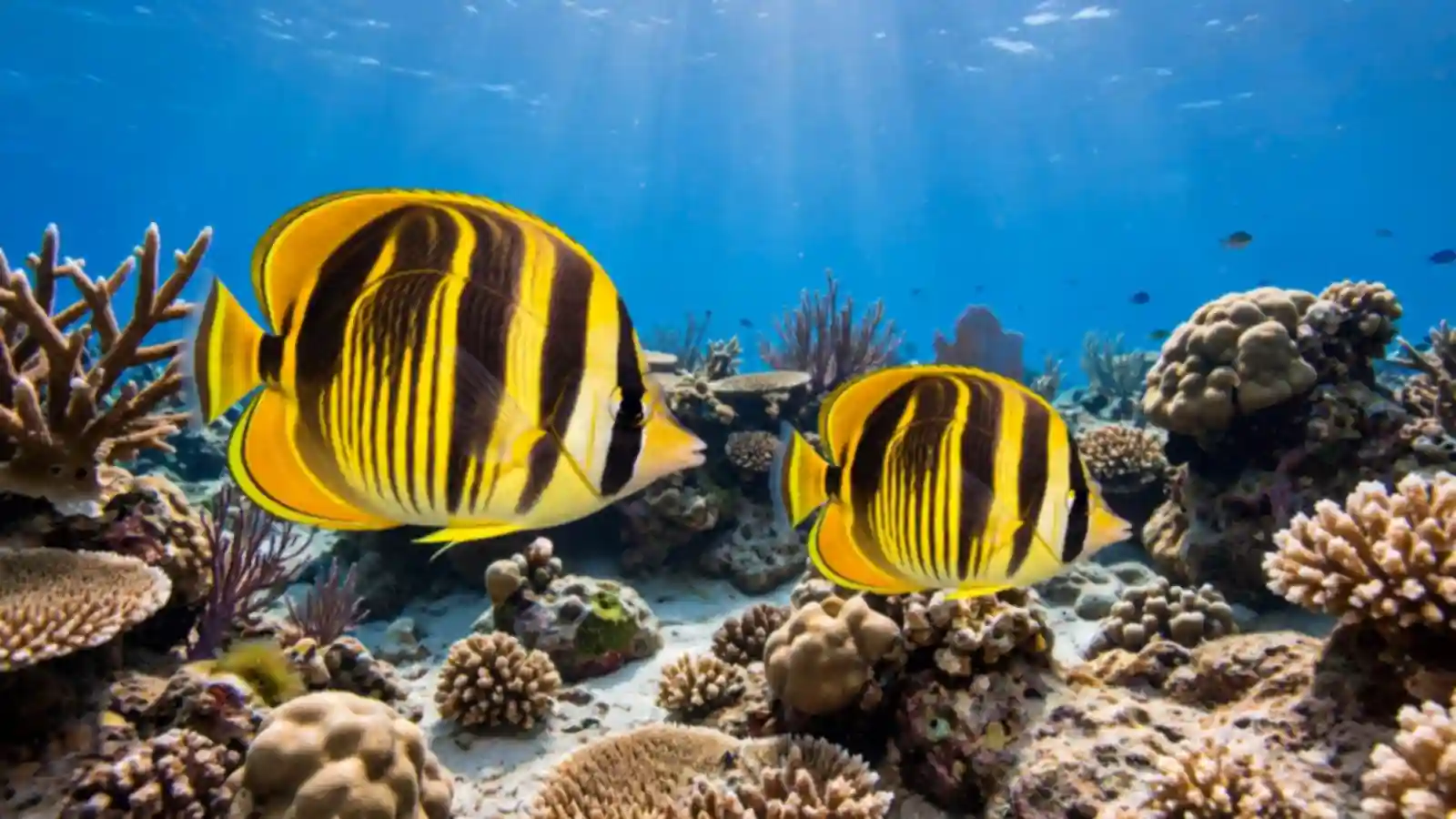
These fish are close cousins of the angelfish, but they are smaller, slimmer-mouthed and usually less territorial. Where an angelfish defends a patch of reef, one patrols a wider home range, often with a single partner, visiting the same coral heads day after day. The family account records the family, size and feeding figures behind this guide.
Butterflyfish Species and Family
There are around 130 species of these fish, and counts vary by authority — older lists give about 114, while current counts run to 129 or 130. They are grouped in the family Chaetodontidae, and the best-known genera are Chaetodon, with most of the species, and the bannerfish, with their long trailing dorsal fins. The species differ mainly in colour pattern, and on a single reef a diver may see a dozen species at once.
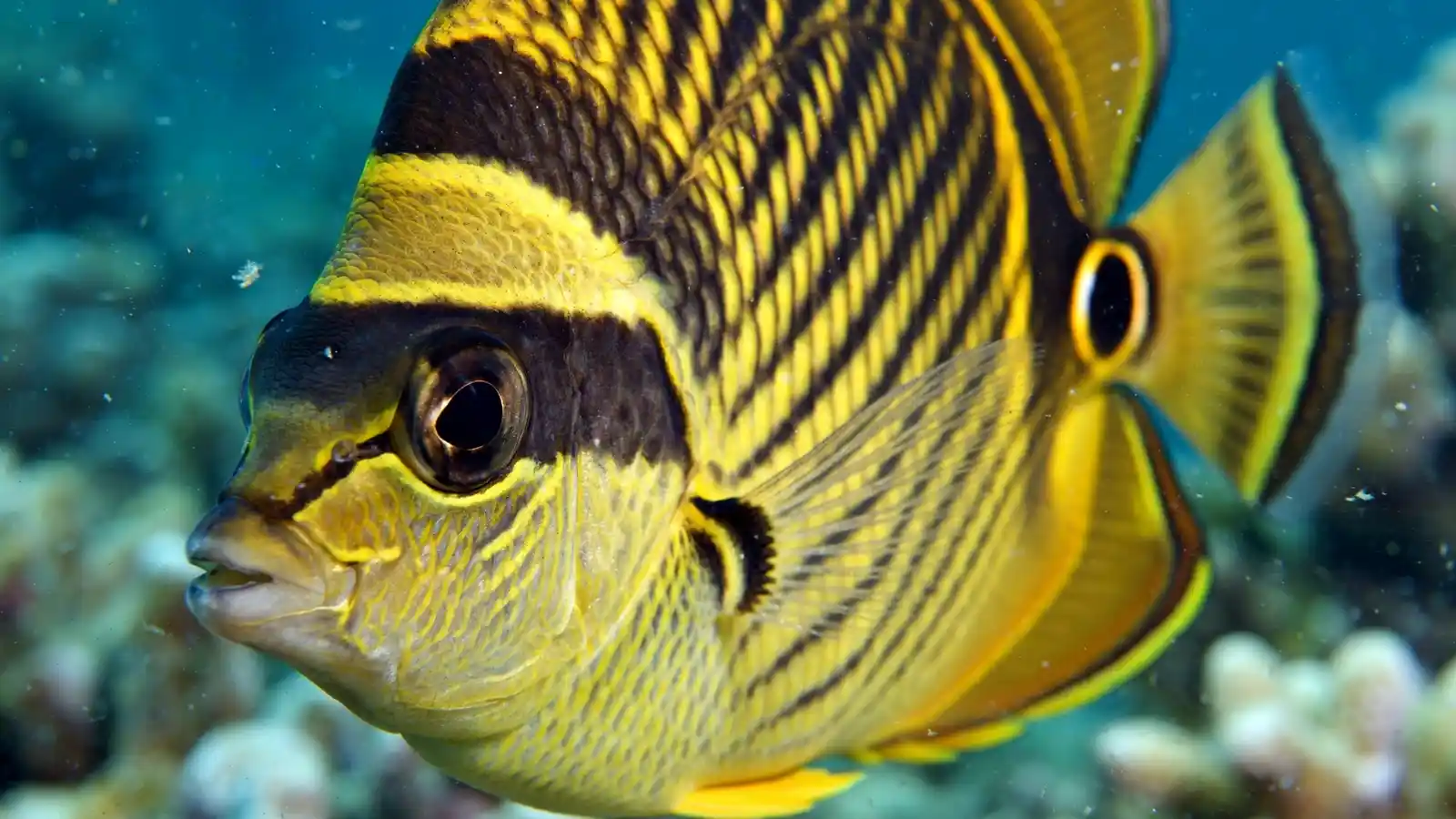
The most familiar species include the raccoon, with its dark mask and white body; the longfin bannerfish, with its tall trailing fin; the threadfin, with its bold eye bar and false eye spot; and the four-spot, with four dark dots along its side. Each species has its own pattern, and the patterns are so consistent that divers learn to name them at a glance. The queen angelfish and the emperor angelfish are the family’s bigger, bolder cousins.
Size and Appearance
Most of these fish are small: the majority are under 20 centimetres long, about the length of a hand, and the largest species reach about 30 centimetres. Their bodies are deep and flattened, which makes them look bigger than they are, and their small mouths are set at the tip of a short snout, perfect for picking tiny food from coral. They are light fish, usually only a few dozen grams, and they move with quick, fluttering fin beats that suit the butterfly name.
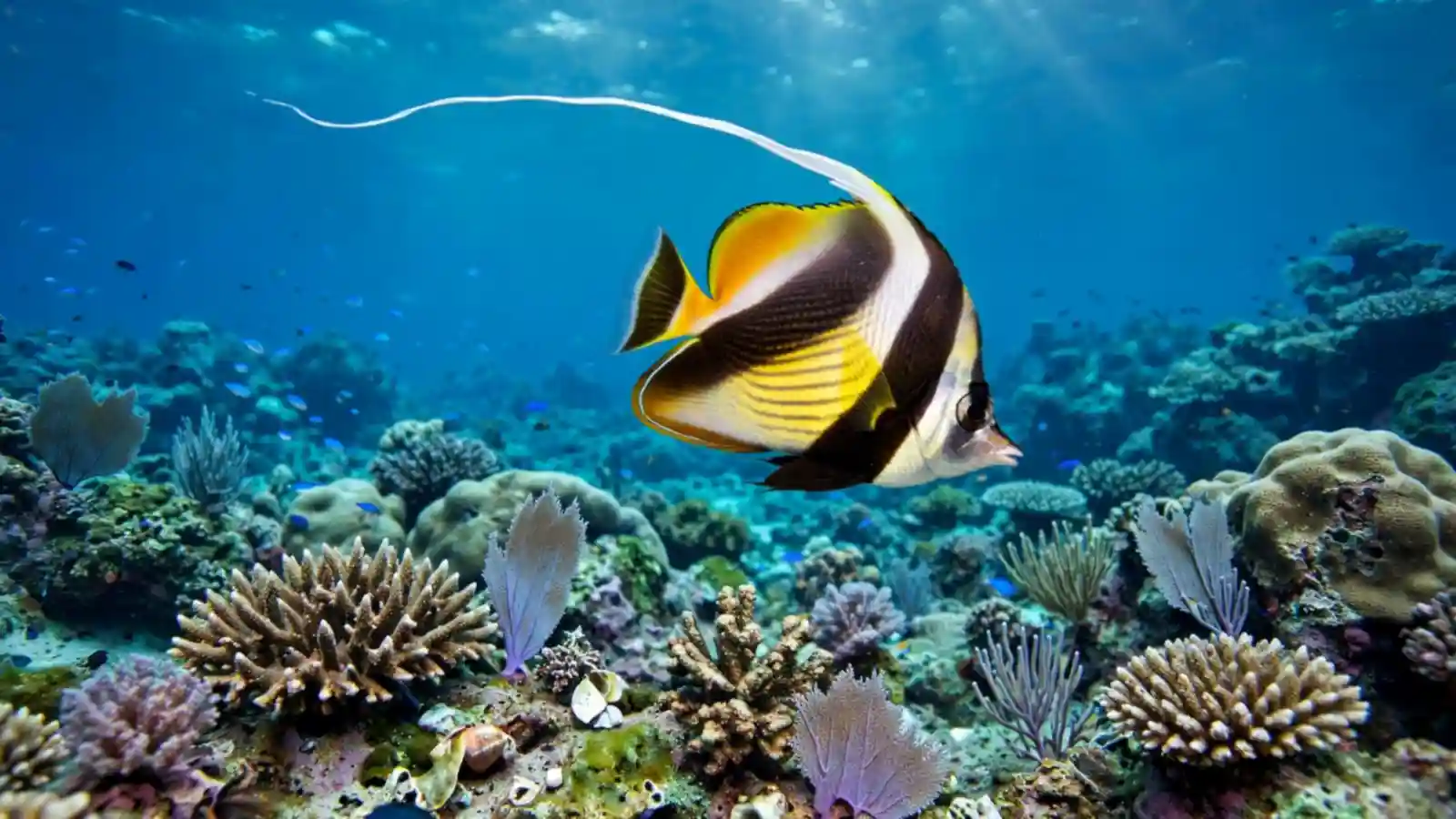
The colours are the point. These fish carry stripes, bands, spots and eye bars in combinations of yellow, black, white, orange and blue, and the pattern is different for every species. The dark eye bar is nearly universal: it hides the eye from predators, and the false eye spot near the tail makes a predator strike at the back of the fish, giving it a chance to escape. Some species can darken or pale their colours a little, but the pattern itself is fixed for life.
Habitat: Coral Reefs Worldwide
These fish live on tropical coral reefs in the Atlantic, Indian and Pacific oceans, from shallow reef flats to reef slopes down to about 30 metres, with a few species found deeper. They need living coral, and they are rarely found far from it — a reef without coral is a reef without them. They are most diverse in the Indo-Pacific, where a single reef can hold twenty or more species, and a handful of species live in the Atlantic.
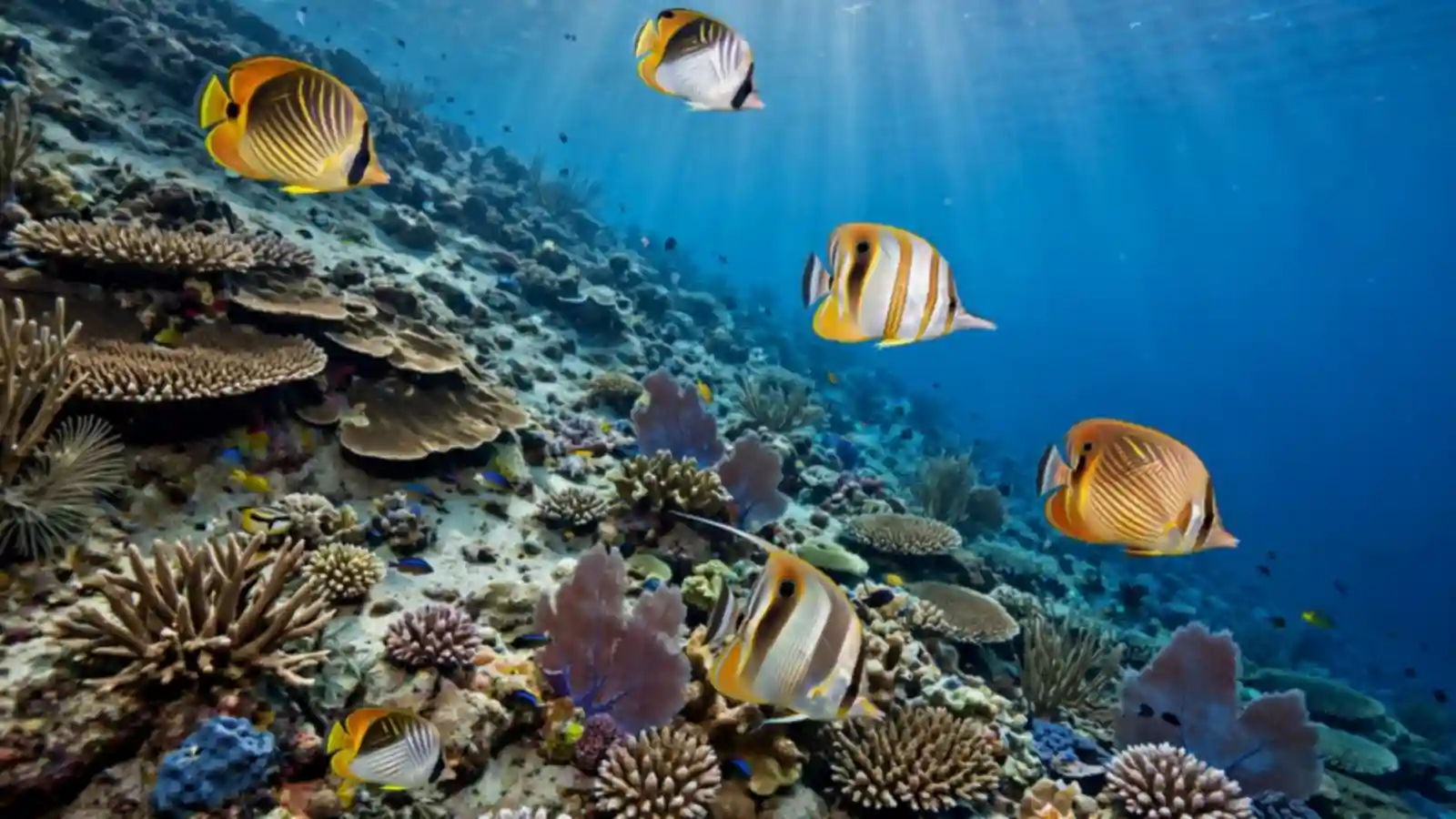
Each species has its own patch of reef, and a pair will defend it against other fish of the same species, though they tolerate other species. The home range is small, often just a few coral heads, and the fish know every hiding place in it. At night they hide in crevices in the reef, changing colour slightly to a duller shade, and at dawn they come out to feed. The Types of Reef Fish guide covers the reef community these fish belong to.
Diet: Coral Polyps and More
These fish feed mainly on coral polyps, the tiny animals that build the reef. They pick at the coral with their small, brush-like teeth, nipping off polyps one at a time, and a single fish may take hundreds of bites in a day. Some species are specialists that eat only one or two kinds of coral, while others are generalists that also eat algae, small worms, crustaceans and the tentacles of soft corals and anemones.
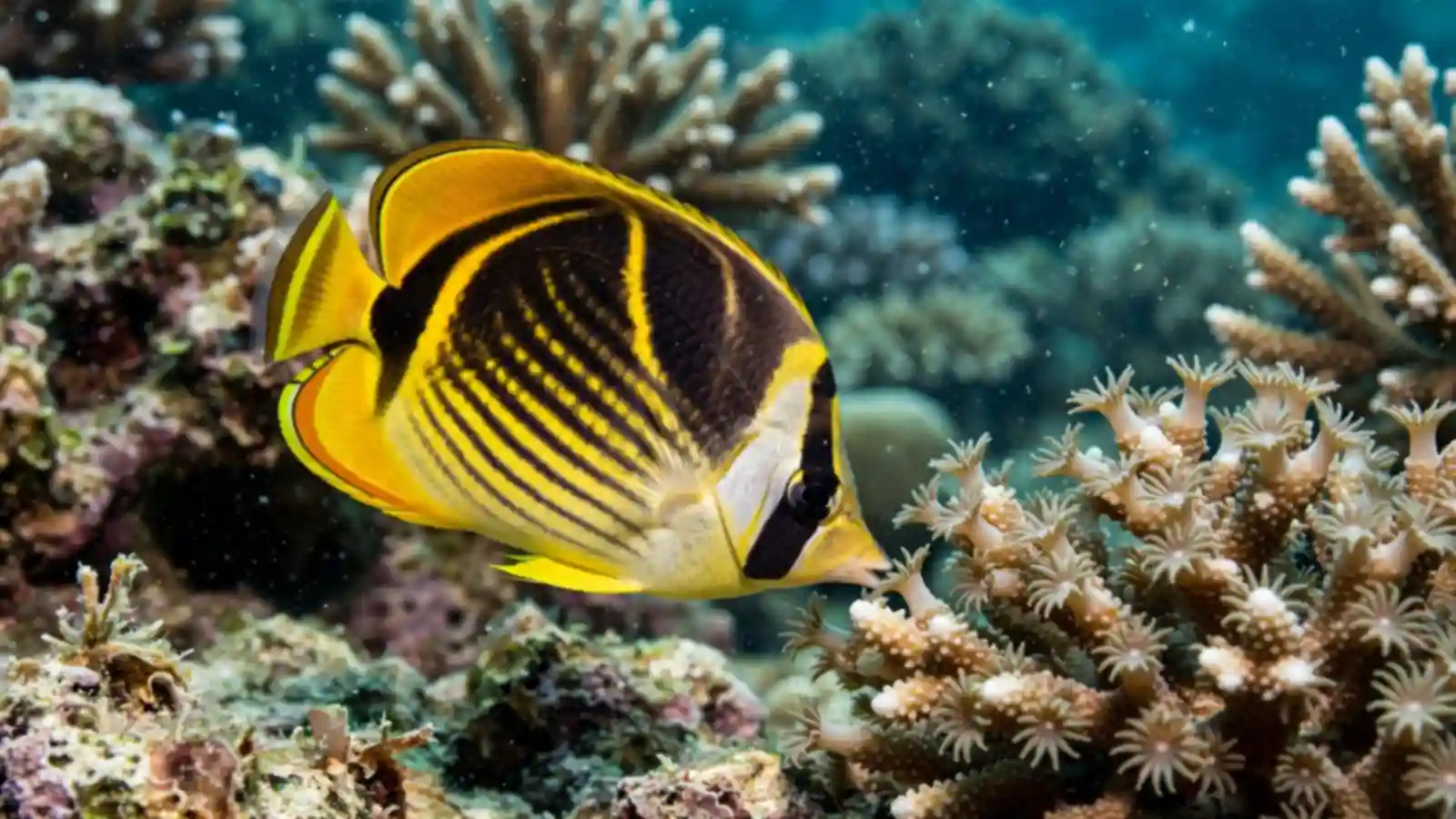
The coral diet is what makes these fish useful to science. Because they depend on living coral, their numbers fall quickly when a reef is damaged, and they are among the first fish to disappear after coral bleaching. Scientists count them to judge the health of a reef: plenty of these fish, in many species, usually means a healthy reef, while few or none means trouble. The fish do not harm the coral they eat — the polyps they nip regrow, and the grazing is part of the reef’s normal life.
Pairs and Territorial Life
These fish are famous for pairing for life. Most species form a pair bond that lasts for years, and the two fish swim together, feed together and defend their territory together. If one partner dies, the survivor usually finds a new partner quickly, and the pair bond is so strong that some species have been seen staying together even after being separated. The pairing is not just for breeding — it is a partnership for defending food and watching for predators.
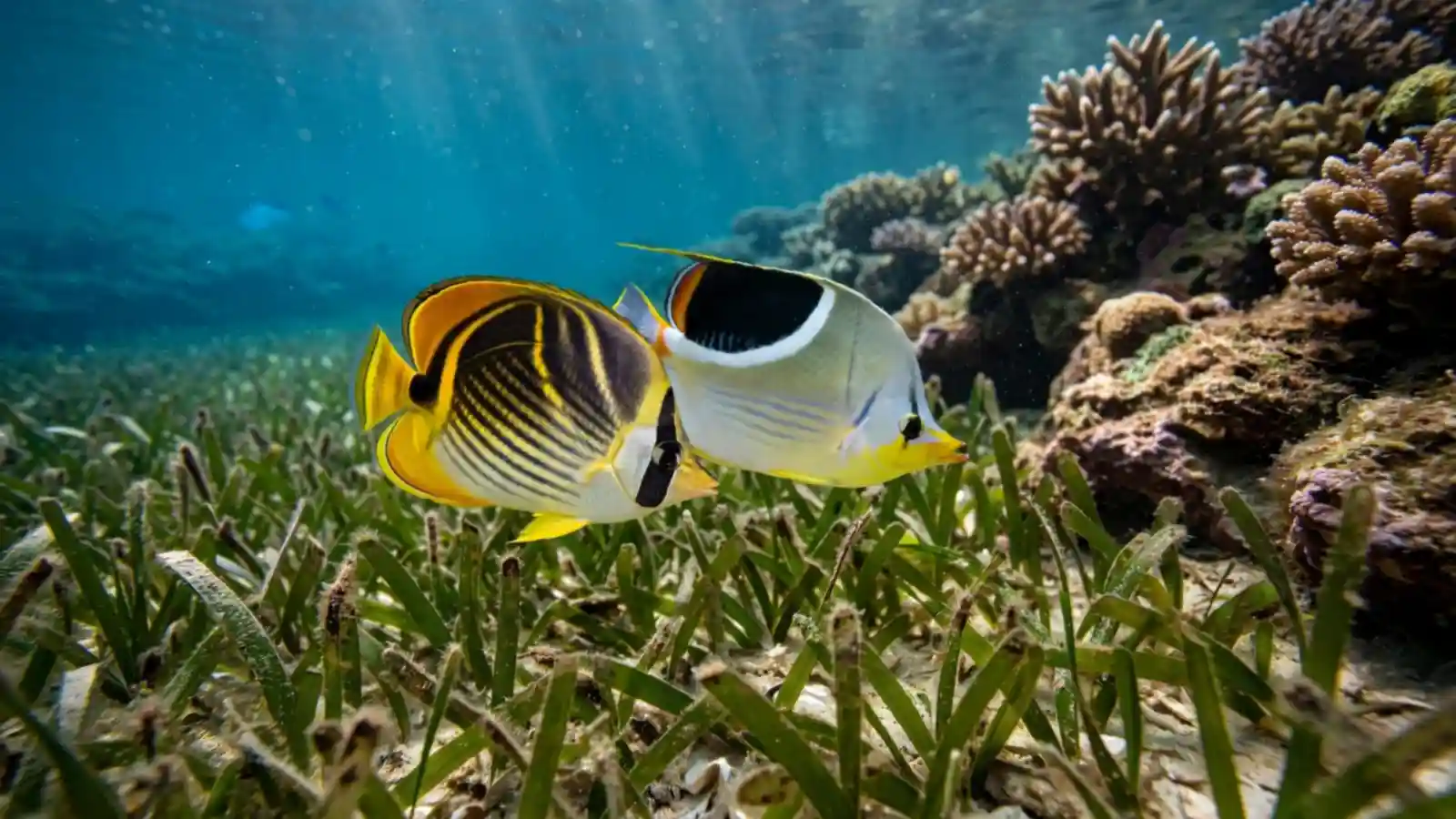
Pairs are territorial, and they chase off other fish of the same species that enter their patch. The display is mostly bluff: the fish spread their fins, darken their colours and swim at the intruder until it leaves. They are not dangerous to people, and they are a favourite of divers precisely because they are bold, bright and always in pairs, drifting over the reef like two butterflies.
Fun Facts
- There are around 130 species of these fish, and counts vary by authority.
- Most of these fish pair for life, and the two fish defend their patch of reef together.
- The dark bar across the eye hides the real eye, and a false eye spot near the tail fools predators.
- Their numbers are used by scientists to judge how healthy a coral reef is.
- One may take hundreds of bites of coral polyp in a single day.
- At night they hide in reef crevices and their colours turn slightly duller.
Frequently Asked Questions
How Many Species of Butterflyfish Are There?
There are around 130 species of these fish, though counts vary by authority — older lists give about 114 and current counts run to 129 or 130. They all belong to the family Chaetodontidae, and most live on Indo-Pacific reefs.
What Do Butterflyfish Eat?
These fish feed mainly on coral polyps, which they nip from the coral with small brush-like teeth. Some species also eat algae, small worms, crustaceans and the tentacles of soft corals and anemones. Specialists eat only one or two kinds of coral.
How Big Do Butterflyfish Get?
Most of these fish are under 20 centimetres long, about the length of a hand, and the largest species reach about 30 centimetres. They are light fish, usually only a few dozen grams, with deep, disc-shaped bodies.
Do Butterflyfish Mate for Life?
Most of them form a pair bond that lasts for years, and the two fish swim, feed and defend their territory together. If one partner dies, the survivor usually finds a new partner. The bond is a partnership for food and safety, not just breeding.
Where Do Butterflyfish Live?
These fish live on tropical coral reefs in the Atlantic, Indian and Pacific oceans, from shallow reef flats to reef slopes down to about 30 metres. They need living coral and are rarely found far from it, and they are most diverse in the Indo-Pacific.
Are Butterflyfish Good Reef Indicators?
Yes — these fish are among the best reef health indicators. Because they depend on living coral, their numbers fall quickly when a reef is damaged or bleached. Plenty of these fish in many species usually means a healthy reef.
What Is the Difference Between Butterflyfish and Angelfish?
These fish are smaller than angelfish, with smaller mouths and less territorial behaviour, and they feed mainly on coral polyps. Angelfish are larger, deeper-bodied, often eat sponges, and defend a patch of reef more aggressively. The two families are close cousins.
Similar Species Worth Exploring
Keep Exploring
Keep exploring the reef fish through the queen angelfish, the crowned sponge-eater of the Caribbean, the emperor angelfish, the striped transformer of the Indo-Pacific, and the wider world of the types of fish. No reef fish tells you more about a coral’s health than the butterflyfish.