Wandering Albatross
Wandering Albatross: The Bird With the Largest Wingspan on Earth
The wandering albatross has the largest wingspan of any living bird — up to three and a half metres of wing, on a bird that can fly for hours without a single flap. It spends years at sea without touching land, and it is the most threatened of the great albatrosses.
By Emily Carter · Reviewed by our vet team · Updated 10 November 2026 · 9 min read
Largest wingspan on EarthUp to 3.5 mYears at sea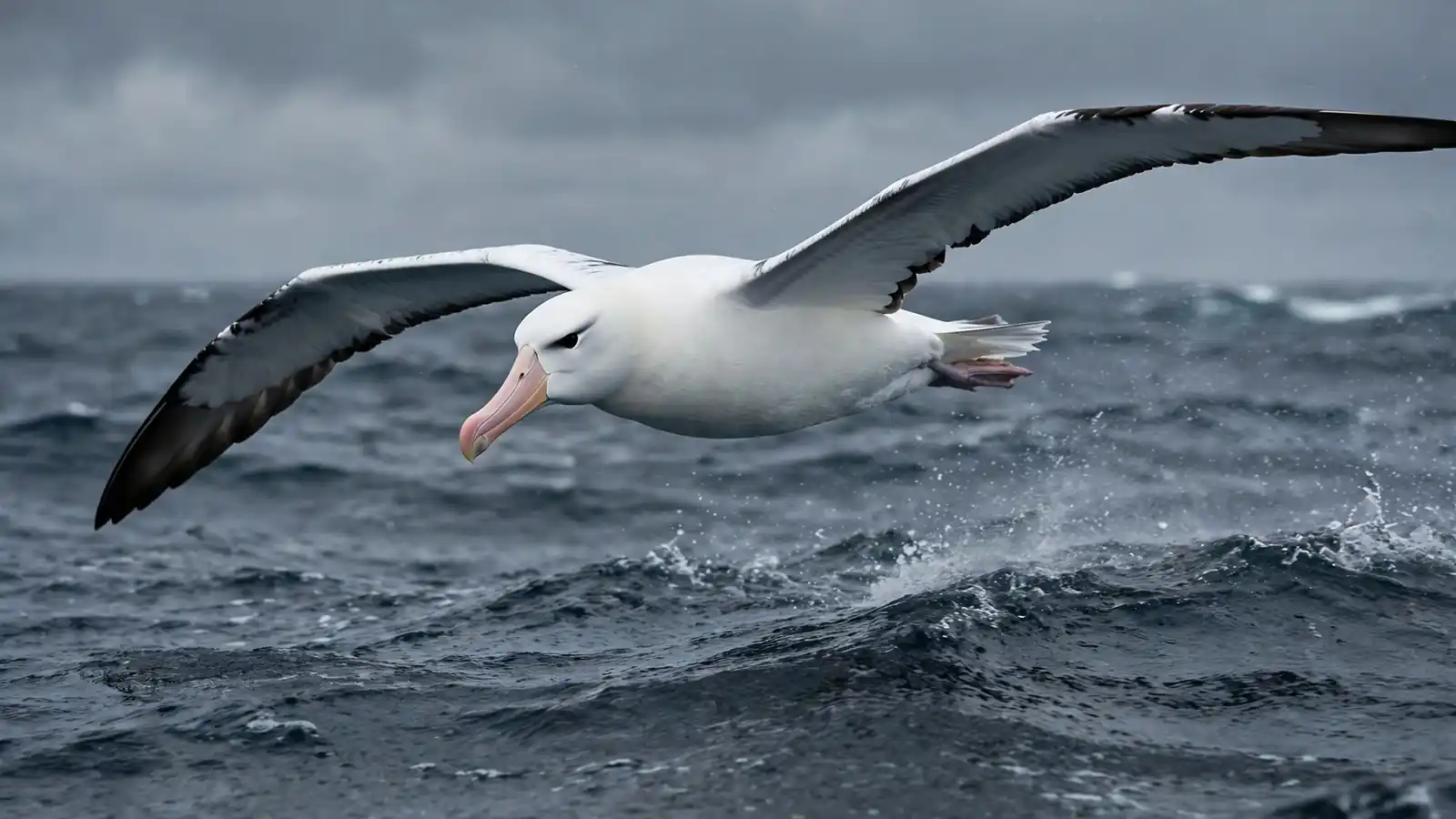
At a Glance
The wandering albatross is the largest flying bird in the world, and the one that spends the longest at sea. It is a bird of the Southern Ocean, circling the Antarctic in the great westerly winds, and it comes to land only to breed — once every two years, on a handful of remote islands. The rest of its life is spent over the open water, gliding.
Wandering Albatross Wingspan: The Largest of Any Living Bird
It holds the record for the largest wingspan of any living bird. The average wingspan is about 3.1 metres, and the largest verified birds reach about 3.5 metres — eleven and a half feet of wing, wider than a small car is long. The wings are long and narrow, built for gliding, and the bird’s whole body is shaped around them.
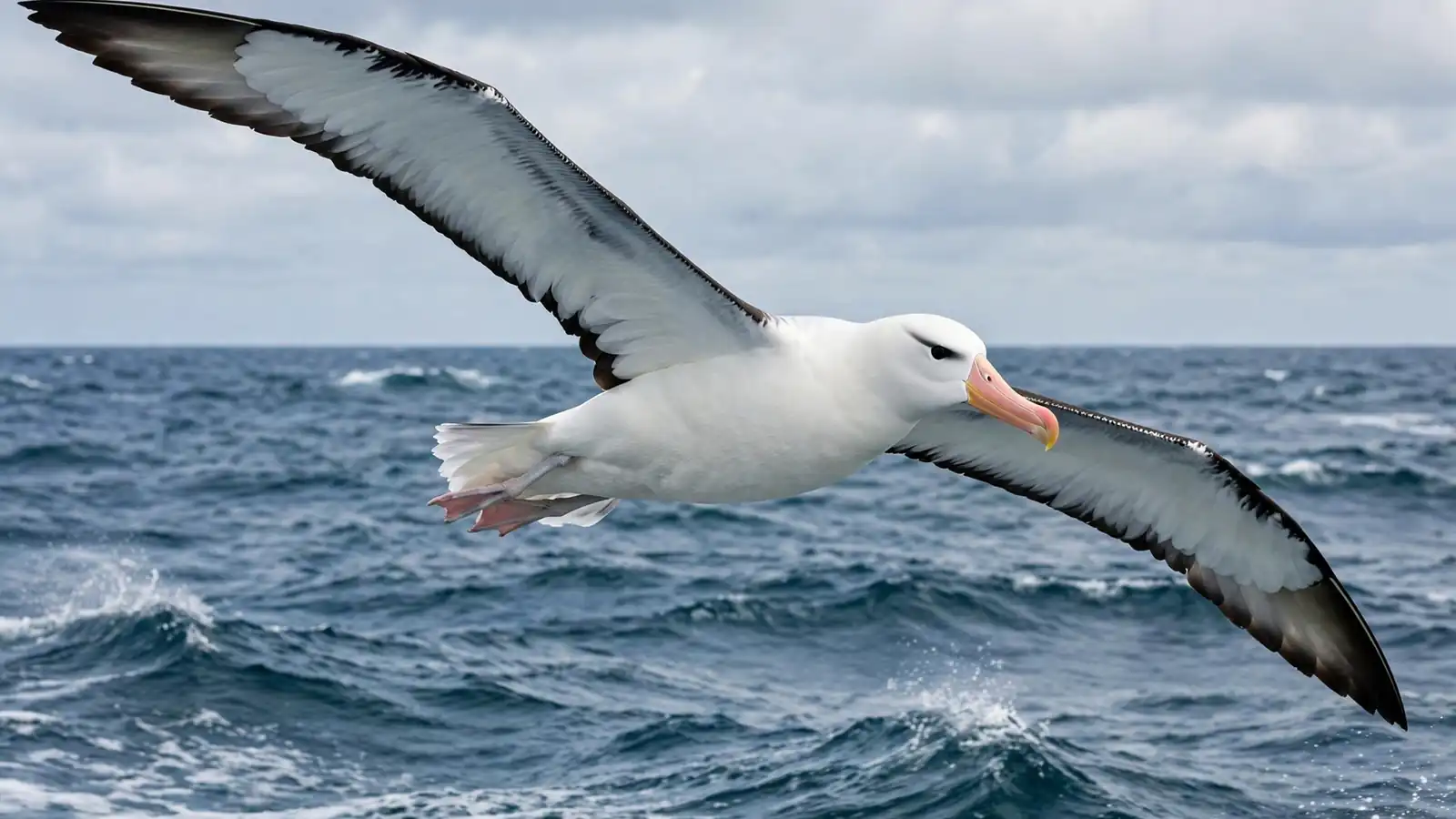
The numbers need care, because the record is often exaggerated. Figures of 3.7 metres circulate in books and on the internet, but they are unconfirmed — no verified measurement supports them, and the largest wingspan ever reliably measured is about 3.5 metres. This guide uses the verified figure, and notes the larger claim only to set it aside.
The wings are not just long — they are locked. An albatross can lock its wings open with a tendon, holding them outstretched without using its muscles, and it can glide for hours without a single flap. The bird is, in effect, a living glider, and the wings are the whole design.
How Wandering Albatrosses Fly
It flies by dynamic soaring — a technique that takes energy from the wind itself. The bird climbs into the wind, turns, dives downwind, and climbs again, tracing great arcs across the sky and gaining speed with each turn. It can fly for hours, even days, without flapping, and it can cover hundreds of kilometres in a single day without effort.

The distances are extraordinary. Birds have been tracked covering around 900 kilometres in a day, and a circumnavigation of the Southern Ocean in about 46 days has been reported — figures that come from tracking studies and are attributed to them, not stated as settled fact, because the winds and the routes vary. What is certain is that no other bird covers ground like it, and that it does it almost entirely by gliding.
The flight is also the reason the bird is so hard to study. It can be at sea for years without touching land, and the only way to follow it is by satellite tag. The tags have shown birds that cross the whole Southern Ocean, from South Georgia to New Zealand and back, and that return to the same island to breed after years away.
Wandering Albatross Size and Looks
An adult is 107 to 135 centimetres long and weighs 6 to 12 kilograms — a big bird, but the size is in the wings, not the body. The plumage changes with age: young birds are chocolate brown, and they whiten year by year, until the oldest birds are almost entirely white, with black flight feathers and a faint pink wash on the bill. An old male, white as snow with black wingtips, is one of the most striking birds in the world.
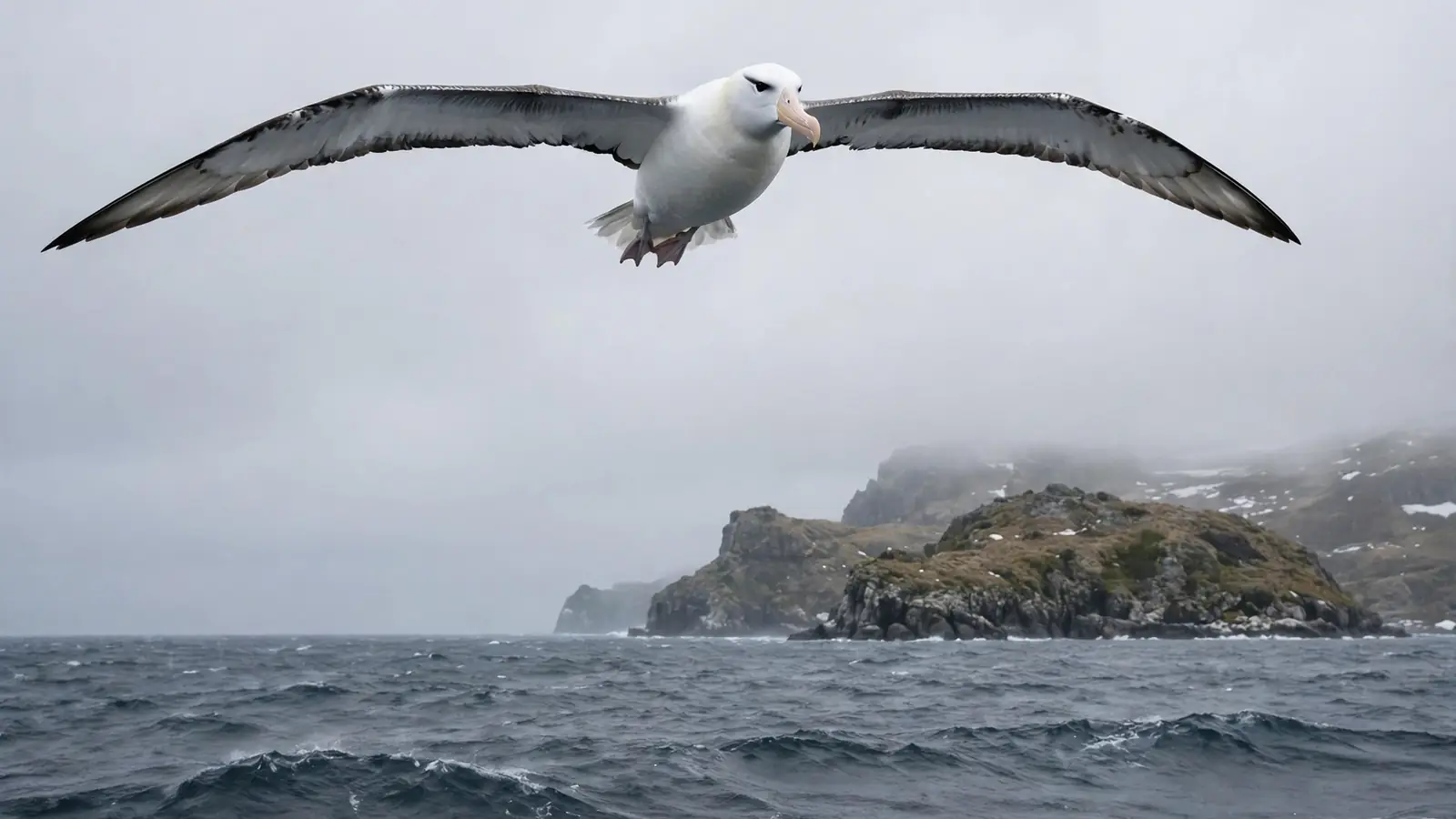
Males are slightly larger than females, with a bigger bill, and the sexes are otherwise alike. The bill is large and pinkish, with a hooked tip and a tube on top — the salt gland outlet that lets the bird drink seawater and excrete the salt. The feet are webbed and pink, and the bird walks awkwardly on land, waddling with its great wings folded.
The whitening with age is so reliable that researchers can estimate a bird’s age from its plumage, and the oldest birds — the whitest ones — are the most successful breeders. It can live fifty years or more, and some birds are still breeding at sixty. It is a long-lived bird, and a slow one: it takes a decade to reach breeding age, and it breeds only every two years.
What Do Wandering Albatrosses Eat?
Wandering albatrosses eat squid, fish and crustaceans, taken from the surface of the Southern Ocean. They are surface feeders: they seize the prey from the water while gliding, or they land and grab it from the surface, and they rarely dive more than a metre or two. The squid are the main course — the bird’s stomach is often full of squid beaks, the indigestible parts that accumulate over a lifetime.
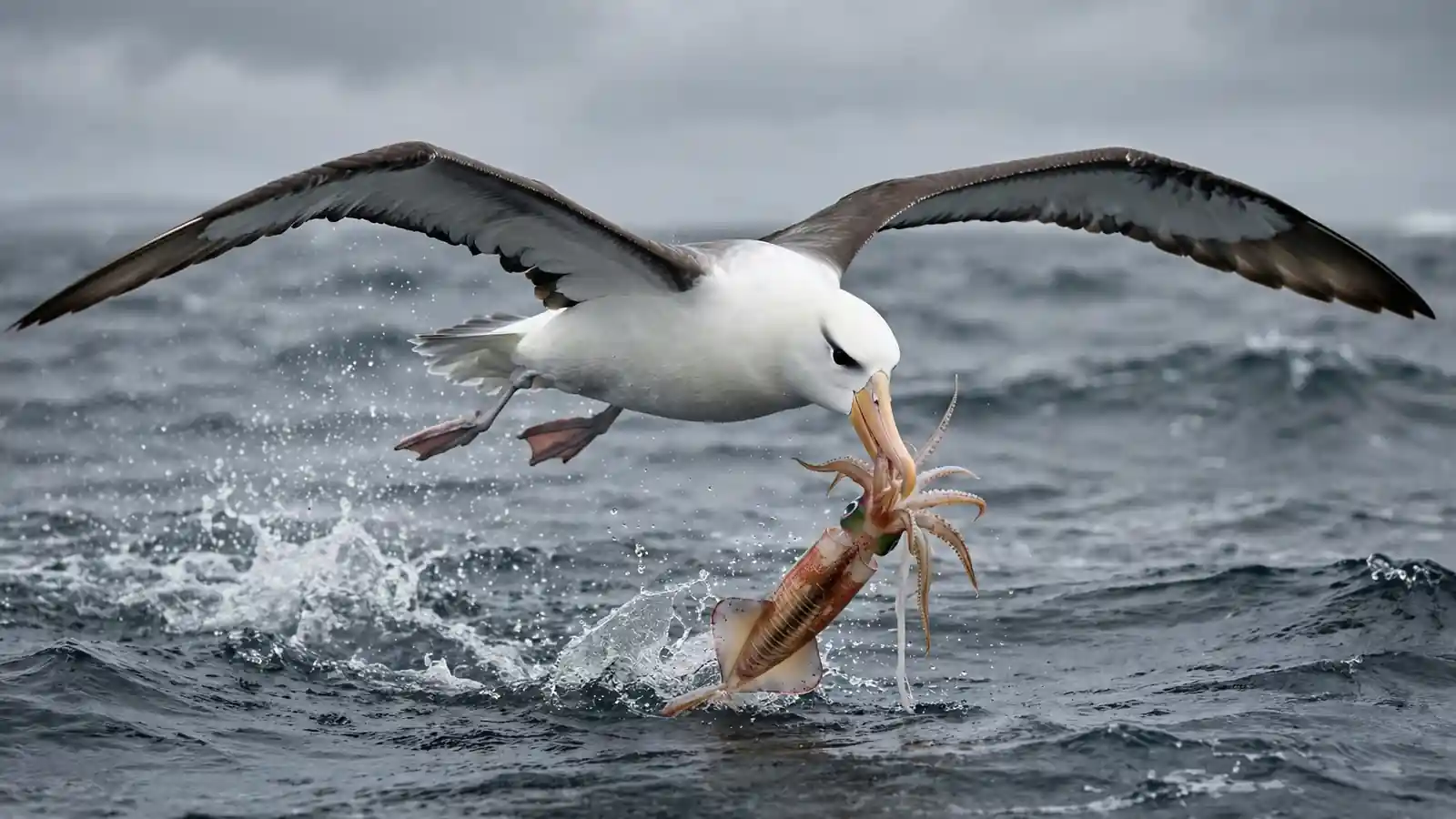
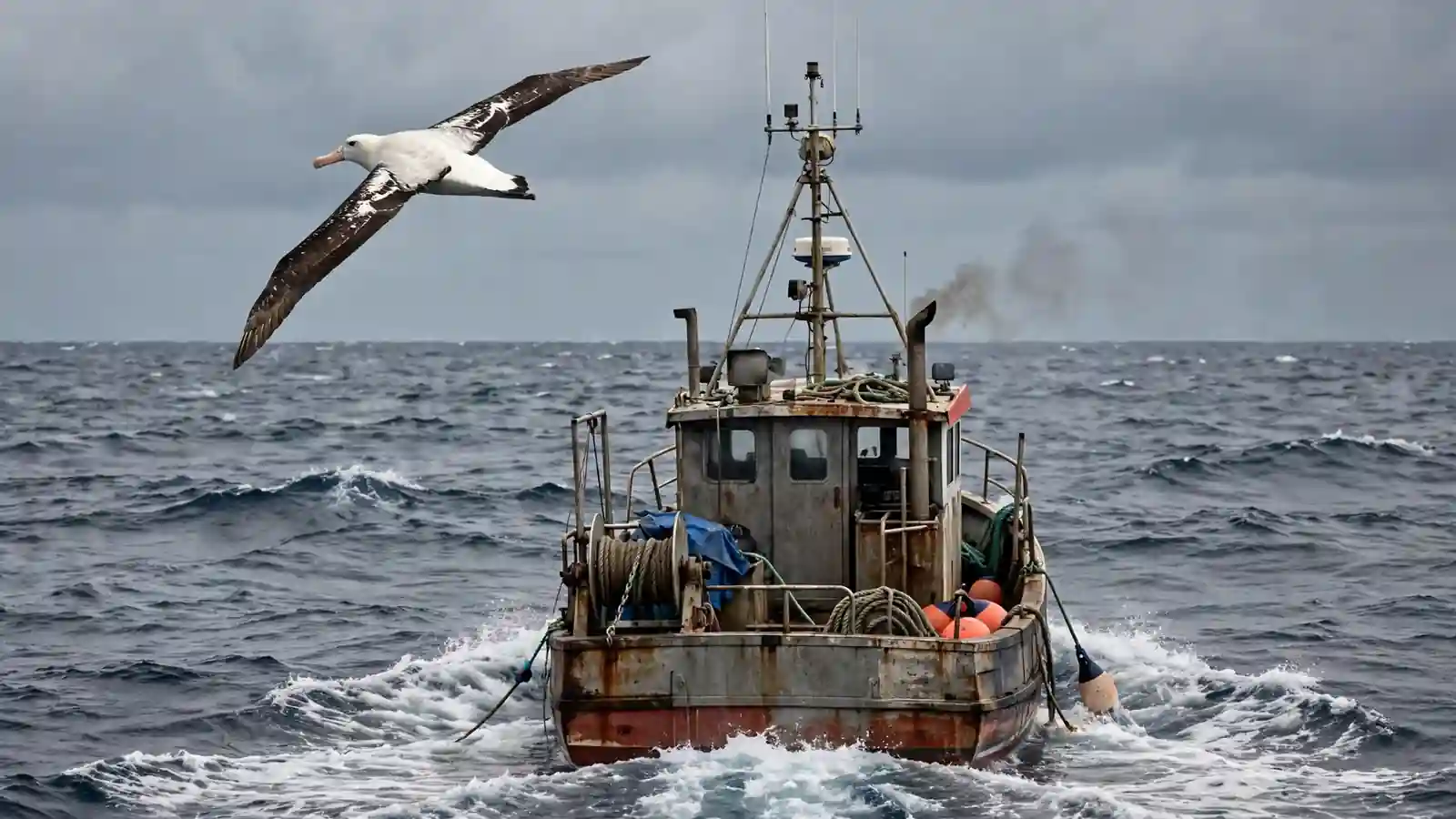
The birds also follow ships, scavenging the offal and the discards thrown overboard. The habit is ancient — albatrosses have followed ships for centuries — and it is now a danger, because the birds that follow the fishing boats are the ones that get caught on the longlines. The scavenging that once fed them is now one of the things that kills them.
The diet is set out in detail in the wandering albatross profile, which also covers the wingspan and the breeding. The food is the reason the bird ranges so widely: the squid and the fish are scattered across the whole Southern Ocean, and the bird that finds them must cover thousands of kilometres to do it.
Where Wandering Albatrosses Live
Wandering albatrosses live in the Southern Ocean, circling the Antarctic in the band of westerly winds between about 30 and 60 degrees south. They are circumpolar — found all around the continent, from the South Atlantic to the South Pacific — and they spend most of their lives over the open water, far from land.
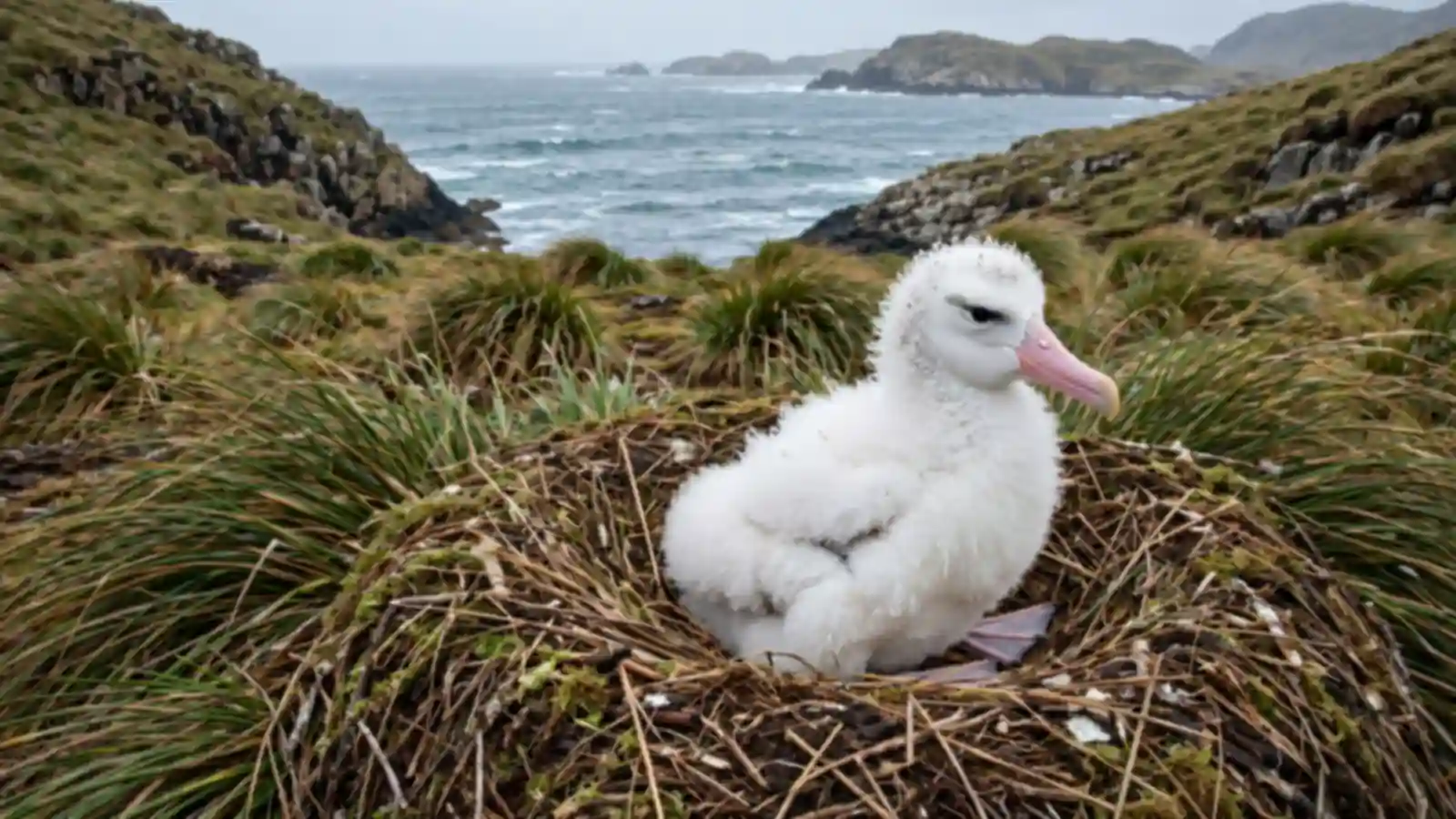
They come to land only to breed, on a handful of remote islands: South Georgia, the Crozet and Kerguelen archipelagos, the Prince Edward Islands and Macquarie Island. The colonies are on open, windswept ground, where the birds can take off into the wind, and the nests are simple mounds of mud and vegetation, built on the same patch of ground year after year.
The breeding cycle is the longest of any bird except one or two others. A pair lays a single egg, incubates it for about 78 days, and then feeds the chick for around 270 days — nine months — before it fledges. The whole cycle takes more than a year, so a pair breeds only every two years, and a chick that fledges in one year will not breed itself for a decade.
Are Wandering Albatrosses Endangered?
The species is listed as Vulnerable, and its numbers are falling. The population is estimated at around 20,000 breeding pairs, spread across a handful of islands, and the decline is driven almost entirely by one cause: longline fishing. The birds follow the fishing boats for the offal, take the baited hooks, and drown — tens of thousands of albatrosses a year, across all the species, and the wandering albatross, the largest and the slowest to breed, is among the hardest hit.
The bycatch problem is not new, and the solutions are known: weighted lines that sink faster, bird-scaring streamers, and fishing at night when the birds are less active. Where the measures are used, the deaths fall sharply. Where they are not used — on the high seas, beyond any one country’s control — the deaths continue. The bird’s future depends on whether the fishing fleets adopt the measures that already exist.
The other threats are smaller but real. Rats and mice on the breeding islands eat the eggs and the chicks. Plastic in the ocean is swallowed by the birds and fed to the chicks. And the warming Southern Ocean is shifting the fish and the squid the birds depend on. It has survived for millions of years by being the greatest flyer on Earth — and it is now being undone by a hook.
Fun Facts
- It has the largest wingspan of any living bird — up to about 3.5 metres.
- It can fly for hours without a single flap, locking its wings open with a tendon.
- Birds have been tracked covering around 900 kilometres in a day.
- A wandering albatross can live fifty years or more, and some are still breeding at sixty.
- Young birds are chocolate brown and whiten year by year — the oldest are almost entirely white.
- The breeding cycle takes more than a year, so a pair breeds only every two years.
Frequently Asked Questions
What Is the Largest Wingspan of Any Bird?
The wandering albatross’s — an average of about 3.1 metres, with the largest verified birds reaching about 3.5 metres. Figures of 3.7 metres circulate in books and online, but they are unconfirmed, and no verified measurement supports them. The wings are long and narrow, built for gliding, and the bird can lock them open with a tendon and fly for hours without flapping.
How Far Can a Wandering Albatross Fly in a Day?
Birds have been tracked covering around 900 kilometres in a day, and a circumnavigation of the Southern Ocean in about 46 days has been reported. Both figures come from tracking studies and are attributed to them, because the winds and the routes vary — but no other bird covers ground like the wandering albatross.
How Long Do Wandering Albatrosses Live?
Fifty years or more, with some birds still breeding at sixty. They are slow to mature, taking a decade to reach breeding age, and they breed only every two years — a long life, and a slow one.
What Do Wandering Albatrosses Eat?
Mainly squid, fish and crustaceans, taken from the surface of the Southern Ocean. They seize the prey while gliding or from the surface, and they rarely dive more than a metre or two. They also follow ships, scavenging the offal thrown overboard — a habit that now puts them at risk from longline fishing.
Are Wandering Albatrosses Endangered?
They are listed as Vulnerable, and their numbers are falling. The population is estimated at around 20,000 breeding pairs, and the decline is driven almost entirely by longline fishing: the birds take the baited hooks and drown. Tens of thousands of albatrosses a year are killed this way, across all the species.
Where Do Wandering Albatrosses Live?
In the Southern Ocean, circling the Antarctic in the band of westerly winds. They come to land only to breed, on South Georgia, the Crozet and Kerguelen archipelagos, the Prince Edward Islands and Macquarie Island, and they spend most of their lives over the open water.
How Do Wandering Albatrosses Fly Without Flapping?
By dynamic soaring — climbing into the wind, turning, diving downwind and climbing again, taking energy from the wind itself with each turn. The bird can lock its wings open with a tendon, holding them outstretched without using its muscles, and glide for hours without a single flap.
Why Are They Called Wandering Albatrosses?
Because they wander. A wandering albatross spends years at sea without touching land, covering hundreds of kilometres in a single day — birds have been tracked covering around 900 kilometres in a day, and a circumnavigation of the Southern Ocean in about 46 days has been reported.
Similar Species Worth Exploring
Keep Exploring
Meet the arctic tern, the other great flyer of the oceans, then the blue footed booby, a tropical seabird of a different kind, and browse the whole family in our types of seabirds hub — then come back to the greatest flyer of them all, the wandering albatross.