Ocean Sunfish
Ocean Sunfish: the giant disc with no tail and 300 million eggs
The ocean sunfish is a giant disc of a fish with no real tail, the heaviest bony fish in the sea, and a female that lays some 300 million eggs — more than any other known vertebrate. This guide gives its true size record, explains the clavus that replaces its tail, and clears up the famous 2,744-kilogram mix-up.
By Emily Carter · Reviewed by our vet team · Updated 10 November 2026 · 11 min read
No real tail fin300 million eggsThe heaviest bony fish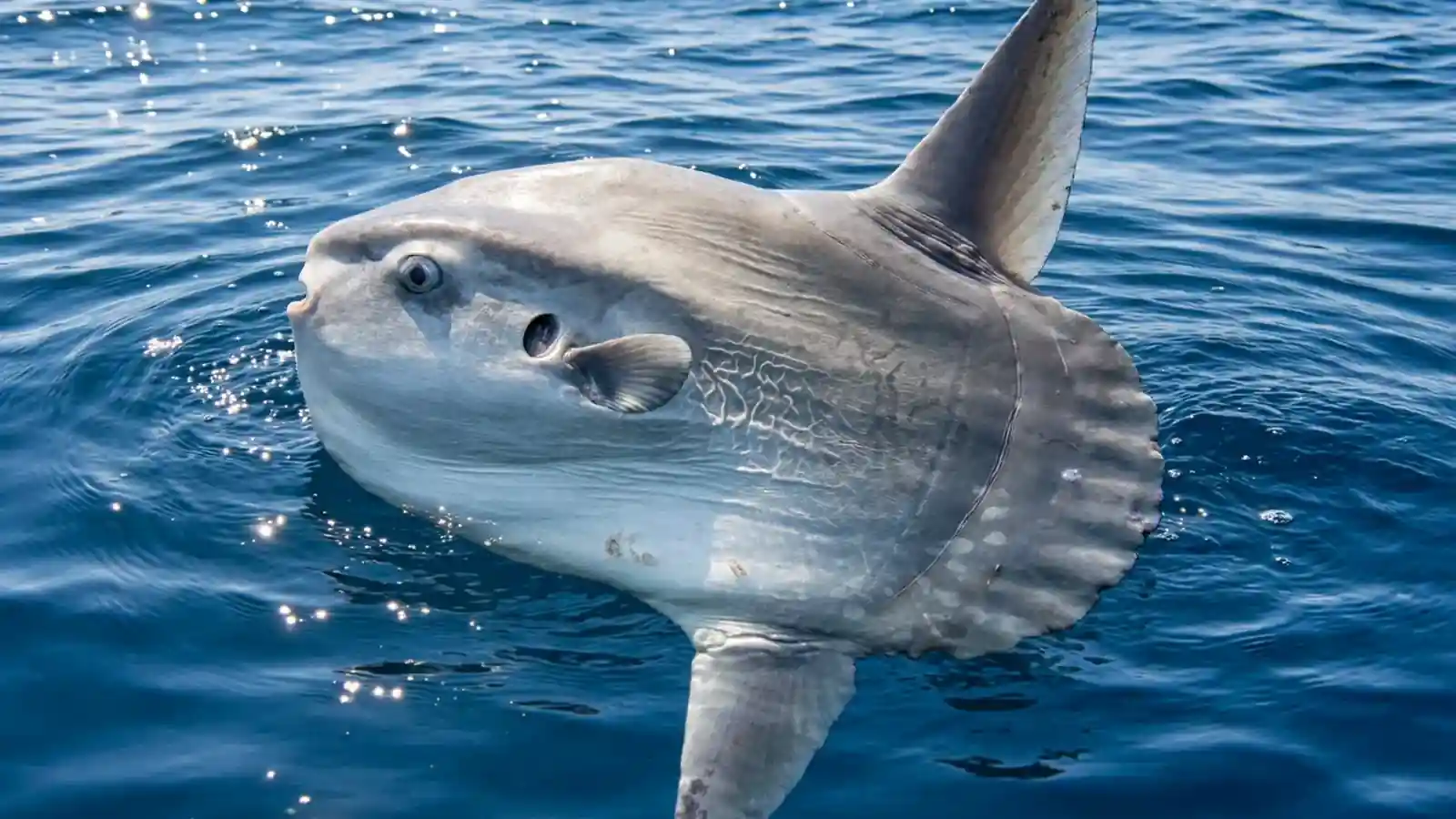
At a Glance
An ocean sunfish looks like a fish that was drawn and then cut in half: a giant grey disc with tall fins top and bottom, a small mouth, and no tail at all, drifting at the surface of the open sea. It is the heaviest bony fish in the world, a female lays more eggs than any other known vertebrate, and it is one of the strangest animals in the ocean.
What Is an Ocean Sunfish?
The species, Mola mola, is a giant disc-shaped fish of the family Molidae, found in open ocean worldwide. The body is laterally compressed into a near-circle, the skin is thick and rough, and the fish has no true tail fin: where the tail should be there is a rudder-like flap called the clavus, and the dorsal and anal fins are tall and set far back, giving the animal its unmistakable silhouette.
It is a fish of the surface and the deep both: they bask at the surface, lying on their sides in the sun, and dive hundreds of metres down to feed, and they are as often seen alone as in small loose groups. The name mola is Latin for millstone, and the fish looks the part — a great grey disc, turning slowly in the blue.
Size: The True Record
The largest recorded specimen, Mola mola, measured 2.7 metres long and weighed 2.3 tonnes, and that is the true record for the species. The famous 2,744-kilogram fish caught off the Azores in 2021, at 3.59 metres long, was not a Mola mola at all: it was a Mola alexandrini, a different and even larger species, and crediting Mola mola with 2,744 kilograms is the most common mistake in the whole subject. The species account keeps the two species and their records straight.
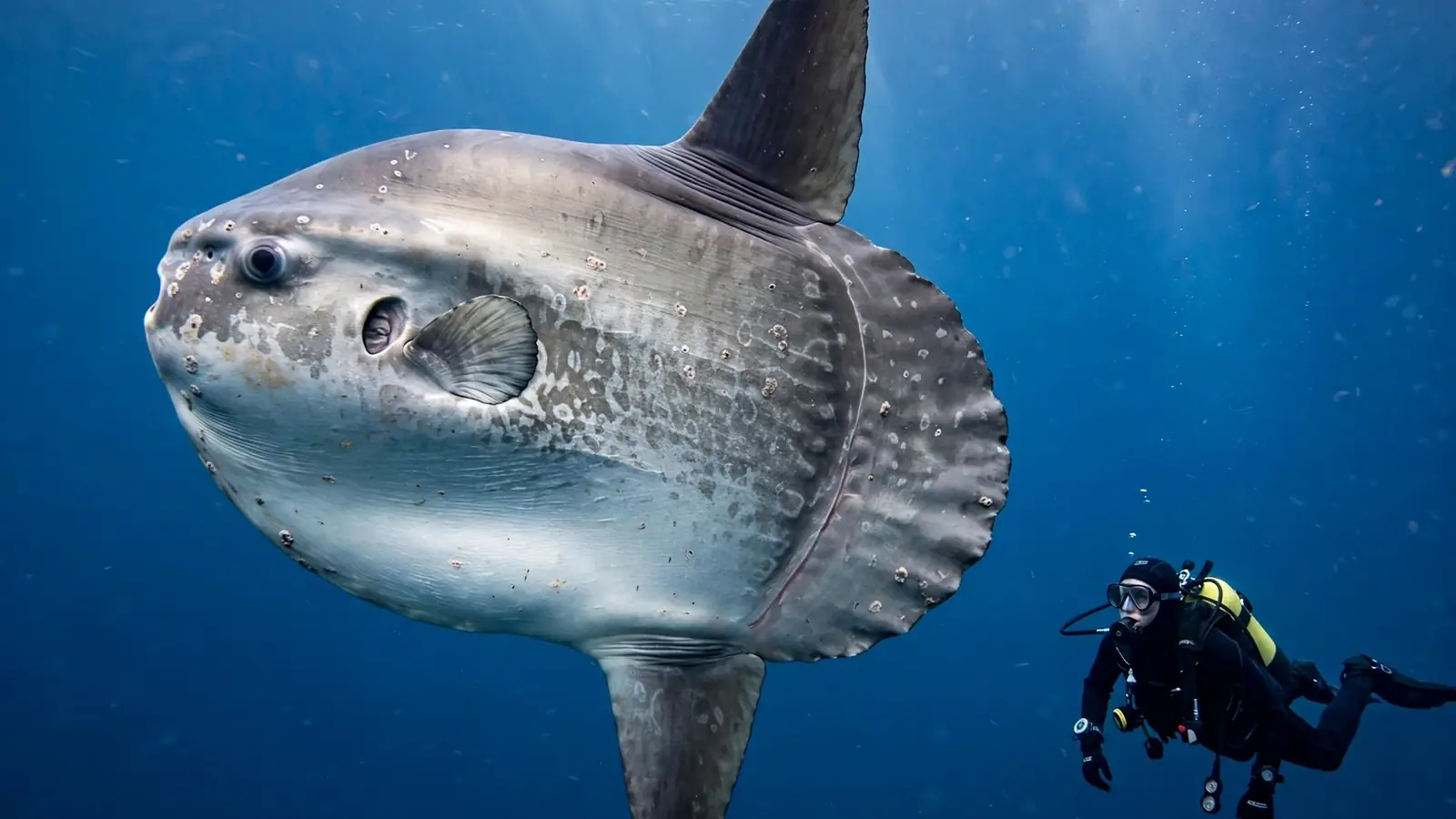
The mix-up is understandable, because the two giant molas look alike and were confused for years, but the records belong to different fish. Mola mola’s own record — 2.7 metres, 2.3 tonnes — is enormous enough on its own, and it is the figure this guide uses for the species itself.
The Five Mola Species
There are five recognised mola species, and this one is only the best known. Mola mola is the classic one of temperate and tropical seas; Mola alexandrini is the even larger southern giant behind the 2,744-kilogram record; Mola tecta, the hoodwinker sunfish, was only described in 2017, after hiding in plain sight for decades; and two more species complete a family that is still being sorted out.
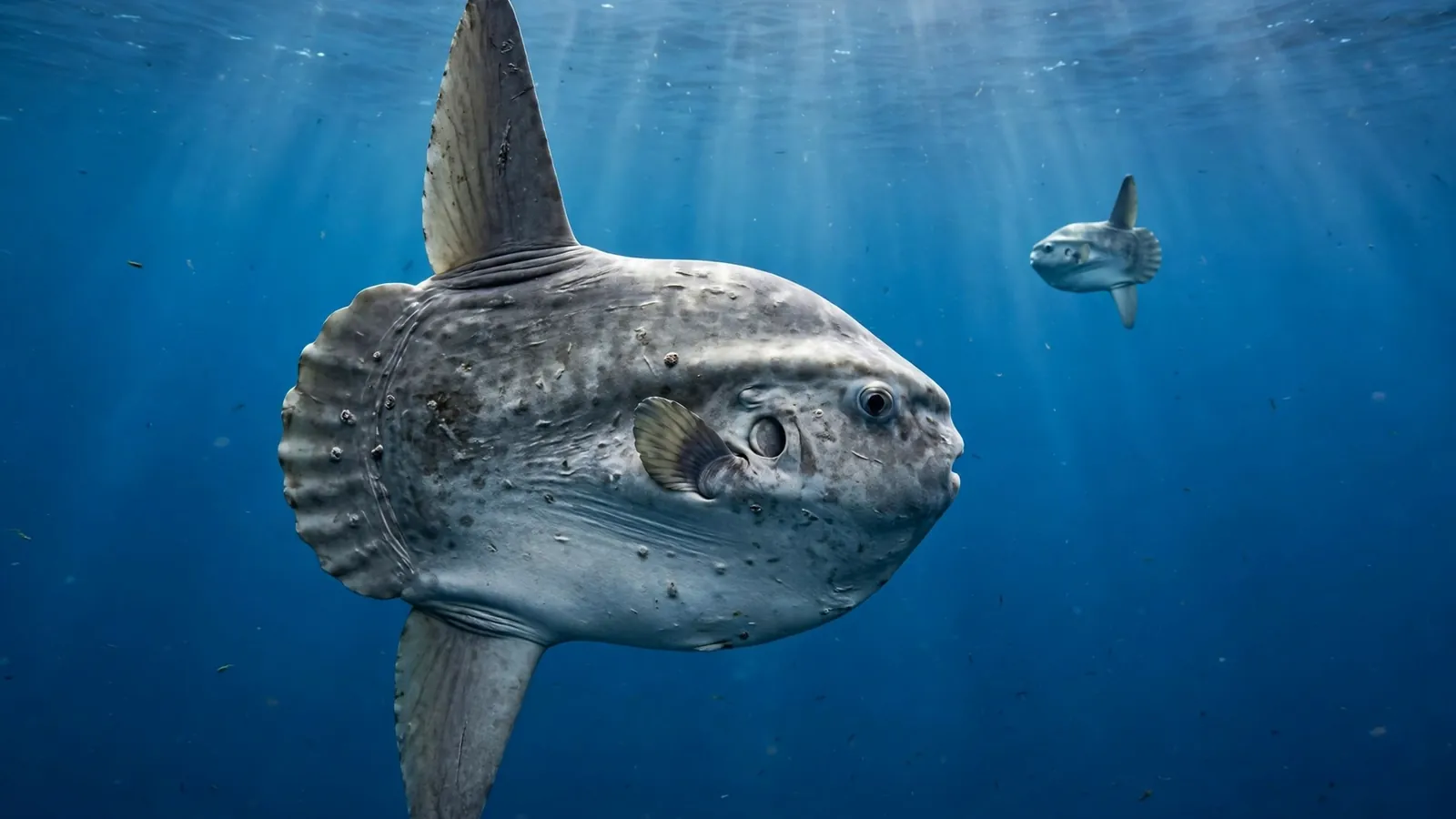
The five are hard to tell apart without a specialist’s eye for skin texture, clavus shape and the bumps along the body, and for years several of them were lumped together under the one name. The family is a reminder that the ocean still holds surprises in its most famous animals, and that the fish in the photograph may not be the species in the caption.
No Tail Fin: The Clavus
It has no true tail fin. Where the tail should be there is the clavus, a rudder-like flap formed from the back of the dorsal and anal fins, and the fish steers with it, sculling with the tall fins top and bottom to move through the water. The clavus is not a tail and it does not beat like one; it is a rudder, and the fish is a slow, deliberate swimmer because of it.
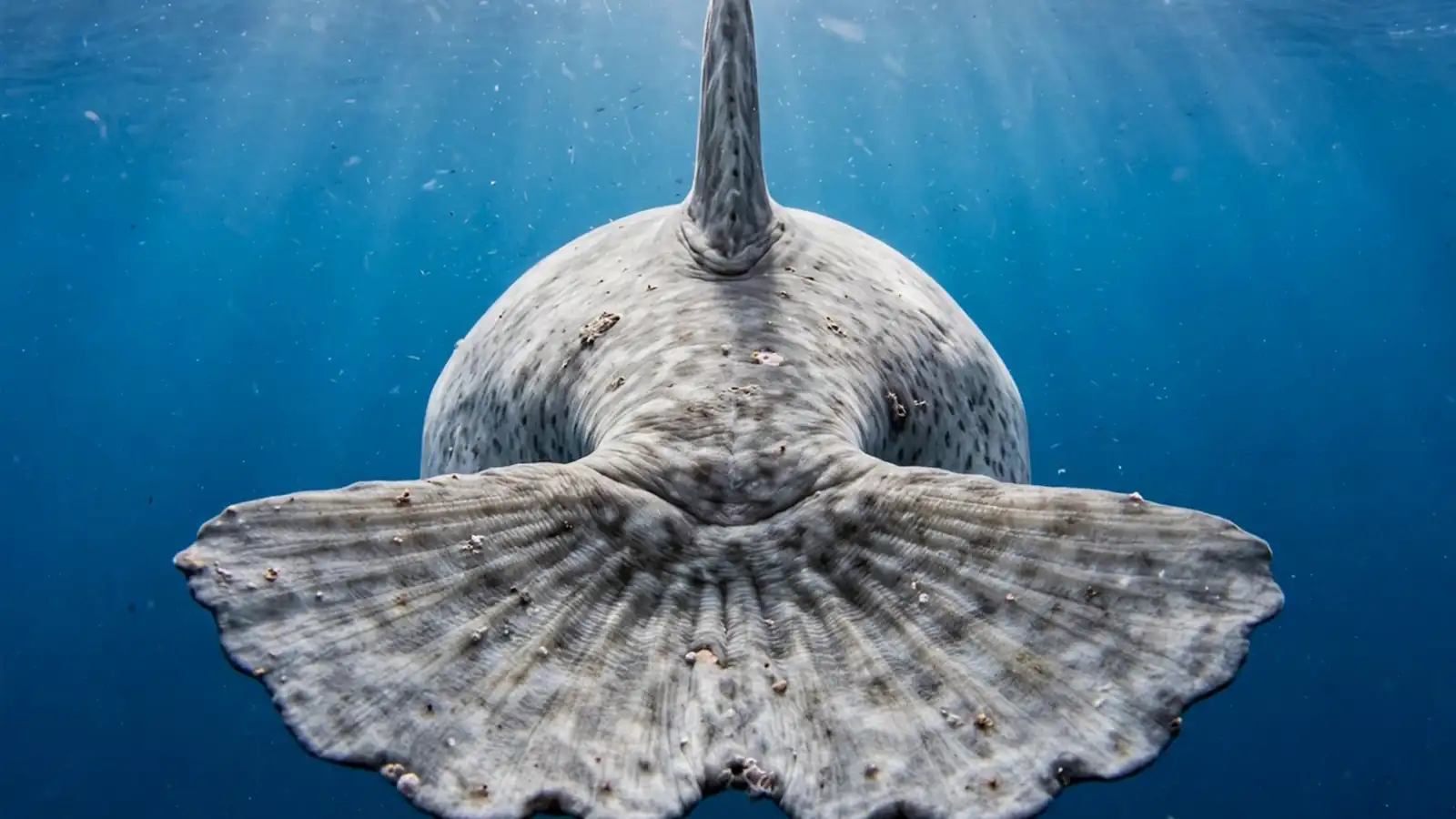
The missing tail is the fish’s whole design in one feature. A mola does not need a tail because it does not need speed: it drifts, it basks, it dives slowly, and it feeds on animals that cannot outrun it. The clavus is enough for the life it lives, and the fish’s shape — a disc with fins — is the shape of an animal that traded speed for size.
Diet: Jellyfish and More
It eats jellyfish, salps, small fish and crustaceans, and the jellyfish are the famous part: the fish is one of the ocean’s great jelly-eaters, drifting through blooms and taking the bells one by one. The diet is low in energy, which is part of why the fish grows so slowly and lives so long, and it is also why the fish dives deep, following the jellyfish and salps down into the cold water.
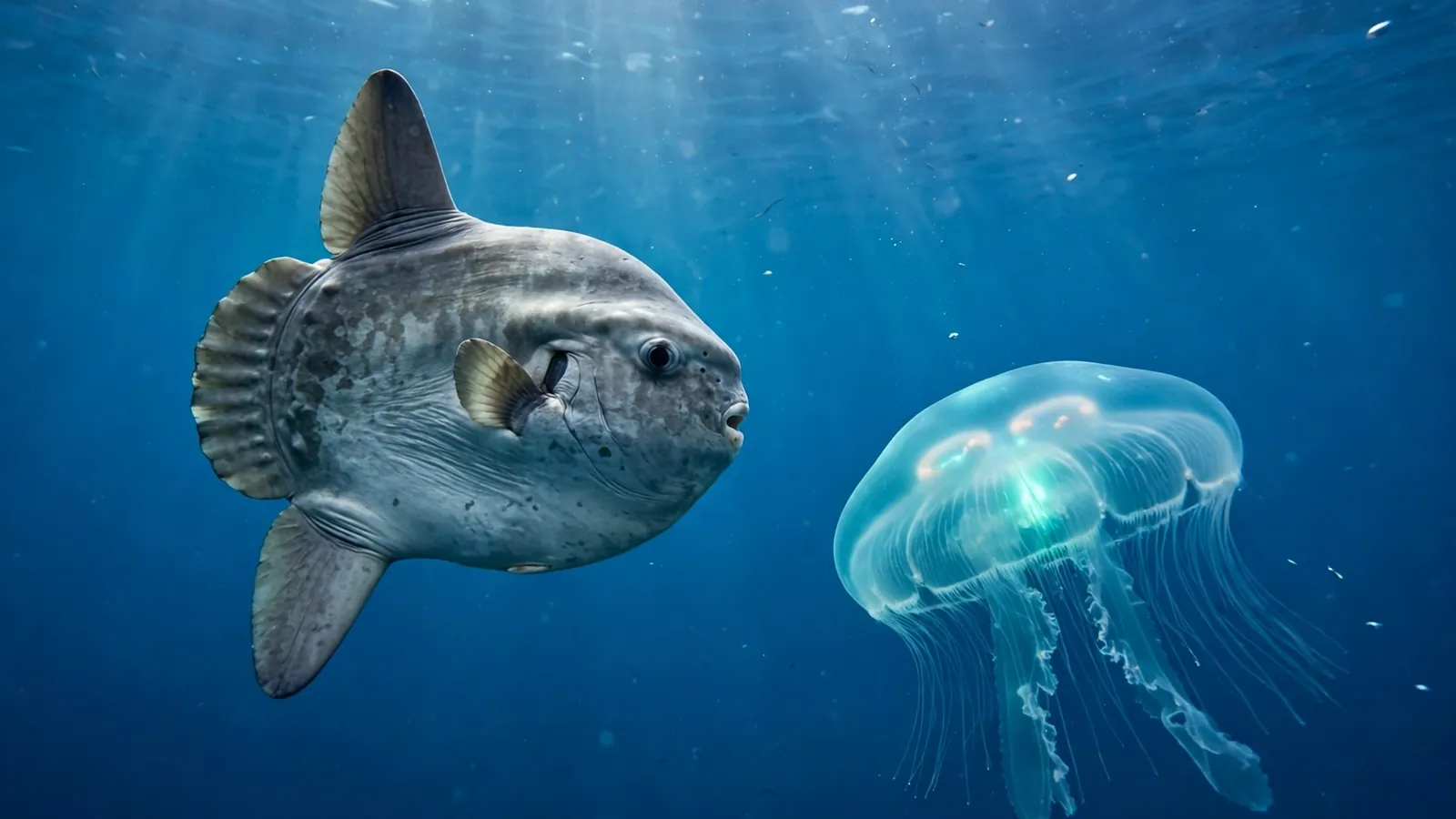
It is a slow way to eat and it suits a slow fish. A mola does not chase; it drifts into food, sucks it in, and moves on, and a single fish can eat a great many jellyfish in a day without ever hurrying. The diet is also the reason the fish is vulnerable to plastic: a drifting bag looks like a jellyfish, and a mola that eats it can die.
The 300-Million-Egg Record
A female lays about 300 million eggs, more than any other known vertebrate, and the number is the fish’s whole reproductive strategy in one figure. Almost all of those eggs will die — eaten, scattered, lost — and the strategy is to make so many that a few survive, which is how a slow, vulnerable fish keeps its numbers up in an ocean full of predators.
The young are nothing like the adults. A baby is a tiny, spiky ball a few millimetres across, and it grows through a series of strange shapes before it becomes the disc of an adult, increasing its weight by millions of times in its lifetime. It is one of the most extreme growth stories in the fish world, and it starts with 300 million chances.
The Fish and People
People meet them most often at the surface, where the fish basks on its side in the sun, and the meeting is usually gentle: the fish is harmless, slow and curious, and divers seek it out. The basking is part of the life: after a deep, cold dive, the fish warms itself at the surface, and seabirds sometimes pick parasites from its skin while it lies there, a cleaning service the fish seems to enjoy.
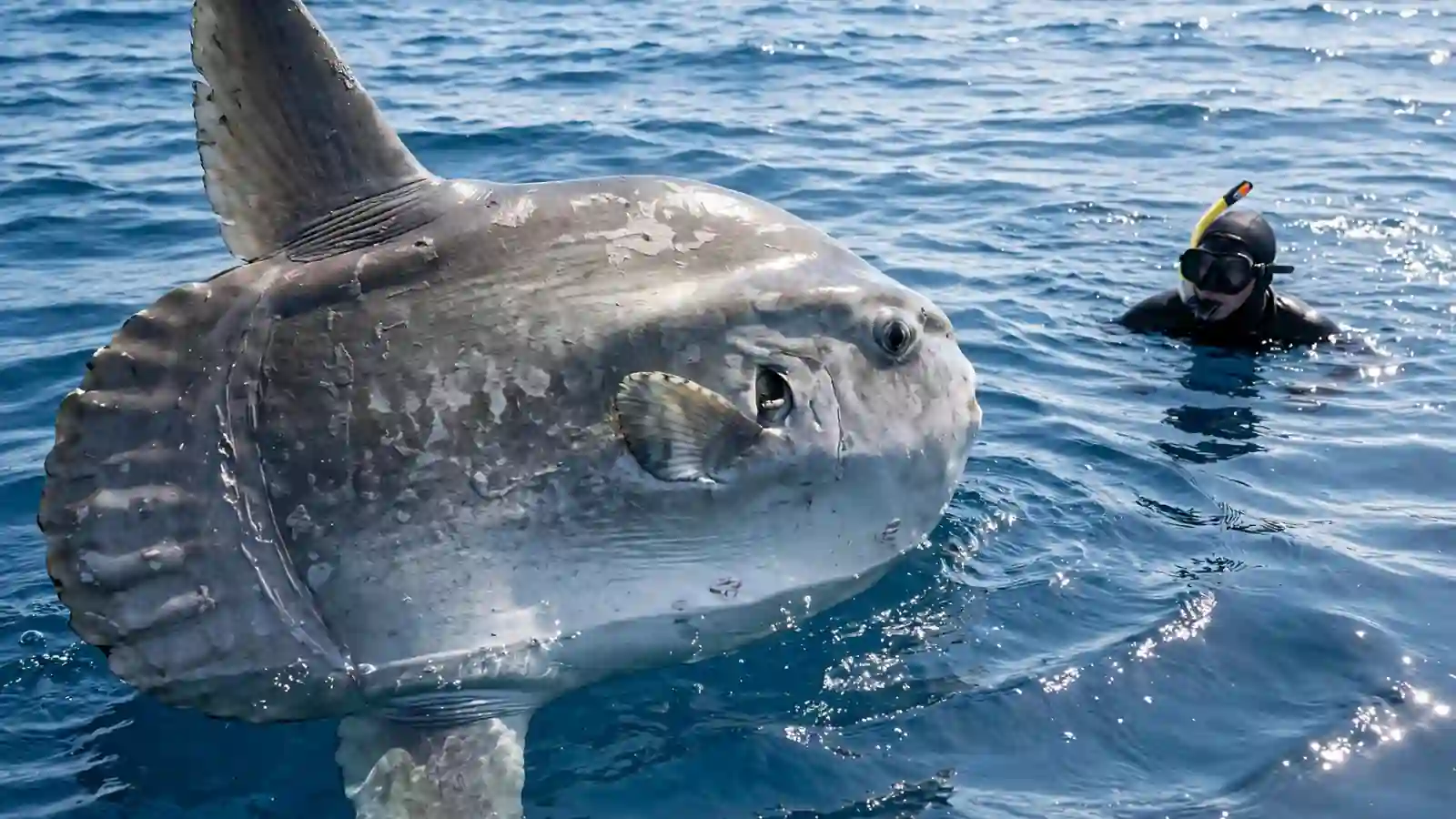
The species is listed as Vulnerable, and the threats are the familiar ones: plastic mistaken for jellyfish, nets, and the slow life history of a fish that grows slowly and breeds late. Captive growth of about 0.82 kilograms a day has been documented, attributed to aquarium records, but it is not a wild rate, and the wild fish remains a slow, long-lived animal that needs the ocean to stay clean and the jellyfish to keep coming.
Fun Facts
- A female lays about 300 million eggs, more than any other known vertebrate.
- The 2,744-kilogram record fish was a Mola alexandrini, not a Mola mola — the most common mistake in the subject.
- It has no true tail fin: a rudder-like flap called the clavus takes its place.
- A baby is a tiny spiky ball a few millimetres across.
- It basks at the surface on its side, warming up after deep, cold dives.
- It is listed as Vulnerable, and plastic bags mistaken for jellyfish are one of its threats.
Frequently Asked Questions
How big do ocean sunfish get?
The largest recorded Mola mola measured 2.7 metres long and weighed 2.3 tonnes. That is the true record for the species. The famous 2,744-kilogram fish was a Mola alexandrini, a different species, and should never be credited to Mola mola.
How heavy is the biggest ocean sunfish?
The biggest Mola mola on record weighed 2.3 tonnes. The 2,744-kilogram fish caught off the Azores in 2021 was a Mola alexandrini, not this species, and the two are often confused.
Do ocean sunfish have tails?
No. It has no true tail fin. Where the tail should be there is a rudder-like flap called the clavus, formed from the back of the dorsal and anal fins, and the fish steers with it.
How many eggs do ocean sunfish lay?
About 300 million, more than any other known vertebrate. Almost all of them die, and the strategy is to make so many that a few survive. The young start as tiny spiky balls a few millimetres across.
What do ocean sunfish eat?
Jellyfish, salps, small fish and crustaceans. The fish is one of the ocean’s great jelly-eaters, drifting through blooms and taking the bells one by one, and diving deep to follow jellyfish and salps into cold water.
Are ocean sunfish dangerous to humans?
No. They are harmless, slow and curious, and divers seek them out. They have no venom, no teeth worth fearing and no interest in people, and the meeting at the surface is usually gentle.
Why do ocean sunfish bask at the surface?
To warm up. After a deep, cold dive, the fish lies on its side at the surface in the sun, warming itself before the next dive. Seabirds sometimes pick parasites from its skin while it basks.
Similar Species Worth Exploring
Keep Exploring
Keep exploring the odd ones: meet the fish that inflates in our pufferfish guide, or browse the whole shoal in the types of fish. Then come back to the giant disc with no tail: the ocean sunfish.