Boxfish
Boxfish: The Fish That Lives Inside a Box
The boxfish lives inside a rigid shell of fused hexagonal plates and releases a toxic mucus when stressed, from dice-sized yellow juveniles.
By Emily Carter · Reviewed by our vet team · Updated 10 November 2026 · 9 min read
Rigid shellToxic mucusCube-shaped

At a Glance
The boxfish is the reef’s armoured cube, a fish that lives inside a rigid shell of fused hexagonal plates and moves by fluttering its fins like a helicopter. It is slow, awkward, and almost impossible to eat — and when it is stressed, it releases a toxin that can kill everything in the water around it.
Boxfish Size: How Big Do They Get?
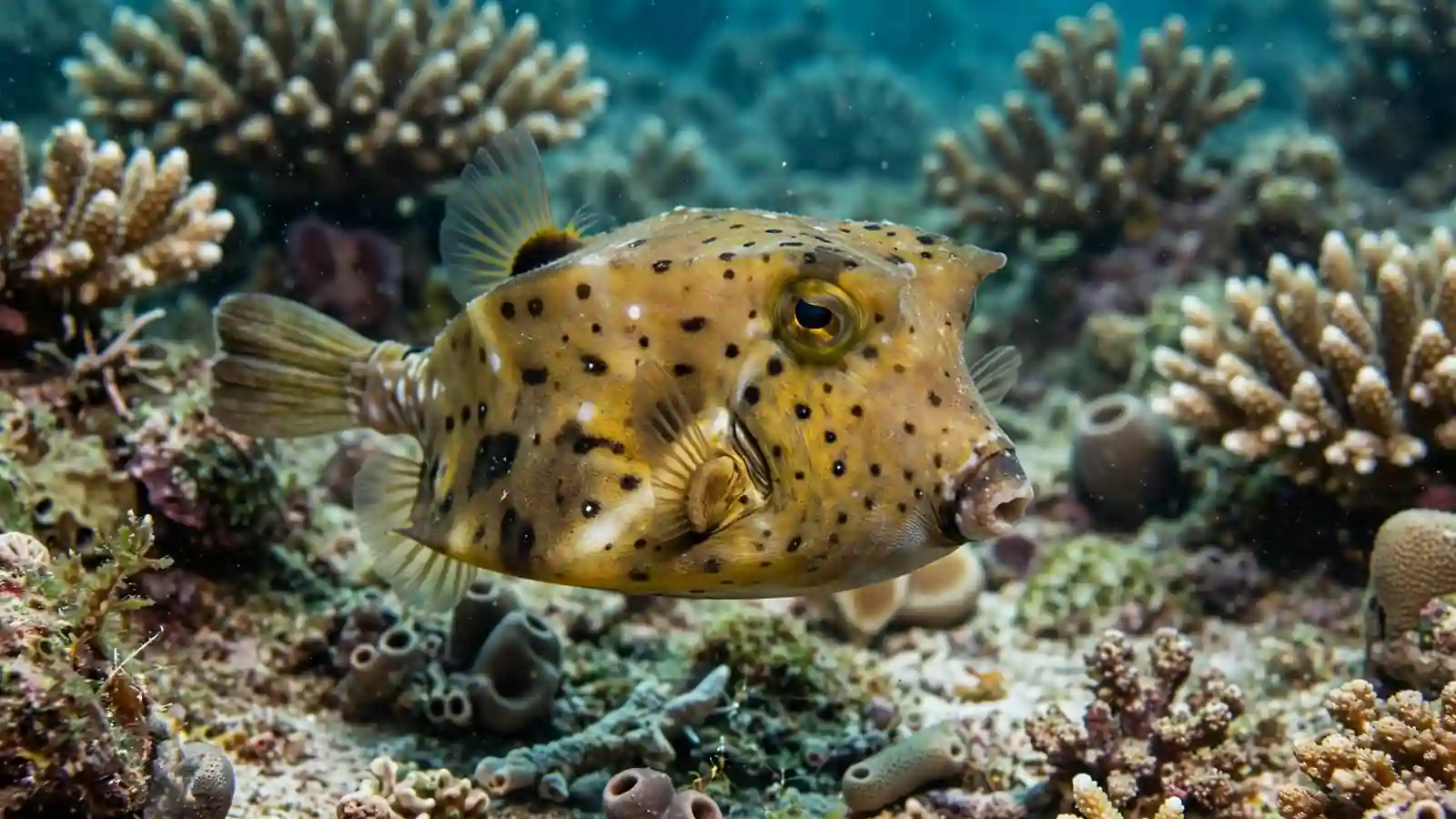
Most of them measure 10 to 30 cm long, a small, cube-shaped fish that fits in the palm of a hand. The yellow one, the family’s most famous member, grows larger — up to 45 cm — and the scrawled cowfish, a horned cousin, reaches about 50 cm. It is not built for size: it is built for armour, and the armour works at any scale.
Size is set by the shell, not by appetite. Because the plates are fused, the fish cannot swell or flex its way out of trouble, so growth means slowly adding bone at the edges of the plates. That is why even the largest adults stay small beside most reef fish, and why the cube outline never changes shape as the years pass.
Growth is slow and the shape is fixed from birth. A juvenile is already a cube, already armoured, already bright yellow with black spots — a dice-sized fish that looks like a toy and is, in fact, one of the best-defended animals on the reef. The box does not grow by stretching; it grows by adding plates, and the fish inside grows to fill it.
Juveniles live the same armoured life as adults from the day they settle on the reef. The bright yellow paint job makes them easy to spot on the sand, but predators learn fast: the little cube is hard, awkward to swallow and quick to leak poison when grabbed, so it is usually left alone to hover in peace.
What Is the Box Made Of?
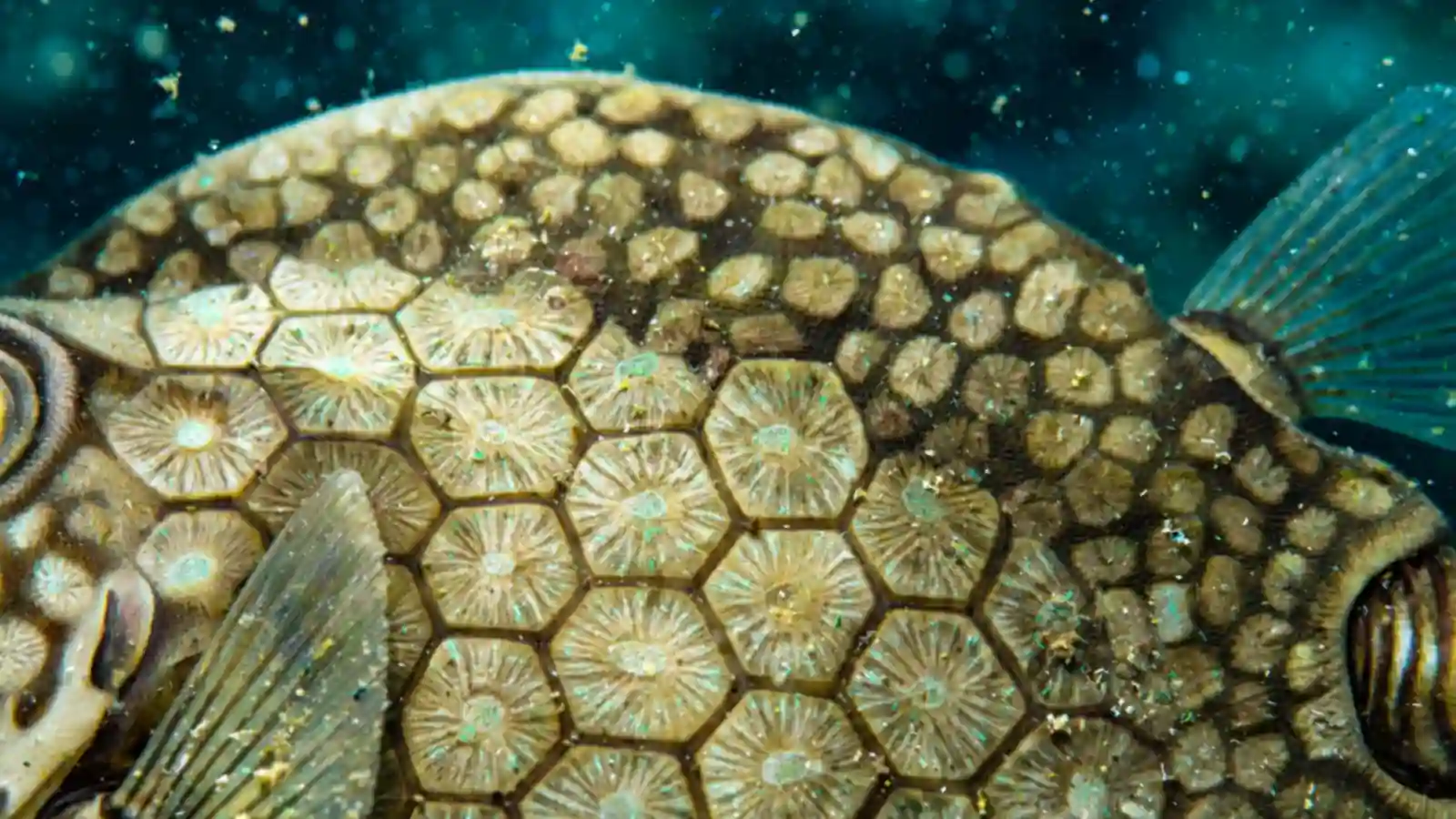
The box is a rigid shell of fused hexagonal plates, a carapace of bone covered in skin that encloses the whole body. Only the fins, the mouth, the eyes and the tail stick out — everything else is inside the box, protected by a wall that most predators cannot bite through. The plates fit together like a honeycomb, and the shape is almost a perfect cube, with the corners rounded just enough to let the water flow.
The box is also the reason this fish swims the way it does. It cannot bend its body, so it cannot swim like other fish — instead it flutters its dorsal, anal and pectoral fins like a helicopter, hovering, turning and backing up with a precision no other reef fish can match. A 2015 study found that the box shape is surprisingly hydrodynamic: the cube creates vortices that stabilise the fish, and the fish in a current is steadier than a torpedo-shaped fish would be. For the full family profile, see The Sea’s fish guide.
The Yellow Species

The yellow species is the family’s icon: a bright lemon-yellow cube with black spots, about the size of a dice, hovering over the sand. The juveniles are the brightest, a solid yellow that fades as the fish grows — adults are a duller yellow-brown, with the spots fading and the edges softening. The colour is a warning, and it works: predators learn that a bright yellow cube is not worth the trouble.
Yellow ones are the most commonly seen on the reef, and the most commonly kept in aquariums — where they are a problem, because a stressed one can release its toxin and kill everything in the tank. The bright colour is honest advertising: this fish is armoured, it is toxic, and it is not food.
Where Boxfish Live
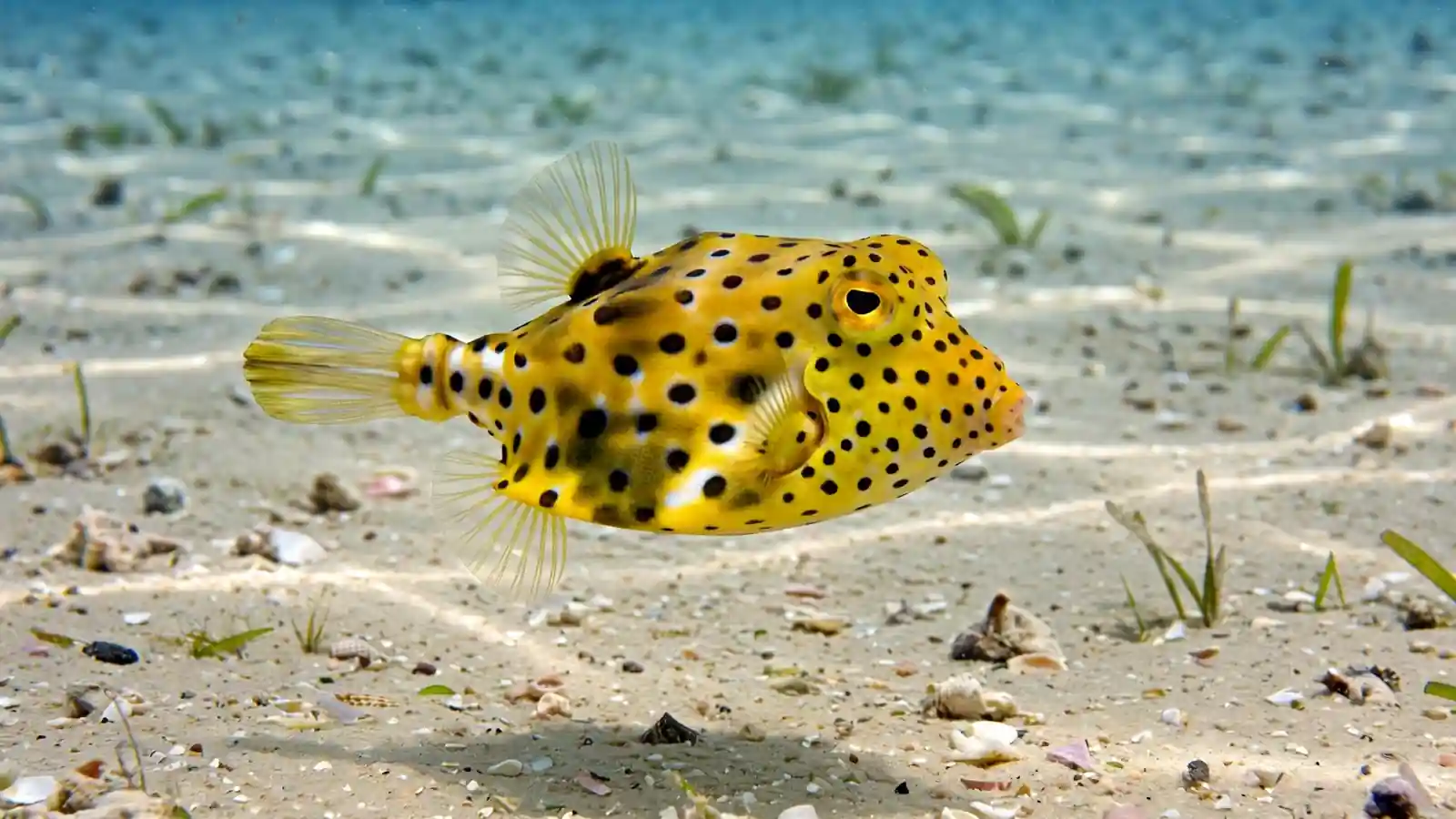
They live on tropical coral reefs and in seagrass beds worldwide, from the Atlantic to the Indo-Pacific, wherever the water is warm and the shelter is close. They favour lagoons, reef flats and seagrass meadows, living from the shallows down to around 100 metres, and they are most at home where the current is gentle and the food is on the bottom.
Warm water is the common thread through that whole range. Lagoons and reef flats give the fish shelter, sand to feed over and coral to hover beside, all within a short, slow swim of home. Seagrass beds offer the same mix, plus cover for juveniles small enough to hide between the blades.
They are slow, deliberate swimmers, hovering over the sand and the coral with their fins fluttering, turning in place and backing up with a precision that looks like a machine. This fish does not hurry — it does not need to. Nothing on the reef can eat it, and the only thing that can hurt it is a net, a tank, or a toxin it releases itself.
That fluttering flight is slow but precise. Rows of small fin strokes let the fish hold station in a surge, spin on the spot and reverse out of a crevice without turning around first. On a reef built of tight spaces, control matters more than speed, and very few fish can match that kind of handling.
What Do They Eat?

They eat algae, sponges, molluscs and small crustaceans, picking at the reef and the sand with their small, puckered mouths. They feed by blowing: the fish will hover over the sand, jet water from its mouth to blow the sand away, and pick out the small animals hiding underneath. It is a slow, methodical way to eat, and it works — the diet is the same across the family, whatever the species.
Feeding is a daytime activity, and it is unhurried. The fish will spend hours working a patch of sand, blowing, picking, and moving on — a gardener of the seabed, turning over the sediment and keeping the small animals in check. It is not a hunter; it is a forager, and its armour lets it forage in the open, where other small fish would hide.
The blowing trick works because the mouth is small and the jet is focused. A patch of sand gets worked the way a gardener works a bed: jet, pick, move on. Worms, tiny crabs and buried molluscs make up most of the catch, taken one at a time through the daylight hours.
The Toxin
Its last defence is chemical. When it is stressed — grabbed by a predator, trapped in a net, or dying in a tank — it releases a toxic mucus from its skin, a poison called pahutoxin, also known as ostracitoxin. The toxin is a surfactant, a soap-like substance that breaks down the gills of other fish, and in a closed space it can kill everything in the water, including the fish itself.
Reports of tetrodotoxin in these fish also exist, but they are reports only, not established fact, and this guide does not present them as settled. What is certain is the pahutoxin, and the warning it carries: the fish should never be kept in a tank with other fish, and a stressed one in an aquarium is a danger to the whole tank. The toxin is the reason its bright colour is honest — it is a fish that cannot be eaten, and it says so.
Aquarists meet the toxin the hard way. A single stressed fish in a small tank can poison the whole system overnight, which is why experienced keepers give the species a tank of its own or skip it entirely. In the open sea the same poison simply drifts away on the current and dilutes to nothing.
The Three Groups of the Family

The family, Ostraciidae, holds about 23 species in 6 genera, and it divides into three groups that are easy to tell apart. The first group are the cubes, with a rigid, box-shaped shell. The cowfish are the horned ones, with two forward-pointing horns above the eyes and a longer, more rectangular body. The trunkfish are the rounder ones, with a smooth, trunk-like shell and no horns at all.
The scrawled cowfish, the family’s horned showpiece, is the easiest to recognise: a box-shaped fish with two horns, a scribbled pattern of blue lines, and a habit of hovering over the reef like a small, armoured airship. The three groups share the same shell, the same slow swimming, and the same toxin — and they share the same reef, living side by side in the lagoons and the seagrass.
Fun Facts
- It cannot bend its body — it swims by fluttering its fins like a helicopter, hovering and turning in place.
- A 2015 study found the box shape is surprisingly hydrodynamic: the cube creates vortices that stabilise the fish in a current.
- The yellow juvenile is bright lemon yellow with black spots, about the size of a dice.
- When stressed, it releases pahutoxin, a soap-like poison that can kill everything in the water around it.
- The family holds about 23 species in 6 genera, divided into the cubes, the cowfish and the trunkfish.
- The scrawled cowfish carries two forward-pointing horns above its eyes.
Frequently Asked Questions
Why Are Boxfish Box-Shaped?
Because they live inside a rigid shell of fused hexagonal plates, a carapace of bone that encloses the whole body. The box protects them from predators — only the fins, mouth, eyes and tail stick out — and a 2015 study found the cube shape is surprisingly hydrodynamic, creating vortices that stabilise the fish in a current.
Are Boxfish Poisonous?
Yes. When stressed, the fish releases a toxic mucus called pahutoxin, also known as ostracitoxin, a soap-like poison that breaks down the gills of other fish. In a closed space it can kill everything in the water, including the fish itself. Reports of tetrodotoxin are reports only, not established fact.
How Big Do Boxfish Get?
Most measure 10 to 30 cm. The yellow one grows to 45 cm, and the scrawled cowfish reaches about 50 cm. Juveniles are dice-sized, bright yellow with black spots.
Where Do Boxfish Live?
On tropical coral reefs and in seagrass beds worldwide, from the Atlantic to the Indo-Pacific. They favour lagoons, reef flats and seagrass meadows, living from the shallows down to around 100 metres.
What Do Boxfish Eat?
Algae, sponges, molluscs and small crustaceans. They feed by blowing sand away from prey with jets of water from their mouths, then picking out the small animals hiding underneath.
Can You Eat a Boxfish?
No. They release a toxic mucus when stressed, and the flesh is not safe to eat. The bright colour is honest advertising: this fish is armoured, it is toxic, and it is not food.
What Is the Difference Between a Boxfish and a Cowfish?
Cowfish are the horned branch of the family — two forward-pointing horns above the eyes — and a longer, more rectangular body. Trunkfish are the third group: rounder, smoother, and hornless. All three belong to the family Ostraciidae and share the same shell, slow swimming and toxin.
Similar Species Worth Exploring
Keep Exploring
Still exploring armoured-fish country? Meet the spiky inflator in the Pufferfish guide, watch the reef’s tough customer in the Triggerfish guide, size up the whole family in the Types of Reef Fish hub, and then come back to the lagoon to watch the boxfish.