Brain Coral
Brain Coral: The Slow-Growing Brain of the Reef
Brain coral grows just 3.5 mm a year, yet its maze-like heads can live for centuries — and its best-known species, the grooved one, is now critically endangered.
By Emily Carter · Reviewed by our vet team · Updated 10 November 2026 · 9 min read
Grows 3.5 mm a yearLives for centuriesCritically Endangered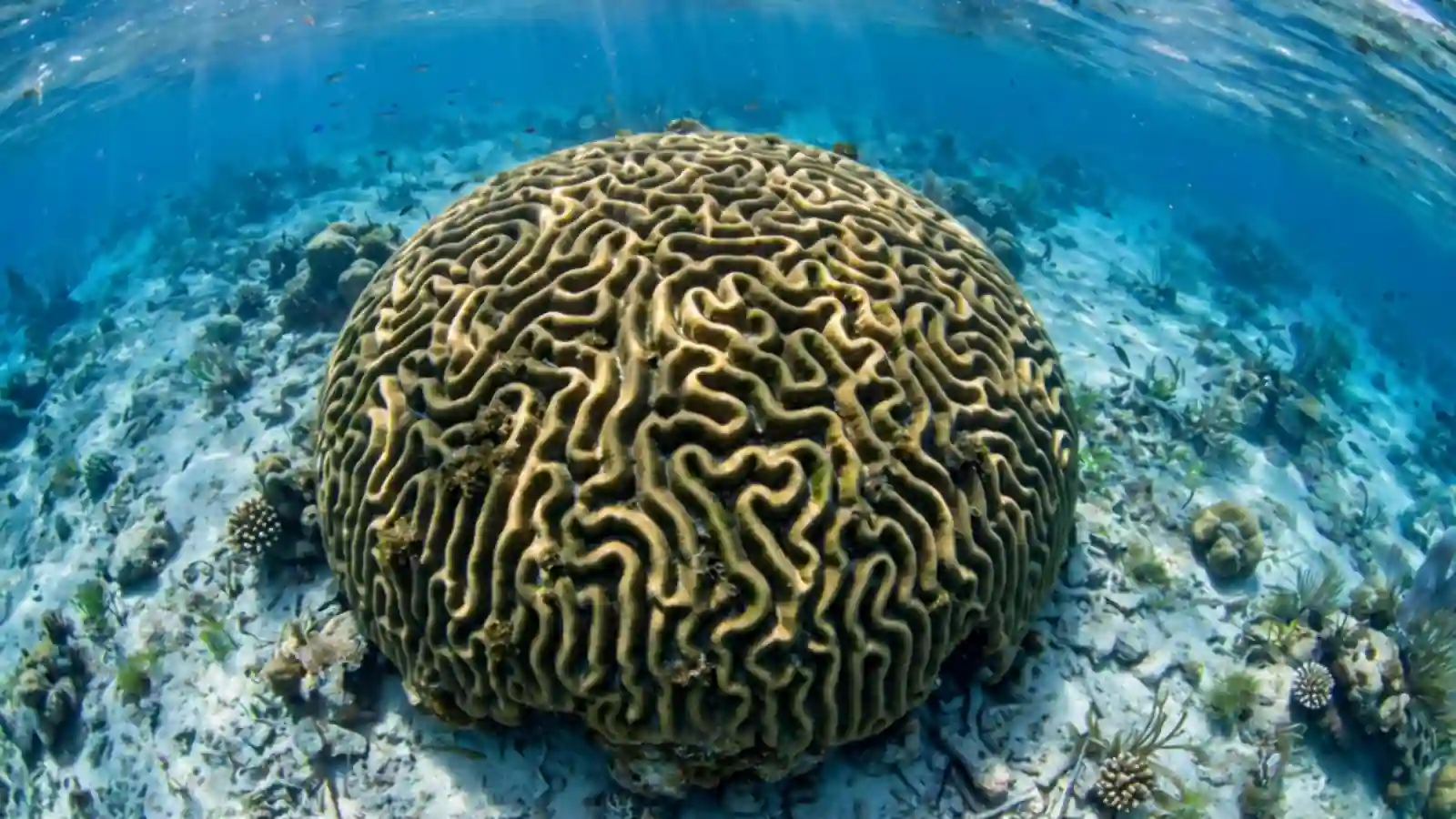
At a Glance
Brain coral is not one species but a shape — a maze of valleys and ridges that looks like a brain, grown by several different corals. The best-known is the grooved species, and it is one of the slowest-growing and longest-lived animals on the reef.
Brain Coral Anatomy: Valleys, Ridges and Grooves
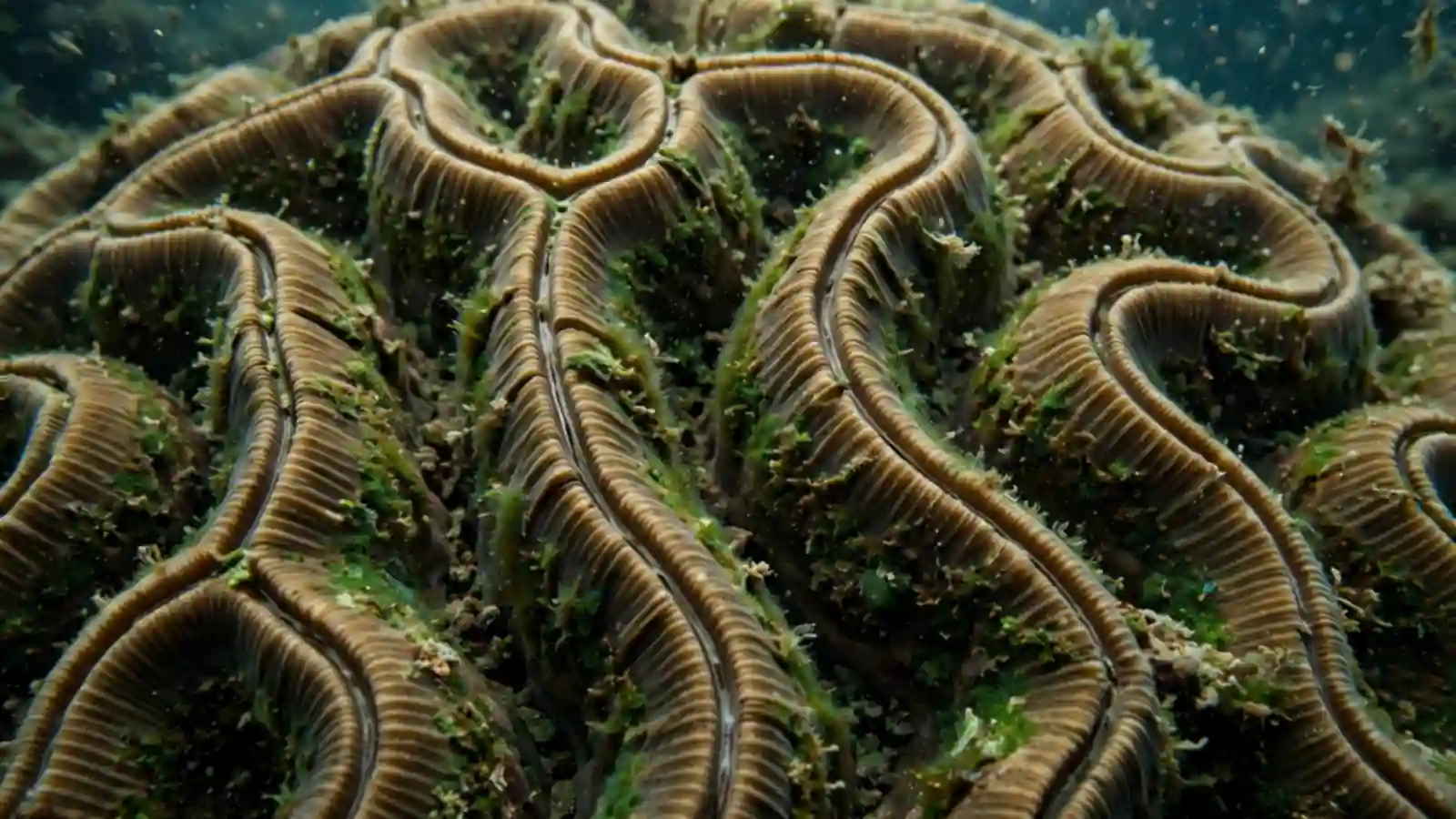
It is a dome of valleys and ridges, a maze cut into living stone. The valleys are the feeding surface, lined with polyps, and the ridges are the skeleton between them — and the pattern is what gives the coral its name, because it looks, unmistakably, like a brain.
The grooved species adds one more detail: its valleys are double, with a groove running along the top of each ridge. It is the only species in its genus, and the double valley is the mark that tells it apart from its cousins.
Grooved Brain Coral: The Best-Known Species
The grooved species, Diploria labyrinthiformis, is the best-known of them and the only species in its genus. Its domes grow to about two metres across on Caribbean reefs, and its double valleys with grooved ridges are unmistakable once you have seen them.
Its cousins are the symmetrical species, Pseudodiploria strigosa, and the boulder species, Colpophyllia natans — similar domes, different valleys. All three are called brain corals, and all three grow the same slow way, but the grooved one is the one most divers meet first.
Where It Grows: Caribbean Reefs and Bermuda
It grows in the Caribbean, the Bahamas, southern Florida and Bermuda, in shallow, sunlit water 1–30 metres down. It likes the reef flat and the reef slope, where the light is strong and the water is clear, and it grows where the waves are gentle enough not to break its domes.
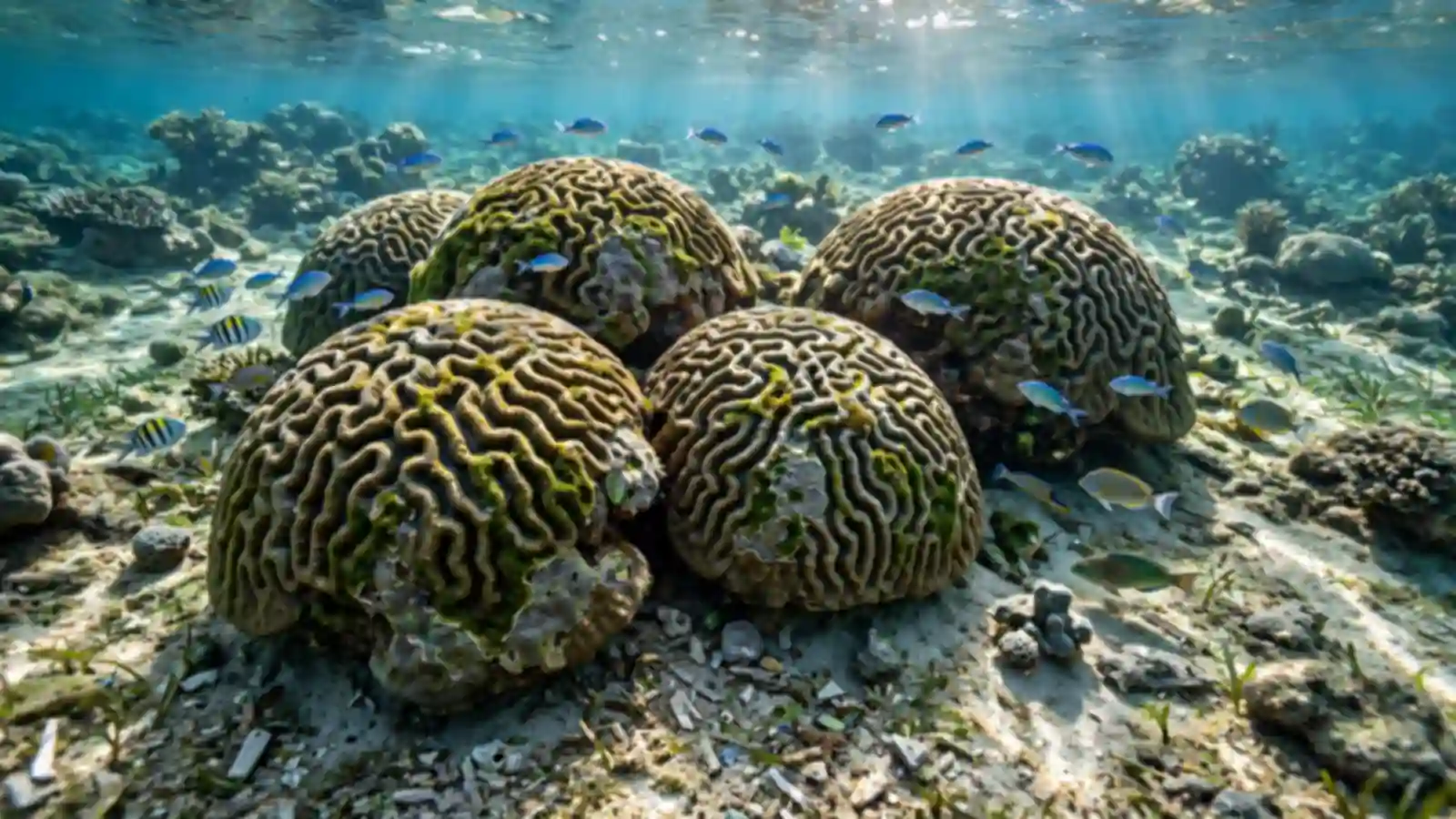
Its dome is a landmark on the reef: it does not move, it does not hide, and it grows so slowly that a large one has been in the same place for longer than any diver alive. The biggest domes are the oldest residents of the reef.
The domes are landmarks in more than one sense: fish shelter in their shadow, and the valleys between the ridges are nurseries for small reef animals. A dome is not just a coral — it is a neighbourhood, and the reef around it is richer for it. The oldest domes have been neighbourhoods for centuries, and the animals that live on them have never known another home. The domes grow where the waves are gentle, and a storm that breaks one has broken a century of slow work.
Slow Growth: 3.5 mm a Year, Centuries of Life
The grooved species grows about 3.5 mm a year — a third of a centimetre, the thickness of a coin — and its colonies reach about two metres across. Do the maths and a large dome is centuries old: the largest colonies are often said to be around 900 years old, though that figure is rarely tied to a dated colony, and the documented figure alongside it is over 200 years for the boulder species.
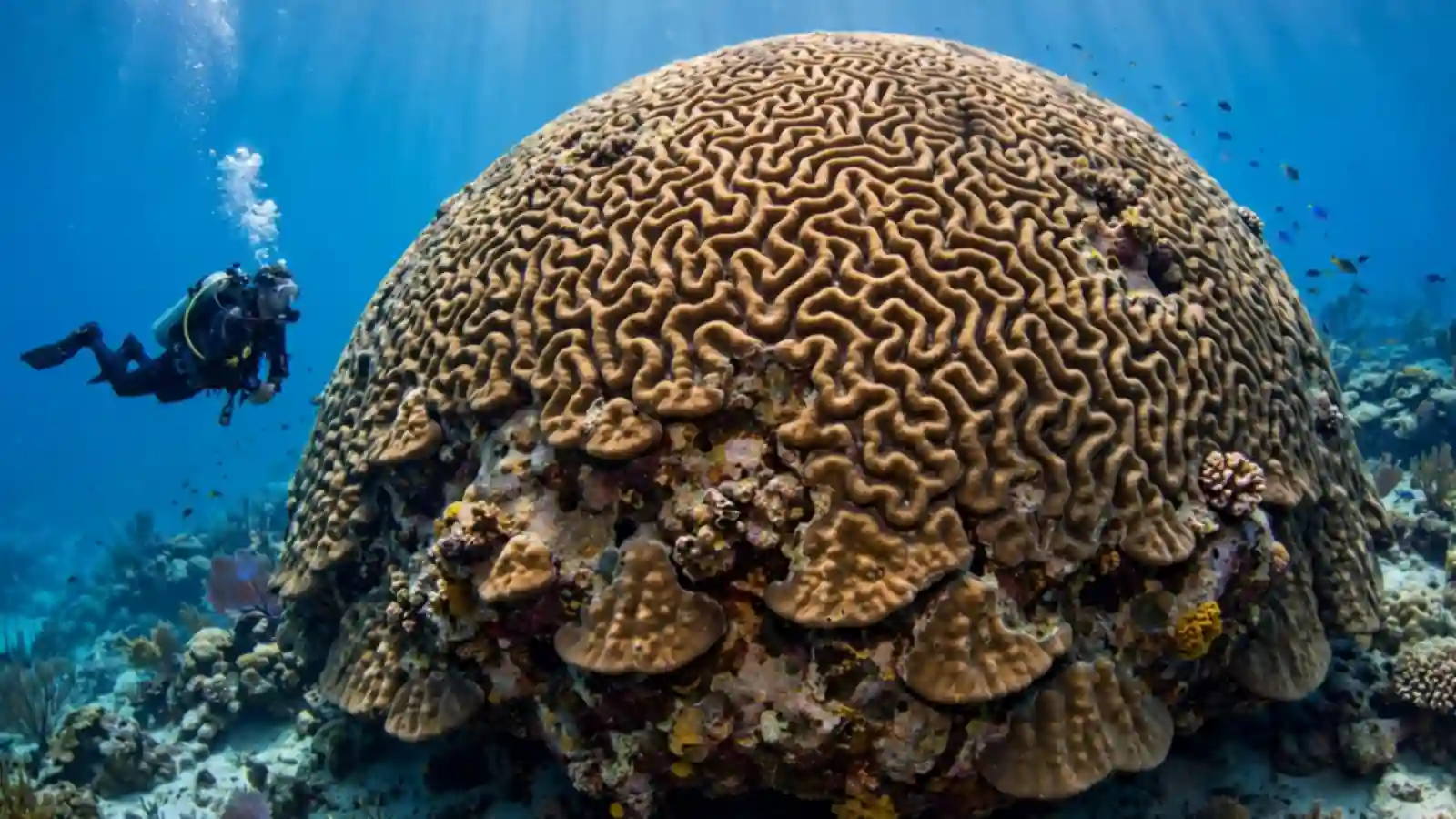
The slow growth is the coral’s strength and its weakness: it makes the domes nearly indestructible, and it makes them nearly impossible to replace. A dome broken by an anchor or a storm will not grow back in a diver’s lifetime — or in several.
An anchor dropped on one does damage that outlives the diver who dropped it, and the scar will still be there when their grandchildren dive the same reef.
Reproduction: Broadcast Spawning
It is a hermaphroditic broadcast spawner: each colony releases eggs and sperm into the water together, and the fertilised larvae drift with the currents before settling on the reef. The grooved species spawns from late May to late June, in the warm water of early summer.

The spawning is a numbers game: millions of larvae, almost all eaten, and a handful that find a bare rock and settle. A new colony begins as a single polyp the size of a pinhead, and it will take a century to become a dome a diver can sit beside.
The Disease Threat: Stony Coral Tissue Loss
The greatest threat to it is Stony Coral Tissue Loss Disease — SCTLD — a disease spreading across the Caribbean since 2014 that strips the living tissue from the skeleton in white lesions. Brain corals are among the most susceptible species, and the disease kills them fast.
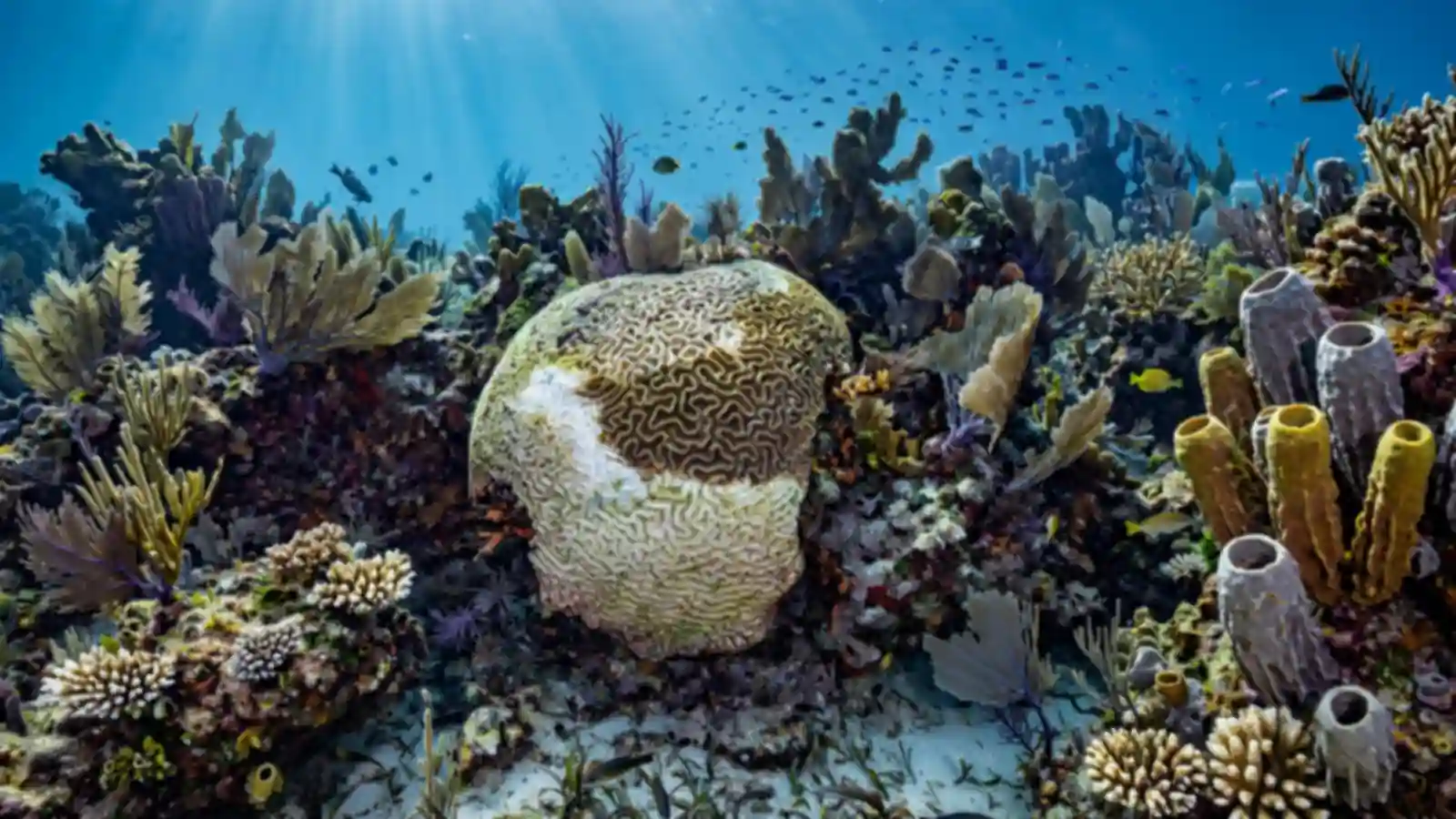
A healthy dome can be reduced to bare skeleton in weeks, and the disease moves from colony to colony along the reef. It is the reason the grooved species’ status changed, and it is the reason the domes that survive are now the most valuable corals on the reef.
Conservation: A Critically Endangered Species
The grooved species is Critically Endangered in the 2021 assessment, largely because of tissue-loss disease. Older sources still list it as Least Concern, but those listings are wrong — they predate the disease and the reassessment, and this guide does not repeat them.
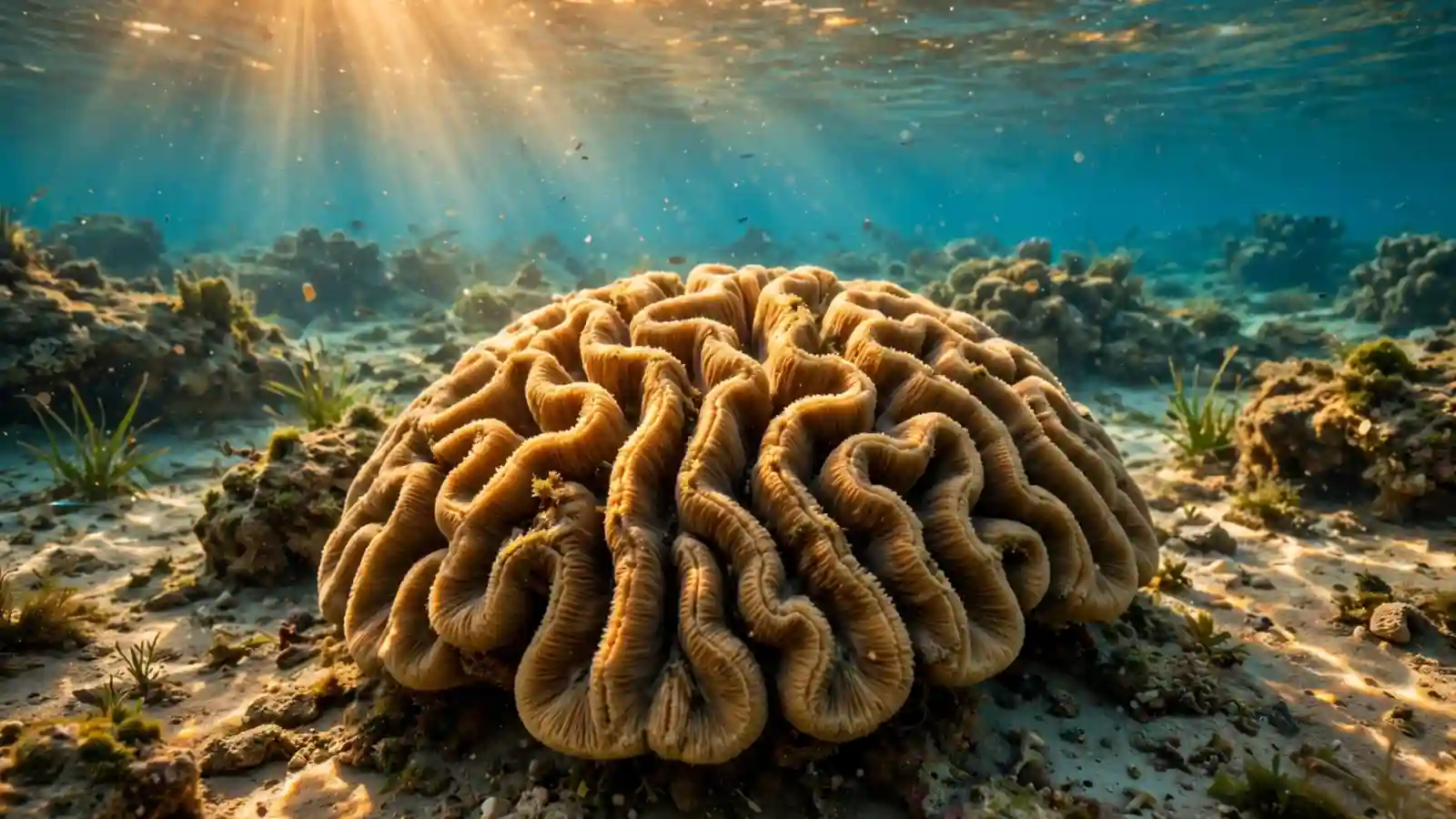
The status is the highest threat level, and it means the grooved species could vanish from parts of its range within a generation. The protection it needs is the reef’s protection: clean water, no anchor damage, and a halt to the disease — none of which is easy, and all of which is urgent. For a guide to recognising the Caribbean brain corals, see this guide to the brainiest Caribbean corals.
Fun Facts
- It grows about 3.5 mm a year — the thickness of a coin.
- The largest colonies are often said to be around 900 years old, though the figure is rarely dated.
- The grooved one is the only species in its genus.
- It is a hermaphroditic broadcast spawner, releasing eggs and sperm together.
- Stony Coral Tissue Loss Disease has spread across the Caribbean since 2014, and brain corals are among the most susceptible.
- The grooved species was uplisted to Critically Endangered in 2021.
Frequently Asked Questions
What Is Brain Coral?
A group of corals that grow in domes of valleys and ridges, looking like a brain. The best-known is the grooved species, Diploria labyrinthiformis, and its cousins are the symmetrical and boulder species.
How Old Can Brain Corals Get?
Centuries. The largest colonies are often said to be around 900 years old, though that figure is rarely tied to a dated colony — the documented figure alongside it is over 200 years for the boulder species.
How Fast Does Brain Coral Grow?
About 3.5 mm a year for the grooved species — a third of a centimetre. Its colonies reach about two metres across, which means a large dome has been growing for centuries.
How Many Species of Brain Coral Are There?
Several, in different genera. The best-known are the grooved species, Diploria labyrinthiformis, the symmetrical species, Pseudodiploria strigosa, and the boulder species, Colpophyllia natans.
Where Does Brain Coral Grow?
In the Caribbean, the Bahamas, southern Florida and Bermuda, in shallow, sunlit water 1–30 metres down, on the reef flat and the reef slope.
Why Is Brain Coral Endangered?
Because of Stony Coral Tissue Loss Disease, spreading across the Caribbean since 2014, to which brain corals are among the most susceptible. The grooved species was uplisted to Critically Endangered in the 2021 assessment.
What Is Stony Coral Tissue Loss Disease?
A disease of stony corals, spreading across the Caribbean since 2014, that strips the living tissue from the skeleton in white lesions. It kills colonies in weeks, moves from colony to colony along the reef, and brain corals are among the most susceptible.
Similar Species Worth Exploring
Keep Exploring
Meet the precious coral, the red coral of jewellery, then the fire coral, the stinging coral that is not a coral, and browse the whole family in our types of jellyfish hub — then come back to the slow-growing brain of the reef, the brain coral.