Giant Squid vs Colossal Squid
Giant Squid vs Colossal Squid: Bigger, Heavier, and the Truth About Both
Giant squid vs colossal squid — the comparison everyone asks for — pits the longest squid against the heaviest, and the truth is more interesting than the myths: the giant is longer, the colossal is heavier, and neither is the monster of legend.
By Emily Carter · Reviewed by our vet team · Updated 10 November 2026 · 9 min read
Giant: ~13 m longColossal: up to 495 kgNeither is a confirmed danger
Giant squid vs colossal squid — the comparison everyone asks for — pits the longest squid against the heaviest, and the truth is more interesting than the myths: the giant is longer, the colossal is heavier, and neither is the monster of legend.
Giant Squid: The Long One
The giant squid is the long one: about 13 m in total length, with a mantle of 1.5–2 m and tentacles of 8–11 m — and the tentacles are 60–70% of the total length. The animal is mostly tentacle, a small body trailing an enormous reach, and it weighs around 275 kg. It lives in the deep ocean worldwide, at 300–1,000 m, and it is the squid of legend — the kraken, the sea monster, the animal that fought the sperm whale in every story.
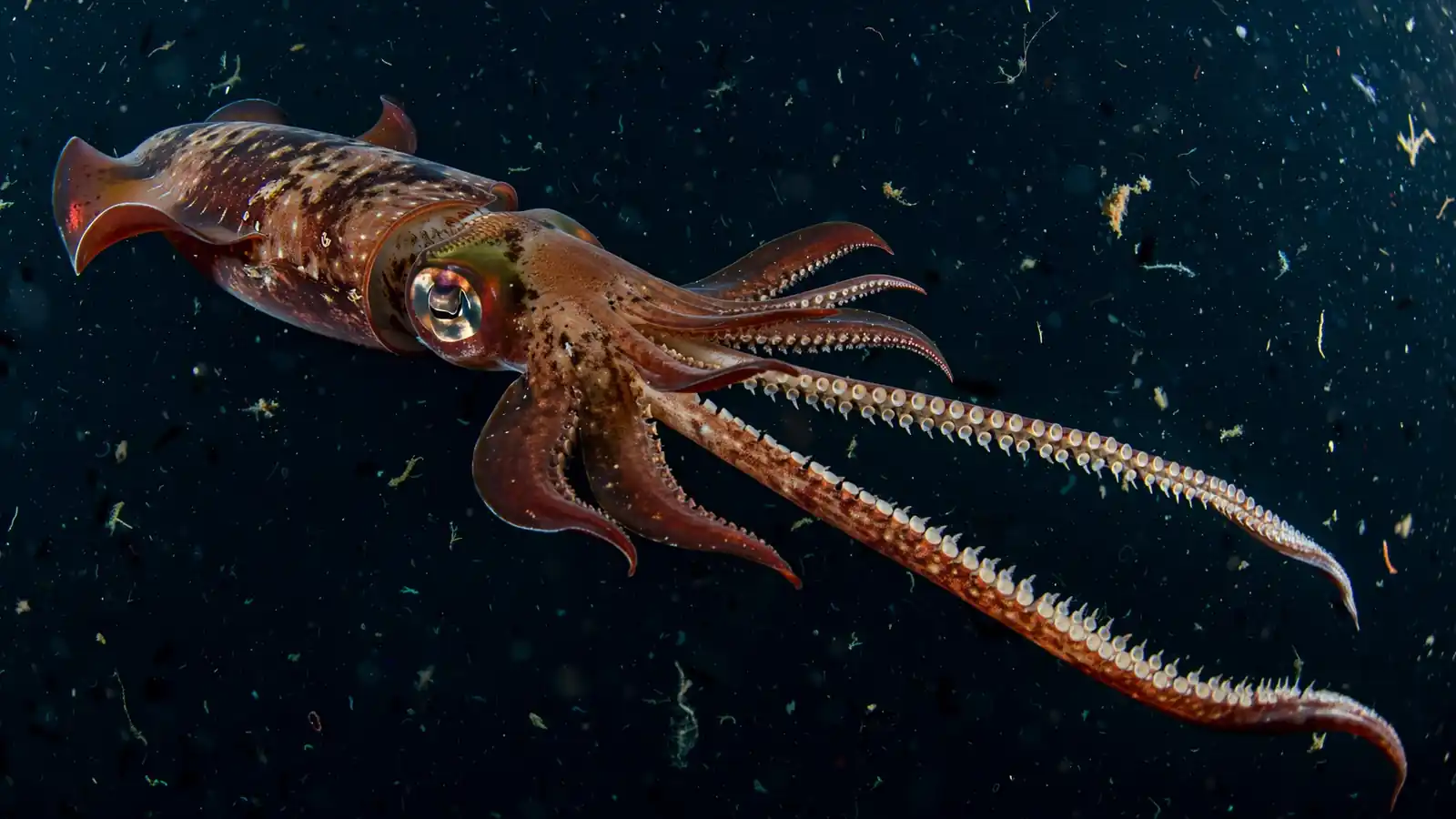
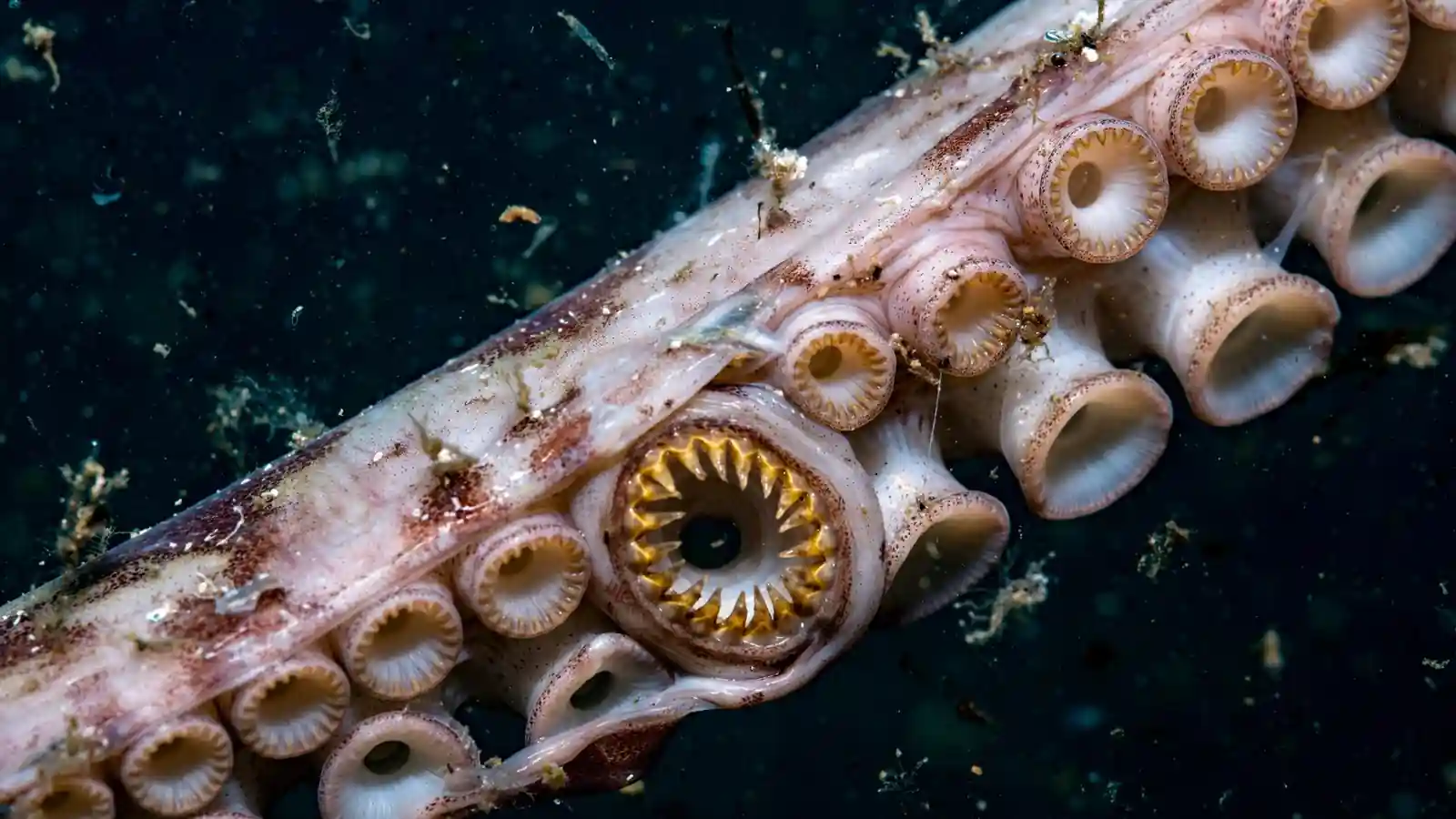
The giant squid’s arms carry toothed suckers, rings of chitinous teeth that grip its prey and leave circular scars on sperm whales — the marks that proved, long before anyone saw a live giant squid, that the two animals fought in the dark. The giant squid is a hunter of the deep, eating deep-sea fish and other squid, and it is the longest squid in the sea — longer than the colossal, by a clear margin.
Colossal Squid: The Heavy One
The colossal squid is the heavy one: about 10 m in total length, with a mantle of 2.5 m and tentacles of only 3–5 m — shorter tentacles, a bigger body, and a weight of up to 495 kg, from the 2007 Ross Sea specimen. The colossal is the heaviest squid in the sea, and it is also the squid with the largest eyes known in the animal kingdom: 27–40 cm across, the size of a dinner plate.

The colossal squid’s tentacle clubs carry swivelling hooks, not suckers — rotating hooks that grip and hold, and that make the colossal a more formidable hunter than the giant. It lives in Antarctic waters, at 1,000–2,000 m, deeper and colder than the giant’s range, and it was first filmed alive in March 2025 by the Schmidt Ocean Institute — a juvenile, in the Southern Ocean, the first live colossal squid ever seen. For the full comparison from the museum that holds a colossal specimen, see the difference between colossal squid, giant squid and octopus.
Giant Squid vs Colossal Squid: Differences Table
| Feature | Giant Squid | Colossal Squid |
|---|---|---|
| Size | Giant squid ~13 m total length (mantle 1.5–2 m; tentacles 8–11 m, 60–70% of total length) | Colossal squid ~10 m total length (mantle 2.5 m; tentacles only 3–5 m) |
| Weight | Giant squid ~275 kg | Colossal squid up to 495 kg (2007 Ross Sea specimen) |
| Habitat | Giant squid — worldwide deep ocean, 300–1,000 m | Colossal squid — Antarctic waters, 1,000–2,000 m |
| Diet | Deep-sea fish and other squid | Deep-sea fish and other squid |
| Lifespan | Not firmly known — both are short-lived deep-sea cephalopods; no firm number is printed for either species | Not firmly known — both are short-lived deep-sea cephalopods; no firm number is printed for either species |
| Danger to humans | Not a confirmed danger; can injure if handled, with toothed suckers; no confirmed fatal attacks on humans | Not a confirmed danger; can injure if handled, with swivelling hooks; no confirmed fatal attacks on humans |
| Distinctive feature | Giant squid — toothed suckers, the longest tentacles of any squid | Colossal squid — swivelling hooks on the tentacle clubs, eyes 27–40 cm (the largest eyes known in the animal kingdom) |
| Scientific name | Giant squid — Architeuthis dux | Colossal squid — Mesonychoteuthis hamiltoni |

Verdict: Longer vs Heavier — Which Wins?
The verdict depends on the measure, and that is the honest answer: the giant squid wins on length, at about 13 m against the colossal’s 10 m, and the colossal squid wins on weight, at up to 495 kg against the giant’s 275 kg. Neither is the biggest squid in every way — the giant is the longest, the colossal is the heaviest, and the two records belong to two different animals.

The colossal is the more formidable hunter, with its swivelling hooks and its dinner-plate eyes, and the giant is the more famous, with its toothed suckers and its centuries of legend. But neither is a danger to people: both live in the deep, both are rarely seen, and no confirmed fatal attack on a human exists for either species. The winner is the one you measure — and the real winner is the deep sea, which made two different answers to the same question.
Fun Facts
- The giant squid’s tentacles are 60–70% of its total length.
- The colossal squid’s eyes are 27–40 cm across — the largest eyes known in the animal kingdom.
- The first live colossal squid was filmed in March 2025, by the Schmidt Ocean Institute.
- The 2007 Ross Sea colossal specimen weighed 495 kg.
- The colossal squid’s mantle is 2.5 m long, against the giant’s 1.5–2 m.
- Neither squid has ever killed a human — no confirmed fatal attack exists for either species.

Frequently Asked Questions About Giant Squid vs Colossal Squid
Which Is Bigger, a Giant Squid or a Colossal Squid?
In the giant squid vs colossal squid comparison, it depends on the measure: the giant squid is longer, at about 13 m in total length against the colossal’s 10 m, and the colossal squid is heavier, at up to 495 kg against the giant’s 275 kg. The giant is the longest squid; the colossal is the heaviest.
Which Is Heavier, a Giant Squid or a Colossal Squid?
The colossal squid — up to 495 kg, from the 2007 Ross Sea specimen. The giant squid weighs around 275 kg. The colossal has a bigger mantle (2.5 m against 1.5–2 m) and a heavier body, but shorter tentacles (3–5 m against 8–11 m).
Which Is More Dangerous to Humans?
Neither is a confirmed danger. Both can injure if handled — the giant with toothed suckers, the colossal with swivelling hooks — but there are no confirmed fatal attacks on humans for either species, and both live far too deep to meet people.
How Can You Tell a Giant Squid From a Colossal Squid?
By the tentacles and the eyes: the giant has very long tentacles (8–11 m) with toothed suckers, and the colossal has short tentacles (3–5 m) with swivelling hooks and eyes 27–40 cm across — the largest eyes known in the animal kingdom.
Where Do Colossal Squid Live?
In Antarctic waters, at 1,000–2,000 m deep — deeper and colder than the giant squid’s range, which is the deep ocean worldwide at 300–1,000 m. The colossal is an Antarctic animal; the giant is found in deep water all over the world.
Has a Colossal Squid Ever Been Filmed Alive?
Yes — the first live footage came in March 2025, when the Schmidt Ocean Institute filmed a juvenile colossal squid in the Southern Ocean. Before that, the colossal was known only from dead specimens, including the 495 kg animal caught in the Ross Sea in 2007.
How Big Is the Biggest Giant Squid Ever Found?
About 13 m in total length, with a mantle of 1.5–2 m and tentacles of 8–11 m. The tentacles are 60–70% of the total length — the animal is mostly tentacle. Do not trust the inflated 14 m colossal figures printed by some websites; the colossal is shorter, at about 10 m, and heavier.
Similar Species Worth Exploring
Keep Exploring
Meet the giant squid in its own guide, then the colossal squid, and browse the whole family in our types of cephalopods hub — then come back to the comparison, giant squid vs colossal squid.