Magnificent Frigatebird: Red Pouch, Wingspan and Piracy
Magnificent Frigatebird: Red Pouch, Wingspan and Piracy
The magnificent frigatebird is a seabird that almost never lands — a black, forked-tailed glider with the largest wingspan of any seabird relative to its weight, and a male that inflates a bright red throat pouch like a balloon to attract a mate. It steals fish from other seabirds in mid-air, snatches flying fish from the surface without ever touching the water, and can stay aloft for weeks at a time.
By Emily Carter · Reviewed by our vet team · Updated 10 November 2026 · 8 min read
Red throat pouchWingspan to 2.4 mSky pirate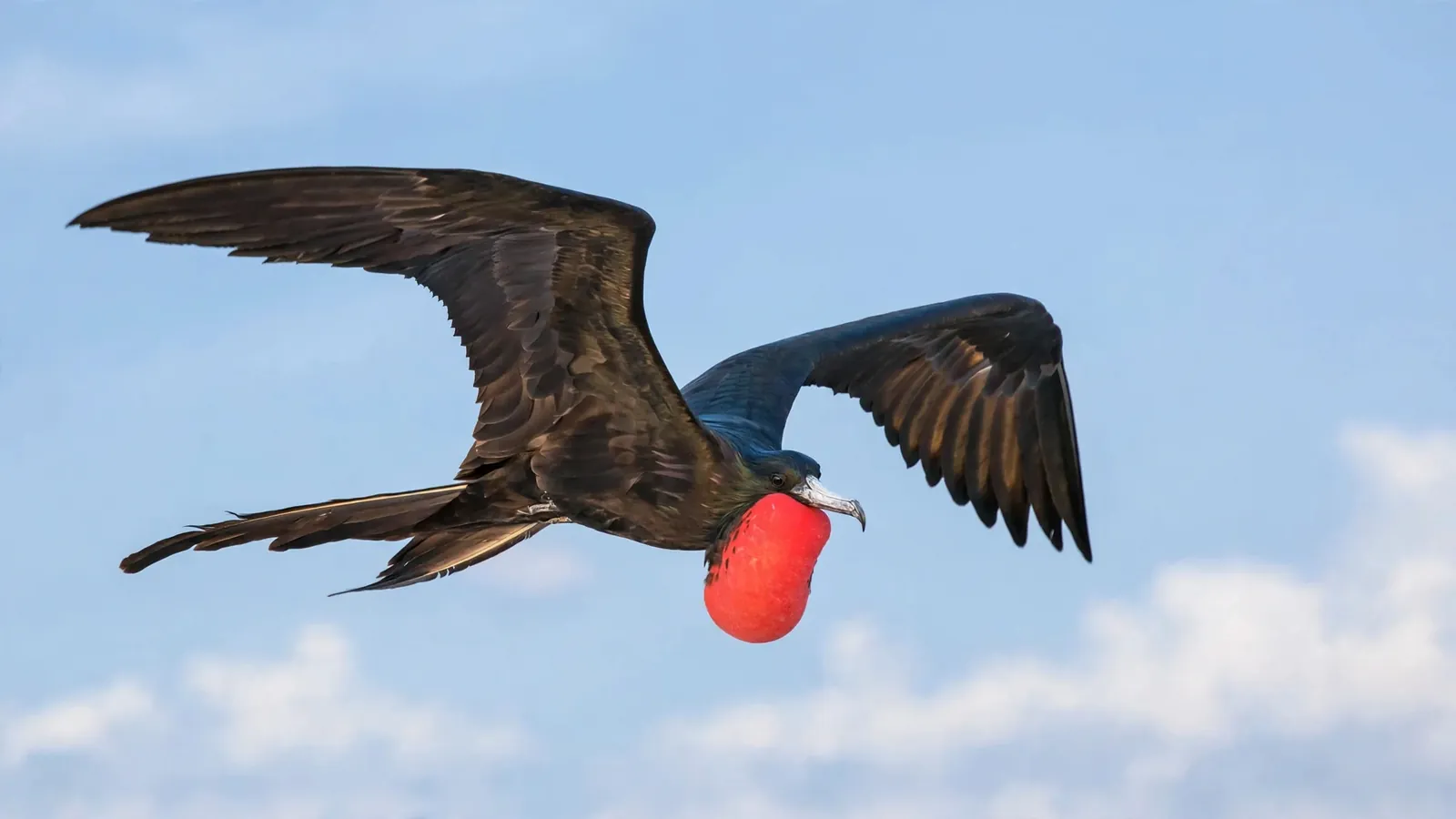
At a Glance
The magnificent frigatebird is the largest of the five frigatebird species, and one of the most extraordinary fliers in the bird world. It is a black seabird with long, narrow wings and a deeply forked tail, built for soaring: it rides the thermals over tropical coasts, barely flapping, and tracked birds have stayed aloft for weeks at a time. It cannot land on water — its feathers are not waterproof and its feet are too small to take off again — so it lives its life in the air, and only comes down to nest.
What Is a Magnificent Frigatebird?
It is a seabird in the family Fregatidae, the frigatebirds, and its scientific name is Fregata magnificens. It lives along the tropical coasts of the Atlantic — Florida, the Caribbean, the Galápagos Islands and the Pacific coast of Central America — and it is the only frigatebird of the Atlantic. The other four frigatebird species live in the Pacific and Indian Oceans.
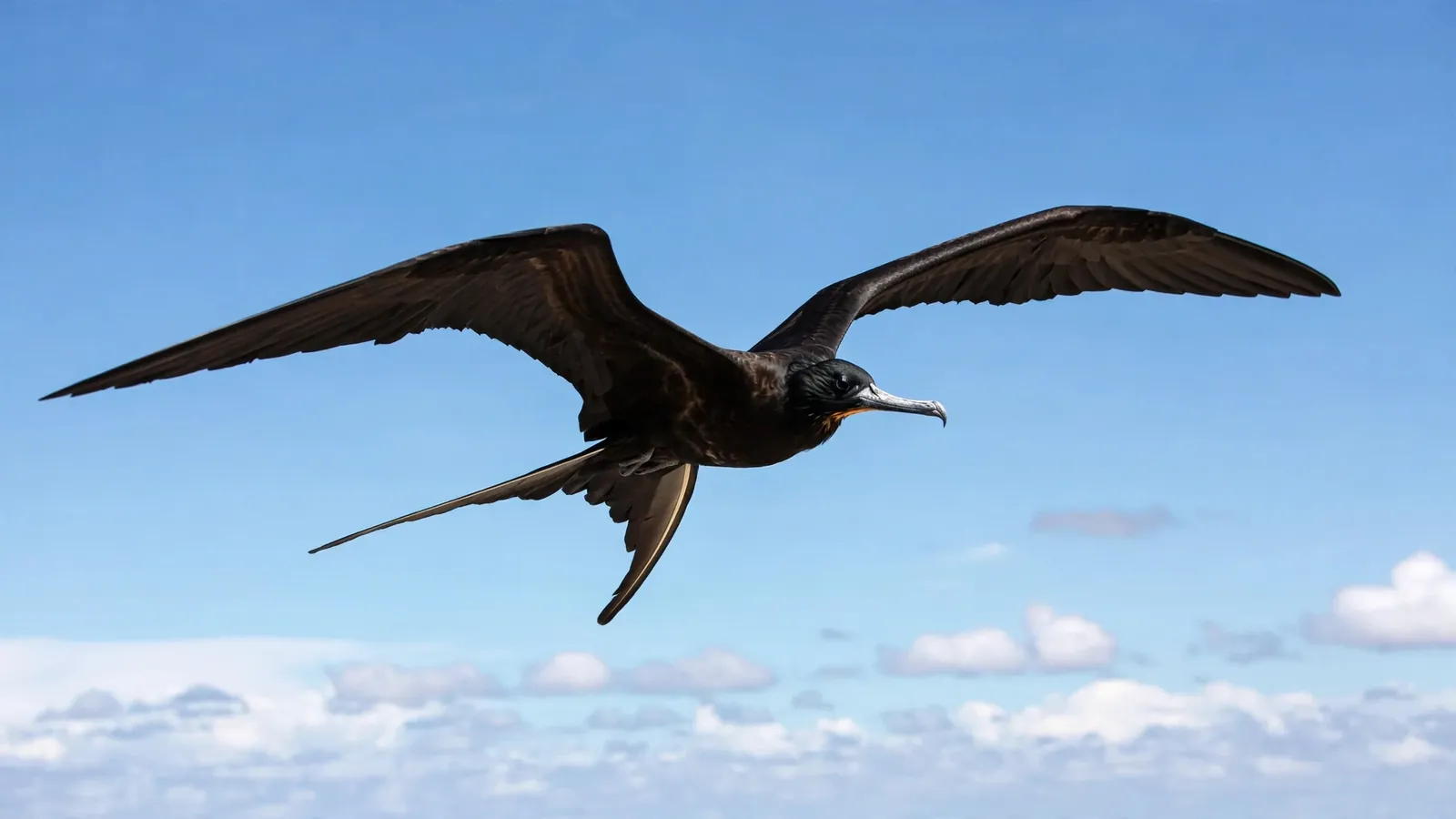
The bird is built for the air in a way no other seabird is. Its wings are long and narrow, its tail is deeply forked, and its body is light — so light, relative to its wingspan, that it can soar for hours without a single wingbeat. On land it is clumsy, with tiny feet and a waddling walk, but in the air it is one of the great fliers of the bird world, circling high over the coast on wings that seem too long for its body.
Magnificent Frigatebird Size and Wingspan
It measures 89 to 114 centimetres long, with a wingspan of 2.17 to 2.44 metres — the largest wingspan of any frigatebird, and one of the largest of any seabird relative to its body weight. The bird weighs only 1.1 to 1.59 kilograms, so its wingspan is more than twice its body length, and the wings are so long and narrow that the bird looks like a black cross in the sky.

The sexes look different. The male is all black, with a red throat pouch that inflates in the breeding season. The female is larger and heavier than the male, with a white breast and a black head — the white breast is the easiest way to tell a female from a male in flight. Young birds have a white head and a pale breast, and they take several years to gain adult plumage.
The Red Throat Pouch
The male’s red pouch is one of the great displays in the bird world. In the breeding season, the male sits in a mangrove tree, inflates the pouch — a bright red, balloon-like sac of skin on his throat — until it is the size of a football, and drums on it with his bill, calling to the females flying overhead. The pouch is the male’s advertisement: the redder and bigger the pouch, the healthier the male.

The display is a group affair. Dozens of males inflate their pouches together in a colony, a field of red balloons in the mangroves, and the females choose among them. The same males that display the pouch are also the pirates of the colony — the birds that spend their days harassing boobies and gulls in mid-air, forcing them to drop their catch. The pouch and the piracy are two sides of the same bird: a display for a mate, and a living made by theft.
Life in the Air: Weeks Without Landing
It lives in the air. It soars on thermals, rides the trade winds, and sleeps on the wing — tracked birds have stayed aloft for weeks at a time, covering thousands of kilometres without landing. The bird’s secret is its weight: with the largest wingspan-to-weight ratio of any bird, it can stay up on the faintest lift, and it can sleep with half its brain while the other half keeps it flying.
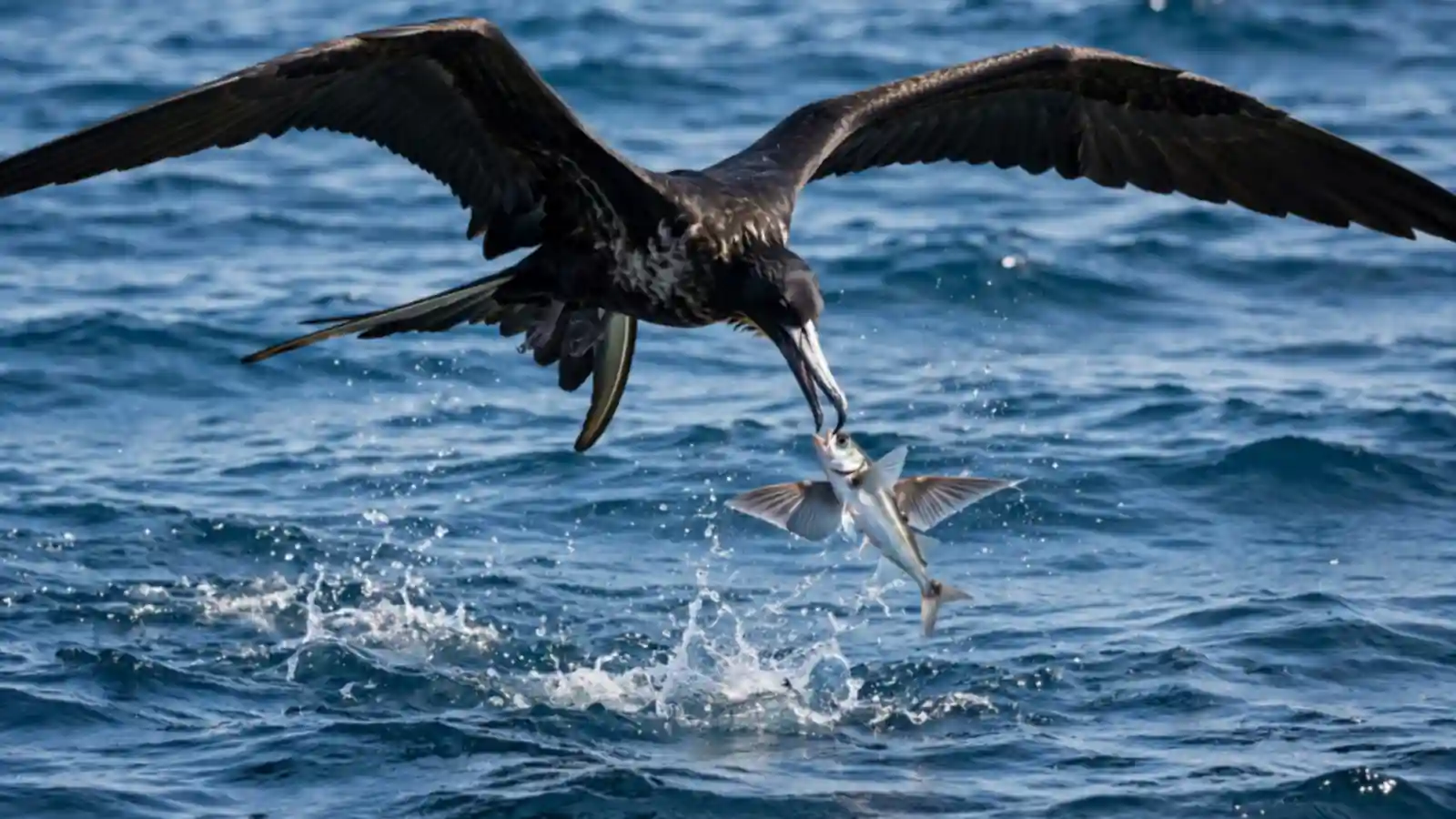
The bird cannot land on water. Its feathers are not waterproof, and its feet are tiny and weak — if a frigatebird lands on the sea, it cannot take off again, and it will drown. So it never lands on water at all: it drinks by skimming the surface, it eats by snatching flying fish from the air just above the waves, and it bathes by flying through rain. The air is its home, and the sea is a place it touches only with its bill.
Kleptoparasitism: The Sky Pirate
It is a kleptoparasite — a thief that steals food from other seabirds in mid-air. It chases boobies, gulls and pelicans, harassing them until they drop or regurgitate their catch, then catches the falling fish in its own bill before it hits the water. The piracy is a spectacle: the frigatebird, faster and more agile than its victim, twisting and turning in the air until the victim gives up.

The stealing is real, but it is only a small part of the diet — about 5 percent. Most of the frigatebird’s food is caught, not stolen: flying fish snatched from the surface, squid, jellyfish and carrion. The piracy is the bird’s famous habit, not its main living, and the brown pelican is one of its regular victims, harassed on its way back from a fishing trip. The theft happens around the colonies, where frigatebirds wait for returning seabirds and pick their moment.
Magnificent Frigatebird Diet and Hunting
It eats flying fish, squid, jellyfish and carrion — food it takes from the surface of the sea without ever landing on it. It snatches flying fish from the air as they leap from the waves, picks squid and jellyfish from the surface, and scavenges dead fish and offal from fishing boats. The hunting is done on the wing, at speed, and the bird’s forked tail lets it turn on a wingtip to catch what it sees.

The diet is the reason the bird lives where it does: the tropical Atlantic, where flying fish are plentiful and the trade winds carry the bird for miles. The frigatebird follows the fishing boats, the tuna schools and the flying fish, and it is a familiar sight over the harbours and coasts of the Caribbean and the Galápagos — circling high, waiting for a fish to leap, or a booby to come home with a catch.
Magnificent Frigatebird Breeding and Range
Magnificent frigatebirds breed in colonies in mangrove trees and low bushes, on islands and coasts around the tropical Atlantic — the Galápagos, the Caribbean, Florida and the Pacific coast of Central America. The female lays a single egg in a stick nest, and both parents take turns incubating it for about two months. The chick hatches naked and helpless, and it is fed by its parents for months — one of the longest periods of parental care of any seabird.

The species is listed as Least Concern on the IUCN Red List, and its population is large and widespread. The magnificent frigatebird guide from EarthLife describes the bird, its pouch and its piracy in detail.
Fun Facts
- A magnificent frigatebird’s wingspan is more than twice its body length.
- Tracked frigatebirds have stayed aloft for weeks at a time, sleeping on the wing.
- The male’s red pouch inflates to the size of a football during courtship.
- The bird cannot land on water — its feathers are not waterproof and its feet are too small to take off again.
- Kleptoparasitism is only about 5 percent of the frigatebird’s diet — most food is caught, not stolen.
- A frigatebird chick is fed by its parents for months — one of the longest childhoods of any seabird.
Frequently Asked Questions
How Big Is a Magnificent Frigatebird?
The largest frigatebird: 89 to 114 centimetres long, with a wingspan of 2.17 to 2.44 metres and a weight of 1.1 to 1.59 kilograms. Its wingspan is more than twice its body length, and it has the largest wingspan-to-weight ratio of any bird — which is what lets it stay aloft for weeks at a time.
Why Do Male Frigatebirds Have a Red Pouch?
To attract a mate. In the breeding season, the male inflates the bright red pouch on his throat until it is the size of a football, and drums on it with his bill, calling to the females flying overhead. The pouch is the male’s advertisement: the redder and bigger the pouch, the healthier the male. Dozens of males display together in a colony, and the females choose among them.
How Long Can Frigatebirds Stay in the Air?
Weeks at a time. Tracked birds have stayed aloft for weeks, covering thousands of kilometres without landing, and they can sleep on the wing — with half the brain asleep while the other half keeps the bird flying. The bird’s secret is its weight: with the largest wingspan-to-weight ratio of any bird, it can stay up on the faintest lift.
Do Frigatebirds Steal Food?
Yes — the magnificent frigatebird is a kleptoparasite, a thief that steals food from other seabirds in mid-air. It chases boobies, gulls and pelicans, harassing them until they drop or regurgitate their catch, then catches the falling fish before it hits the water. But the stealing is only about 5 percent of its diet — most of its food is caught, not stolen.
Why Can’t Frigatebirds Land on Water?
Because their feathers are not waterproof and their feet are tiny and weak. If a frigatebird lands on the sea, it cannot take off again, and it will drown. So it never lands on water at all: it drinks by skimming the surface, eats by snatching flying fish from the air just above the waves, and bathes by flying through rain.
What Do Frigatebirds Eat?
Flying fish, squid, jellyfish and carrion. The frigatebird snatches flying fish from the air as they leap from the waves, picks squid and jellyfish from the surface, and scavenges dead fish and offal from fishing boats. It also steals fish from other seabirds in mid-air — kleptoparasitism — but that is only about 5 percent of its diet.
Where Do Magnificent Frigatebirds Live?
Along the tropical coasts of the Atlantic — Florida, the Caribbean, the Galápagos Islands and the Pacific coast of Central America. They breed in colonies in mangrove trees and low bushes, on islands and coasts, and they spend their lives soaring over the tropical sea, following the flying fish, the tuna schools and the fishing boats.
Similar Species Worth Exploring
Keep Exploring
Start with the brown pelican, the frigatebird’s favourite victim, then meet the Atlantic puffin, the clown of the North Atlantic, and browse the whole family in our types of seabirds hub — then come back to the sky pirate of the tropical Atlantic, the magnificent frigatebird.