Great Skua
Great Skua: The Pirate Seabird of the Northern Isles
The great skua is the pirate of the northern seas — a heavy brown seabird that grabs gannets by the wingtip in mid-air and shakes them until they drop their catch, and the Shetland islanders call it the bonxie.
By Emily Carter · Reviewed by our vet team · Updated 10 November 2026 · 9 min read
Pirate seabirdCalled bonxie in ShetlandGrabs gannets mid-air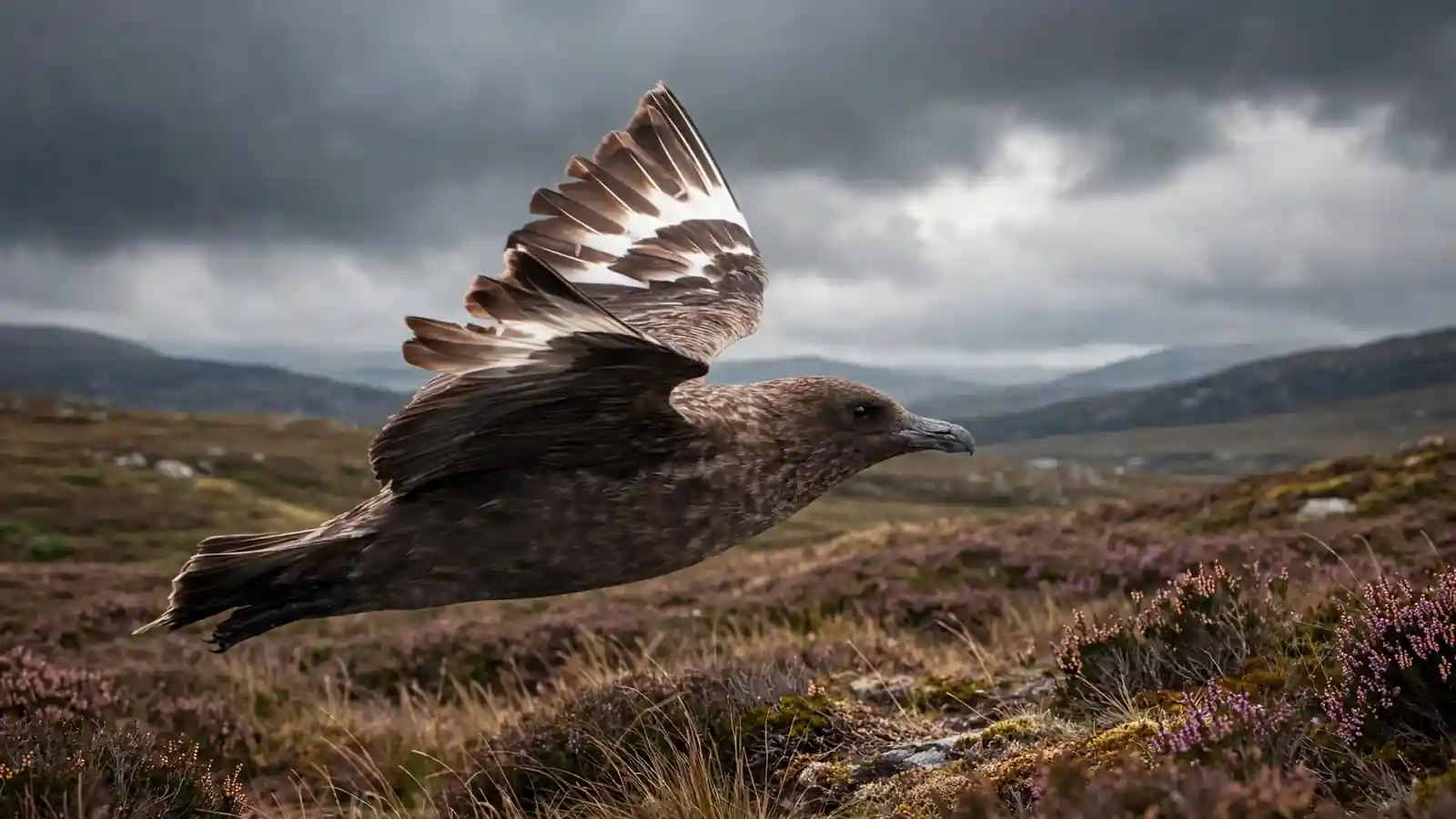
At a Glance
The great skua is a heavy, powerful seabird of the northern isles, famous for stealing food in mid-air. It breeds on Shetland, Orkney and the far north, hunts puffins and kittiwakes, and has been hit hard by avian influenza since 2021.
Great Skua Kleptoparasitism: Piracy on the Wing
Skua kleptoparasitism is piracy in its purest form: the skua chases a gannet or another seabird in the air, grabs it by the wingtip, and shakes it until the victim disgorges its catch — then the skua catches the falling fish before it hits the sea.
The chase is fast, loud and relentless, and it works. A gannet that has just caught a fish is carrying a meal it cannot defend in the air, and the skua knows it. The skua does not need to be faster than the gannet — it needs to be more frightening, and a heavy brown bird with a hooked bill, hammering at your wingtip, is frightening enough.
Bonxie: The Shetland Name
Bonxie is the Shetland name for it, and it is the name the islanders have used for centuries. The word is Norse in origin, and it fits a bird the Shetlanders know as a neighbour, a thief and a defender of its nest all at once.

A bonxie on its territory is a bird to respect: it will dive at walkers who come too close to its nest, striking with its feet and bill, and it has drawn blood from more than one unwary birder. The name is affectionate, but the respect behind it is real.
Great Skua Size: A Heavy, Powerful Seabird
It measures 50–58 cm long, with a wingspan of 125–140 cm and a weight of 1.2–1.8 kg — a heavy, barrel-chested seabird, built for power rather than grace. It is the largest skua in the North Atlantic, and it looks it: dark brown all over, with a thick neck, a heavy bill and pale flashes on the wings.

The size is the point. A skua that steals food in the air needs to be big enough to bully a gannet, and it is. Its wings are broad and its flight is strong and direct, and when it stoops on a victim it comes down like a hammer. For the full species account, see the skua guide from a UK bird charity.
Where Great Skuas Live: Northern Isles and Beyond
Great skuas live and breed on the northern isles — Shetland, Orkney, the Faroes and Iceland — and spend the winter out in the North Atlantic, as far south as the coasts of West Africa. Shetland holds the largest breeding population, and the moorland colonies there are the bird’s stronghold.

The colonies are on open moorland, not cliffs: the skua nests on the ground, in a shallow scrape among the heather, and defends a wide territory around it. Outside the breeding season the bird is a creature of the open sea, following fishing boats and seabird flocks across the Atlantic.
What Do Great Skuas Eat? Fish, Puffins and Kittiwakes
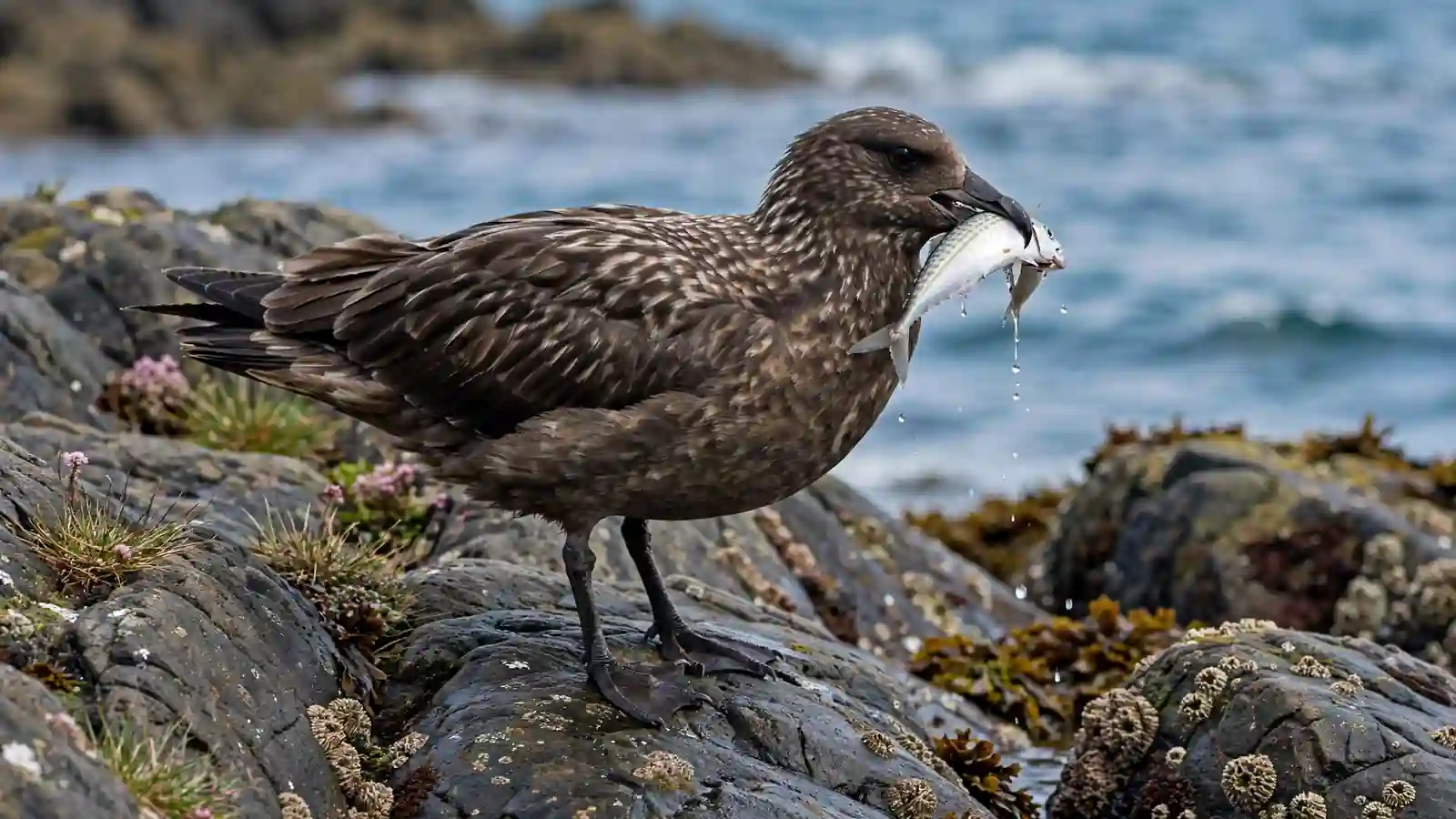
Great skuas eat fish, puffins and kittiwakes — and almost anything else they can steal, catch or scavenge. Stolen fish are the staple, taken from gannets and other seabirds in the air, but the skua is also a hunter in its own right, and it takes puffins and kittiwakes on the wing or on the water.

The hunting is direct and brutal: the skua strikes a puffin from above, drives it into the sea, and drowns it before eating it. It also eats eggs and chicks, scavenges dead fish and offal from boats, and will take small mammals on the moor. It is an opportunist with a pirate’s morals and a gull’s appetite.
Skua vs Northern Gannet: Pirate and Victim
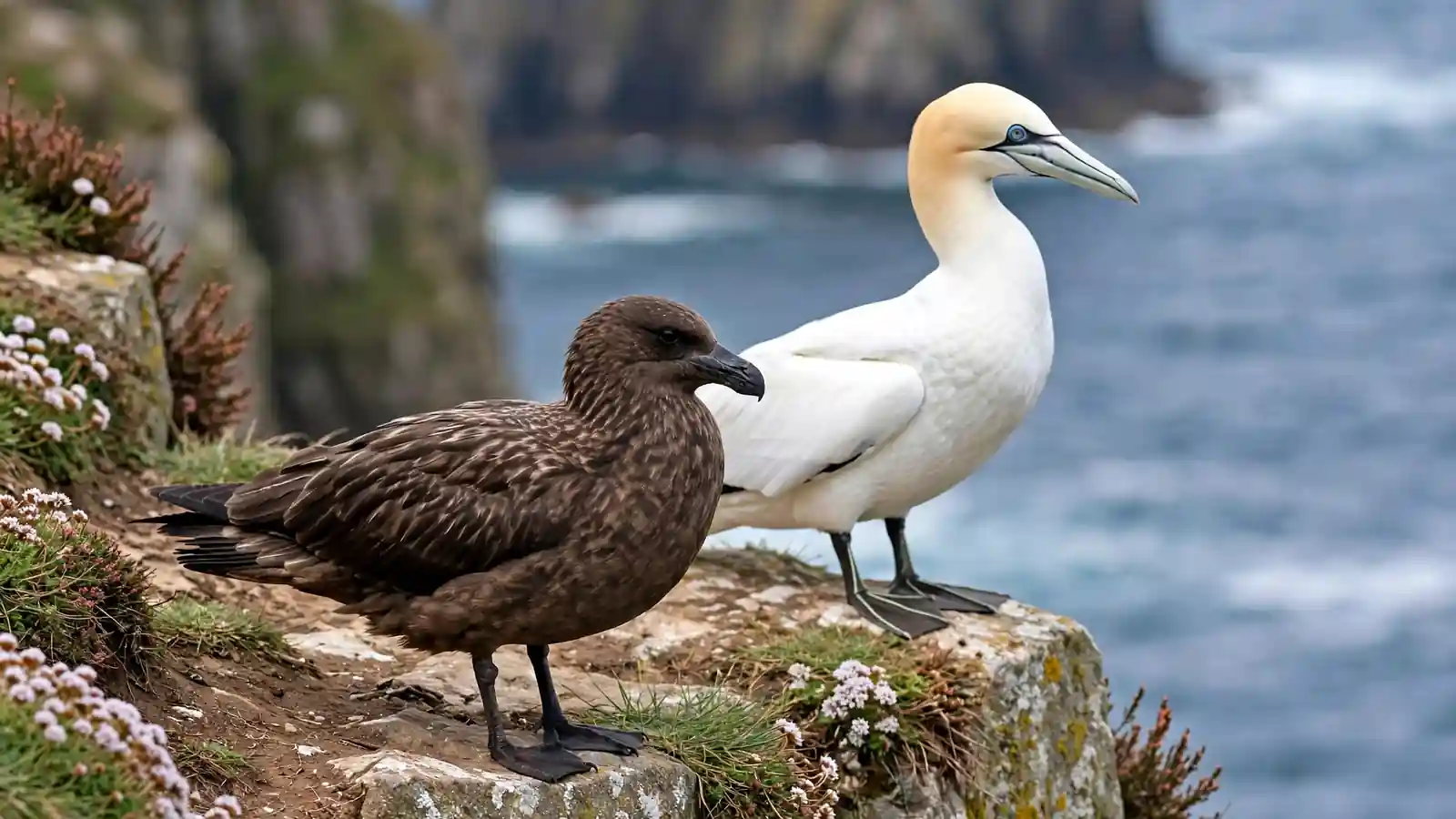
The skua vs northern gannet contest is the classic pirate-and-victim pairing of the northern seas. The gannet is the better diver and the better fisher, plunging from height to catch fish the skua could never reach — and the skua is the bird that waits for the gannet to come back up, then takes the fish.
The gannet is bigger, with a wingspan up to two metres, but size is not the whole story: the skua is heavier-built, more aggressive and willing to fight in the air, and a gannet carrying a fish cannot manoeuvre well enough to escape. The two birds are locked in an arms race — the gannet dives deeper and flies home faster, the skua chases harder — and neither side ever wins for long.
Conservation: Least Concern but Declining, Avian Flu Hit
It is listed as Least Concern, but the listing must be read with the trend attached: the population is declining, and avian influenza since 2021 has hit it hard. Around 48,000 breeding pairs remain, and the Shetland colonies have lost large numbers of birds to the virus.
Least Concern is a global status, not a clean bill of health. The skua’s decline has several causes — fewer sandeels, the long shadow of the 2021 flu, and the general pressure on northern seabirds — and the bird’s future depends on fish stocks and disease as much as on any protection of its moorland colonies.
Fun Facts
- It is called the bonxie in Shetland — a Norse name centuries old.
- It steals food by grabbing gannets by the wingtip until they drop their catch.
- It is the largest skua in the North Atlantic, at 50–58 cm and up to 1.8 kg.
- A nesting bonxie will dive at walkers and strike with its feet and bill.
- It hunts puffins and kittiwakes, drowning them before eating them.
- Avian influenza since 2021 has hit the Shetland colonies hard.
Frequently Asked Questions
What Is a Great Skua?
A heavy brown seabird of the northern isles, Stercorarius skua — the largest skua in the North Atlantic. It is a pirate by trade: it steals fish from gannets in mid-air, hunts puffins and kittiwakes, and breeds on the moorlands of Shetland, Orkney, the Faroes and Iceland.
Why Is the Great Skua Called a Bonxie?
Bonxie is the Shetland name for the great skua, Norse in origin and centuries old. The islanders use it for a bird they know well — a neighbour, a thief and a fierce defender of its nest, which will dive at anyone who comes too close.
How Do Great Skuas Steal Food?
They chase a gannet or another seabird in the air, grab it by the wingtip, and shake it until it disgorges its catch — then catch the falling fish before it reaches the sea. The chase is fast and relentless, and it works because a bird carrying a fish cannot manoeuvre well enough to escape.
How Big Is a Great Skua?
It measures 50–58 cm long, with a wingspan of 125–140 cm and a weight of 1.2–1.8 kg. It is a heavy, barrel-chested bird with dark brown plumage, a thick neck, a heavy bill and pale flashes on the wings.
Where Do Great Skuas Live?
They breed on the northern isles — Shetland, Orkney, the Faroes and Iceland — nesting on open moorland in shallow scrapes among the heather. In winter they range out across the North Atlantic, as far south as the coasts of West Africa.
What Do Great Skuas Eat?
Fish, puffins and kittiwakes — stolen, hunted or scavenged. Stolen fish from gannets are the staple, but the skua also takes puffins and kittiwakes on the wing, eats eggs and chicks, and scavenges dead fish and offal from boats.
Are Great Skuas Endangered?
They are listed as Least Concern, but the population is declining and avian influenza since 2021 has hit the Shetland colonies hard. Around 48,000 breeding pairs remain. The status is global, not a clean bill of health — the decline is real.
Similar Species Worth Exploring
Keep Exploring
Meet the northern gannet, the pirate’s favourite victim, then the horned puffin, one of the birds the skua hunts, and browse the whole family in our types of seabirds hub — then come back to the pirate of the northern isles, the great skua.