Spiny Dogfish Facts: Venom Spines, Size and Long Life
Spiny Dogfish: The Small Shark With Venomous Spines
The spiny dogfish is a small schooling shark with two venomous dorsal spines — and a pregnancy that lasts nearly two years.
By Emily Carter · Reviewed by our vet team · Updated 10 November 2026 · 9 min read
Venomous spinesAbout 1.2 m longLives up to 75 years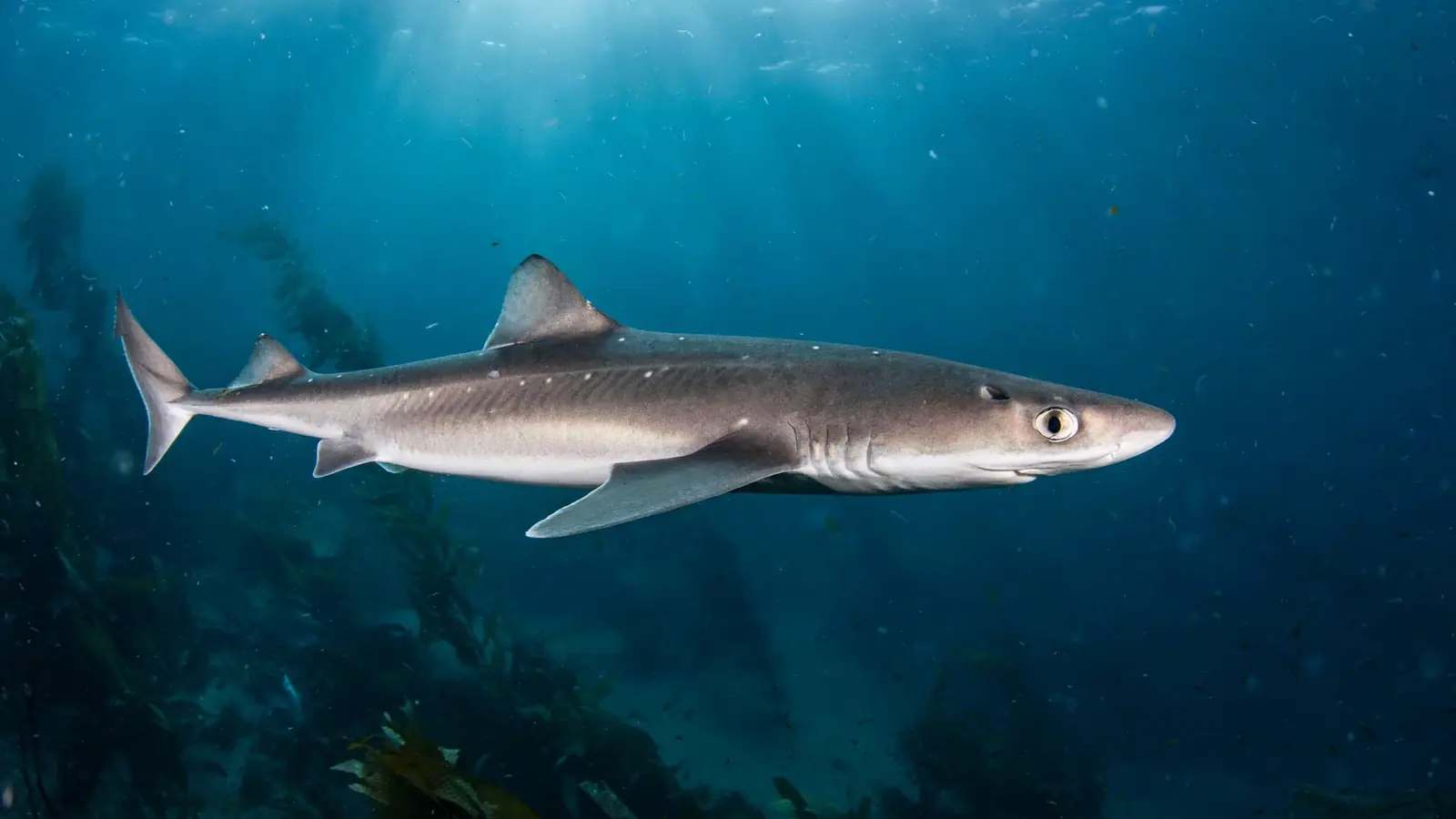
At a Glance
The spiny dogfish is a small shark with a big reputation. It is a schooling shark of the cold seas, armed with two mildly venomous dorsal spines, and it carries its young for nearly two years — one of the longest pregnancies of any animal. It can live for decades, and it travels in schools of hundreds. This guide covers its size, its spines, how to identify it, its schools, its two-year pregnancy, and the Pacific cousin that turned out to be a different species.
Size: How Big Do They Get?
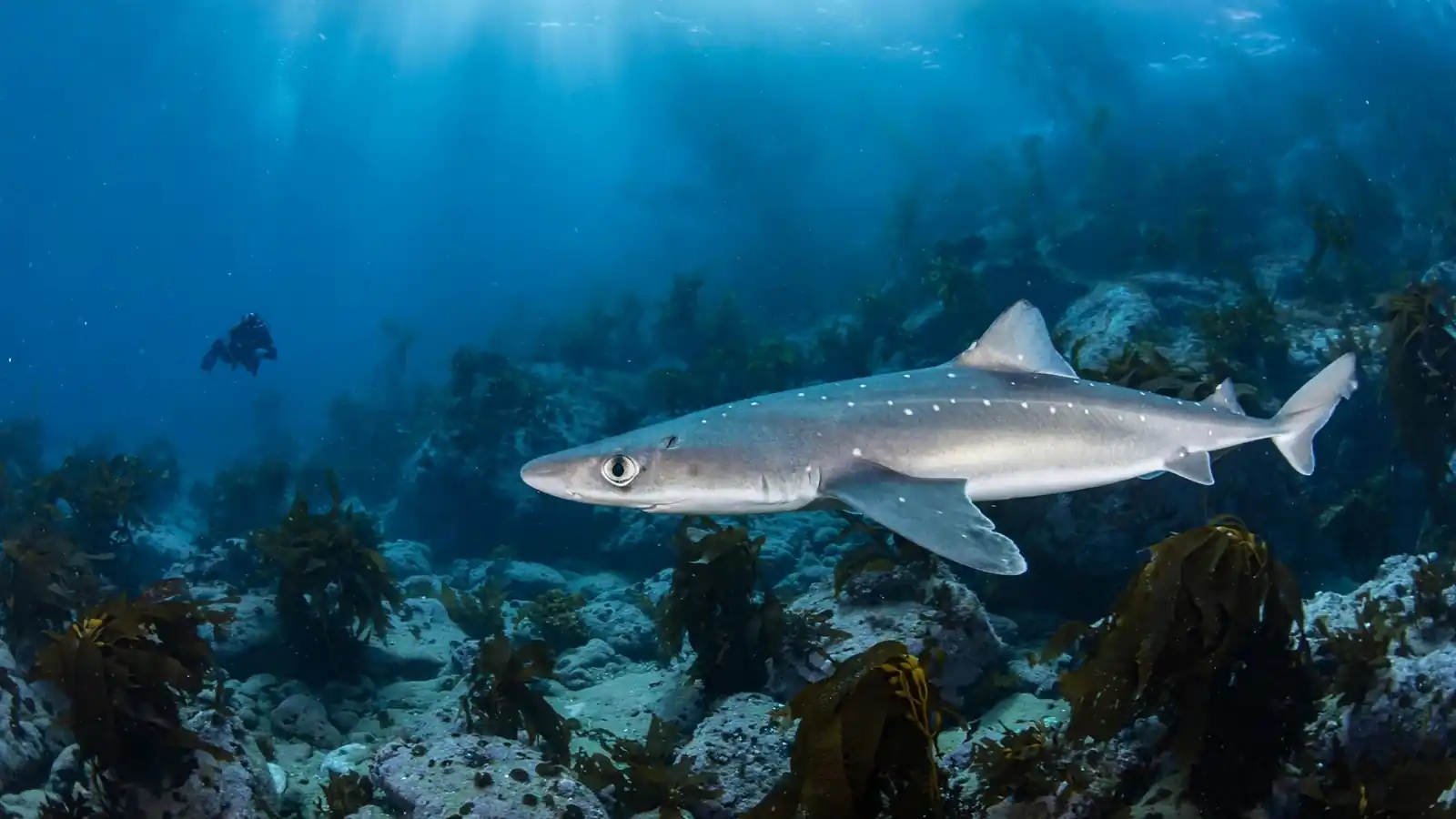
Females reach about 1.2 metres long, and males reach about 1 metre. They are slender, grey-brown sharks with white spots along their flanks, and they weigh up to about 9 kg. One database lists a 200 cm maximum, but that figure is an outlier — most sources give about 1.2 metres as the typical maximum, and this guide uses that figure.
They are small for a shark, but they make up for it in numbers. One is never alone: it travels in schools of hundreds, and a school can stretch for kilometres. Size is not what makes this shark remarkable — it is the spines, the pregnancy, and the sheer number of them. For the full species record, see the species page.
The Venomous Spines: How They Defend Themselves
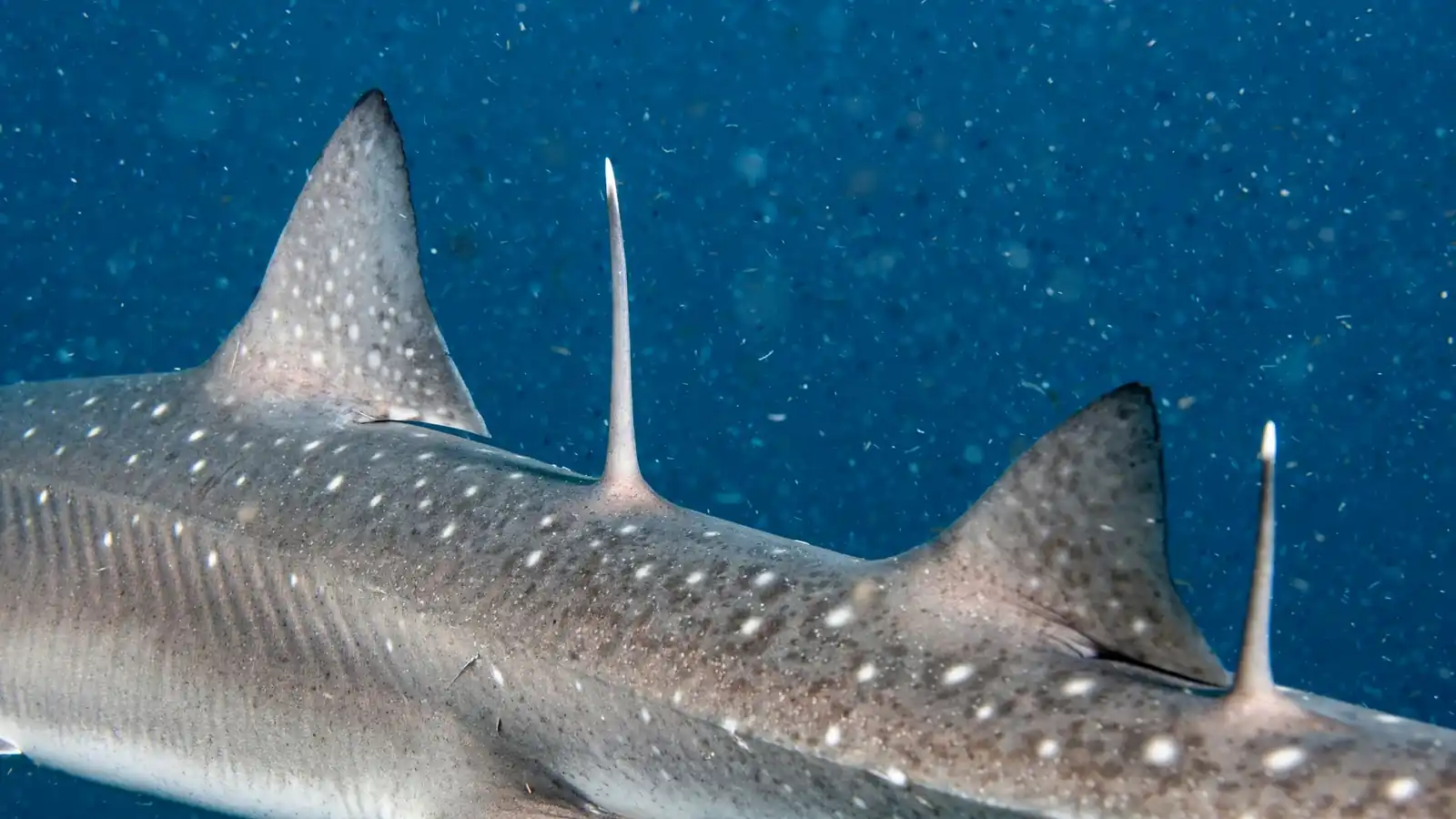
It has two dorsal spines, one in front of each dorsal fin, and each spine has a venom gland at its base. When the shark is threatened, it arches its back and stabs with the spines, injecting a mild venom that causes pain and swelling. The venom is not deadly to people, but a spine wound is painful, and it can become infected if it is not cleaned.
The spines are the shark’s only real defence, and they are also its name: ‘spiny’ for the spines, ‘dogfish’ for the way it hunts in packs like a dog. Fishers handle them carefully, holding them by the tail and keeping their hands away from the back — and divers give them the same respect. A small shark with a venomous spine is still a shark with a venomous spine.
No Anal Fin and White Spots: How to Identify One
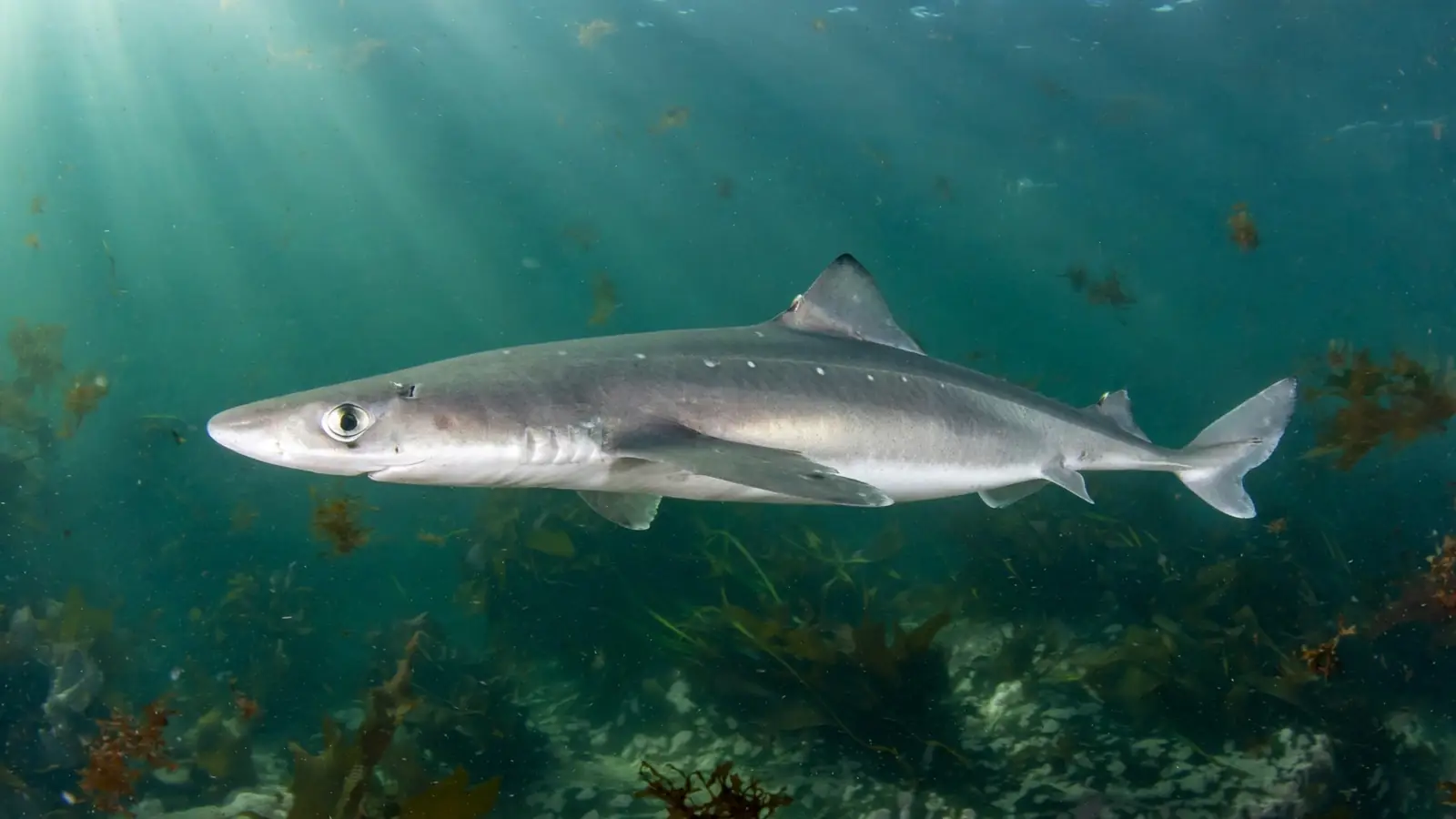
It is easy to identify once you know what to look for. It has no anal fin — the fin that most sharks have on the underside near the tail — and its flanks are marked with white spots that fade as it ages. Its back is grey-brown, its belly is white, and its snout is pointed and narrow.
The white spots are the giveaway. No other small shark of the cold seas has the same combination: no anal fin, white spots, and two dorsal spines. Young dogfish have the boldest spots, and the spots fade as the shark grows older — so a heavily spotted dogfish is usually a young one.
Where They Live: Schools of Hundreds

They live in cold and temperate seas worldwide, from the surface to about 1,000 metres deep, and they travel in schools of hundreds to thousands. The schools are segregated by size and sex: males with males, females with females, and young with young. They migrate with the seasons, moving inshore in summer and offshore in winter.
The schools are their strength. A single dogfish is a small, vulnerable shark, but a school of thousands is a force — and it is also a problem for fishers, who catch them in huge numbers as bycatch. Like the hammerhead shark, they are schooling sharks that find safety in numbers — and like the hammerhead, they are fished in numbers that their slow reproduction cannot replace.
What Do They Eat? Opportunists of the Shelf

They eat small fish, squid, crustaceans and jellyfish, and they are opportunists of the continental shelf: they eat whatever is abundant, and they change their diet with the seasons. They hunt in schools, herding small fish together and taking them one by one, and they will scavenge when they find a dead fish or a discarded catch.
They are not picky, and that is why they are so successful. It can live on almost anything, from a herring to a jellyfish, and it can go for long periods without food. It is a shark built for the cold, lean seas — and it has survived by being adaptable, not by being fussy.
A Two-Year Pregnancy: Reproduction

Its pregnancy lasts nearly two years — about 22 to 24 months, one of the longest pregnancies of any animal. A female gives birth to 2 to 15 live pups, each about 20 to 30 cm long, and the pups are born fully formed and ready to swim. It is a slow, costly way to reproduce, and it is why this shark is so vulnerable to fishing.
The long pregnancy means a female produces few young in her lifetime, and she does not start breeding until she is about 12 years old. A population that loses its adults cannot replace them quickly — and that is exactly what has happened in the North Atlantic, where they were fished so heavily that their numbers collapsed. They are recovering now, slowly, one two-year pregnancy at a time.
The Pacific Split: A Different Species?
The Pacific form (Squalus suckleyi) was split from it in 2010, and it is now recognised as its own species. It lives in the North Pacific, from Alaska to Japan, and it looks almost identical to its Atlantic cousin — the same grey-brown back, the same white spots, the same two spines. Only genetics and geography separate them.
The split matters because the two species are managed separately. The Atlantic species is fished heavily and its numbers are watched closely, while the Pacific species is fished less and is thought to be more abundant. Like the Greenland shark, it is a long-lived cold-water shark that needs time — and the Pacific split is a reminder that even the most familiar sharks can still surprise us.
Fun Facts
- Its pregnancy lasts nearly two years — one of the longest of any animal.
- Its two dorsal spines are mildly venomous, and it arches its back to stab.
- They have no anal fin — a quick way to identify them.
- They travel in schools of hundreds to thousands, segregated by size and sex.
- They can live for 35 to 75 years, and the true figure is still disputed.
- The Pacific form was only recognised as a separate species in 2010.
- They are one of the most abundant sharks in the world — and one of the most fished.
Frequently Asked Questions
Are spiny dogfish venomous?
Mildly. They have two dorsal spines, each with a venom gland at its base, and they arch their backs to stab when threatened. The venom is not deadly to people, but a spine wound is painful and can become infected.
How big do spiny dogfish get?
About 1.2 metres for females and about 1 metre for males. One database lists a 200 cm maximum, but that figure is an outlier — most sources give about 1.2 metres as the typical maximum.
How long do spiny dogfish live?
Estimates range from 35 to 75 years, and the true figure is disputed. They are slow-growing sharks, and the oldest individuals are thought to be among the longest-lived of all small sharks.
How long is a spiny dogfish pregnant?
Nearly two years — about 22 to 24 months, one of the longest pregnancies of any animal. A female gives birth to 2 to 15 pups, each about 20 to 30 cm long.
Where do spiny dogfish live?
In cold and temperate seas worldwide, from the surface to about 1,000 metres deep. They travel in schools of hundreds to thousands, segregated by size and sex, and they migrate with the seasons.
What do spiny dogfish eat?
Small fish, squid, crustaceans and jellyfish. They are opportunists of the continental shelf, eating whatever is abundant, and they hunt in schools, herding small fish together.
Is the Pacific spiny dogfish a different species?
Yes. The Pacific form was split from it in 2010 and is now recognised as its own species, Squalus suckleyi. It lives in the North Pacific, and it looks almost identical to its Atlantic cousin.
Similar Species Worth Exploring
Keep Exploring
Still swimming with the school? Meet the other long-lived cold-water shark in our Greenland Shark guide, compare the other schooling shark in our Hammerhead Shark guide, and size up the whole family in the Types of Sharks hub — then watch for the white spots of the spiny dogfish.