Dubois Sea Snake
Dubois Sea Snake: The Most Venomous Sea Snake Ever Tested
The Dubois sea snake is the most venomous sea snake ever tested, with an LD50 of 0.044 mg/kg — yet it is a shy reef hunter that rarely bites people.
By Emily Carter · Reviewed by our vet team · Updated 10 November 2026 · 9 min read
LD50 0.044 mg/kgFangs 1.8 mmReef hunter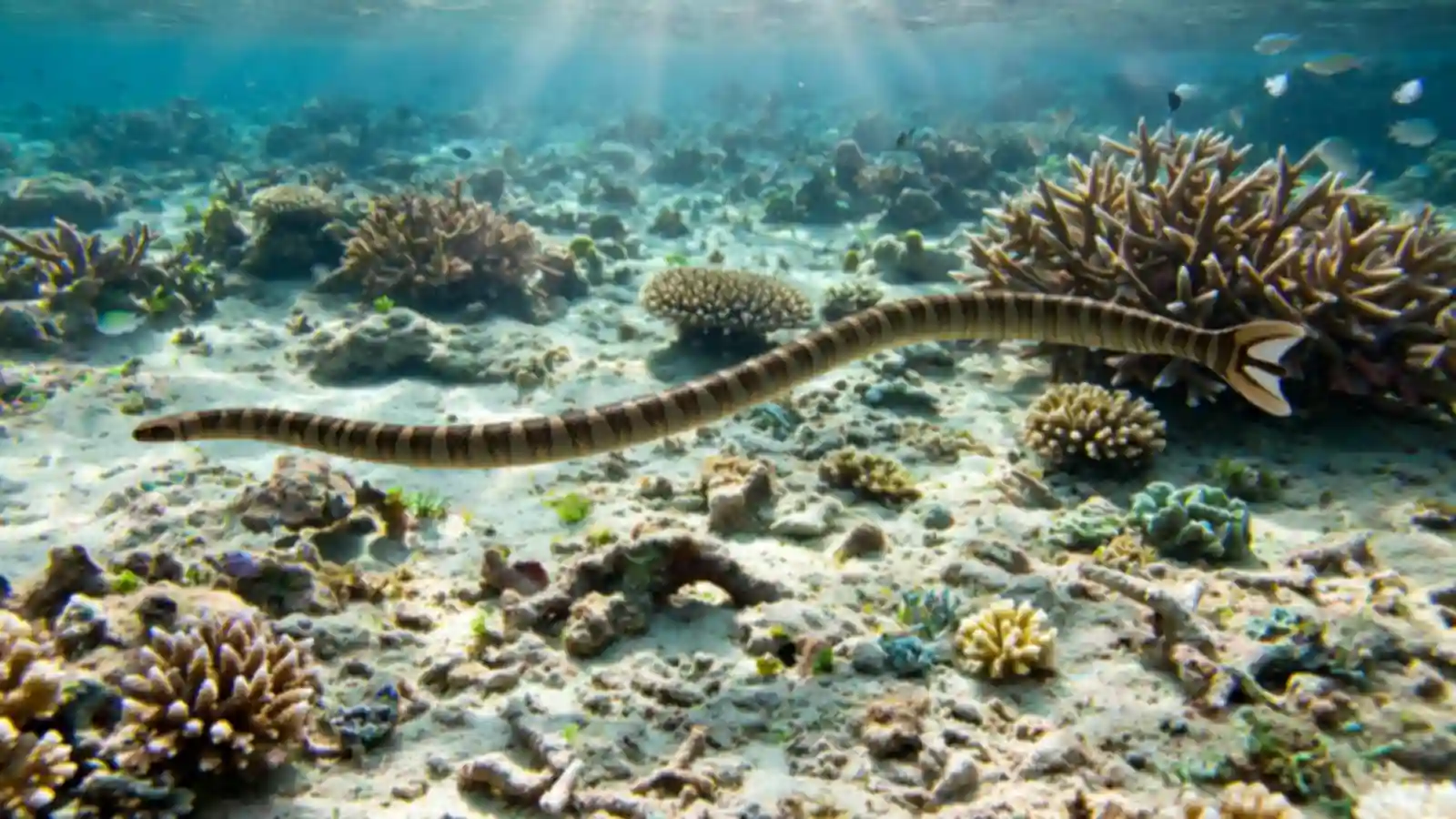
At a Glance
The Dubois sea snake is a shy reef hunter of the Indo-Pacific and the most venomous sea snake ever tested. Its venom is extreme, its fangs are tiny, and its yield is small — a combination that makes it deadly on paper and almost harmless in practice.
Dubois Sea Snake Venom: The Most Toxic Sea Snake Tested
Its venom is the most toxic of any sea snake ever tested: an LD50 of 0.044 mg/kg, which makes it the third most venomous snake overall — behind only the inland taipan at 0.025 and the eastern brown snake at 0.036. The number is the reason the Dubois tops every “most venomous” list, and it is a number that deserves its caveat, which this guide prints with it.
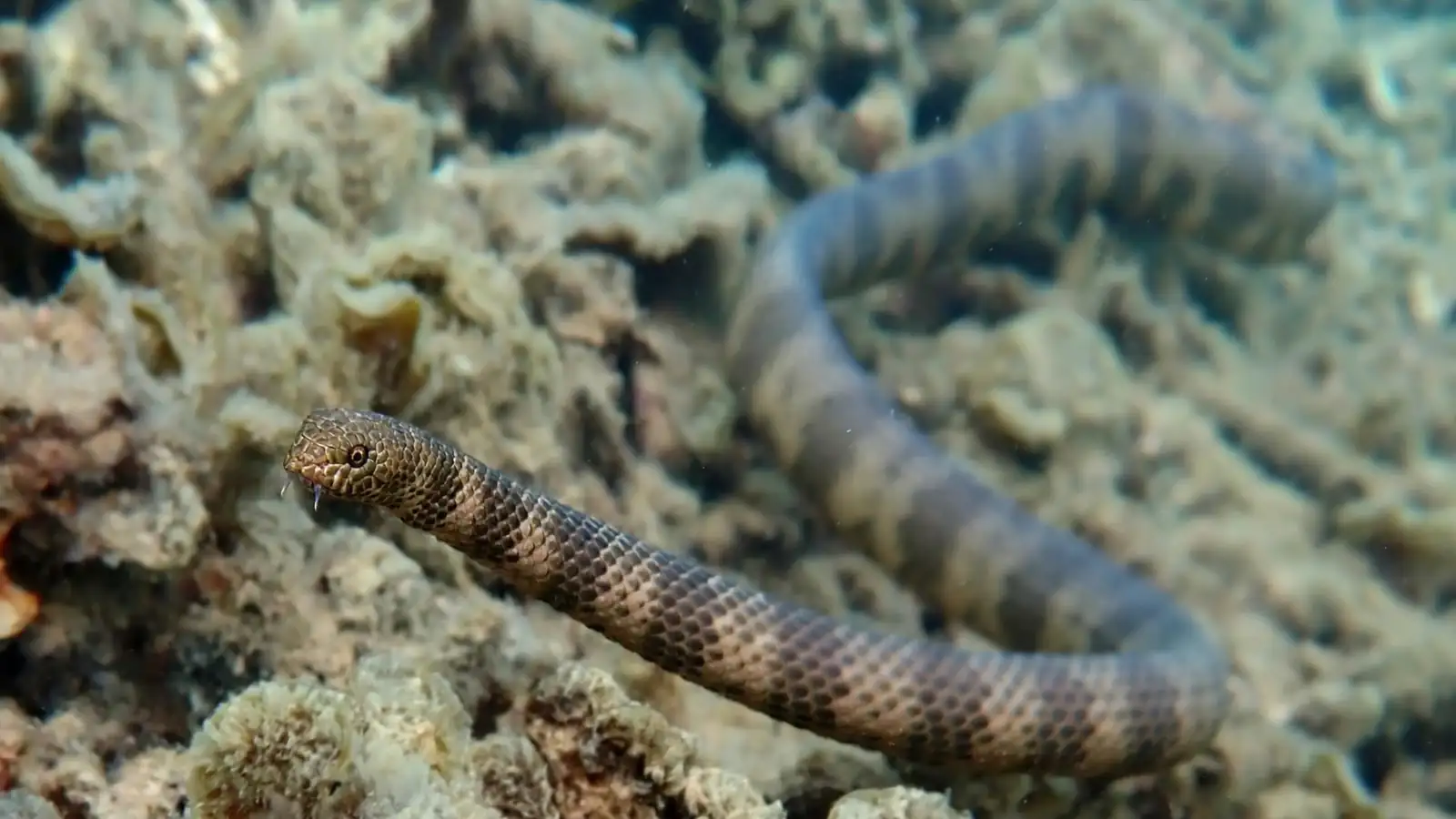
The caveat is the yield. The Dubois carries fangs just 1.8 mm long and delivers only about 0.43 mg of venom per bite — a tiny dose, even at extreme potency. A snake that cannot deliver much venom cannot do much damage, however toxic the venom is. The ranking is real, and so is the limit on it: the most venomous sea snake tested is also one of the least dangerous, because it almost never bites anyone.
Size and Fangs: Small Snake, Tiny Fangs
It is a small, slim snake, typically under a metre long, with a small head and fangs just 1.8 mm long — shorter than a grain of rice. The size is part of the animal’s character: it is a reef-crevice hunter, built to slide into cracks and corners where moray eels hide, and a big body would not fit.
The fangs are the limiting factor in every bite. At 1.8 mm they can barely pierce a wetsuit, let alone thick skin, and the venom yield of 0.43 mg means even a successful bite delivers little. The Dubois is a small snake with a small delivery system and an extreme venom — a combination that looks terrifying on paper and is almost harmless in the water.
Where They Live: Reef Flats to 80 m
Dubois sea snakes live on coral reef flats and sandy or silty bottoms to 80 metres deep, across the Indo-Pacific — from the coasts of Australia and New Guinea through Southeast Asia. They are reef animals, not open-water animals: they hunt the reef, they shelter in it, and they rarely leave it.
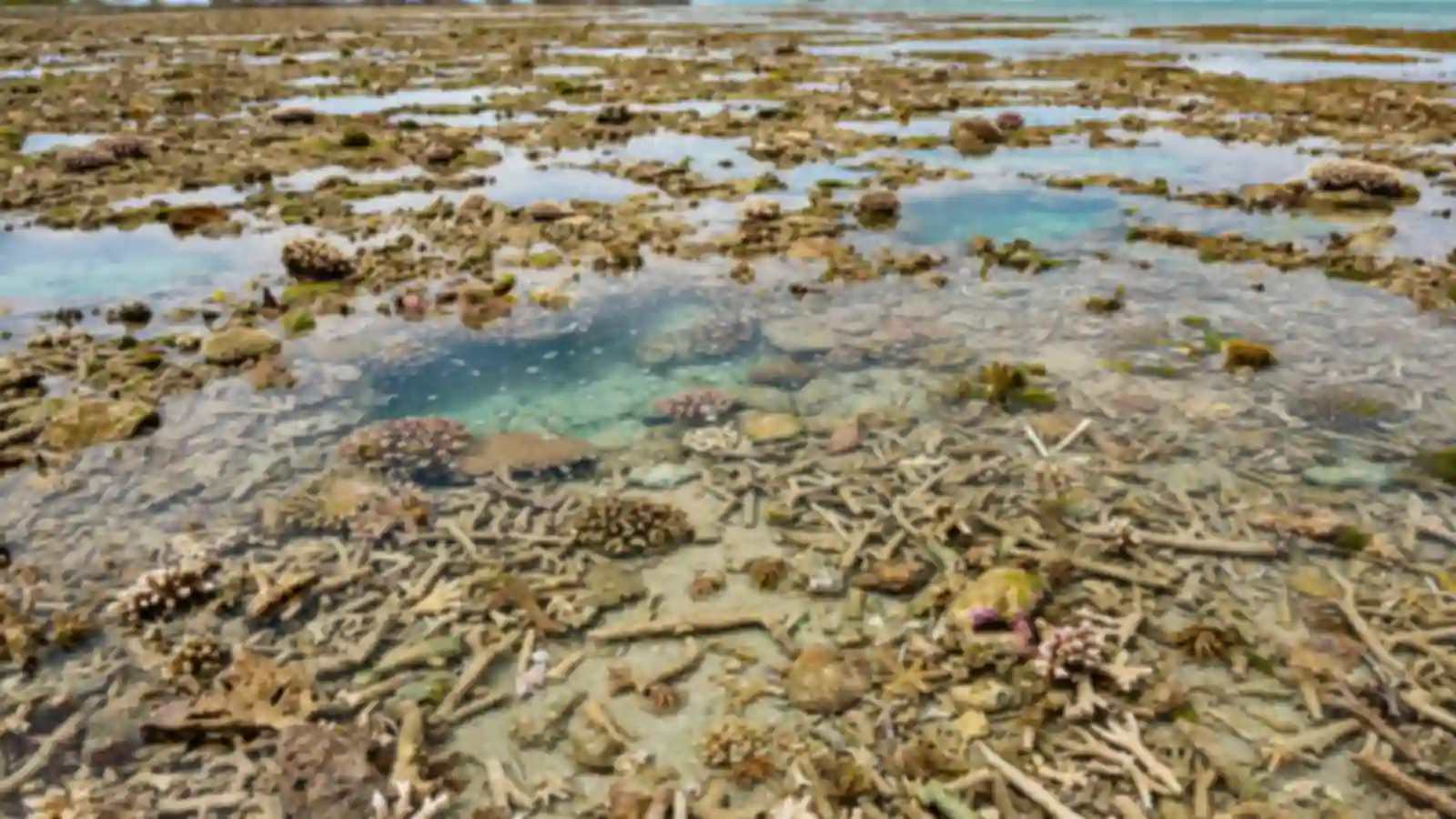
The reef flat is the hunting ground. At low tide the flats are shallow enough to wade, and the Dubois works the crevices and the sandy patches between the coral, looking for moray eels. At 80 metres down the reef gives way to sand and silt, and the snake works that too — a reef hunter with a deep range, but always a reef hunter.
What They Eat: Moray Eels
It eats moray eels — a prey most snakes would not touch. Morays are long, muscular, sharp-toothed reef predators, and the Dubois hunts them in their own crevices, sliding into the crack, biting, and waiting for the venom to work. It is a bold diet for a small snake, and the venom is what makes it possible.
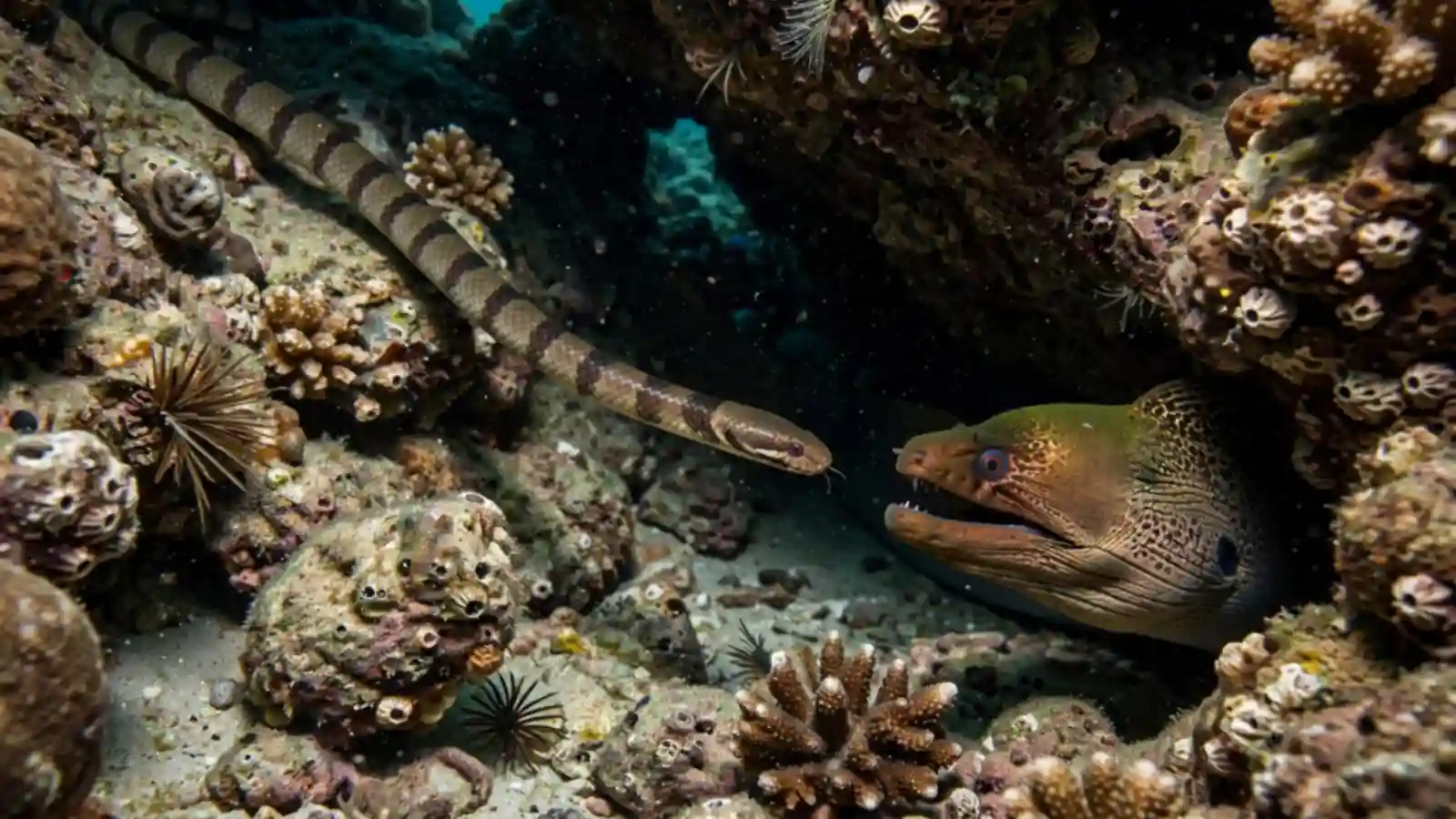
The hunt is a crevice hunt. The Dubois finds a moray in its hole, bites it in the confined space where the eel cannot turn, and holds on until the venom takes hold. Then it swallows the eel whole, head first, in the same crevice. The extreme venom is not for people — it is for morays, and it is the tool that lets a small snake eat a dangerous one.
Behaviour: Crepuscular Reef Hunter
It is crepuscular — most active at dawn and dusk — and shy. It does not seek confrontation, it does not defend territory, and it does not approach people. A diver who meets one will usually see it sliding away into a crevice, not turning to face them.
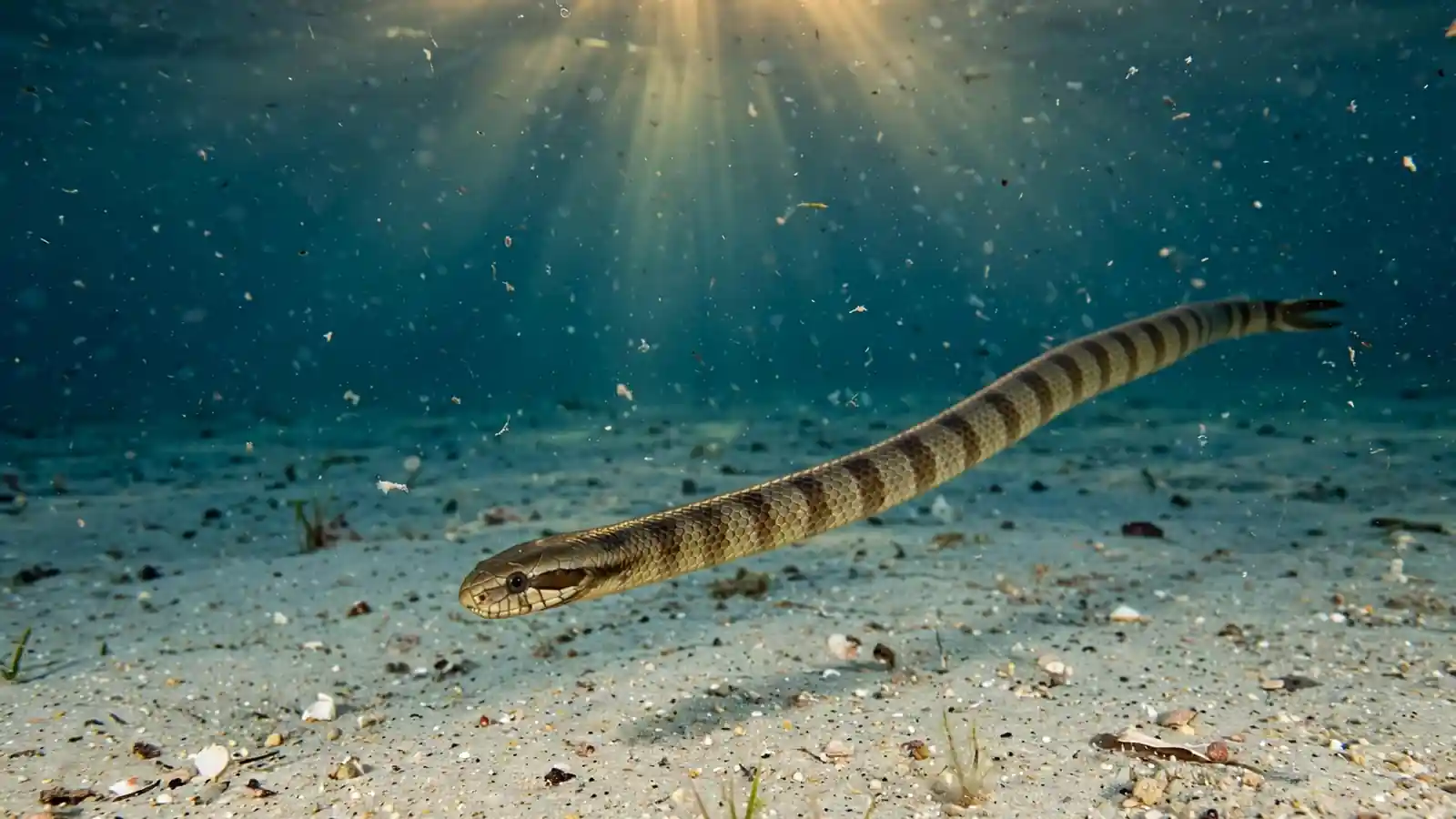
The shyness is the other half of the safety story. A venomous snake that avoids people, hunts at twilight, and lives on reef flats is a snake that almost never bites anyone — and the record bears that out: very few bites are attributed to the Dubois, and none of the famous sea snake fatalities belong to it. The most venomous sea snake tested is also one of the best behaved.
Dubois Sea Snake vs Beaked Sea Snake
It and the beaked sea snake are the two names at the top of every venom ranking, and the comparison is a lesson in what venom numbers do and do not mean. The Dubois is more toxic by laboratory measure — LD50 0.044 against the beaked sea snake’s 0.11 — and it ranks third among all snakes. By the lab numbers, the Dubois wins.
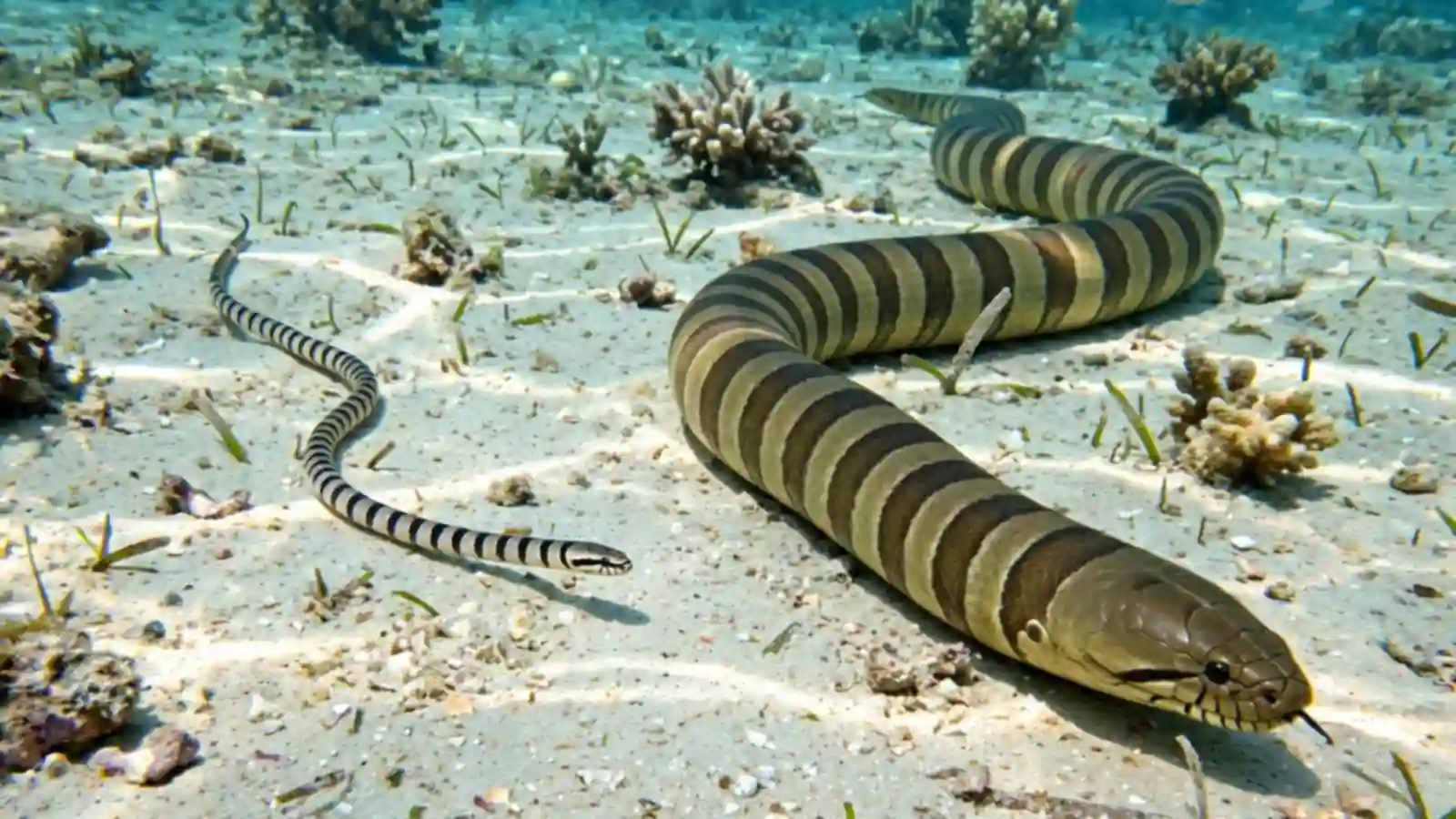
By the outcome numbers, the beaked sea snake wins by a distance. It causes over 50% of all sea snake bites and up to 90% of fatalities, while the Dubois, shy and crepuscular with a yield of only 0.43 mg, causes very few bites at all. Toxicity is not danger: danger is toxicity multiplied by contact, and the Dubois almost never makes contact. For the full comparison, see this sea snake guide, which covers the venom, the ranking and the bite record.
Conservation: Least Concern, Assessment Ageing
It is listed as Least Concern, and it is a reasonably common animal across a wide Indo-Pacific range. It is not rare, it is not obviously declining, and its reef-flat habitat, while pressured by coral loss, still holds it in good numbers.
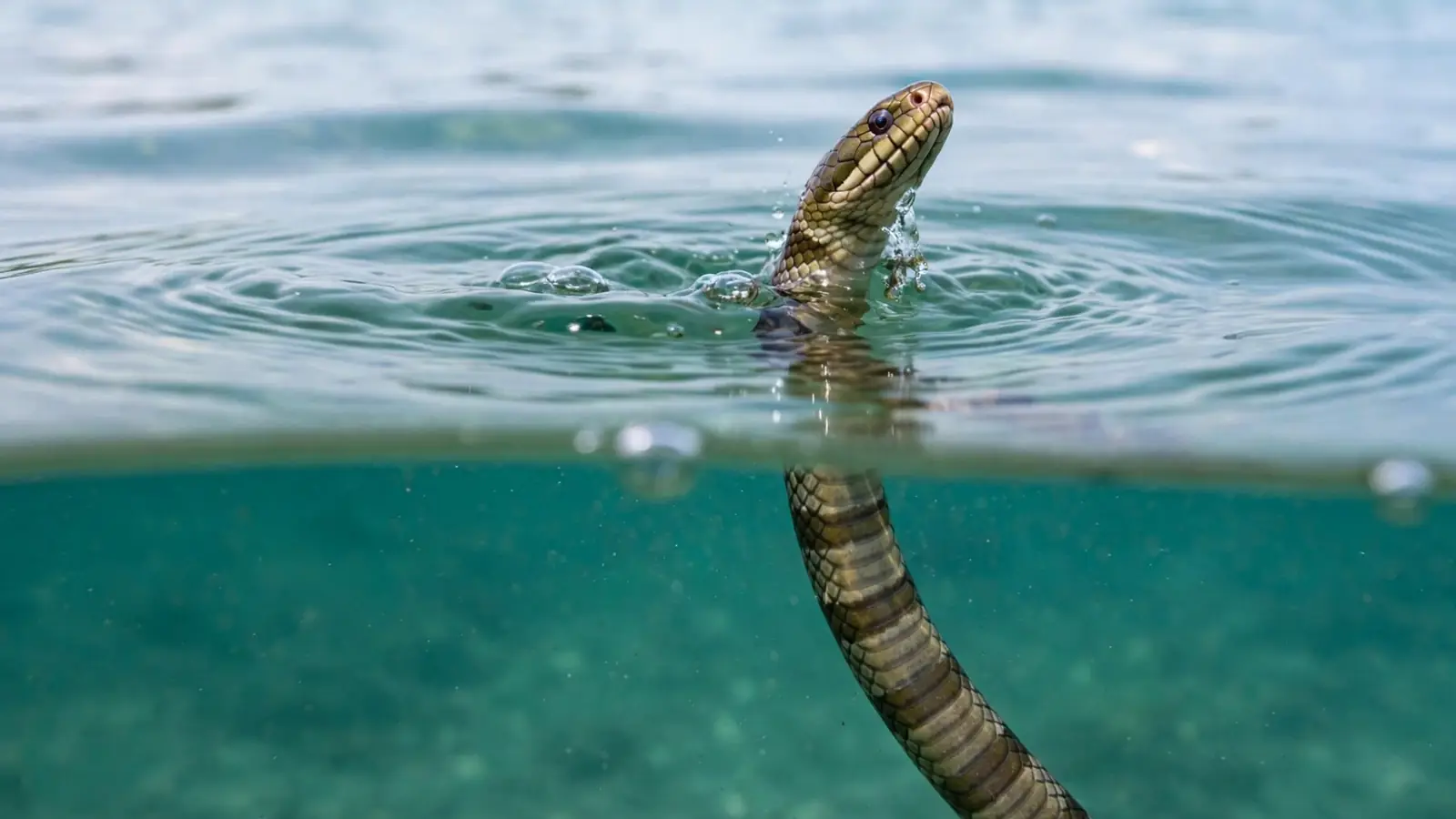
One caveat belongs with the status: the assessment itself is ageing, and at least one source flags it as very out of date. The guide prints “Least Concern” without a year because the year could not be sourced cleanly — and the honest position is that the status is probably right but the paperwork is old. The Dubois is not a conservation emergency; it is a well-established reef snake whose assessment deserves a refresh.
Fun Facts
- Its venom is the most toxic of any sea snake ever tested.
- It ranks as the third most venomous snake overall — behind the inland taipan and the eastern brown.
- Its fangs are just 1.8 mm long, and its venom yield is only 0.43 mg.
- It eats moray eels — hunting them in their own reef crevices.
- It is crepuscular: most active at dawn and dusk, and famously shy.
- Despite the ranking, it causes very few bites — and none of the famous sea snake fatalities.
Frequently Asked Questions
What Is a Dubois Sea Snake?
A Dubois sea snake is a small, slim sea snake, Aipysurus duboisii, of the Indo-Pacific — a shy reef hunter that eats moray eels. It is the most venomous sea snake ever tested, with an LD50 of 0.044 mg/kg, and it ranks as the third most venomous snake overall.
How Venomous Is a Dubois Sea Snake?
Extremely by laboratory measure: an LD50 of 0.044 mg/kg makes it the most venomous sea snake tested and the third most venomous snake overall, behind only the inland taipan (0.025) and the eastern brown snake (0.036). But its fangs are only 1.8 mm long and its venom yield is just 0.43 mg — so it delivers very little venom per bite.
Is the Dubois Sea Snake the Most Venomous Snake in the World?
No — it is the third most venomous snake overall, and the most venomous sea snake tested. The inland taipan and the eastern brown snake rank above it. And by outcome it is far from the most dangerous: it is shy, crepuscular and small-yielding, and it causes very few bites.
Where Do Dubois Sea Snakes Live?
On coral reef flats and sandy or silty bottoms to 80 metres deep, across the Indo-Pacific — from Australia and New Guinea through Southeast Asia. They are reef animals: they hunt the reef, shelter in it, and rarely leave it.
What Do Dubois Sea Snakes Eat?
Moray eels. The Dubois hunts them in their own reef crevices, sliding into the crack, biting, and waiting for the venom to work before swallowing the eel whole, head first. The extreme venom is a tool for eating dangerous prey, not for people.
Are Dubois Sea Snakes Dangerous to Humans?
Almost never in practice. The venom is extreme, but the snake is shy, crepuscular and small-yielding, with 1.8 mm fangs and a 0.43 mg yield. Very few bites are attributed to it. Any sea snake bite is a medical emergency — but the Dubois is one of the least likely sea snakes to bite you.
How Can You Tell a Dubois Sea Snake From a Beaked Sea Snake?
By the build and the home. The Dubois is slimmer, with a smaller head, and lives on coral reef flats; the beaked sea snake is bulkier, with a pointed down-turned snout, and lives in shallow estuaries and river mouths. By the lab numbers the Dubois is more toxic; by the bite numbers the beaked sea snake is far more dangerous.
Similar Species Worth Exploring
Keep Exploring
Meet the beaked sea snake, its more dangerous cousin, then the yellow bellied sea snake, the pelagic drifter that never comes ashore, and browse the whole family in our sea turtles and marine reptiles hub — then come back to the most venomous sea snake ever tested, the Dubois sea snake.