Razor Clam
Razor Clam: the beach’s fastest digger
The razor clam can dig a foot a minute and vanish four feet down in seconds, faster than any person with a shovel. It is a long, thin clam shaped like a cut-throat razor, and it spends its life buried in the surf zone of sandy beaches, surfacing only through the twin siphons it pokes above the sand. This guide covers the Pacific and Atlantic razor clams, how to read their signs on the beach, and the domoic acid closures that shut whole beaches down.
By Emily Carter · Reviewed by our vet team · Updated 10 November 2026 · 10 min read
Digs a foot a minuteBuried 4 feet downShows mark the sand
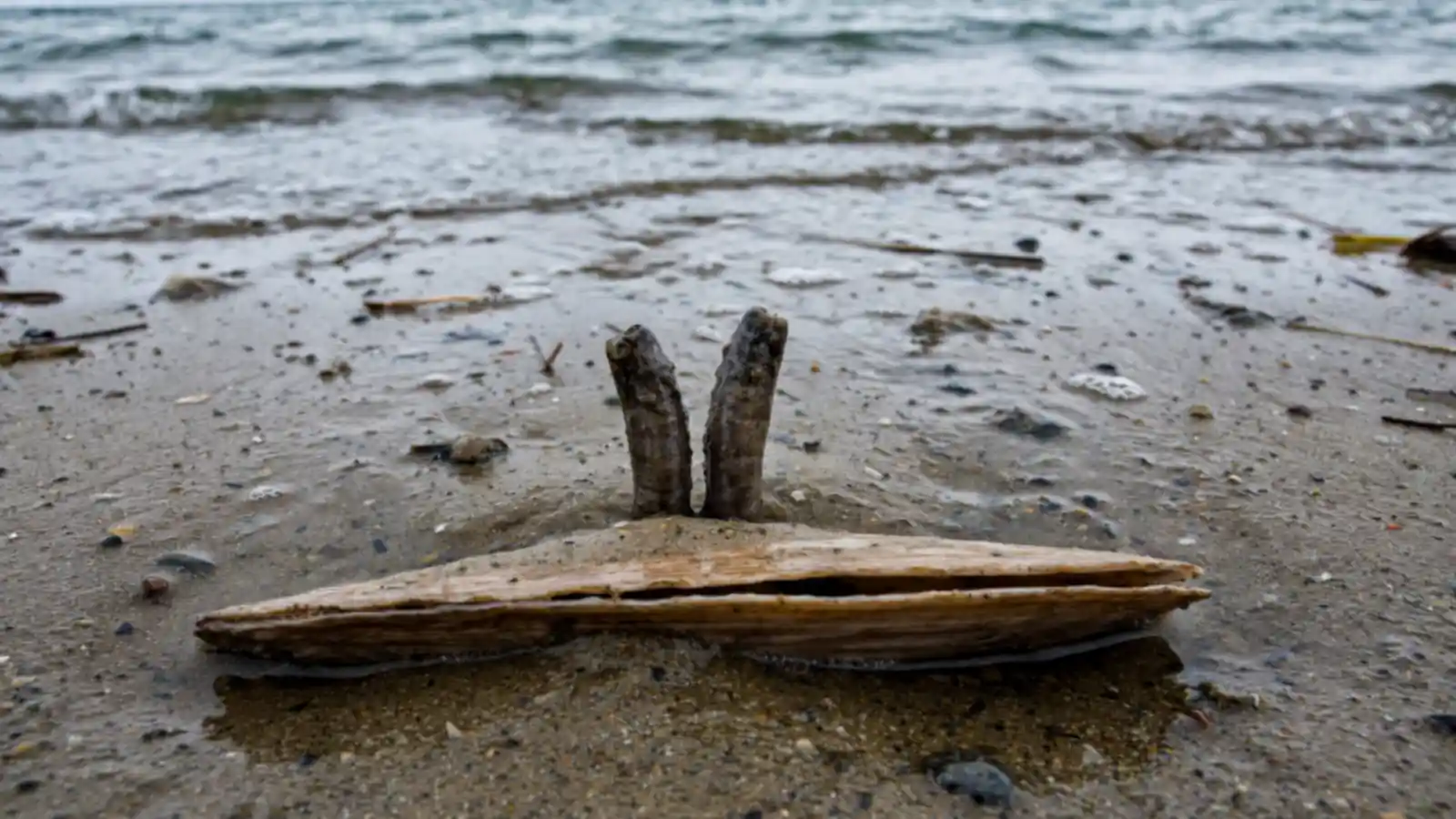
At a Glance
A razor clam is a long, straight shell with edges sharp enough to earn its name, and it cannot close its shell fully, so the two halves gape slightly even at rest. The animal inside is mostly foot, a pale muscular organ it uses to pull itself down through the sand faster than a person can dig after it. Here is the animal at a glance.
Razor Clam Species: Pacific vs Atlantic
Two clams share the name, and they live on opposite coasts of North America. The Pacific species, Siliqua patula, is the famous one, a long thin shell to 15 centimetres, found on the surf beaches of the western coast from Alaska to California. The Atlantic one is the jackknife clam, an Ensis species, a little shorter and narrower, found on the eastern coast from Canada to the Carolinas.
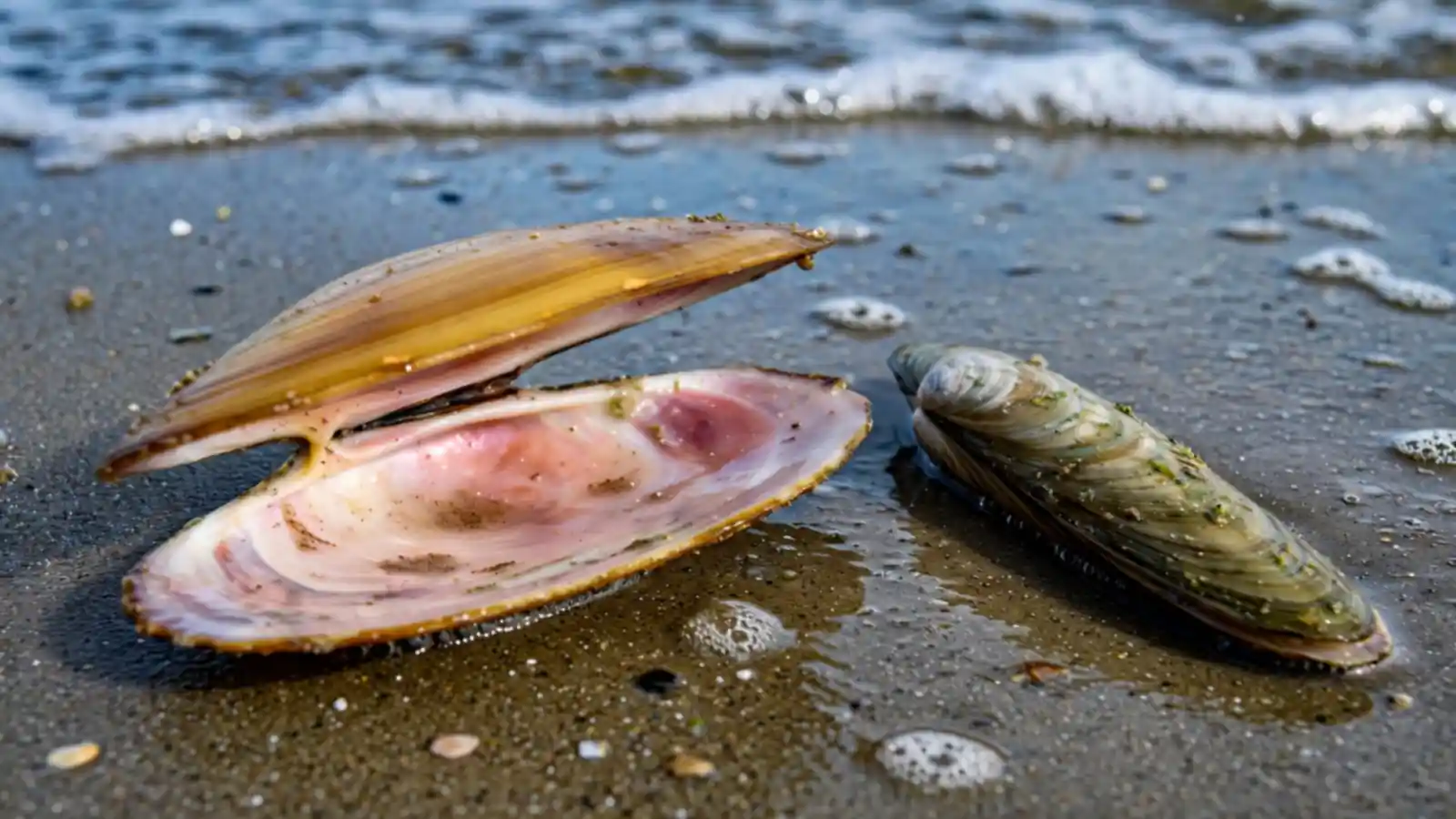
The two are easy to tell apart side by side. The Pacific shell is broader, more oval at the ends, and often flushed pink or purple inside, while the Atlantic shell is straighter and more knife-like, with a greenish tinge. Both share the trademark: a shell that cannot close fully, so the siphons and the foot are always slightly exposed, and edges sharp enough to cut an unwary hand.
The Pacific Razor Clam: Siliqua patula
The Pacific species is the star of the family, and it owns some of the most famous digging beaches in the world. On the long sandy beaches of Washington and Oregon, diggers gather at low tide to follow the signs the clams leave on the sand, and the state wildlife agencies manage the beds with seasons, limits and regular toxin testing.
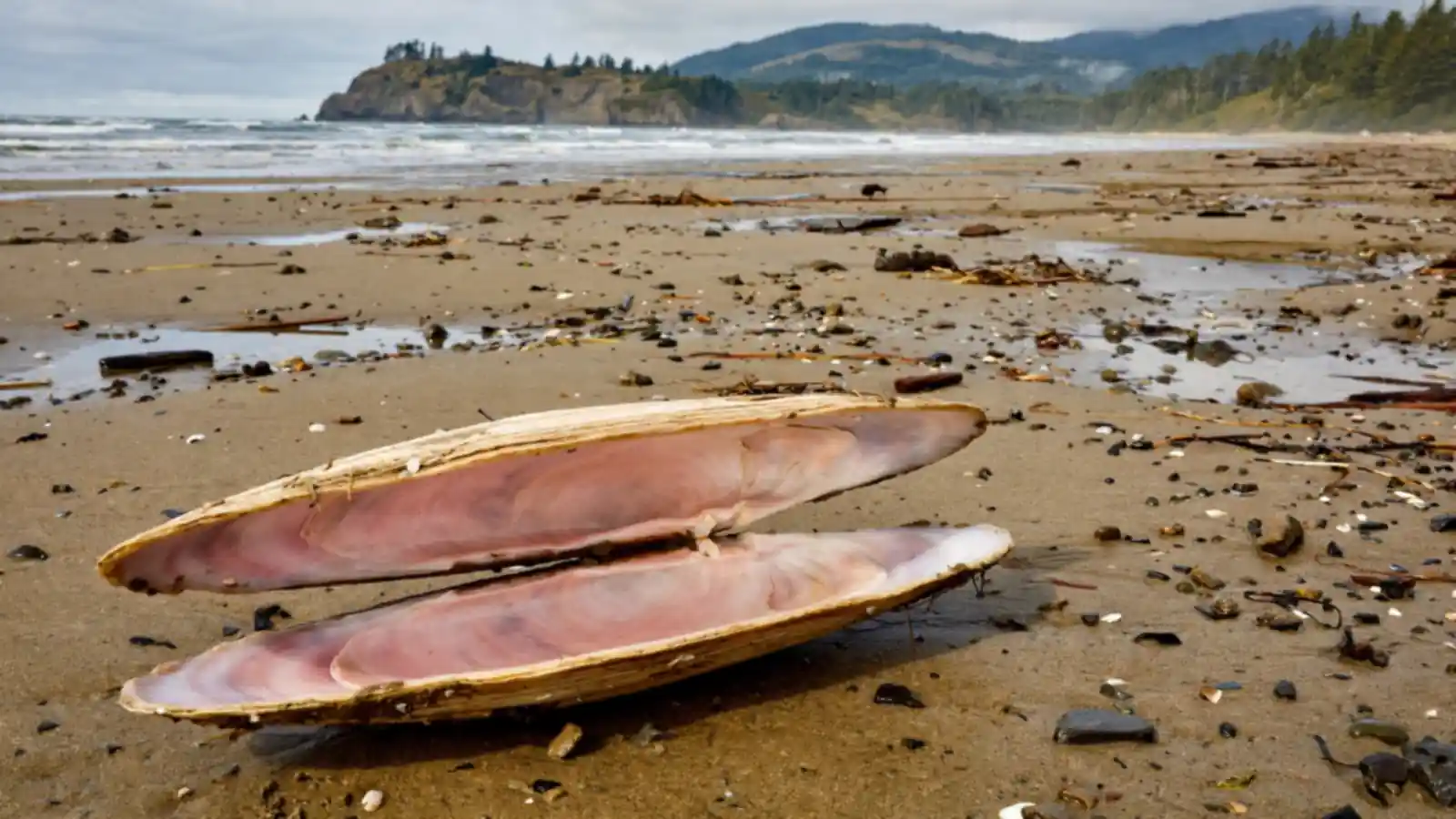
Siliqua patula grows fast and lives fast. It reaches digging size in its second year, spawns in the surf through the summer, and most animals live only about five or six years. The shell grows in visible rings, and a big old clam can be read like a tree, its rings recording good summers and bad.
How Fast Can It Dig? A Foot a Minute
It digs by turning its foot into an anchor and a piston. It pushes the pale foot down into the sand, swells the tip to grip, and then pulls the shell down after it, repeating the stroke fast enough to sink a foot a minute. A startled clam can vanish four feet down in seconds, well beyond the reach of any hand.
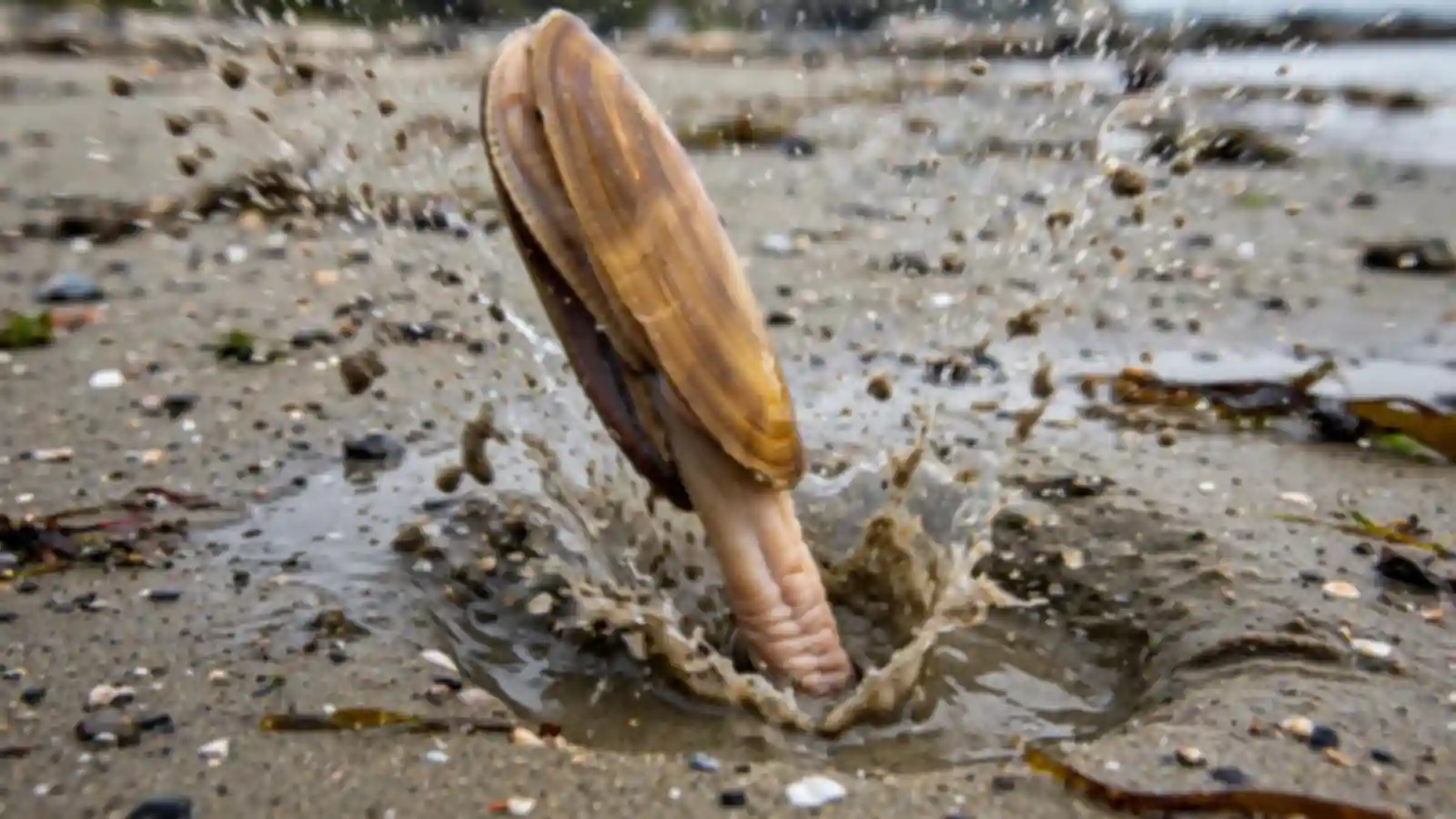
The speed is a survival trick. The surf zone is a dangerous place to sit still: waves scour the sand, gulls patrol at low tide, and fish cruise the shallows. A clam that can disappear in seconds is a clam that gets to feed in peace, and it is the fastest digger of any clam on the beach. Diggers who chase one learn the lesson quickly — the clam is always faster than the shovel.
Reading the Beach: The “Shows” That Mark a Clam
A buried one leaves signs on the sand, and diggers call them shows. The commonest are dimples, small round hollows where the clam’s siphons break the surface, and doughnuts, rings of sand pushed up around the siphon holes. The clearest is the keyhole, a small oval opening that marks a clam sitting just below the surface.
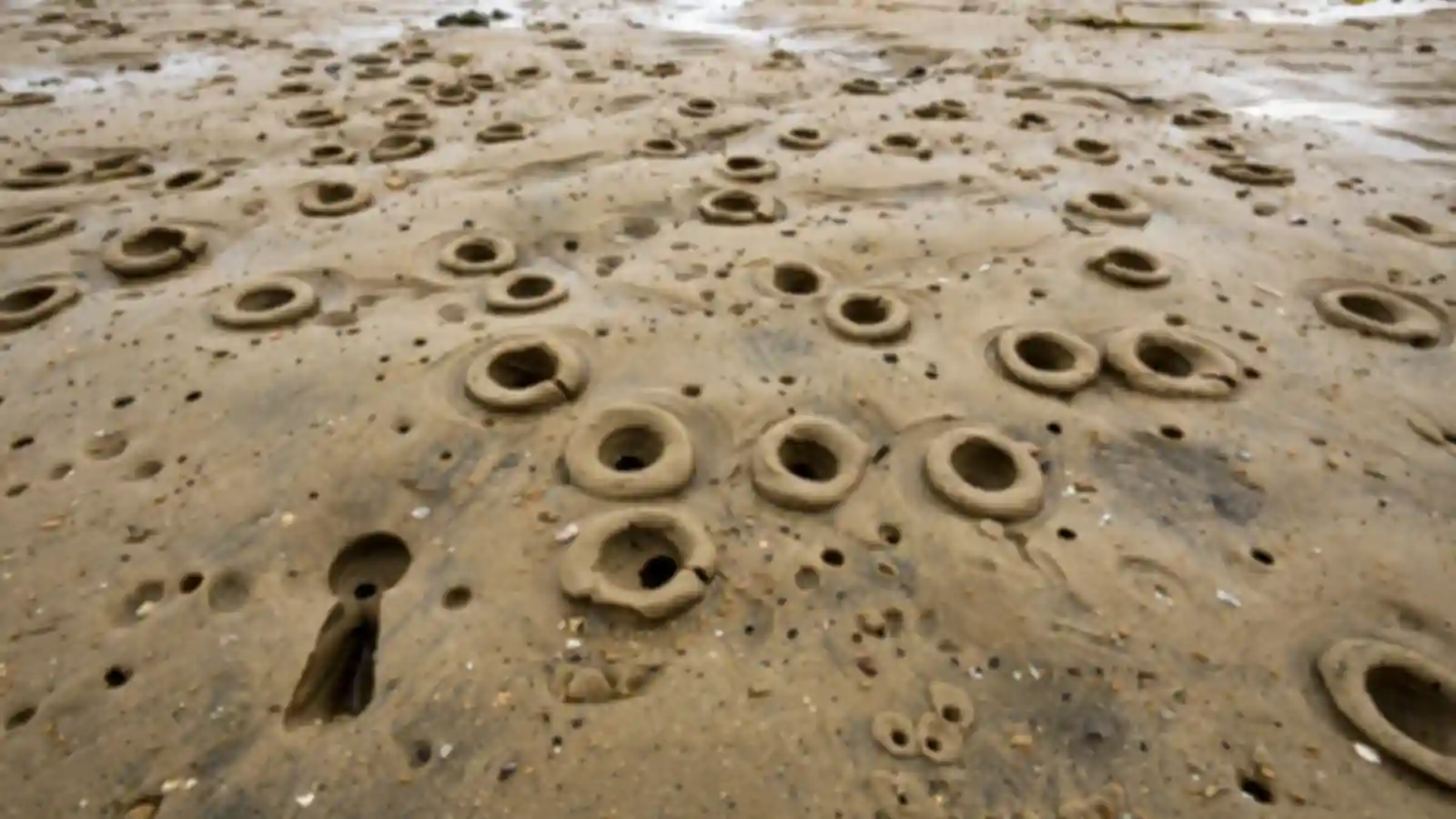
Reading shows is a skill passed down on the beach. A fresh show is crisp-edged and wet, and it means the clam is close to the surface and feeding. An old show is slumped and dry, and the clam has either moved deeper or left. The best diggers read a whole beach at a glance, following the line of shows down the slope of the sand, and they know that a beach with no shows is a beach with no clams to dig.
What Do Razor Clams Eat? Filter Feeders of the Surf
Razor clams eat plankton, and they take it from the surf itself. Two siphons poke up through the sand: one draws water in, the other pushes it out, and the gills inside strain out the tiny plants and animals drifting past. A single clam filters litres of water a day, and a whole bed of clams filters the surf zone clean.
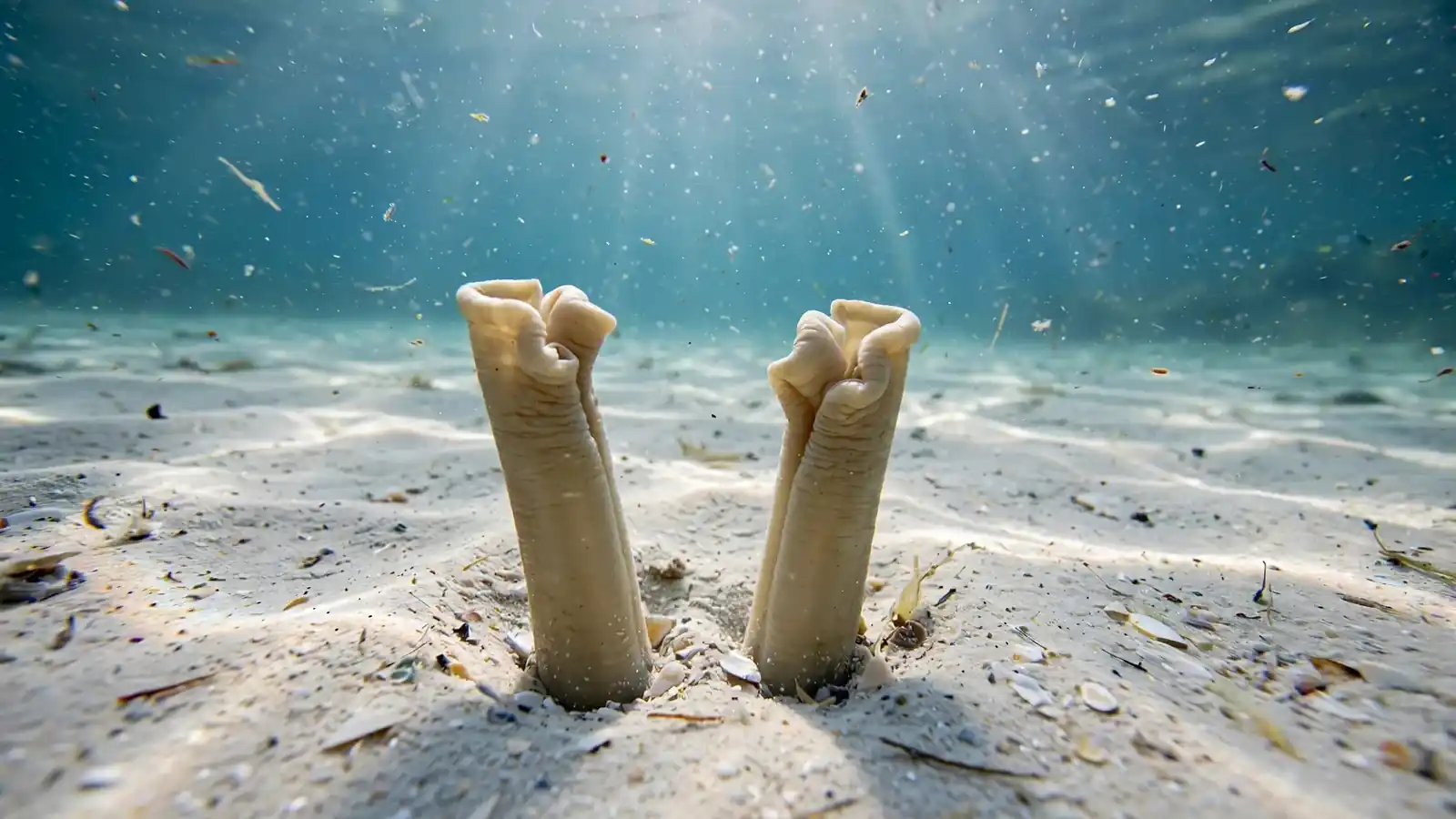
The feeding is why razor clams live where they do. They need moving water rich in plankton, and the surf beaches of the Pacific coast deliver exactly that, with every wave bringing a fresh load of food. In calm water the plankton settles and the clams go hungry, which is why you will not find razor clams in quiet bays — they belong to the open beach, where the water never stops moving.
Domoic Acid: Why Beaches Close
The beaches close, and the reason is usually domoic acid. The toxin is made by certain algae that bloom in warm water, and filter-feeding clams collect it in their flesh. In people it causes amnesic shellfish poisoning, a serious illness, so the state wildlife agencies test the beaches regularly and close them when the toxin rises above safe levels.

The closures are a recurring seasonal story on the Pacific coast, and they can last weeks or months while the algae bloom passes and the clams clear the toxin from their bodies. Diggers check the closure notices before every trip, and the agencies post the results beach by beach. The system works: no one has died from a legally harvested one in decades, and the closures are the reason why. For the full detail, see the state guide to clams.
Life Cycle: Spawning and Growth
Razor clams spawn in the surf, releasing eggs and sperm into the water through the summer. The fertilised eggs drift as plankton for a few weeks, then settle onto the sand as tiny spat, no bigger than a grain of rice, and begin the digging life at once. Most spat are eaten or washed away, and only a few in thousands survive to digging size.

Growth is fast. A young clam reaches a few centimetres in its first year and digging size in its second, and the shell rings record each year of growth. Spawning peaks in the warm months, and the beds are managed so that enough adults survive each season to seed the next. It is a short, fast life for a clam, and the whole population turns over in about five years.
Fun Facts
- It can dig a foot a minute and vanish four feet down in seconds.
- The clam’s shell cannot close fully, so its siphons and foot are always slightly exposed.
- Diggers find buried clams by their “shows”, dimples, doughnuts and keyholes on the sand.
- The Pacific species, Siliqua patula, grows to 15 centimetres and lives about five years.
- Domoic acid from algae blooms can close whole beaches for weeks at a time.
- It filters litres of surf water a day, straining out plankton through its gills.
Frequently Asked Questions
What is the difference between a Pacific and an Atlantic razor clam?
The Pacific razor clam, Siliqua patula, is the longer, broader species of the western coast, to 15 centimetres, often flushed pink or purple inside. The Atlantic razor clam, the jackknife clam, is a little shorter and straighter, with a greenish tinge, and lives on the eastern coast. Both share the razor-sharp shell edges and the shell that cannot close fully.
How fast can a razor clam dig?
It can dig about a foot a minute, and a startled clam can vanish four feet down in seconds. It digs by pushing its muscular foot into the sand, swelling the tip to grip, and pulling the shell down after it in fast repeated strokes.
How do you find razor clams on a beach?
You look for their shows, the signs they leave on the sand: dimples where the siphons break the surface, doughnut-shaped rings of sand, and keyhole-shaped openings. Fresh, crisp-edged shows mean the clam is close to the surface and feeding.
How deep do razor clams bury themselves?
Razor clams commonly sit a few inches below the surface while feeding, but a startled clam can pull itself four feet down or more. The depth is the clam’s defence against gulls, fish and diggers, and it is why the animal digs faster than any person with a shovel.
What do razor clams eat?
Razor clams eat plankton. They draw surf water in through one siphon, strain out the tiny plants and animals with their gills, and push the water out through the other siphon. A single clam filters litres of water a day.
What is domoic acid and why does it close razor clam beaches?
Domoic acid is a toxin made by certain algae that bloom in warm water. Filter-feeding razor clams collect it in their flesh, and in people it causes amnesic shellfish poisoning. Wildlife agencies test the beaches and close them when toxin levels rise, until the bloom passes and the clams clear the toxin.
How long do razor clams live?
Most razor clams live about five to six years. They grow fast, reaching digging size in their second year, and the shell rings record each year of growth, like the rings of a tree.
Similar Species Worth Exploring
Keep Exploring
Keep exploring the mollusks: meet the cockle, a heart-shaped bivalve that jumps instead of digging, or browse the whole family in our guide to the types of mollusks. Then come back to the beach and its fastest digger, the razor clam.