Frogfish
Frogfish: the anglerfish that walks on its fins and strikes in 6 milliseconds
The frogfish is a fish that forgot how to swim properly: it walks across the seabed on limb-like fins, it fishes with a rod and lure built into its own forehead, and it can swallow a fish whole in about 6 milliseconds — one of the fastest feeding strikes ever measured.
By Emily Carter · Reviewed by our vet team · Updated 10 November 2026 · 9 min read
Strikes in about 6 millisecondsFishes with its own built-in lureWalks on limb-like fins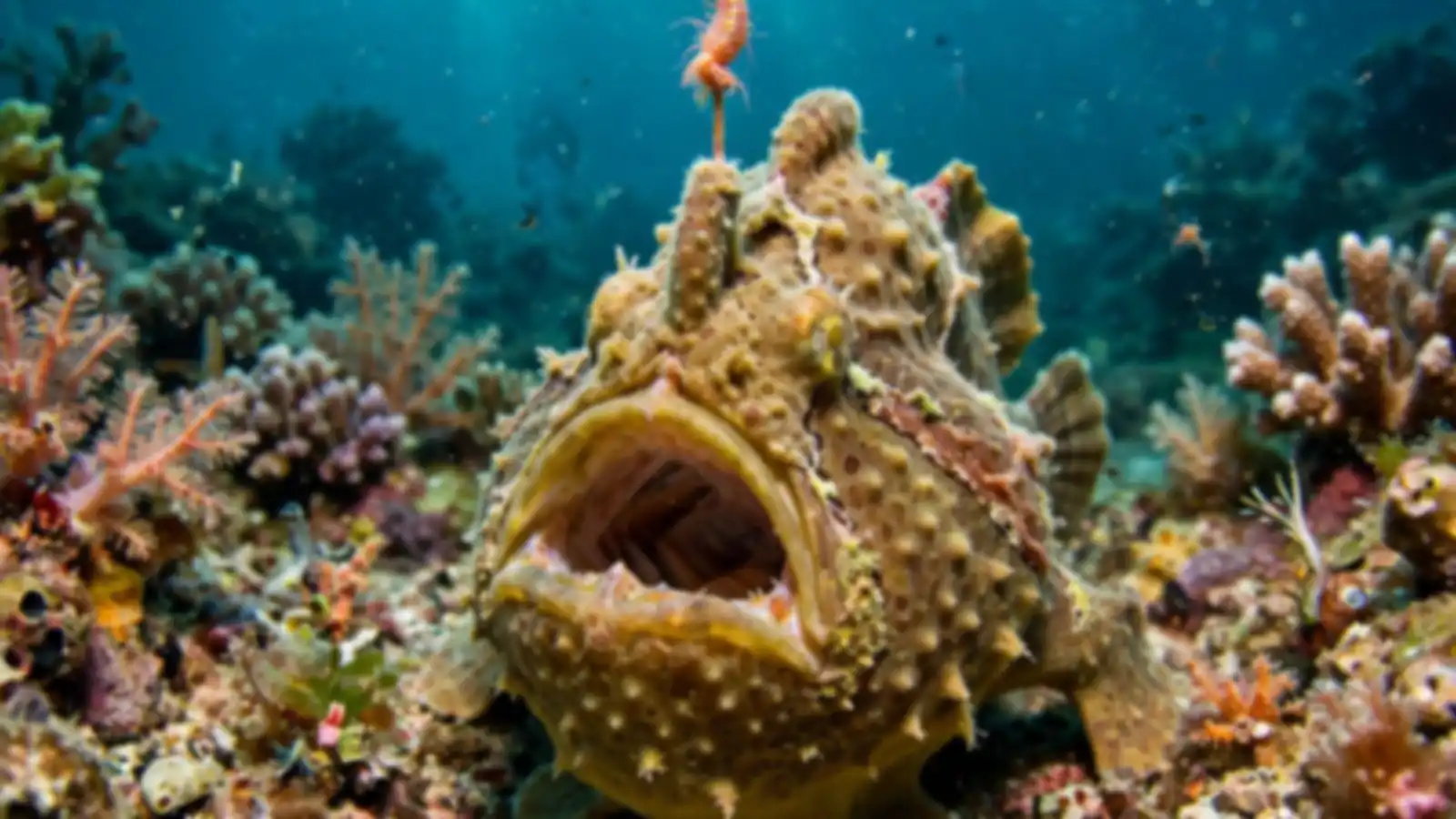
At a Glance
The frogfish is a shallow-water anglerfish that traded swimming for walking. It belongs to the family Antennariidae, with around 50 described species, and it lives on tropical and subtropical reefs around the world — everywhere except the Mediterranean. Warty, lumpy and often brightly coloured, it sits on the reef disguised as a sponge or a lump of coral, dangles a lure in front of its enormous mouth, and waits for dinner to come to it.
The Reef’s Walking Anglerfish
It is an anglerfish that lives in the shallows. It is a member of the same order as the deep-sea anglerfish, the Lophiiformes, but it took the opposite path: instead of hanging a glowing lure in the dark, it sits on a sunlit reef and fishes in plain sight. Its body is short, deep and warty, with skin that can be smooth, hairy or covered in fleshy flaps, and its colour can match a sponge, a rock or a patch of algae so closely that divers swim past without seeing it.

The walking is the giveaway. Its pectoral fins are jointed like little limbs, and it uses them, with its pelvic fins, to stroll across the sand and reef in two distinct gaits — a slow, deliberate walk and a quicker, galloping shuffle. It can swim if it must, by jetting water through its gills, but it prefers to walk: swimming would give away the disguise, and its whole life depends on not being noticed.
Frogfish Size and Species
They range from about 2.5 centimetres to about 38 centimetres long across the family, and the giant, Antennarius commerson, is the largest of them all. Most species are hand-sized, between 5 and 15 centimetres, and the females are usually larger than the males. There are around 50 described species in the family — a modest number, kept honest by counting only the family Antennariidae and not the wider anglerfish order.

The best-known species are the reef’s characters: the giant, big and warty; the painted, which changes colour to match its sponge; the striated, striped and hairy; and the sargassum, which lives its whole life drifting among floating sargassum weed in the open Atlantic. Each species is a specialist in its own patch of reef, and each one fishes the same way.
The 6-Millisecond Strike: How the Strike Works
Its strike is one of the fastest feeding movements ever measured: the mouth opens and the prey is inside in about 6 milliseconds, six thousandths of a second. The jaws swing open, the mouth expands to as much as twelve times its resting volume, and the rush of water drags the prey in before it can react. High-speed cameras were needed to see it at all — to the naked eye, the fish simply opens its mouth and the prey is gone.
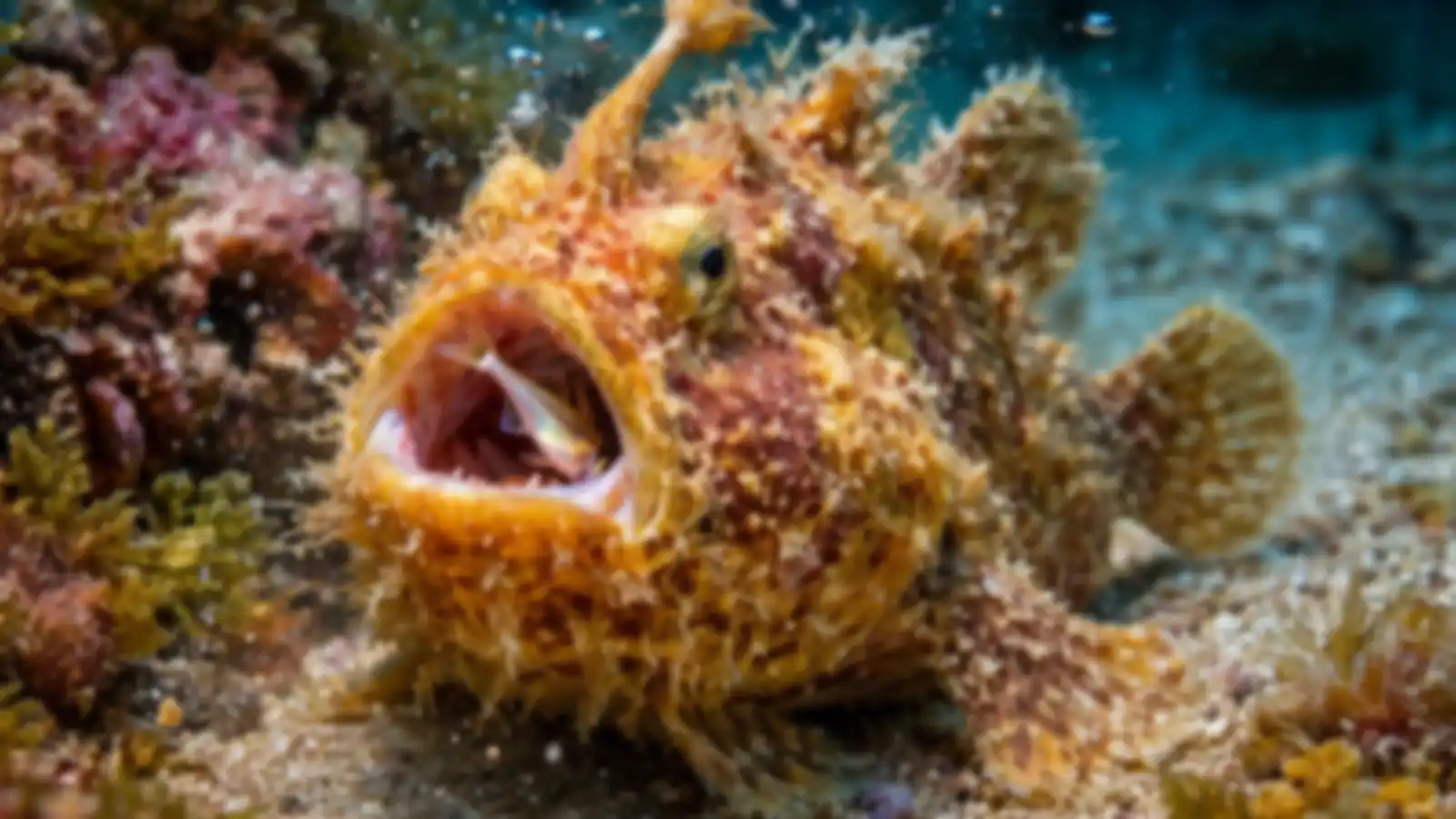
Speed is only half the trick; the other half is the mouth itself. Its mouth is enormous relative to its body, and it can swallow prey almost as big as itself, whole and alive. The prey is engulfed by suction, not bitten, and once inside there is no escape: its stomach stretches to hold the meal, and the fish may not need to eat again for days.
The Lure: Illicium and Esca
Its fishing rod is built into its head. The first spine of its dorsal fin is modified into a rod, the illicium, tipped with a fleshy bait, the esca, which the fish wiggles to mimic a worm, a shrimp or a small fish. Different species carry different lures — some look like worms, some like tiny fish, some like shrimp — and it chooses its lure to match the prey it wants.
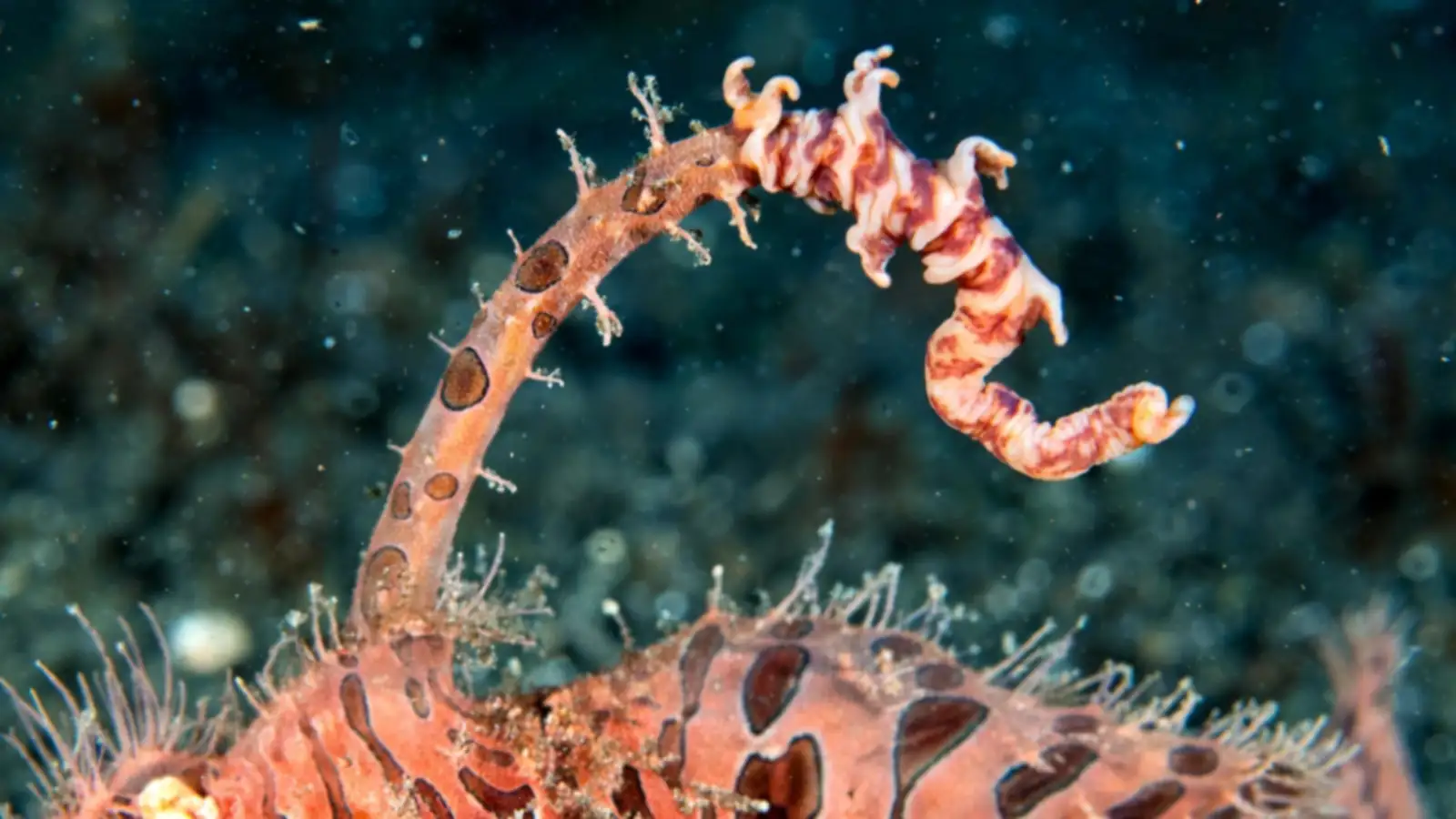
The technique is aggressive mimicry: it sits still, waves the lure, and waits for a curious fish to come close enough to investigate. The moment the prey is in range, the strike fires. Some even adjust the lure’s movement to the prey, twitching it faster for active hunters and slower for grazers, and the painted has been seen using its lure like a fishing line, casting it out and reeling it back in.
Walking on Fins
It walks on fins that work like legs. Its pectoral fins have an elbow-like joint and end in finger-like rays, and with its pelvic fins it can push itself along the bottom in a slow, deliberate stroll, or in a faster, galloping gait when it needs to move quickly. It is one of the few fish that genuinely walks, and it does it because walking keeps the disguise intact where swimming would not.
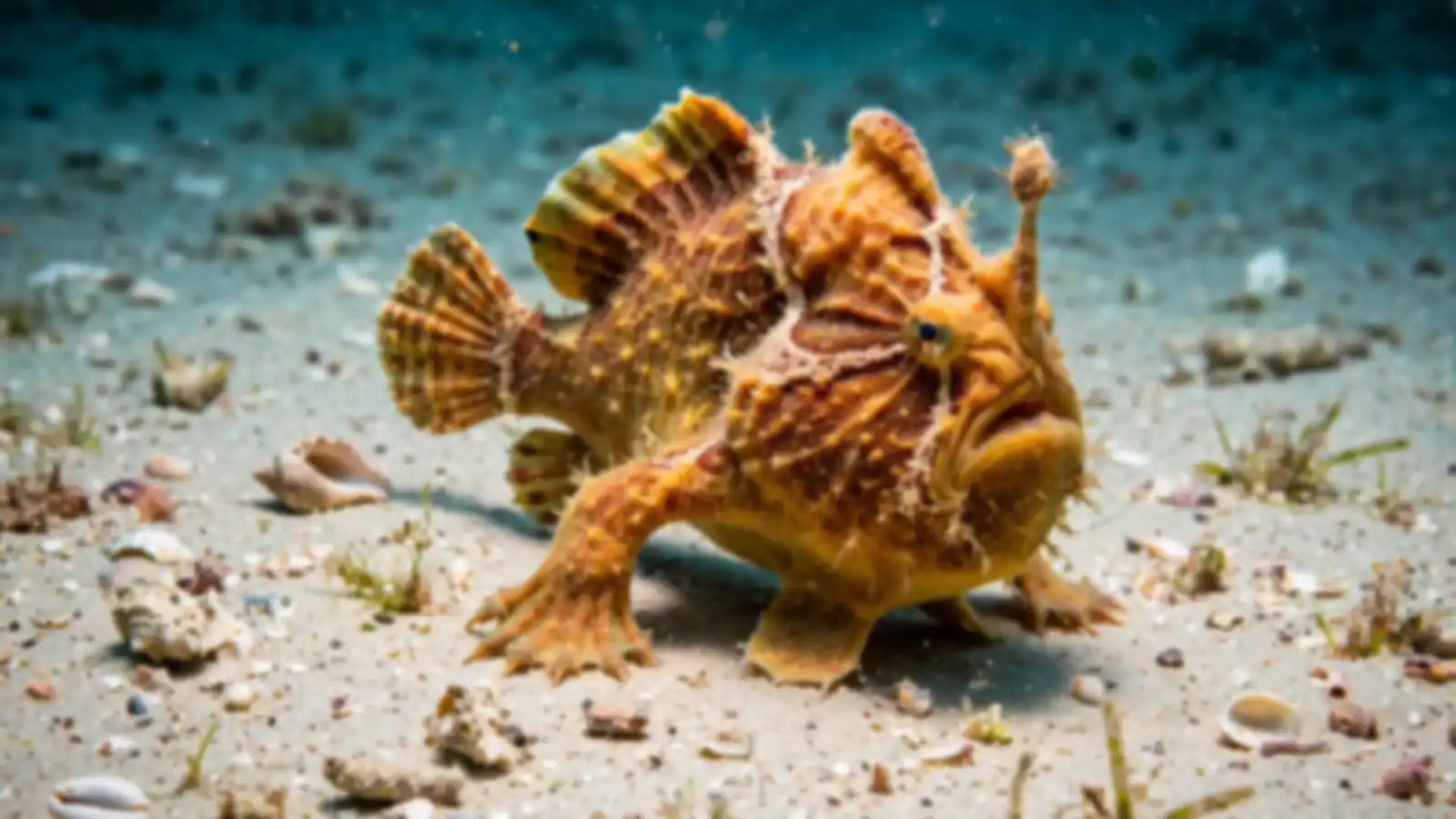
Walking also lets it hunt on foot. It stalks prey across the sand, creeping closer on its fins, then stops, raises its lure, and waits. The sargassum takes the trick furthest: it lives among floating weed in the open ocean and walks through the weed mat on its fins, fishing as it goes, never needing the seabed at all.
Camouflage and Colour Change
Its camouflage is active, not just coloured. Many species can change colour over days to match a new sponge or coral, and some, like the painted, can shift shade in hours. The skin is often covered in warts, flaps and filaments that break up the body’s outline, and some species even grow algae on their skin, so that they look less like a fish and more like a piece of the reef itself.

The disguise protects it from predators and hides it from prey at the same time, and it is so effective that they are often found by accident — a diver notices the lure moving, or the eye, which is the one part of the fish that cannot be disguised. The family account records the strike timing, the species count and the lure anatomy behind this guide, and the deep-sea side of the family is told in our anglerfish guide, where the same lure hangs in the dark instead of on a reef. The leafy seadragon is another reef master of disguise, a fish whose leaf-like lobes make it look like drifting seaweed.
Fun Facts
- It can open its mouth and swallow prey in about 6 milliseconds, one of the fastest strikes ever measured.
- Its mouth can expand to about twelve times its resting volume, letting it swallow prey almost as big as itself.
- It walks on limb-like pectoral fins, in two distinct gaits: a slow stroll and a quicker gallop.
- Its lure, the esca, mimics a worm, a shrimp or a small fish — and some adjust the wiggle to match the prey.
- The painted can change colour to match its sponge, sometimes within hours.
- They live on tropical reefs worldwide, but the family is absent from the Mediterranean.
Frequently Asked Questions
How Fast Is a Frogfish Strike?
Its strike takes about 6 milliseconds — six thousandths of a second — from the mouth opening to the prey being inside. The mouth expands to as much as twelve times its resting volume, and the rush of water drags the prey in before it can react. It is one of the fastest feeding strikes ever measured.
How Do Frogfish Walk?
They walk on limb-like pectoral fins that have an elbow-like joint, helped by their pelvic fins. They move in two gaits: a slow, deliberate stroll and a quicker, galloping shuffle. Walking keeps their camouflage intact, where swimming would give them away.
What Is the Lure on a Frogfish?
The lure is the esca, a fleshy bait on the tip of a rod-like fin spine called the illicium, built into its forehead. The fish wiggles it to mimic a worm, a shrimp or a small fish, and different species carry different lures. When prey comes close to investigate, it strikes.
How Big Do Frogfish Get?
They range from about 2.5 centimetres to about 38 centimetres long across the family. Most species are hand-sized, between 5 and 15 centimetres. The giant, Antennarius commerson, is the largest species, and females are usually larger than males.
Are Frogfish Dangerous to Humans?
No. They are not dangerous to people. Some species are venomous to their prey, but they are not a hazard to humans — they are small, slow, and far more interested in hiding than in biting. A diver would have to pick one up to be at any risk at all, and the fish would rather sit still and be a sponge.
Where Do Frogfish Live?
They live on tropical and subtropical reefs around the world, in shallow seas from the Indo-Pacific to the Caribbean and the Atlantic. They sit on sponges, corals and rocky reefs, and the sargassum lives among floating weed in the open Atlantic. The family is absent from the Mediterranean.
What Do Frogfish Eat?
They eat fish and crustaceans, swallowed whole. They sit camouflaged on the reef, dangle their lure, and suck prey in with a 6-millisecond strike. They can swallow prey almost as big as themselves, and a big meal can keep one fed for days.
Similar Species Worth Exploring
Keep Exploring
Keep exploring the reef’s oddballs through the anglerfish, the deep-sea cousin with a glowing lure, the seahorse, the upright waiter of the same reefs, and the wider world of the types of reef fish. No reef fish fishes harder, walks stranger, or strikes faster than the frogfish.