Types of Whales
Types of Whales: From the Blue Whale to the Tiny Vaquita
The whale family holds the largest animal that has ever lived and a porpoise small enough to cradle, ocean singers, deep divers and hunters that think in sound. This hub gathers every whale species guide in one place, and explains the one split that organises them all: baleen versus teeth.
By Emily Carter · Reviewed by our vet team · Updated 4 November 2026 · 6 min read
Two groups: baleen & toothedBiggest: the blue whaleSmallest: the vaquita
At a Glance
Among all the types of whales, ask a room of people to picture one and most will summon the same animal: something vast, blue and singing in the deep. The reality is wilder and wider. The whales, dolphins and porpoises together, the cetaceans, are one family of fully aquatic mammals that returned to the sea around 50 million years ago, and they now range from the 200-tonne blue whale to the 40-kilogram vaquita. Every guide below follows the same layout, so sizes, diets and conservation notes are always in the same place.
Two Families: Baleen and Toothed Whales
One ancient split organises all types of whales. The baleen whales, or mysticetes, gave up teeth for baleen: hundreds of hanging plates of keratin, the stuff of your fingernails, that work like a sieve. A baleen whale engulfs a mouthful of water thick with krill or small fish, then pushes the water out through the plates and swallows what stays behind. They have two blowholes, grow to the family’s greatest sizes, and include the blue, humpback, right and gray whales.
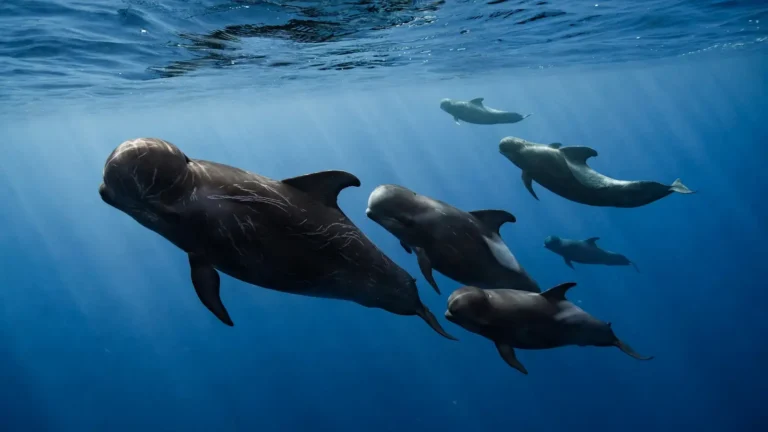
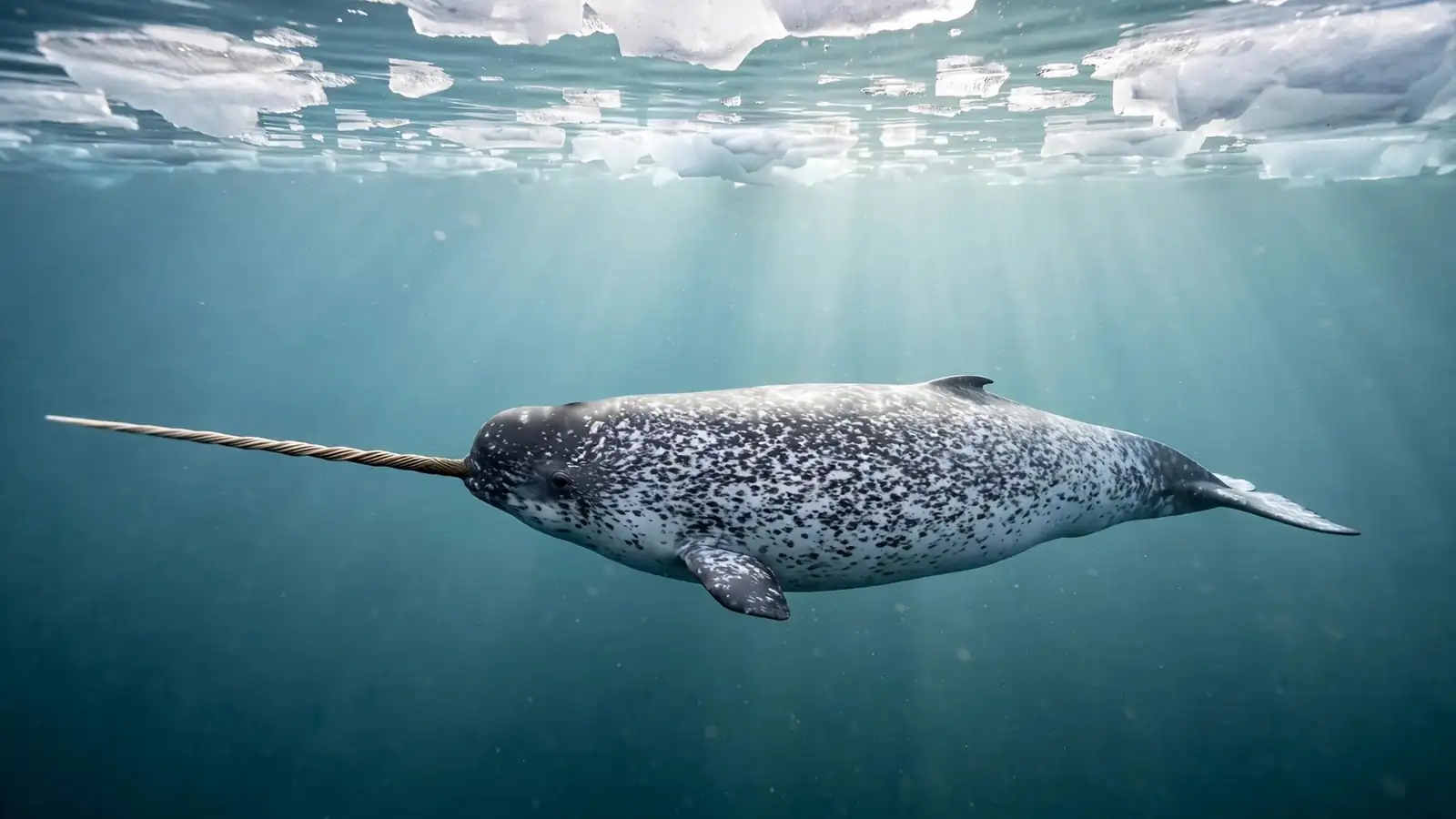
The toothed whales, or odontocetes, kept their teeth and added a superpower: echolocation. A toothed whale hunts one animal at a time, fish, squid, sometimes seals or other whales, finding them in the dark with clicks produced in the head and focused by the fatty melon on the forehead. They have a single blowhole, and the group holds the sperm whale, the beaked whales, the narwhal and beluga, the killer whale, and all the dolphins and porpoises.
The Baleen Whales
Our baleen guides begin with the two most loved members of the family: the record-breaking blue whale and the acrobatic humpback, singer of the most complex songs in the animal kingdom.

The Toothed Whales
The toothed side of the family is where the characters live: a unicorn of the Arctic, a smiling white whale, the ocean’s most formidable hunting team, and a porpoise so small and rare that saving it has become a race against the clock.
More Whale Species on the Way
This guide to the types of whales is still growing. Full species guides are in preparation for the great toothed hunters and specialists: the sperm whale family, and the beaked whales, the deepest divers of all. As each guide is finished and verified, it will join the cards above with its size, diet, habitat and conservation story told in the same familiar layout.
How to Tell the Types of Whales Apart
Out at sea, whale watching is mostly detective work on glimpses. Three clues do most of the sorting. First, the blow: a blue whale’s spout rises tall and straight, a humpback’s is bushy, and a right whale’s splits into a V from its twin blowholes. Second, the back: some whales carry a clear dorsal fin, some a mere ridge, and the right and bowhead whales none at all. Third, the farewell: whether the tail fluke lifts clear as the whale dives, and the pattern on its underside, which for humpbacks is as individual as a fingerprint.
Size tells its own story if you can judge it. Anything past 20 metres is one of the great rorquals or a sperm whale; anything porpoise-small, under two metres, belongs to the little toothed hunters of coasts and rivers. And behaviour is a giveaway too: the breaching, tail-slapping acrobat is almost always a humpback, the bow-riding crowd at a ship’s prow will be dolphins, and the huge, slow roller with no fin at all is likely a right whale, cruising with its mouth open and filtering as it goes.
Watching Whales Well
Almost every one of the types of whales in this hub was hunted within living memory, and several, the blue and right whales above all, were driven to the edge of extinction before protection arrived in the twentieth century.
Most populations are now, slowly, growing again, which is why whale watching has become the best and kindest way to meet them: boats that keep their distance, engines quiet and encounters on the whale’s terms. Choose operators who follow local viewing guidelines, never chase a whale that is feeding or travelling with a calf, and remember that the smallest member of the family, the vaquita, needs not watching but a net-free sea. Every species guide in this hub carries its conservation status in the same place, so you can see at a glance which whales are recovering and which are still in trouble.
Frequently Asked Questions
How Many Types of Whales Are There?
Scientists recognise more than 90 living species in the whale family as a whole, counting whales, dolphins and porpoises together. Around 15 of them are baleen whales, including the blue whale and humpback, and the rest are toothed whales, from the sperm whale down to the tiny vaquita.
What Is the Difference Between Baleen and Toothed Whales?
Baleen whales have no teeth. Instead they carry plates of baleen, a brushy material that strains krill and small fish from huge mouthfuls of water, and they have two blowholes. Toothed whales have proper teeth, a single blowhole, and hunt individual prey such as fish and squid using echolocation.
What Is the Biggest Whale in the World?
The blue whale is the biggest whale and the largest animal known ever to have lived. A big adult can reach about 30 metres (98 feet) long and weigh around 200 tonnes, with a heart the size of a small car and a tongue as heavy as an elephant.
What Is the Smallest Whale in the World?
The smallest whale is the vaquita, a porpoise from the northern Gulf of California. Adults reach only about 1.5 metres (5 feet) long and weigh 30 to 55 kilograms. It is also the rarest marine mammal on Earth, with only around ten individuals left.
Keep Exploring
Begin with the giants among the types of whales in our blue whale guide, then go to the opposite extreme with the tiny vaquita. To meet the biggest branch of the family, dive into the types of dolphins: the dolphins are the largest whale family of all, and even the killer whale belongs to it. When you are ready to change families entirely, cross over to the types of seals and sea lions, the fin-footed mammals that split their lives between sea and shore. For a sea cow whose tail could pass for a whale’s, meet the dugong.