King Penguin
King Penguin: The Second-Largest Penguin on Earth
The king penguin is the second-largest penguin in the world — a tall, orange-cheeked bird of the sub-Antarctic islands that breeds in colonies of hundreds of thousands and takes longer to raise a chick than any other penguin. It is the emperor penguin’s closest relative, and the easiest to mistake for one.
By Emily Carter · Reviewed by our vet team · Updated 10 November 2026 · 9 min read
Second-largest penguinBreeds 14–16 monthsColonies of 100,000s
At a Glance
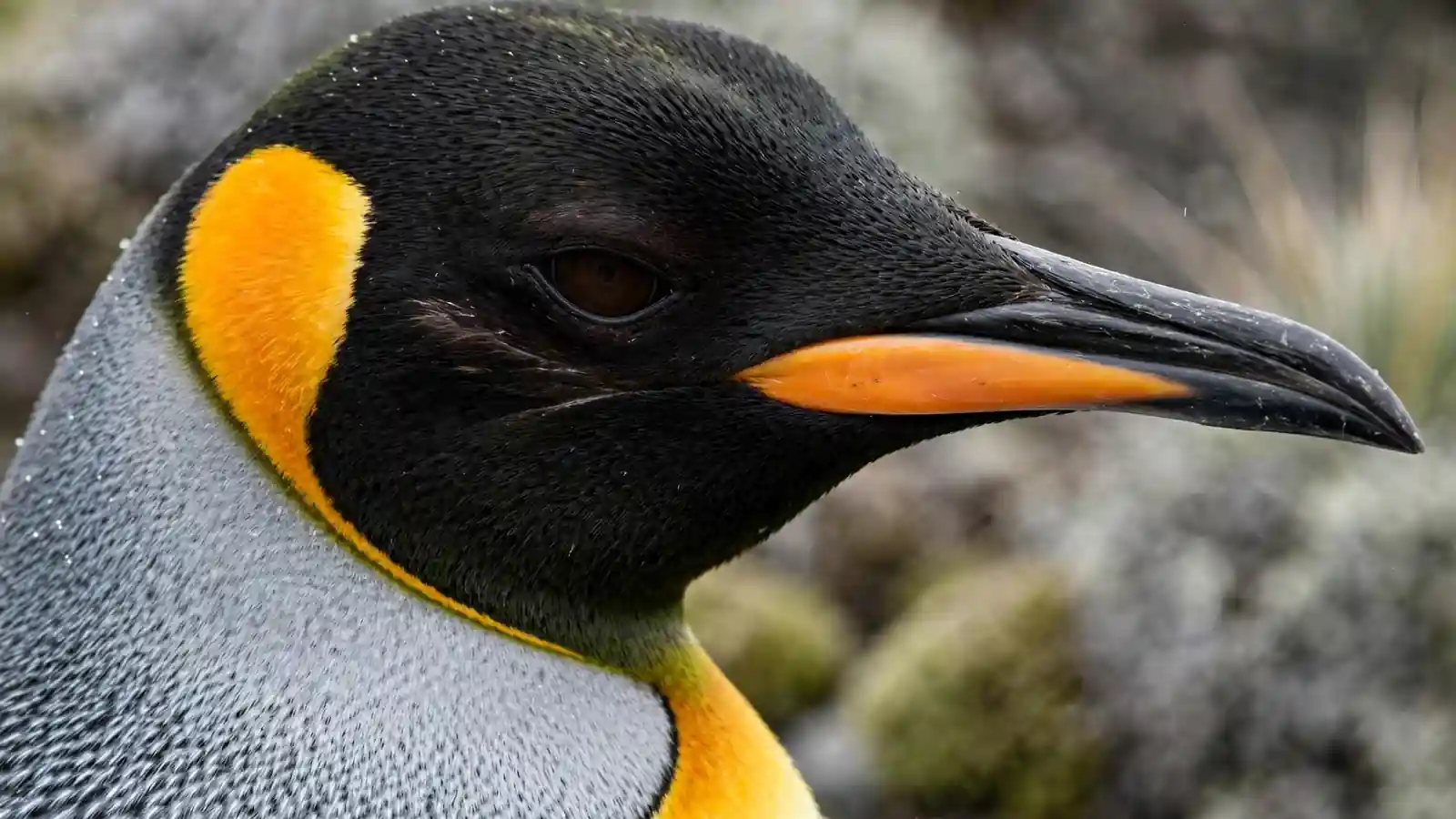
The king penguin is the emperor penguin’s smaller, brighter cousin — and the difference between them is in the cheeks. A king’s cheek patch is vivid orange, with a pink and orange wash down the neck; an emperor’s is pale pink, with a yellow wash. The two are the only penguins in the genus Aptenodytes, the great penguins, and they are the only penguins that never build a nest.
King Penguin vs Emperor Penguin
Tell a king from an emperor penguin by the cheeks. The king’s cheek patch is a vivid, saturated orange, with a bright orange-pink wash running down the neck and breast. The emperor’s cheek patch is pale pink, and the wash down its neck is yellow rather than orange. Put the two side by side and the king is the brighter, warmer bird — and the smaller one, at 85 to 95 centimetres against the emperor’s 110 or more.
The size difference matters at sea. The emperor dives deeper and hunts bigger prey, and it breeds on the Antarctic sea ice through the winter; the king breeds on the sub-Antarctic islands, in a milder climate, and dives to shallower depths. The king is also the more social bird in one sense: its colonies are enormous, sometimes hundreds of thousands of pairs, where the emperor’s colonies are smaller and more scattered.
The two are each other’s closest relatives, and their chicks are famously alike. A king chick is a ball of brown wool — so different from the adult that early explorers thought it was a separate species and called it the woolly penguin. An emperor chick is grey and white with a black head. If the chick is brown and woolly, it is a king.
King Penguin Size and Looks
An adult stands 85 to 95 centimetres tall and weighs 11 to 16 kilograms — the second-largest penguin in the world, after the emperor. The back is blue-grey, the belly is white, and the head is black with that vivid orange cheek patch and a wash of orange-pink down the neck. The bill is long and slightly downcurved, black with a pink lower edge.

Males and females look alike and are almost the same size, though males are slightly larger. Young birds are duller, with a grey-brown wash where the adults are orange, and they take three or four years to grow into the full adult colours. The chicks, famously, look like nothing else: round balls of chocolate-brown down, the ‘woolly bears’ that confused the first naturalists to see them.
The size is built for the cold sea. A big body holds heat, and its thick layer of fat and dense feathers keeps it warm in water that would kill a smaller bird in minutes. The trade-off is that a big body needs a lot of food, and it must eat a quarter of its own weight in fish on a good day.
Where King Penguins Live
King penguins live on the sub-Antarctic islands — the ring of islands north of Antarctica, in the cold Southern Ocean. The biggest colonies are on South Georgia, in the South Atlantic, and on the Crozet and Kerguelen archipelagos in the southern Indian Ocean, with smaller colonies on the Prince Edward Islands, Heard Island and Macquarie Island. They do not live on Antarctica itself; that is the emperor’s country.
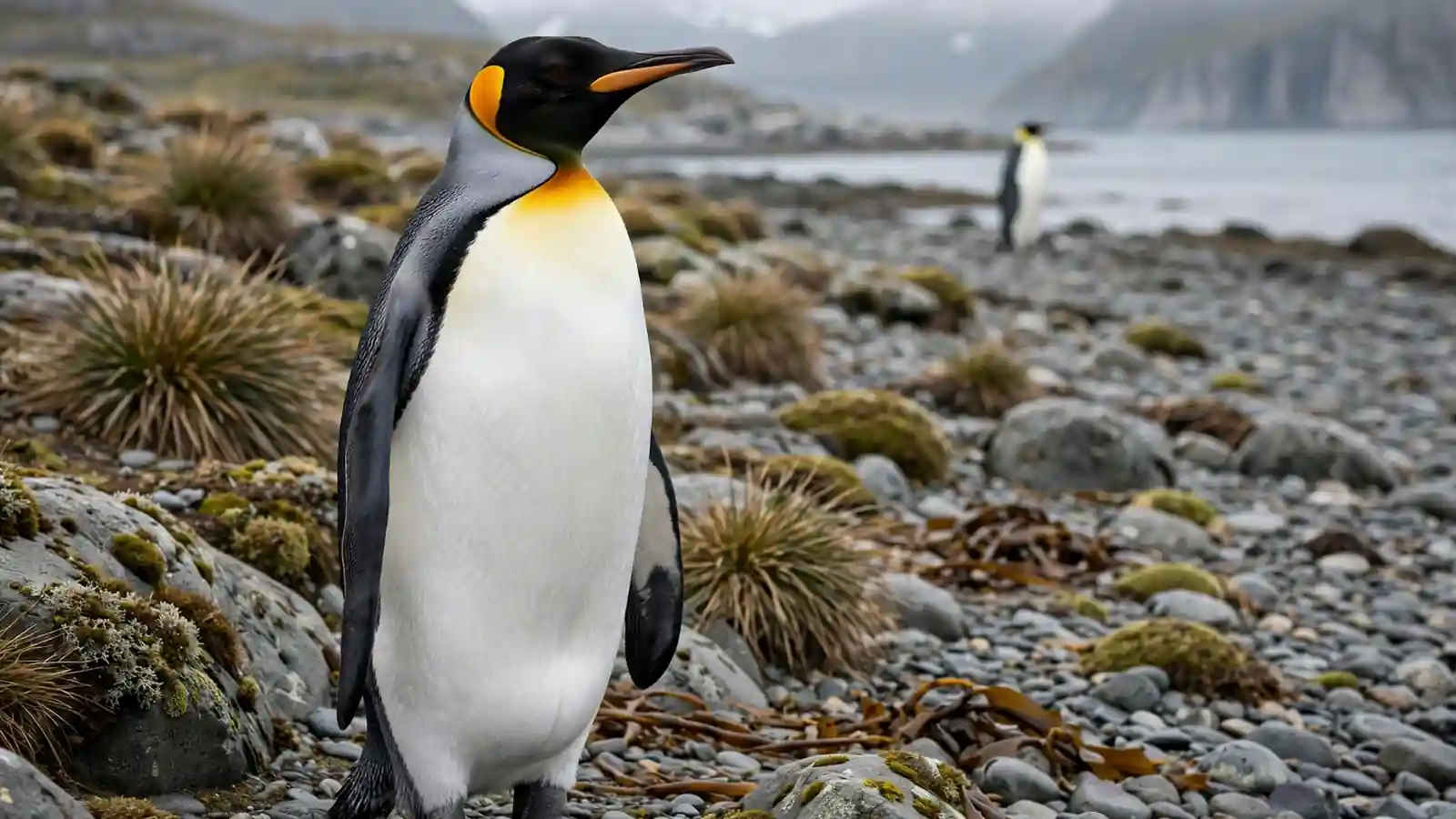
The colonies are on flat, open ground near the sea, usually a beach or a valley floor where the birds can come and go. A king colony is a noisy, crowded place: the birds stand shoulder to shoulder, calling constantly, and the ground is trampled flat and white with guano. The biggest colony, at St Andrews Bay on South Georgia, holds around 150,000 breeding pairs — a city of penguins.
At sea the kings range widely, swimming hundreds of kilometres from the colony to find the fish. They follow the Antarctic Polar Front, the boundary where cold Antarctic water meets warmer sub-Antarctic water, because the fish are thickest there. A foraging trip can last a week or more, and the bird that returns must find its mate and its chick among a hundred thousand identical-looking neighbours — by voice alone.
Breeding: The Longest Cycle of Any Penguin
Its breeding cycle lasts 14 to 16 months — the longest of any penguin, and one of the longest of any bird. The cycle is so long that a pair cannot breed every year: they breed twice in three years, and a chick that hatches in one summer is still dependent the following winter. It is a slow, deliberate strategy, and it works because the adults are long-lived and the food is reliable.
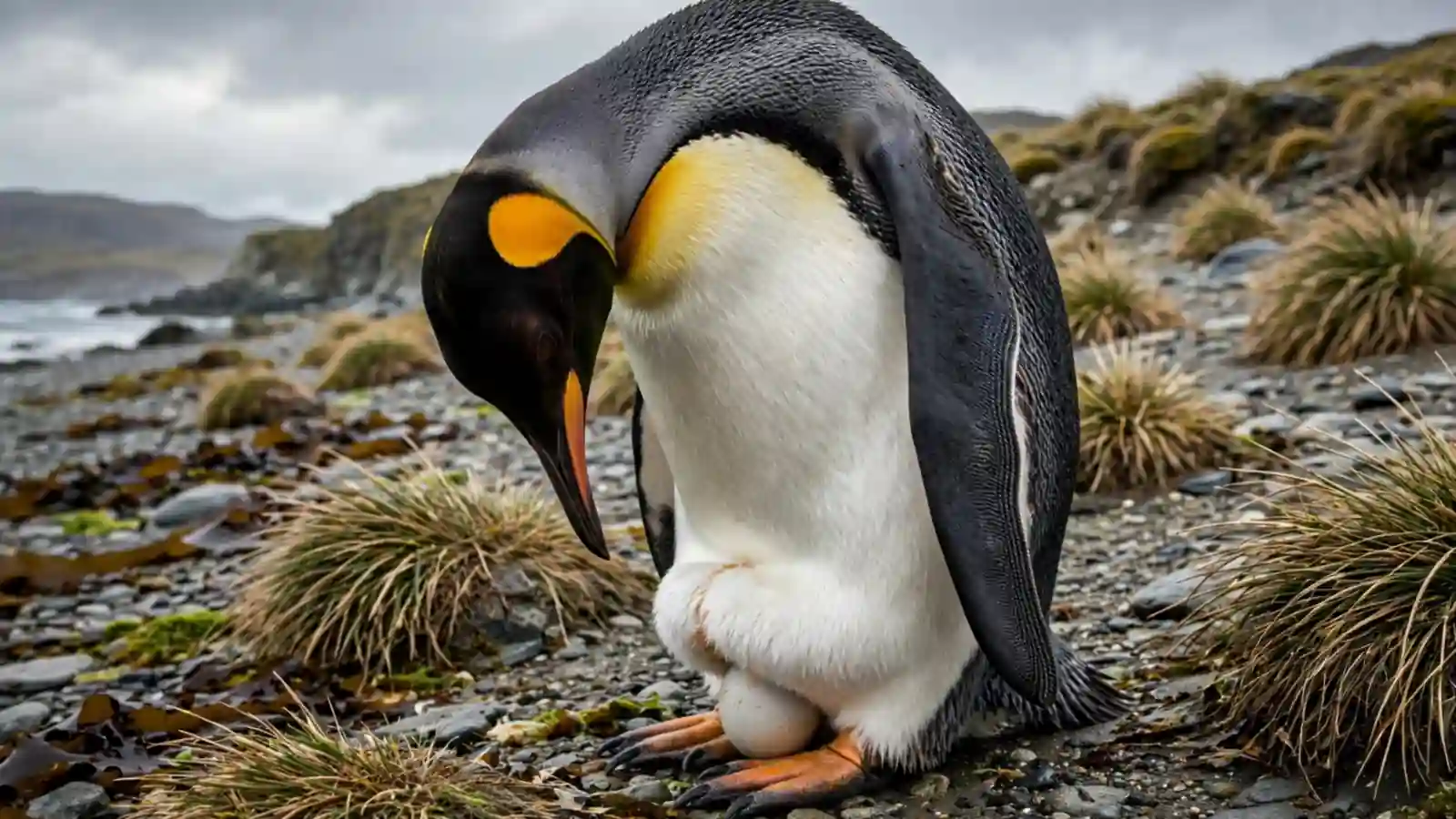
Like the emperor, the king builds no nest. The single egg is carried on the feet, tucked under a fold of belly skin called the brood pouch, and the parents take turns holding it for about 55 days. The chick hatches in the summer, grows through the autumn in its brown woolly down, and then — uniquely among penguins — spends the winter fasting, alone in the colony while both parents are at sea, surviving on the fat it stored in the summer.
That winter fast is the riskiest part of the cycle. The chicks huddle together for warmth in groups called crèches, and they can lose half their body weight before the parents return in the spring to feed them again. Chicks that survive the winter fledge in the second summer, a year after they hatched, and head to sea — the only penguin chicks that take a full year to leave home.
King Penguin Colonies
King penguin colonies are among the largest gatherings of birds on Earth. South Georgia alone holds around 450,000 breeding pairs, and the Crozet Islands hold hundreds of thousands more. A colony is not just big — it is loud, smelly and permanent, used year after year, with the same pairs returning to the same patch of ground.
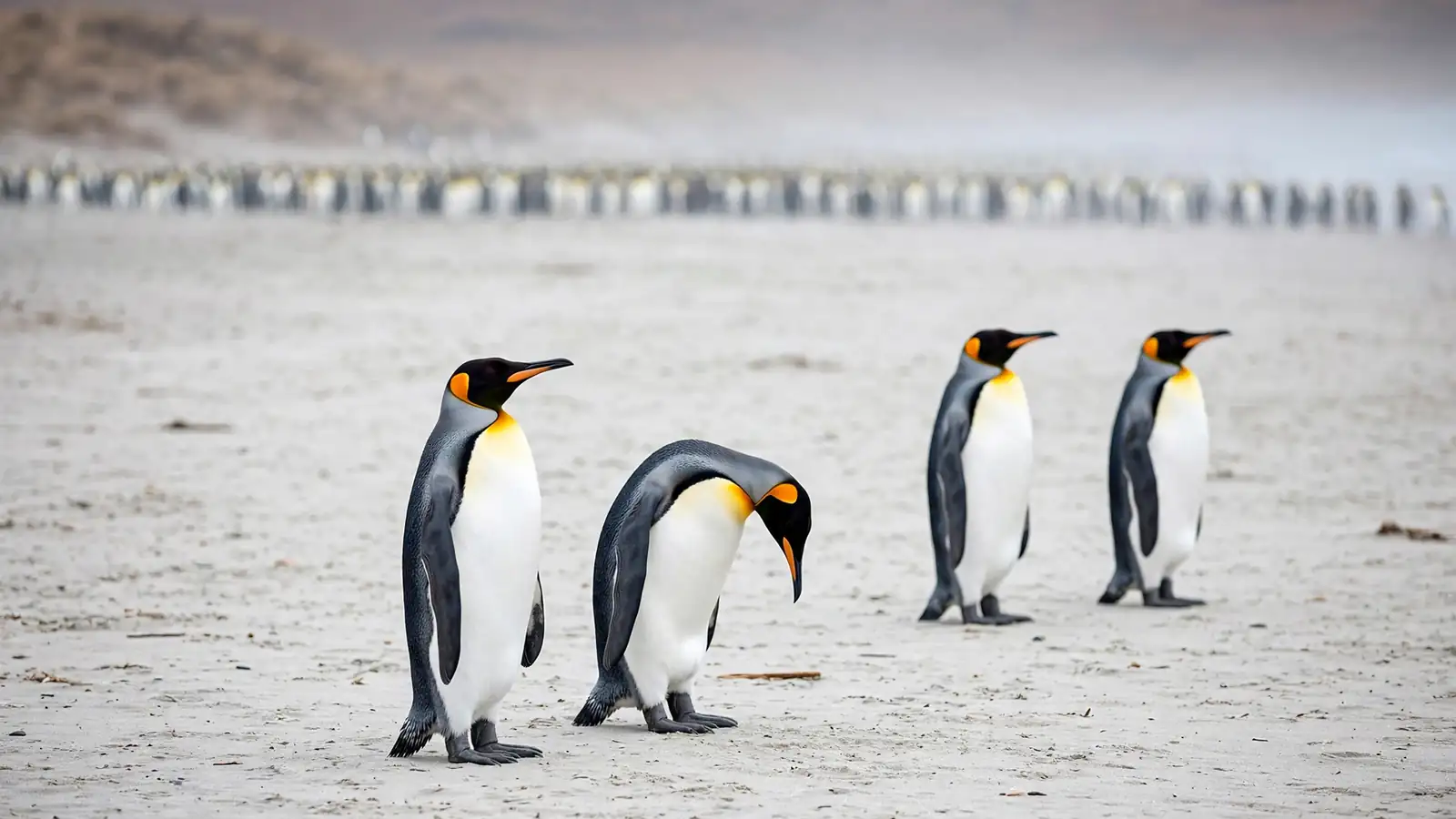
The colonies have not always been safe. On Île aux Cochons in the Crozet Islands, the largest colony in the world held around 500,000 breeding pairs in 1982; a 2018 study found only about 60,000 — a decline of roughly 90 percent, one of the steepest collapses ever recorded in a seabird. The cause is still argued, but the leading suspect is a shift in the fish the penguins depend on, driven by warming water.
The good news is that most colonies are growing. South Georgia’s colonies, which were nearly wiped out by the sealers of the nineteenth century, have recovered to record numbers, and the species as a whole is listed as Least Concern. The Île aux Cochons collapse is a warning, not the whole story — but it is a warning the researchers are watching closely.
What Do King Penguins Eat?
King penguins eat mainly lanternfish — small, deep-water fish with light organs, known as myctophids — with squid as the second course. They hunt by diving, and they dive deep: typical dives reach 150 to 300 metres, and the record is 424 metres, deeper than any other penguin except the emperor. A dive lasts four or five minutes, and a bird may make hundreds of dives on a single foraging trip.
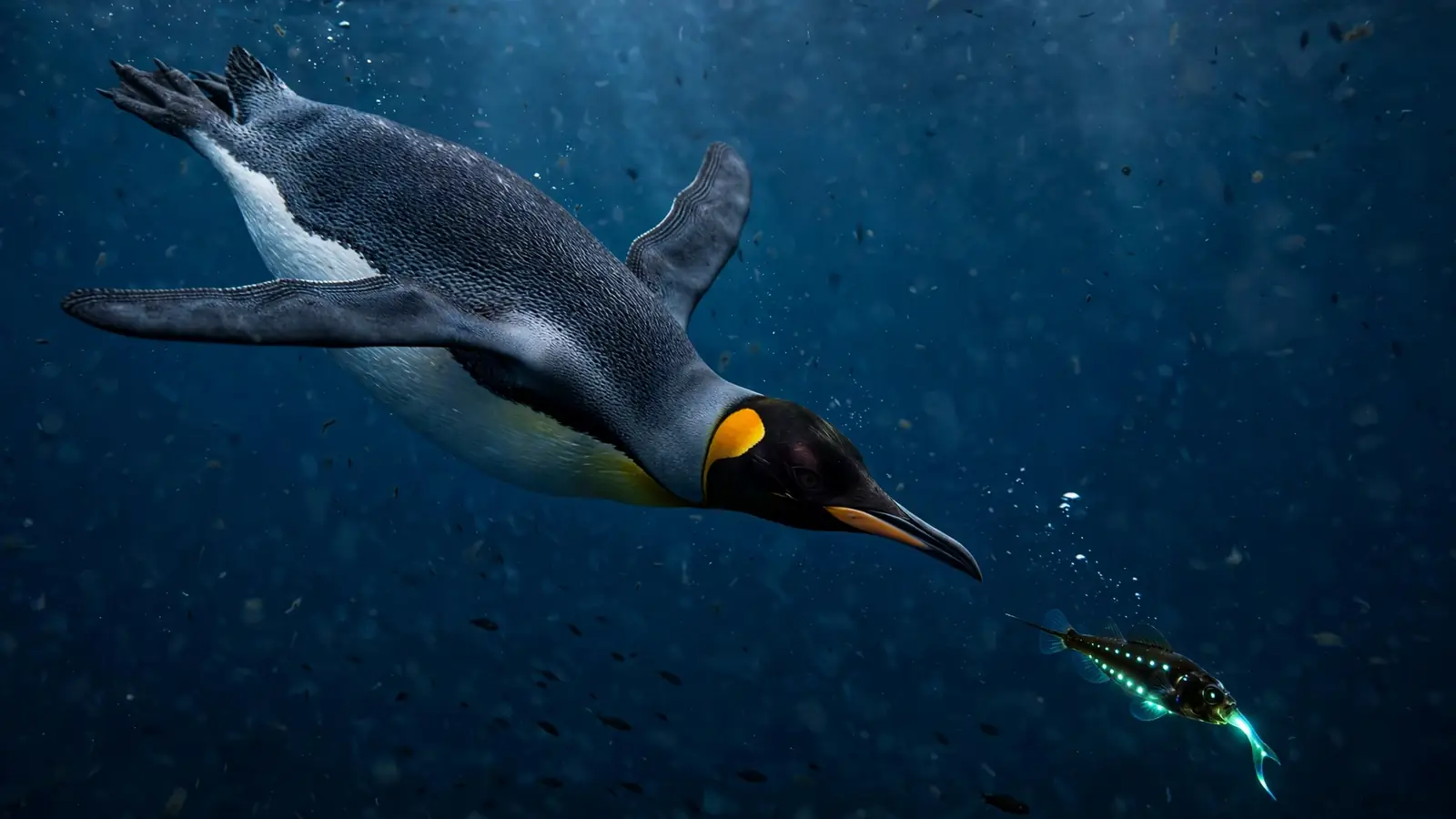
The hunting is done in the dark. Lanternfish live deep during the day and rise toward the surface at night, and the penguins follow them, diving at dawn and dusk when the fish are on the move. The birds catch the fish one at a time, swallowing them underwater, and they can eat a quarter of their own body weight in a day when the fishing is good.
What the penguins eat is set out in detail in the king penguin animal facts guide, which also covers the diving depths and the colony life. The diet is the reason the colonies sit where they do: close to the Polar Front, where the lanternfish are thickest, and within a week’s swim of the fishing grounds.
Fun Facts
- Its breeding cycle lasts 14 to 16 months — the longest of any penguin.
- Its chicks are brown and woolly, and early explorers thought they were a separate species called the woolly penguin.
- The record dive is 424 metres — deeper than any penguin except the emperor.
- A king penguin can eat a quarter of its own body weight in fish in a single day.
- The biggest colony, at St Andrews Bay on South Georgia, holds around 150,000 breeding pairs.
- King penguins find their mate and chick among hundreds of thousands of identical birds — by voice alone.
Frequently Asked Questions
How Big Are King Penguins?
They stand 85 to 95 centimetres tall and weigh 11 to 16 kilograms, making them the second-largest penguin in the world after the emperor. Males are slightly larger than females, and both are much bigger than the little penguin, the smallest species, which stands only 30 centimetres tall.
What Is the Difference Between a King Penguin and an Emperor Penguin?
Three things: the king is smaller (85–95 cm against the emperor’s 110 cm or more); the king’s cheek patch is vivid orange with an orange-pink wash down the neck, while the emperor’s is pale pink with a yellow wash; and the king breeds on the sub-Antarctic islands while the emperor breeds on the Antarctic sea ice. Their chicks differ too — king chicks are brown and woolly, emperor chicks grey and white.
How Long Is the King Penguin Breeding Cycle?
Fourteen to sixteen months — the longest of any penguin. The cycle is so long that a pair breeds twice in three years rather than every year, and a chick that hatches in one summer is still dependent the following winter, fasting in the colony while its parents are at sea.
How Deep Do King Penguins Dive?
Typical dives reach 150 to 300 metres, and the record is 424 metres — deeper than any penguin except the emperor. A dive lasts four or five minutes, and the birds hunt lanternfish, which live deep during the day and rise toward the surface at night.
Where Do King Penguins Live?
On the sub-Antarctic islands — South Georgia, the Crozet and Kerguelen archipelagos, the Prince Edward Islands, Heard Island and Macquarie Island. They do not live on Antarctica itself; that is the emperor penguin’s country. South Georgia alone holds around 450,000 breeding pairs.
What Happened to the King Penguins on Île aux Cochons?
A 2018 study found the colony there had fallen from around 500,000 breeding pairs in 1982 to about 60,000 — a decline of roughly 90 percent. The cause is still argued, but the leading suspect is a shift in the lanternfish the penguins depend on, driven by warming water. Most other colonies are growing.
What Do King Penguins Eat?
Mainly lanternfish — small, deep-water fish with light organs — with squid as the second course. They hunt by diving to 150 to 300 metres, catching the fish one at a time and swallowing them underwater, and they can eat a quarter of their own body weight in a day when the fishing is good.
Are King Penguins Endangered?
No. The king penguin is listed as Least Concern, and it breeds in large colonies on the sub-Antarctic islands. It is the second-largest penguin in the world after the emperor, standing 85 to 95 centimetres tall.
Similar Species Worth Exploring
Keep Exploring
Meet the emperor penguin, the king’s closest relative, then the gentoo penguin, the fastest swimmer of the family, and browse the whole family in our types of penguins hub — then come back to the orange-cheeked giant of the sub-Antarctic, the king penguin.