Amphipod
Amphipod: the tiny crustacean that rules the sea
The amphipod is a tiny, shrimp-like crustacean found in every ocean, from beach sand to the deepest trenches — over 10,700 species strong. This guide covers the whole order Amphipoda, from the sandhoppers on your beach to the giant of the abyss, and the whale lice and mysid shrimp folded in with them.
By Emily Carter · Reviewed by our vet team · Updated 10 November 2026 · 10 min read
Over 10,700 speciesFrom beach sand to 5,300 m deepNo carapace, sideways-flattened
At a Glance
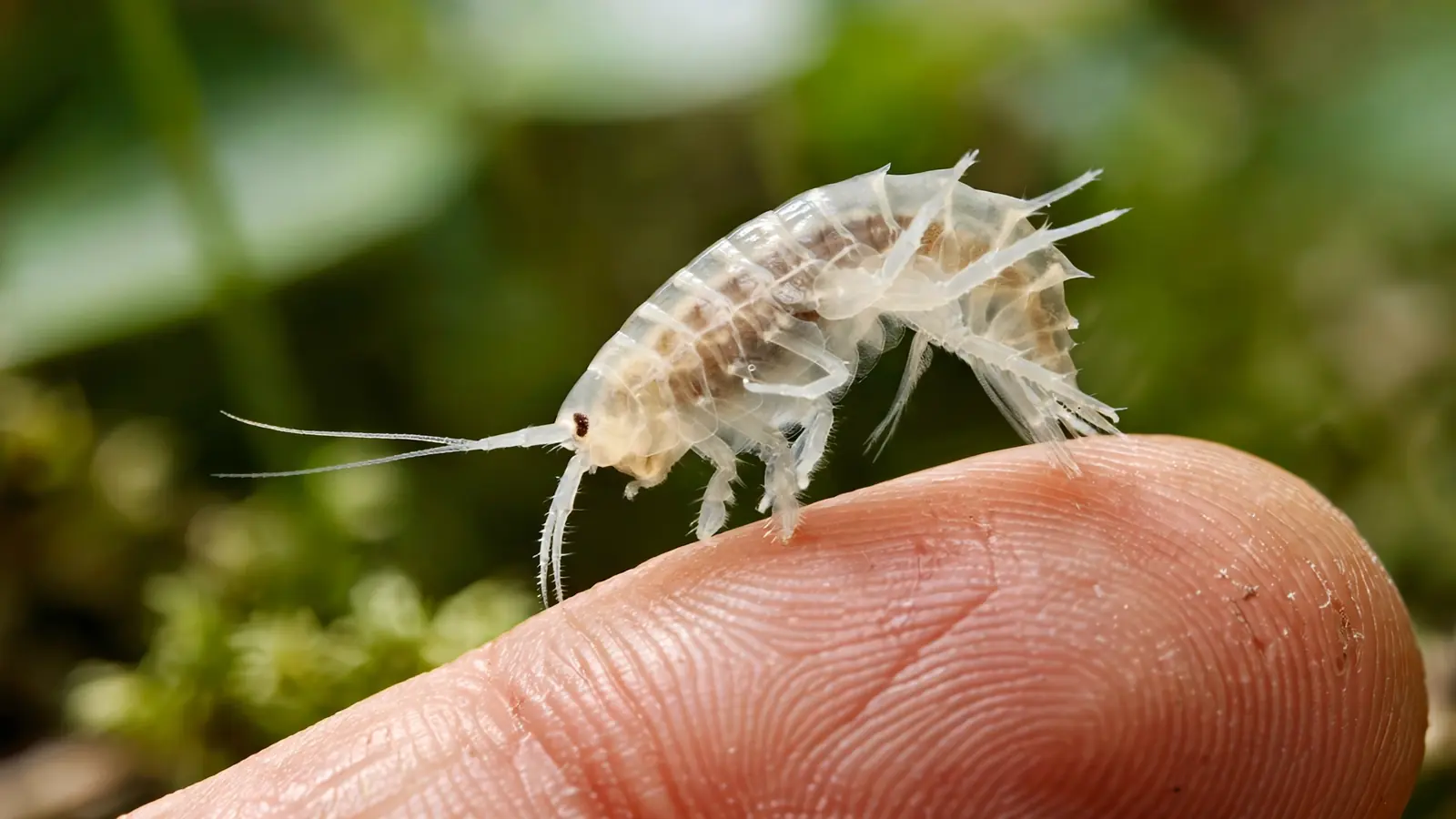
An amphipod is a small crustacean that looks like a tiny shrimp curled on its side, and it is everywhere: in the sand under your feet on the beach, in the rivers and lakes inland, and in the deepest trenches of the ocean. There are more than 10,700 species, and this guide covers them all. This is the whole group, at a glance, before the detail begins.
Amphipod Size: From 1 mm to 34 cm
It is typically under 10 millimetres long, a small curved animal that most people never notice, and the smallest species are barely 1 millimetre. The size is the reason the group is so widespread: a tiny animal can live in a crack in the sand, in a drop of water, or in a fold of seaweed, anywhere the food is.
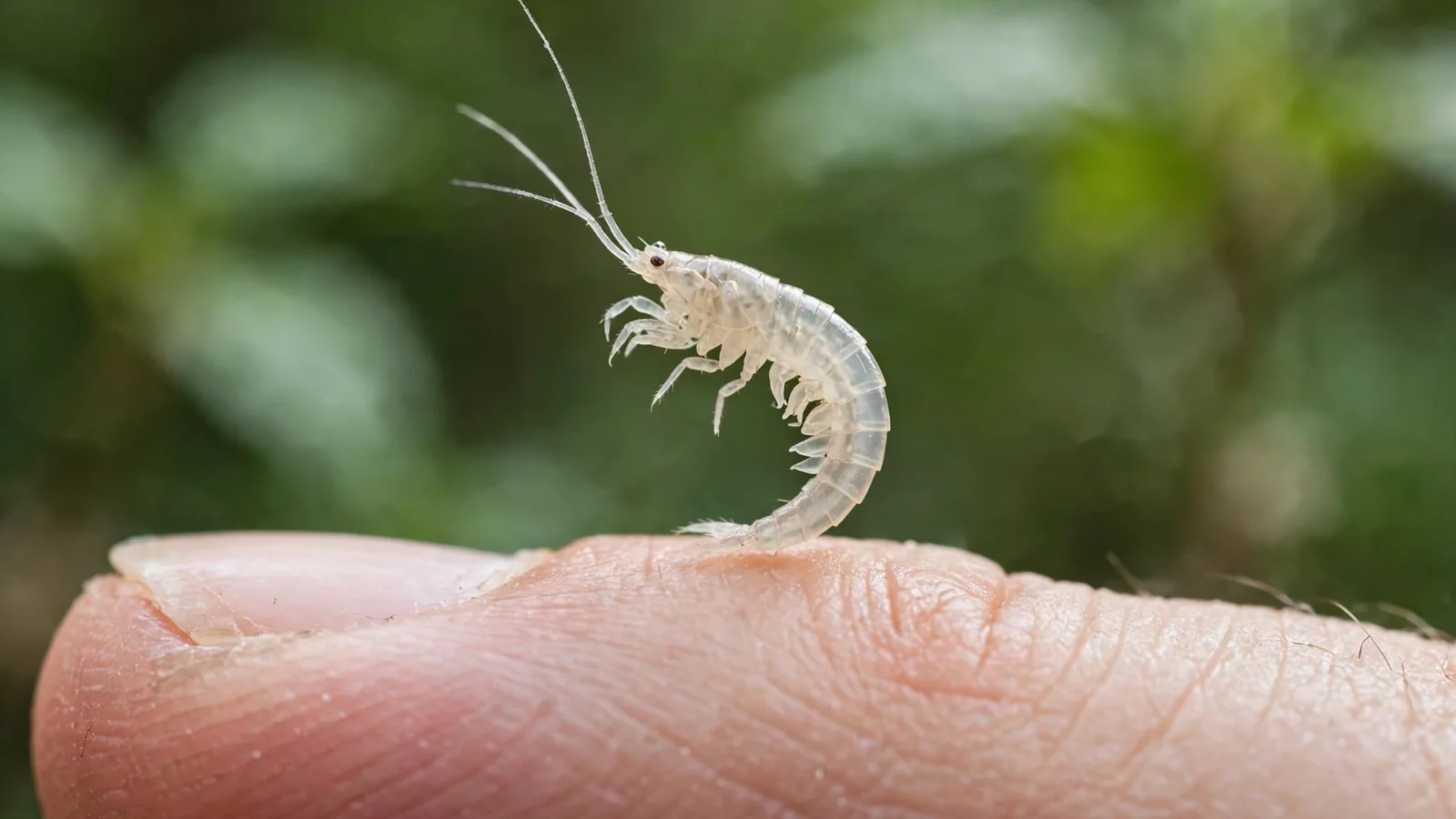
The exception is the giant, Alicella gigantea, which grows to about 34 centimetres at depths around 5,300 metres. The giant is a creature of the abyss, where the cold water holds more oxygen, and the literature links its size to that oxygen — an explanation, not a settled law. Between the 1 mm sandhopper and the 34 cm giant lies the whole range of the order.
The Sideways Body: No Carapace, All Curve
It has no carapace, the hard shield that covers a shrimp’s body, and its body is flattened sideways, like a fish seen from the side. The curve is the animal’s signature: the animal lies on its side and curls, and the shape lets it slip through sand and seaweed where a rounder animal would stick.
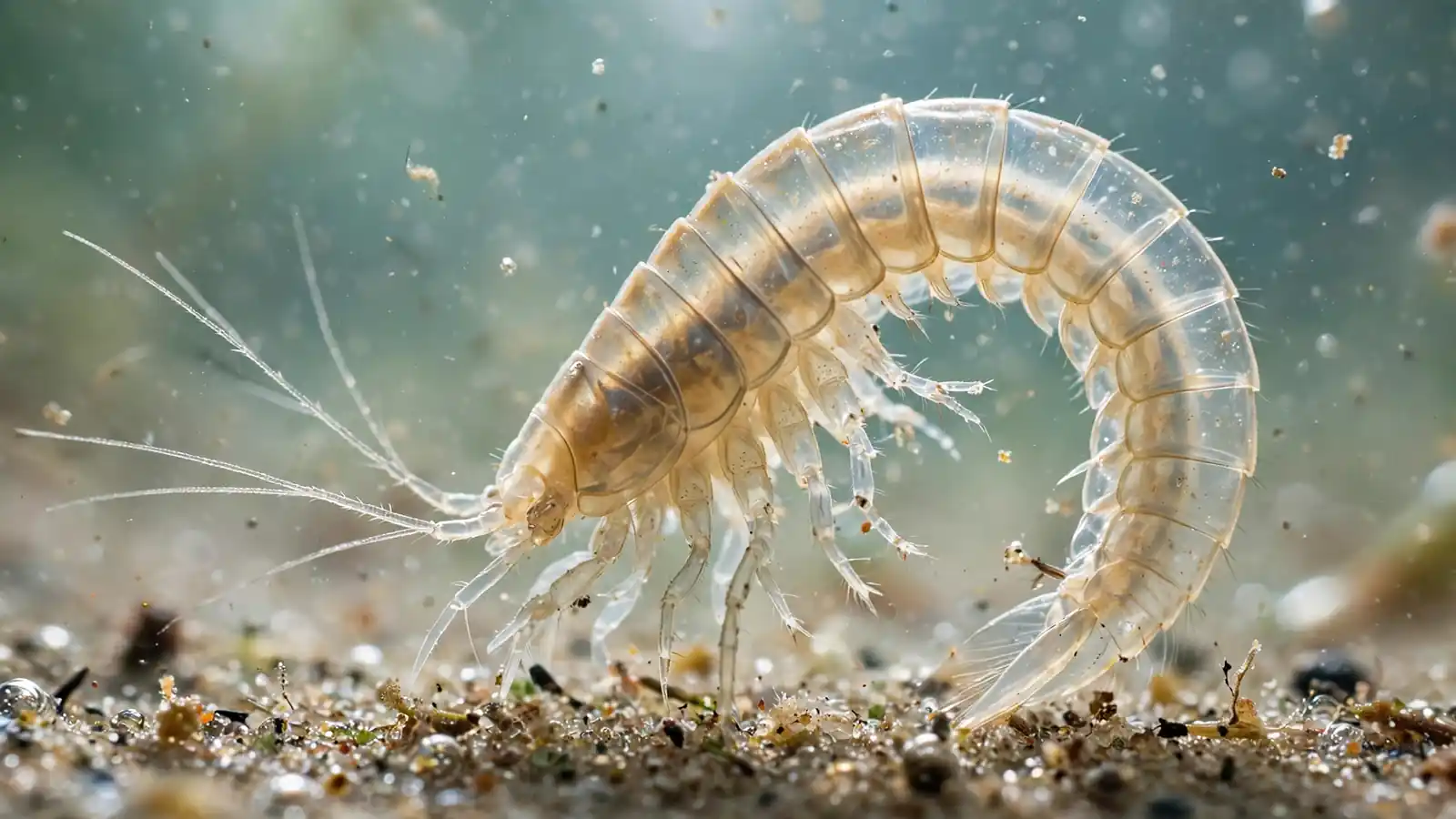
The sideways flattening is the key difference from the isopod, which is flattened top to bottom, like a woodlouse. The two groups are cousins, and the flattening is the quickest way to tell them apart: it is thin when seen from above, and an isopod is thin when seen from the side.
Where They Live: Beaches, Rivers and Trenches
Amphipods live everywhere water is: on beaches, in rivers and lakes, in the open ocean, and in the deepest trenches. The sandhoppers live on the beach, hopping among the seaweed at the tide line, and about 2,250 species live in freshwater, in rivers and lakes far from the sea.
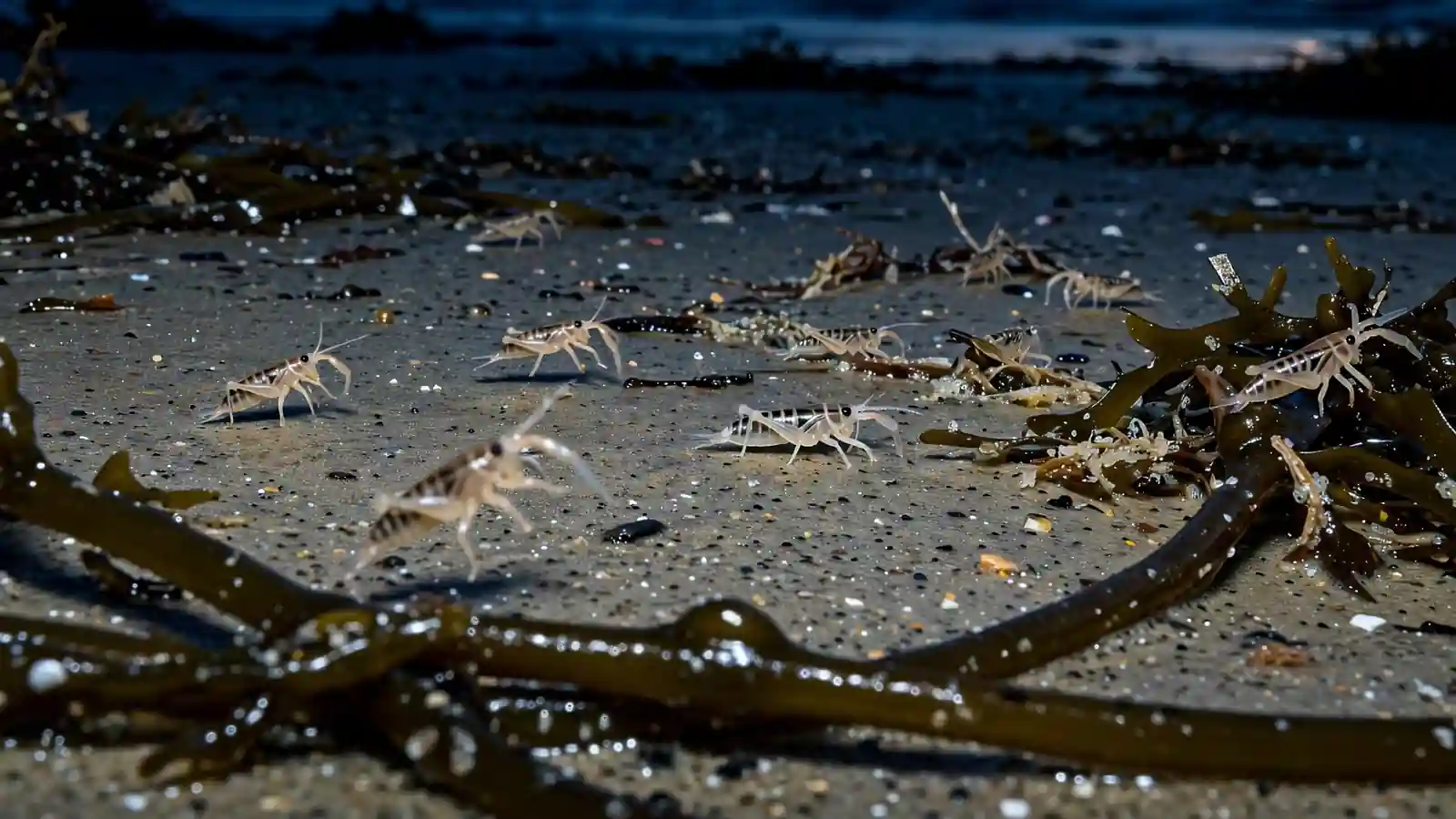
The range is the group’s strength. It can live in a rock pool, in a river, in a coral reef, or in a trench 5,300 metres down, and the same body plan works in all of them: a small curved animal that eats what it finds and hides where it can.
What Do They Eat? The Ocean’s Clean-Up Crew
It eats detritus, algae and small animals, and it is the ocean’s clean-up crew: it takes the dead matter that settles on the sand and turns it back into food for the animals above it. The sandhopper on the beach eats the seaweed that washes up at the tide line, and the deep-sea ones eat the dead animals that sink from above.
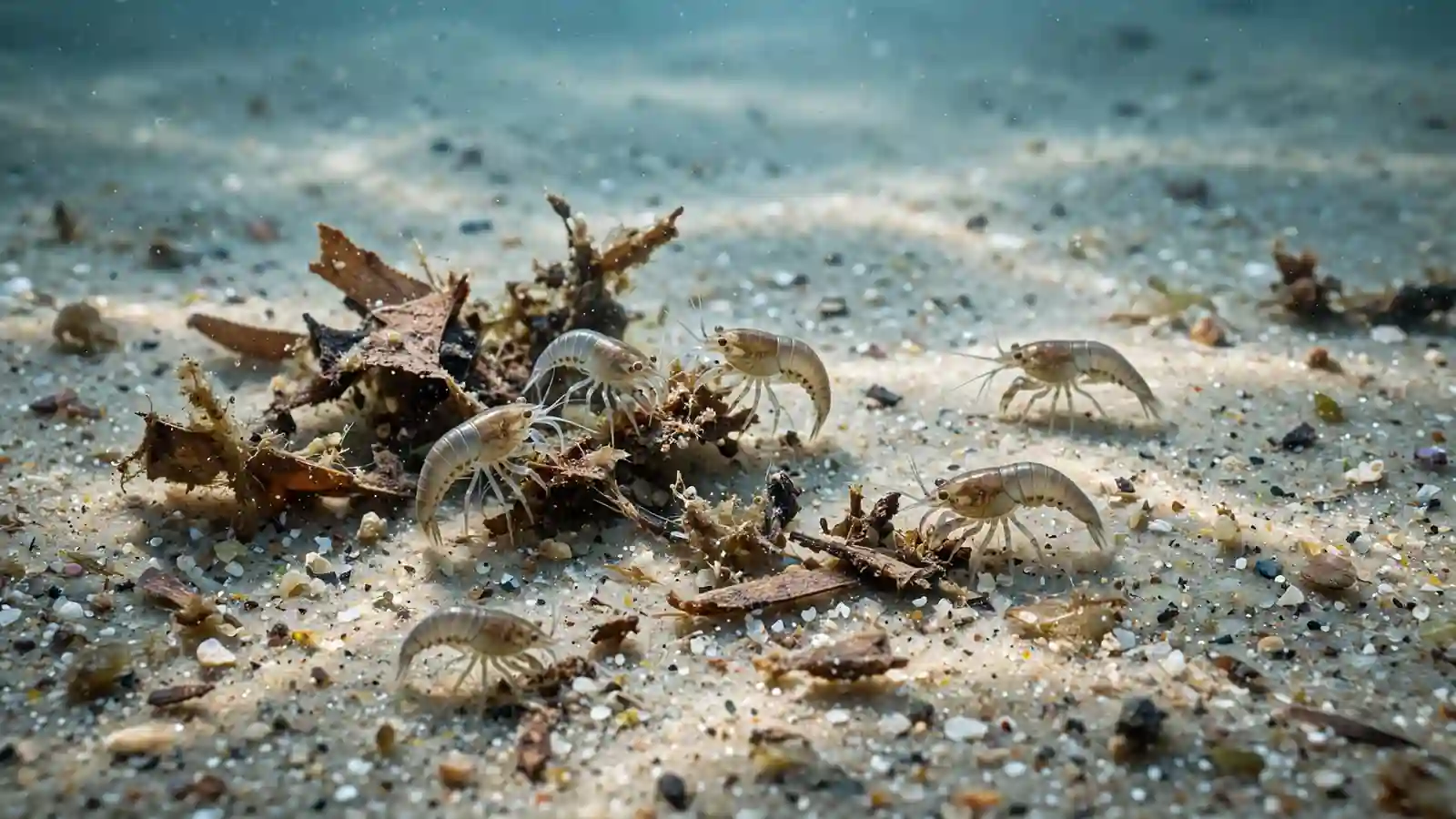
For a wider survey of the group, see this field guide. The diet is humble, and the work is essential: without the amphipods, the dead matter would pile up, and the food web would run slower.
Amphipod vs Isopod: Flattened Sideways or Flat
The difference between this animal and an isopod is the direction of the flattening. It is flattened sideways, thin when seen from above, and an isopod is flattened top to bottom, thin when seen from the side, like a woodlouse. Both are crustaceans, and both are common, but the flattening tells them apart at a glance.
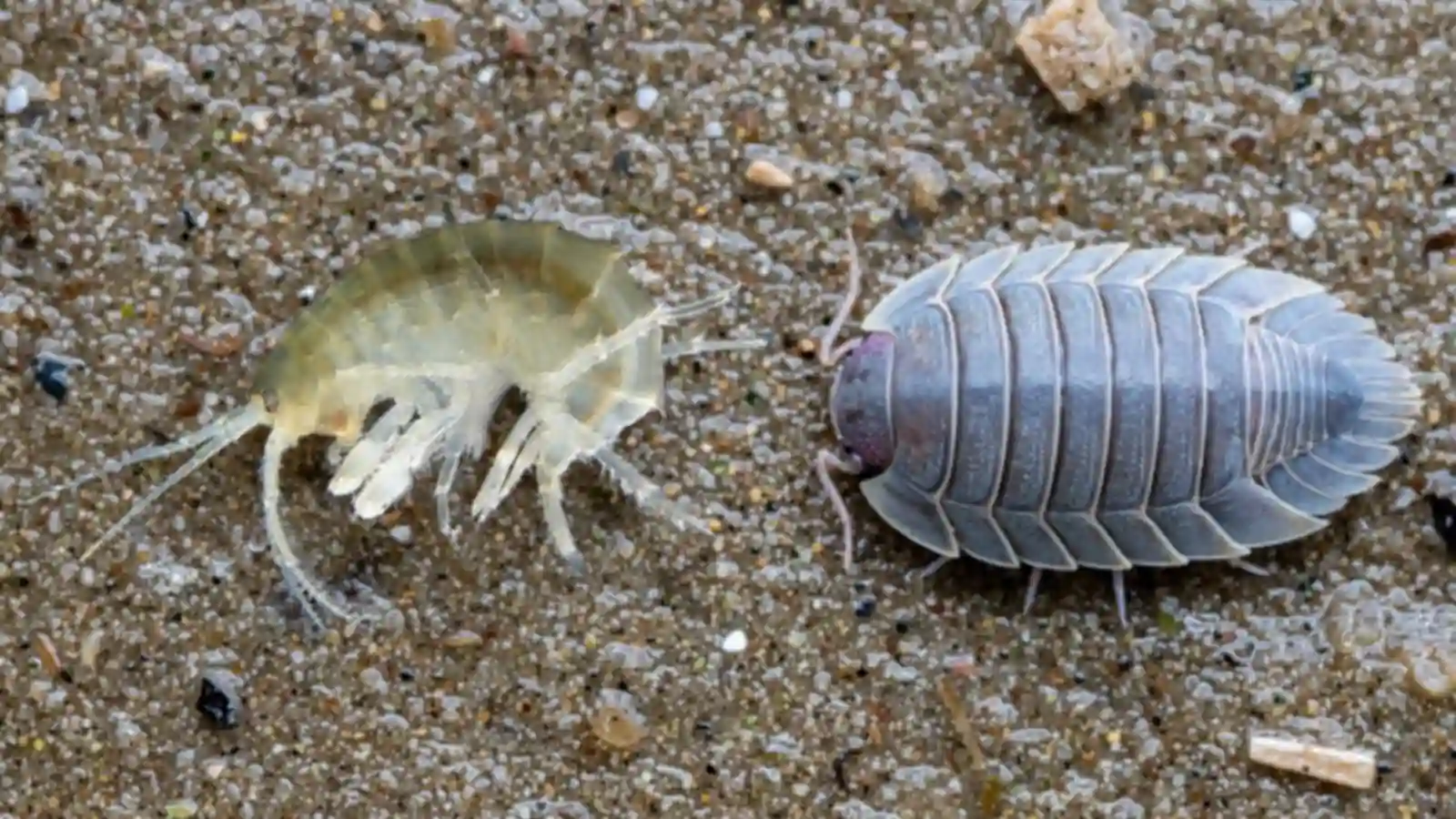
The isopod is its closest lookalike, and the confusion is understandable: both are small, both live in the same places, and both eat the same dead matter. But it curls on its side and hops, while the isopod crawls flat, and once you have seen both, the difference is easy to remember.
Whale Lice and Mysid Shrimp: The Folded Cousins
Two smaller groups are folded into this guide. The whale lice are amphipods that live on whales, clinging to the skin and feeding on dead skin and algae, and a whale can carry thousands of them. They are not lice at all — they are amphipods that have given up swimming for a life on a whale.

The mysid shrimp are the other folded cousin: small shrimp-like crustaceans, also called opossum shrimp, that swarm in coastal waters and feed the fish that eat them. They are not true shrimp, and they are not amphipods either, but they share its life — small, numerous, and eaten by almost everything.
Life Cycle and Reproduction
It begins life as an egg carried by its mother in a brood pouch under her body, and the young hatch as miniature adults, not as larvae. There is no drifting plankton stage for most amphipods — the young stay close to the mother, and then crawl away to live the same life she leads.
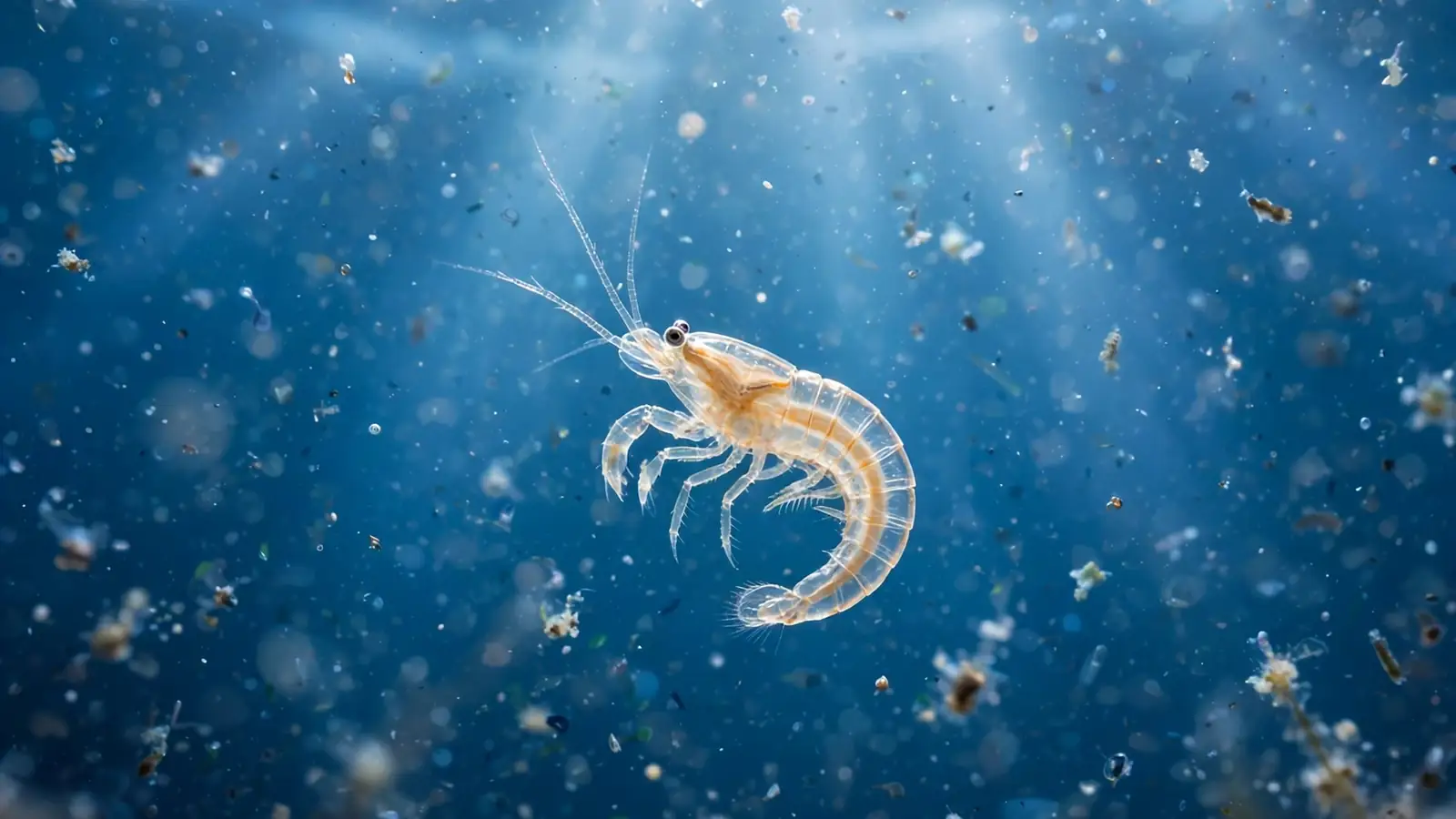
The female carries her eggs in a pouch formed by her legs, and the young stay in the pouch until they are ready to leave. The reproduction is direct and simple, and it is the reason it can live in a rock pool or a river: the young never need to drift, and the population stays where the food is.
Fun Facts
- There are over 10,700 described species in the order.
- Most amphipods are under 10 mm long — smaller than a grain of rice.
- The giant grows to about 34 cm at 5,300 m depth.
- It is flattened sideways; an isopod is flattened top to bottom.
- Sandhoppers are amphipods — the “beach fleas” that hop among seaweed.
- Whale lice are amphipods that live on whales, not lice at all.
Frequently Asked Questions
What Is an Amphipod?
It is a small, shrimp-like crustacean from the order Amphipoda, with a sideways-flattened body and no carapace. There are over 10,700 described species, living in every ocean, in rivers and lakes, and on beaches.
How Big Do Amphipods Get?
Most amphipods are under 10 millimetres long, and the smallest are barely 1 millimetre. The exception is the giant, Alicella gigantea, which grows to about 34 centimetres at depths around 5,300 metres.
Where Do Amphipods Live?
Amphipods live everywhere water is: on beaches, in rivers and lakes, in the open ocean, and in the deepest trenches. About 2,250 species live in freshwater, and the sandhoppers live on the beach at the tide line.
What Do Amphipods Eat?
It eats detritus, algae and small animals, and it is the ocean’s clean-up crew. Sandhoppers eat the seaweed that washes up on the beach, and deep-sea amphipods eat the dead animals that sink from above.
Are Amphipods the Same as Isopods?
No. It is flattened sideways, thin when seen from above, while an isopod is flattened top to bottom, thin when seen from the side, like a woodlouse. Both are crustaceans and both eat dead matter, but the flattening tells them apart.
What Is a Sandhopper?
A sandhopper is a beach species, also called a beach flea, that lives among the seaweed at the tide line. It hops when disturbed, and it eats the decaying seaweed that washes up on the beach.
What Are Whale Lice?
Whale lice are amphipods that live on whales, clinging to the skin and feeding on dead skin and algae. They are not lice at all — they are amphipods that have given up swimming for a life on a whale.
Similar Species Worth Exploring
Keep Exploring
Keep exploring the crustaceans: meet the isopod, its top-flat cousin, or browse the whole family in our guide to the types of crustaceans. Then come back to the beach, home of the amphipod.