Spiny Lobster
Spiny Lobster: the clawless lobster with a backwards escape
The spiny lobster has no claws at all, yet it is one of the best-defended animals on the reef, armed with long spiny antennae, a hard shell and a tail flip that launches it backwards out of danger. This guide follows the Caribbean species, the best-known of about 60 in the family, through its reef home, its night hunts and the fishery rules that keep it coming back.
By Emily Carter · Reviewed by our vet team · Updated 10 November 2026 · 10 min read
No claws, just spiny antennaeTail flip launches it backwardsHides by day, hunts by night

At a Glance
A spiny lobster looks like a lobster that forgot its claws, and in a way it did — the whole family gave them up in favour of long spiny antennae and a powerful tail. Under that spiny shell sits a nocturnal hunter that spends its days wedged in a reef cave and its nights walking the reef in search of shellfish. This is the whole animal, at a glance, before the detail begins.
Spiny Lobster Size: How Big Do They Get?
A typical one is about 60 centimetres long, measured from the tip of its antennae to the end of its tail, and most of the family stays close to that size. The Caribbean species is the heavyweight of the group, growing to about 15 lb, and a big one looks substantial on the reef, all spines and antennae with a broad armoured tail behind it.

Size varies across the family, but the shape does not: a long body, a hard spiny shell, and antennae that can be longer than the body itself. Like all lobsters, it grows by moulting, shedding its old shell and hardening a new, larger one, and each moult leaves it soft and vulnerable for a short while. That is when the reef cave matters most, and a moulting lobster stays hidden until its new armour sets.
No Claws, Just Antennae: How to Tell It Apart
The first thing to check is the front end. It has no large claws at all — where an American lobster carries a crusher and a cutter, it carries two long antennae covered in sharp spines, plus a pair of smaller horns over its eyes. The antennae are the animal’s main weapons and its main tools, and they are hard to mistake once you have seen them.
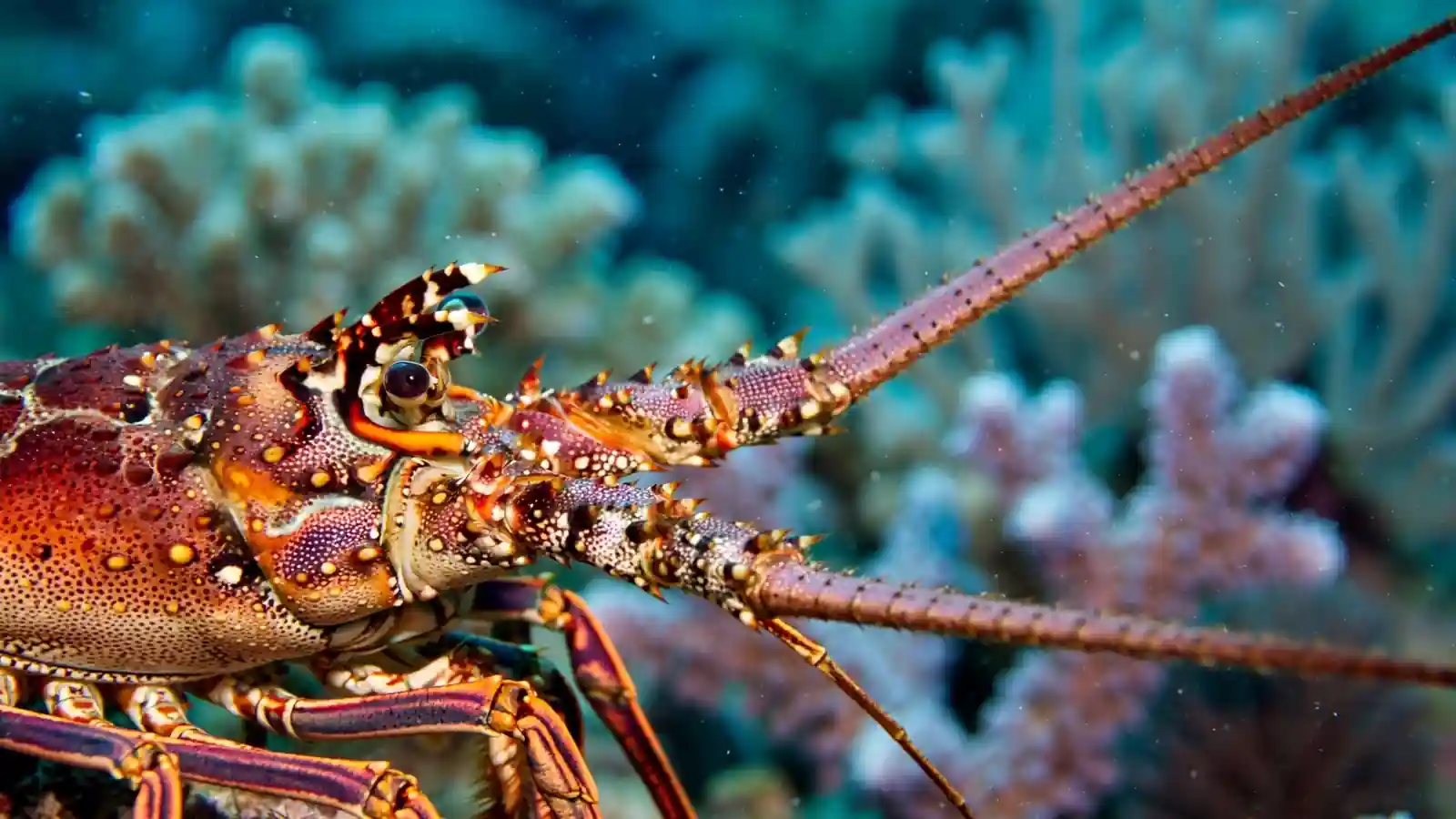
The other clawless lobster to know is the slipper lobster, and the two are easy to separate: the slipper lobster’s antennae are flat plates, like shovels, while the other’s are long and spiny. The body tells the same story — it is long and cylindrical with a heavily spined shell, usually reddish-brown with yellow spots, while the slipper lobster is flattened and broad.
Where They Live: Reefs, Caves and Crevices
Spiny lobsters live on rocky reefs, in caves and crevices, and over seagrass beds, and the Caribbean species is at home on the reefs of Florida, the Bahamas and the wider Caribbean. They are nocturnal animals: by day the lobster wedges itself into a cave or a crevice, antennae pointing outwards, and a single cave may shelter several lobsters at once.
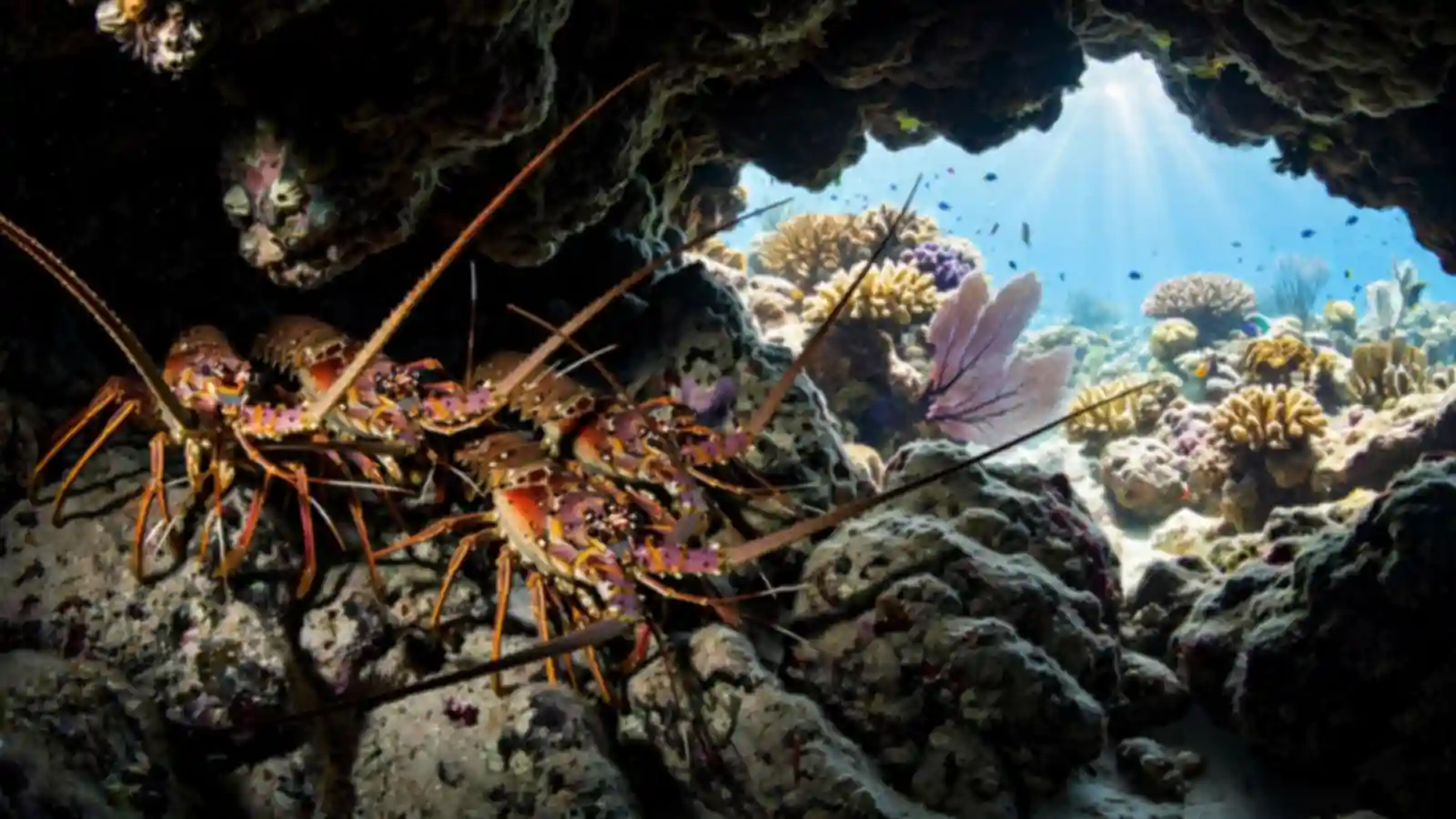
The shelter matters because the reef is full of animals that would eat a lobster given the chance. Inside the cave it is hard to reach and harder to grip, and its spines catch on any mouth that tries. At dusk the lobsters emerge, sometimes in a loose line, and walk out across the reef to feed, returning to shelter before dawn.
What Do They Eat? Night Hunts on the Reef
It is an omnivore, and its night hunts cover most of the small animals of the reef. Sea urchins, snails, crabs and clams are the main prey, picked up with the walking legs and broken open with the mouthparts, and the lobster also scavenges dead animals it finds on its rounds. The long antennae sweep the ground ahead as it walks, feeling for food in the dark.
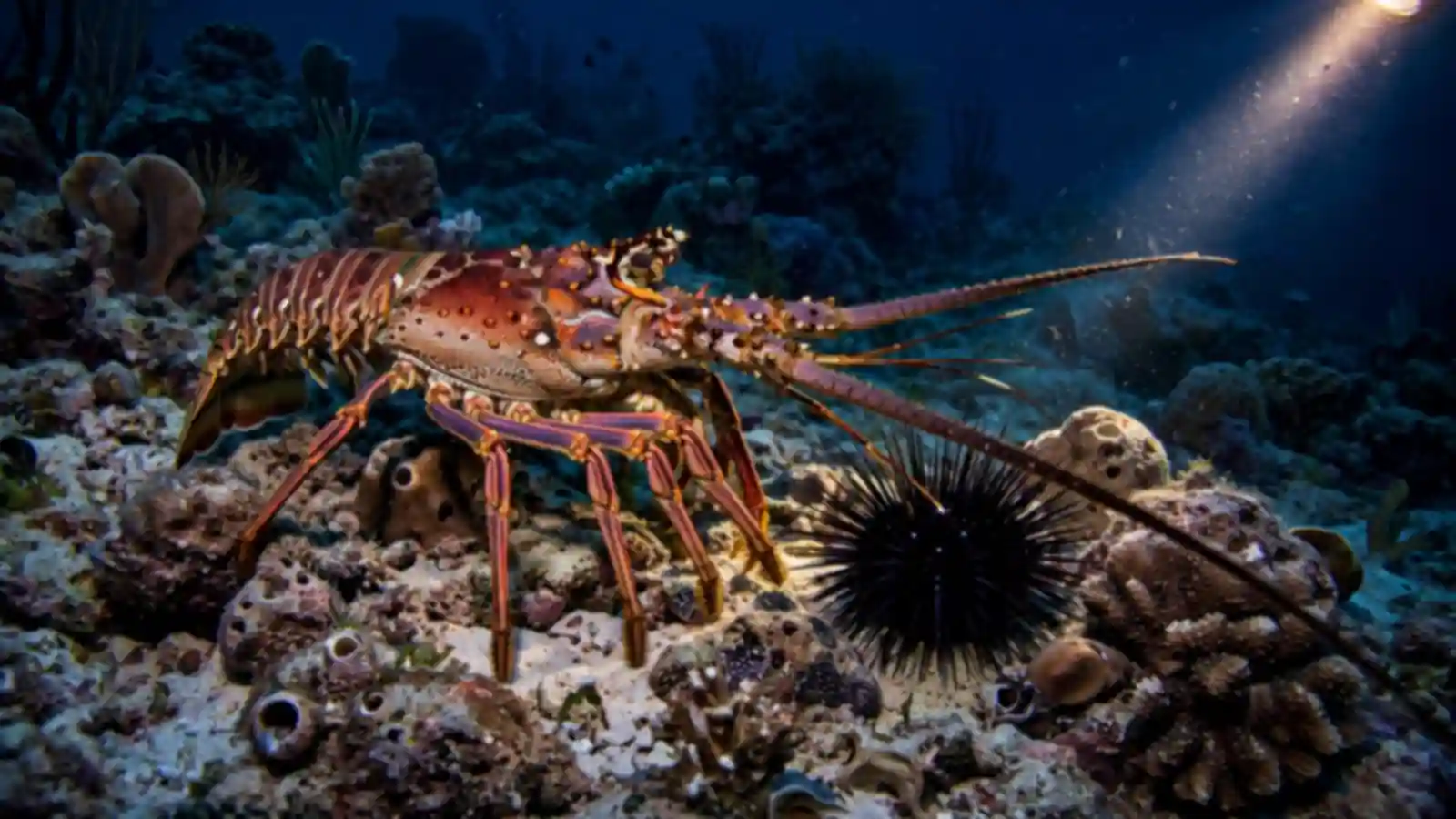
For a wider survey of the family, see this full facts guide. The diet is the reason it matters to the reef: by eating urchins and snails it keeps grazers in check, and by scavenging it clears the reef of dead animals. A reef without its lobsters is a reef with more urchins and fewer bare patches of rock for new coral to settle on.
The Tail Flip: A Backwards Escape
When a predator gets too close, it does not run — it flips. The broad muscular abdomen curls sharply under the body and the animal shoots backwards through the water, fast enough to clear the danger in a single beat. The tail fan spreads as it flips, steering the escape, and the lobster can repeat the flip several times in a row if the threat follows.

The tail flip is the second line of defence, after the antennae. A predator that grabs at the lobster meets a mouthful of spines first, and if it persists, the flip carries the lobster away before the grip can hold. It is a short escape, not a long swim — the lobster flips clear, then settles again on the reef a few metres away.
Spiny Lobster Life Cycle: From Larva to Reef Dweller
It begins life as a phyllosoma, a flat transparent larva that drifts in the open ocean for months, carried by the currents far from the reef where it hatched. The larva is so unlike the adult that early naturalists thought it was a different animal altogether, and it feeds on plankton as it drifts, growing slowly through a series of moults.
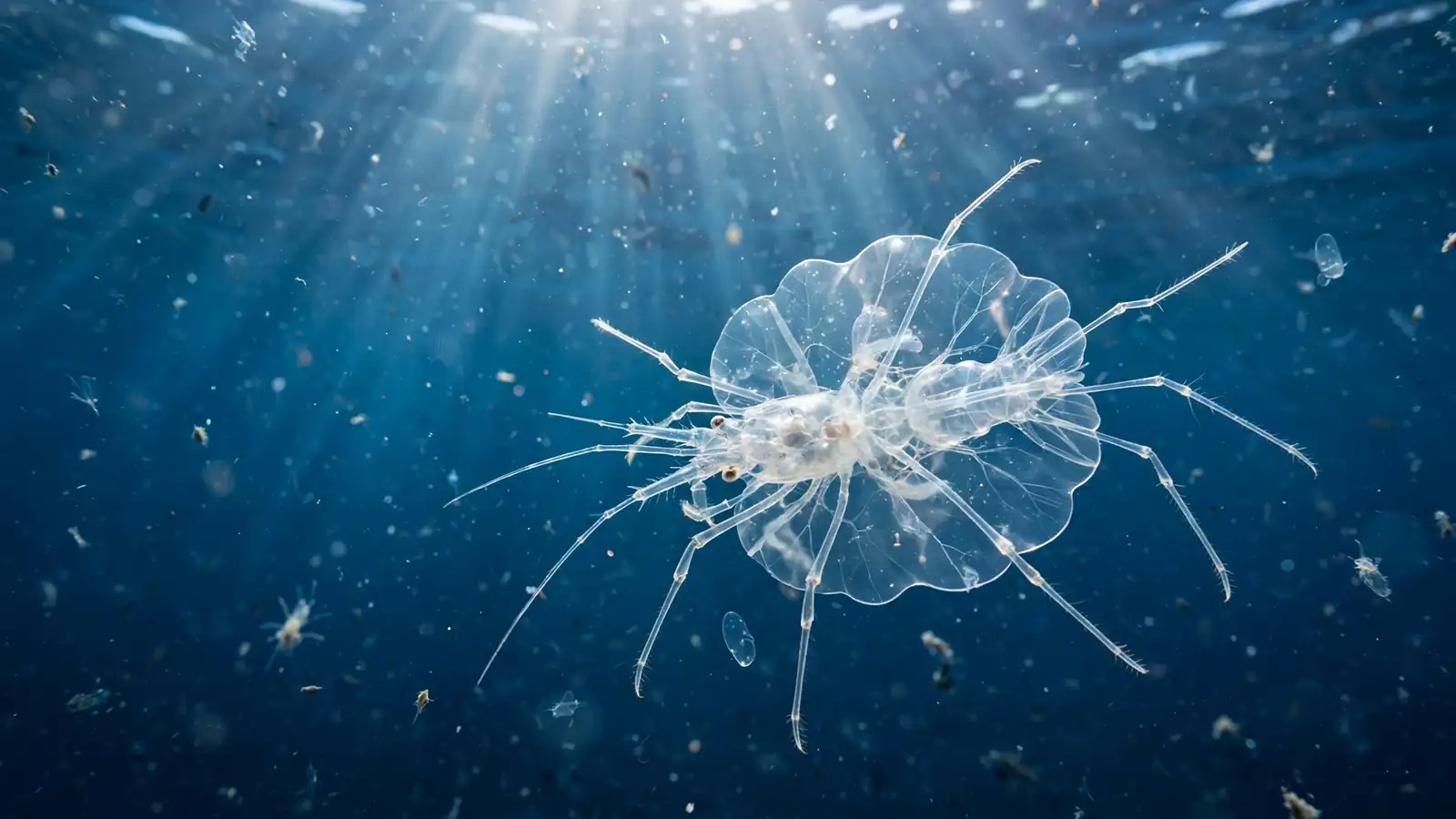
After months at sea the larva settles onto a reef, moults into a small lobster shape, and takes up the reef life it will keep for the rest of its days. Growth is slow and steady from there, one moult at a time, and a lobster that survives its first years on the reef can live for decades, its exact age impossible to pin down.
Fishing Rules and Sustainability
It supports an important fishery across Florida and the Bahamas, and the fishery is managed with minimum sizes and closed seasons that protect breeding animals. The rules are there because the lobster is slow-growing and long-lived, and a reef stripped of its large lobsters loses both its urchin control and its breeding stock.

The fishery works best when the rules are followed, and the lobster’s own biology helps: the long larval drift spreads young lobsters across wide areas, so a protected reef can reseed its neighbours. The animal that hides by day and hunts by night is also, quietly, one of the reef’s most useful residents.
Fun Facts
- It has no claws at all — its weapons are two long spiny antennae.
- The Caribbean species can reach about 15 lb, one of the biggest lobsters without claws.
- It escapes by flipping its tail and shooting backwards through the water.
- Its lifespan is uncertain: estimates range from 15 to 50 years.
- Spiny lobsters hide in reef caves by day and hunt shellfish by night.
- The family counts about 60 species, all of them clawless.
Frequently Asked Questions
Do Spiny Lobsters Have Claws?
No. It has no large claws at all. Instead it carries two long antennae covered in sharp spines, plus a pair of smaller horns over its eyes, and those spines are its main defence.
How Big Do Spiny Lobsters Get?
Most spiny lobsters are about 60 centimetres long. The Caribbean species is the largest of the family, growing to about 15 lb.
Where Do Spiny Lobsters Live?
Spiny lobsters live on rocky reefs, in caves and crevices, and over seagrass beds. The Caribbean species is found on the reefs of Florida, the Bahamas and the wider Caribbean, hiding by day and hunting by night.
What Do Spiny Lobsters Eat?
It is an omnivore. It eats sea urchins, snails, crabs and clams, and it also scavenges dead animals on the reef. It hunts at night, using its long antennae to feel for food in the dark.
How Long Do Spiny Lobsters Live?
Nobody knows exactly. One source gives 50 years or more, another gives 15 years or more and notes that ageing is uncertain, so the honest answer is an estimate of 15 to 50 years.
What Is the Difference Between a Spiny Lobster and an American Lobster?
The spiny lobster has no claws and defends itself with long spiny antennae and a tail flip. The American lobster has two large claws, a crusher and a cutter, and is the heaviest crustacean on record.
Are Spiny Lobsters Dangerous?
Not to people. It is shy and nocturnal, and its spines can scratch a careless hand, but it has no venom and no interest in attacking anything it cannot eat.
Similar Species Worth Exploring
Keep Exploring
Keep exploring the crustaceans: meet the American lobster, the clawed giant that holds the weight record, or browse the whole family in our guide to the types of crustaceans. Then come back to the reef cave, home of the spiny lobster.